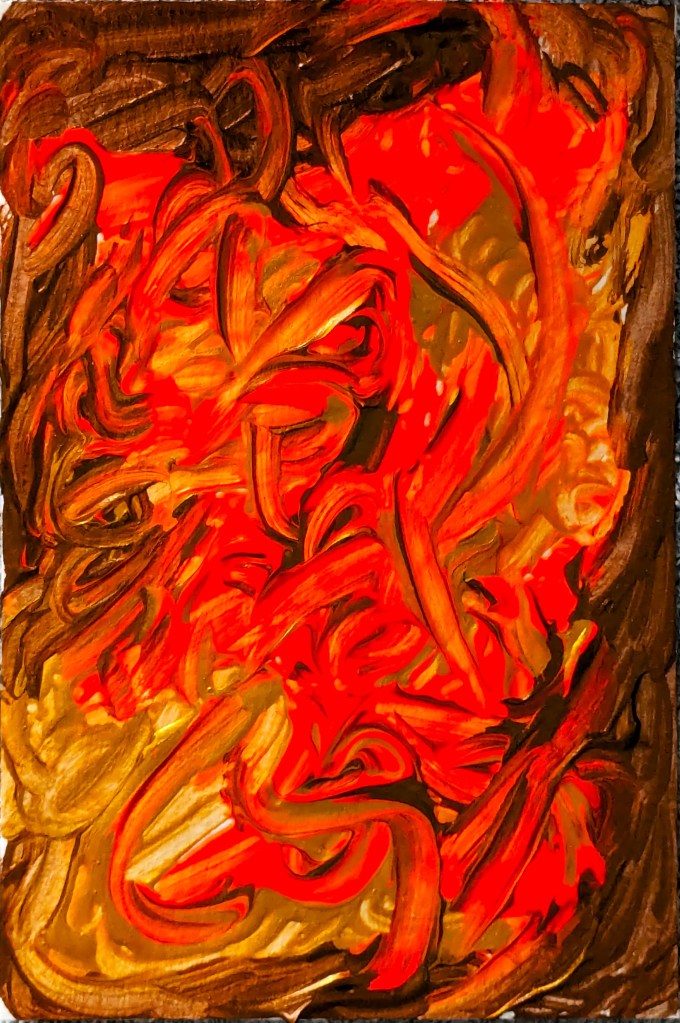
Carved in Stone

Carved in Stone

28

The man who cannot cry
is dry indeed,
his inner space
a wasteland without rain.

Who can now walk forty days
in a desert wilderness,
without water?

Where is that crystal fountain,
with its healing streams
flowing from the rock,
its waters flowing through us,
bringing us tears of sorrow
and tears of joy.

Water and words –
they drift through me
and shadowed waves move,
shifting shape in the changing light.

29

A rising moon,
shimmers over the bay.
It reveals the path
that leads me back
to my primal waters.

Oh, salt flow of tears,
salty the waters
of the baptismal font
washing away all stain of sin.

Immersion in water,
a new start, a new life,
and all the soul-sweet eternities
of water and the word.

Commentary:

Water – such an important commodity, and filled with so much symbolism, religious and otherwise. And our bodies, on average, are composed of 60% water. We can survive for three days without water, if we are lucky. How precious it is. How much we depend on it.

The Bay of Santander, so beautiful beneath the moon. And I remember the full moon’s circle touching a rocky triangle as it rose above Peña Cabarga. Oh, the night life of the fish as they rose in the bay and basked in the moonlight. How often was I tempted to walk out along that moon path and walk the waves to Somo and Pedreña on the far side of the bay.

Immersion in water, a new start, a new life, and all the soul-sweet eternities of water and the word. Total immersion, then, not just in languages, but also in water. Where would we be without those life-long commitments, not to mention the crystal fountain whence the healing streams do flow?

St. Mary Redcliffe

St. Mary Redcliffe

Time and Temple Meads
have begrimed your wand-thin spire,
the tallest in England.

You waved goodbye
to the Cabot boys,
Nova Scotia bound,
as they set sail.

Starling lime your belfry,
gift and inspiration
of Merchant Adventurers,
that gentlemen’s company.

Worms wriggle and gnaw
at your ship’s figure-head,
harbored now, bare-breasted,
sturdy in your oak-beam nave.

Rust rustles and creaks
at the Edney Gates,
wrought to last centuries
by Bristol ironmasters,
themselves apprenticed
to learn time’s laws.

Commentary:

Yesterday, via Zoom, I met with the Canadian Alumni of Bristol University. Sarah Price (Bristol Alumni Association) and Heather Proctor (Alumna) set the meeting up for us. Golden Oldies, all of us, we sat there and reminisced about our days, so long ago for most of us, at Bristol. I graduated in 1966, the same year I came to Canada. Most of the other alumni graduated long before I did. My last visit was in 1986 when I met with the Spanish Department, much changed, and talked abut my most recent research. One alumnus had visited just last year and talked of his returning to his old hall, his old room, his olde department, and all the changes that he had seen.

Most of those gathered had been in halls of one sort or another. Their experiences and friendships seemed very different to mine. Digs out in Knowle, Bristol, my first year. Then rooms in a rooming house, up by the Clifton Suspension Bridge, with other members of the Cross-Country team, for my next two years. Summers in Spain and France distanced me enormously from both England and the university. I remember coming back from Spain one summer and standing at the bus stop in Clifton, waiting for a bus to take me to Temple Meads Railway Station, a Number 18, if I remember correctly. Well, the bus arrived and drove towards me at enormous speed. It didn’t look as if the driver had any attention of stopping. So, I ran out into the road, waving my arms. He braked, gave me a very strange look, and asked me what I wanted. I said I wanted to go to Temple Meads. He said well get on the ****ing bus then. I looked at a great expanse of green metal, with windows, but no door, and asked him “Where’s the door?” Of course, after three months in Spain, like an idiot, I was standing on the wrong side of the road, and the wrong side of the bus. Such bitter-sweet memories.

I suppose I wasn’t a very good student. My only talent was speaking Spanish fluently. I worked hard at that, completely immersed in Santander, playing soccer on the sand, wandering through bars at night, learning to drink from a porrón and a bota without disgracing myself, and fishing on the weekends for panchos and julias in the Bay of Santander. I also learned how to row an old battered row boat, un bote. And it was all marvelous fun.

I also wrote a great deal of poetry and even managed to publish regularly in the Nonesuch Magazine. St. Mary Redcliffe, the poem above, dates from those days. I loved that church and visited it regularly. I wonder how many other Bristol students went in there and walked around inside. I also wonder how many stood with Jorge Luis Borges by the polished, black slate of the city hall, with its coal mine on the green, and gazed at their reflections in those shiny azabache mirrors. As I wrote yesterday on my blog – “How much can we know, your life of mine, my life of yours? At what point do those twin railway lines meet at the edge of time? Or are they doomed to a parallel universe where mind and mind, rail and rail, neither meet nor understand?” Sometimes, we can take a great joy in working out the answers to such questions. 

Clepsydra 22

22

… winds kiss words from lips
      sand creaks
           squeaks underfoot
                    creeps between dry toes

the sand cleanses
     purges
          brings closure
               each magnificent moment
                    lighting a candle

is this beach an altar
     under the rocks’
         shadow church
              it doesn’t matter

mindfulness
     holding each memory
          each piece of colored glass

wave after wave
     climbing ashore
          washing footprints
               memories away
                    closing
                         door after door …

Commentary:

“Wave after wave climbing ashore, washing footprints, memories away, closing door after door.” Everything turns out in black-and-white – here a crow, there a seagull. What does each say to each, when they meet upon the beach? Silence and stillness. No sound of wind or wave, no sign of the tide rising or falling, and what do the birds say to each other, when they meet like this? Two solitudes, mine and thine, and somehow the silence must be broken, or in our separate solitudes we will remain. What if I open my solitude and show it to you? Will you then open yours and spread it willingly before me? Or will you turn away, crow spurning seagull and there’s no going back.

And did my feet, in ancient time, walk upon the beach in Santander? Did they wander over the cliffs at Cabo Mayor? What did I say to the sands in Swansea Bay when, sitting on the steps by the railway station, I dusted the sand from between my toes, placed socks upon my feet, and did up my sandals? Private places, private memories, private conversations live on in the privacy of my head.

A dozen heads, all crowded onto the computer screen, zoomed in so they can be together for an hour or two, repeating their memories to each other – how much did they really share? How much can we know, your life of mine, my life of yours? At what point do those twin railway lines meet at the edge of time? Or are they doomed to a parallel universe where mind and mind, rail and rail, neither meet nor understand? Tell me, if you can, what the crow thought of the gull when they met, that morning on the sand.

Write about your first crush.

Daily writing prompt
Write about your first crush.

Write about your first crush.

No. No, I can safely say that I have never had that sort of crush, except on a teddy bear or a little poo-pee aka puppy. I guess my first real crush was an orange crush. And no, again, not that orange crush either. I guess I have never been a fan of the Denver Broncos. But, as a child, I loved Orange Crush and Dandelion and Burdock, the former suitable for children and the latter looking remarkably like grown aka groan up beer.

During my time at university, I fell victim to several crushes. One was at the bottom of a collapsed scrum while playing rugby. Never much fun that sort of crush. All those sweaty, smelly bodies. Another came in an attempt to beat the Guinness Book of Records under the achievement – how many people can you get inside an English Telephone Kiosk? This was in the sixties, when England actually had telephone kiosks. If you have never seen a real English telephone kiosk, there’s one down in Kingsbrae Gardens, and I highly recommend a visit to that antiquity – almost as good as the statues in the gardens.

Anyway, one day in rag week, a group of Bristol University students, me among them, started crowding into a telephone kiosk. We entered upright, tried kneeling, others kneeling on our shoulders. We managed about twelve.

Doors open or doors closed? This baby came with no instructions. Poor parents, even more miserable single parents. And they are almost always young women, aren’t they? Come to think of it, maybe we should have invited some female students to join us – much lighter in weight and far less smelly – in the bad sense!

So, we tried a different tactic. If the first measure was a crush, and indeed it was, well, the second measure??? Judge for yourselves. One of us held the door open, the rest of us lay down like logs, feet outside the door, and the newcomers lay down on top of us. Ingenious indeed. But those at the bottom could scarcely breathe. They were the victims of a real crush.

Like the finger in the woodpecker’s hole, we reversed it – feet in, heads out. We got up to twenty-seven students. Then we ran out of student volunteers. Revolting. We asked passers-by to help us. But to no avail. Reversed and removed. Equally revolting. Sent our efforts in, with photos. There was no response. We didn’t make it. I still don’t know what that particular crush record is.

In Cassis-les-Calanques, 1960, I was one of eight people standing in a Citroen Deux Chevaux. That was quite a crush. But, in Santander, Spain, 1970, Clare and I watched 11 people, yes, eleven, get out of a SEAT 600, a 600cc Spanish four-seater car, otherwise known as a bullet / bala, and with about as big an engine as your lawnmower. They exited, one by one, and proceeded to enter the local church for Sunday mass. Can you imagine 11 people riding on your lawnmower?

Maybe that wasn’t a crush at all. Maybe it was just a (Morris) minor miracle.

Describe a man who has positively impacted your life.

Daily writing prompt
Describe a man who has positively impacted your life.

Describe a man who has positively impacted your life.

Does it have to be a man? Many women have impacted my life in a positive fashion. My Welsh grandmother taught me how to cook. She would stand me on a small stool placed beside the stove and I would watch as she explained what she was doing and why she was doing it. She allowed me to stir the various mixtures, to help beat the eggs, and when she baked, she always gave me a small piece of cake mix or dough so that I could create something for myself and bake it in the oven with the all the other things. It is hard to beat that type of impact. The small stone she threw still sends ripples through my kitchen and that of my daughter and granddaughter.

When I think of kitchens, I think of the many, many kitchens that I visited when living in France, Spain, and Oaxaca, Mexico. In each of them I picked up so many hints and ideas. In Santander, how to make a tortilla espanola / Spanish omelet. Every evening, my first landlady would leave, on the kitchen counter, one egg, one potato, and one onion. That was my supper – but I had to make it myself. I have made Spanish omelets for 60 years now. Some are simple, others combine different ingredients. All come from the kitchens I have visited in Spain.

In France, I learned the Parisian way to scramble eggs. Again, my landlady taught me how to scramble them her way, the only correct way. My scrambled eggs, learned as I was perfecting my knowledge of French language and culture, are still the talk of the table, when I serve them. Oaxaca was a total revelation, as I have said on many occasions, as was Oaxacan cooking. The first thing I learned – how to prepare quesadillas. Alas, there are no offerings of flor de calabaza with wish to garner them, not here in Canada, not that I have seen, anyway. Next came pico de gallo, that inimitable blend of cilantro, onion, jalapeno, tomato, lime, and salt. All of these recipes came, verbally, and practically, from the wonderful women who have enriched my world, as did the bacon and eggs, on a tortilla, with salsa mexicana, and the eggs scrambled in orange juice. And we won’t talk about the chapulines, grass-hoppers fried in garlic, nor the avocado with tuna delicacies.

Of course there have been men as well. Mon, the friend who spent twenty-three years in a Franco jail as a political prisoner, and survived. He built his own boat, powered by an old engine from a bakery that he adapted, and together we fished the Bay of Santander, every Sunday, for three consecutive summers. He taught me the secrets of the bay, where the fish were, where they hid, how they moved with the tides. He would encourage me to jump over the side, in deep water that lifted me up with the surge of the Biscay, under my armpits, and wouldn’t let me back on board until I could name every part of the bote. I became a very quick learner, especially as he was eating the omelet and drinking the wine as I was speaking. It was another incredible enrichment.

 Juanra, from Avila, was another such teacher. He would take me on his Sunday excursions to buy the week’s wine for his hostal-restaurante, and together we would visit La Seca, and other local wine-growing regions. I remember the day he and the lady who owned the vineyard we were visiting baptized me. We stood, thirty five feet underground, beside a wooden barrel, one of twelve in that cellar, that contained 5,000 litres of white wine. Juanra climbed a six foot ladder, and stood beside a tiny feather that acted as a plug to keep air out of the barrel. The lady, who performed the role of high priest, gave me a glass, showed me where to hold it, beneath the spigot, so that the wine would fill it and I could taste and test it. She turned the tap on – but no wine came out – then she held my hand ‘to keep it and the glass steady’. “Ahora / Now!” she gave the command. Juanra withdrew the feather, the wine flowed, and the lady jiggled my arm and soaked me from wrist to elbow, shrieking with a high-pitched laughter that blended with Juanra’s bass guffaw. “Ya te hemos bautizado,” they cried in unison. “Now we have baptized you.” And there I stood, a child of the vineyard and an adopted son of the land.

Just one? Only one? How could you be so cruel? I remember with great fondness one of my rugby coaches. Many of the people who surrounded him thought he was a clown, and told me so behind his back. But he had a certain something – and I wasn’t sure what it was. One day, at a national coaching conference, he took me on one side. “You already know everything that people here can teach you. But, somewhere, there is one piece of gold. You may find it here, or there, or in the bar. But that one piece of gold is what you will take home with you.”

When I coached the provincial junior team, one summer, I invited that coach to visit and to help me coach. We walked onto the field together. “Leave this to me,” he said. I asked him what I could do to help and he said – “Nothing. Just sit in my back pocket. See what I see. keep quiet. Ask questions later.” He started with a warm up game of rugby, which he refereed. “Whenever I blow the whistle three times – like this peep! – peep! – peep! – I want you to stop wherever you are. Don’t move until I tell you to.”

Then followed the most wonderful master coaching session I have ever witnessed. A ruck – peep! – peep! – peep! – – “Who was first to arrive?” No answer. he pointed. “You were. What did you do? Why did you do it?” This went on and on – scrums, lineouts, kick-offs, penalties, 25 yard drop outs – we weren’t metric yet. “Peep! – peep! – peep! – What did you do? Why did you do it? What else could you have done? Why didn’t you do that?”

They had called him a clown, the ones with the papers, and the coaching certificates, and the education, behind his back, and to them he was clown. But to me, he was a master coach. He taught me how to look, to listen, to see, to ask questions, and never to judge anyone until I had walked in a person’s shoes, or sat in their back pocket, not just for a mile, but for a whole wonderful weekend. He had a wonderful sense of humor and the clown left everyone laughing. Clown? He might have been the Prince of Clowns, but I have never forgotten what he taught me, nor how he taught it.
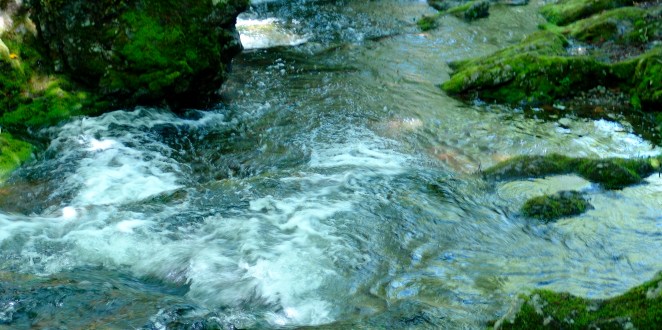
Bay of Santander – 1963

Bay of Santander
1963

I stood there
on the sea wall
calling out to the dark
“Help!” “Save me!”

Moon hid her face
behind veiled clouds.
All hope denied
I called out to the tide,

outgoing, to take me
with it, out to sea,
past the island
and the lighthouse,

out to where the waves,
stronger than anything
I ever knew, would thrust
strong fingers under my arms

and lift me up,
then drag me down,
so I could finally rest
in peace, and drown.

Comment:
This painting is called Picking at Scars. Some scars run so deep that they are always there. When they itch, you scratch them, and they bleed afresh. The scar of loneliness is one such scar. Alone, in a foreign land, learning their language, the culture, their customs, feeling not just unaccepted, but unacceptable, and the moon at night shining on a land, a bay, a city, to which you know, deep in your heart, you will never belong. That loneliness walks with me still and, sixty years later, it still leaves me desolate.

Universitario Rugby Club, Santander

Universitario Rugby Club, Santander.

This photo just reappeared on Facebook, posted 17 October 2016. I couldn’t believe it then, and I can hardly believe it now. What an honor. What memories. Imagine: immortalized on a beer pump in the bar of a foreign-to-me-now rugby club.

“There is some far corner of a foreign bar
that is forever Canada, and Wales.
And in that bright brew,
a shadow will remain,
a memory, ghosting through,
whose stay was not in vain.”

Vanity of vanities, all things are vanity. The Olde Order changeth lest one good custom should corrupt the world. The memories fade as faces age and friends grow distant. They fade away like dreams in the early light of day.

Pepe’s Bar

Pepe’s Bar

Friday Fiction

Pepe’s bar was at the top of a steep, cobbled street, on the left-hand side. When we got there, it was crowded with men, mostly fishermen off the North Atlantic ships that cross the sea to the Grand Banks of Newfoundland. The men stay away for weeks at a time, and when they get back home, they too have a huge thirst, large and curious appetites, and money with which to indulge them. We all pushed our way into Pepe’s bar to join the crowd.
            “Phew! Let’s get out of here. The place stinks of fish!”
            “We can’t go without drinking something. You know what Pepe’s like.”
            “Let’s share a porrón.”
            And a porrón of red wine duly appeared. The porrón is designed for a small boat in the open sea. It is a glass flask of variable size, holding half a litre or a litre of bright red wine, depending upon the number of people drinking from it. It has a wide funnel at one end through which the wine enters and a thin spout at the other through which the wine exits in a fine ruby jet which the experts shoot directly into their mouths; done with skill, no lips ever touch the flask which circulates from hand to hand amidst cries of appreciation for the skilled and jeers for the careless (and the educational tourists, like me, here to learn about the language and the culture) who suddenly choke and cough as they squirt a red stream of wine up their noses and onto face, shirt, and tie. By dint of hard work, some of it done in the bath tub at home while nobody is watching, I can manage a porrón in the quiet confines of the bar; but I still don’t know how I would fare, out at sea, in an open, wind-swept boat.
I was soon going to find out.

Cave Paintings

Spotify
Don’t forget to scroll down to appropriate audio episode.

Cave Paintings
Cantabria

Who painted these pictures on the walls of night’s cave?
This grayish hand, fingers flexed, outlined in black soot,
that deer dancing, those bears, horses, bison, running?


Did they come from nowhere, plucked from nothing but
the artist’s memories of what he saw as the ice age faded
and heat and warmth returned to warm his world? Drawn
from life, without doubt. Unless these Neanderthals were
truly creating art from a literal vacuum with nothing new
invented since according to Picasso. And he should know.

Imagine them as sounds, as letters from distant relatives,
as colored vowels scored on the blocks of a child’s first
alphabet set. Sit and stare. Watch flames flitter over
sharp shapes. See life enter the drawings as flimsy
light flickers over the cave walls’ dips and bumps.

Once seen, never forgotten. Not just the paintings, but also
the clammy cave damp, the red hanky draped over a pocket torch
to imitate firelight, the drip of water, slow growth of limestone
deposits growing into stalagmite and stalactite. Such things
flit in and out of my mind like owls or bats, drop in on my sleep
wake me with predatory beaks and claws, calling for my skull’s shut
doors to open wide, to let them in, and to bring them back to life.

Comment: The picture comes from an ash-tray my parents bought at the Cuevas de Altamira, in Santillana del Mar (Cantabria, Santander as it was known then) in 1963. We visited many cave sites in Cantabria including Puente Viesgo, where we saw the sooty hands. Back then, the caves had only just been opened. At Altamira, a young lady came to greet us. We asked her if we might view the caves and she whistled loudly. Her husband came down from the fields where he was working. He took a large iron key from his pocket, opened a huge door set in the rock, and in we went. One light bulb illumined the inner chamber. Only a small segment had been dug out. We reclined on a rocky bank. He doused the electric light, took a torch from his pocket, and covered it with a red pocket handkerchief. He moved this back and forth to imitate firelight and immediately the whole wall came to life and the animals moved in the flickering light. Pure magic. Unforgettable. We were the only people there. Four of us. A few years later, you had to book an appointment and a place. Within six years, the caves were closed as the heat of human bodies raised the cave temperatures and caused the paintings to deteriorate. I was so fortunate, so privileged, to see those paintings in what was almost their pristine state. In 1991, I visited the facsimile of the caves built in Madrid. I paid my money, went in, sat down, and came out crying for all those things we had lost, for all that beauty that had been denied.

Time

Spotify:
Remember to scroll down to the appropriate audio episode.

Time
A Theory of the Absurd

I wonder what I’m doing here, so far from home, sitting
at the bar, with my beer before me, my face distorted
in half a dozen fairground mirrors, surrounded by
people half my age, or less, all smoking, cursing, using
foreign forms of meta-language, gestures I no longer recall:
the single finger on the nose, two fingers on the forehead,
the back of the hand rammed against the chin with a sort
of snort of disapproval. It’s way beyond my bedtime, yet
I am held here, captured, body and soul, by foreign rhythms,
unreal expectations of a daily ritual that runs on unbroken
cycles of time: morning brandy, pre-lunch wine and tapas,
home for the mid-day meal, a brief siesta, back to the café
for a post-prandial raising of spirits, more blanco, then back
to work at four and struggle on until seven or eight when
the bar routine begins again with pre-supper tapas and tinto.
Time, comprehended in this new life-cycle, lacks meaning.
Time, in a cycle I have long abandoned, is absurd as well.