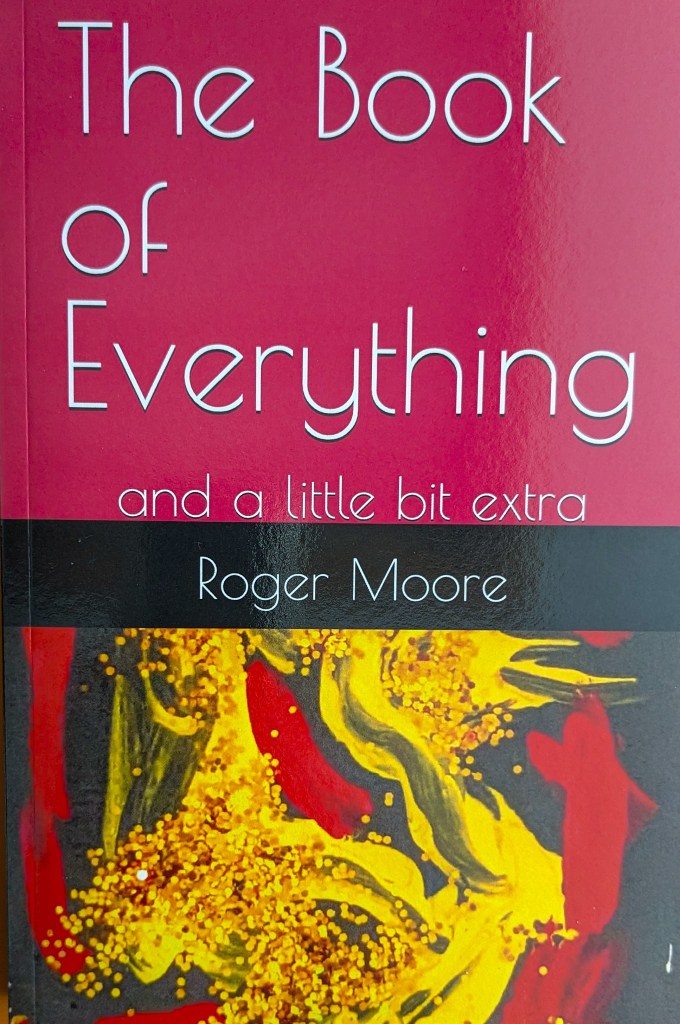
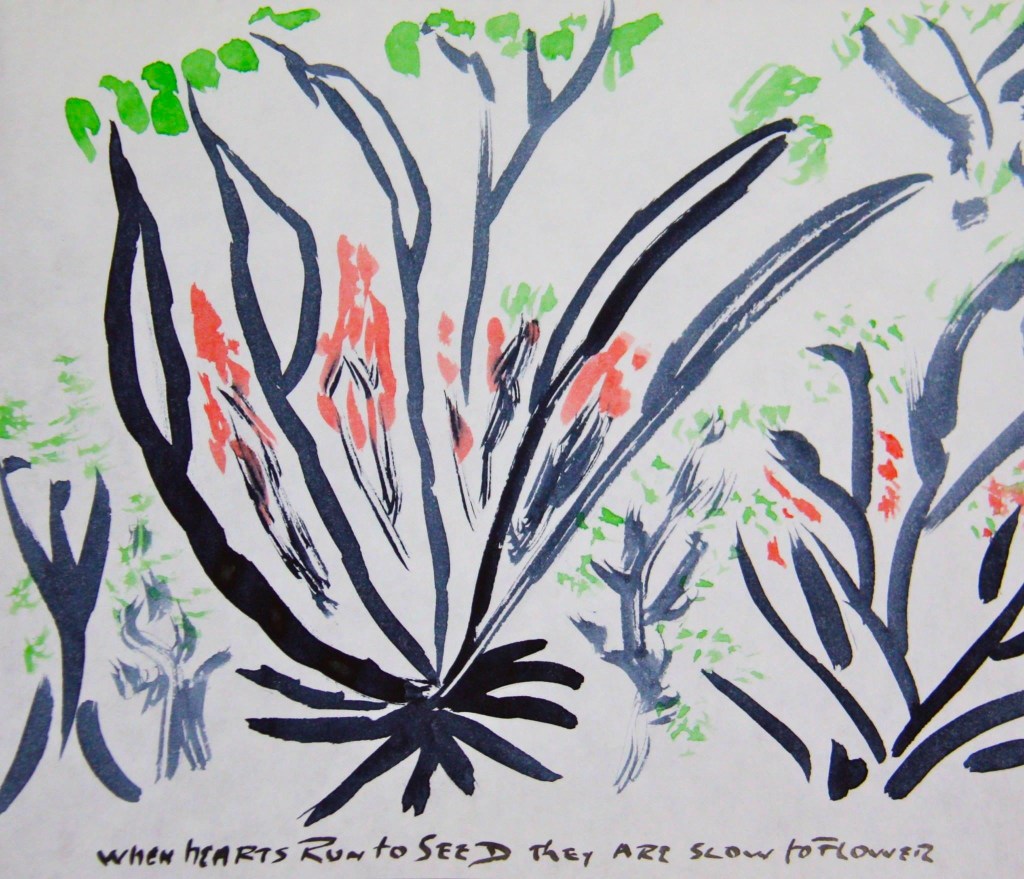
Where did your name come from? That seems to be a strange sort of question. First of all, what do you mean by ‘your name’? My surname (or family name), my Christian name, my second name, my nick-name? I have already answered that particular question – to find out, click on this link – What’s the story behind your nickname?
As for my surname, well, that came from my father, and his came from his father, and his came from his father – and so on, ad infinitum. If we go back to the original chicken and egg theory, then we find out that, according to Wikipedia, Moore (pronounced mʊər or mɔːr/ is a common English-language surname. It was the 19th most common surname in Ireland in 1901 with 15,417 members. It is the 34th most common surname in Australia, 32nd most common in England, and was the 16th most common surname in the United States in 2000. It can have several meanings and derivations, as it appeared as a surname long before written language had developed in most of the population, resulting in a variety of spellings. Variations of the name can appear as Moore, More or Moor; as well as the Scottish Gaelic originations Muir, Mure and Mor/Mór; the Manx Gaelic origination Moar; the Irish originations O’More and Ó Mórdha; and the later Irish variants O’Moore and de Mora. The name also arises as an anglicisation of the Welsh epithet Mawr meaning great or large.
So, where did my surname, Moore, come from? Well, you tell me. Because Wikipedia didn’t exactly give me a perfect location for its origin.
As for Roger – well, here we go again. Wikipedia says the following – Roger is a masculine given name, and a surname. The given name is derived from the Old French personal names Roger and Rogier. These names are of Germanic origin, derived from the elements hrōd, χrōþi (“fame”, “renown”, “honour”) and gār, gēr (“spear”, “lance”) (Hrōþigēraz). The name was introduced into England by the Normans. In Normandy, the Frankish name had been reinforced by the Old Norse cognate Hróðgeirr. The name introduced into England replaced the Old English cognate Hroðgar. Roger became a very common given name during the Middle Ages. A variant form of the given name Roger that is closer to the name’s origin is Rodger. So there you are. Or you could blame my father and mother, or the gentleman who dipped me in the baptismal font and baptized me with that name. Personally, I cannot remember a thing about it.
Of course – wrth gwrs – me being a creative writer with a sense of humor and a parentage that was also creative, my name might have been drawn out of a hat, or found in a Christmas Cracker, or suggested by the slip of paper inside a Fortune Cookie, or discovered in a bottle left by that ubiquitous Welsh or Irish or French or Scottish or English milkman, Moore the Milk. I only know that I am one of the few people I have ever met blessed with that name. Alas, I never met my namesake – Roger Moore aka James Bond aka .007 [respect that dot, it comes from Rudyard Kipling!] – although I have been gifted with those names and that number by several of my acquaintances.
I have a question for you. Recently I purchased a book by Forrester- The African Queen. I enjoyed the movie years ago and thought I would like to read the story. The main actors were great. The book highlighted that it showed what it was like being a female during the war, (1) which when I look back on now is one of its main points.
My question or thought on this book is tied around the library system. When I lived in Fredericton I wanted to give a bunch of books to the library, their first question to me was, “How old are the books? I told her and she said anything over five years in not being accepted. (2)
I wondered about this and the fact that many books in school are being removed, (3) how can we tell how much we have progressed? (4)
I don’t like prejudice but it seems we are throwing out too much. (5) Any thoughts on this. I don’t mind some of the history being trashed (6) because for Canada the consentation is for Quebec and Ontario.
Roger’s Response
(1) It’s also about the role of the nun in society. How do ‘holy women’ function in a male society? It sets some of the many questions we are now being faced with, but doesn’t really give any answers. It’s a long time since I saw that film. I don’t think I ever read the book – the themes might well change in print. They are present (some of them) in The Handmaid’s Tale.
(2) The library system seems to have rules and an etiquette all its own. When I donated books to the library, they accepted some for their collections, but set others up for sale on the book tables by the door. My guess is that certain books are ‘best sellers’ and will be read, others are ‘dust gatherers’ and won’t be. They want the former, not the latter. They also have specialized collections. If the books fit the specialized collections, great. If they don’t, then they hit the unwanted category and are moved on. This is particularly true of the UNB Library System.
(3) This is an entirely different question, and one with very deep roots. It deals, in part, with the question of control – quis custodiet ipsos custodies – who shall guard the guards, who shall program the programmers? By controlling what people read, you control their thoughts. One of the worst signs of this was the book burnings of the Spanish Inquisition (15th – 16th – 17th centuries). The Jews were expelled from Spain in 1492. (And the Arabs / Moors, in 1609). Prior to that, these people were ‘processed’ by the Inquisition. The original Inquisition was Papal, aimed at instructing the priesthood in Rome in how to interpret the Catholic Catechism. It was corrupted in Spain (under Fernando and Isabelle) by the Spanish Inquisition, a sort of secret police, which worked rather like the Gestapo in WWII. One of their jobs was to ensure that people who had converted to Catholicism, to avoid deportation, stayed converted and didn’t revert to their old religion, even in secret. Another was to ensure that reading material, religious material, and cultural material, particularly after 1527 (Martin Luther and his 97 theses) when the Reformation started, were all in line with the accepted Catholic thoughts of the time. All books about to be published were sent to the Inquisitorial Censor who vetted them and either approved them, or asked for changes. If he (they were all men) saw the slightest sign of dissent or heresy. Don Quixote, Book One, Chapter Six (DQ,I,6), deals with the book burnings of DQ’s personal library. In certain of the States (down south) books are already being banned. A similar ban, in certain States, that touches us closely, is the banning of Margaret Atwood’s The Handmaid’s Tale.
(4) “There is no earth, no heaven, no extended body, no magnitude, no place and that nonetheless I perceive these things and they seem good to me. And this is the most harrowing possibility of all, that our world is commanded by a deity who deceives humanity and we cannot avoid being misled for there may be systematic deception and then all is lost. And even the most reliable information is dubious, for we may be faced with an evil genius who is deceiving us and then there can be no reassurance in the foundations of our knowledge.” René Descartes (1635)
Descartes expresses this much better than I can. It is one of the major dangers of the age in which we live. How do we distinguish between reality and alternate realities? Which reality is the real reality? What is, or isn’t, fake news? How do we tell? Who do we believe? And why do we believe them?
(5) Another part of the problem is that ‘certain people’ – who don’t believe in science and who exploit people’s scientific ignorance to their own advantage – are willing to destroy the foundations of our knowledge. Burn everything down, they say, and start again. The new starting point is to impose what they believe upon everybody around them. This is a huge and crucial problem that threatens us, as individuals. It also threatens the foundations of our knowledge, as well as the very world in which we live – climate change vs denial of climate change – profits over people, versus government of the people, for the people, by the people. Once one starts asking such questions and looks at the AI systems with their immense persuasive powers and their seemingly uncontrollable spread of Mis-information and Dis-information, then one starts to realize how serious the problem is.
(6) Those who ignore history are doomed to repeat it – Santayana (the Spanish philosopher, I think). However, we must, in certain circumstances, adjust our current beliefs to current realities. Immigration is a major issue – as is how we deal with people, like me, who come from different cultures and beliefs? Not everything written in the past suits our current world view.
I have been looking at old Westerns – “The only good injun is a dead one” (John Wayne). Really? I know some wonderful people in our first nations communities and I have taught them and worked with them and have often been taught by them. “Shoot first and ask questions afterwards.” Really? I won’t comment further on that one, without reflecting on the number of automatic weapons floating around in our socuiety. So many people are being killed by them.
All of this comes down to the big question – freedom of information or the release of just enough information to persuade other people of what we believe and what we want them to believe. Power and Control. Knowledge is Power – Michael Foucault. Control that knowledge and you have power over the people. Noam Chomsky has written widely on this – and his books have been banned in the USA. Bertrand Russell too – The Meaning of Meaning, for example, and his establishing – along with A. J. Ayer – of the doctrine of logical positivism – the removal by means of mathematics of all the emotional content of words.
My friend, you have opened a can of worms. Long may they wriggle and squirm.
Why admire a profession? I used to admire the fire-fighters when I was in Spain. Then I discovered that a small group of them were setting fires deliberately so that they could get double pay and danger money extinguishing the fires they had set. I used to admire politicians. Then I discovered that they weren’t always honest, had their hands in other people’s pockets, used their positions to entrench and enrich themselves, and pulled all sorts of tricks to stay in power. I used to admire priests. Then I started reading horror stories of child abuse, abuse of power, negligence of priestly duties. And these things aren’t new. In The Book of Good Love, (Spain, 1330-1343) written by Juan Ruiz, the Archpriest of Hita details how the celibate priests were ordered in a letter from the pope of the time to give up the ladies with whom they were living (and with whom they had children) to return to a life of celibacy. All fictitious, of course, but also based on a truthful reality, as was the Seller of Papal Bulls (as described in Lazarillo de Tormes – Spain 1554, and published anonymously because of its anti-clerical content).
I hope, with that short selection of potential professional felonies, I have made my point. In brief, to admire the ideal of a profession is one thing. But to admire the unprofessional conduct of certain individuals who ruin the reputation of their own profession is something else entirely.
Therefore, I would propose that we change the title of this prompt from What profession do you admire most and why?, to What professional do you admire most, and why? Now the question can be answered with ease. I most admire those professionals whose profession is a vocation. They do their jobs out of love and not just for money. They are dedicated individuals who put their profession and the people they serve before their own home comforts, wants and desires.
Such unsung heroes abound. The baker who gets u at 4:00 am, arrives at the bakery at 5:00 am, bakes, prepares, and wraps the goods, until 8:00 am when the customers arrive and the shop opens. This is done at minimum wage, autumn, winter, spring, and in the summer when the heat warnings go out and the bakery is a living hell, what with the ovens and the heat dome outside. The teacher whose work does not end in the classroom, but starts outside, when class has ended, and the students really need the TLC that comes from a teacher who puts them before his/her office schedule of 30 minutes student time a week. The general practitioner who does not retire at age 55 to bask in the sun on a Caribbean Island, but who continues his work, until at age 80, he can tend his flock of patients no more, and who then retires with grace, heartfelt thanks, and love from a job well done.
These are my heroes. These are the professionals that I most admire. Not the profession, but the person who performs that profession with skill, hope, love, commitment, and a dedication that reaches out to embrace that specific professional world, whatever it is, and the people who share it.
Scour the news for an entirely uninteresting story. Consider how it connects to your life. Write about that.
Scour the news – what on earth does that mean? Let’s begin with scour – If you scour something such as a place or a book, you make a thorough search of it to try to find what you are looking for. Rescue crews had scoured an area of 30 square miles. Synonyms: search, hunt, comb, ransack. Search, hunt, scour, ransack – well? Which one are you after? And how long have I got? Question: what am I looking for? Answer: an entirely uninteresting story. What a tremendous waste of my time. And, when you get to my age, time is precious.
As for the news, well, what on earth do you mean by that? I speak several languages fluently. Am I looking for an entirely uninteresting piece of news in all of them? As one of the Two Ronnies used to say “You’re having me on, aren’t you? You’re having me on.” Let’s just stick to one language – English. Then let us ponder for a moment the meaning of the news. How many newspapers do you wish me to purchase and peruse? I am not a millionaire, you know. Or do you want me to listen to the news on the radio or the television? If so, how many channels? How about sending me online? I love the thought of that. There are thousands of websites out there filled with all kinds of news, good bad, indifferent, fake, artificial? And you want me to scour them all in search of, and I quote “an entirely uninteresting story”! Pull the other one, as the old comedians used to say, ‘”it’s got bells on”.
I’ll tell you what I’ll do. I’ll scour your prompt, that’s what I’ll do. Having given it a brief analysis, I declare it entirely uninteresting. Next I’ll consider how it links to my life. Well, sorry, it doesn’t. If I were to follow it through, I’d be sitting here for hours, wearing my fingers out on the keyboard. So, what’s the link between your prompt and my life? A total waste of time, that’s what. Sorry, I have better things to do with my life. Like reading Shakespeare – “Friends, Romans, Countrymen, and prompt readers, lend me your shovels. I come to bury this prompt, not to praise it.”
If you were going to open up a shop, what would you sell?
That is a very hard question to answer. I think of all the material things that everyone else can think of, but I do not want to sell commonplace things – antique furniture, paintings, books, stamps, groceries – I could go on and on, but I will resist the temptation to do so.
When I lived in Santander, Spain, the local wines were sometimes called ‘sol embotellado‘ / bottled sunshine. I wouldn’t want to open a wine shop, but I would love to bottle the essence of a warm sunny summer day and – why should I sell it? I wouldn’t. I would give it away, free of charge, to all the needy people, inner city boys and girls, the impoverished, those who live in the streets and sleep in doorways or under bridges at night. Oh the joy and happiness that would come when they opened their bottle of summer sunshine and felt the warm fresh air gather around them so they could breathe it in.
But why stop there? I would also give away ‘essence of butterflies’, that special feeling that comes on the colored wings of a butterfly and combines with the joy of flowers and the gift of taking flight. How special that would be. But sell it? It is much too valuable to sell. Put a dollar, Euro, yen, rupee, or sterling price upon it, and all its powers would vanish, like fairy dreams fading away.
Fairy dreams – yes, I would offer them as well to those who needed them. And not the sort that fade away, but those fairy dreams that suspend us in the wondrous beauty of their ethereal light. And I would bottle hope, and self-belief, and the power to change oneself from what one is to what one is destined to be. And I would add essence of self-knowledge and powder of Davey Lamp light that would enable the seekers to seek in the darkest corners of their souls and find that elusive inner self, and bring it out from the darkness. And I would stock fragrant filaments of firefly that would also allow my customers to enlighten that darkest of nights, the dark night of the soul. And a map of hidden foot paths that would allow the wanderer to wander and never get lost.
How about an elixir of happiness and joy? A quintessence of rainbows, perhaps? Or a magic lantern that would shine out from heart and eyes and enlighten the soul friends of those lucky souls who were able to locate and enter my shop of conditioners, vital vitamins, and soul magic for all those lost and lonely people. And there, that mirror on the wall – look in it, gaze deep into your own eyes, and maybe, just maybe, you will find my shop.
And “What will your shop be called?”, you ask. Look into your heart and you may find the answer engraved therein. It will be called The Gift Shop of Hope Restored. I look forward to welcoming you when you open the door and step in.
I am curious about how you generate prompts for people to write about. Do you put words in a hat and pull them out? Or do you examine a multitude of Christmas crackers to see what words of wisdom are contained within them? As for me, I am curious about Olde Curiosity Shoppes and the curious things that one finds in them.
I am also curious about aliens. There are so many of them. At night, they often invade my brain and stamp around causing enormous damage up there. I think they think the own the place, throwing parties at two in the morning and chanting things that shouldn’t be chanted. They embarrass me. Even worse they sometimes shame me. You should hear the things they say and sing. Snippets of old rugby songs and limericks that never even saw the shores of the Emerald Isle. Sometimes, next day, they are still partying, and those little snippets go earwigging their way on and on.
What’s worse, they speak several languages and I hear them chanting in Latin, French, English, Spanish, Catalan, Italian, Galician, and even in Welsh. As for the Welsh, it rolls on and on – ar hyd a nos – in fact they sing until Harry is hoarse. I looked in the mirror one morning, and I saw a whole crowd of them waving their tentacles like multiple octopi and chanting yma o hyd. And yes, indeed, they were still there. They weren’t going anywhere. They followed me around all day.
Another thing about which I am curious – how do I de-alienate the aliens who have alienated me from my old peaceful world of curiosity shops? “Ho-ho-ho-ho-ho, tell me if you know, who the, why the, where the, what the, where do aliens go?”
And if you happen to be curious about what makes me tick, well, I have a long arm and a short one, just like a grandfather clock, and a key in the middle of my back with which you can wind me up and set me off on any topic, however curious it may be. Just light the blue paper and retire.
When Moo descended from Mount Academia, he brought down with him the ten tenets to which great teachers, knowingly or unknowingly, commit. He asked me to transcribe them here, since they were in danger of being neglected and / or forgotten.
Mastery of the subject – great teachers know their subjects inside out. They do not read their graduate school notes to their students, heads bowed, chins on chest, droning on in a low, boring mumble. They encourage questions and are open to debate with their students about the subject that they know so well and openly love.
Master thy subject.
Humility – great teachers are humble. They know that they are not omniscient. They also know that knowledge changes across time and that they too must change and follow new ideas. They also know, perhaps instinctively, that some of their students are as intelligent as they are. They never dismiss their young charges as idiots, fools, or lunatics to be beaten and forced into the required shape.
Be humble.
Flexibility – great teachers are flexible, not rigid. They can bend the rules, reshape the syllabus, change pace and tone to match the needs of their students. In addition, they ask their students about their needs and try to address those needs in a personal way, sometimes on a one on one basis.
Be flexible.
Reaching out – great teachers reach out to their students as a group and as individuals. They never paint themselves into the know-all corner where they alone know best, and they know, with absolute certainty, what’s best for their students. Great teachers know, above all, that one size, in great teaching, neither fits nor benefits all.
Reach out.
Equal treatment – great teachers treat their students equally. They do not fawn on the best and scorn the worst, nor do they teach by the WWII convoy system, teaching only at the speed of the slowest. By extension, great teachers try to create an atmosphere of love in learning and joy in the subject.
Practice equality.
Honesty – great teachers are honest, fiercely honest. They know their own strengths and weaknesses, their own limitations. They work on their weaknesses, striving to turn them into strengths. They also push the boundaries of their limitations, striving always to keep up with the ever-changing frontiers of knowledge.
Be honest.
Human beings – great teachers know that they are human beings and they recognize early on in their careers, that while they are teaching a subject, they are also preparing fellow humans for a life beyond the ivy-covered walls of academia. By extension, they emphasize the humanity of their students and try always to develop and sustain that humanity.
Be human.
The meaning of meaning – great teachers reach out beyond their subjects to teach the meaning of meaning. Why is the subject important? What can each individual use this hard-earned knowledge for, in their own lives? How can they reshape their own lives and create better ways of learning and living? This teams up with reaching out and enters the realm of learning for learning’s sake and love of learning and love of knowledge.
Love thy learning.
Creativity – great teachers are creative. They open their students’ minds to new ideas, fresh knowledge, better ways of doing things. They never use phrases like ‘thinking outside the box’ and they do not build better boxes, one or two sizes larger than current boxes, inside which their students must now sit, work, and think. Creative teachers tear down the walls of medieval academia and open their students’ minds to the winds of change and fresh knowledge.
Be creative.
Life long learning – great teachers teach students how to think for themselves, how to teach themselves, how to self-assess, how to check and double-check the knowledge (all too often nowadays, fake news and / or false knowledge) handed down to them from a multitude of sources, far too many of them unreliable. Great teachers teach their students to know themselves. They also teach them how to work out whether a source is a reliable fount of information, or not. In short, they teach life long learning and neither they, nor their students, ever give up hope.
Are there things you try to practice daily to live a more sustainable lifestyle?
Let me begin by asking a straightforward question – what on earth does this question mean? Permit me to begin with the word lifestyle. I googled it and got the following – 1. a set of attitudes, habits, or possessions associated with a particular person or group. 2. such attitudes, etc, regarded as fashionable or desirable. Let me now google sustainable. Here’s what I found – 1. able to be maintained at a certain rate or level – “sustainable fusion reactions”. 2. able to be upheld or defended – “sustainable definitions of good educational practice”. 3. Sustainability is ability to maintain or support a process over time. Sustainability is often broken into three core concepts: economic, environmental, and social.
This is all very interesting indeed. So, what can I practice daily that will allow me to maintain “sustainable fusion reactions”? Answers via snail mail, trained snails please, via the North Pole, to arrive by Christmas, if the snails can maintain the pace. What can I practice daily to “uphold or defend sustainable definitions of good educational practice”? Good question as a retired former teacher, I have to admit that there is very little I can do about an academic world, already moribund, that I left fifteen years ago. As for the three core concepts of economic sustainability, environmental sustainability, and social sustainability, well, I really don’t know what to say.
Economic sustainability – I look at the growing number of homeless and the multitude of retirees who are forced out of their homes or apartments and onto the streets by rising rents, and I feel fear and dismay. I watch prices rise and my savings fall – you tell me, pretty please, what can I do about it? Hope? Pray? Petition? Buy less? I already do that. Eat less? I already do that. I can control a certain amount around my own house and home, but there’s little I can do about homelessness and the stock exchange and the cost of living.
Social sustainability. Covid brought shutdown (2020) and shutdown meant a great many friendships and connections were broken. It is hard, at my advancing age, to establish new friends, begin new relationships, or renew connections with friends who are happy to remain disconnected. Besides which, a year or more of masking, not meeting, not leaving home, changes one’s lifestyle. It is hard, as I say, to gear up and start again.
Environmental sustainability. “Drill, baby, drill.” What can I do, on a daily basis, to stop drillers drilling, miners mining, polluters polluting, forest fires burning? I certainly try to pollute as little as possible on a daily basis – but – I do not own an open cast mine, an oil refinery, nor do I have an oil field to exploit, nor a space ship to launch like a modern day Noah’s Ark, to escape the deliberate destruction I am doing to the earth. Clearly, I try not to play with matches, especially on a hot dry day. But that’s mainly a cross between courtesy and common sense. To phrase it another way, I certainly didn’t guzzle up all the cod on the Grand Banks, or allow the sewage from a major sewage works to overflow into rivers, lakes, and seas in order to save money and make larger profits for my friends and shareholders.
Given my limitations, yes there are things I do on a daily basis to live a more sustainable lifestyle. I eat less. Go out less. Exercise and stretch more. Try to recycle as much as possible. Try not to over indulge and to make my daily bread stretch as far as possible, sometimes into a second or third day. I would, if I could, buy seven loaves and five fishes, go out into a central square, and feed a multitude. But, alas, something like that is really way beyond both me and my pension level.
Answering stupid questions like these – now that would be a great response. But there are other ways to waste time – like mousing around on the computer – some call it surfing, which sounds like fun – but acting like a mouse that’s chasing its own tail / tale, well, that is most surely a waste of time. Playing verbal cat and mouse games is a good way to go too.
Most devilish of all, sitting in a car, beside a lollipop person, who has just stepped out and stopped you from joining the car, ten yards ahead of you, that is now the last car in the latest convoy to be held up, while you are now the first car waiting to go next time. You sit, and sit, and wait.
Then – INSPIRATION – I turn my disc player on and lo and behold – Pete Seeger sings The Abraham Lincoln Brigade, from the Spanish Civil War. What’s special about that, you ask? Well, how about the chorus? – “No pasara’n! No pasara’n!” / “They shall not pass! They shall not pass!” sang the Abe Lincoln Brigade as the battle for Madrid thundered on. I open the car window, turn up the volume, bellowing it out loud while waiting to count the cars coming from the opposite direction.
It was a very long wait. And then the first of 109 cars, trucks, and various other vehicles appeared. Bored now with The Abraham Lincoln Brigade, I changed quickly to Viva la Quinta Brigada, kept the volume up high and “No Pasara’n! The pledge that made them fight” rang out as the official truck with its magic sign “Follow me!” crept up in front of me, turned, and started to crawl, snail mail style, down almost two kilometres of highway at 10 KPH.
When we got to the end of the road works, he turned into someone’s driveway, and I, and the next two cars behind me, followed him. I learned a few choice words to add to my vocabulary – “Like WTF do you think you are doing?” “It says follow me! on your truck.” I replied. ” I just did.” And off he went again on a long, four letter rant. Then, on foot, he stood in front of the convoy that had stalled anyway, now having nobody to follow, and guided his three black sheep out onto the road that led to freedom.
Well, that was an adventure and an absolutely total waste of time. As the court case will be, when I appear before the magistrate next week. Believe you me, if you believe all this, you would believe anything. And, congratulations, you have just successfully wasted another five minutes of your precious time and I have wasted ten of mine writing this piece.
I really only want a one word tag – poet, and that’s the name of my blog – rogermoorepoet.com.
An award-winning teacher, researcher, poet, and short-story writer, I was born in Swansea, the same town as Dylan Thomas, the famous Welsh poet, whom I emulated in my youth. I wrote poetry throughout my childhood, but I never took lessons, nor was I known as a poet.
Early in 1962, I sent a sonnet to the poetry competition of the Stroud Festival of Religion and the Arts. I left school and was studying in Paris, when the results came out and I discovered that I had won first place in that competition. In my absence, a deserving boy from my school was sent to pick up the award, a book of poetry, signed by Ursula Vaughan Williams. The poem was published in Trydan and I have a copy of it somewhere.
Throughout my undergraduate career (1963-1966), I wrote poetry. Much of my early work appeared in my university’s student arts review, The Nonesuch Magazine – the Flower of Bristol that giveth great light. Alas, I was not studying English, and only the English students seemed capable of being called poets, so I was always called something else. I wrote a lot about nature, back then. One day, when I hand delivered my poetry submission, the editor of Nonesuch, an English student, asked me if I was a pantheist. “Good heavens, no,” I told him. “I’ve got a girl friend.” This answer did nothing in university circles to affirm my wanna be status as a poet.
Some of these poems survived and a couple appeared in Stars at Elbow and Foot. Here is one from Last Year in Paradise.
St. Mary Redcliffe
Time and Temple Meads have begrimed your wand-thin spire, the tallest in England.
You waved goodbye to the Cabot boys, Nova Scotia bound, as they set sail.
Starlings lime your belfry, gift and inspiration of Merchant Adventurers, that gentlemen’s company.
Worms wriggle and gnaw at your ship’s figure-head, harbored now, bare-breasted, sturdy in your oak-beam nave.
Rust rustles and creaks at the Edney Gates, wrought to last centuries by Bristol ironmasters, themselves apprenticed to learn time’s laws.
I call myself a poet. I think of myself as a poet. In Santander, Spain, I was known as the mad Welsh poet! What an honour it would be to have Roger Moore Poet as my tagline. I’d rather leave the ‘mad Welsh’ out.
But why stop at one tagline? I am also an award winning teacher and researcher. And a long-term rugby coach. How would they be as tags? Roger Moore Coach? Roger Moore Teacher? Roger Moore Researcher? Not quite the same thing. No resonance and I can produce no links to attach to those names. They are much more run of the mill. Anyone can be a coach, a teacher, a researcher. Not everyone can be a poet, let alone a famous poet, like Dylan Thomas. Besides which, I live in Idlewood, not Milkwood.
There is one other alternative, however. Roger Moore 007. Alas, that one belongs to someone much more famous than me, even though we share the same name. But I might go one step further. How about 3M-007? That would do at a pinch – pretty unique – there aren’t many of them about! I love it. So there we go – a choice of two taglines, either of which fit – Roger Moore Poet and Roger Moore 3M-007.
Which one would you choose for me? “A rose by any other name would smell as sweet.” But remember, I ain’t no rose. So please don’t tread on the tails of my all-disguising, multi-colored 3M-007 poetry coat.