What relationships have a positive impact on you?

Daily writing prompt
What relationships have a positive impact on you?

What relationships have a positive impact on you?
I think one of my poems answers this question best. I write “one of my poems” but it is really my ‘free’ translation of one of Francisco de Quevedo’s sonnets – Retirado en la paz de estos desiertos. I have changed the poem slightly, but I am sure Don Francisco (1580-1645) will excuse Don Roger’s impoverished effort (2023).

On Loneliness
29 December 2023

Resting in the peace of these small rooms,
with few, but welcome books together,
I live in conversation with my friends,
and listen with my eyes to loving words.

Not always understood, but always there,
they influence and question my affairs,
and with contrasting points of view,
they wake me up, and make me more aware.

The wisdom of these absent friends,
some distant from me just because they’re dead,
lives on and on, thanks to the printed word.

Life flits away, the past can’t be retained.
each hour, once past, is lost and gone,
but with such friends, I’m never left alone.

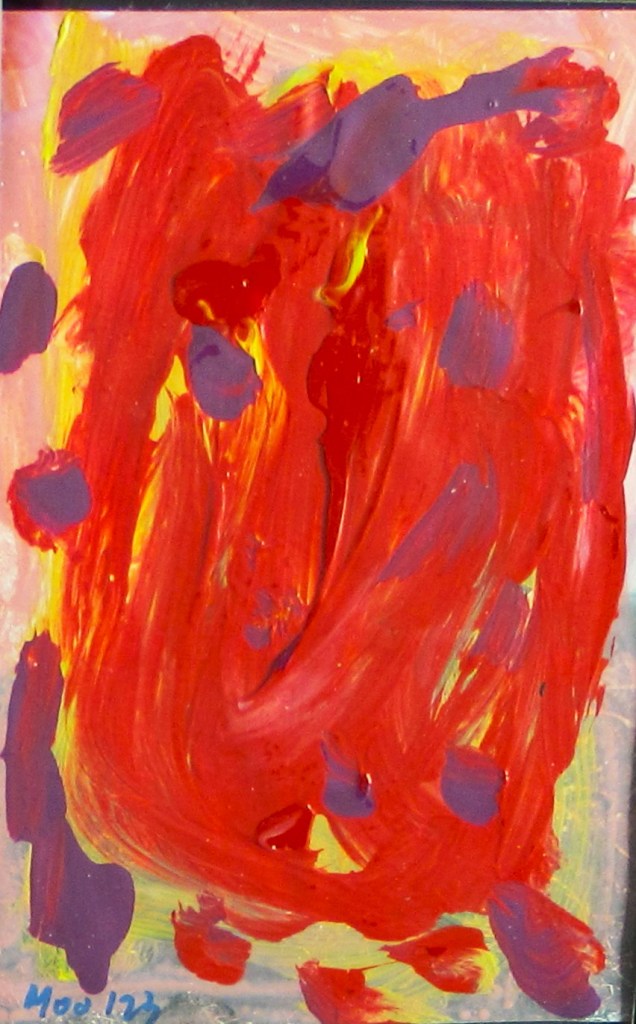
The painting, by my friend Moo, is called Fiat Lux – Let There Be Light. It is reminiscent of Dylan Thomas’s poem, Light breaks where no light shines. Intertextuality – Quevedo drew inspiration from the Stoics. I drew inspiration from Quevedo. Moo drew inspiration from Dylan Thomas. The nature of creativity and its continuing links throughout the ages shines clearly through these wonderful associations.

What is the greatest gift someone could give you?

Daily writing prompt
What is the greatest gift someone could give you?

What is the greatest gift someone could give you?

The greatest gifts that anyone could possibly give me have already been given. Greatest of all, this life I live, this body I inhabit, given to me by my mother such a long time ago. Without that gift, and blessing, all other gifts would be meaningless. The second gift, chronologically, was the education that they provided for me. This included time on the continent during the summer and the school year to develop, in France and Spain, my knowledge of the languages and cultures.

The third gift has to be my meeting with Clare, and her decision to stay with me as her chosen partner. This includes my moving to Canada to study at the University of Toronto, and her decision to follow me here. Then, we got married, on Christmas Eve, and she became my greatest gift, giving me, in her turn, the gift of a child – our daughter, who in turn gifted us with a granddaughter. This last group of gifts includes the gifts that keep on giving, year after year.

So, a life viewed through rose-colored spectacles? Yes, in some ways. We have had our ups and downs but the gifts of life, love, and laughter have carried us through the difficult times when the winds blew, the sea rose, and we rowed on into brighter weather. There have been other gifts, of course. They include the gifts of family and friendship bestowed upon me by so many people in Wales, England, France, Spain, Canada, and Mexico. The gift of friendship, in later life, and my meeting with like-minded people who have walked with me, some for a little while, many for a lot longer. And we must never forget the gifts of adoration and love, bestowed upon us by our four-legged friends, the dogs and cats who have entered our various homes and enhanced our existence.

Having said all that, one moment, one gift, a much more recent one, does stand out. We lost power for three days, seventy-two hours, just before Christmas this year. At the start of the fourth evening, we were looking at temperatures of -10C to -15C. Our house temperature had descended to +53 F and we didn’t know whether we could face another cold night, or not. Then, at 7:15 pm, the exact moment when we had lost heat three days earlier, with a click and a whirr, the lights came on, the heating started again, and we received, from anonymous people, who we will probably never meet, the gift of power restored and the return of light and heat.

So, to the linemen of NB Power, those anonymous workers who strove to bring the light and spirit of Christmas to the dark homes of the cold and lost, we send our thanks. You gave us, without even knowing us, one of the greatest gifts that living things can receive – heat and warmth and light at Christmas Time, in the bleak mid-winter. Thank you, men and women of NB Power. You were the bearers of great gifts and you and your devotion to duty (under the worst of the weather), and the gifts you brought us are all truly appreciated.

You get to build your perfect space for reading and writing. What’s it like?

Daily writing prompt
You get to build your perfect space for reading and writing. What’s it like?

You get to build your perfect space for reading and writing. What’s it like?

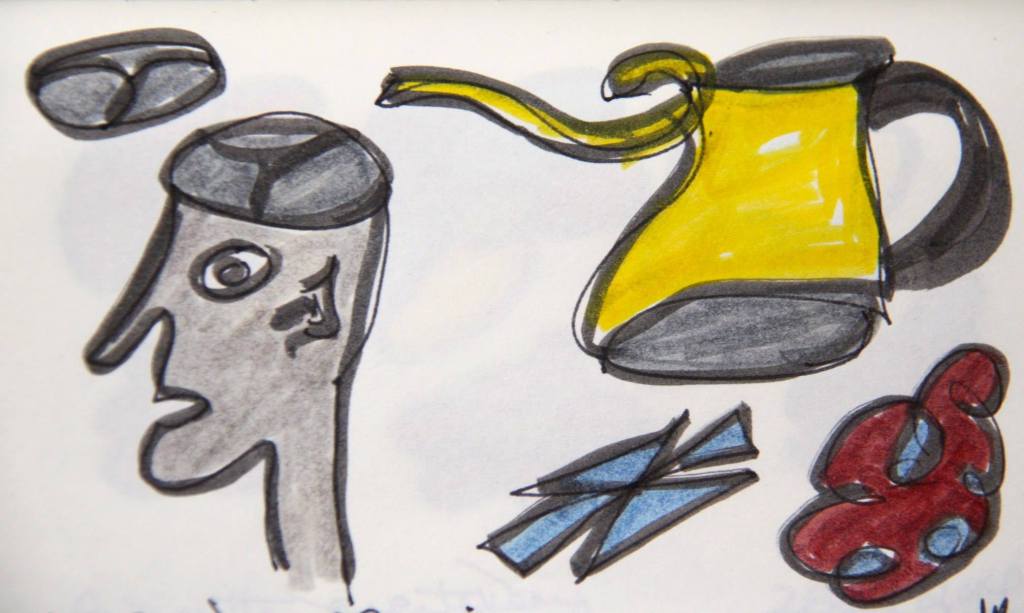
After an outpouring of poetry, during the recent three day – 72 hours – power loss, I have run out of words. Having had nothing to do but write, I now have everything to do, except write. So, I did some painting instead. This one is called Emotions in Motion. It is a picture of the inside of my head.

The inside of my head (pictured above) is the perfect space for both reading and writing. It is an especially good place when illuminated by candlelight as the flickering flames help the emotions to get into motion, if you see what I mean. And you probably don’t, because you have never entered a perfect writing, reading, and painting place, like mine.

Anyone can have a desk, with a window, looking out onto a garden. There may even be wonderful landscapes with fantastic sunrises and surprising weather events. But no space is perfect, save for that one perfect space (as depicted above). I can just imagine my friend Vincent (Van Gogh) doing aerial cartwheels with his paintbrush in his hand as he perambulates around his Starry Night, another perfect space in which to paint and read and write.

I painted Emotions in Motion during the aftermath of the three day power out[r]age when all sorts of thoughts and licorice all-sorts were floating around in there. You can probably taste a couple of the flavo[u]rs when you look at the picture. Never mind. Words will return – or not – in which case I’ll let the blobs of paint speak for me. And you can read my fortune in Vincent’s stars – or not, as the case may – or may not – be.

Share what you know about the year you were born.

Daily writing prompt
Share what you know about the year you were born.

Share what you know about the year you were born.

How much does anyone know about the year when they were born? When do childhood memories begin? What do we really know about those early days, those first surroundings, the family, the friends? I only know what I have been told – and not all of it is pleasant. Here for example is the song my grandfather used to sing to me when I was a very young child.

“I’ll never forget the day, the day that you were born.
They took you to your father and he looked at you with scorn.
Said he, ‘if that’s his face, the best thing you can do,
is stick a tail the other end and take him to the zoo.'”

I don’t remember what I looked like, acted like, or sounded like. I don’t remember much at all. But I have never forgotten that song with its innate cruelty. Oh yes, people laughed and pointed. Maybe you did too. But is it really funny? And what if your only childhood memory is a sense of being unwanted, rejected, left on the shelf, sent to the zoo… ? “Little boys should be seen and not heard.” Another piece of wisdom from the ancients.

Mind you, I have heard stories, and written them. Here’s one.

The Stork

My story almost didn’t begin in Number One, the first house that I recall from Gower, Wales. My mother gave life to me, a very long time ago, in the middle of a frost-bound winter in that land now distant in time and space. Yet begin it did just as the clock struck eight, that Sunday evening, in January, mis Iawnor. I know this is meant to be my story but the beginnings are swathed in a misty past that tells of a lack of awareness, a search for the meaning of shape, color, and form, the realization, however slow, of the need for language, words, a map, a direction, a slow growth of the seed from baby hood to boyhood, to manhood, and beyond.
 My parents told me I was flown in by a meandering stork that just happened to pass by our house at eight o’clock that night. I don’t remember much about the flight, although I have always dreamed of tumbling through that sky-blue air, only to be trapped at the last moment, my hips and legs caught in a vice that squeezed and squeezed until I could no longer breathe. This nightmare haunted me for years. All through my childhood, I climbed through ever narrowing tunnels and caves until I was trapped, struggling, suffocating, trying to get out. Many times, I would wake myself up with my own panicked screams. The twin holes in my temples, marks made by the doctor’s forceps, remind me to this day of the last stages of that journey.

Our dog, a black Labrador called Paddy, after St. Patrick, of course, and all the Paddies who worked the Paddy fields in Ireland and Wales, had been exiled to a neighbor’s house until after … after what? After the delivery? Were they afraid the dog might frighten away the stork? Who knows what they thought back then? In Galicia they still throw stones at storks to keep them from bringing babies to houses. It’s cheaper than contraception, which is illegal there anyway. When the clock struck eight, Paddy, curious and maybe jealous, turned herself into a stone, threw herself through the neighbour’s front bay window, and rushed home barking. The stork, scared by the noise, dropped me, plop, right down the chimney, and when the doctor held me upside down by the heels and slapped me, I started to scream.
How do I know all this? I don’t. I merely repeat what I’ve been told. Simpletons at heart, poets and babies believe so many things, myths and legends, fairy tales, tall stories, the stories of storks … can you tell talk from mutter, or Stork* from Butter as the TV ads used to ask? I know I can’t. But this is my tale to tell, even though I don’t know how it began (Alpha) nor how it will end (Omega). So many mysteries hide behind thick curtains of mist that conceal both the future and the dimly remembered past, a past that we often reconstruct while calling it ‘memory’.

*Stork: a brand of margarine that the tv ads said “tasted just like butter”. Hence: “Can you tell Stork from butter?”

Tell us about your first day at something — school

Daily writing prompt
Tell us about your first day at something — school, work, as a parent, etc.

Tell us about your first day at something — school

My father held my hand all the way to the convent. I wiggled, squirmed, dug in my heels, but it did me no good. Too firm, his grip, too determined his grim, muscled chin. When we arrived, he dragged me up the gravel path leading to the stark, red-brick building, and jangled the bell that hung from an iron clasp. He kept a tight hold of my hand as the bell’s echoes faded away into the interior corridors. A tapping of feet, and the wooden door opened just enough to let a small, four-year old boy in. My father pushed me through that gap. I turned to wave good-bye, only to see his back as he walked rapidly down the drive.
            “Come along, child, we’ve been expecting you,” a figure in flowing black robes with a white wimple framing her face emerged from the shadows.     The nun closed the door and banished the sunlight. “Welcome,” she said. “Wipe your feet.”
            “It’s not raining. My shoes are clean.”
            “When you enter this convent, you do as you are told. Wipe your feet. Blow your nose and dry your eyes. You should be ashamed: crying at your age.”
            A rough brown coconut mat lay by the door. I stood on it and moved my feet backwards and forwards, sniveling as I did so.
            “Now follow me.”
            The nun walked down the shadowy corridor, her leather sandals flip-flapping against the polished wood floor. The scent from the highly waxed boards rose up and flooded my nostrils. I looked down to see my face distorted by the floor’s polished woodgrains.
            We approached a classroom from which a babble of young voices echoed down the corridor. The nun opened the door and all chatter stopped. She led me to an empty seat on a wooden bench and there I sat. The nun went to the teacher’s desk in front of the class.
            “Class: you will all stand. I ordered you to be silent in my absence. You were talking when I opened the door. Who started the talking?”
            My new classmates stared silently at their feet.
            “I heard voices, many voices. Who started talking? Was it you? You? You?” She stabbed her finger at the class. Nobody said a word and nobody moved. “Will someone tell me who was the first to disobey my orders?”
            Silence.
            “Then I shall punish you all. You will kneel on the floor. You will raise your arms to shoulder height. Like this.” The nun imitated the arms of Christ as he hung from the Cross. “You will recite ten Hail Mary’s,” she turned to me. “Your new classmate will count them. His name will now be Joseph, a good Catholic name that will help him establish his convent identity. Joseph: you may stand, not kneel. Class, begin.”
            The piping of shrill voices chorusing a prayer filled the room.

I looked at the girls as they knelt there, arms out, all dressed alike, and I realized that I was the only boy in this particular class.

Have you ever performed on stage or given a speech?

Daily writing prompt
Have you ever performed on stage or given a speech?

Have you ever performed on stage or given a speech?
I began teaching in 1966 and continued until 2009. In those 43 years of academia, I performed on stage almost every day and gave speeches at least once or twice per class. I began as a top down teacher – I had all the knowledge, and I shared it with the individuals in the class room who had oh-so-much-less knowledge than me.

One morning, later in my career, I looked at myself when I was shaving. I looked deep into my own eyes and asked myself the vital question – “What are you teaching?” I looked at myself, razor in had. My mind was as blank as the look on my face, covered as it was with shaving soap. Then I awoke to a new world – I was not teaching a subject, I was teaching people, real, live human beings who were searching for knowledge, real knowledge, not just book knowledge.

Up until that point I had looked upon teaching in the same way as most of my colleagues did, filling empty heads with knowledge. As one of my old professors, in my first university back in the UK, once told us, after a senate house lunch swilled down with expensive sherry – “Knowledge is that which passes from my notes to your notes without ever passing through anybody’s head.”

That was the day I got down off the stage. I stopped giving speeches – aka lectures – and I asked the people in my class what they wanted to know. The answers surprised me. That was the day I began my teaching career, my real career, teaching people to become better learners, self-teachers, and hence better people. I stopped teaching my subject, and started teaching my students. I taught them how to teach themselves, how to assess the teaching material they were using, how to express themselves verbally and in writing, how to think critically for themselves, how to question everything, including me.

In short, I no longer taught them. I introduced them to Chaos Theory, how to teach themselves, how to assess their own work, how to develop the skills necessary for life-long learning, and how to love the pursuit of knowledge, for its own sake and for their own self-development.

The day I made that decision, I left the stage, retired as an actor and a speech maker, and became a teacher, a real, live teacher, of real, live human beings. It was one of the best days of my life. When I meet my former students, I realize that the stones I cast that day are still rippling round the universal pond of knowledge. Long may those ripples continue to enrich the world of teaching and learning.

What could you do less of?

Daily writing prompt
What could you do less of?

What could you do less of?
I shall deliberately misinterpret that prompt / question and answer it my way. I could do less of listening to stupid adverts, repeated ad nauseam, sometimes with gimmicky tunes – one to two lines maximum – again and again, all day, every day. Surf the channels to escape an ad, and what do you get? A synchronized set up where almost every channel is blasting out the same, or similar, ads at the same time. Have you noticed that when you leave the TV room, and retreat to the kitchen to get some limited peace, the ads follow you because the volume is turned up at ad time so you just can’t escape.

I remember my grandfather, back in the sixties, with the advent of ITV in Wales – the Independent TV channel that used ads – sitting before the TV set, his foot up before the screen and his fingers in his ears so he would not be able to see or hear those ads. Alas, once heard, seldom forgotten, and I can still sing most of those meaningless jingles heard back in my childhood. How it I hate when I go shopping in the supermarket and shoppers tunelessly whistle a TV ad as they shuffle along behind their carts. Alas, ad free programming, all too often, is either expensive or non-existent.

And what about those telephone calls when they put you on hold until the next agent is free to attend to you? I won’t mention names, because I don’t want to get sued, but I guess we have all had the same experience. I had a ninety minute online wait one day, with horrible music, an exhortation to stay on the line so I wouldn’t lose my place in the queue aka line-up, and a 90 second ad that glorified the joys of the company’s product, repeated once every five minutes. I suffered through that ad 18 times on that one call alone. Another local firm gave me the similar treatment, except that it was a one minute ad, repeated once every ninety seconds. I suffered through 10 repetitions in a wait of 15 minutes, got fed up, and hung up the phone.

Look at the peaceful scene above. That’s the view from my bedroom window in Island View. Even the crows are absent, and the early morning silence, like the sun, is golden. Two birds with one stone – a morning person or an evening person? A morning person with dawns like this, but an evening person when a sunset like this one miraculously occurs.

Do you ever see wild animals?

Daily writing prompt
Do you ever see wild animals?

Do you ever see wild animals?

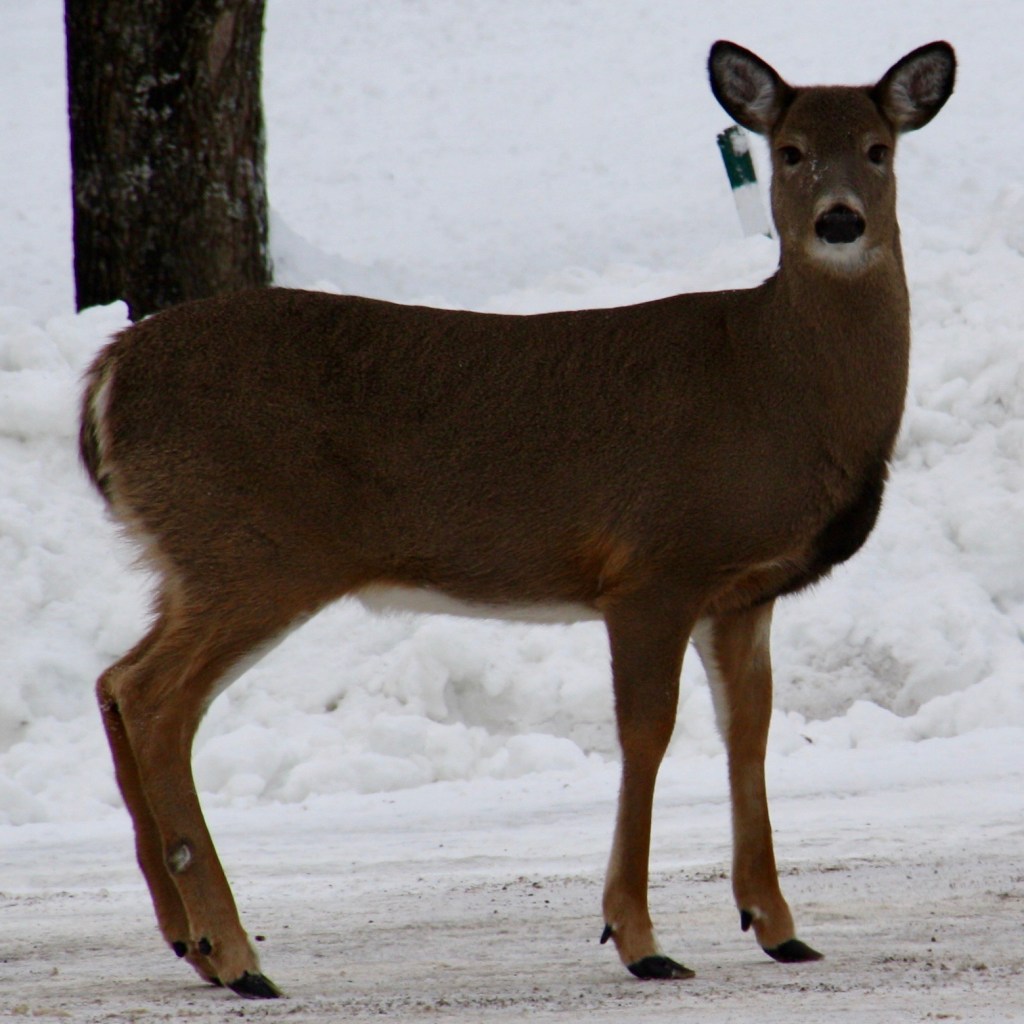
Indeed I do. And sometimes, just like this Wapiti, or White-Tailed deer, they see me as well. Some are camera shy. But this one, caught one morning walking past my garage door, heard the click of the first camera shot, stopped, turned towards the sound, then kindly waited until I had shot him, in the only way I would ever shoot a wild animal, with my camera. Isn’t he a handsome fellow – very photogenic.

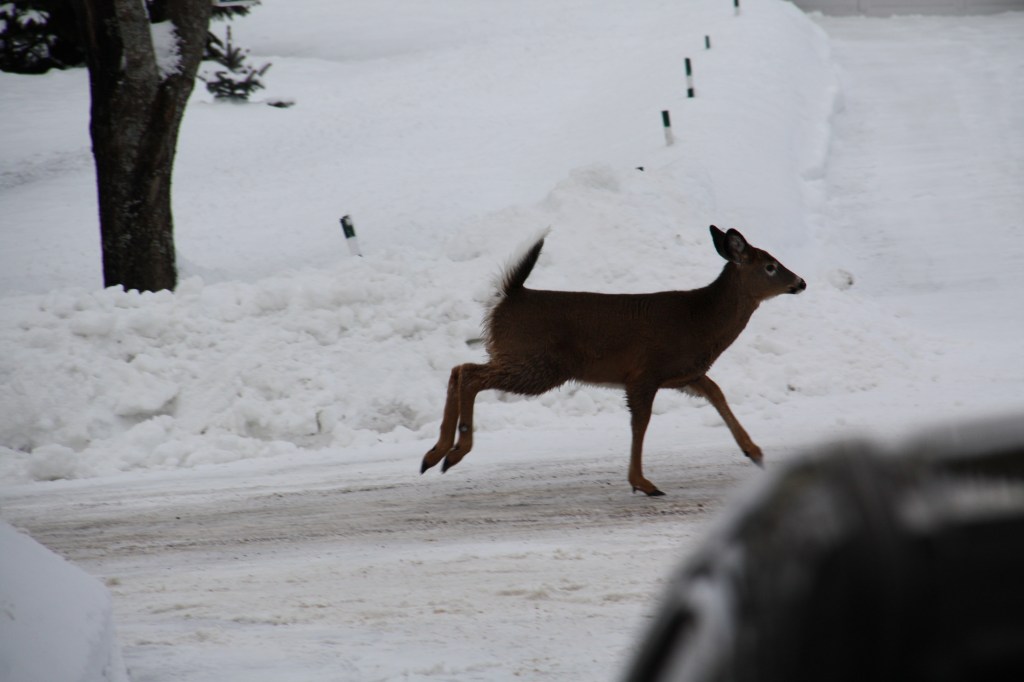
Some of the animals that pass through our yard do not seem that wild. This one lay down for a little rest about forty feet from the house. Early morning light, not easy to shoot, but he sat there and waited for me. Alas, I was using a camera with a laser focus and the red flash of the light disturbed him. I didn’t mean to do so. Whoops – there he goes, tail-up and now you know what they mean when they say ‘high-tailing it’ out of the woods and up the road.

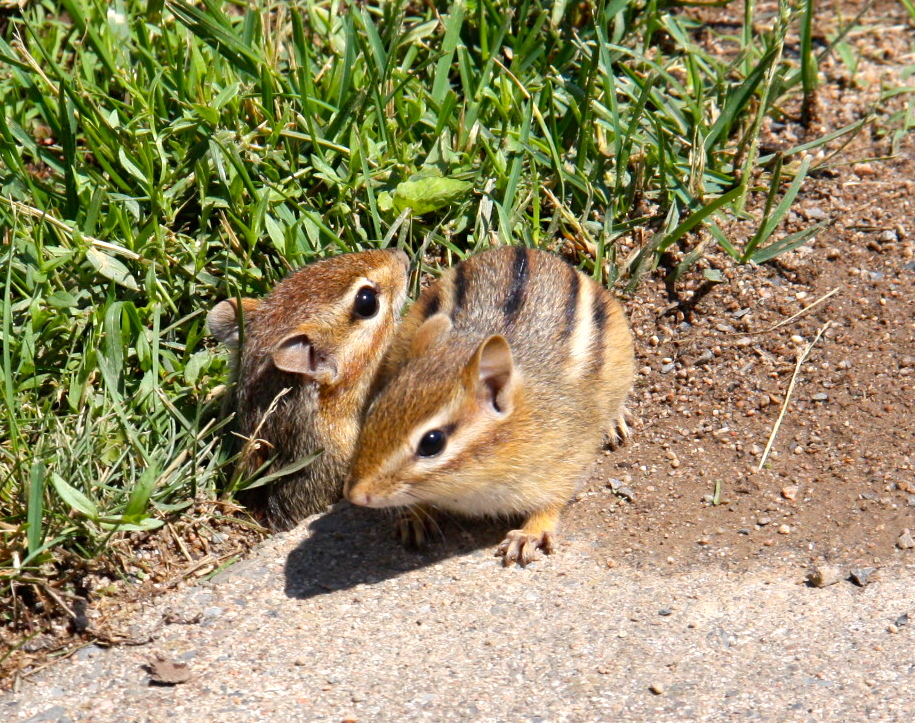
And what about the chipmunks, and the squirrels, and the skunks, and the raccoons, and the jack-rabbits, and the porcupines? They all drop in from time to time. Look at this happy couple. Aw! Aren’t they sweet?

And don’t forget the birds – but give us another prompt – all about our feathered friends -and we’ll talk about them next time

Do you have a favorite place you have visited? Where is it?

Daily writing prompt
Do you have a favorite place you have visited? Where is it?

Do you have a favorite place you have visited? Where is it?

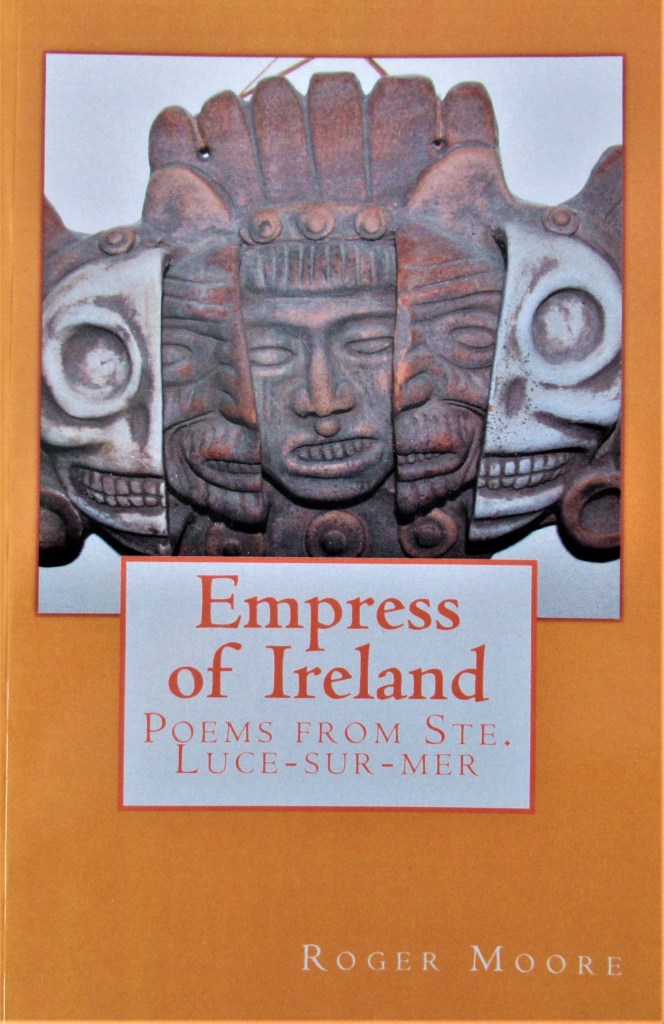
Just one place? So difficult to choose. I have been very lucky in my travels. I haven’t gone far, but I have tried to go deep, returning to the same places again and again. One place I often visited was St. Luce-sur-Mer in Quebec. It is a wonderful little town on the banks of the St. Lawrence River. The sunsets are sheer marvels and the views of the Northern Lights across the bay are just outstanding. Site of the wreck of the Empress of Ireland, it is filled with mystery and memories, as is the nearby Rimouski. Ste. Luce sur Mer would be my third choice.

Oaxaca, Mexico, would be my second choice. The city itself, capital of the state, is packed with history. I taught there for a couple of weeks (maximum six) every year from 1995-2001 and every time I returned I found something different and more mysterious. The dancing and music in the capital, the cascades of fireworks flowing down the facade of a church, the Christmas Cribs that grew day by day as people added to them, the incredible food, and above all the people – dancing in the Zocalo on Sundays to the music of the State Orchestra, crowding the markets with color, and the markets themselves, the scents of peppers, coffee, chocolate – to visit Oaxaca, in those days, was to visit the heart of Mexico. Imagine sitting beneath the tree that Hernan Cortes had sat beneath when he visited Oaxaca just after the Conquest of Mexico City – Tenochtitlan – and talked to the Mixtecs and Zapotecs of the Oaxaca Valley. And the codices – wonderful – I cannot say enough in praise of Oaxaca.

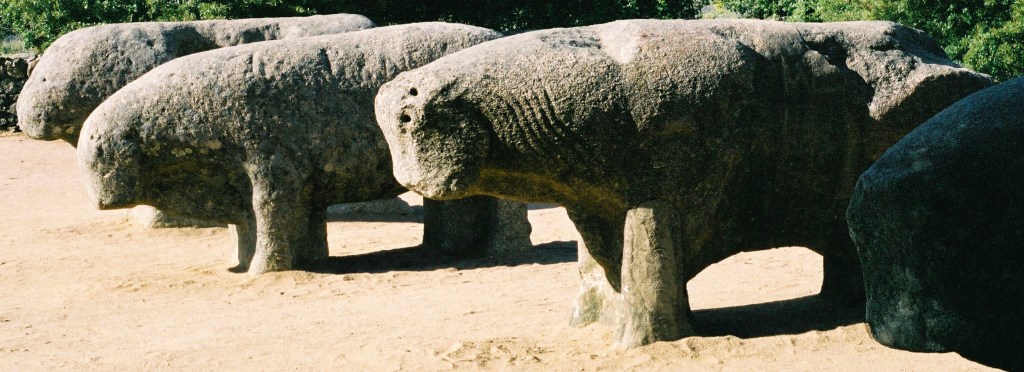
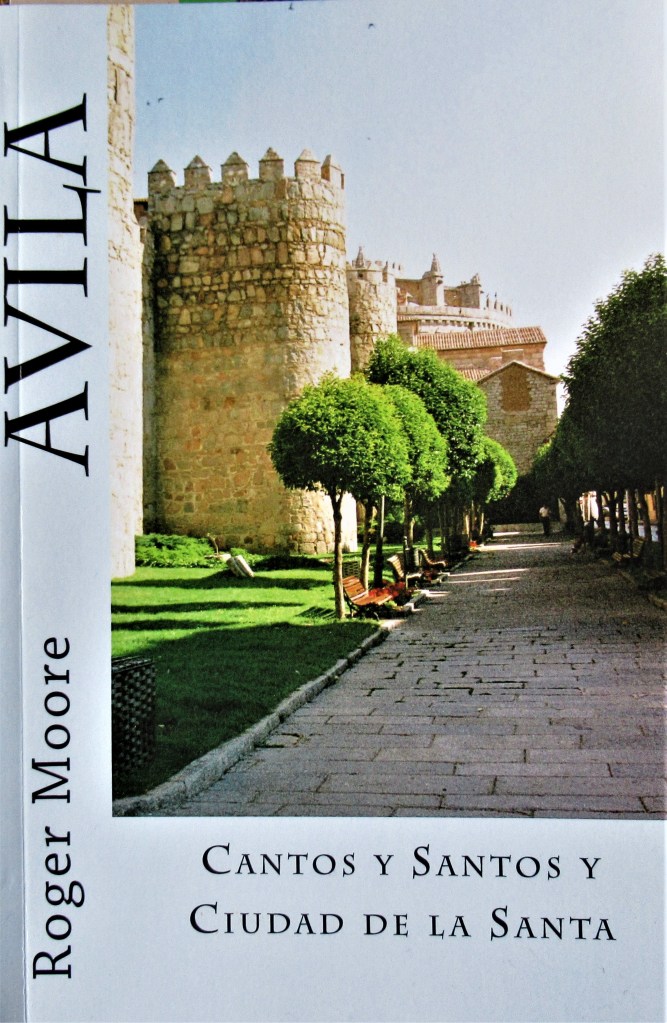
My number one choice: Avila. The lead photo shows the Toros de Guisando. Pre-dating Christianity, these four stone bulls – verracos – were often used as boundary markers by the Vettones who lived there before the Romans. One of these four bulls bears, carved into its side, the marks of one of the Roman Legions that passed this way. The countryside around Avila has to be seen to be believed. The walled city itself is a wonderland – three kilometres of walls, 9 gateways, a Cathedral that shows an enterprising mixture of styles, museums, libraries, squares, and a welcoming people who make you one of the family. I visited here for four summers, 2005-2008, staying for between 6 and 8 weeks on each visit, and always residing in the same place, El Rincon, close by the Mercado Chico.

What is one thing you would change about yourself?

Daily writing prompt
What is one thing you would change about yourself?

What is the one thing you would change about yourself?

Only one thing? I remember a story about a boy who boarded in a monastery school, and there, like the monks, they all changed their dirty habits once a week. So, is a dirty habit a thing? Probably is, if its a brown, sackcloth habit, tightened around the waist with a white cord by a man wearing open-toed sandals and no socks. So, there we go, once a week, on Wednesdays, like those monks, I also change my dirty habits. I also change my shoes, my socks, my shirts, my sweaters, my jeans.

More important, as I grow older, I have permitted myself to change my mind as often as I like. So, yes, I also change my mind, and not just on Wednesdays. And I really do change it when, like my habits, it gets dirty. “Oooh, you’ve got a dirty mind, you have.” “Well, so I do. Never mind, I’ll just go and change it.”

“What did Big Ben say to the Leaning Tower of Pizza?” – I’ve got the time, if you’ve got the inclination.
“How many ears did Davy Crocket have?” – Three – a left ear, a right ear, and a wild front ear.
“What’s yellow and deadly?” – Shark infested custard.
“What’s black and deadly?” – A crow in a tree with an AK47.
“When is a door not a door?” – When it’s a jar.
“What time is it Eccles?” – “It’s eight o’clock.” “Here, how do you know it’s eight o’clock?” “I’ve got it written down on a piece of paper.” “What do you do if it’s not eight o’clock?” “I don’t look at the paper.”
“Ding-a-ling” – That’s my ear ringing. I’ll just pick it up and answer it.
“What’s the first sign of madness?” – Hairs in the palm of your hand. “What’s the second sign of madness?” – Looking for them.

So what is one thing I would change about myself? Possibly the absolute necessity to tell awfully bad jokes. Easy to say – I’ll probably keep adding to these as I remember more of them. Take care – you have been warned.

“How many – men – does it take to change a light bulb?” – Five. One to hold the bulb and four to turn the ladder. Jokes like these can be good or bad. Good because they are occasionally funny. Bad, because it so easy to insert an adjective before – men – and to turn the joke into something more devious and not necessarily very pleasant.

“And that is the end of the gnus,” said the lion on BBC television, as he licked his paws. “Enough, no more. It is not as sweet now, nor as sour, as it was before. Pass the chow mean, please.”