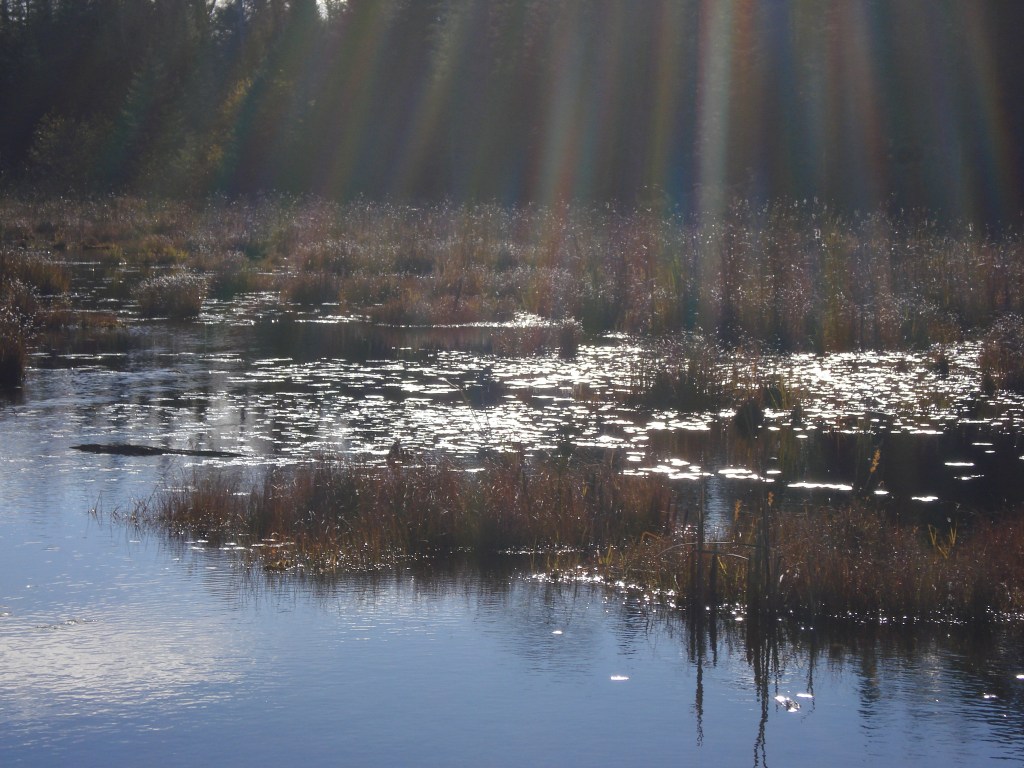
Water

Water

Here, in Island View, my lawn’s parched grass
longs for water, long-promised but never drawing near.
Do my flowers remember when the earth slept without form
and darkness lay upon the face of the deep?

The waters under heaven gathered into one place.
When they separated, the firmament appeared.
Light sprang apart from darkness
and with the beginning of light came the word,
more words, and then the world …

… my own world of water in which my mother
carried me until her waters broke
and the life sustaining substance drained away
throwing me from dark to light.

In Oaxaca, water was born free, yet everywhere
lies imprisoned in bottles, in jars, in frozen cubes,
its captive essence staring out with grief-filled eyes.

A young boy on a tricycle pedals the streets
with a dozen prison cells, each with forty captives:
forty fresh clean litres of drinkable water. He holds
out his hand for money and invites the villagers
to pay a ransom, to set these prisoners free.

Real water yearns to be released, to be spontaneous,
to trickle out of the corner of your mouth,
to drip from your chin, and fall to the ground.

It is a mirage of palm trees upon burning sand.
It is the hot sun dragging its blood red tongue across the sky
and panting for water like a great big thirsty dog.

Sweet Dreams

Sweet Dreams

Amnesia fades in these amniotic
waters, moving in time to the water pump’s
heart beat. I close my eyes. Nothing is the same.

Do I drift dreamily or dreamily drift?
The tub’s rose-petals bring garden memories:
primrose, bluebells, cowslips, daffodils dancing

sprightly in Blackweir Gardens or Roath Park,
beside the lake or along the gravel paths
where we used to bike, so many years ago.

Photos float before me, pictures of moments
I alone recall. Spring in Paris, the trees
breaking buds along the Champs-Élysées.

Santander in summer, walking the Piquío,
Segunda Playa, beneath the jacarandas.
Winter in Wales, up in Snowdonia where,

on a Relay Run to Tipperary,
I ran down a valley between high hills,
on a freezing night, with only the stars

to keep me company along a ribbon
of road. Autumn in Mactaquac. An orgy
of gaudily painted trees, leaves floating

on this first chill wind, to perch like sparrows,
on my beloved’s hair. The look in her eyes
as I catch a falling leaf and put it in
her pocket to save it for another day.

Going Back

Going Back

Nothing will ever be
as it was before.
Time, like water,
like these people marching,
constantly flows.

It trickles through my fingers,
uncatchable,
unstoppable sand
filtering through
the hour glass’ waist.

You cannot walk
in the same river twice.
Water flows, currents shift,
rocks wear down,
banks crumble and fall.

However hard I try
I cannot recapture
that first, fine, careless rapture,
the touch of that first
drop of river water.

Kneeling by the river bank,
like St. Kevin and the Blackbird,
I cannot recall
the river’s name.

Sciatica

Sciatica

There is no science to sciatica,
just a series of sensations
most of them involving pain.

I don’t know how or when it comes,
but one day, it knocks on your door
and you clutch back and buttock.

It’s like a hawk at the bird feeder,
flown in from nowhere to shriek
and shred, unawares, one small bird.

Was it the flannel I dropped yesterday
when showering?  I stooped to pick it up,
lunged forward, and that was it?

The pain came later. It kept me awake
all night, my worst nightmare.
No comfort anywhere. An endless

wriggling and every movement a knife
blade stabbing at my buttock and slicing
its slow, painful way down my leg.

The screws, my grandfather called it,
a metal screw screwed into his leg,
leaving him limp and limping.

I googled it today, sciatica, and they
suggested an ice pad for twenty minutes,
repeated twenty minutes later.

“Yes,” I muttered, “yes” and found
in the fridge the ice pack we used
to use in our Coleman’s cooler.

My beloved helped me undo my pants.
“This,” she said, “will be icing on the cake.”
“No,” I said, “it will be icing on the ache”

Tomorrow, I will call the chiropractor.
She will bend me to her will, straighten
my back, cure the pain, set me right again,
as long as Covid lets me in to her domain.

Lamentations

El Cristo de Carrizo

“Contemplate this crucifixion.
Each of your sins is a thorn
driven into His brow.

Each misdemeanor spears
the sacred side,
draws water and blood
from the open wound.

Your sinful deeds
drive nails anew
into hand and foot.

Christ lives in you.
Your misdeeds nail him
daily to the cross
He bears for you.

He hangs there,
open-eyed.

No death,
no resurrection,
just an everlasting suffering
from these nails
you daily drive.”

Comment: This poem is a very golden oldie. I wrote it in 1979 while walking the Camino de Santiago / the Road to St. James. I should add that this was long before it became fashionable to do so. I walked alone and, save for my thoughts, I was indeed very lonely. In fact, the long days walking, the solitude, got to me. I needed to talk, to meet people, and so, after long discussions with sundry people along the route, I determined to take the bus or the train to the main pilgrimage centres and to walk out from them in either direction. This allowed me to meet people, explore the towns with their churches, traditions, and museums, and to learn much more about the nature and art traditionally associated with the pilgrimage. In this fashion, I spent five days in Leon, two days in Hospital de Orbigo, a week in Astorga, another week in Ponferrada, and nearly two weeks in Santiago itself.

I wrote a collection of poems while I was studying the cities and the landscape. This particular poem is a summary of the conversation I had with the old priest, determined to convert me to Catholicism, who introduced me to the Cristo de Carrizo, in Leon.

In 1613, Francisco de Quevedo, the Spanish poet on whom I wrote my doctoral thesis (Toronto, 1975) wrote a collection of heartfelt mea maxima culpa poems dedicated to his aunt. It bore the title of El Heráclito Cristiano / The Christian Heraclitus.  This in turn was based on an earlier cycle of poems, Lamentaciones de Semana Santa / Lamentations of Holy Week (1601), which Quevedo appears to have written following the Spiritual Exercises of Saint Ignatius of Loyola.

These spiritual exercises consist of a set of contemplations based on the Stations of the Cross, Via Crucis, in which the contemplator meditates on each of the moments of Christ’s torment and suffering leading up to his death by crucifixion at the end of Holy Week. The purpose of the exercises is to try and recreate in the mind of the contemplator the sufferings of Christ, to imagine his pain, and to feel his suffering at a personal level. This is an act not only of contemplation and contrition, but also of purification of mind and spirit.

This year, during Holy Week (from Palm Sunday to Easter Sunday and the Resurrection), I attempted to follow in the footsteps of Quevedo and to contemplate the current world situation and my own specific situation, as influenced by the lock down in New Brunswick instigated on account of the Corona Virus pandemic.

Lamentations for Holy Week, then, is my attempt to examine myself and my own conscience at a time of great personal stress, a stress that I share with all those who are infirm, frail, in ill health, alone, and getting on in years. These are the people most affected by loneliness and the threat of the pandemic to our lives.

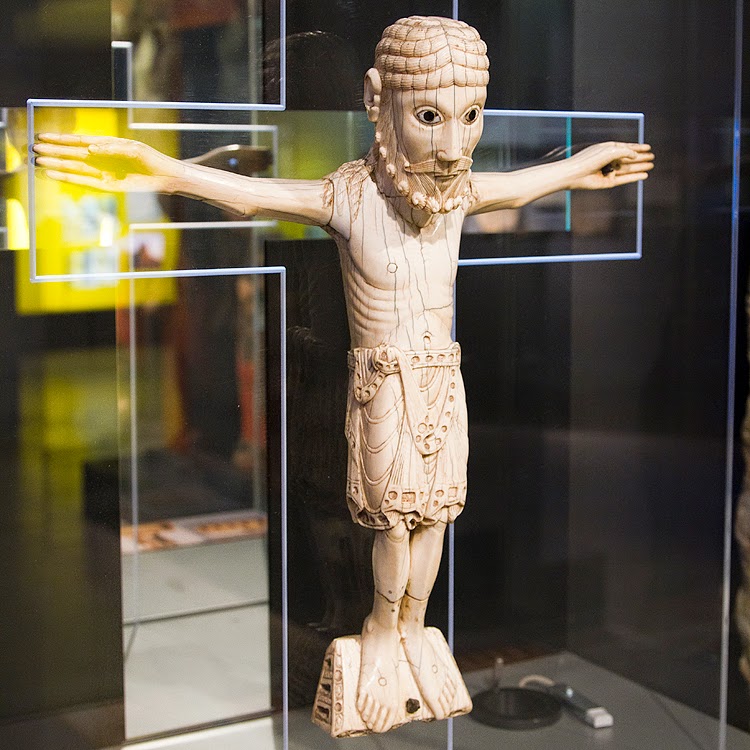
The Cristo de Carrizo is a hand-carved ivory cross, Mozarabic in origin. It shows Christ, on the cross, with his eyes open, looking at the viewer. Christ is not dead, in this crucifixion, but very much alive, and suffering. Image taken from Wikipedia.
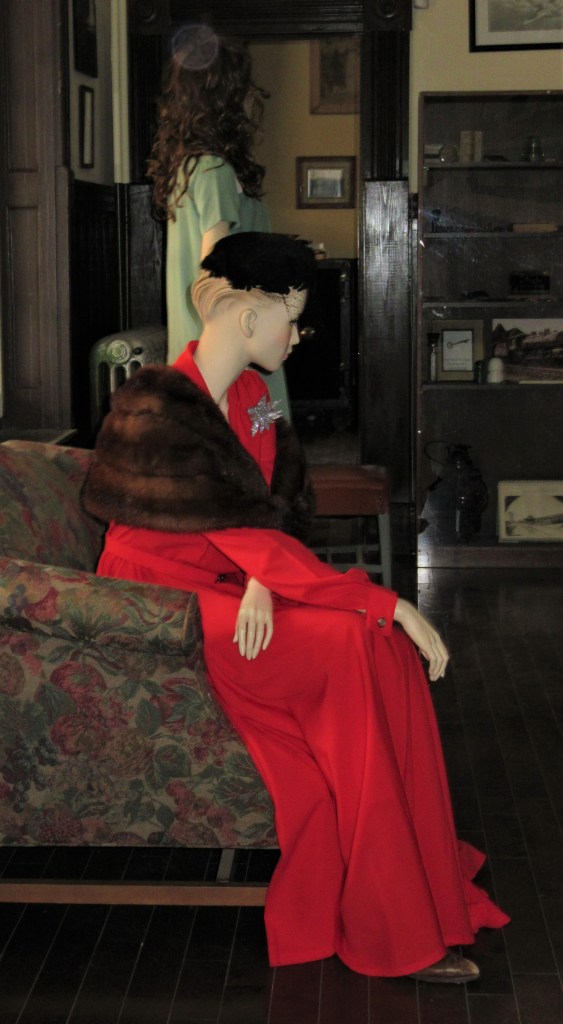
Co-[vidi]-s

Co-[vidi]-s
17 March 2020

Time changed with the clocks
and my body clock
is no longer in sync
with the tick-tock chime
that denounces each hour.

Hours that used to wound
now threaten to kill.
They used to limp along,
but now they just rush by
and I, who used to run
from point to point,
now shuffle a step at a time.

Around us, the Covidis
thrives and flowers.
Wallflowers, violets,
we shrink into our homes,
board up the windows,
refuse to open doors.
We communicate by phone,
e-mail, messenger, Skype.

Give us enough rope
and we’ll survive a little while,
fearful, full of anguish,
yet also filled with hope.

Pioneer Sky

Pioneer Sky
04 September 2020

Just when I think that life
has become meaningless
I look up at the Pioneer Sky:
celestial blue for hope,
white clouds for purity.

Sky and clouds float side
by side in the beaver pond.
When the walking trail
became so popular,
they abandoned their lodge.

They moved to another pond,
lower down than this one,
and there, where fresh milkweed
grows, they built another dam
and a brand-new lodge.

The great blue heron still
stands on guard, patrolling
his usual watery haunts.
When my beloved draws near
he cracks his wings open.

He searches for solitude
in untroubled waters,
weaving his wary way
between white and blue skies
mirrored in the pond below.

Where’s Home (2)

My home for 31 years

Where’s Home (2)
Part II of an open letter to Jan Hull

I ended yesterday’s letter with the words “There is a brighter side too, and I will get to that another day.” This is the day, and the brighter side is the sacredness of place. The Celtic Nations believe strongly in the sacredness of place. In the old religions we believed that places held spirits who dwelt in the rivers and streams, who lived in the trees and the orchards, who were a large part of the spirit of place and sacred space. You can still read some of this innate pantheism in The Chronicles of Narnia. Irish, Scottish, Welsh, French … we all have Celtic roots and, like the First Nations of Canada, we still believe in the sanctity of the land. This is an old tradition and a worthy one. Not all great ideas were born in Western Culture post the Industrial Revolution. Many pre-date our so called modern culture. Some should replace it.

I believe very strongly in the power of place. Sometimes, turning a corner one day, we know we are home. This is the feeling that comes so strongly through the second chapter of your book, Jan. Yes, the Maritimes (NB, NS, and PEI) are home for many people. It is indeed their One Small Corner. their querencia. What is a querencia, you ask? Well, it is the place that calls you, the place in which you want to live, the place in which you want to die. And yes, in this time of pandemic, death is on all our minds: those twin realities, sickness and death. Neither is easy. These times are not easy. But they become easier for those of us rooted in our time and our place and, like it or not, the human being, male, female, or other, must live in a dialog with their own time and place. This is the chrono- (time) -topos (place) of the Russian Philosopher, Mikhail Bakhtin.

Life is so much easier when we are in our own beloved space. When we are out of it, away from home, down the road, that is when we suffer most, Sometimes we are still able to flourish. Oftentimes, we wither and perish, like leaves on the tree. You, in your book, Where’s Home?, have offered us a glimpse of what that one small corner, the province of Nova Scotia, means to your correspondents and the ones with whom you have held dialog. We are all of us richer for that experience. Thank you, Jan, and on all our behalves, mine particularly, please thank your contributors.

One Small Corner

 And this is the good thing,
to find your one small corner
and to have your one small candle,
then to light it, and leave it burning
its sharp bright hole in the night.

 Around you, the walls you constructed;
inside, the reduced space, the secret garden,
the Holy of Holies where roses grow
and no cold wind disturbs you.

 “Is it over here?” you ask: “Or over here?”

If you do not know, I cannot tell you.

But I will say this: turning a corner one day
you will suddenly know
that you have found a perfection
that you will seek again, in vain,
for the rest of your life.

Flowers

Clare’s Birthday

I won’t allow her to sit here
with her head in her hands
fearing the future
or brooding on the past.

Every day we survive
is a bonus now, each sunrise
a celestial celebration.

We welcome daylight
with open arms and now,
on her birthday, we will
accept all gifts with joy.

Sunshine floods through us.
It fills us with joy and beams
like a beacon. A full tide
of love overflows in our hearts

filling our souls with sunlight
and red and white carnations.

The Champion

The Champion

There I was, in dreamland, half-asleep,
leaning on my cart, when this phantom drifted
towards me. “Help me,” it said. “I’m hungry.”

I woke up from my dream, looked at the ghost,
tall, skeletal, thin, cavernous eyes, cheekbones
protruding, gaps in the teeth, grey face drawn.

“Sorry!” My reply was automatic. I looked
at him again. “I only carry plastic.” The excuse
limped heavily across the air between us.

I saw something in his eyes, I knew not what.
As I walked away, I added one hundred pound
of muscle to his frame. He had played hard.

I remembered him holding up the Maritime Cup.
But I couldn’t remember his name. I pushed
my cart all over the store searching for him.

At the ATM I withdrew cash I could give him.
I would tell him he had dropped it. I could invite
him to the snack bar, buy him a meal and more.

I could tell him to buy what he needed and meet
me at the check out. I could add his purchases
to my bill. I looked everywhere. Nor sight, nor sign.

One opportunity. That’s all we get. Miss it, blow
the match. Grasp it, hold it tight, we’re champions.

Comment: “Am I my brother’s keeper?” “Or my sister’s?” Here and now we are living with realities that we have rarely faced before. Not everyone has kept their jobs. Some are indeed living out on the streets, helpless, homeless, panhandling, hoping. Right now they are lucky. Sunny, warm, hot … though sometimes too hot. At least it isn’t 40 below and freezing their butts off. So what do we do? Turn a blind eye? Say we are sorry? Suddenly recognize an old friend, turn quickly away before he recognizes us, and burn ever afterwards with shame?

I cannot answer for you. I can only answer for myself. I am ashamed of my slick answers, my throwaway negatives, my disguised barbs. “Go get a job.” There are no jobs, or very few anyway, Covid-19 has seen to that. “Do something useful, can’t you?” There’s very little they can do, and seemingly there’s very little can be done for them. “Go home!” They have no homes to go to.

So what are the alternatives? Love? Charity? Comprehension? Embracing their situation? Understanding? How can we understand, you and I, who sit before the computer screen, the cell phone, or the I Pad, scanning this in comfort? Think about it: there, out into the street, but for some good luck, and the grace of God, go you and I. Think about it. Now do you understand?