What major historical events do you remember?

Daily writing prompt
What major historical events do you remember?

What major historical events do you remember?

Interesting question, but very problematic. How do I define a “historical event”? What exactly do I mean when I say “I remember”? Max Boyce had a lovely song in which the chorus was “I wuz there.” If everybody who says they saw Llanelli defeat New Zealand in 1973 at Stradey Park had been there, there would have been 300,000 people pressed into a ground that held about 15,000. But, as Max Boyce sings, “I wuz there”. Well, in spirit, anyway, and I have seen the film several times. I also remember watching Jim Laker’s 19 wickets in the 1956 cricket Ashes. I watched that match on B&W TV. Does that count as an historical event that I remember?

How about the Battle of Hastings, 1066? In 1966, I ran in a road relay that led from Bristol to Stamford Bridge, where Harold defeated Harald Hadrada, down the main highway to The Trip to Jerusalem, where we stopped for a pint, down to Hastings, where we re-enacted the battle that saw William the Conqueror take the throne. Several of the runners wore Saxon uniforms, a couple even had long, blonde hair. We re-enacted two battles. Does that mean I remember that historical event?

Let us talk about Stonehenge. I first went there when there were no railings, no fences, and when sheep and cows could safely graze. I remember it well. And I remember creatively re-constructing, with my grandfather, the digging of the post-holes, the raising of the stones, the transportation of them, by ship and log rollers, from the Prescelli Mountains in Wales to their current resting place. As Max Boyce says, in my own mind, I was there. I was there too at the destruction of Maiden Castle. The first book I ever bought, age about six, was Sir Mortimer Wheeler’s autobiography, Still Digging. I can still feel that Roman ballista arrow going through the victim’s backbone. Does that count as a memory, as a presence, as a moment of reality?

The Conquest of Granada, the Expulsion of the Jews from Spain, the later expulsion of the Moors, the Adventures of Don Quixote, the mixing of truth and reality, the questioning of authority, the inquiry into the meaning of meaning, my mother’s sister phoning me after 9-11. “What’s all the fuss about, Roger? There were only three planes. We had them every night, over here, during the London Blitz, for two long years.” What impresses itself upon the human consciousness. How do we remember things and why? The Spanish Armada -there were actually three of them -, the Peninsular wars in Spain, the battles of Trafalgar, Vimeiro, Salamanca… Then we can move on to Vimy Ridge, Ypres – Wipers, as my grandfather called it, his days in the trenches, recounted to me, in the kitchen, day after day, in vivid, lived language that still remains with me. And he would sing – “If you want the whole battalion, I know where they are, they’re hanging on the old barbed wire.” Yes, I was there with my grandfather. I remember it well. The Battle of the Atlantic, the Hunt for the Bismarck, the Battle of Britain – I sat in the cockpit of a Spitfire, a long time ago, during the Battle of Britain celebrations, and I climbed into and walked around the interior of a Lancaster.

Memory and the reconstruction of historic events, some we actually lived, and some we just dreamed of, and some we saw at the movies. What is memory – an actual happening or a creative reconstruct? What is the meaning of meaning? And read Bertrand Russell’s book on the subject before you answer that one. As for me, I was there, standing beside Max Boyce, witnessing the game, though, as he says, “a hundred thousand in the ground, and me and Roj outside.”
What details of your life could you pay more attention to?

Daily writing prompt
What details of your life could you pay more attention to?

What details of your life could you pay more attention to?

I will be eighty next birthday. Sadly, I am aware that my life is moving slowly towards its endgame. The major pieces have left the chessboard and I, the King, shuffle forward, a step at a time, then one to the side, and sometimes one back, as my two faithful pawns age with me. The end is never far away at this stage of the game. One slip, one misjudgment, and it’s checkmate, mate. So – how to respond to today’s prompt?

Quite simply, I am now paying more attention to my death than to my life. I have already updated my will, and I have given power of attorney to a person I trust. I have spoken with my financial adviser, and he has given me a Will Companion. It contains a whole series of details to fill in – bank accounts, passwords, online contacts, clubs, societies, social media, precious objects, and, last of all, a page of funeral instructions. That was an eye-opener – everything from funeral home, instructions for service, cremation of burial, plot number or scattering, church, financial arrangements – well, I didn’t panic, but wow, it made me feel very uncomfortable.

In the first 24 hours after my death, someone will have to make between 40 and 70 decisions, all impacting the manner of my departure. If I want things done the way I want, versus the way they might happen, and if I want to choose burial vs cremation, order of service, hymns, obituary, family friends, acknowledgements, then – according to those who know – I should be doing it now. So, big decision, I went online and studied the recommendations of my local funeral home.

I have already filled in several online pages of forms and I have asked them to contact me, which they will do soon. Then we will talk over all those details that I so desperately want to avoid. But death is inevitable. To face it and accept it and to prepare for it while I am still alive is the bravest and the best and the most sensible thing I can do. So, here I go, paying attention, while still alive, to the little details that will surround my death.

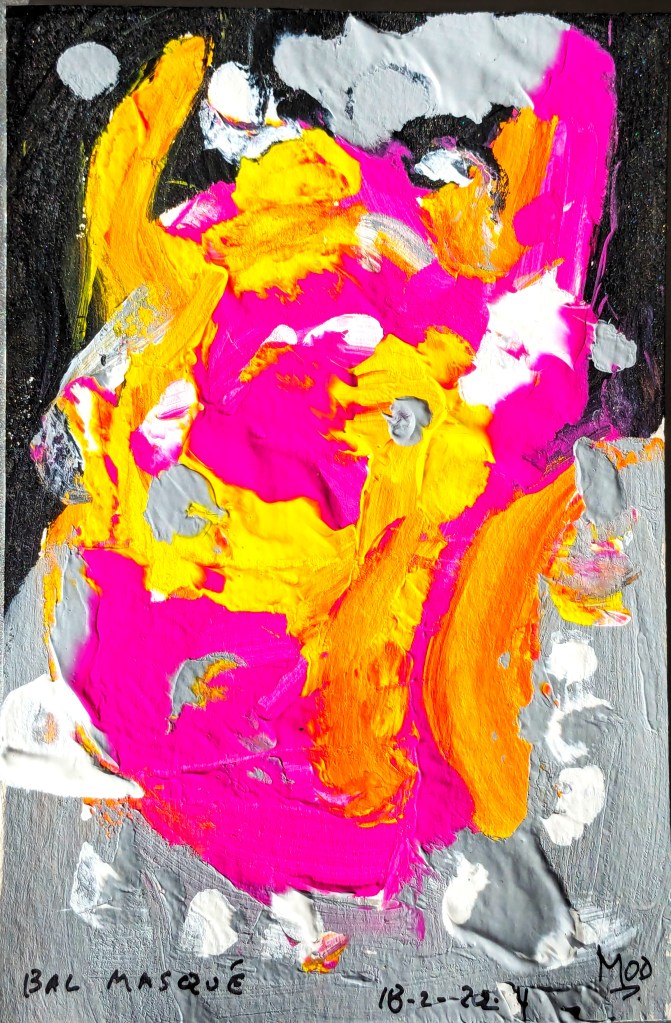
The inevitable? Yes. Above, in the opening photo, you can see a Mexican Death Mask. The small pearl at the centre is the seed from which the baby will grow. The seed is the round spot beneath youthful beauty’s nose. then comes wrinkled old age, and wrapped around is the white skull, the final beauty, which I will never see, but others may. Writing these words, I do not feel sad or gloomy. I have lived in Oaxaca, Mexico, and know the powerful, loving emotions that surround the Day of the Dead. I feel grateful that I have good friends to advise me and to stand by me and my family. And when, not if, the inevitable happens, I will have done my best to be prepared. Pax amorque.

Do you see yourself as a leader?

Daily writing prompt
Do you see yourself as a leader?

Do you see yourself as a leader?

First, I want a definition of leadership. Here’s one – Leadership is the ability of an individual to influence and guide followers or members of an organization, society, or team. Leadership often is an attribute tied to a person’s title, seniority or ranking in a hierarchy.

Let us begin with the last sentence. Leadership often is an attribute tied to a person’s title, seniority or ranking in a hierarchy. I am without a title, I have no seniority and, furthermore, I do not belong in any hierarchy. So, having nothing onto which to hitch my leadership, I am clearly not a leader. In addition, I can say, in all honesty, that I have no followers. Where on earth would they follow me? I have no wish to go anywhere, let alone to lead other people into the wilderness that so often surrounds us.

So, what am I, if I am not a leader under that definition. Am I a follower? I doubt it. I cannot remember following anyone in thought, word, or deed. A maverick, then? Possibly. All in all, I have always felt that, rather than ‘belonging’, I was outside the hierarchical cultures in which I found myself and was merely an outsider, looking in through the window and watching and observing others as they boldly led, or meekly followed.

So being neither a leader nor a follower, what might I be? Well, I am a creative person. I see the world in a very different light. I also encourage others to see things differently and to present different points of view while embracing their own authenticity. I see myself as an innovator. I see myself as a problem solver. But my solutions have all too often come up against the red taped inhibitions that bind those hierarchical cultures into their unbending, iron strangleholds that limit or deny fresh visions of truth and beauty.

I always remember a story my grandfather told me about one of his experiences during WWI. “See that pile of sand over there?” “Yes, Sarge.” “Well, move it over here.” “Yes, Sarge.” “Right. Well done. Now move it back again.” “Yes, Sarge.”

Ah yes, leadership. And in those days to disobey a direct order was to volunteer yourself for ‘forty days in prison’ or ‘back to bread and water’ or, even worse, to qualify you for a blindfold and a firing squad.

Are you holding a grudge? About?

Daily writing prompt
Are you holding a grudge? About?

Are you holding a grudge? About?

I have reached the stage in life when grudges belong to a distant past. Some of that past I still regret, but I have come to accept most of it as the normal rites of passage through which human beings must pass, if they are to grow and develop. This acceptance also comes from the understanding that the steps that led me to my current life and situation, were beneficial, even when I didn’t think they were at the time.

Garcilaso de la Vega once wrote: Cuando me paro a contemplar mi estado / y a ver los pasos por do me ha traído, hallo, según por do anduve perdido, que a mayor mal pudiera haber llegado. The Wikipedia translation offers us this – When I stop to contemplate my state and see the steps through which they have brought me, I find, according to where I was lost, that it could have come to a greater evil.

That said, I have learned to see the lesser evil in things that actually happened and the greater evils into which I might have fallen. I remember bearing grudges, but I feel that I have now set them aside. Reading John O’Donohue’s book Anam Cara, for the fourth or fifth time, has helped me to achieve that state of mind.

Some things do annoy me though. Speed reading is one of them. Well, not speed reading but the application of speed reading to any and all situations. In today’s Guardian, for example, I read that – “A lot of people, myself included, complain that they don’t have time to read but everyone has time to read a poem. You can read Ozymandias, for example, in just 17 seconds.”

One of the first things that I did in Grad School at U of T was to take a speed reading course. I found it absolutely essential in order to read and process the quantity of new material that was thrown at me by my profs. In my undergraduate education (Bristol University) I was told that “It is better to read one poem a hundred times than to read a hundred poems once.” As a poet, and a student of poetry, I prefer to dwell on a poem, to absorb its essence, its meaning, its subtleties, its associative fields, rather than to gulp it down in 17 seconds, for example, and then move on to something else. The poet and dreamer who live within me need that time to re-create, poeticize, and dream.

“What is this life if, full of care, we have no time to stand and stare, no time to stand beneath the boughs and stare as long as sheep or cows,” wrote W. H. Davies, author of Autobiography of a Super Tramp.

I realize just how much our lives have speeded up, how we are inundated by information, how we drown in sound-bytes, memes, and mini-clips. I also know that, however fast we read, we will never take it all in, not in one lifetime. Sometimes, less is more, slower is faster, we need to take time, to make time, to stand and stare. Seamus Heaney expresses it well – “Some time, take the time…” I don’t hold a grudge against those who can’t, or won’t, make and take that time. But I truly believe that many, many people would benefit by doing so. I also believe that a benevolent society would allow many more people to do just that.

Meanwhile, I will agree with the Guardian columnist that reading a poem in 17 seconds is much better than reading no poetry at all. So, some time, take the time….

What change, big or small, would you like your blog to make in the world?

Daily writing prompt
What change, big or small, would you like your blog to make in the world?

What change, big or small, would you like your blog to make in the world?

Looking around me and seeing the way that the world I know is so totally divided, and knowing that words and ideas will bounce off people’s backs like rain off a duck’s back, I do not expect my blog to make any changes, big or small, to the world. Would I like it to? Yes, I would. But whether it will or not is a different question.

My blog consists of several elements. Let us start with the poetry. If I can reach out and touch somebody with one or more of my poems, then I will be very happy. This is, after all, a poetry blog. And part of that blog is a continuing discourse on creative writing and poetic creativity. If one of my articles / posts on creativity can help one person, just one, to improve their creativity, then I will feel justified with all the hard work and thought I have put into the posts.

I also write about Discourse Analysis, the meaning of words and texts. In our current, doubt-ridden world, it is often the loudest voice that carries the most weight, and he wildest ideas that get the most attention. I always remember that still, small voice that comes after the fire and the thunder: “What doest thou here, Elijah?” Alas, I am not an Elijah, nor am I a prophet, nor am I out to make a profit. But if someone, somewhere, recognizes my voice as a still, small, voice speaking a little bit of sense in this wilderness of wild words, then I will be satisfied. My creative prose comes next. It is mostly composed of flash fiction, memoirs, and short stories. If I can bring tears or laughter to the eyes and the heart of just one reader, then again I will feel that I have done my work.

Then there is my art work. I have always been told that I am useless at art. Mind you, I think those people came from the same school of thought that told me, as a teenager, that I would never go to university – except on a train. However, I discovered Matisse and his words ‘making meaning out of color and shape’. Then came Dali – ‘I don’t know what it means, but I know it means something.’ Out of those words have come cartoons and paintings, some funny, some sad, and all of them unique. Again, if one reader / viewer finds joy in them, then I will be happy. And if my own work persuades one battered, belittled artist that he or she can paint, create, make meaning out of color and shape, then I will have achieved the minor miracle of helping to change someone’s life for the better.

As for these prompts, I have only just started to be prompted into doing something. Why? I am not sure why. I just think that I have a different view of the world from most people. If I can offer that alternative view of reality, a joyous reality, I might add, to one, or maybe even two people, then once more, I can feel that yes, my blog has made one, small change to the world around me. And I cannot ask for more than that.

Meanwhile, I think of the studies I did on the Spanish Civil War (1936-1939). The right kept moving further right. The left kept moving further left. The middle ground where discourse, creative thinking, and debate can flourish, slowly vanished. Then, when positions and thoughts became so deeply entrenched that there was no room for mainoeuvre / manouver / maneuver, whichever way you wish to spell it, then shooting broke out and people went to war and found, all too often, their often-violent deaths. I would not wish that fate on any person, government or country. If just one person would read that powerful and bitter history, and learn from it, then the world might be a better place.

To talk to one person at a time, that’s what I want from my blog. Then I want that person to talk to another person, and the third one to a fourth, and so on and so forth, until we have established, one person at a time, a linked chain that may, just may, be long enough and strong enough to help lighten the darkness and head off the dangers into which we seem to be steering.

Apologia

Apologia
pro vita mea

The fairground’s distorting mirrors distort.
I change as I walk past one and then another.

Rage, rage against that hump-backed shape
that looks back at me from the bottle-glass.

Magic: eye of a newt, eye of a toad, cat’s
eyes at night lighting the road to bed.

Bedlam all around me. Absurd this world,
gone carnival mad in the blink of an eye.

I need a white stick to walk through
this fog that clings to my clay-bound soul.

This wine I drink, these thoughts I think,
life’s fountain pen soon runs out of ink.

Watch the tides as they ebb and they flow.
When your time runs out, pack up, and go.

Comment: My friend Moo did himself proud with the above painting. What is it? I asked him. Dunno was his reply. I have shown it to several friends and speculation is rife: the dancer and the dance, dancer and diver, a blur of three figures, headless mermaid (I love that one). And yes, life is absurd (Albert Camus), a carnival (Bakhtin) in which knowledge is power and civilization is mad (Foucault).

Originality and imitation – how many genuinely original ideas are there? Very few. And the same goes for poetry – original poems are very rare. Most of our ideas come from elsewhere, even if we do not know it. The title of the above poem comes from Petrarch. It’s structure is traditional – a sonnet. Its ideas are borrowed from Camus, Bakhtin, Foucault. And yet, shuffle the cards (Cervantes) throw the dice (Mallarme’) and this poem and this post have both achieved a kind of originality and uniqueness by linking disparate ideas in a new unity.

Describe one habit that brings you joy.

Daily writing prompt
Describe one habit that brings you joy.

Describe one habit that brings you joy.

Creativity. I was told, a long time ago, that genius is 99% perspiration and 1% inspiration. When I started creating – poetry, mainly – I waited for the muse to arrive and lamented when she didn’t. Then I tried to force her to visit me – and that didn’t work either. Then, in 1985, I started a journal. I wrote in it every day that year and, as I wrote, I realized that most of what I was writing was gibberish. But – and it’s a big but – a few literary gems gleamed out from the rubbish. The question then became – how to recognize them. The answer to that has come more easily, the longer I have worked at writing. It’s not the muse who needs persuasion, it’s the artistic eye and mind that need to be trained so that they can see the creative art in the surrounding world.

Now, after 38 years of regular journaling – and I try not to miss a day – I can distinguish easily between art and rubbish. My poetic creativity, often via a streak of surrealism, has wormed its way from poetry, into poetic prose (short stories and novels), and from there into my style of quasi-surrealist, quasi-expressionist paintings.

Where is the joy? The joy lies first, in the work itself, the contemplation of the blank page, then the slow tidal flow of words that fill the empty spaces. Then comes the joy of recognition, followed by the joy of selection, followed by the joy of polishing, and eventually, the joy of publication. The same is true of painting. Here, the empty canvas, like a beach with the tide coming in, fills up with color and shape and, like Matisse, I try to make meaning out of those colors and shapes. Am I great artist? Of course I’m not. I’m a dibbler and a dabbler, unknown and unrecognized, but joyous in my joy of creating something that will stand, for a little while, against time’s rising tide.

Qué será

Qué será

Peace in the Peace Park,
here on the headland,
where cool grass slopes
down to the water’s edge.

Geese have nested close by
and gifted us with goslings.
Golden balls of fluff, they walk
on the land right now,
but soon will take to the water.

A thin, yellow line, they will
paddle behind their parents,
webbed feet invisible
beneath the water’s flow.

And I, in the metal coffin
of my over-heated car,
sit and watch them, envying
their freedom of movement,
waiting for whatever will come.

My beloved draws near.
I sense as much as see her,
as I covet her strong steps,
the ageless sway of her body.

Alas, I am growing old,
and not with any grace,
but fighting it all the way,
and qué será, será
is all that I can say.

Was today typical?

Daily writing prompt
Was today typical?

Was today typical?

So, I Googled the meaning of typical and here are some of the synonyms that appeared. Standard, normal, stock, representative, usual, conventional, characteristic, regular, orthodox. Following the meanings offered, yes, today was typical. Dark at midnight, dawn breaking about 5:30 AM, full sun by 7:30 AM, noon – dead on 12 o’clock, as usual. And so it goes on. The weather may change, but the basic structure of the days, although also cyclical, growing longer then shorter, in terms of daylight hours, does not change much. Therefore, yes, by this definition, it was a typical day. But was it?

For creative people, each day is different and each moment, minute, hour of each day is different. Creatives listen, observe, feel, touch, delve beneath the surfaces of things, and see things in a lateral multiplicity that means everything is evolving, changing, growing, decaying. Creative people look and listen (with or without mother). They imitate, and from that imitation they create and re-create. And creativity moves way beyond the standard, normal, stock, representative, usual, conventional, characteristic, regular, and orthodox. If it doesn’t, it’s not creative, it’s just standard, normal, stock, representative, usual, conventional, characteristic, regular, orthodox.

Was today typical? Well, it’s not over yet. But up until now, it has only been typical in terms of its intimate creative typicality. The light has changed with the changing sky and clouds. Rain fell, and changed the tones of the colors around. The light changed, but so did the scents that arose from the warm earth with its carpet of grass and the tarmac and concrete, its heat suddenly cooled. The ground glistened, spider-webs sparkled, birds sang when the sun returned, flowers tossed their heads, in slightly different ways from yesterday, when the wind was warm. Now, damp and shining, their dance-steps and rhythms also changed. Now the world is wet. The trees are waving their fans and have caused a slight wind to arise and rustle their leaves. This day is full of creative magic – but only for those who have ears to hear and eyes to see. For too many people, alas, yes, this is, after all, just another typical, humdrum, boring old day. As W. H. Davies wrote: “What is this life if, full of care, we have no time to stand and stare?” Creatives make that time – and they live among the blessed.

Words of Wisdom

Words of Wisdom

“You can’t write about life if you haven’t
lived it.” Words of wisdom from the poet
who wrote The Old Man and the Sea.

“But,” I hear you say, “what did he know
about writing? He never took any courses
that taught him how to write, nor held a certificate
from a prestigious school that guarantees quality.
Nor was he a poet, he only wrote prose.”

And yet, the prestige of that ivy-covered,
ivory tower leads poets… I pause for a moment…
– to where exactly? Into debt, of course, and also
down the paved path of their own destruction.

What kind of life do they live, those writers,
who only exist within their cerebral boxes,
and never step outside them unless they are
ordered to build an even bigger box?

Have they walked with street-walkers in Madrid?
Have they sat beside the poorest of the poor,
in Oaxaca, shivering in thin cotton clothing
beneath falling snow? Have they visited Madrid’s
Plaza de España, stepping high to avoid the blunt,
bloodied needles, shared, to take away the pain?
Have they pan-handled in Yorkville or slept
in sleeping bags, by the Royal York, in the snow,
at 40 below, on the gratings above the Subway?

“The unexamined life is not worth living,” some say
Socrates said. But what I think is ‘the unlived life is
not worth examining.” Tear down the walls that
inhibit and limit you. Go out into the world and see
what others see and feel. Only then, come back,
stab your pen into your veins, fill it with your blood,
and set before us what was done to you, what you
experienced, how you survived, and what you felt.

Comment: Once again I thank my friend Moo for his illustration – Building Bigger Boxes. It goes well with the theme of this rant, or is it a poem? A verbal rant to echo a visual rant, perhaps, or vice versa.