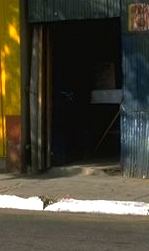
I buy two liters of white mescal, cheap and rough, without the second brewing: fire water, not smooth. Two liters: she sells them in an old Coke bottle she’ll seal with cellophane, and a rubber band. Six worms I buy. Bedraggled fighters dragging smoky trails as they plummet through a yellow sea.
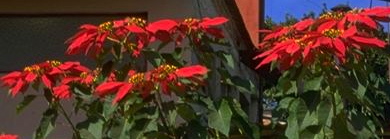
In the shop next door I buy poinsettias. When I get home, I put them in a vase and watch them, red-eyed, watching me. Bloodstains scratching a white-washed wall.
Misshapen gems in a ceramic prison, their beauty breaks me down: a fragmented world, decimated words, metaphors born from worms and mescal.
The eyes I see are not eyes because I see them: they are eyes because … twin brown ovals … they watch me as they float in a liquid mirror within the upraised glass held by my hand.
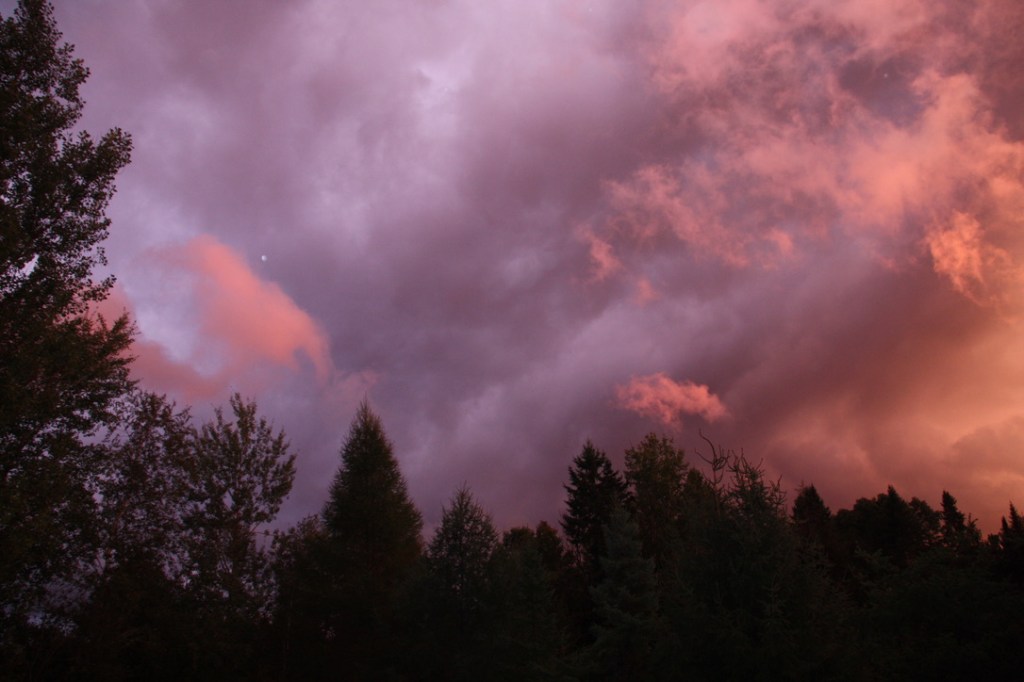
Outside, beyond the balcony, sun -blood melts like sealing wax. The bougainvillea strains sharp stains through a lonesome slice of sunlight giving birth to flamboyán and tulipán.
My lemon tree leans over to listen. Glistening pearls of dew embellish its morning throat. Christmas decorations these postage-stamp minstrels, thronging each branch, filling me with song.
Butterflies, winged flakes of archaic paint, flutter from temple walls leaving them barren. Church towers, strong when terra firma shakes, quiver insubstantial. Mescal melts the morning, a miracle, this quiver of shimmering air.
March 1 is St. David’s Day: Dewi Sant, patron saint of Wales. While we are here, immersed in cold and snow, in Wales, spring is arriving, the daffodils are out, trees are budding. This poem is a reminder that winter will end and sunshine and spring will return. So for St. David’s Day, I wish you joy and hope.
Earth to Earthlings
“Get out and about,” she told me. Take off your socks and shoes. Walk barefoot on the earth and grass: twin pleasures, you can choose.”
I took two canes, one in each hand, and left the house to walk the land.
In the garden I took off my shoes to walk barefoot on the lawn; when grass sprang up between my toes I was instantly reborn.
I stood in the shade of the crab apple tree and let leaf and flower spill over me.
Sunlight took away my frown and freckled a smile on my face. I was blessed again with hope and light; earth and grass filled me with grace
When white blossoms filtered down they gifted me a flowery crown.
I stooped to reach my shoes and carried them home in my hand, maintaining as long as I could my contact with this magic land.
He knows the frogs are in there. He doesn’t need to hear them sing. But he loves to make them croak.
Croaking Angels
Their tunes are one note symphonies, croaks of joy that move their fellow frogs to ecstasy, exhorting them to share the splendors of ditch life, in a springtime bonding that will loft them skywards.
There’s an ancient magic in this calling: water and laughter, sunlight, warmth, and all those joyous things that fill the newborn spring.
Moonlight swings its cheerful love lamp. New leaves and buds are also known to sing.
Comment: This always makes me think of the croaking chorus from Aristophanes. I do hope all those wonderful ancient plays, songs, myths, and legends are not forgotten in our croaking frog chorus of modern jingoistic advertisements and propaganda. Ah well, what’s a source for the proper goose is probably a source for the proper gander. Who knows nowadays? What we do know is that spring is just around the corner. Warmth and the absence of snow will help change our lives. And yes, that croaking chorus will be back.
Diagnosed with a terminal illness that I also call life I know this sickness will surely terminate in my death.
Death: it has walked beside me for more than seventy years. It has gazed back from my mirror, as I shave my face, and part my hair. It has lain its head on the pillow beside me as I lie in bed.
We have shared so many things: the soul’s dark night, the winding ways of life’s once infinite, now soon-to-be-ended maze.
Now, arm in arm, life, death, and me, an intimate ménage à trois, we are running a three-legged race while carrying an egg in a spoon and playing life’s ultimate game of chicken.
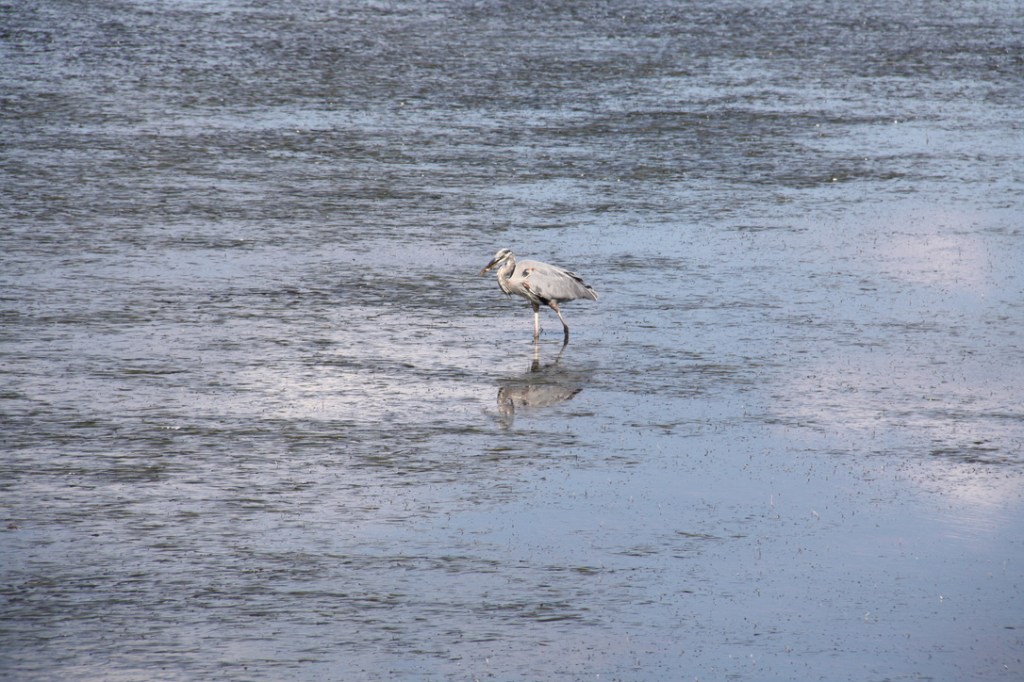
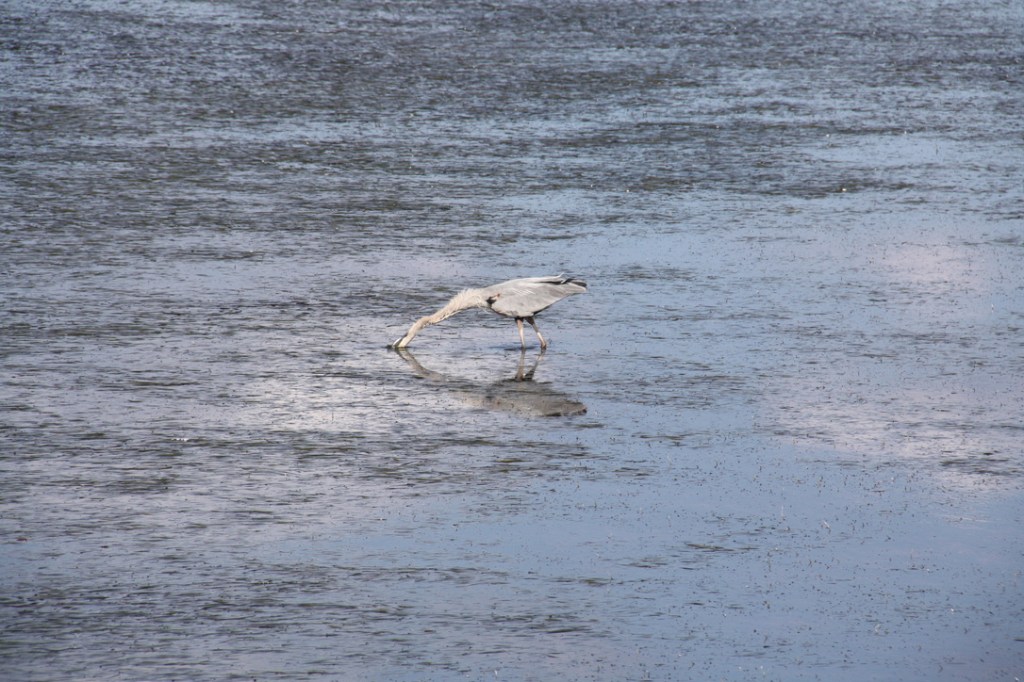
Comment: Look carefully at the second picture: you will see the fish he has just caught, sideways in his beak. These photos are from the bay at Alberton in PEI, taken about two seconds apart!
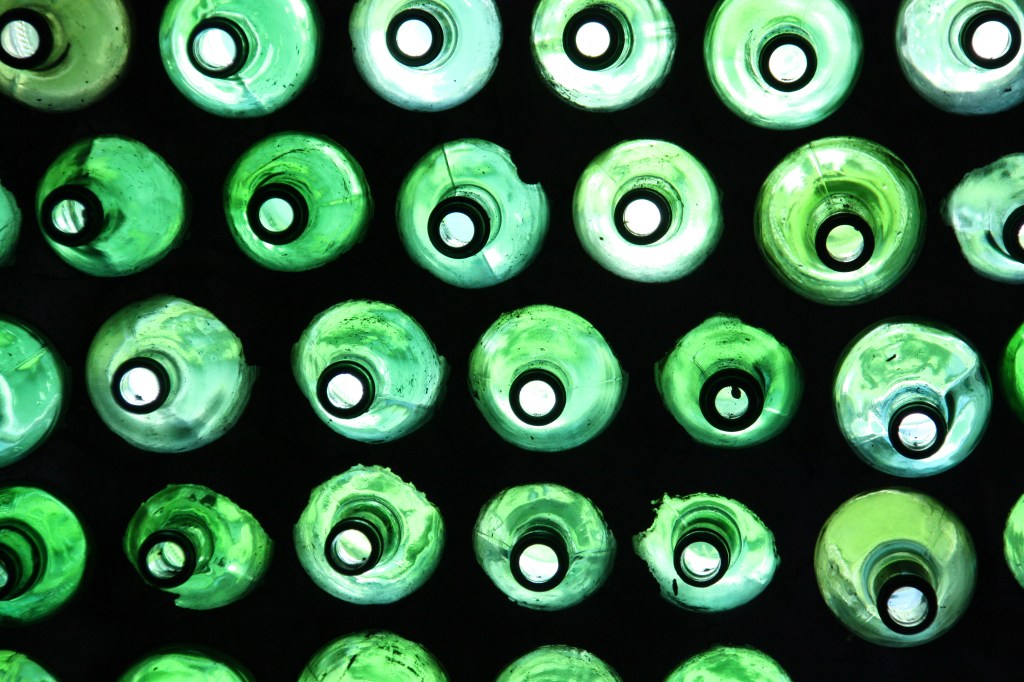
Light through glass, darkly: bottles set in one of the bottle house walls in PEI. The gardens are wonderful and well-worth a visit.
Bottle House, PEI The day begins with flowers: at the entrance, beneath the windows, flowers everywhere, a delicacy of scent. Beyond these flowers, even more flowers, then playthings in the garden: a child’s paradise, these sculptured faces, this glass among the trees, sun and shade, the fountain’s water, this dream of an old man, kept alive now by his children, a dream of health and sanity and peace out by the bay, where the mud red waters roll and the tide’s hand grasps at the land and pulls it down with watery fingers. Everywhere: faces and elements of faces: a nose, eyes, a mouth, open in surprise. Carved wooden faces, glass faces, pottery faces, flesh and blood faces, grandma’s face, grandpa’s face, then the grandchildren. Tourists travelling, old islanders returning to see family and friends, young islanders returning to visit the almost forgotten farms which their families worked a generation or three ago, before their exodus from the land. “This was grampy’s house!” they say or “that was my grandmother’s farm!” as if a life could be reborn in that pointed finger, those casual words. How many memories are snapped in each picture? How many lives are caught in this snapping of the fingers as the past is instantly summoned and perfection is bottled for a second or two in the magic of this house, this garden where the builder’s spirit roams. Sit still awhile. Be silent: you may hear him breathe, glimpse him, for a second, staking out the flowers, extracting a weed, checking the set of the concrete foundations, polishing a bottle, resting on a wooden seat, avoiding the slow snail on the path bejewelled by rain-drops from the trees or spray from the fountain. For where there are flowers, there must be water and rain and peace and happiness and all good things, glimpsed darkly through smoked glass yet grasped so smoothly in the sun’s bright light. This is the house of bottles, the glass house, where rough winds are shunned and the bottles are set in concrete. It is a museum of light and dark, the creation of sun and shadow as sunshine fails and the lighthouse’s flashlight beam reverberates from glass to stone and back again. Shapes, shadows, memories curved and carved in glass, set in glass, this shimmering beacon this glass house, this light house built as a heaven-haven for harboured ships and the soul’s refreshment, here, in these gardens, among these bottles, and at the chapel door, an angel-in-waiting.
Angel or fairy? It doesn’t matter. She was a gift one morning, when we visited. In this photo you can see how the bottles are set in the wall.
Early morning light in the Red Room at KIRA. Such a splendid invitation for the enlightened mind to write poetryabout the splendors of light.
Light
This fragile light filtering through the early-morning mind filled as it still is with night’s dark shadowy dreams their dance demonic or perchance angelic as light rises and falls in time to the chest’s frail tidal change the ins and outs of life-giving breath
Bright motes these birds at my morning window feathered friends who visit daily known by their song their plumage their ups and downs
they dazzle and sparkle cracking the day open with their joyous songs
Dawn from the window of The Red Room, KIRA, June 2017.
Daybreak
… early morning sunshine creepy-crawly spider leg rays climbing over window and wall my bed-nest alive to light not night’s star twinkle but the sun’s egg breaking its golden yolk gilding sheet and pillow billowing day dreams through my still sleepy head …
… the word feast festering gathering its inner glimpses interior life of wind and wave the elements laid out before me my banquet of festivities white the table cloth golden the woodwork’s glow mind and matter polished and the sun show shimmering its morning glory …
Comment: It seems like only yesterday, though three and a half years have slipped swiftly by. Each summer I am envious of those chosen to represent their artistic disciplines at KIRA. The joys of waking in the Red Room and of writing at the desk there will stay with me for ever. It was pleasure and a privilege. And still I live in hopes to see sunrise from the Red Room once more. This poem incidentally is from my poetry collection entitled One Small Corner. It was written at KIRA (Kingsbrae Gardens) in the month of June, 2017. One Small Corner is available on KDP and Amazon. Here is a link to the KIRA Video.
Different bird, same question: why? This one is from one of the beaches on the road to North Cape, PEI. Why, indeed?
Why?
In the mud nest jammed tight against the garage roof, tiny yellow beaks flap ceaselessly open.
The parents sit on a vantage point of electric cable, mouths moving in silent encouragement.
A sudden rush, a clamour of wing and claw, a small body thudding down a ladder of air to crash beak first on the concrete. “Why?”
“Wye is a river. It flows through Ross-on-Wye and marks the boundary between England and Wales.”
And the swallows perch on the rafters watching their fledgling as it struggles on the floor: the weakening wings, the last slow kicks of the twitching legs. “Why?”
“Y is a crooked letter invented by the Green Man of Wye.”
Comment: This is the original poem, written back in the eighties, wow, that’s forty years ago. I included it in my first poetry chapbook, Idlewood (published, 1991). It was a slim volume, dark green color, typed and photocopied, very humble, but MINE! A couple of years ago I wrote a prose poem, sort of flash fiction, in one of my Welsh sequences and included the story as part of the text. It came to me as a memory yesterday morning, and I posted it on Facebook. Here now is the story. Hopefully, you have just read the poem: I hope you liked it but, as I know all too well, de gustibus non est disputandum. I would like to know if you prefer the poetry to the prose. Please let me know, pretty please?
Why?
“Where are you going?” I ask. “To see a man about a dog,” my father replies. “Why?” I ask. “Hair of the dog,” his voice ghosts through the rapidly closing crack as the front door shuts behind him. “Why?” I cry out. I recall the mud nest jammed tight against our garage roof. Tiny yellow beaks flap ceaselessly open. Parent birds sit on a vantage point of electric cable, their beaks moving in silent encouragement. A sudden rush, a clamour of wing and claw, a small body thudding down a ladder of air to crash beak first on the concrete. “Why?” I ask. The age-old answer comes back to me. “Wye is a river. It flows through Ross-on-Wye and marks the boundary between England and Wales.” The swallows perch on the rafters watching their fledgling as it struggles on the floor, the weakening wing flaps, the last slow kicks of the twitching legs. “Y is a crooked letter invented by the Green Man of Wye,” my grandfather says. “Why?” I repeat. “I want to know why.” Silence hangs a question mark over the unsatisfied spaces of my questioning mind.




 rogermoorepoet