Wednesday Workshop: New Projects

IMG_0026

Wednesday Workshops
New Projects
03 July 2019

New Projects … how do you choose them, these new projects? Simple answer: I really don’t know. So much depends on you and your work habits. In my own case I have a back log of projects. I have been writing and creating for years. As a result I have a whole set of files that I can turn to and select from. Two novels, about fifty short stories organized into two or three as yet unpublished manuscripts, a couple of hundred poems, organized into three separate thematically organized manuscripts, a set of writings on facilitating creative writing …

Projects … do the work and then choose the order in which you will publish it. I look at the hollyhock that suddenly appeared last year in my garden. Do the work: the birds (in all probability) seeded it. The hard work: the hollyhock grew itself. I should add that my beloved nearly tore it out on the grounds that she didn’t recognize it and it looked like a weed. But she left it, and it grew into what it was meant to be: a hollyhock. One stalk. So many buds. We didn’t know which would blossom first. And it didn’t matter. One after anther they all blossomed. The hollyhock knew what it was doing [we didn’t]. It had belief and faith [we didn’t]. But we had hope.

The Hollyhock Project: This year the hollyhock has eight [yes, eight] different shoots. It’s no longer a single flower, it’s become a bush! It has also shed seeds further afield [I should really write abed, since they’re all in the same flower bed.] I wonder in what order they will blossom. It doesn’t matter really: I am just confident they will bloom. And the sunflowers have rooted below the bird feeders. They have their own projects and I know they will grow as and how they will. And the yucca has four shoots that will flower, how and why I just don’t know. But each flower has its project(s) and I am confident they will all flower and flourish.

My own projects: When June came in, I didn’t know what to do, nor did I know in what order to do it. Then Time-spirits came together. Geoff gave me some drawings and I chose one for the cover. I took the manuscript to the printers, got an estimate, and received a mock-up. The text had shifted in the transfer from computer to computer. My 70 page text had grown to 132 pages. I spent the next 72 hours rewriting everything, eliminating words, lines, poems, dropping the text back down to 70 pages. It is now published. I wondered what to do with the McAdam Railway Station poems. Geoff came to see me on Sunday, 23 June, and told me that he would be celebrating his birthday the following Friday. He also told me that the McAdam Railway Station would be unveiling his mural the following Sunday (June 30). The McAdam railway poems were published on Saturday, 29 June, and I took them to McAdam in time for the ceremony.

Trust: Trust yourself, trust your projects, trust the universal spirit [Northrup Frye’s Spiritus Mundi], under whichever name you acknowledge it). And remember, genius is 99% perspiration and 1% inspiration. Put in the mileage, put in he hard work, believe, and trust. ¡Qué será, será! Whatever will be, will be.

IMG_0206


Vision

61958745_10157302398440522_1367573584830005248_n.jpg

Vision

Vision
appears from nowhere
holds you in its hands
molds you like putty
play dough or plasticine
till you bend to its will

62074164_10157302392400522_2936552509885382656_n.jpg

is it a conundrum
like chicken or egg
the final product
laid out in all its details
or is it a process
step by step along the way
sometimes even the artist
cannot really say
yet shaping happens

61873858_10157302392335522_4315892376666112000_n.jpg

maybe it happens each day
in a different way
a power descending
an angel entering
a vacant mind as if it were
an empty room
Lorca’s duende
alive and well
and living in St. Andrews

62071670_10157302392320522_4450451399947321344_n.jpg

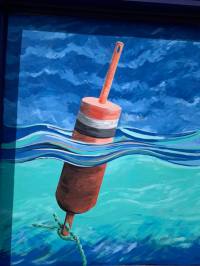
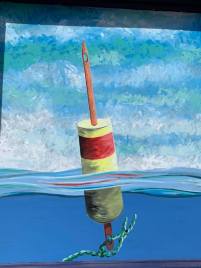
Comment: The above verses express, in part, a conversation on the origins of inspiration and vision held around the dinner table at the KIRA residence in St. Andrews on 9 June 2019. Those who participated in the dinner discussion … de sobremesa, as they say in Spain, over the table top … included (clockwise round the table) Chuck, Masha, Heather, Susan, Geoff, Andrea, Roger, Evelyn, Perri, Faye, and Mel. If I have forgotten anyone, or placed them in the wrong seating order, please forgive me. I am growing old and my memory is not what it was. However, the arrival of inspiration, how we greet the artistic vision, what it means to each of us, whether it arrives in totality or in fragments, glimpses or a full vision, this varies for each one of us. More on this tomorrow when I write about Lorca’s duende, the dark earth power that takes over performance artists when they perform, filling them with fire and fury, then leaving them empty, drained of all essence, ripe for the old rag-and-bone man and his cart. The paintings, incidentally, are by my line-painting friend, Geoff Slater, who is also a muralist, indoor and out, and the photos are courtesy of Mary Jones, the much-beloved former Executive Secretary at KIRA.

Zeitgeist

IMG_0638.JPG


Zeitgeist

Zeitgeist is a concept from 18th- to 19th-century German philosophy, translated as “spirit of the age” or “spirit of the times”. It refers to an invisible agent or force dominating the characteristics of a given epoch.
Wikipedia 

Those who cannot learn from history are doomed to repeat it.

“Plus ça change, plus c’est la même chose.”

Poems for troubled times.

My current poems are deliberately cryptic. Each one is a mind game I am playing with you. I do not underestimate you. I have placed clues throughout each poem and if you follow the clues you will arrive at many of the poem’s hidden meanings. Some poems are more difficult than others, their meaning more recondite. Others seem very straightforward, yet still contain secrets.

This style of poetry has a long history going back to Anglo-Saxon riddles and way beyond, back into the mists of time. Luis de Góngora (1561-1627) and Francisco de Quevedo (1580-1645) specialized in similar forms of recondite poetry, often based on metaphor and the juego alusivo-elusivo, the game of alluding to something while eluding the act of saying what it is. Jorge Guillén (1893-1984) and Federico García Lorca (1898-1936) also played this game, as did Octavio Paz (1914-1998) and many of the surrealist writers. In the works of all of these poets, the clues may rest in the poem or they may be found in a generic knowledge of the mythology of the poem’s exterior world.

Our world finds itself in an incredible mess right now. Somehow, we have to sort it out. We must pick our ways through the difficulties of these troubled times, as you must pick your way through the intricacies of these poems. Many of you will give up. Some of you, the chosen few, will make your way to the heart of each poem. Remember that images and metaphors tie past, present, and future together. Each word, each image offers a picture that reflects some of the shared realities with which we live.

Remember, as I said above: “those who cannot learn from history are doomed to repeat it” (George Santayana). Otherwise expressed, in the words of T. S. Eliot: “Time present and time past / are both perhaps present in time future / and time future contained in time past” (Burnt Norton). The seeming anachronisms in my recent poems suggest that perhaps all time is ever-present and always one.

Revision

img_0128

Revision
“We are not writers, we are re-writers.” I do not remember who said this, but it is extremely well said. We write, yes. But then we rewrite, sometimes obsessively, again and again. But how does that rewriting process take shape? Why do we rewrite? How do we rewrite? And what do we do when we re-write? These are all vital questions.

Mechanical revisions and rewrites
This, for me, is the search for typos, punctuation errors, mis-spellings, grammar corrections, that sort of thing. Yes, we can rely on a (reliable?) editor and a not so reliable spell-check, but the editor usually costs money. Or we can learn to do it ourselves, which is what I recommend very strongly.

Grammatical revisions and expression checks
These are usually a little more difficult to deal with. Do the verb tenses check out? Are subject and verb clearly delineated? Does the wording make sense, not just to us, but to the outside reader? A second pair of eyes is always useful at this point. Also, a sense of distance from the text is useful. Leave it a day (or two) and come back to it later when he creative rush has fled the system.

Structural revisions 1
Whenever we do a structural revision, it is essential to check that the revision ties in with the rest of the piece and that we maintain consistency throughout. A simple example: I decide, on page 77 of my novel, to change my main character’s name from Suzie to Winnie. Clearly, her name has to be consistent, both backwards (1-77) and forwards (77 onwards). While this is obvious, other changes, taste, color of hair, color of eyes, height, weight, tv program preference, may not be so easy to check and double-check. But it must be done.

Structural Revisions 2
This is where we must pay attention to the vision in the re-vision. We must ask the question, what does the poem / story / chapter / text want to say? What is it actually about? Often, in the flush of creation, we write words (actions, thoughts, emotions) on the page and they flow like water from a fountain. It’s a wonderful feeling. Later, during the re-vision process, we must ask ourselves, again, deep down, what do these words mean, what are they trying to say? This is actually a slightly different question from what am “I” trying to say?
The speaking / writing voice may want to say something, but the words (and characters and actions) themselves may want to say something else. Now we are faced with a dilemma: do we write what we want to say or do we follow the intricate word-path growing from what we have written? As a beginning writer, I did the former. As a more mature (and I hope, a slightly better writer) I now do the latter.
The result is often a piece that is radically different from it’s starting point. When you listen to what the story / poem / text / characters etc are telling you and when you follow words and characters, then structure changes, paragraphs switch places, thoughts move around, expressions change. We are no longer forcing words into our meanings, we let the meanings grow out of the words. This is particularly important in short story telling and the writing of poetry. It is vitally important to the novel where any inconsistency must have a relevance to the development of action, plot and character. It is also a totally different approach to the meaning of re-vision.

Summary
I realize many writers may have difficulty accepting these points. Those trained originally in the academic world, in particular, will respond negatively to the idea of the words ‘not being forced into the correct academic shape by the quasi-omnipotent academic mind’ aka Constable Thesis Editor. However, the more creative a writer is, the more that writer will respond to the creativity that lies within both the creator and the creation that has appeared on the page and, as writers, we must never lose sight of that creative act, for it is one of the most truly wonderful things that we can do.

Writing Memories 7

IMG_0402.JPG

Module 2.3: Accidents

We are talking about accidents, but this segment offers a transition between accidents and illness. To a certain extent, accident prevention or at least the check-ups that lead to illness prevention is key here. Blood tests rate high on that scale and I am tested regularly, at least once every six months, sometimes more often, for the different levels of chemicals in my body that may signify that all is good or that something may ultimately go wrong. Blood testing has become quicker and easier. I used to hate the sight of the needle, but now I concentrate on the nurses who work with me, some especially those nearing my own age, very sympathetic, others, younger, setting out on their nursing careers, so young, delicate, and full of enthusiasm. Sometimes I feel attracted to these young creatures in a sort of May to December match up of care-giver (her) and care-needer (me). I find this both curious and funny: si jeunesse savait, si vieillesse pouvait  / if youth knew how, if old age was able to … I have learned to laugh with delight at the incongruity of these silly moments and I am amazed how much humor can help, even in the most serious moments. First, the poem.

Love at Last Light 

A teenage apprentice with a little plastic badge
bearing her name asked me to reveal my birthdate.
This apparently confirmed that I knew who I was,
so she bound my arm with a thick rubber thong.

My veins swelled up, long thin leeches, slowly fattening.
She told me to make a fist and pouted as she probed
with slender fingers, feeling in vain for a fresh vein
from which to extract, then bottle the necessary blood.

I watched my body’s sap pumping out in tiny, sad spurts
driven by that tired flesh-and-blood machine known as
my heart. Drip by febrile drip my blood accumulated.
The young girl smiled with youth’s perfect lips and teeth.

My heart was a time-bomb ticking beneath her fingers.
I dreamed for an instant of walking upright and free,
a stranger in the paradise of a long-promised land.

Then she handed me my gifts: a throw-away plastic potty,
three disposable spatulas, and an air-dry sample card,
with written instructions, date stamped, bearing my name.

Commentary: I like this. It might benefit from more dialog, an insertion of personalities, an exchange of wit, dry science on the one side, an old man’s take on life on the other. I’ll think about that. Meanwhile, we have all been to a local hospital or clinic for blood tests of various types and we are all familiar with the situation. I don’t know how other people feel, but here’s my prose take on the situation.

Love at Last Light [Prose 1]

A teenage apprentice with a little plastic badge bearing her name asked me to reveal my birth date. This apparently confirmed that I still knew who I was, so she bound my arm with a thick rubber thong. My veins swelled up, long thin leeches, slowly fattening. She told me to make a fist and pouted as she probed with slender fingers, feeling in vain for a fresh vein from which to extract, then bottle the necessary blood. I watched my body’s sap pumping out in tiny, sad spurts driven by that tired flesh-and-blood machine known as my heart. Drip by febrile drip my blood accumulated. The young girl smiled with youth’s perfect lips and teeth.
My heart was a time-bomb ticking beneath her fingers. I dreamed for an instant of walking upright and free, a stranger in the paradise of a long-promised land. Then she handed me my gifts: a throw-away plastic potty, three disposable spatulas, and an air-dry sample card, with written instructions, date stamped, bearing my name.

Commentary: This stands up. It is short, to the point, and makes a point at the end. Or does it? Maybe I need to expand the ending, insert some direct dialog, I need to think about this. No problem: there’s lots of time. I’ll go out for a little walk and see if the muse descends while I am walking. The muse arrived and whispered in my ear, and I expanded the piece from 170 to 415 words, virtually doubling the word count. Was it worth the effort? You must be the judge.

Love at Last Light [Prose 2]

A teenage apprentice with a little plastic badge bearing her name asked me to reveal my birth date. I gave it, and this apparently confirmed that I still knew who I was. She offered me a quick twist and pucker of the lips and I interpreted this as a smile. My left arm, sleeve rolled up, lay flat against the little work area beside the chair. “This arm?” she asked and I nodded. She bound my arm with a thick rubber thong. My veins swelled up, long thin leeches, slowly fattening. She told me to make a fist and pouted as she probed with slender fingers, feeling in vain for a fresh vein from which to extract, then bottle the necessary blood. Then, she took a new needle, checked it, concentrated on her chosen spot, and slipped the needle into the web of veins just inside my left elbow. I felt the needle tip slice through the flesh, but I felt no pain. With the needle in, she attached the shunt to the needle end, and I watched my body’s sap pumping out in tiny, sad spurts driven by that tired flesh-and-blood machine known as my heart. Drip by febrile drip my blood accumulated in the container. When the first container filled, she attached another, and another. “Wow,” I said, remembering the immortal words of the comedian, Tony Hancock, “that’s a whole armful.” The young girl smiled with youth’s perfect lips and teeth and my heart fluttered. My heart did more than flutter: it became a time-bomb ticking beneath her fingers. I remembered how easily I bruised and tried not to think about the red, purple, and blue sunsets that sometimes spread across my inner arm after these exercises. I dreamed instead of walking upright and free on the golden sands of a Caribbean beach, hand in hand with this stranger as the sun slipped into the sea for its final bathe of the day. A stranger to my present self, I felt young again as we walked together in the paradise of a distant but well-remembered land. “I’ve got a present for you,” said my new found companion as she handed me my gifts: a throw-away plastic potty, three disposable spatulas, and an air-dry sample card, with written instructions, date stamped, bearing my name. “You know where to put the samples when you have produced them?” I nodded, sighed, picked up the anonymous brown paper bag, and walked away.

Suggestions for the writing exercises included in each module:

Write a prose memoir, just reminiscing.
Use 1st, 2nd, or 3rd person narrative.
Choose 6-12 words from the reading and expand on them using associative fields.
Write from an image or a metaphor.
Journal style: automatic writing, but try to select the gems.
Letter style: write to a friend.

Beginning Writers: Just write, using the prompts to help you get your own words and experiences and memories on the page. Use dialog where you can.
Intermediate Writers 1: Try and concentrate, while writing, on including at least one sense (sight, sound, touch, taste, smell) within your piece.
Intermediate Writers 2: Try and combine two or three senses within each exercise.
Advanced Writers: Use the prompts as you will and concentrate on imagery, metaphors, letting the language doing the work, and combining or mixing the senses. You can also experiment with free-writing, interior monologue, and surrealism.

IMG_0236

Writing Memories 4

image2 (6).jpeg

Writing Memories 4

Module 2.1 : Accidents

Like it or not, accidents happen at our age. We trip on the rug, slip on the ice, fall in the bath, so many little things can happen, none, hopefully, serious, but every one of them annoying. In my case, my beloved traveled to Ottawa to visit our family then and I stayed to look after the cat (and have my favorite chair vomited on by the monster). I played contact sports for years, no stitches. My beloved goes away and two or three days later, I slice myself up sharpening a kitchen knife. Everything is fodder for creation. Here’s the poem.

Triage
A stitch in time

1

Banality, stupidity, or just old age:
how did the knife slip from its intended path
and end up slicing through my finger? Blood

everywhere, oozing then pumping, flowing
freely, deep ugly, red, between fleshy
cliffs, the wound’s edges. Chaotic, shrill pain,

short, sharp shocks, cold water flowing, flushing
out the sudden gulley, cleansing, thinning
my life’s liquid. Little finger, left hand,

right down to bright bone. Instant recall, first
aid course. Sheet from paper towel, staunch, press
down, pressure, find gauze, bandages, scarlet

ink, my blood, not royal blue. Take bathroom
towel, run down corridor to garage,
leaving fresh blood spoor, the cat following,

sniffing, licking my blood fresh off the floor,
one hand clumsy on steering wheel, the other
held high as I drive to emergency, fast.

2

Three nurses attend me. The first completes
the triage, stops the bleeding, bandages
my hand, gauze pads press down, sends me to wait.

Second nurse inserts needles, kills the nerve,
cleans the wound, sews my little finger up.

Six stitches. A tubular dressing. Time
now for third nurse, anti-T-jab, checks me
for PTSD, smiles sadly, sends me home.

Commentary: The poem summarizes the instant well. I think the most horrible and outlandish thing of all was looking over my shoulder and seeing the cat following me, licking up the blood trail that I left spotted across the floor. I remember her squatting there, licking her lips: little horror. So, for Sunday’s session, I turned that moment into prose.

Triage [Pose 1]
A stitch in time

1

Banality, stupidity, or just old age: how did the knife slip from its intended path and end up slicing through my finger? Blood oozes, then squirts, then flowing freely, deep ugly, red, between fleshy cliffs, the wound’s edges. Chaotic, shrill pain, short, sharp shocks, cold water flowing, flushing out the sudden gulley, cleansing, thinning my life’s liquid. Little finger, left hand, right down to bright bone. Instant recall, first aid course. Sheet from paper towel, staunch, press down, pressure, find gauze, bandages, scarlet ink, my blood, not royal blue. Take bathroom towel, run down corridor to garage, leaving fresh blood spoor, the cat following, sniffing, licking my blood fresh off the floor, hand clumsy on steering wheel, horn tooting, driving to emergency, fast.

2

Three nurses attend me. So many questions. The first completes the triage, stops the bleeding, bandages my hand, gauze pads press down, sends me to wait. Second nurse inserts needles, kills the nerve, cleans the wound, sews my little pinky up to the sound of thread pulled through flesh, then knotted, and snipped. Six stitches. A tubular dressing. Time now for third nurse, anti-T-jab, checks me for PTSD, smiles sadly, sends me home.

Commentary: Nothing wrong with that. From poetry to prose poem. But is it lacking something, some bite, the feeling of panic, a sense of shock? Alas, it is missing so much. “Every attempt / is a wholly new start, and a different kind of failure / because one has only learnt to get the better of words / for the thing one no longer has to say, or the way in which / one is no longer disposed to say it.” And that is so true. What was true for me then, battered, bruised, bleeding, in shock, no longer comes through the words I left on the page. I wondered if I could warm them up a little. Here goes.

Triage [Prose 2]

A stitch in time
1
Banality, stupidity, or just old age: how did the knife slip from its intended path and end up slicing through my finger? Blood oozes, then squirts, then flows freely, ugly, red, between deep, fleshy cliffs, the wound’s edges. Chaotic, shrill pain, short, sharp shocks, cold water flowing, flushing out the sudden gulley, cleansing, thinning my life’s liquid. Little finger, left hand, right down to bright bone. Instant recall, first aid course. Sheet from paper towel, staunch, press down, pressure, find gauze, bandages, scarlet ink, my blood, not royal blue. Take bathroom towel, run down corridor to garage, leaving fresh blood spoor, the cat following, sniffing, licking my blood fresh off the floor, hand clumsy on steering wheel, horn tooting, driving to emergency, fast.
2
Three nurses attend me. So many questions. The first completes the triage, stops the bleeding, bandages my hand, gauze pads press down, sends me to wait. Second nurse inserts needle, kills the nerve, cleans the wound, sews my little pinky up to the sound of thread pulled through flesh, then knotted, and snipped. Six stitches. A tubular dressing. Time now for third nurse, anti-T-jab, asks me questions, gazes into my eyes, checks me for PTSD, smiles sadly, sends me home.

Commentary: Not much has changed yet now I seem to have lost the thrill, the shock, of that moment. I never even mentioned the feeling of achievement that warmed me when I got home, the knowledge that I had hurt myself and had got myself repaired without having to call my neighbors or emergency. I didn’t add that the first nurse tossed the blood-soaked kitchen towel into the garbage can and that she was unable to stop the bleeding. The second nurse managed that, after he injected me. He also gave me extra bandages in case the cut re-opened during the night. It didn’t. Looking back now, and remembering, I recall the hospital smells, the sense of the needle slipping into my flesh, the gradual loss of all feeling, the smell of the surgery, the scent of the anesthetic, the taste of the saliva in my  mouth. Revisiting the scene, so much later, I can begin to see all that I missed. As a result, Eliot’s words ring out truer than ever. Clearly, I will have to revisit this poem, this prose, this memory sketched into my life. This commentary, written on the spur of the moment, may help me do just that. Clearly I need to move from visual expression to visceral experience and taste and smell may just do that. Yes, I tasted my blood (so did the cat), and my saliva, and  I remember how the taste changed, oh so subtly, with each injection (there were three). I also remember the smells, all different of each of those rooms. Oh dear, so much work still to do.

Suggestions for the writing exercise included in each module:

Write a prose memoir, just reminiscing.

Use 1st, 2nd, or 3rd person narrative.

Choose 6-12 words from the reading and expand on them using associative fields.

Write from an image or a metaphor.

Journal style: automatic writing, but try to select the gems.

Letter style: write to a friend.

image2 (7).jpeg


Impact

IMG_0017.JPG

Impact

This photo comes up from nowhere, springs into your half-awake mind, diminishes your reality. W5: who, what, why, when where? But there is no who, save the person bearing witness to this moment in time, and you, the double witness who also contemplates and is therefore complicit.

Do you recognize this scene? Is this a moment in your life? Are you the one who struck the match and lit the flames in the lower corners? And are they even flames? Or are they moments of glory, flashes of fireworks, the world coming alive in a moment of combustion when light and dark are mingled until, fiat lux / let there be light, and the world is reborn, light and form, drawn from darkness, and earth and sea divided into separate realms. In principium erat verbum / in the beginning was the word and the world was born / reborn in this verbal-visual instant between sleeping and awakening, when dreams gain substance and ideas take on form and shape and grow in the observer’s mind until creation sparks into life.

Who now knows what will be, what might be? We see. We bear witness. We paint, draw verbal pictures, take snapshots, unfold our souls, placing them on paper and canvas capturing them by camera in snapshots … but What’s it all about, Alfie? Do you remember the film? The suspension in space, the knowledge that all is absurd, that this is a jigsaw puzzle of the worst kind, with no solution, no answer, and every path bifurcating before us, and each of us wandering in a maze, a labyrinth, with an entrance, but no exit.

Do you think up or down, when you’re floating in a space without gravity, where nothing is substantial and all the rules you ever learned no longer hold? The roller-coaster rolls on and you hang on, and sometimes the sun comes up and sometimes the sun goes down, and is that the first light of morning or is it the last light of day, and how can you be sure?

And where is it anyway? Have you ever been there? And if I told you where it was , what time of day it was, or what time of night, would you believe me? And if not, why not? And who and what am I? And why do you trust what I say? And why would you trust me, when you have never met me, and you do not even know who I am, or where I am, or what I am, and even I do not really know who I am or why I am, and why does any of this matter?

It matters because we need faith, we need substance, we need hope, we need to believe in something other than ourselves and beyond ourselves. We still want to wake in the morning and see the dawn. We want to grasp it in our hands, not just in our minds, and know that there is light beyond this darkness, there is hope beyond this gloom, there are better things ahead. See that forgotten candle? Pick it up. Take that match. Strike it against the box. Now light that candle. Take it out. Show it to other people. Encourage them to light their own candles.

Sometimes we need to enlighten the world, to turn it round, to reject it as it seems to be and to recreate it in our own image.  But take care: the image of the candle is not that of the laser beam or the searchlight. One by one, the small people, we must join together, and like tiny stars and light up the firmament. I cannot do it alone. But together, you, and you, and you, and you, if you walk with me, we can do our best. And that is the best we can do, in this, as Voltaire’s Candide once called it, the best of all worlds and the only one we have.


Rejection

IMG_0023.JPG


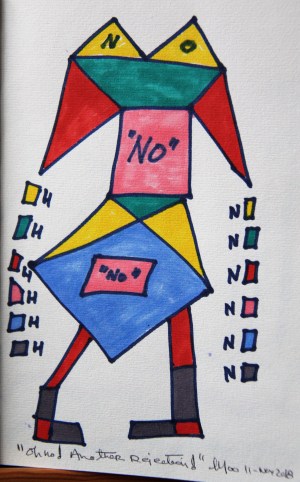
“Oh no, another rejection!”

“And rejection equals dejection, or doesn’t it?”

“Only if you let it get you down. I wait until I am in a foul mood and ready to tear things to pieces because my mean streak is surfacing. Then I go to my rejections pile, re-read the rejection letters, then read again the pieces that have been rejected.”

“Why on earth would you do that?”

“Above all to work out why the work was rejected. What did the editors see that I didn’t? When I write, I wear rose-tinted glasses and all my little babies are the prettiest, the strongest, the fairest in the land, especially when I give them the ‘mirror, mirror on the wall’ test.”

“I’ve never heard of that.”

“It’s simple: you look in the mirror and ask ‘Who’s the fairest writer of all?’ and the mirror answers ‘Why, you are, of course.’ If you believe that, and as writers, we often do, then rejection becomes a hard realistic rock, shattering both Ego and Id. The immediate response is to deny the editor’s taste and judgement. It is amazing how many stupid, dumb, and uncultured editors there are out there. They hate us and don’t understand us.”

“That’s true.”

“No it isn’t. The fault, dear Brutus, lies in ourselves, not in our editors, that we are not great writers. Understand that, and you have a chance to succeed and to improve. Re-reading allows me to try and understand what went wrong, why the mirror lied, how the rose-tinted glasses distorted the actuality of the written page. Understand the other and how the other perceives what and how you write and maybe, just maybe, you can condition yourself to improve. Many budding writers are dropped on stony ground and fall by the wayside. Others land in the desert and their things of beauty bloom where nobody sees them. Some fall on seemingly fertile ground and earn an immediate immortality that fades in a season when the fad wears off. A few writers, an occasional few, go back to the drawing board and water their flowers with the sweat of their brow. Eventually, if they are lucky, their work may be accepted.”

“You always preach the bus story, Julius.”

“Of course I do. Get off the bus early, and you’ll never finish your journey. Remember Sir Walter Raleigh: ‘it’s not the beginning, but the continuing of the same until it be thoroughly finished that yieldeth the true glory.’ He didn’t sail the Golden Hind around the word by setting up house in Cadiz and living in luxury on a beach in the south of Spain. He continued on and on, always forward, until he arrived back in his home port.”

“So we must just keep going, then?”

“Of course. But never blindly. Take criticism to heart, remembering that it comes from another’s heart. Learn from your mistakes. Correct them when you find them. Never give up.”

“You’re always happy, Julius. I bet you never get rejected.”

“Oh I do, Brutus, I do. And each rejection is a dagger to the heart. But I keep going. For example, last week I received my fifteenth consecutive rejection. So much work, so much genius, and all denied.”

“But you’re still smiling.”

“Indeed I am. I have just received my second acceptance in two days. I no longer feel betrayed by my editors.”

“I’ll never betray you, Julius.”

“You will, Brutus, you will. Never fear, et tu, Brute.”

Green

39948917_706398923049634_3046174897211441152_o (1).jpg

Green
KIRA Day 3

Where has the time gone? Don’t answer that question. The Retreat has settled into a structure of its own and outside time no longer has any meaning. The internal time of the retreat runs smoothly as clockwork, a wooden, self-oiling clockwork, of the most delicate kind.

08:00 – 09:00 Breakfast. We gather in the kitchen and the conversations begin over breakfast. We talk about the previous night’s readings, the plans we have for the day, or whether we want to workshop of just retire to our studios and write.

09:00 – 10:30 Workshop time. Each morning we have a topic and we illustrate it and discuss it fully. Each workshop also comes with ideas and prompts for writing. At the end of  each workshop, we plan the rest of the day. We hold regular Blue Pencil Cafés in which facilitators and participants discuss submitted work. We suggested about 20 minutes for the BPCs, but my first one last over an hour and we managed to get through half a poem. Jeremy’s first one lasted an hour and a half (prose) and he covered more ground than me. My second one was marvelous: we spent an hour or more on one paragraph, three lines.

What happens in the BPCs is unbelievable. It’s not just the revision of the poem or the piece of prose, but a wide-ranging discussion on theories, ideas, prompts, the nature of writing, directions a piece may take, the nature of creativity, where inspiration comes from, how it may be channeled, how writing occurs, where it can lead … incredibly exhausting at times, yet energy fills us and we are always ready to write, re-write, revise, and talk again.

14:00 – 16:00 Art School. On Tuesday, Geoff Slater sat us down with paper and paint and we experimented with color, the creation of color, the basics of primary colors, how to make secondary colors, how to create the color wheel. Geoff enthralled us: never will the color wheel ever look the same again. Never will I use a color again without thinking in depth about it’s composition and meaning. Green no longer means Green: it means so much more. I read Lorca’s Romance Sonámbulo, this morning, and it took on all sorts of different and very new meanings. Verde, que te quiero verde. Green, for I love you green … green wind … green branches … green flesh … green hair … 

I sat opposite Geoff this morning. Behind him, green bushes, green trees, green leaves, green grass, green foliage … Yesterday, I paid little attention to all that green-ness. Today it fascinated me and I was able to distinguish between the amount of yellow, the amount of blue, the lightening factor, the darkening factor, the tinges of red and brown and oh to be able to capture it all, all that green-ness, all that certainty, blurred into a sea of green.

16:00 -17:30 BPC time. We pair up facilitator / participant and share our work. Each day a different piece, a different conversation, an advancement of yesterday’s talks, another step or two forward. Sometimes we take tiny steps. Other times we make gigantic leaps. Time and space lose meaning. We have been gifted with something different and we are truly blessed.

18:00 – 19:30 Dinner. This is a sumptuous meal provided by the Garden Café, our very own award-winning Kingsbrae Garden Café. The group is open. The man who provides us with desserts, he makes them in our kitchen, specially for us, joins us as we sit at the table and we add culinary art to the poetry, prose, and painting that we are always discussing.

19:30 – 21:30 Readings. We read what we have written during the day and facilitators and participants share together. I try to choose work of mine that reflects the day’s themes. Linking theory (morning) to practice (evenings) is also a fascinating procedure. We finish the evening by planning the next day’s work. The key to the retreat is flexibility. We respond to each others’ needs. Colors are important? We concentrate on colors and read about them in our evening sessions. Today we talked symbols. Tonight I will offer a reading in which symbols play an enormous role.

Alas: my free time is over. Now I must descend and return to the joys of BPCs, discussion, dinner, and the evening’s read. Farewell for now: I will be back as soon as I can.


KIRA 1

IMG_0170


KIRA 1

Our first full day at KIRA, and it’s not over yet.

Last night we had our first dinner together, courtesy of Kingsbrae Garden Café. Wonderful food and a dessert to live for. All of the participants gathered around the table and we were graced with the presence of Mrs. Lucinda Flemer. Conversation was lively, with each of us defining our position and interests in various art forms ranging through painting, print-making, poetry, photography, short stories, and memoirs.

After dinner, we discussed the nature of the retreat itself. This centered on several areas: Establishing Goals, Towards a Shared Experience, Building a Creative Community, and Managing Expectations. We discussed an agenda for this morning (Monday) and agreed upon an action plan for our first day. We also agreed that we would achieve what we could during the first day and then change, as necessary, if change were needed. The main things: be flexible, be creative, talk together, work together, support each other, and cater, small group, to each individual.

This morning we discussed the creation of a personal time and space for writing. Each one spoke of where and when they wrote. We made some suggestions as to how time and place might be achieved, even during a busy working day. We then spoke about journals, pocket notebooks, hard work versus inspiration, and the need to recognize gems when we created them. Genius is 99% perspiration and 1% inspiration. The hard yards must be put in at the beginning. Before long they will no longer be hard. The idea of the artist as a traveler was discussed. We are all making similar journeys, but we are all on different points along the way. Many of us were helped in our beginning days, and we in our turn must now help others.

We then worked on specific goals for each person, facilitators and participants. This was very person-specific. We agreed upon a schedule for Blue Pencil Cafés and gave the first ones later in the afternoon. We finished with a ten word exercise, courtesy of Jeremy Gilmer. Write a ten word story. We took time off to write and then ended the session by reading our efforts to each other. Great fun and a good time was had by all.

My own BPC went very well. More about that later, perhaps. It went on much longer than I expected and we both had great fun looking at a poem in all it’s different shapes, meanings, and possibilities. Tonight, we have our first set of readings and we will see how they go. The BPC material, reworked, should be ready for later. Again: it will be fun and words, thoughts, and ideas, will creatively take wing and fly.