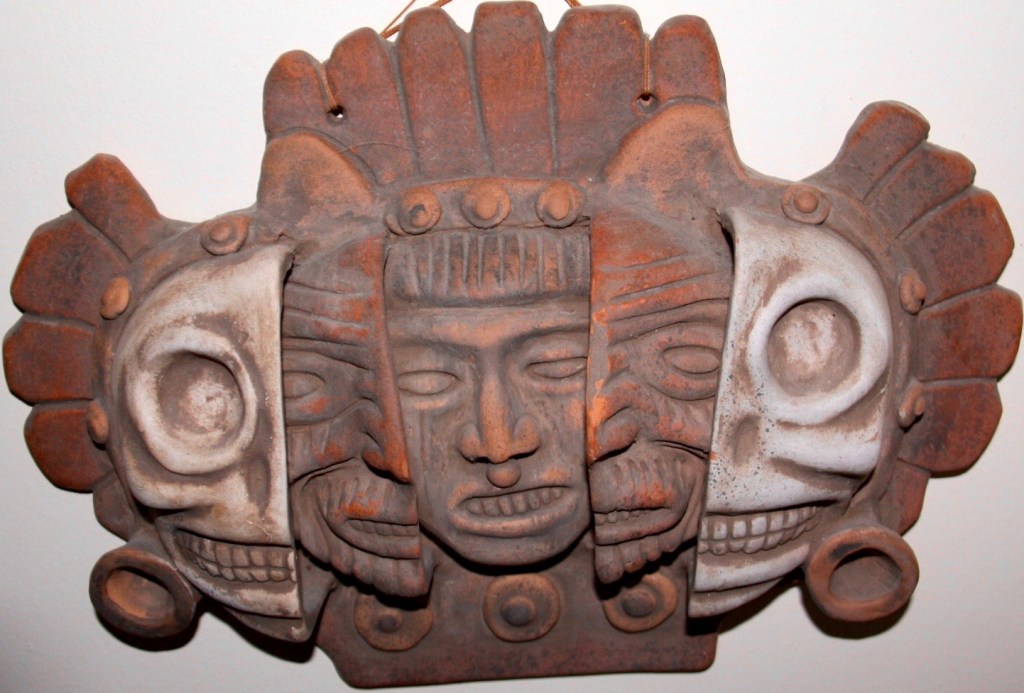
A once-upon-a-time god struts past the table where I drowse. Once I stole his nose, breaking it from a sacred statue. Now I watch it cross the square: a proud beak nailed to a face.
Casting shadows on the cobbles, zopilote flies over the square. I caught him once, dozing on a local bus filled with love-birds: he begged me to fold his wings and let him sleep forever.
The balloon lady sits in the square selling tins of liquid soap. Released from school, the children charm my days blowing colored bubbles that seek freedom in the skies.
Eight Deer, eight years old, sets out on his conquests. Nine Wind gives birth to his people, releasing them from their underworld prison by carving a door in a tree .
Faces crowd the trees above me, as long-dead friends come back to life, chattering like sparrows in the branches. Roosting time and their voices slip slowly into silence.
Sometimes, at midnight, they scratch at the window in my head and tumble through my half-awake mind. They need me, these dreams, for I bring them to life. Without me, the dreamer, they would surely fade and die.
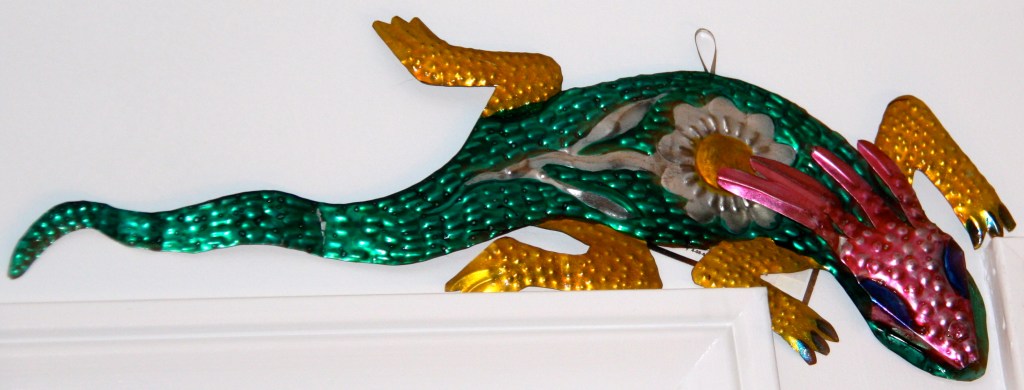
There are striations in my heart, so deep, a lizard could lie there, unseen, and wait for tomorrow’s sun. Timeless, the worm at the apple’s core waiting for its world to end. Seculae seculorum: the centuries rushing headlong. Matins: wide-eyed this owl hooting in the face of day. Somewhere, I remember a table spread for two. Breakfast. An open door. “Where are you going, dear?” Something bright has fled the world. The sun unfurls shadows. The blood whirls stars around the body. “It has gone.” she said. “The magic. I no longer tremble at your touch.” The silver birch wades at dawn’s bright edge. Somewhere, tight lips, a blaze of anger, a challenge spat in the wind’s taut face. High-pitched the rabbit’s grief in its silver snare. The midnight moon deep in a trance. If only I could kick away this death’s head, this sow’s bladder, this full moon drifting high in a cloudless sky.
Comment: This is the prose version, from Fundy Lines (2002). The prose version was based on an extract from a longer poem that first appeared in Though Lovers Be Lost (2000).Though Lovers Be Lost is also available on Amazon and Kindle.
Outside the church, a boy pierces his lips with a cactus thorn.
The witch doctor catches the warm blood in a shining bowl.
He blesses the girl who kneels before him.
On her head she carries a basket filled with flowers and heavy stones. He sprinkles it with her brother’s blood.
All day she will walk with this basket on her head until evening’s shadows finally weigh her down.
Cobbles clatter beneath her clogs.
When the stones grow tongues, will they speak the languages in which she dreams?
Comment: Revisiting and revising some earlier poems. The early version can be found here. The original poem comes from the collection Obsidian’s Edge, which can be found on Amazon.
A single sunbeam: sharp blade of a heliocentric sword, it shatters the chapel’s dark.
Fragmented light speckles white-washed walls.
The priest’s face: a pallid lily truncated in the dawn’s pearly light.
A wanderer kneels and prays. A halo of sunshine runs a ring around her head.
Her flesh now clutches a statue’s marble hand.
Her pilgrim palm presses into granite forcing warm fingers into cold stone.
Her veins weave a warm spell over frosted rock.
Comment: Revisiting and revising some earlier poems. The early version can be found here. The original poem comes from the collection Obsidian’s Edge, which can be found on Amazon.
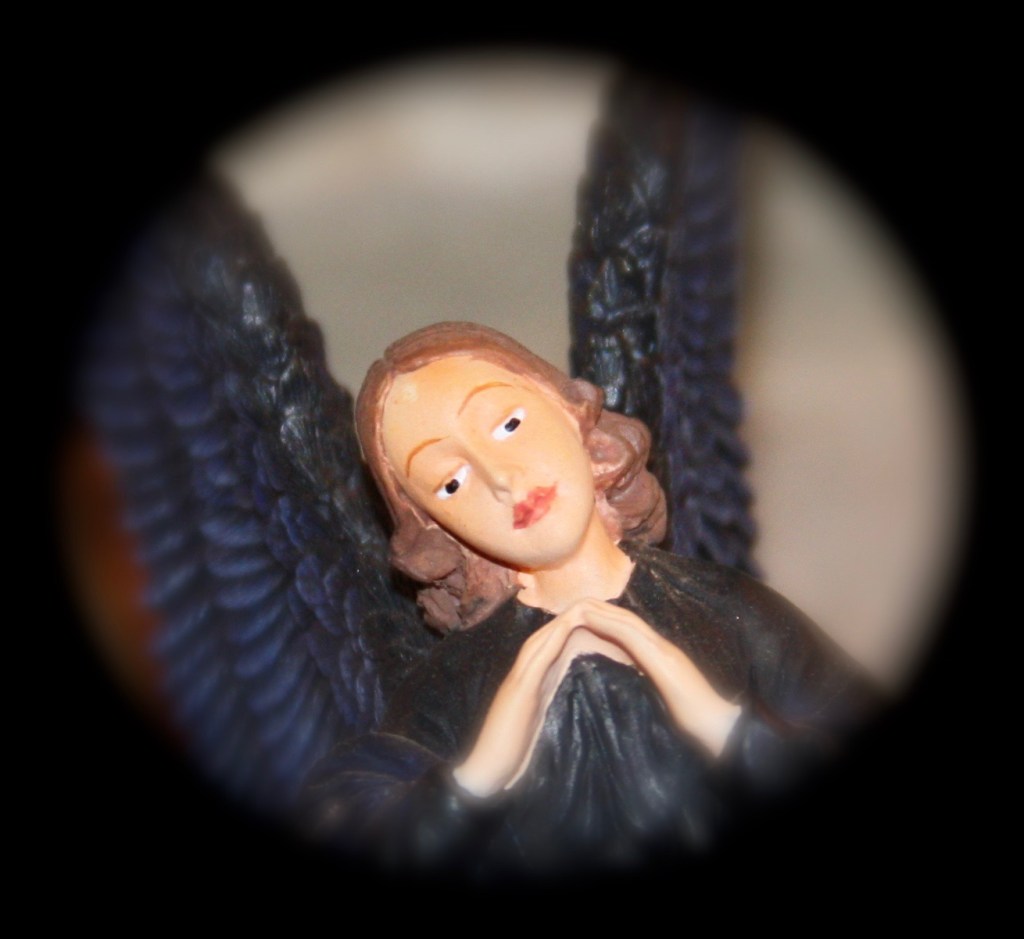
Angel Choir (on seeing the Northern Lights at Ste. Luce-sur-mer)
listen to the choristers with their red and green voices light’s counterpoint flowering across this unexpected son et lumière we tremble with the sky fire’s crackle and roar
once upon another time twinned in our heavenly bodies we surely flew to those great heights and hovered in wonderment now our earthbound feet are rooted to the concrete if only our hearts could sprout new wings and soar upwards together
the moon’s phosphorescent wake swims shimmering before us the lighthouse’s fingers tingle up and down our spines our bodies flow fire and blood till we crave light and yet more light
when the lights go out we are left in darkness our hearts fill with dreams of what might have been
“Contemplate this crucifixion. Each of your sins is a thorn driven into His brow.
Each misdemeanor spears the sacred side, draws water and blood from the open wound.
Your sinful deeds drive nails anew into hand and foot.
Christ lives in you. Your misdeeds nail him daily to the cross He bears for you.
He hangs there, open-eyed.
No death, no resurrection, just an everlasting suffering from these nails you daily drive.”
Comment: This poem is a very golden oldie. I wrote it in 1979 while walking the Camino de Santiago / the Road to St. James. I should add that this was long before it became fashionable to do so. I walked alone and, save for my thoughts, I was indeed very lonely. In fact, the long days walking, the solitude, got to me. I needed to talk, to meet people, and so, after long discussions with sundry people along the route, I determined to take the bus or the train to the main pilgrimage centres and to walk out from them in either direction. This allowed me to meet people, explore the towns with their churches, traditions, and museums, and to learn much more about the nature and art traditionally associated with the pilgrimage. In this fashion, I spent five days in Leon, two days in Hospital de Orbigo, a week in Astorga, another week in Ponferrada, and nearly two weeks in Santiago itself.
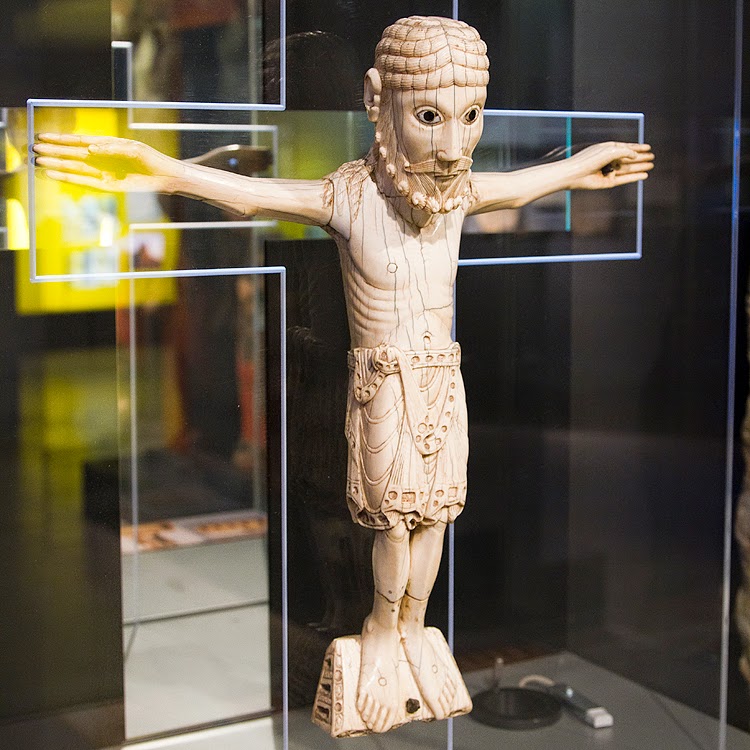
I wrote a collection of poems while I was studying the cities and the landscape. This particular poem is a summary of the conversation I had with the old priest, determined to convert me to Catholicism, who introduced me to the Cristo de Carrizo, in Leon.
In 1613, Francisco de Quevedo, the Spanish poet on whom I wrote my doctoral thesis (Toronto, 1975) wrote a collection of heartfelt mea maxima culpa poems dedicated to his aunt. It bore the title of ElHeráclito Cristiano / The Christian Heraclitus. This in turn was based on an earlier cycle of poems, Lamentaciones de Semana Santa / Lamentations of Holy Week (1601), which Quevedo appears to have written following the Spiritual Exercises of Saint Ignatius of Loyola.
These spiritual exercises consist of a set of contemplations based on the Stations of the Cross, Via Crucis, in which the contemplator meditates on each of the moments of Christ’s torment and suffering leading up to his death by crucifixion at the end of Holy Week. The purpose of the exercises is to try and recreate in the mind of the contemplator the sufferings of Christ, to imagine his pain, and to feel his suffering at a personal level. This is an act not only of contemplation and contrition, but also of purification of mind and spirit.
This year, during Holy Week (from Palm Sunday to Easter Sunday and the Resurrection), I attempted to follow in the footsteps of Quevedo and to contemplate the current world situation and my own specific situation, as influenced by the lock down in New Brunswick instigated on account of the Corona Virus pandemic.
Lamentations for Holy Week, then, is my attempt to examine myself and my own conscience at a time of great personal stress, a stress that I share with all those who are infirm, frail, in ill health, alone, and getting on in years. These are the people most affected by loneliness and the threat of the pandemic to our lives.
The Cristo de Carrizo is a hand-carved ivory cross, Mozarabic in origin. It shows Christ, on the cross, with his eyes open, looking at the viewer. Christ is not dead, in this crucifixion, but very much alive, and suffering. Image taken from Wikipedia.
Codes and Coding Where’s Home? (4) A continuing open letter to Jan Hull.
“Languages: they say that to learn another language is to gain another soul and another set of eyes through which to view the world.” I wrote these words on March 23, 2020, on the 22nd day of our Covid-19 lockdown. Why recall this article now? Because Jan Hull talks about Nova Scotian conversational language codes in her book Where’s Home? and her ideas rang a bell and tugged at my memories. CFA, for example, and CBC, and my own invention WAH. Then there are her coffee shop codes of Tim Horton’s and her Burger codes of MacDonald’s, and I mustn’t forget her other small town talking codes of former times and newly named places, must of which are bewildering to the outsider, aka CFA.
Why codes and coding? A rhetorical question, of course. But codes and coding are the basic elements through which language transfers thought, our thoughts. What is a code? Well, we know all about Morse Code and the elaborate codes through which spies from all countries communicate their needs. A code is a way of converting language, changing it, making it available to those initiated in the code and unavailable to those who have not received such initiation. Sounds simple, doesn’t it?
When I was travelling regularly to Spain for research in Spanish libraries, my first port of call was always the local barber shop. I did this for several reasons. In the first place, my Canadian haircut gave me away as a foreigner. This is the hairdresser’s code. The barber’s shop was always the centre of local gossip. Here, buzz words changed hands, politicians were discussed, all the local news was immediately available. Each of these items was a code, a code that made an insider (acceptable) versus an outsider (not to be spoken to). I remember, one summer in Madrid, not getting served in any bar or restaurant. Check haircut: okay. Check shoes: bought new Spanish pair. Check shirt, jacket, tie: all up to date. Inspect lucky customers who are being served … ah … they are all wearing a shiny brass pin showing the symbol of Madrid: El Oso y el Madroño, the bear and the strawberry tree, as seen in La Puerta del Sol.
The next bar I entered saw me sporting El Oso y el Madroño in my lapel. Qué quiere el señor? Immediate service and with a smile. These are social codes, the codes that include the winks and nudges of the upper class, the secret handshakes and foot positions, the names dropped so gently and quietly that they never shatter when they hit the floor. There are also language codes. Northrop Frye wrote The Great Code: The Bible and Literature, a study of the mythology and structure of the Bible, and it was published in 1982. In this wonderful study, Frye showed how themes and language from the bible have influenced the structure of Western Literature, particularly that written in English. Within this code, names, themes, miracles, parables, psalms form a body of common knowledge available to all readers who are christian and whose first language is English.
But there are other codes. Think Courtly Love. Think Petracharism. Petrarch’s poetry, originally written in Italian, was widely imitated throughout Europe. Italian literature, Spanish, French, English, all dip into that code, as does Shakespeare among so many others. Think the Great Chain of Being. Shakespeare is incomprehensible in places unless you unlock this particular code. Think Platonism, Neo–Platonism, Stoicism, Existentialism … okay, so all this is academic, and I do not want to lose you in a sea of academia. So think NFL, think NBA, think NHL, think baseball, think cricket, think rugby, think darts, think all of the things we manipulate on a daily basis in our lives and think how they include some people (those who know and share our codes) and exclude others (those who are unaware of them). LBW, c&b, c. A, b. B, st. A b. B, w, W, b, lb, lbw, dec., RSP … and think of the hand gestures that accompany them! You would have to be an ardent follower of the mysterious game of cricket, as I am, to immediately understand all those letters and signs.
This is a wonderful line of discussion. It follows along the lines of micro-language and macro-language. Macro-language is accessible to all who happen to speak that language. Micro-language in its multidinous forms incarnadine belongs ONLY to those who share the micro community, be it family, household, village, town, county, region … all that is closest and dearest to our micro-hearts.
When I was in Moncton (2015), at the Auberge Msgr. Henri Cormier, I spoke French on a daily basis. Being an academic and a linguist, I was fascinated by the levels of French that were spoken in that small community. Here are the levels I identified: (1) LFI, Le francais international, the central French language that I spoke and everyone understood. (2) Acadian, a beautiful language with regional variations, a different accent and rhythm, and some very different words and phrases. (3) Chiac, the mixed English-French used by the citizens of Moncton, whose wonderful poets are trying to get it established as a literary language. (4) Community French, five families from Paquetville were there and when they spoke among themselves about their home town, references, history, culture were all barriers to those who did not come from Paquetville. (5) Family Groups, and this is easy to understand, for all families have their in-jokes, their coded speech, their conversations that keep the outsider outside of the family group.
It is a fascinating study, that of coded languages, and I thank you, Jan, for re- opening it and reminding me of it.
Between Two Places Dianne Fitzpatrick Where’s Home?
Where’s Home (3) Part III of an open letter to Jan Hull
The Little Things
In 1898, Spain fought and lost a war with America over possession of Cuba. Cuba was the last of Spain’s overseas Empire and when it went, the all conquering fatherland, upon whose empire the sun never set, was reduced to its original territory in the Spanish Peninsula. That same year, the literary Generation of 1898 started a new movement, one that made Spain itself central to its imagery and thought. Theirs was not the Spain of Imperial History, with its wars and treaties, battles and conquests. Theirs was the eternal countryside of Spain, the Spain of Old Castille that was rooted to the soil, and that had remained virtually unchanged in the small towns, fishing ports, and villages, for hundreds of years. This was the Spain of Miguel de Unamuno’s Intra-historia: the history of small things.
St. David, Dewi Sant, the patron saint of Wales, a historical figure flourishing circa 600 CE, is famous within Wales for his many sayings. But for me, one stands out. “Byddwch lawen a chadwch eich ffyd a’ch credd, a gwnewch y petheu bychainmewn bwywd” / Be joyful and keep your faith and creed and do the little things in life. In these times of stress and strain, faced by enormous changes brought about by the pandemic, to these prophetic words I turn.
Poets, creators, artists, stoneists, craft-workers of all kinds … we are the antennae of the people. We sense the directions in which life flows and will flow and we are ahead of our times, not behind them. We are the ones who ‘do the little things’, often abandoning larger, more financially rewarding projects in favor of smaller ones that spiritually enrich both us and the people around us. And that is what I am now reading in Jan Hull’s Where’s Home? People, real, live, flesh-and-blood people, many of them artists at heart, abandoning the big city’s rush and rock and roll to enjoy the quietude of small communities which they help to build with their own hands.
Troglodytes, cavemen, people living in the past, I have heard ‘so-called saner citizens’ mutter about some of our contemporary artists. They live off hand-outs and charity and welfare, and they live in the past. Grey-suited, working in concrete boxes, these well-heeled critics are all made out of ticky-tacky, as the old song says, and they work in little boxes, and they come out all the same. Fine fr some, but you certainly cannot say that of the characters who inhabit the small towns, villages, and ports, as Where’s Home? demonstrates so clearly, with quote after quote from contented people, all resident in Nova Scotia, some CFA (Come From Away), others CBC (Come By Choice), and yet others native to the province.
Living in the past … when Hurricane Arthur struck, we went without power for twelve days. No water, no warm food, no cooking, no refrigeration, no flush toilets, no showers, no air conditioning, no television, no Wifi, no internet … In 1928, my grandfather and my father built a summer home, a bungalow, in Gower. I remember, even in the late fifties, living there during the summer with my grandparents: wood stove, rain water barrels, no running water, outhouse, no electricity, no refrigeration, oil lamps … Hurricane Arthur … and Clare and I went back to bungalow living. Several of our neighbors did not know how to cope with the ‘problems’. A couple moved into hotels or stayed with family elsewhere until the crisis was over. As for us, this was the life I was used to as a child. We went into bungalow mode and had more fun than anyone could imagine… living in the past? … or preparing for the future? … Think about it, and don’t jump too quickly to the wrong conclusion.
Above all, Jan Hull’s book, Where’s Home?, has made me think. It has made me think deeply about my own life, my own memories, my own restless, rootless existence, my own attempts to settle and resettle. More, in light of the pandemic with so many working from home, so much home schooling, and so much online back and forth, maybe we, the artists, the returnees, the WAH (Work At Homers), maybe we are not stranded, forgotten, on the back-burners of modern life. Maybe, just maybe, we are the fore-tellers, the front-runners, the pioneers of how a better, more meaningful existence may be created and kept. Thank you, Jan, and please thank all your contributors on my behalf.