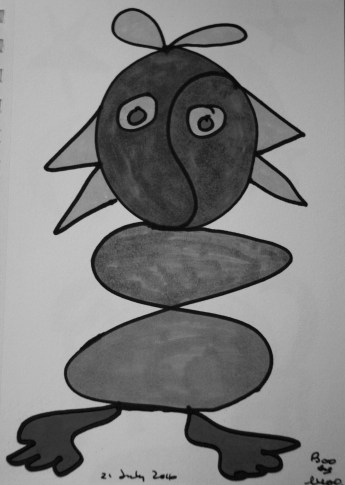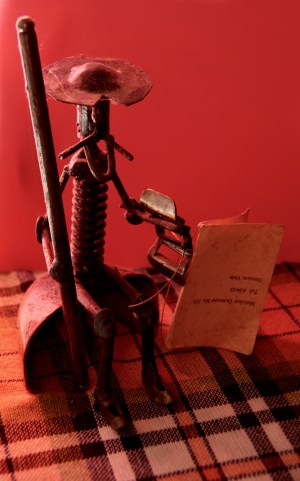
Haircut, anyone?

SD 16

Haircut, anyone?

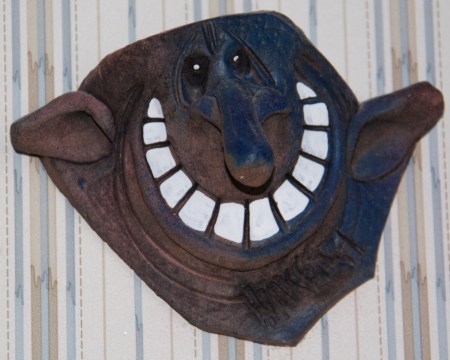
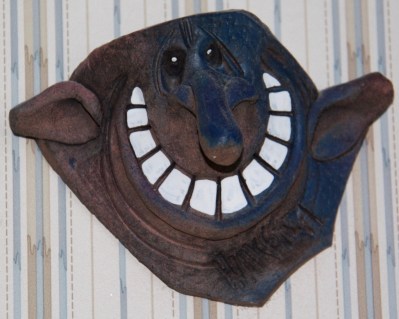
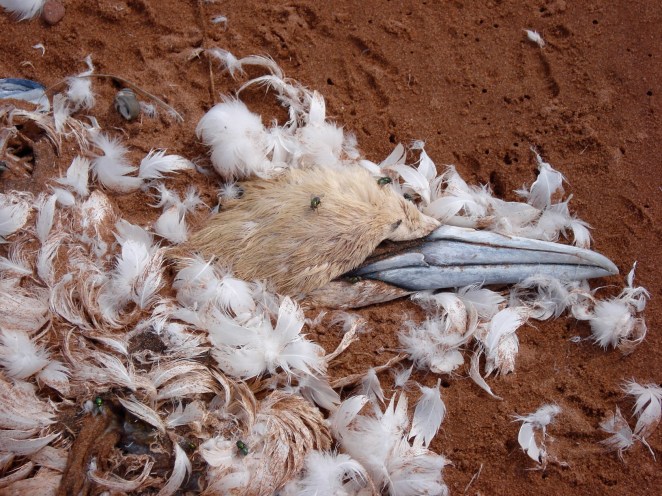
Well, it’s almost time for me to have my hair cut. When I looked in the mirror to shave this morning I looked a little bit like this: beaky nose, eyes closed, well, half-closed and squinting, anyway, and all lathered up. My grand-pappy told me there’d be days like these: usually just before he cut himself shaving at the kitchen sink with his old cut-throat razor. Then he’d disappear into the outside bathroom and reappear with little Vs of toilet tissue pushed into his chin to staunch the still-leaking wounds. All that’s missing here, in this photo, apart from life itself [nature morte: still life] is my grandfather’s pink shaving cream. And a sense of humor: wreckage on life’s beach, the common destiny that awaits us all, flies and all.

KIRA & so much more


IMG_0052

KIRA & so much more

KIRA & Kingsbrae Gardens are so much more than an outdoor adventure. They offer a journey into yourself, an exploration of your inner depths, a Jules Verne voyage into the interior of the world that you are: the artist, the creator, the truly spiritual person that you are capable of being.

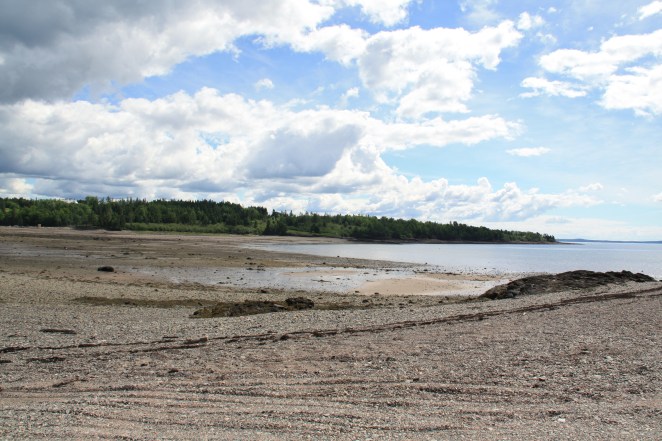
How do I know? Because I have been there. I have walked those beaches, explored those shores, got my feet dirty in the Passamaquoddy mud, climbed those hills, viewed those islands from both sides. I have been out to sea to see those whales, have crossed the Old Sow from side to side, have imagined myself as a pirate for the shortest of times, crawling my sailing ship around the whirlpool, listening to its sucking sound, watching the seals as they rose from the depths, the sea gulls as they dropped from the skies.

Within the gardens, I have touched those secret places, grasped the flowers, crushed the leaves of herbs between sightless fingers and raised those perfumes to blind nostrils. I have also breathed in the scents of salt borne on a sea wind caressing the cheek, smoothing the brow, bearing away the cares of city and suburb.

Renewal is here and now. It is the sea wind’s kiss, the suck of mud, between the toes, barefoot, the rise and fall of tides, the ocean’s life forced into our lives and floating our cares and despairs away. Nothing of the city lurks here to ambush us, unless you bring it with cell phone, computer, texting, and the dull, grey air that will soon be vanquished and whisked away by the breeze, terns, gannets, the seal’s nose breaking through the sea’s surface, the deer crossing the road, demanding their right of way.

At the end of my own residency in KIRA (June, 2017), I tried to summarize my thoughts about the experience. To read them for yourself, click on this link: Residency, June 29, 2017. I was invited by the Writers’ Federation of New Brunswick to write about my stay. To read that, please click on this link: KIRA: an intensive creative experience WFNB, August 5, 2017).

To find information about your own potential residency at KIRA, click on this site KIRA – Kingsbrae Garden or this one KIRA Boutique Writing Retreat.

 IMG_0464


MT 2-6 Monkey Meets An Anarchist Ant

img_0188

MT 2.6
Monkey Meets An Anarchist Ant

(Memories of El Camino de Santiago)

The anarchist ant dresses in black.
He wears a little red base-ball cap
backwards on his head.
His eyes are fiery coals.

“Phooey!” He says.
“It’s folly to go with the flow.”
So he turns his back
on his companions and marches
in the other direction.

Some ants call him a fool.
The Ant Police try to turn him.
The Thought Police try
to make him change his mind.

Others, in blind obedience
to a thwarted, intolerant authority,
first bully him, then beat him,
then bite him till he’s dead.

Comment: One of the legends of the Road to St. James, the pilgrim route across Northern Spain that I walked in 1979, states that if you do not walk the road as a human being, in your own lifetime, you will come back as an ant and be forced to walk it ant form, when you are dead. I stood on the hill outside Astorga, looking back at the city. On the old pilgrim road, at my feet, and beneath the old Cruz de Harapos, a colony of ants was busy walking in a long line towards Santiago de Compostela. One turned his back on the group and started to walk the other way, but he didn’t last long. “Go to the ant, thou sluggard.” Fair enough. But watch out for the ant-police and the thought-police. 

Obsolescence

img_0281

Obsolescence

The programs that no longer work.
The files you can no longer access.
Photos that vanish
leaving a blank space in the album.

Memory that goes on the blink.
Forgotten phone numbers,
the birthdays of family members,
that carton of eggs left in the store,
your cousin’s face, her name,
the parking spot where you left your car.

“What day is it today,” you ask,
for the second or third time.
“What time is it?”
“Who’s that coming for tea?
Are you sure I know them, dear?”
“Where did you say we were going?”

“Just round the corner, to visit a friend.”
Or should that be … round the bend?

Comment: Apparently I placed this poem on Facebook a year ago, but I have found no trace of it here, on the blog. This time last year, I lost both of my computers to what was diagnosed as obsolescence. Luckily I had most things backed up. The group who swore they could transfer 99% of my hard-drive material to the new machine, migrated just 1% (my desk top) and the other 99% went on walkabout. I was able to piece much of it back together, but obsolescent programs and out of date apps no longer functioned. So much material was deemed irretrievable. This experience made me realize, yet again, how fragile is our hold on our possessions, our memories, our sanity, and yes, our very lives. For me, it is a very sobering thought that, with a flick of a switch, I, like my computer, could be turned off, and 99.9% of the wonders of my beautiful existence would totally disappear from the memory-banks of this earth. Some say, and I believe them, that, like my computer, I will be re-cycled, recirculated. I will become a part of the wider oceanic world-consciousness. Alas, we can have faith in whatever we wish to believe, but sometimes, we really don’t know.

MT 2-5 Monkey Meets Pontius Parrot

img_0181

Monkey
Meets
Pontius Parrot
(With glorious  memories of Macarronic Latin)

 Pontius Parrot is very clever
and very pontifical.
He pontificates from his pulpit.
“Pretty Polly!”

His name isn’t Polly
and he doesn’t have a pulpit
but he parrots words
in Macaronic Latin:

“Caesar adsum jam forte.”

Pontius Parrot is
perky at the podium.
He bounces up and down,
preens himself prettily,
rattles his chains,
shakes his bars:

“Brutus aderat.”

 Shame and scandal
wear him down.
A dysfunctional family
of feathered friends
henpecked him
until he was black and blue
and threw up copiously:

 “Caesar sic in omnibus.”

He dips his wings in holy water,
calls for some soft soap,
and washes
feathers and claws.

Poor Pontius Parrot,
He can only say
“Repent!”

“Brutus sic in at.”

Comment: Anyone who suffered through school Latin, especially if they went to boarding school or grammar school, will recognize famous Macarronic Latin quotes such as the verb bendo, whackere, ouchi, sorebum, and the one the author of Monkey Temple reproduces in the above poem. If you are unfamiliar with Macarroni Latin and have had the good fortune to have avoided both grammar and boarding schools, just read the Latin normally in English and you will establish its Macarronic meaning.

MT 2-4 Monkey Visits the Chimpanzees’ Tea Party

img_0181

MT 2-4
Monkey Visits
the Chimpanzees’
Tea Party

Dressed to the nines in their gala outfits,
they have come here for the tea party.

Hairy penguins,
they waddle back and forth
across the temple,
then lunge for a table
with its jumbo shrimp,
smoked salmon,
scallops, baked oysters.

Faces slashed from ear to ear
by enormous grins,
“Food’s free!” they say
and stuff themselves
regardless of the consequences.

Serviettes tucked into collars,
they scoff lobster and crab.
Birds of Paradise,
subtle delicacies
flown in from half a world away,
decorate the tables.

There is something about them,
these chimpanzees,
gripping cup handles
between finger and thumb,
enormously pleased to be
the centre of attention,
however clumsily they walk
in their hired-for-the -occasion,
ill-fitting, black and whte
penguin suits.

Loss of …

IMG_0062.JPG

Loss of …

By the time I remembered your name,
I had forgotten your face. Then I couldn’t
recall why I wanted to talk to you.

I trace dark landmarks on the back of scarred
hands: blood maps, unremembered encounters,
dust covered photographs, grey, grim, anonymous,

not belonging in any family album.
At night I cruise among islands, emerald green
against sapphire seas. Why didn’t I visit

some of these places? Golden sand trickles through
night’s fingers and time’s hour glass, as stars
sparkle and planets dance in Platonic skies.

My memory fails. I wake each morning
unaware of where I have been the night before.
I track the sails of drifting ships, white moths.

I think I have caught them in overnight traps,
but they fly each morning in dawn’s forgiving light.
I give chase with pen and paper, fine butterfly nets

seeking wild thoughts waiting to be caught, then tamed.
I grasp at something just beyond my fingertips,
but I can’t quite remember what it is.

Comment: I first published this poem on July 31, 2018 (click here for the original post). Here it is now, in revised form. I find the revision process to be totally fascinating: the polishing of old ideas, the arrival of new ones, a different structure, a reshaping of the poem’s internal logic. So much happens in the revision process. Many great poets wrote and rewrote their poems, again and again.  I consider Francisco de Quevedo and Juan Ramón Jiménez to be poets who continually revised. A perusal of the variants to their poems (28 versions in the case of some of Quevedo’s poems) gives the reader an understanding of how the great poets think, of how they purge, intensify, sometimes simplify, usually improve their initial instincts. We lesser poets can learn so much from the greats. Above all, we can understand that poetry is a life-long practice, that it is a love of words and emotions, that it is a desire to catch and preserve the uncatchable that can never be completely caught. The critics say that the reader can never know the writer’s intentions. I agree with that, to a certain extent, as I never know why I am writing what I put down on the page. I guess I often have no intent. More important, my original intention can change as I write, and what I write is by no means what you understand I wrote when you read, for each of us processes the imagery, especially metaphors, in a different, and very personal, fashion. That said, when I rewrite a thought pattern emerges and my intentions become that much clearer, not from the words on the page, but from the footpath that led me in different directions until the final version emerged on the page.

Knowledge

F1040022

Knowledge
Thursday Thoughts
9 August 2018

In response to yesterday’s post, The Curse of Cursive, I received this comment.

“I have always blamed my own illegible (except – well sometimes – to me) scribble on the hours sitting in college lectures attempting to make a record of what was being said. Consequently, I could only ever record about every 3rd sentence. Something which I claim accounts for all those gaps in my learning.”

This comment merits a Thursday Thought.

First thought: the whole process of note-taking. One of my professors in Bristol University, where I did my undergraduate degree, was in the habit of sipping Harvey’s Bristol Cream while munching his sandwiches, consequently his post-lunch thoughts were always most enlightening. Here is his post-lunch declaration on knowledge: “Knowledge is that which passes from my notes to your notes without passing through anyone’s head.” This statement was followed by a closing of the drowsy eyes and an enormous hiccup.

For me, the art of note-taking goes way beyond the copying down of another’s ideas. As  note-takers, we must sift the incoming information, break it into salient and important features, and get the main drift of the argument down on the page. And not just the argument, but our own questions and challenges as well. Much of what I was taught at the various schools I attended was, frankly, nonsense. However, I learned a great deal about teaching from those who taught me that nonsense. A dictated note from an early geography class, preserved for ever in the young student’s mind: “The earth is geoidal, ie, earth-shaped.” Good one, teacher. “Please sir, if the earth is earth-shaped, what shape is the moon?” “Don’t be cheeky, boy, I’ll see you afterwards.”

When I received my first important teaching award I realized that it came to me on account of what I had avoided (all those inadequate lectures and lessons) and that what I was doing was engaging students and challenging them to challenge me by developing their own questions and ideas, by doing their own background checks, and by establishing their own thought processes, rather than trying to imitate somebody else’s dictated and regurgitated notes with their partial pictures of (in)complete and often antiquated knowledge, and all this often dredged up and recycled in the form of ancient, dusty scrawlings from pre-historic graduate courses.

I realize that this is unfair to several lecturers I encountered over the years who were able to deliver riveting and thought-provoking adresses. However, these were few, very scarce, and much appreciated. Their names and ideas are engraved on my mind. They and their methods are not forgotten, even now, but, as I say, there weren’t many of them.

As for knowledge, it is so personal and becomes an integral part of who we are and what we do. I know people who received everything they knew about life with their first degrees. They thought they possessed everything, the complete tree of knowledge in one rolled up certificate. Alas, many of them spent their lives never progressing, standing still and contemplating their known world, neither learning nor needing to learn anything else.

Our knowledge is incomplete. If we are at all ‘thinking people’, we know this. We also know we can never get enough knowledge. A PhD is great: knowledge Piled higher and Deeper. But often it is Reinforced Ignorance, the false knowledge that this knowledge is the only knowledge, well, the only knowledge that matters to the individual who, at a substantial living wage, ekes it out with great care and tests other people on their ability to reproduce it in its exactitude. “And I never-ever thought for myself at all” (I am the Monarch of the Sea, the Ruler of the Queen’s Navy, HMS Pinafore).

And here we enter the world of clichés: life-long learning, an everlasting thirst for enlightenment, for more light, more knowledge. The only real knowledge that we simply must transfer to our students, our followers, is how they can gain knowledge and even more knowledge for themselves. A love of and a desire for life-long-learning is the teacher’s greatest gift. If the teacher can pass that on, then the world of ideas will not fail, knowledge will not become carved in stone, set in concrete, entrenched in notes ‘that pass from my notes to your notes without going through anyone’s head’.

Here ends my Thursday Thought. A rant, really, and a very satisfying one. Thank you, Roland of Roland’s Ragbag, for turning on the tap and allowing these refreshing waters to once again flow.

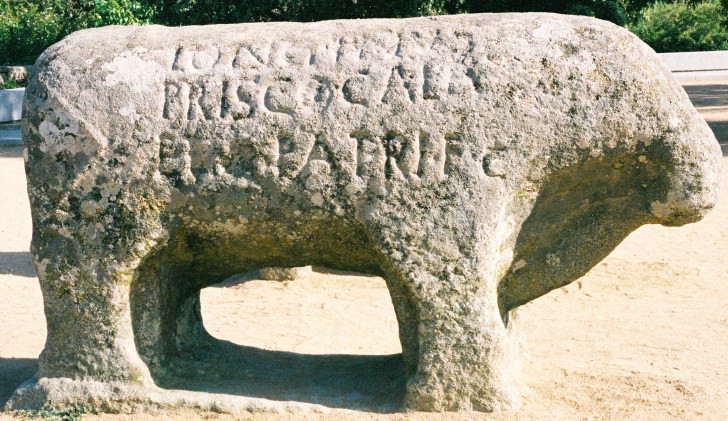
Comment: Opening photo, knowledge set in stone. One of the Bulls of Guisando (Province of Avila, Spain), with graffiti carved by a Roman legion.
Purple

IMG_0067

Purple

I write poems
in green ink,

but I prefer
purple.

Bruised clouds
on an evening sky,
dark depths
of a rainbow glow,
Northern Lights
singing at the deep
end of their scale …

or just a desire
to be different …
slightly different ..

as if that one thing,
the color of my ink,
might tip the scales
and turn me
from mediocrity
to celebrity

with a wave
of a violet wand.

or the click
of a pair
of ink-stained
fingers.

Curse of Cursive

IMG_0004 (2)

The Curse of Cursive
Wednesday Workshop
8 August 2018

It appears we will no longer teach cursive writing in our schools. Instead, we will teach our children to print. I will not pass judgement on this decision. Quite simply, my handwriting has always been bad. Very bad. I have never worked out why, but I suspect that it is because I think very quickly and my hand tries to keep up with my brain, and the result is the scrawl that I call my handwriting.

I type with two fingers, too, and stare at the keyboard as I am doing so. I tried to follow a typing course one year. I worked at it for two months. At the end of that time, I tried my touch typing examination and managed a rate of 78 words a minute with an accuracy of  82%. I did the same test with my trusted two fingers: 114 words a minute accuracy rate 98%. Oh dear. I still type with two fingers and I still write badly and no, my thoughts have not slowed down.

Just glance through the above photograph, taken from the journal I keep everyday. “Almas de Violeta,” it reads, “an early poetry book by Juan Ramón Jiménez, the Nobel winning poet, was first published in violet ink. I have a copy of his complete works, Obras completas, in which these early poems still appear in purple, or violet rather, to match the color of the title. He published in green ink too, but personally I prefer the purple. Bruised clouds on an evening sky, dark depths of a rainbow glow, Northern Lights singing at the deep end of their scale … or just a desire to be different … slightly different, as if that one thing, the color of my ink, might tip the scales and turn me from mediocre to celebrity with a wave of a violet wand or the click of a pair of ink-stained fingers.”

Now, wasn’t that easy! And there’s so much personality in tone and color, ebb and flow, the link of a poet to the words on his page.

Once, in a faraway library in a distant, magical land, I was studying an autograph manuscript, written by Francisco de Quevedo (1580-1645). The hand-writing began very steadily. Then I noticed a red dot or two on the page. Then a larger stain. Our poet was a notorious drinker. The letters grew large and loopy. The paragraphs sprawled. Punctuation marks and accents, slashed and splashed, and missed their targets. By the end of his evening, with his bottle surely empty and gone, I could just about make out what the good man had written.

When I turned the manuscript folio, from recto to verso, it was a new day and the original handwriting was back, small and neat. I have noticed the same phenomenon when I write late at night. Unreadable words, occasional wine splutters, spelling and grammar mistakes, disjointed readability … but the thoughts and the ideas are still there, still clear. Sure, I need a bit of hard work to interpret some things, but that’s the curse of the cursive, I guess.