Last Dance

IMG_0177

Last Dance

The shy lady in the corner,
body withered by cancer,
stands up to dance.

She bows to the band
then floats into movement.

Dancing alone she clings
to the empty air as she
once clung to her man.

Nymphs and shepherds play
sweet music at midnight in this
room turned sacred grove.

Her dance-steps are a draught
of joyous water from the fount
of eternal youth and lasting love.

Comment: Another Golden Oldie pulled out of the magic hat of a forgotten manuscript. Such a joy to rediscover these things. Draught is the English form of American draft, incidentally, as in draught cider. I hate how my spell-checker corrects my spelling, even when it is correct. Wednesday was dance night in the hospice. At seven o’clock a band would arrive and set up at one end of the dining room. Tables were cleared away and chairs placed in rows so that patients could sit and listen or move onto the dance space that awaited them. This one old lady, shy and very much worn down by her treatment, stood up when the last dance was called and floated in an ethereal space that was hers and hers alone. The other patients stood around in a circle and applauded as she danced  and the band played on and on until everyone was dancing and the room was filled with joy and forgetfulness. Such is human strength, even in the face of apparent and imminent disaster. Dance on, my friends, dance on.

IMG_1256 (2)


Empty Nest

IMG_1258 (2)

Empty Nest

The wind at the window
scratches tiny notes.
I can no longer hear the tune
nor read the words.

Who walks beside me
as I pace my lonely path,
abandoned in this empty house.

My self-portrait
stares back at me:
a splintered selfie,
framed in a sliver
of silvery glass.

Above me,
a monkey moon,
that itinerant tinker,
walks a fractured way
over broken glass.

The knapsack on his back
is cobbled together
from cobwebs and clumsy
veils of drifting clouds.

Comment: Another Golden Oldie from that same throw-away manuscript that I discovered a couple of days ago. I wrote this one the year after my mother’s death. My father was in hospital and I had flown back to Wales to visit him. When I was not with him, I wandered alone in a large house, empty of people, but filled with memories. The whole experience was rather surreal, just like the imagery I conjured up to describe it. Early spring, but a cold one. After hospital visiting hours, I wandered an untidy house and an unkempt garden. My mother had departed. My father was on the way out. I was alone with a life-time of memories. “No hay pájaros en los nidos de antaño” wrote Cervantes in the Quixote. “There are no birds in last year’s nests.” With no brothers, no sisters, no close family, and no friends left in Wales, I found that out the hard way. Those days of wandering, ‘upstairs, downstairs, in my lady’s chamber,’ taught me that most difficult of lessons in the hardest of ways.

IMG_0456 (2)

Lost

IMG_1058 (2)

Lost

My body’s house has many rooms and you, my love,
rule over them all. Your shadow dances on walls.
in mirrors, and your breath brushes my cheek

every time I open doors or windows. That silly cat
looks for you and hisses when I bring her kibble.
I walk from room to room, but when I seek you,

you are no longer here. I knock, nothing opens.
Afraid, sometimes, to enter a room, I know
you are in there. I hear your footsteps on the stair.

Sometimes your voice’s echo breaks the silence.
You whisper my name in the same old way.
How can it be true, my love, that you have gone,

that you have left me here alone? I count the hours,
the days, embracing dust motes to find no solace
in salacious sunbeams and my occasional dreams.

IMG_1774

Comment: A Golden Oldie. I wrote this some time ago while my beloved was in Ottawa visiting our daughter. Separation is such a strange thing: an absence, yes, but also a presence in the tiniest details and the most unsuspected moments. And then there is the dream world where things join together, and then fall apart. This poem has so much more meaning in a time like this when so many people are separated and can no longer be together. Time … I have written about it before … passes. Hopefully, families and friends will be reunited once more, the sooner the better. In the meantime, we’ll meet again, don’t know where, don’t know when. Chadwch eich fydd / Keep your faith, as St. David, the patron saint of Wales is said to have said circa 500, byddwch lawen / be joyful, and gwnewch y pethau bychain mewn bwywd / do the little things in life.

Doing Time

IMG_0687 (3)

Doing Time

Time bends like a boomerang,
flies away,
comes flying back to
the thrower’s hand.

Endless this shuffle.
Unmarked days
drop off the calendar.

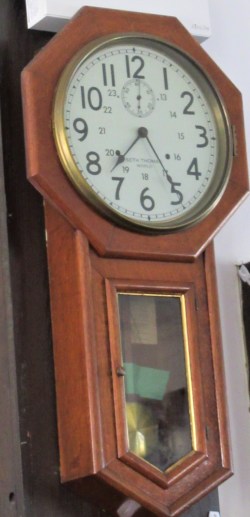
Hands stop on the clock.
The pendulum
swings back and forth
but nothing else moves.

‘As idle as a painted ship
upon a painted ocean.’

Yet the seas seem to move,
the winds seem to blow,
the sails seem to swell,
while our garden
fills with birds
and squirrels,
light and dark.

Morning ablutions.
Each day is a twin
of the day before.
Like wise each week.

The TV screen fills up
its washbasin of tired
looking faces bore us
with their endless wisdom.

Time hands heavy:
an albatross around the neck,
or an emu, an ostrich,
a flightless dodo,
an overweight bumble bee,
too heavy to fly.

Comment: An interesting article that I read today suggests that the lock down is bending time out of shape and that we need to adapt our minds and our body clocks to a new temporal reality. Seconds hang heavy. Days present the same routine. The routine makes the divisions between each day seem irrelevant. This is what my Spanish friend and teacher, the poet José Hierro, meant when he wrote about his time in jail as a political prisoner after the Spanish Civil War: “El tiempo aquí no tiene sentido” / time in here has no meaning.

A similar effect is noticed by those of us who were imprisoned in boarding schools from an early age. The first day back, we draw a railway train at the beginning of a long track and we number each day from the beginning of term. Then we cross off the days, one by one. Often, before the first week is even over, we forget about counting the days: they are all the same, lookalikes with a rhythmic similarity that sends us to sleep as routine takes over and we sleepwalk through life.

How important is time? How important is it to distinguish Monday from Wednesday, Friday from Thursday, this Saturday from a week on Sunday? It becomes less and less important. The TV chatters on and on. The shows we follow illuminate our days. I turn on the radio at five on Friday for Cross Country Check Up, which airs on Sunday. I go without breakfast and don’t even notice that I haven’t eaten. I make a cup of coffee and it sits there on the table with the cup of tea that I forgot to drink this morning. Each time I take my tablets, I write that fact down so that later in the day, I can check that I have actually taken them. The notes mount up and the bottles of tablets run down. Each mandarin orange has a tiny key and I wind those oranges up so they will go tick-tock as I eat them. My Teddy Bear has an alarm clock between his legs and a flashlight in his ear so that I can tell the time on cloudy nights when I can no longer see the Platonic dance of the rotating stars.

Settling Accounts

Empress 314


Settling Accounts

How did I earn my money? Let me count the ways.
Of madmen, priests and preachers, I sang the praise,
sinners all who tried to change my ways
by grooming me in all their awful styles
to share the sadistic rhythms of their wiles.

Then there were bosses, CEOs, and chief execs,
whose aim in life was troubling their employees,
the men for unpaid work, the women for sex,
and while we slaved, they lived a life of ease.

Senior teachers, department heads, and deans
reduced all genius to counting and recounting beans.
Those bean counters checking up on us, every hour,
flexing their muscles, overwhelming us with power.

Sometimes, at night, my nightmares fill with screams
as their abuse and privilege shake me from my dreams,
my dreams of freedom, sharing, caring, love, and joy,
all the small things I’d taken for granted when a boy.

In a twisted, corkscrew world we all must live
where the richest rob the poorest who work and give.
And even more shall be given to those who hold
while those who have-not labor and are sold.

A sad world this, but some things remain with me:
my power to dream, to create a legacy,
to mold still willing people with my voice,
to gift them beauty, thought, and power of choice.

Oh dreamers, join with me and sing, be it high or low,
but don’t forget your dreams, don’t ever let them go.

Comment: I went to pick up groceries today and sat in line, waiting in the car, rear hatch open, for 30 minutes. Unwilling to waste my time, I decided to write a poem. Oh dear: I had left my note book at home. I rummaged around the car and found a redemption slip from two years ago and a bank slip from last year. I wrote two poems, one on each of them, each poem thematically linked to the slip of paper it was written on. This is the bank slip poem. I’d say “Enjoy” except that this is what the waiter / waitress says each time s/he places a particularly unpalatable meal before me. Luckily this cannot happen anymore and I am eating delightfully well at home, thank you. I am not a Cordon Bleu Chef by any means, but I am a good one, having learned at my Welsh Grandmother’s knee when I was a tiny tot. Supper tonight: salmon and leek and potatoes! Cost: about $5. It would have cost fifty in a restaurant and it would have been half as good. So count your blessings: cooking and creativity are two of mine and yes, every time I look at what I have and see what so many others are missing … I break my heart.


img_0003

Beaver Pond

IMG_1304 (3).JPG

Beaver Pond at Mactaquac
for my beloved 

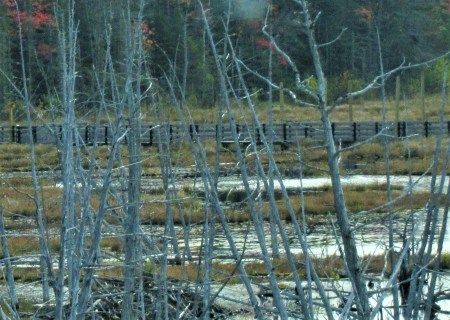
Beaver Pond, Mactaquac, on a fine spring day:
so sad to sit here knowing you can no longer
walk the trail. I remember the sun on your hair,
white, a flag of surrender to old age besieging
your mind and body. It cannot be seen on the board
walk where you stopped to commune with newts,
frogs, birds, fish, ducks, and the great blue heron
you disturbed. Remember? He rose from the reeds
with an anguished cry and a crack of mighty wings.

The wind in Island View is chill today, not a day
for walking in the wild. Monday: men arrive in a truck
and haul our garbage away. So much detritus,
such a mess at the roadside as winter ends and spring
brings thoughts of freedom to roam beyond spells
of ice and snow. Memories: I pack them into a green
green plastic bag and stuff them in the dustbin.

I want to be free. I want you to be free. I want to sit
and watch you wander, like you did last summer
contemplating the multiple meanings of grass, sun,
bird-song, herons, ospreys, beavers, their lodge,
this dam they constructed, this pond in which
they swim, nocturnal creatures, who live far away
from this lock-down and from our silent visits banned.

IMG_1318 (3)

Daffodils

IMG_0617

Daffodils

My daffodil day-dreams carry me back to Wales, that Land of Song where every valley conducts choirs of daffodils and their pale, brass voices are raised in an annual springtime hymn of hope. Beneath the trees, in Bishopston Valley, between Pyle Corner and Pwll Ddu, sheltered bluebells tinkle sweet tunes, lilies-of-the-valley bloom, and primroses raise their faces to the sky while hearkening to those springtime airs that sound where’er you walk. In Blackweir Gardens, the Feeder Brook flows into the castle moat and the castle’s central keep stands on the mound the Normans dug when they converted into a motte and bailey the old Roman camp that was built on an earthworks constructed by the Silures long before that countenance divine shone forth upon these clouded hills and long before the Roman came to Rye or out to Severn strode. Generation after generation, all those who witnessed the birth of these flowers and strove to be the first to hear the cuckoo’s call, come alive again in this floral tribute. Oh, Land of Song: the bluebells may have gone, the larks may sing no more, cuckoo and cowslip may have fled the valleys, but all is not lost, not while the daffodils still toss their heads in sprightly dance and spring breaks out its freckled sunshine.

Comment: Win some, lose some. Survival is all. At the same time as I mourn everything  that is lost, I also celebrate all that survive. The grosbeaks have left us, moving further north as the weather warms. They have left more room for cardinals and hummingbirds have moved in to replace them, as have turkey vultures. Turkey Vultures, Zopilote, The Trickster, in Oaxaca, the bird that flew high up into heaven, stole the fire of the gods, and brought it back on his wings, now flies over the St. John River Valley, having moved up here with the warmer air from the south.

“The olde order changeth lest one good custom should corrupt the world” … indeed it does. And we must mourn and celebrate the olde order while preparing for, and celebrating, the arrival of the new. For the world has changed and is changing as I sit here and type these words and it will have twitched and changed again by the time you read them. Who knows exactly what is coming? How do we prepare for the unknown? How do we open our arms and embrace an uncertain future? Good questions all. I cannot answer them for anyone but myself, but I must ask them. Many of them were discussed today by Suzanne Moore in an article entitled: The way we once lived is now redundant. We must reinvent ourselves. Read it and start thinking about how we can be strong, daring, caring, and best prepare ourselves, not for our own extinction, but for our own reinvention.


Sounds of Music

IMG_0147

Sounds of Music

Sounds of music everywhere, and in Cardiff now the black weir gurgles with laughter as you stride along. Gravel crunches in rhythm with your footsteps and the song birds invent new ways of singing their same old courting songs. Nesting birds pair up and sing about the joys of nesting. Beneath the trees, the Daffodils – Taffodils sway to the wood wind’s delicate fluting. A lace of golden lover’s hair, they curtain the sky above you as you climb the embankment, up and up, until the River Taff flows beneath you. Black and swift and deep and swollen with the last of the winter rains, the river surges along, its face freckled with sunshine.  The Taff, they say, cradles, as it murmurs its own sweet river song, the finest coal dust from the Rhondda Valleys and carries it out to be reborn in the sea. Here, in the river, fish and eels swim eyeless, so the fishermen say, as they gesticulate with brimming eyes and empty hands, weaving with hollow wind words mystical stories of the mythical salmon that were hooked, but lived to swim another day.

img_0146-3

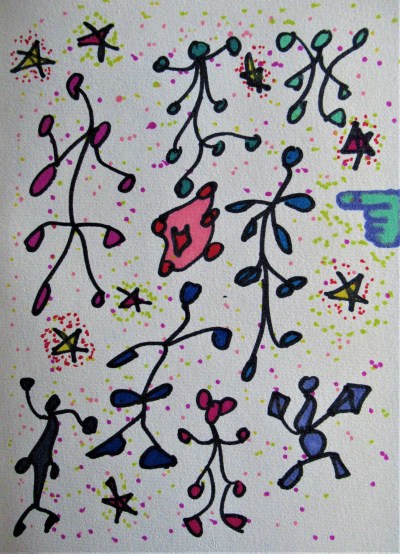
Comment: A crazy cartoon with a stick man dancing to music that occurs just off the screen at the side of the page. He dances unseen, unheard, as the deer dance at midnight, on their hind legs, reaching for bitter berries wintering on the mountain ash, as the sunlight dances when speckled trout rise to snap at flies, as my heart dances when my beloved walks into the room and lights my world with a smile. Spring in Wales: so far ahead of us as we languish here, on Canada’s East coast, hoping that last night’s minus temperatures will stagger to zero and then surge upwards into plus and double plus. Meanwhile, the grey squirrel chases away the red squirrel who frightened away the chipmunk, my beloved’s pet chipmunk for whom she put out the early morning seed to comfort him on this fresh frosty morning with its chill wind dancing between still-barren trees.

Scars

IMG_1095 (2)

Scars

It’s just a tiny splinter, lodged in my little finger. I take a needle from my sewing kit, put on my glasses, and break the skin around the small black spot in an effort to dig the splinter out.

Suddenly, the vision changes and I am back in my grandfather’s house. My father has bent me over his knee and is jabbing at the splinter in my thumb with a needle from my mother’s sewing kit.

“Hold still,” he pushes me down with the elbow of his left arm, then thrusts the needle again and again into the now bleeding spot on my thumb. “Hold still. Stop wriggling.”

“You’re hurting me.”

“Good.”

My mother comes into the room and inspects my thumb.

“Put your glasses on,” she tells my father. “At least you’ll be able to see what you’re doing.”

“Ow, ow!” I struggle with each piercing thrust of the needle but my father only holds me tighter.

Back in the present, I can hardly see this other splinter, let alone pull it out of my little pinky. I have broken the skin, so I place a band aid over the spot. Hopefully, the plaster will draw the splinter out, it usually does, quite painlessly. I put my sewing kit away and check my right thumb. My age-old splinter, still in there, winks its little black eye back at me from beneath the tear-filled eyelid of its tiny white scar.

We bear so many scars. Not all of them are visible.

Comment: So my granddaughter decided that she could polish up and improve my drawing notebook (top photo). And she did. Proof positive that a red pen in the hands of a young lady can work wonders. The thin red line of life, that link that joins us generation to generation, stretches back to times that only I can remember, stretches forward into times that I will never see. I wonder what my grandfather thought when he sat on his chair by the old Welsh fire and I climbed up, onto his knee. “Grandpa, tell me a story.” And he always did: “Once upon a time …  there was a thin red line …” And look, there’s my grandfather’s old chair down in my basement in Island View, New Brunswick, Canada. It’s a long way from my grandfather’s old home in Swansea. Just think, I used to climb up on the back of that chair, while he was sleeping, and blow on the bald spot on the back of his head … one long thin red line of inherited mischief …

18581930_1306791786107970_4016640231053970709_n-1

Limpet

fundy 05 mist+wolfepipers 081

Limpet

… like a limpet at the sea side
she clings to her inner rock
as the incoming tide
causes waters to rise,
threatening
to sweep her away.

A wind charges
over the bay,
brings a wave-surge,
white water urgent,
crashing against rocks.

Rock-face showered
and shocked,
the little limpet
clinging on,
knowing that this
is the way
limpets survive,
day after day,
generation
after generation.

Comment: We must also survive and we do so by hanging on as long as possible. The tides may rise, the mists come in, storms may send waves to come breaking over us … but they will not break us because we are limpets. So, imitate those limpets, cling to your rocks and hang on. However grim the situation might seem, the night will end, day will come, and we will survive. And remember that old Irish drinking song: “If Moonshine don’t kill me, I’ll live till I die.” And so will we all. And until then, enjoy the sunshine and the moonshine. This is your life, your planet, your set of circumstances. Hang in there and hang on, for as long as possible. Look for the good things in your life and when you find them, celebrate them and make the most of them. Remember the sundial: I count only the happy hours. Seek and you will find: for there is goodness all around you, even when the night seems to be at its darkest.