Dustbin Alley

20180823_152000-1_resized.jpg

Dustbin Alley
(1789 AD)

all the dustbins
dancing down the street
trying to achieve
a spring time copulation
to create more dustbins

you can’t have a revolution
without dustbins
dustbin … dustbins … dirty
dusty dustbins

a sadistic way to look at
basket-bins full of sawdust
heading between potholes
wind-blown bins
a right St. Vitus’s Dance

him sitting next to me
knitting a new red cap
to place upon
the old dictionary
me standing
on Gibraltar’s Rock so fair
this square in Paris
Place de la Bastille
where tumbrils rattle
over cobbles

Old Moll in a Moll’s Cap
toothless fairy
at a Goblin Party
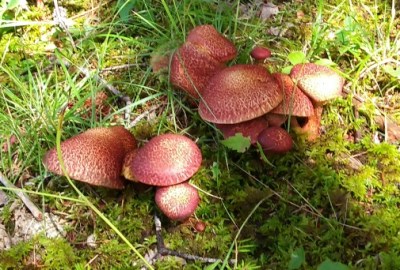
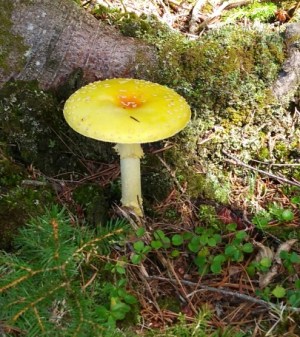
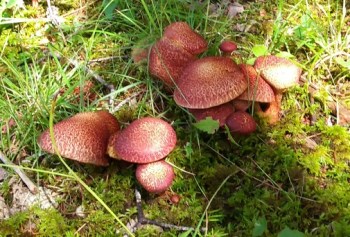
afraid of mushrooms
scared of toadstools
[sick]

20180823_152016_HDR-1_resized - Copy.jpg

Revision

img_0128

Revision
“We are not writers, we are re-writers.” I do not remember who said this, but it is extremely well said. We write, yes. But then we rewrite, sometimes obsessively, again and again. But how does that rewriting process take shape? Why do we rewrite? How do we rewrite? And what do we do when we re-write? These are all vital questions.

Mechanical revisions and rewrites
This, for me, is the search for typos, punctuation errors, mis-spellings, grammar corrections, that sort of thing. Yes, we can rely on a (reliable?) editor and a not so reliable spell-check, but the editor usually costs money. Or we can learn to do it ourselves, which is what I recommend very strongly.

Grammatical revisions and expression checks
These are usually a little more difficult to deal with. Do the verb tenses check out? Are subject and verb clearly delineated? Does the wording make sense, not just to us, but to the outside reader? A second pair of eyes is always useful at this point. Also, a sense of distance from the text is useful. Leave it a day (or two) and come back to it later when he creative rush has fled the system.

Structural revisions 1
Whenever we do a structural revision, it is essential to check that the revision ties in with the rest of the piece and that we maintain consistency throughout. A simple example: I decide, on page 77 of my novel, to change my main character’s name from Suzie to Winnie. Clearly, her name has to be consistent, both backwards (1-77) and forwards (77 onwards). While this is obvious, other changes, taste, color of hair, color of eyes, height, weight, tv program preference, may not be so easy to check and double-check. But it must be done.

Structural Revisions 2
This is where we must pay attention to the vision in the re-vision. We must ask the question, what does the poem / story / chapter / text want to say? What is it actually about? Often, in the flush of creation, we write words (actions, thoughts, emotions) on the page and they flow like water from a fountain. It’s a wonderful feeling. Later, during the re-vision process, we must ask ourselves, again, deep down, what do these words mean, what are they trying to say? This is actually a slightly different question from what am “I” trying to say?
The speaking / writing voice may want to say something, but the words (and characters and actions) themselves may want to say something else. Now we are faced with a dilemma: do we write what we want to say or do we follow the intricate word-path growing from what we have written? As a beginning writer, I did the former. As a more mature (and I hope, a slightly better writer) I now do the latter.
The result is often a piece that is radically different from it’s starting point. When you listen to what the story / poem / text / characters etc are telling you and when you follow words and characters, then structure changes, paragraphs switch places, thoughts move around, expressions change. We are no longer forcing words into our meanings, we let the meanings grow out of the words. This is particularly important in short story telling and the writing of poetry. It is vitally important to the novel where any inconsistency must have a relevance to the development of action, plot and character. It is also a totally different approach to the meaning of re-vision.

Summary
I realize many writers may have difficulty accepting these points. Those trained originally in the academic world, in particular, will respond negatively to the idea of the words ‘not being forced into the correct academic shape by the quasi-omnipotent academic mind’ aka Constable Thesis Editor. However, the more creative a writer is, the more that writer will respond to the creativity that lies within both the creator and the creation that has appeared on the page and, as writers, we must never lose sight of that creative act, for it is one of the most truly wonderful things that we can do.
Macadam: Before & After

IMG_0661 (2).JPG

Macadam: Before & After

Yesterday, I traveled to Macadam Railway Station to spend a day with two of my friends, Geoff Slater (artist) and Jessi Green (writer). Geoff is painting a mural for the historic building. It depicts an incident from WWI in which Canadian Railway Engineers and troops rebuilt a railway bridge in Northern France that had been destroyed by the enemy. When I arrived in Macadam, Geoff took Jessi and I to see the then current state of his painting (as shown above, Before). After lunch, Jessi and I would discuss sundry writing topics, including when, ho, and what to revise, as well as our various writing  projects while Geoff continued with his painting.

IMG_0663 (2).JPG

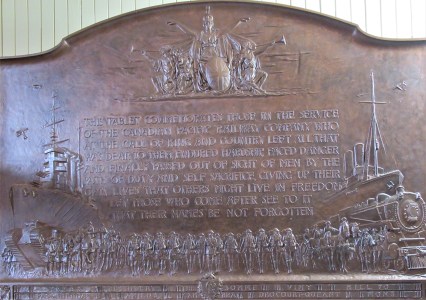
On the wall opposite the mural hangs a plaque dedicated to the memory of those Canadian Railway Engineers, probably the best in the world at the time, who made such reconstruction possible. The juxtaposition of mural and plaque make a fitting tribute to the role of the railway in WWI. The Macadam Railway Station is a protected historical site and a work of art in itself . What a pleasure it was to visit there as an invited guest.

IMG_0683.JPG

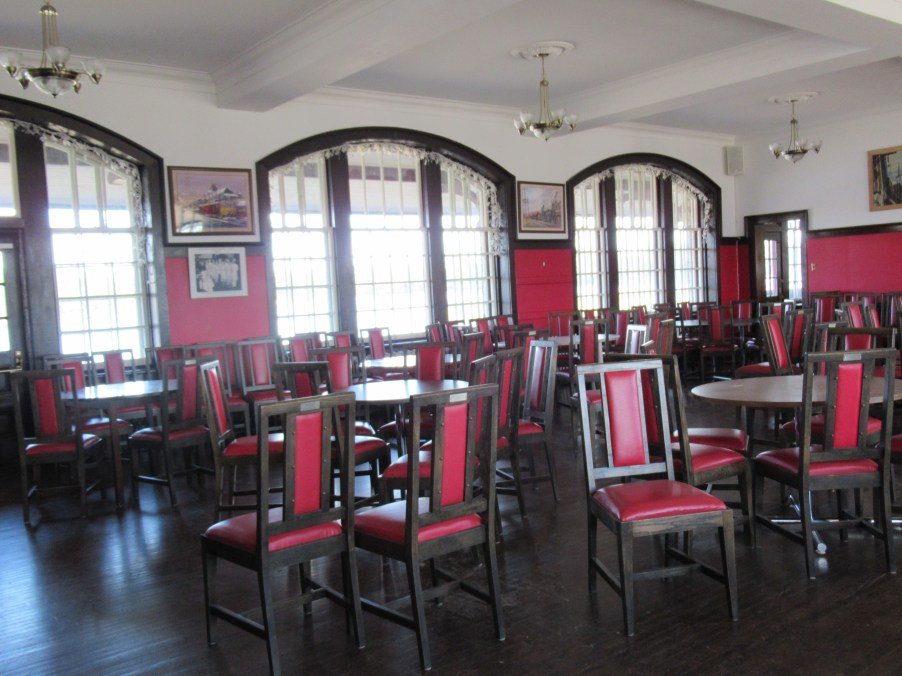
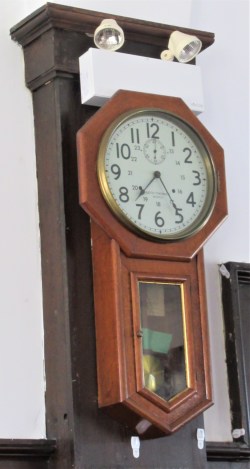
This is the dining room and immediately below you will see photos of the beautiful working bureau, over a hundred years old, and the grandmother clock that hangs on the wall beside the bureau.

IMG_0686 (2).JPG


IMG_0687 (2).JPG

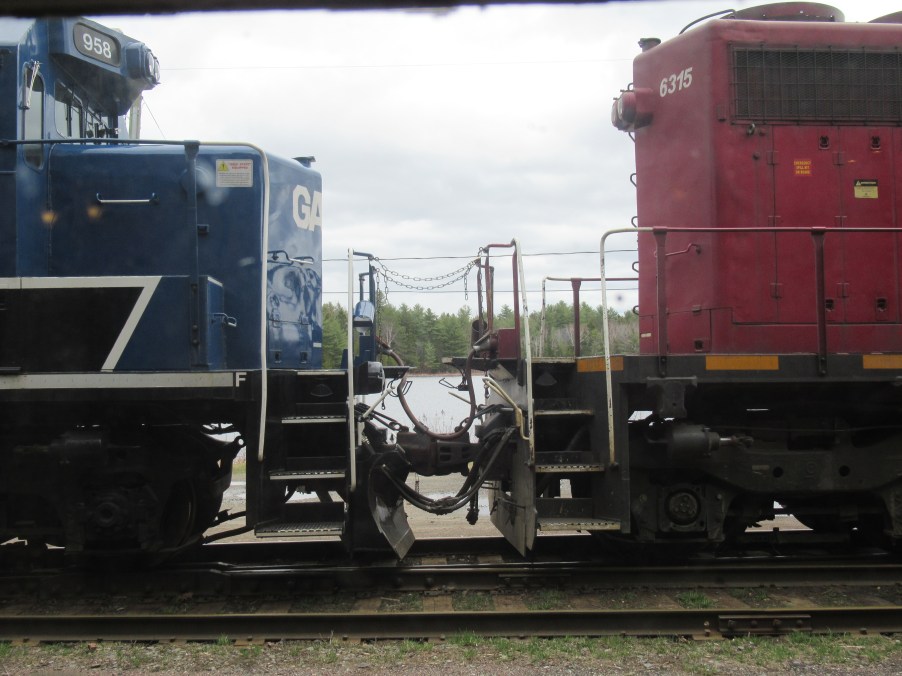
During the afternoon, we were blessed by the arrival of a train. In many ways, it was a ghost train, hauling with it so many memories of the past when railways ruled and train travel was ubiquitous.

IMG_0678.JPG

Before leaving, we paid our respects to Geoff’s painting. He had been busy on the top right corner of the mural and had completed the insertion of the military personnel who were working on the new trestle bridge built to replace the one that had been destroyed. All in all, this was a fabulous day in which art, photography, memory, writing, planning all played a part. Some photos to end with: first of all, a selfie entitled Selfie with Coal Scuttle and wow, did that bring back some childhood memories; and then a close up of Geoff’s work for that afternoon Men on the Bridge. I will end by saying that Macadam Railway Station is a ‘must-see’ visit for all train enthusiasts as well as for the train generation who wish to maintain their links with that past.

IMG_0689


IMG_0664.JPG

IMG_0692 (2).JPG


Method & Madness

IMG_0650

Method and Madness
(1729 & 1955-1962 AD)

his dawn chorus voice
woke the wilderness
shook bread down from heaven
to be cast on wild waters

Frocester’s old barn
scything and tithing
Gloucester a stomping ground
walking and biking
wherever he can

a dearly beloved
moved into sundry places
a town mice wandering open fields
harvesting blackberries and apples
gleaning summer seeds
storing them now a country mouse
ready for winter’s dead dreams

he collected dusty parchments
stitched old leaves together
a many-colored coat he made
amid autumn’s sheaves

words fell like rain
formed lines on each page
turned into tunes
that bolstered his heart
marched him steadily onward
mad from stage to raging age

Comment: This is the revision of my previous poem. Any comments on either version gratefully accepted.

IMG_0402 (1)

Carnival


IMG_0198

Carnival
(29 March 2019 AD
12 April 2019 AD
25 June 2019 AD)

house of cards
jacks and jokers
twos and threes
running wild
vacant faces
loaded wallets
crowded rooms

dry bones
wizened teeth
tongue-tied cheeks
feet shuffling

tiny corkscrew
worms gnawing
through what passes
as a brain

high-wire tumble
into this tumbril
wheel-of-fortune-barrow
plentiful cornucopia
copycat horn of luck

clock faces blank
no numbers no hands,
egg-white circles
stuttering uttering
cluttering
flustered minds
meaningless circus sounds

IMG_0618 (3).JPG

Swans


IMG_0627 (2)

Swans
(at the Vetch Field)

(circa 1950 AD)

White
their plumage
fierce eyes
folded angels’ wings
black-booted feet
paddling urgent
driving them on

skilled and silky
swift lunge
capable of breaking
leg or arm

all white ghosts
those swans
bodies and spirits
earthly dance done
long since gone
flown to the sky

anonymous
constellations spread
milky feathers
winged like swans

Comment:

The Vetch Field is where Swansea Town (now Swansea City) used to play their soccer. My father took me regularly to see the Swans play and, when young, I preferred the round ball game to the oval ball game. Swansea Town were always known as the Swans and the rugby team were always called the All Whites. No Ospreys and colored uniforms in those days and also no money in the rugby: everything was amateur. The inter-relationship of images in the poem above changes when the reader learns that the Vetch Field is also where the shroud-wrapped bodies of those prisoners who were hanged in nearby Swansea Jail were rumored to be buried. This may or may not be true, but be it myth or legend or plain falsehood, it gives added dimensions  to the imagery in this poem.

De[con]struction


20180823_152016_HDR-1_resized - Copy

De[con]struction
(1945 AD)

daylight regenerates
a stuttering roar
noise bursting into life

ladders and supplies
rise from earth to sky
loud voices verbal angels

barn dance on raw rafters
uncovering hidden layers
replacing worn-out tiles

ascending descending
Jacob wrestling with
his heavenly burden

no crows on patrol
cats long gone to ground
chaos and commotion

leave taking
a ritual shaking
rough tarry hands

a brave new world
rebuilt by three
not so wise men
less than three days

Courbet

Courbet
(1944 AD)

a deep moist cave
moss-grown cavernous
casting from night to day

synchronous memories
ascent descent blood scent
ejection rejection

tumbling down falling
insidious angel
no room at the inn
trapped no escape

Hieronymus Bosch
black-winged devils
cloud tormented
descending
anonymous red skies

factory and furnace
foundering foundries
mysterious birth myth
turned into lies

virgin berth
borne with tweezers
untouched the channel
from dark to light

Aye, aye

IMG_0581.JPG

Aye, aye
(8 April 2019)

I am my eye
this eye
my left eye

rapid heartbeat
shallow breathing
tautness in chest
this is all about
my eye

frozen with gel
disinfected
bathed in iodine
it nestles in a nest
loitering with intent
within a blue tent
filled with oxygen

three bright lights
surgeon’s fingers
surgical instruments
moving shapes
this eye my eye
sees them draw near
then fade away

machines hum
laser beams bite
extract then implant
more liquids
face patted dry
dark glasses appear
smiles all around

“Oh my eye
and
Betty Martin!”

this eye
is not an eye
because you see it
it’s an eye
because it
once more sees you

IMG_0591 (2).JPG

Ogmore-by-Sea

IMG_0055

Ogmore-by-Sea
(1960 AD)

white stone its castle
tumbled into ruin
stones in the river bed
mirrored its image
wind-broken ripples
picture fragmented

mud flats and rocks
stretch out horizontal
distant the sea
Severn mud an obstacle
no swimmers out there
where tides twist and pull

rock bathing instead
wind-whipped bare bodies
blasted with sand
skimpy the clothing
bikinis and pants
intrepid the wearers
breathless young girls
Welsh voices on the wind
always the wind
across rock across mud

dinosaurs walked here
left tracks in that mud
metamorphosed now
into fossil and rock

breeze tickles the nostrils
gulls batter the ears
salt stings the tongue
life on the margin
a bargain a gift
sweet in my memory
her kiss on my lips

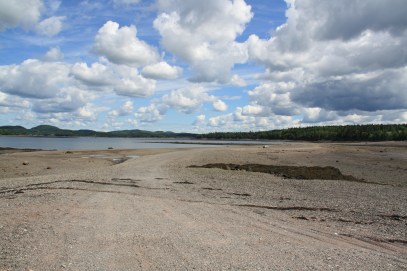
Comment: I have no pictures of Ogmore (except in my mind). You’ll have to make do with St. Andrews, also by the sea. My thanks go out to David Watts for reminding me of my childhood in Wales. So many memories came twitching back. I went regularly to Ogmore with one of my school friends and his family. This was while I was still in the sixth form in school … a long time ago … but I remember it well.