Self Isolation Day 21

IMG_0638

Self-Isolation Day 21
Bakhtin’s Chronotopos
Man’s dialog with his time and place

Chronos / time + Topos / space = chronotopos: the time and space within which we live.

Chronos: this morning, when I woke up, I moved back into my own time and space. But what is my time? It was 5:45 am when I awoke, so was that my time? I stayed in what the Spanish call the duermivela, that drowsing dream-world in which we all wander, half-conscious. I stayed there until I decided to get up at 7:45 am. Was that my time? Well, yes,  all of that is / was my time. But time extends further than that. Real time is static and only exists in this second as I type the s of second, but look how it has flowed or flown. So my time drifts backwards into a knowable and then an unknowable past. I knew my parents, and my grandparents. But I know nothing of their childhood, their war days (WWI and WWII), their courting, their marriages. Their time is time lost for me. Sure, I can invent it, renew it, recreate it … but it can never be mine. All I can possess is this Second when I preSS the S key, a Second that haS already flowed paSt me, flown and gone. The same with future time. It is there, stretching out before me, for how long, I do not know. It is not yet mine, and when I come to possess it I will only posses it, really possess for those precious Seconds when I inhale, or exhale, or press the S key. And now I have bewitched you, and your concept of time, and your keyboard will never be the same.

Topos / Place: so what is my place? When I awoke this morning, it was the kennel-cave of the bed in which I hibernate each night. Then it morphed into the bathroom where I dressed and prepared for the day. After that, I walked downstairs. Descending the stairs, a step at a time, feeling for the steps with my cane, as I do, I find that each step is my place. Luis de Góngora, one of my favorite Spanish poets, wrote, a long time ago that “Cada pie mal puesto es una caída, / cada caída es un precipicio”each footstep, badly placed, is a fall, / each fall is like tumbling down a precipice. Ipso facto, I must take care not to fall each time I place my foot on a stair, and each stair, therefore, is my concentrate of time, and this moment of time manufactures my space.

Then there is my breakfast place, my office place, my work place. Time spent in each of these spaces is a link backwards and forwards, past, present, and future all inexorably bound in each passing second that I live.

But there are other spaces, spaces in which time flows at a different rate in objective time (the thirty minutes you spend in the dentist’s chair) and subjective time (the hours and hours those thirty minutes take to pass as each second limps by, like a three legged tortoise with gout). hen there is creative time: and creative time, especially on the computer, leads us into a different space, a sort of hyper-space, in which we hover between this place (the place of the office and the house) and that place (the place in which we create our visions and dream our dreams). Lost in that creative hyper-space we drift in a timeless amniotic sea where all time is one and all places are one and we are the masters and mistresses of our own creative universe. Y aquí, as my good friend José Hierro once told me, el tiempo no tiene sentido / here time has no meaning.

Jane Tims wrote these words to me today. “The idea that some of our words will live on, on the page… I wonder where our WordPress and Facebook words will reside in 300 years? Will some antiquities student make the headlines having managed to upload the forgotten words of people who wrote about the days of the coronavirus?”

My reply: “These are very true words, Jane. It looks like you have gifted me with the topic of tomorrow’s blog! Thank you.”

Indeed, the online medium is so ephemeral and can be wiped out in seconds. Tweets can be erased, changed, and altered. Written words and written histories have also been erased and wiped out. In our brave new world, the truth changes from day to day with no vital record attached to it. Historians always say that the conquerors write history … and when they do so they usually destroy the writings of the conquered. I think of all those Mexican Codices, destroyed by the Spanish priests on their arrival in Mexico as the works of the Devil. We know so much from the surviving ones, for example the history of Ocho Venado, born in 1063 and sacrificed in 1113 in accordance with the fifty two year annual cycle. Only five Mixtec codices now survive, one, the Vindobonensis, still bears the scorch marks from when it was plucked from the flames that were meant to devour it. Man’s inhumanity to man. How much have we lost? How much are we losing? How much will we retain? And what is truth …?

As for us and our chances of survival, another good friend of mine, the poet and philosopher José María Valverde once wrote of nosotros, los pobres poetas de hoy, destinados a ser polvo seco de tesis doctoralwe poor poets of today, destined to become the dry dust of doctoral theses. In spite of all this, it is our fortune and our duty to exist within our time and our space, to live letter by letter, painfully tapped on the keyboard, and to engage in our dialog with our own time and space, for that my friends is all we have, the single instant of that one letter S.

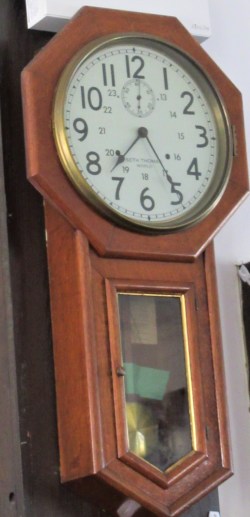
Comment: The watch in the photo belonged to my father. I wind it up and wear it on his birthday every year. It now measures my time, as it once measured his, and its place, at least once a year is on my wrist. Its function is to tell me the time. One day, it will do the same for my daughter, and then my granddaughter and they too will have their dialog with their own time and place.

Self-Isolation Day 19


IMG_0718 (2)

Self-Isolation Day 19
Platero yo yo
Meniscus: Crossing the Churn

I am eking out my reading of Platero y yo much as I eke out the food supply: small portions, and a chapter at a time. In the same ay that I am enjoying my food so much more, savouring each mouthful, cutting down on the accompanying wine, tasting life to the full, so I am slowing down my reading. I am learning to enjoy the journey, the perusal of each word, each phrase, the long-drawn out aftertaste of every image, the lingering bouquet of each metaphor. Yes, Platero y yo is a fine wine drawn slowly over the palate to be tasted and tested, not swigged and swallowed.

Not for the first time in my life, I am jealous, jealous of this writer with his Nobel Prize for Literature and his wonderful way of choosing le mot juste, the exact word, with which to illustrate his tales. It is not the Nobel Prize of which I am jealous, but the talent, the skill, the patience, the taste of each word. I wish I could write like that. I wish I could take the world outside in my garden and imprison it on the page.  Imprison: that’s what I do. Juan Ramón Jiménez imprisons nothing. His birds and butterflies fly free. His donkey roams free. His village women, young and old, wander freely across the pages as do the gypsy children and the children of the poor, with their dreams of gold watches that will not tell the time, their shot-guns that will not kill hunger, their donkeys that will carry them to a pauper’s death. Reading at this level, I rediscover my inevitable inability to write the way I want, to capture what I see, to give life and liberty to my words, enchained all, and lavishing in their captivity.

There is, of course, an alternative, one of which I am also incapable: to create a new world. I know of few people who are capable of doing that. Tolkien, of course, created Middle-Earth, the Shire, Mordor, Gandalf, and the Lord of the Rings. Rowland created Hogwart’s and the world of magic that surrounds Harry Potter. Closer to home, Alexandra Tims created Meniscus, a planet that travels around twinned suns and is in turn circled by two moons. Here water effervesces and flows uphill or generates dramatic water-climbs and lake-like churns.Erosion occurs by wind-scour and frost-heave. It holds predators (slear-snakes and kotildi) and humans have been brought her, as slaves, from earth itself, to eke out a miserable existence amidst the dystopia created by Dock-winders, Gel-heads, Argenops, and the Slain.

What I love about this series includes the invented language, the flora and the fauna, the wonderful drawings and maps that occur regularly throughout the books. This is no Middle-Earth, a recognizable world inhabited by humans and figures of magic drawn from our own legends and mythologies. It is a flesh-and-blood creation of something new and startlingly different.

Wolfgang Kayser suggested, a long time ago, that there were three types of novels: novels of action (the easiest to write, if you have that calling), novels of character (the development of an individual or a series of individuals), and novels of place (where the world, or a small part of it, is captured in detail). Occasionally, a great novelist, and Miguel de Cervantes was one of those, manages to write a book (Don Quixote) that contains all three of these features. Mikhail Bakhtin talks about ‘man’s dialog with his time and place’. Well, Ms. Tims has created ‘a woman’s dialog with her created time and space’ and I, personally, am so very happy that she did so.

Comment: [added 27 March, 2020]
Meniscus: Crossing the Churn can be found at
Here are the other books in the series.
Book One – Meniscus: Crossing The Churn

Book 1.5 – Meniscus: Forty Missing Days
Book Two – Meniscus: South from Sinta
Book Three – Meniscus: Winter by the Water-climb
Book Four – Meniscus: The Village at Themble Hill
Book Five – Meniscus: Karst Topography
Book Six – Meniscus: Oral Traditions
Book Seven – Meniscus: Encounter with the Emenpod


Self-Isolation Day 18

IMG_1773 (2).JPG

Self-Isolation Day 18

So we are in the eighteenth day of our Self-Isolation. Yesterday I added a fifth book to my group around the table: The Art of the Middle Game by Paul Keres and Alexander Kotov, translated by Harry Golombek. I have had this book since 1964 when it was first published in Penguin Books. Once upon a time, I played serious chess, was president of a chess club, and read widely about the game. But I have not played any serious, face to face chess since I came to Canada and the last games I played were in 1994, when I visited the Dominican Republic, although I did pay a couple of games in Oaxaca on my first visits there.

I dipped in and out of this book yesterday, playing sample games here and there. It was a joy to rediscover the movement of the pieces and to see how great minds viewed the chess board. Sharpe’s Riflemen are wonderful to watch on YouTube, but they cannot rival the two sixteen piece armies that wage battle on the sixty-four squares of the chess-board!

The Art of the Middle Game uses descriptional notation. This means that when the King Pawn takes two steps forwards, it moves from King two to King four. In descriptional notation, this becomes P-K4. If it is the first move of the game, by white, then it becomes 1. P-K4. If the opposition follows suit, then his move is also transcribed as P-K4. This gives us 1. P-K4   P-K4. And this is where the confusion arises: each side has a K-4, and a Q-4 and every other square is doubled up as well in a mirror image of army facing army. After such a long time away from the game, I found my concentration wavering in places and thus I had pieces on the wrong squares and had to start all over again. Very frustrating.

When I played chess in Spain, also back in the sixties, I was faced with algebraic notation, long in use on the continent of Europe. The eight ranks are lettered a-h, from left to right, and the eight files are numbered 1-8 from bottom to top, with ‘white on the right’ i.e. h-1 always white. This means that each square has a single, plotted designation and it is much easier to follow the game as there is no mirror imaging. In this fashion, 1. P-K4 would become e2 – e4 followed by e7 – e5. None of this changes the nature of the game, but it does change the speed and ease with which it is transcribed and followed.

I remember buying my first pocket chess set, in Boots the Chemist (!) when I was 9 or 10 years old. It is an old cardboard set with red and white squares and pieces. I still have it and I am using it now. The scrawl that I call my handwriting is still unmistakable, after all these years. That same day I bought Harry Golombek’s The Game of Chess, and I taught myself how to play, based on that book. I remember looking at the descriptional notation and not understanding how the system worked, even after days of memorization. Then, one morning, as Dylan Thomas, another Swansea Boy once wrote, ‘light broke where no light shone’ and as all the squares fell miraculously into place, the system of descriptional notation suddenly made sense to me. “Threshold knowledge is a term in the study of higher education used to describe core concepts — or threshold concepts — which, once understood, transform perception of a given subject, phenomenon, or experience” (Wikipedia). The discovery of the key to descriptional notation was indeed a threshold experience, as was the transition to algebraic notation. What a wonderful world we live in.

CV-19 Week 3 Day 3


IMG_1337 (2)

CV-19 Week 3 Day 3
A Change of Scene

Nothing serious happening with this change of scene, but this morning I put Phillip Larkin on one side and turned to a new book, Neil Sampson’s Apples on the Nashwaak (2019). This may be just the read you need in times like these. An excellent foreword locates the text of Neil’s narrative poem(s) in the long line of European narrative poetry. Neil’s introduction places his text in his own life on the land where he lives and wanders in Upper Durham, above the Nashwaak River. The text itself places us, as readers, in the long successions of repeated lives and deaths that mark the early settlements in New Brunswick, Canada. And yes, we have passed this way before, for better or for worse.

This is not a re-statement of ‘mal de todos, consuelo de tontos‘ / shared ill’s are a fool’s consolation. The colored apples on the stark tree that adorns the cover are a statement of hope, long term hope, even among the bleakness of difficulties, tragedies, and deaths. Like it or not, these things happen, and yes, there are survivors. Hopefully, there will always be survivors. And thus we must always live in hope. It is one of the threads that come through Neil’s poetry.

Only four trees are still alive.
The last of that first
generation
ponder existence and being
unable to walk
— no chance of pilgrimage —
have seeded their hope of redemption,
in Self.

Sounds like us, tucked away at home for three weeks and three days now ‘unable to walk’ outside and with no immediate ‘pilgrimage’ in sight or ‘hope of redemption’. Yet we sit here, un-suffering, following the news on television and radio, talking with friends on the telephone, reaching out to loved ones, near and far, on Skype, e-mailing and encouraging fellow un-sufferers, house bound, like us, ‘Children / hugging the chimney, // warm long after / the embers had died’.

Wait! In the orchard!
There’s One who’s come to call.
Those four pioneers
cankered with rot;
bark-skinned, limbs,
thin, draped in swags
of moss —

they know
who He is.

Enough for now, Neil. I shall read your book today and perhaps tomorrow, and then I will move on with head held high and hope in my heart. Thank you for your words. They are doubly meaningful at times like these reaching out to us with comfort, love, and understanding, and warming our hearts.


CV-19 Week 3 Day 2

IMG_1053 (2)

CV-19 Week 3 Day 2
Reading in Multiples

Legend tells us that Francisco de Quevedo possessed a revolving book stand-cum-lectern. He placed this on his table at meal times and he would have four books open at the same time, moving rapidly in his reading from one to another. I have always liked this idea. As a result, I am now doing something similar.

I began by taking out Don Quixote, which I am once again reading in Spanish. The adventures of our Ingenious Gentleman are a delight and this time, the slowness of my 28th reading of the 1605 text allows me to taste every word, to roll the syllables round the tongue, and to savor every word. With CV-19 on the loose, there are no deadlines, no use by dates, and nothing to prevent me from delaying the full enjoyment of each word of the text. Equally important, there is no class preparation, no waiting audience, just me, an old man now, following the thoughts and adventures of an old man as written by an old man, Miguel de Cervantes, way back when.

I have the Collected Poems of Phillip Larkin on the table beside me. What a different world. What depth of insight and observation. What a bearing of witness to the follies and foibles of an England that I left behind so long ago, much of it vanished now, along with the old choir stalls and the hedgerows, the cuckoos and the skylarks. I read and re-read The Old Fools and realize just how close I am to that cliff edge, that precipice, that Alpine peak, beneath which I shelter and seek succour. Then I turn to This be the Verse and I start to laugh at this portrayal of middle-class parental pretensions. This is Larkin’s open wit, but his sly wit, like that of Cervantes, but more bitter, creeps up on you and catches you unawares, unless you know how and where to look for it.

At my left elbow, Juan Ramón Jiménez’s Platero y yo awaits my attention. No children’s book this, but a wonderfully poetic recounting of a poet’s observations of Moguer, a small seaside town in Andalusia. This too is a book to read slowly, to savour, to taste each word, each story. This too is prose poetry at its best. Cervantes wrote that ‘epic poetry can be written in prose’ / la épica también puede escribirse en prosa‘. JRJ might equally well have written that ‘poetry can also be written in prose’ … an edict that I have tried to follow in my own writing.

For my more serious reading, I am dipping into the late Roger Scruton’s A Short History of Modern Philosophy (from Descartes to Wittgenstein). This is heavier reading, in some senses, yet the parallels between Descartes philosophical observations and Cervantes’s literary ones are well worth considering, for Cervantes often offers the practical where Descartes puts forward the theoretical.

I will be adding more titles to my reading as I progress. Needless to say, I am also wandering through the labyrinth of my own earlier writings, and they are so much fun to revisit too. I will add more on this topic, as our enforced enclosure progresses.

Comment: These visitors came to my garden last summer. It is a delight to offer my photographs of them as a counter to CV-19 for these butterflies symbolize the brevity and the beauty of our lives. Butterflies on a rock: poetry and literature in Canada, and even more fragile in these times of utmost fragility. Keep well, keep safe, and keep in touch with your loved ones by telephone, Skype, Messenger, e-mail, and keep everything safe.

Wannabe a Creator


IMG_1047 (2)

Wannabe a Creator?

            Not everyone can be a creator, not because they cannot create, but because they do not believe in the powers of creation, the strength of the tsunami, of that tidal wave that sweeps us creators away and drives us into the blackened spaces of our inner minds where a dark sun shines its coal black light and shadows dance their will o’the wisp dance and lead us on and on until we have caught our dreams, squeezed them dry of their nothingness, and turned them into the stuff of an actuality filled with new life, a new reality, a new creation, something that is really ours, yet that will only truly live outside ourselves.
We gaze at each new creation for a moment, in astonishment, then position it in its cradle of reeds, place it in the running river, push it out into midstream and eyes, filled with tears, we wish it ‘god speed’ and send it spinning on its way to who knows where? Our hearts fill with hope as we watch it float away to make its own life, sink or swim, on this sea of sorrows, where someone, downstream, may bend to the waters and speak the magic words and tell a tale, our tale, their tale, or whatever they then deem the new tale to be.
Now, in our time of trouble, is the opportunity to dig deep, to mine our unconscious, to discover and re-discover our innate creativity. Take out that note-book, that pencil. Find that old sketch-book. Bring tat camera back to life. Above all, take the time to be yourself, to remember who and what you are, to re-discover your self and, wherever possible, take this opportunity, for it is an opportunity, to build the new self, the one you still wish to be. There are no greater mortal creators than those people who can create themselves anew. Now is the time to dream ourselves a new and better reality. Now is the time to drop the wannabe and to become a true creator.

Comment: I am taking the time now to multi-task my reading. This means starting and restarting several books at once and then shuffling the readings and pausing a while as I contemplate the pages. More on this tomorrow. Join me then.

Le Pont Mirabeau

Le Pont Mirabeau

Beneath Mirabeau Bridge flows the Seine
and so does our love
must I be reminded yet again
that happiness always follows pain

Let night descend let the hours sound
the days go by … I’m still around

Hand in hand let us stay here face to face
while beneath the bridge of our arms
like flowing waves our gazes interlace

Let night descend let the hours sound
the days go by … I’m still around

Love flows away like waves that flow
love flows away
hope fills us with dismay
and life passes slow

Let night descend let the hours sound
the days go by … I’m still around

Days and weeks flow by bye bye
along with former loves
and past times that did fly fly fly
they will never come back again
Beneath Mirabeau Bridge flows the Seine

Let night descend let the hours sound
the days go by … I’m still around

Comment: I spent the school year in Paris in 1962-1963 and I have always wanted to translate Le Pont Mirabeau from French into English. Today, I found both the time and energy to do so. It’s not a great translation, but it is mine. It also contains new revisions from an earlier post but note that the links in the earlier post no longer function. Click on the link above to get the French original.

Crows

UNADJUSTEDNONRAW_thumb_2788.jpg

Crows

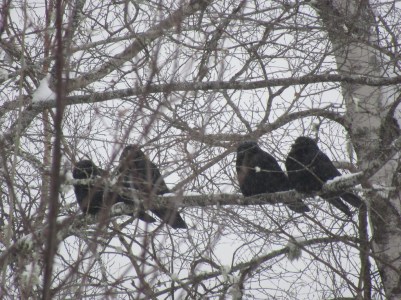
A family of crows lives  and nests close to our garden. Here are four of them together on the same branch. Two years ago, there were five of them. Last year there were seven and this year ten flew in the other day. They are such beautiful flyers. All weather conditions, too, summer and winter, all year round visitors.  I wish I could photograph the sound the air makes through their pinions as they swoop low over the roof on a warm summer’s afternoon.

UNADJUSTEDNONRAW_thumb_2741.jpg

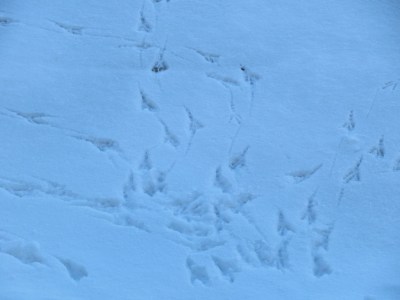
And they leave such gorgeous tracks in the snow. It is always fun to have them around and totally raucous when they find something worth eating.

UNADJUSTEDNONRAW_thumb_2731

Geoff Slater has captured them to perfection. He’s better with his pencil than I am with my camera.

image3 (10)


Hawk at the Feeder

IMG_1678 (2).JPG

S/he flew in at lunch time today. We haven’t seen a bird or a squirrel in the garden since. So, ipso facto, s/he must still be around somewhere. It’s very quiet out there. I just managed the one photo before s/he flew.

We have had a few discussions on Facebook and elsewhere about what type of hawk this is. Sibley says it is difficult sometimes to distinguish between the Sharp-shinned hawk and the Cooper’s Hawk. My feeling is that it is too big for a “sharpie” and therefore, in all probability, is a Cooper’s. My camera battery was on its last gap when I took the photo, and as I said yesterday, I only managed this one shot. It was certainly a beautiful bird.

Silence


IMG_1053 (2)

Silence

When I wait for words to come
and they refuse,
I know that silence is golden
and spreads its early morning sunlight
across the breakfast table
where yellow butter melts on hot toast.

Light from the rose window in Chartres
once spread its spectrum over my hands
and I bathed in its speckled glow.

My fingers stretched out before me
and I was speechless;
for in such glory,
mortal things like words cease to flow.

So much can never be said
even if it is sensed: fresh coffee,
poutine à pain, bread baking,
flowers bursting into bloom,

the sense of immanent beauty that fills me
when a butterfly lands on a flower in bloom,
or each time my beloved enters the room.