Hope

image1-1

Hope

Faith, hope, and charity
help us see with much more clarity.

We have faith in a vaccine cure,
though when it will happen,
we can’t be sure.

Charity comes from the rank and file
serving in supermarkets with a smile,
doctors and nurses work the day round.
On night shifts too, they can be found.

The garbage men, patrolling the street,
keeping homes and gardens neat,
tidy, clean and rubbish free,
helping to restore our sanity.

Police and army play their part
keeping us six feet apart,
doing the work we cannot do,
helping all not just the few.

Essential people, women and men,
bringing life back to normal again.

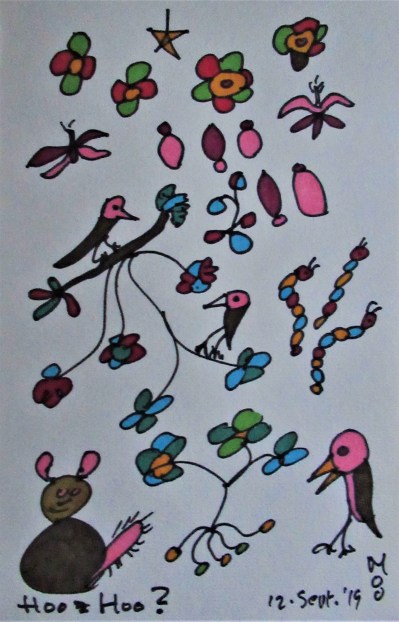
Comment: Many thanks to line painter Geoff Slater for this wonderful drawing from Scarecrow, one of my favorites. Scarecrow is a joint production between Geoff and I, with his drawings illustrating my story. This is the moment when Scarecrow dares to dream and hope that he will soon find and dance with his own beloved. Even in this current world of stress and sorrow, we are still allowed to have our hopes and dreams. Dream on my friends. Hope on. Hopefully this nightmare will soon be over.

Writing a Poem Video


cropped-39948917_706398923049634_3046174897211441152_o-1.jpg

Writing a Poem

The KIRA artists (Roger Moore, June, 2017) were invited to make a video on the ways in which they worked. Here is my KIRA video. This is the first time I have ever made a video of myself. I am not into selfies (wrong generation) and had to be ‘persuaded’ to do this. The instructions were simple: something easy that anyone could do under lock down or in a home-schooling situation. I hope you enjoy the show!


Earth Bounty

IMG_1238 (2)

Earth Bounty
by
Victor Hendricken

 The paradox of life: in order to survive, we must consume; by consuming, we create waste; however, we do not see our waste as detritus, but as the product of living. 

Deep beneath earth’s surface, a miner drills a one and one-quarter inch hole eight to twelve feet deep into a rock face that is roughly twelve feet square. The miner repeats his task until the rock face resembles a block of Swiss cheese. Each hole is stuffed with explosive material. Then a blasting cap shaped like a metal matchhead, containing a fuse and trailing a wire pair sheathed in plastic, is gingerly inserted into each hole, buried up to twelve inches inside the explosive.

The miner and his partner (miners always work in pairs) connect the wires from each cap to a common grounded wire. The pair retreats to a safe area stringing out the grounded wire behind them, where they meet up with other pairs of miners waiting for permission from the mine captain to connect the trailing wires to an electrical junction box wired directly to a throw switch on surface. When all miners are assembled, they travel by hoist to daylight, where they hang their personal identification tags on the appropriate tag board confirming they are no longer in the deeps. The board is rechecked and the captain sirens a series of warning alarms and when certain that everyone is safe on surface closes the switch initiating the blast.  All drilled faces explode as one.

The miners hang their work clothes to dry, shower and change into street clothes. Some head home to family; some go to the bunkhouse kitchen; some seek out the comfort of a pub and the company of their workmates. No one is allowed to go underground again until the air is purged of dust and noxious gasses.

A miner drilling into rock containing copper in sulphide, oxide or elemental form is not thinking about copper pots for cooking, or copper wire for electrifying his house, or copper tubing to carry water from well to sink. He is fully engrossed in the task at hand: break the rock into manageable sized pieces and transport it from the deeps to the surface.  He is acutely aware of his dependence on number of feet advanced in the drift today, in the volume of ore bearing rock extracted from the stope.  He gives no thought to the growing piles of waste rock strewn about the nearby surface.

Out on the greenish grey ocean the fisher sets his traps. The location of each cage is identified by a floating coloured buoy.  The day is long and the sea rough.  In nearby locations, trawler lines and weighted nets are released to scavenge the ocean at various depths herding schools of many fish species to a common fate.  Some nets scrape the ocean floor to capture creatures succored there. Occasionally, fishers are forced to overnight on the ocean surface as their prey migrates below to nibble at the bait within the traps, to gather in large schools before the nets.

As each trap is hauled up, emptied and rebaited, the fisher is not thinking about lobster rolls. As he hauls in the bulging net and empties it into the ship’s hold, he is not thinking about blackened cod or fish cakes, sole adamantine or tender filet with baked potatoes and butter.  He is focused on hauling the catch from the deep ocean and filling the ship’s hold; delivering the dead and dying sea animals to the fish plant for processing into human and other food.  He does not count the discarded carcases of species that contaminate his daily catch.

The logger fells another tree, trims the branches and saws the tree into cordwood lengths. He inhales deeply while admiring his day’s work.  Chainsaw in hand, he does not think about houses or furniture.  He does not measure in board feet, nor does he envision dimensional lumber as he hews, stacks and hauls.  He focuses on cords piled, loads counted. Trees are objects to devour, not treasures to be taken.  He does not notice the acres of clear-cut whose topsoil will soon become prey to buffeting winds and torrential rain.

At the end of the day, perhaps on the empty street or in the local pub, the miner’s thoughts may wander to home, to sitting at his wooden table inside his wooden house, to eating a banquet of sautéed fish knowing only the supermarket as the meal’s origin.  At the end of the day, the fisher may walk the dark street from dock to home, peer down an alley dimly lit by doorways leading to cavernous public drinking places. He may wonder at the hidden resources protected by the alley, exposed by the alley. He will not wonder about the light’s source, the tungsten filament in the lamp, or the clinking glasses as he enters the pub.  At the end of the day, the logger will lay down his saw, turn in his axe, enter the pub from the street and take a seat near the alley door. He does not question the source of the fisherman’s platter he is served, nor does he think about the metal in the barroom tables and chairs, nor what goes into making a beer glass.  He marvels at the burnished wooden bar rail, harbours a fleeting image of his chainsaw.

When the three, the miner, the fisher and the logger, by happenstance meet, they do not tell secrets of their trade.  They speak instead of trivia and sports, avoid politics and talk of home. The angry metal teeth on the logger’s saw, the sharply honed edge of his axe, the height and girth of trees felled are no more in mind than the metal and wooden boat into which the fisher loads his catch, than the living, mineralized stope from which the miner draws his bonus.  Each protects his space as surely as a mother holds her child from nosy passers’ by.

Stories of mining pass only between miners; stories of fishing remain solely with fishers; stories of lumbering are wedged into spaces between lumberjacks.  No word is spoken of farmers plowing fields and harvesting crops.

And while we blithely drive our vehicles of iron, steel, copper and zinc, barbecue pink salmon and grey mackerel, slather slabs of butter on thick slices of homemade wheat bread, dance on decks of wood and nails and screws, the miner puts on his slickers and dons his hardhat and lamp; the fisher steps into his waterproof garb and rubber boots; and the logger twice ties his cork boots, sharpens his saw, and shoulders his axe.  The farmer quietly steps into his worn overalls, mounts his high-powered four-wheeled tractor and attacks worn out fields with plow and harrow.

Comment: This morning’s piece by my friend Victor. I publish it here with great pleasure. Victor has a sharp mind and an elegant pen. Hopefully, he will continue writing for me and, always with his permission, I will continue to publish his oeuvre.


Easter Sunday

IMG_1776 (2)

Easter Sunday

Easter Sunday: such a joyful day.
Last night the deer came out to play.
Good Friday’s snow is going away.

The Queen’s ‘Happy Easter’ was said at home.
The Pope held mass all alone in Rome.
I’m writing this poem and I’m home alone.

We’re locked down at home and so is the cat.
This morning she threw up her food on the mat,
three hoicks and a yuck and then a wet splat!

The snow is melting. The sun’s in the sky.
Rain is forecast and the river is high.
Let’s hope I stay well: I don’t want to die.

I know that I’ll die, sooner or later,
but if at all possible, let it be later,
‘cos I’m not quite ready to meet my creator.

Maybe he’s like me, with a tear of sorrow
for all things undone and left till tomorrow.

I do hope he’s a procrastinator
not a ‘do-it-right-now’ style of dictator.


IMG_1336 (2)


Spring

IMG_1786 (2)

Spring

Slow going
this snow going
but at least
it isn’t snowing

Snow forecast
on the weather show
but we know
it cannot last
now the equinox
is past

With a roll of drums
Easter comes
but friends and family
stay away

so all alone
and safe at home
we’ll spend
our Easter day

Everybody understands
how often we must
wash our hands
and all our friends
must safely stay
at least six feet away

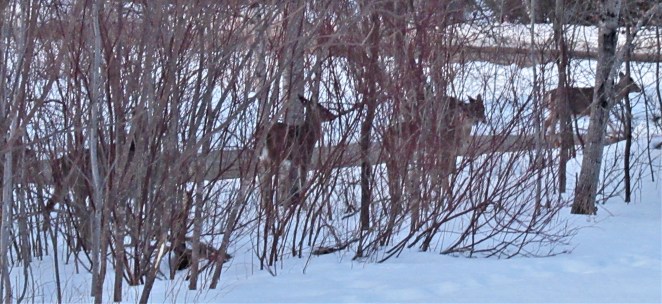
Comment: They are difficult to see, these deer nesting at the bottom of our garden. There are at least three of them, all safely distanced, the clever little things. The poem was written as a challenge from a friend. More about that later. Keep safe, keep well, keep six feet apart, keep hoping! Spring will eventually come. The drawing below is by my friend, line artist Geoff Slater. It is one of my favourite illustrations, taken from Scarecrow.

image2 (1)


Hibiscus

IMG_1777 (2).JPG

Hibiscus
Day 26 CV-19

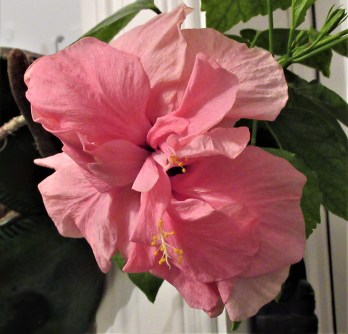
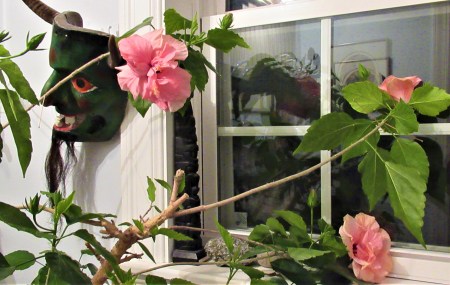
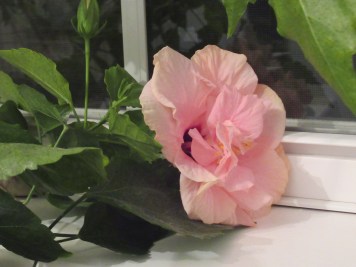
The hibiscus lives downstairs. We bought it years and years ago. A tiny plant in the florist’s shop, we brought it home. When we placed it here, by the window, we were horrified to see it was covered with tiny spider mites. Gradually, in spite of all our efforts, it lost its flowers and then, one by one, its leaves. After Clare had magicked the spider mites away, she nourished that one last leaf. “If that goes, the plant goes,” she told me. “It cannot survive without leaves.” It took time and daily care and attention, true TLC, but a second leaf appeared, and then a third. Now, each winter, it puts out flowers and fills the room with joy and light.

IMG_1776 (2).JPG

More important, in these dark times it fills us with hope and the knowledge that however bad things may appear to be, we can hang on, we can survive. We can be present in every second that we are given and that we can, and must, enjoy every moment to the full. Condemned to a certain death, our hibiscus survived to remind us of the miracle of life, for life is stronger than death, and hope is stronger than despair, and spring and summer are stronger than winter, even if it seems to be ‘our winter of discontent’.

IMG_1774


Deer

IMG_1783 (2).JPG

Deer
CV-19 Day 24

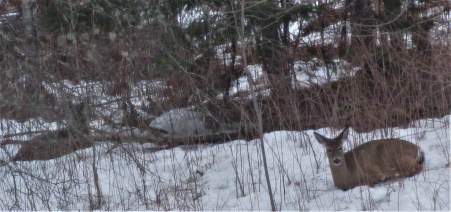
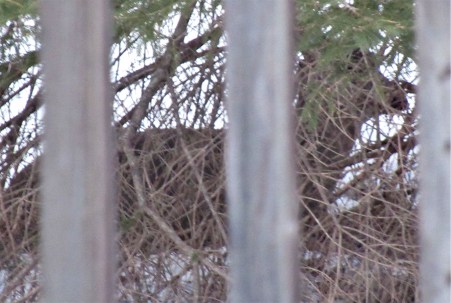
I woke up this morning, looked out of the window at a grey, sunless day, and saw this deer at the foot of the garden, abut 50 feet away. I couldn’t believe it. Thirty years we have lived in this house, and I have never seen a deer sleeping in the yard before. Well, it wasn’t sleeping. It’s eyes were open, the head was turning, and the ears flickered with every step I took. What a way to start the day.

IMG_1786 (2).JPG

Then I did a double-take and blinked. What I thought was a rock, to the first deer’s left, was another deer, also lying down. I realized it wasn’t a rock when it wiggled its ears. Behind the first deer and above it, scarcely visible among the trees is a third deer. You’ll have to look hard to see it, but it’s there. I apologize for the qualities of the photos, but grey day, early morning light, and shooting threw fly netting at a well camouflaged deer does not guarantee high artistic quality, as you will understand.

IMG_1784.JPG

Actually, the third deer is more clearly visible in this photo. It also shows a little bit more of the late-winter / early spring landscape. Then, when I got downstairs, lo and behold, a fourth deer underneath the fir tree. From a lower angle, I could only just sight it through the bars of the porch.

IMG_1787 (2).JPG

Again, my apologies: but what a morning … four deer, ‘nesting’ in the garden, where I have never seen deer before, except wandering through.

IMG_1740 (2).JPG


Self-Isolation Day 22 / Ducks

Empress 070

Self-Isolation Day 22
22 =Ducks, Patos in Spanish.

Ducks, because the 2 and the 2 seem to float together like a pair of ducks or a pair of Swans. How did Swansea get it’s name? Some say it was because handsome white swans used to swim on the salt waters of the bay: Swan+sea. Other’s say that  was on account of a battle where a man called Swain lost his eye: Swain’s Eye = Swansea. Oh dear, it’s so much easier in Welsh: Abertawe, the mouth of the river Tawe.

Speaking of Welsh, this is the 290th consecutive day that I have done my Welsh lessons. I guess the pandemic has helped over the last few weeks. Nowhere to go, nothing to do, and all those Welsh memories bringing a fresh light to enlighten the darkness that is Corona Virus aka Covidis-19.

Language Teaching: never easy. And I should know after 43 years of teaching Spanish in Canadian universities (1966-2009). Relevance and irrelevance: how do we teach meaningful things? Good question. Dw i eisiau prynu’r crwban ddu fach / I want to buy the little black tortoise. Very useful. I bet they use that phrase on the streets of Llanelli and Abertawe every day of the week. How about Mae’r ddraig coch yn callu smwddio bob wythnos / The red dragon is able to do the ironing every week. Well, well: I suppose I did remember these two wonderful phrases. I am sure I will use them the next time I go to Cardiff.

I much prefer the Welsh of St. David: Gwnewch y pethau bychain mewn bywyd / Do ye the little things in life or Byddwch lawen a chadwch eich ffyd a’ch credd / Be joyful and keep your faith and creed. These two quotes from the patron saint of Wales are full of meaning, especially at this oh-so-difficult juncture in all our lives. Funny really: I laugh at the first two, the dragon and the tortoise, but without them, I would probably never have arrived at the Original Welsh of St. David / Dewi Sant.

Languages: they say that to learn another language is to gain another soul and another set of eyes through which to view the world. We view the world through our languages. Limit the language and we limit the world. Reduce the language, any language, to its lowest common denominator, and we reduce and diminish the world around us. Sparrows, juncos, chickadees, Cedar Waxwings, robins, mourning doves, crows, hawks (Cooper’s Hawk, Sharp-Shinned Hawk, Marsh Hawk) are all reduced to birds. Mountain Ash (Russian or European), Birch, Hackmatack, Tamarack, Spruce … all these are reduced to trees, nothing more and nothing less than trees.

Think about language. Savor language. Roll it round your mouth. Taste it on your tongue. Use the correct names for things. Expand your vocabulary. Do not be satisfied with Grade 9 English. Learn. Advance. Develop. Carry a dictionary (Y geiriadur Gymraeg newydd) and look up words, learn their meanings, learn how to spell them. Never give up. Do not be satisfied, ever, with the lowest level of existence. Flower, flourish, rise up and fight for your own self-education, for your own language, for your own destiny, for your own rights!

Self-Isolation Day 18

IMG_1773 (2).JPG

Self-Isolation Day 18

So we are in the eighteenth day of our Self-Isolation. Yesterday I added a fifth book to my group around the table: The Art of the Middle Game by Paul Keres and Alexander Kotov, translated by Harry Golombek. I have had this book since 1964 when it was first published in Penguin Books. Once upon a time, I played serious chess, was president of a chess club, and read widely about the game. But I have not played any serious, face to face chess since I came to Canada and the last games I played were in 1994, when I visited the Dominican Republic, although I did pay a couple of games in Oaxaca on my first visits there.

I dipped in and out of this book yesterday, playing sample games here and there. It was a joy to rediscover the movement of the pieces and to see how great minds viewed the chess board. Sharpe’s Riflemen are wonderful to watch on YouTube, but they cannot rival the two sixteen piece armies that wage battle on the sixty-four squares of the chess-board!

The Art of the Middle Game uses descriptional notation. This means that when the King Pawn takes two steps forwards, it moves from King two to King four. In descriptional notation, this becomes P-K4. If it is the first move of the game, by white, then it becomes 1. P-K4. If the opposition follows suit, then his move is also transcribed as P-K4. This gives us 1. P-K4   P-K4. And this is where the confusion arises: each side has a K-4, and a Q-4 and every other square is doubled up as well in a mirror image of army facing army. After such a long time away from the game, I found my concentration wavering in places and thus I had pieces on the wrong squares and had to start all over again. Very frustrating.

When I played chess in Spain, also back in the sixties, I was faced with algebraic notation, long in use on the continent of Europe. The eight ranks are lettered a-h, from left to right, and the eight files are numbered 1-8 from bottom to top, with ‘white on the right’ i.e. h-1 always white. This means that each square has a single, plotted designation and it is much easier to follow the game as there is no mirror imaging. In this fashion, 1. P-K4 would become e2 – e4 followed by e7 – e5. None of this changes the nature of the game, but it does change the speed and ease with which it is transcribed and followed.

I remember buying my first pocket chess set, in Boots the Chemist (!) when I was 9 or 10 years old. It is an old cardboard set with red and white squares and pieces. I still have it and I am using it now. The scrawl that I call my handwriting is still unmistakable, after all these years. That same day I bought Harry Golombek’s The Game of Chess, and I taught myself how to play, based on that book. I remember looking at the descriptional notation and not understanding how the system worked, even after days of memorization. Then, one morning, as Dylan Thomas, another Swansea Boy once wrote, ‘light broke where no light shone’ and as all the squares fell miraculously into place, the system of descriptional notation suddenly made sense to me. “Threshold knowledge is a term in the study of higher education used to describe core concepts — or threshold concepts — which, once understood, transform perception of a given subject, phenomenon, or experience” (Wikipedia). The discovery of the key to descriptional notation was indeed a threshold experience, as was the transition to algebraic notation. What a wonderful world we live in.

CV-19 Week 3 Day 3


IMG_1337 (2)

CV-19 Week 3 Day 3
A Change of Scene

Nothing serious happening with this change of scene, but this morning I put Phillip Larkin on one side and turned to a new book, Neil Sampson’s Apples on the Nashwaak (2019). This may be just the read you need in times like these. An excellent foreword locates the text of Neil’s narrative poem(s) in the long line of European narrative poetry. Neil’s introduction places his text in his own life on the land where he lives and wanders in Upper Durham, above the Nashwaak River. The text itself places us, as readers, in the long successions of repeated lives and deaths that mark the early settlements in New Brunswick, Canada. And yes, we have passed this way before, for better or for worse.

This is not a re-statement of ‘mal de todos, consuelo de tontos‘ / shared ill’s are a fool’s consolation. The colored apples on the stark tree that adorns the cover are a statement of hope, long term hope, even among the bleakness of difficulties, tragedies, and deaths. Like it or not, these things happen, and yes, there are survivors. Hopefully, there will always be survivors. And thus we must always live in hope. It is one of the threads that come through Neil’s poetry.

Only four trees are still alive.
The last of that first
generation
ponder existence and being
unable to walk
— no chance of pilgrimage —
have seeded their hope of redemption,
in Self.

Sounds like us, tucked away at home for three weeks and three days now ‘unable to walk’ outside and with no immediate ‘pilgrimage’ in sight or ‘hope of redemption’. Yet we sit here, un-suffering, following the news on television and radio, talking with friends on the telephone, reaching out to loved ones, near and far, on Skype, e-mailing and encouraging fellow un-sufferers, house bound, like us, ‘Children / hugging the chimney, // warm long after / the embers had died’.

Wait! In the orchard!
There’s One who’s come to call.
Those four pioneers
cankered with rot;
bark-skinned, limbs,
thin, draped in swags
of moss —

they know
who He is.

Enough for now, Neil. I shall read your book today and perhaps tomorrow, and then I will move on with head held high and hope in my heart. Thank you for your words. They are doubly meaningful at times like these reaching out to us with comfort, love, and understanding, and warming our hearts.