Bullfight

f1000018.jpg

Bullfight

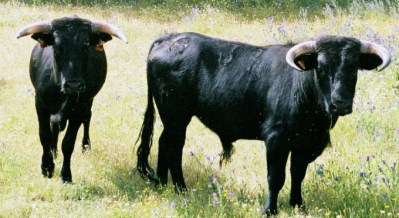
The above photo shows novillos, young bulls, on a bull farm in Salamanca, Spain, bred for the bull ring. They are tested in the farm’s private bull ring and the best and bravest are saved for the bull ring. A series of computer programs tests them at six month intervals to see if they are bull ring material.

Spain is divided on bull fighting with Catalonia banning the bullfight while Castilla and Andalusia are ardently in favor of the three, thousand year old tradition. The Spanish flag, in Castille, comes with a fighting bull, in the centre, replacing the coat of arms.

Many opinions exist abut bullfighting, bull running, and the whole tradition of blood sports. I will not state my position. But I will leave you with a piece of flash fiction, perhaps a short story. Each of you, if you wish, may play the game, click on the Bullfighting link, and decide for yourselves where you, and I, stand. Warning: not for the faint of heart … go on, be brave, remember the toros bravos who have perished in the ring.

F1040014.jpg

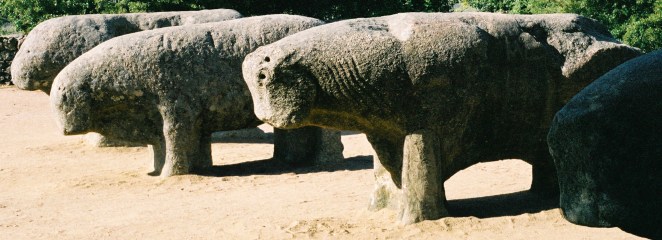
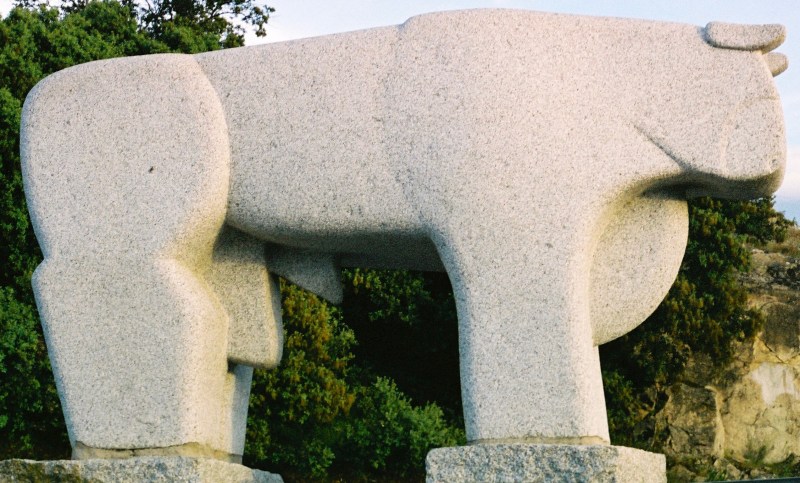
Los Toros de Guisando, mentioned in the Quixote, prehistoric stone bulls, verracos, Celtic carvings from the Province of Avila, Spain. The Roman legions carved their names into these stone bulls. Below, a modern bull, also from the province of Avila. I must, at this point, mention my friend Juanra, who took me to see these monuments and encouraged my interest in his wonderful province. Juanra, te lo agradezco, no sabes cuanto.

F1040010.jpg


Gardens

IMG_0943.JPG

Commentary:

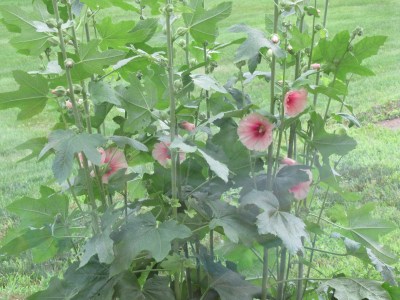
How can I write about gardens without beginning with my own garden? Last year’s single stem hollyhock has this year turned into a hollyhock ‘bush’ with ten separate flowering stalks. Yesterday, only one flower adorned the plant, today some seven to ten blossoms have appeared. I am amazed by the presence of so much beauty. Never before have hollyhocks graced our garden. Now I can do nothing but give thanks.

But there are other gardens. Kingsbrae Gardens for example have been mentioned  on this blog before, and I have written a book about them. Many of you will have seen the video we made. If not, the video One Small Corner can be seen by clicking on the link, as can the gardens and the book.

That said, welcome to another set of gardens. Click on the link, and you will be able to discover them and visit them for yourself. Come along, play the game. You know you want to!

IMG_0937 (2).JPG


Sheep

IMG_0126 (2).JPG

Sheep                               

Wales is whales to my daughter
who has only been there once on holiday,
very young, to see her grandparents,
a grim old man and a wrinkled woman
who wrapped her in a red shawl
and squeezed her and hugged her
till she cried herself to sleep
lunging for lack of space and air,
suffocating in a straitjacket
of warm Welsh wool so tightly bound.

So how do I explain the sheep?
They are everywhere, I say.
On lawns, in gardens. I once knew
a man, a friend of my father’s,
whose every prize tulip was devoured
by a sheep, one single sheep
who sneaked into the garden
on market day when they left the gate ajar.

Sheep are everywhere, I say, everywhere.
I remember riding on a passenger train
and seeing sheep leering like tourists
peering from dark coal wagons travelling
God knows where and bleating
fiercely as we passed them by.

In Wales, I say, sheep are magic.
When you travel to Paddington
on the train, just before you leave Wales
at Severn Tunnel Junction,
you must lean from the carriage window
and loudly call “Good morning, Mister Sheep!”
and if the one you greet looks up,
why, provided you’re good and quiet
for the rest of the journey,
your mum and dad will buy you
something nice in London.

My daughter shows disbelief. And “Look
at that poster there:” I say, “a hillside
of white on green, and every sheep
as still as a stone,
and each white stone a roche moutonnée.”

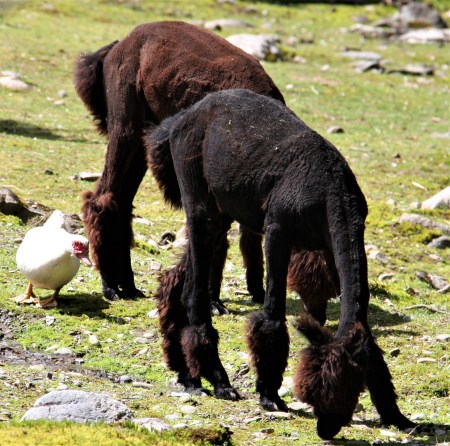
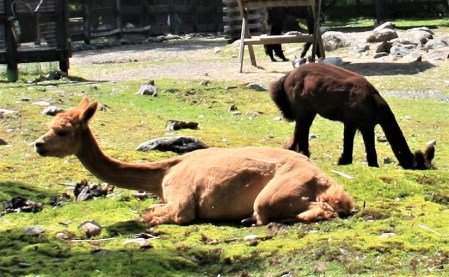
Commentary: I couldn’t find a Welsh sheep in my photo collection, so I used this photo of Pre-Columbian Incan sheep substitutes instead. Llamas is probably a Freudian slip or a typo for lambs. See: there’s reason for everything and a link between all things, even llamas, vicuñas, and alpacas, like this pair from Kingsbrae Garden Barber Shop Shorn Quartet. The other two from the Barber Shop Alpaca Quartet are around somewhere. I’ll go and look. Ah yes, here they are. Listen carefully, and you may hear them sing.

IMG_0119 (2).JPG

In the Cave

9_Bisonte_Magdaleniense_polícromo.jpg

In the Cave
(514-520 BC)

one goes on a journey
knows where one’s been

reality returning
one tells what one’s seen

shadows dancing
on night’s silver screen

verbal sketches
from where one’s been

speaking other languages
heard not seen

the more one speaks
the more others think
‘dream’

a dream for those
who’ve never been
where one’s been


Querencia

F1040020

Querencia
(29 August 1947)

heavy snow all winter
starting in November
continuing through

neighbor plowed us out
arriving as each storm left
sometimes he came in for tea
we became good friends

now he is moving out west
to be with his grand-kids
when he moves we may
be forced to sell up and go
winter snow too much for us
summer grass too much to mow

querencia
it’s a bull-fighting thing
there’s a spot in the bull ring
where each bull chooses
to make his last stand
it’s his chosen place to die
like this is mine

F1000008

Waste Knot


IMG_0211

Waste Knot
(6th Century BC)

finger-nails crack
red sealing wax
liberating gathering
knotted parcel string

broken finger nails
hard scarlet chips
blood flash-frozen
beaded on blade

underground
clawing for clues
damp walled
this cave-walk
distant the exit
thread leading out

reef knots slip knots
sheep-shanks bowlines
bowlines-on-the-bight
tight he tied them
used them
to measure distance
to distance him from doom

behind him
the bull head
boisterous
bellowing him on

Eight Deer

img_0436

Eight Deer
(1113 AD)

eight deer visit
my garden each night
they raid my feeders
capture my birdseed
lusting for gold
anything to keep out
this winter cold

raccoons
leave claw-marks
grubbing for grubs
dug up like donuts
circled on my lawn

who captures whom
when the full moon
descends from the sky
walks among men
making them mad

death by snow plow
snow-melt and crows
Eight Deer emerges
his sacrificed body
preserved on this page
and in salt snow

Dog

IMG_0040 (3)

Dog

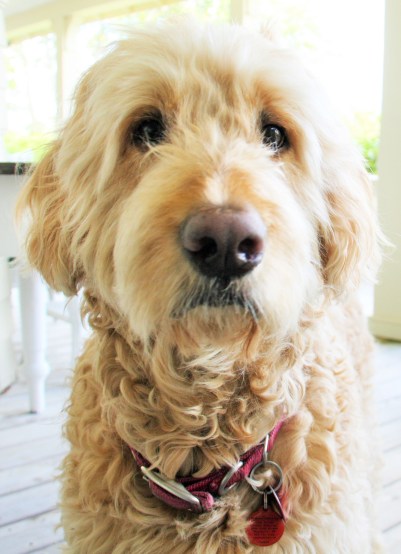
Dog buries under the bedclothes, snuggles up close, frightened by nurses and cold medical smells. Dog knows the meaning of needles, long thin silver teeth that sink into the flesh and make Dog feel woozy. Dog rolls its eyes and growls as doctors wearing long white coats walk around the ward talking to those patients who are still capable of responding. Long stethoscopes twist around the doctor’s necks like tentacles. Dog knows them well and doesn’t trust them. Dog shows its teeth, growls deep and low, draws itself in, even closer, shivers beside its mistress, in spite of the in-bed warmth. Mistress shivers too. She doesn’t understand how Dog got there, but she loves Dog’s warmth and companionship, and trembles at the thought of its absence. Nurse holds that threatening needle, the magic wand, as nurse and doctor call it, but Dog doesn’t believe in them nor in their magic. Dog’s cold, wet, wrinkled nose is out and its soft brown eyes. It sees and smells and senses and is ready to defend or befriend. The patient puts her hand on Dog’s head, smooths it, soothes it, ‘Good dog’, she says. Dog wags, a small jerky motion of a short, stubby tail. Nurse slides the needle into patient’s arm. “There,” she says. “You can sleep now.” Dog whines, gets out from beneath the blankets, lies beside the patient as she lies in her hospital bed. Dog licks the salt tears from her face. When she stops breathing, Dog howls. But nobody sees it, nobody hears it, nobody pays any attention, nobody comes.

Cows

IMG_4757 (2).jpg

Cows

Underneath the bungalow, we find a secret space so small that only the young ones can crawl there. We go after coins that drop through the floorboards of the verandah and we hide there, in that cool, dark grave space, when we wish to be neither seen nor heard. At the far end of the bungalow, in a larger space beneath the floor, Nana has her refrigerator. This space, similar to ours, is where she keeps the thick cream off the bottled milk when she wishes to turn it into Devon Clotted. Here, too she places the jellies when she wants them to set. We have neither running water nor electricity, just the cool beneath the floorboards. We do have two water tanks, one a square, red-rusted, cast-iron tank that collects the rain-water off the roof, the other an old iron-bound wooden barrel that connects to a downspout outside the backdoor.

They have built me a swing in the backyard and on sunny days I throw my head back, thrust my legs forward, and squint at the summer sky through half-closed eyes, as the old folk push me. “Higher,” I cry out. “Higher.” We don’t have a push lawn-mower, though we occasionally borrow one from the neighbors. We do have a scythe, a sharpener, and a pair of bill-hooks. I have never forgotten that head down, half-shuffle of the scythe man using his scythe: one step sideways, swing, feet together, one step, swing. I loved the sweet smell of the fresh-cut grass as I played the grim reaper in the backyard, always with a grin.

I lived in the bungalow for the whole of one summer. I guess my mother had been placed in some hospital or other for the duration of the fine weather. Nobody talked about her and I never knew what was wrong with her or when she was coming back. It was all a mystery, wrapped in stealth and secrecy. Her absence was a pain in my side, a thorn in my heart, and I still don’t know what happened to her.

I slept in the back bedroom with my Nana in her big double bed. I slept on the far side, next to the outside wall. At night I would often hear the cows as they munched away at the grass and wandered through our un-fenced yard. I say ‘I slept with my Nana’ but in actual fact I fell asleep long before she came to bed, often when the sun was still high in the sky. She always got up early in the morning to prepare breakfast for the men and lunch for my uncle, who worked in town and usually took the early morning bus.  My Nana was up and dressed by the time I woke up, so I rarely saw her in bed.

Some nights I woke up during the night, needing to pee. I never liked using the Royal Doulton chamber pot that squatted coldly beneath the bed, especially if she was in the room. We had no indoor plumbing, nor running water, as I have said, and apart from the rainwater the only tap was at the far end of the bungalow field, a long way away, and all but rainwater had to be fetched by hand in large tin cans that we ferried, empty, to the end of the field and brought back, full, at the end of our excursions to farm, local shop, or beach.

Those cows that wandered through our yard at night really frightened me. We would meet them in the lane some times, a noisy, dusty, flowing, multi-colored tide that flooded the pathway and forced us walkers into the next field, if there was a gate close by, or high into the hedge, if there wasn’t a gate. The one black and white cow in the herd really filled me with fear. She had a crooked horn, had gored a dog, and had kicked out at several of the local residents, injuring at least one of them quite badly, a broken leg, I think. That cow had an evil reputation, especially when, isolated from the herd, she meandered around on her own.

When I wanted to pee, I preferred to walk outside, to the outhouse, rather than use the chamber pot. I would grope my way out of the bedroom, turn right, drop down the steps into the kitchen, and slide back the bolts on the door. Then I would half-open that door and peep out, listening carefully for any sound of the cows tearing out the grass with their teeth, or rumbling gently as they chewed the cud, churning it over and over. I would sniff the night air, and if I sensed a cow in the vicinity, I would pee through the narrow crack of the open door and swear in the morning, when someone found the little puddle, that it wasn’t me, that it must have been the cows.

One quiet night, I walked bravely out into the dark and stepped right into a cold cow pat that lay just outside the back door like a landmine, waiting for my unwary feet. I still remember the cow-manure’s soft squish as it sifted upward through my toes and rose to assault my nose. After I had gone pee, I wiped my foot again and again in the long grass beside the outhouse, then placed it beneath the water-spout from the rain barrel, trying to flush it clean before I crept back into bed.

That was the night I left the back door open. Next morning, my Nana woke us all up with a series of long, loud screams and squeals. The black and white cow had wandered through the open door and ended up in the kitchen where my grandmother had come face to face with it in the early morning light.

A cow in the kitchen, that really spooked me and I still have dreams, nightmares, really, of a herd of cows invading the bungalow, breaking down the doors, and climbing in through the windows, and me all alone, trapped in my bed, shivering ferociously, squeezing myself, trying desperately not to go pee.