What is the last thing you learned?

Daily writing prompt
What is the last thing you learned?

What is the last thing you learned?

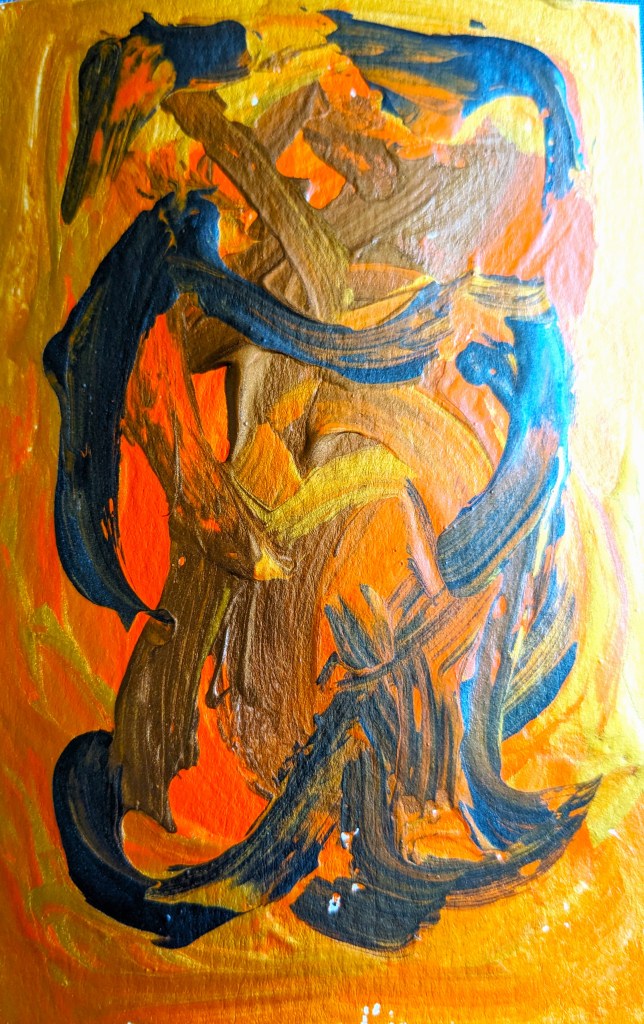
I watched Doc Martin last night, Season 1, Episode 1 – Going Bodmin. And here’s the painting of the excellent state of Bodminism. Offers of less than $10,000 for the original will be turned down. As for me, I think I am slowly going Bodmin. And why shouldn’t I? A merry road, a mazy road, that night when we did tread, all the way to Bodmin Moor, by way of Beachy Head.

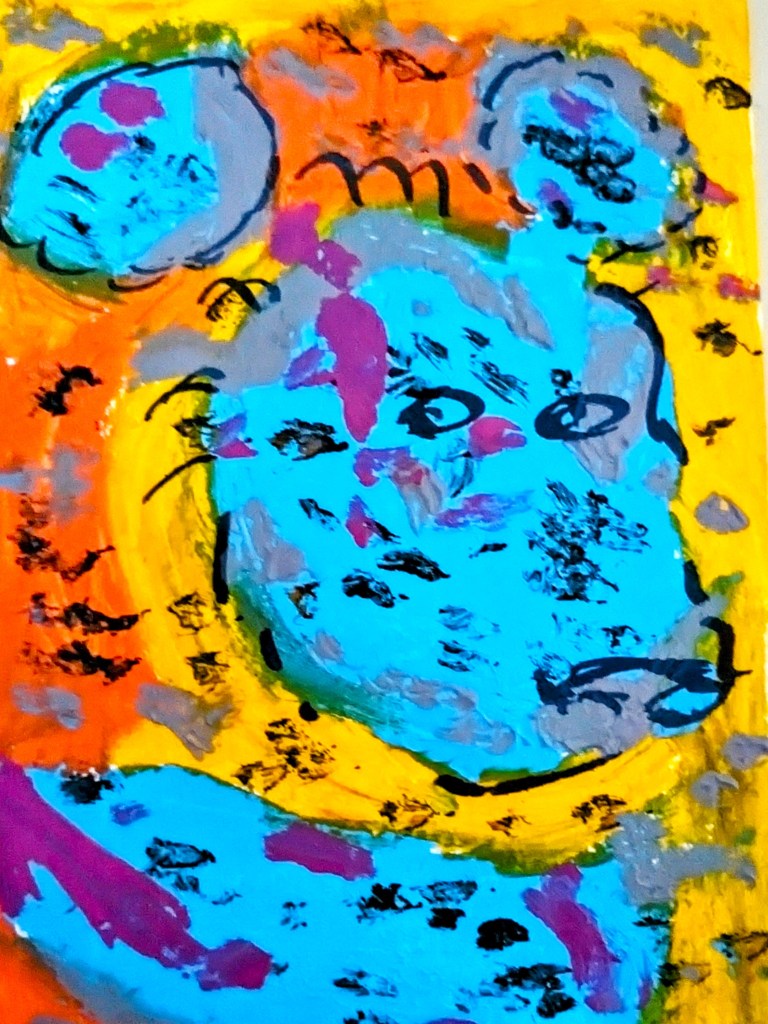
So, what is the last thing that I learned? That I too am “Going Bodmin” – slowly, bit by bit, and having such great fun along the way. I have drawn the portraits of some of my fellow Bodminists whom I meet along the way. Maybe you can recognize one or two of them.

I guess going Bodmin is like going on a pilgrimage, to Santiago de Compostela, say, or like the Medieval Trip to Jerusalem. This modern pilgrimage can start anywhere in the UK as long as it ends in Nottingham, in one of Olde England’s oldest pubs, a spider-web-filled cavern known, of course, as The Trip to Jerusalem. This was, once upon a time, the start of the pilgrimage to the Holy City. Now it is the end of the pilgrimage from Bristol City.

Well, that was the road I ran back in 1966 when we ran a road relay from Bristol University Students’ Union to Stamford Bridge, down to Hastings, and back to Bristol. King Harold Marched from Stamford Bridge (where he defeated Harold Hard Loki) to Hastings (where he was conquered by Willy the Conker) in 1066. Alas, I don’t think the Trip to Jerusalem was open then, so he couldn’t stop in for a quick one on the way down. Might’ve won the battle if he had. Caught looking up to see where the spider webs were, I guess.

So, the last thing I learned was that I am going Bodmin! Did you learn anything from this blog? If you did, let me know what it was, and remember, it’s a long way to Tip-a-rary, but it’s a merry road and a mazy road when you’re heading for Bodmin Moor.

Happy Giving Birth Day!

Happy Giving Birth day!

It was our daughter’s birthday today. I have lost count how many, and luckily, so has she. She lives 1500 kms away and was unable to come home for a celebration. We celebrated on the telephone. So much better than nothing.

I wanted to have a proper celebration, and so did my beloved, her mother. We bought special foods, special wines, sat at the table … in spite of the sparkle and the candles, something was missing. And it wasn’t just our daughter.

“Okay,” I said. “Let’s make this a very special day. It’s just you and me. Let’s make it your Happy Giving Birth Day. After all, there were two of you involved and I think you deserve some credit.”

So here we are – as of now February 4 is Happy Giving Birth Day. It is open to all mothers. And each of you can celebrate it on the day you gave birth to your babies. Some of them do not wish to acknowledge how old they are … [don’t ask!].

But you, the unacknowledged for so long party, you can finally stand up, centre stage, and say “YES, this is also my day! It is my Happy Giving Birth Day!”

It doesn’t have to be on February 4, as my beloved’s is. It is on the day it happened, when it happened, and you know exactly when that is.

I don’t know you, but permit me to embrace you, and allow me to welcome you to the Happy Giving Birth Day Club. May you enjoy your achievement(s) for ever.

Ice Flow

Ice Flow

Free fall, then scree on the road
to Wolastoq. with the fresh air
speaking to the rock face
in a long-forgotten tongue,
broken words metamorphosing
into fragmented scree at rock-foot.

Just for a moment we glimpse
the ancient water in the stone,
catch the flow of winter words.

The January sun, low in our eyes,
heavenly glory glancing off rock
to give earthly joy, golden beams
highlight damp, glistening slate.

Afternoon frost, water and rock,
polished into ice-maiden tears
that dance their sparkling way
and are held for a moment
in a vision that will last forever.

Comment:
Such beauty in silent things, ice, rock, sky. But learn to listen and perhaps you will hear them talking, one to the other. One day, you too may share their words of wisdom.

Joy of Words

Joy of Words

If the words won’t come, don’t worry.
Sooner or later, they will arrive, driving
down in flurries. Think wind-driven leaves
or the soft white whisper of snaking snow.

There is a moment when all sounds cease
and you can be at one with your inner self,
there, where summer sunshine twinkles
and soft rains bring forth clarity and joy.

What are words anyway, but soap bubbles
emerging from an iron ring to rise in
child-hood’s skies, soaring, dying, around
the cloudy thrones of sun-kissed clouds.

We, their so-called creators, are left below,
building cotton-wool castles spun from air.

Comment:

The painting, animales de fondo, comes from a book by Juan Ramon Jimenez in which he describes human beings as ‘animals living at the bottom of an ocean of air’. I have tried to capture the concept both verbally and visually.

What was your favorite subject in school?

Daily writing prompt
What was your favorite subject in school?

What was your favorite subject in school?

I never had one. I hated every school I attended with a passion. I hardly passed an examination during my school days and I remember, in Mathematics, dropping from Level I, to Level II, to Level III. I failed the first exam in Level III and earned this comment on my school report “Now I know why he descended to Level III.” I still have those school reports, incidentally, complete with the signatures of the Masters of my – limited, very limited – universe. How I appreciated Pink Floyd’s The Wall, when I first heard it. “We don’t need no education, we don’t need no thought control, no dark sarcasm in the classroom, hey, teacher, leave those kids alone. You’re just another brick in the wall.” And yes, I built walls around me, many of them. But I survived.

Another comment from that report: “He has read widely and indiscriminately – I do hope it has done him some good.” That reading included the complete works of Jean-Paul Sartre and Albert Camus, lots of Andre Gide, the theatre of Jean Anouilh – some of which I saw live in Paris -, an immersion in the Existentialist philosophical movement, the complete plays of Corneille, Moliere, Racine, Beaumarchais, a variety of French Poets, including Apollinaire and Jacques Prevert, a selection of Spanish poets, novelists, and playwrights, and a series of modern-(ish) British poets, including John Manley Hopkins, Wilfred Owen, Dylan Thomas, Vernon Watkins, and ‘indiscriminate others’! I wrote a great deal of poetry at that time, some of it in imitation of Francois Villon and Gilbert Chesterton (of whom I read many works as well).

Alas, my enthusiasm was not appreciated, especially as I scorned many of the texts that I was forced to read for my examinations. I should add I also scorned the limited, authoritarian interpretations of them that were forced upon us. The slavish imitation of ‘teacher’s remarks’ gained an A+. Any attempt to think outside the authoritarian boxes built oh so carefully for us, earned an F-.

But, if I had to choose one subject, it would be Myself. Protecting that self, developing that sense of self, growing into myself, understanding myself, and finally, having left those schools, those ideas, and that country far, far behind me, becoming the self that I am – and have always wanted to be. “What do you want to be when you grow up?” “I just want to be me.” And I am, thank heavens. And it’s a good job too, for, as Oscar Wilde once said “Everyone else is taken.”

The Dying of the Light

Rage, rage against the dying of the light.

The world has become such a dark place over the last three weeks or so. At times, I have despaired, lost hope, lost my faith, lost my creativity. Words have not come knocking on at my door. The eyes in my head have seen nothing to paint. Darkness, bleakness everywhere. And yet, light breaks where no light shines, as Dylan Thomas once wrote, and last night I started a painting. This morning I finished it and gave it a title: Rage, rage against the dying of the light.

Yesterday I managed to complete a couple of poems. I attribute this new found creativity to moving my muse out of my office and placing it in my bedroom where it can inspire me at night. It seems to have worked. My muse is a small carving placed between four pyramids. Pyramid power and the muse’s inspiration have brought light back into my world, the light of creativity.

We must band together, we creatives. We must inspire ourselves and then go on to inspire others. We must let the light of our creativity, our faith, our belief spill out into the darkness that surrounds us. Together we must stand united and our light will be a lantern that will enlighten the world, not with chants, slogans, and cults, but with the inner faith and the total belief that genuine creativity brings to the world.

Creatives of the world, unite. Rage, rage against the dying of the light. United together, we can, and will, restore that light.

What was the hardest personal goal you’ve set for yourself?

Daily writing prompt
What was the hardest personal goal you’ve set for yourself?

What was the hardest personal goal you’ve set for yourself?

Oscar Wilde once wrote – “Be yourself. Everyone else is taken.” The Ancient Greeks had a similar phrase – “Know thyself.” Well, to know myself, and then to be myself, are two of the hardest personal goals I have ever undertaken.

Why? Because I was educated in a system that wanted young people, boys and girls, to look alike, and think alike, and dress alike. That’s why school uniforms were designed. That’s why we marched into chapel at the same time every day, and sang the same hymns every day, and said the same prayers every day. Rote learning was a key element in this. I remember, age four, chorusing my two times table: “1 x 2 is 2. 2 x 2 is 4. 3 x 2 is 6. 4 x 2 is 8.” Very little room for thinking. Nobody would ever answer the question “Why is 2 x 2 4?” “What makes this so important?” “Why do we have to learn it?” The stock answer: “Little boys should be seen and not heard.” Or “Shut up and just do it.” Or “Why can’t you be like other children?”

This type of early school life, with anyone who stepped out of line, getting punished, often physically, was not conducive to lateral thinking or freedom of thought. Anyone who moved aside from the prescribed patterns was moved back into them, very quickly. The WWII convoy theory – the class moves at the speed of the slowest ship. No stragglers permitted. This later morphed into the slogan “No child left behind.”

But they were. And they were left outside, looking in. And if they didn’t buckle down, they suffered the shame of expulsion from the herd or the flock or the convoy. And once expelled, and branded as stupid or a trouble-maker, it was very difficult to get back in.

At what stage did I become myself? I am not really sure. First there was the phase of knowing I didn’t belong. Then there was the phase of realizing that my mind didn’t react like the minds of other people. Why not? Well, for one reason, on IQ tests, even the simple ones, I often saw multiple answers. But there was only ever one correct answer. Say what the Inquisitor wanted to hear and it was “Good dog, have a biscuit”. Give an answer other than the one he (or she) was looking for, and it was “Bad dog.” Then your nose was rubbed in the dirt.

Here’s a simple example from this year’s Farmer’s Almanac. Which is the odd one out? Tennis, pickle ball, badminton, squash… ” Oh dear, I think there were five, but I have forgotten the fifth. The correct answer – pickle ball, – it’s the only one played with a paddle not a racquet. GOOD DOG. How about badminton – it’s the only one played with a shuttlecock. BAD DOG. Or squash – its the only one played without a net between the players. BAD DOG. The Farmer’s Almanac was fun, but being judged sub-standard at age 11, and again at age 15, for coming up with creative, and perfectly logical alternative answers, was not much fun.

So – the most difficult personal goals – 1. to know yourself. 2. to grow into yourself. 3. to appreciate the wonderful, unique nature of who and what you truly are. 4. to then rejoice in the creativity of your own individuality.

Are you holding a grudge? About?

Daily writing prompt
Are you holding a grudge? About?

Are you holding a grudge? About?

I have reached the stage in life when grudges belong to a distant past. Some of that past I still regret, but I have come to accept most of it as the normal rites of passage through which human beings must pass, if they are to grow and develop. This acceptance also comes from the understanding that the steps that led me to my current life and situation, were beneficial, even when I didn’t think they were at the time.

Garcilaso de la Vega once wrote: Cuando me paro a contemplar mi estado / y a ver los pasos por do me ha traído, hallo, según por do anduve perdido, que a mayor mal pudiera haber llegado. The Wikipedia translation offers us this – When I stop to contemplate my state and see the steps through which they have brought me, I find, according to where I was lost, that it could have come to a greater evil.

That said, I have learned to see the lesser evil in things that actually happened and the greater evils into which I might have fallen. I remember bearing grudges, but I feel that I have now set them aside. Reading John O’Donohue’s book Anam Cara, for the fourth or fifth time, has helped me to achieve that state of mind.

Some things do annoy me though. Speed reading is one of them. Well, not speed reading but the application of speed reading to any and all situations. In today’s Guardian, for example, I read that – “A lot of people, myself included, complain that they don’t have time to read but everyone has time to read a poem. You can read Ozymandias, for example, in just 17 seconds.”

One of the first things that I did in Grad School at U of T was to take a speed reading course. I found it absolutely essential in order to read and process the quantity of new material that was thrown at me by my profs. In my undergraduate education (Bristol University) I was told that “It is better to read one poem a hundred times than to read a hundred poems once.” As a poet, and a student of poetry, I prefer to dwell on a poem, to absorb its essence, its meaning, its subtleties, its associative fields, rather than to gulp it down in 17 seconds, for example, and then move on to something else. The poet and dreamer who live within me need that time to re-create, poeticize, and dream.

“What is this life if, full of care, we have no time to stand and stare, no time to stand beneath the boughs and stare as long as sheep or cows,” wrote W. H. Davies, author of Autobiography of a Super Tramp.

I realize just how much our lives have speeded up, how we are inundated by information, how we drown in sound-bytes, memes, and mini-clips. I also know that, however fast we read, we will never take it all in, not in one lifetime. Sometimes, less is more, slower is faster, we need to take time, to make time, to stand and stare. Seamus Heaney expresses it well – “Some time, take the time…” I don’t hold a grudge against those who can’t, or won’t, make and take that time. But I truly believe that many, many people would benefit by doing so. I also believe that a benevolent society would allow many more people to do just that.

Meanwhile, I will agree with the Guardian columnist that reading a poem in 17 seconds is much better than reading no poetry at all. So, some time, take the time….

What does your ideal home look like?

Daily writing prompt
What does your ideal home look like?

What does your ideal home look like?

My ideal home looks exactly like the one I am living in right now. In the country, surrounded by trees, with blossoming crab apples in the front garden and a mountain ash in full view from the kitchen window, what more could I ask for? Blossoms in the spring, a gradual flowering throughout the summer, and now, as fall approaches, the fruit ripening.

Verde, que te quiero verde. – Green, for I love you green. But what exactly is green? I sit on the front porch in the cool of summer, and look out on a sea of greens – green grass, green leaves, light green, medium green, dark green, and all kinds of shades and hues as the sunlight filters a subtle dance of colors through the leaves. The eye distinguishes so many different shades of green. Alas, I do not have the vocabulary to distinguish verbally what I see visually. Ah, poor poet, linguistically damaged, and writing with one hand tied behind my back, I suffer from an ability to feel and an inability to express. Terminological inexactitudes, Winston Churchill called them. But in my case, they are the lies I must create when the truth overwhelms me with its beauty.

And in winter, when the cold winds blow, and the leaves lose the safety of their trees to be blown hither and thither at the wind’s will, what then? A blanket of whiteness, shadows shifting beneath the moon by night, and a million brilliant sparkles beneath the sun by day. And the visitors, every night the deer come, stay awhile, then vanish, only to reappear the next day. At midnight, in the moonlight, I watch them from my window as they dance on their hind legs and nibble the hanging fruit that the mountain ash reserves, just for them, so that they will survive, as they have done for millennia, in this paradise that surrounds my ideal home.

Real People

Real People

They lie there, lifeless, in their little black coffins.
They refuse to pick up their beds and walk.
Powerful as you are, you are powerless now.
You are unable to grace them with the gift of life.

Listless, disappointed, you turn away. Don’t look,
but now, while you are not watching them, they move.
A gesture here, a wink of the eye, a tiny smile,
a broken tooth, a scar from a dog bite, and they come alive.

Now they stand before you, dressed in the clothes
you wove for them, from their own words.
When you listened, they spoke. They didn’t want
to be forced into falsehoods, forged from your fake words.

True to their own natures, they now walk and talk,
naturally, in the words you heard when you let them speak.