Faces

IMG_0258.JPG

Faces
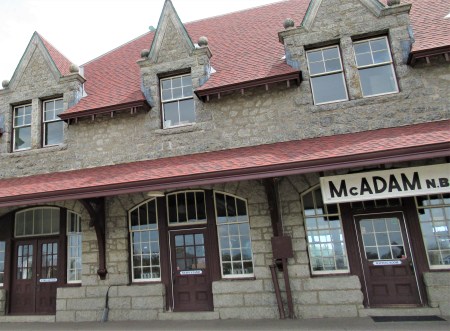
McAdam Railway Station #10

“White at windows
when trains pass through
in June on their way
to summer and sand.

Wind-tousled, tanned
at summer’s end
returning home to
Boston and Montreal.

I remember them
waving their hands,
flickering white hankies
as they went by.

This station is a ghost train
that travels through time
instead of space. Stand
still as silent stone. Wait.

Look: there’s someone,
waving at us now
from that window
on the second floor.”


IMG_0782 (2).JPG


S.O.S

IMG_0678 (2).JPG


S. O .S.
McAdam Railway Station #8

“Dozing in the cab, I was.
Smelt a different smoke.
It wasn’t my engine’s.

Looked around.
Saw flames. One, two,
three houses on fire.

Steam was up. Yessir.
Three short hoots I gave.
Three long. Three short.

S.O.S. Mayday. Mayday.
S.O.S. S.O.S. Kept going
till house lights came on.

People running. Leaving homes.
Jumped out of the cab.
Ran out to help them.

They thanked me.
Said I had saved their lives.
What else could I have done?”

Comment: This is a third hand poem. It came to me from Geoff who heard the story from the hardware store owner who witnessed the fire. The narrator is the anonymous engine driver who raised the alarm. Of course I don’t know exactly what he did, said, or thought. Our knowledge of history can be divided into two great moments: the momentous events, recorded by expert historians via diligent research, and intra-historia, as Miguel de Unamuno, that great Spanish philosopher and rector of Salamanca University called it, referring to those small, individual moments when history is made by anonymous human beings who did what they had to do and then faded into the anonymity of a distant past, now wrapped in silence, as is the store-keeper and the driver of the train.

IMG_0678 (2).JPG

Master Clock

IMG_0687 (3).JPG

Master Clock
McAdam Railway Station 4

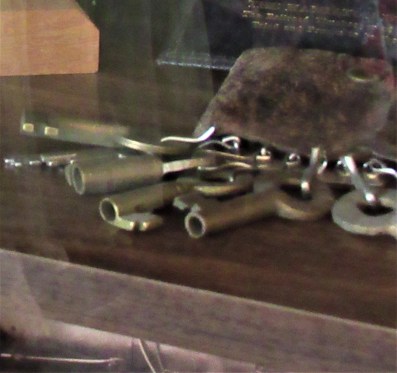
“It came from the Empress,
in Victoria. It won’t work here,
I’m afraid. It’s the clock
that runs all the clocks
and keeps them on time.

It needs a network.
ten, twenty, thirty clocks
that it can control
from its central circuit,
keeping them all on time.

Just like the railway.
The trains were always on time.
Except, just like this clock,
they don’t run anymore.”

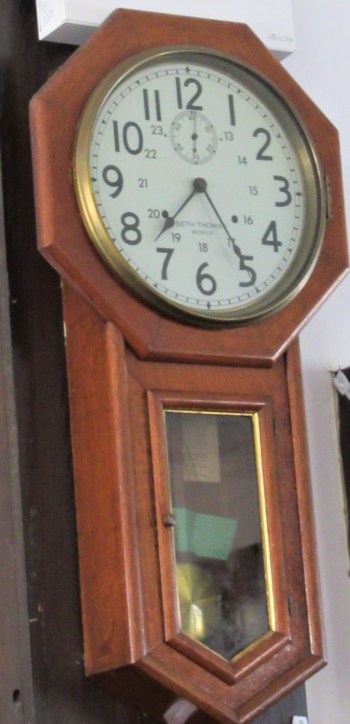
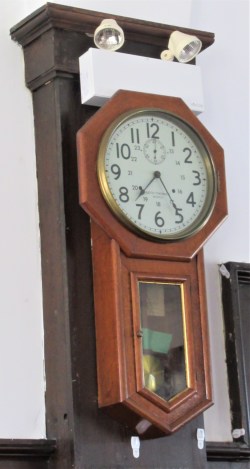
Comment: I don’t have a picture of the Master Clock at McAdam Railway Station. I guess I’ll have to take one next time I visit McAdam. This clock can be found in the dining room. Like the Master Clock, it too has stopped. Known in Wales as Grandmother Clocks, these pendulum clocks are designed to hang on the wall rather than to stand on the floor like Grandfather Clocks. Can a Grandmother Clock be a Master Clock? I’ll leave that semantic conundrum to the experts in linguistics. While they are all arguing about it, I will just say that Elsie, who else, told the story of the Master Clock to a group of tourists from Nova Scotia while I was listening.

A Three Year Old Girl

img_0181

A Three-Year Old Girl
McAdam Railway Station #3

“I often see her, walking around,
standing in a doorway,
looking into a room.

She’s very curious
but never says a word.
Doesn’t ask questions.

She’s not scary at all,
like some of the others.

There are rooms here
where people won’t go
if they’re alone.

But they mean no harm,
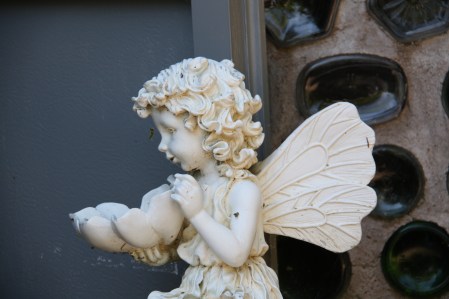
these broken ghosts.

They’re lost, nowhere
else to go, I guess.
Just missed the last train”

Comment: Another story from Elsie, who says she often sees this young child in one room or another. The station is indeed filled with many memories and you can feel warm and cold presences throughout the building. Some rooms are filled with foreboding, while others are warm and comforting. Many old buildings have these qualities as do the old iron age walled camps scattered around the south of England. Maiden Castle and Badbury Rings spring to mind, as do Westbury White Horse, Corfe Castle and parts of Brownsea Island in Poole Harbour. Do I believe in ghosts? I echo the words of my mentor and fellow-countryman, Dylan Thomas: “I’d be a fool if I didn’t.”

Fourteen

IMG_0774.JPG
Fourteen
McAdam Railway Station 2

“Fourteen years old, he was.
Left school to work at the station.
Pushed brooms, did the cleaning.

Walked into the men’s washroom
early one morning to give it a clean.
Found a man hanging there, dead.

Took out his pocket knife,
cut him down, called for help.

I met him at the station
when he was ninety-three.

He told me all about it,
shrunk in size he did
as he told his story, shrunk

until he was the same size
he was at fourteen.”

Comment:
Another story from Elsie, one of the guides at the McAdam Railway Station and the President of the Macadam Historical Association. A true historian, she is gifted with an uncanny ability to condense a remembered incident into a minimum of poetic words. Thank you, Elsie, for allowing me to access your memory and repeat what you told me. It is an honor and a pleasure to do so.

Zeitgeist

IMG_0638.JPG


Zeitgeist

Zeitgeist is a concept from 18th- to 19th-century German philosophy, translated as “spirit of the age” or “spirit of the times”. It refers to an invisible agent or force dominating the characteristics of a given epoch.
Wikipedia 

Those who cannot learn from history are doomed to repeat it.

“Plus ça change, plus c’est la même chose.”

Poems for troubled times.

My current poems are deliberately cryptic. Each one is a mind game I am playing with you. I do not underestimate you. I have placed clues throughout each poem and if you follow the clues you will arrive at many of the poem’s hidden meanings. Some poems are more difficult than others, their meaning more recondite. Others seem very straightforward, yet still contain secrets.

This style of poetry has a long history going back to Anglo-Saxon riddles and way beyond, back into the mists of time. Luis de Góngora (1561-1627) and Francisco de Quevedo (1580-1645) specialized in similar forms of recondite poetry, often based on metaphor and the juego alusivo-elusivo, the game of alluding to something while eluding the act of saying what it is. Jorge Guillén (1893-1984) and Federico García Lorca (1898-1936) also played this game, as did Octavio Paz (1914-1998) and many of the surrealist writers. In the works of all of these poets, the clues may rest in the poem or they may be found in a generic knowledge of the mythology of the poem’s exterior world.

Our world finds itself in an incredible mess right now. Somehow, we have to sort it out. We must pick our ways through the difficulties of these troubled times, as you must pick your way through the intricacies of these poems. Many of you will give up. Some of you, the chosen few, will make your way to the heart of each poem. Remember that images and metaphors tie past, present, and future together. Each word, each image offers a picture that reflects some of the shared realities with which we live.

Remember, as I said above: “those who cannot learn from history are doomed to repeat it” (George Santayana). Otherwise expressed, in the words of T. S. Eliot: “Time present and time past / are both perhaps present in time future / and time future contained in time past” (Burnt Norton). The seeming anachronisms in my recent poems suggest that perhaps all time is ever-present and always one.

Grand Finale

IMG_0646 (2).JPG

Grand Finale
(Moscow 1812
&
Moncton 2015)

survey the battlefield
muskets primed
three shots a minute
cities burning
hamlets and villages

world-viewed
through a monocle
stand to attention
be-whiskered faces
small narrow minds
wine glasses raised
gay colored uniforms
dazzling decorations
marvelous medals

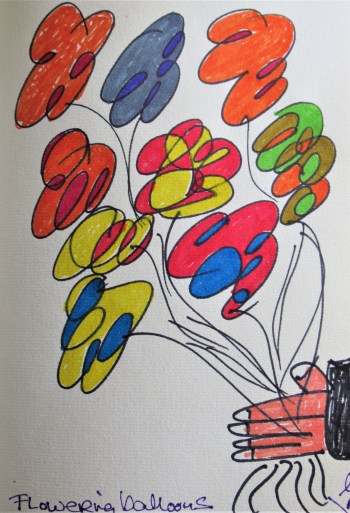
balloons blooming
gaudy their globules
pins at the ready
no flash but a big bang

glorious martial music
tintinnabulations
church bells ringing
carillon and cannon
magnificent the music

written cryptic
recorded alive
heard played seen
in  memory’s mind’s eye
again and again


Macadam: Before & After

IMG_0661 (2).JPG

Macadam: Before & After

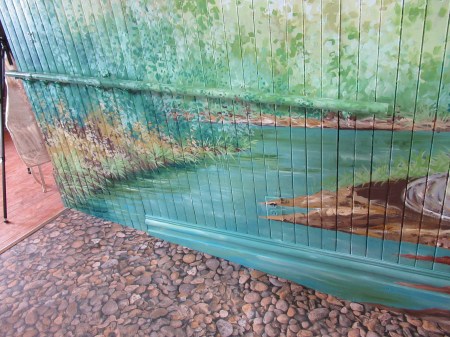
Yesterday, I traveled to Macadam Railway Station to spend a day with two of my friends, Geoff Slater (artist) and Jessi Green (writer). Geoff is painting a mural for the historic building. It depicts an incident from WWI in which Canadian Railway Engineers and troops rebuilt a railway bridge in Northern France that had been destroyed by the enemy. When I arrived in Macadam, Geoff took Jessi and I to see the then current state of his painting (as shown above, Before). After lunch, Jessi and I would discuss sundry writing topics, including when, ho, and what to revise, as well as our various writing  projects while Geoff continued with his painting.

IMG_0663 (2).JPG

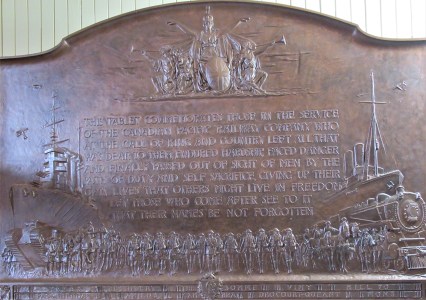
On the wall opposite the mural hangs a plaque dedicated to the memory of those Canadian Railway Engineers, probably the best in the world at the time, who made such reconstruction possible. The juxtaposition of mural and plaque make a fitting tribute to the role of the railway in WWI. The Macadam Railway Station is a protected historical site and a work of art in itself . What a pleasure it was to visit there as an invited guest.

IMG_0683.JPG

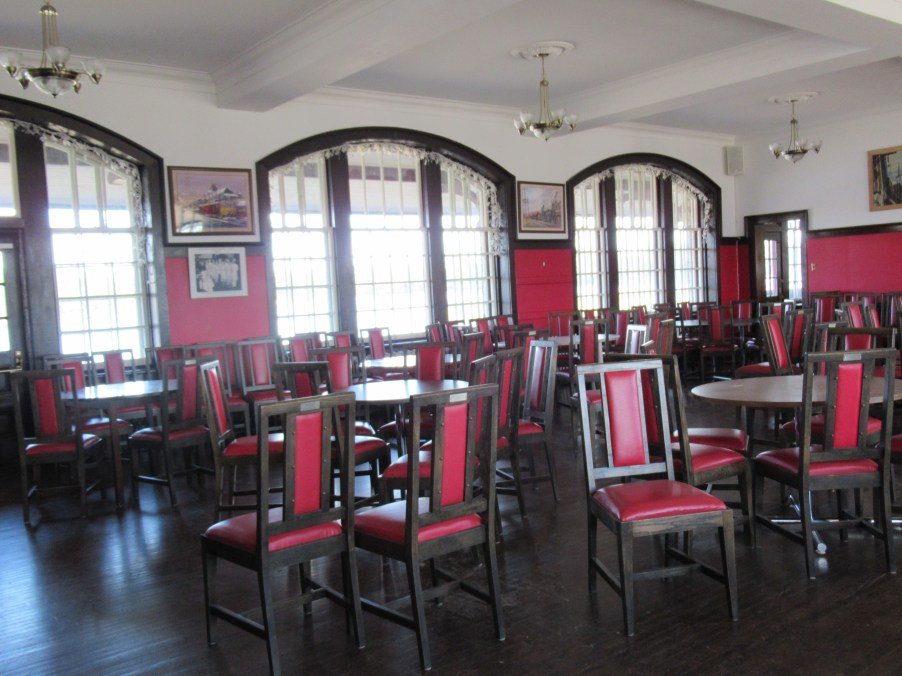
This is the dining room and immediately below you will see photos of the beautiful working bureau, over a hundred years old, and the grandmother clock that hangs on the wall beside the bureau.

IMG_0686 (2).JPG


IMG_0687 (2).JPG

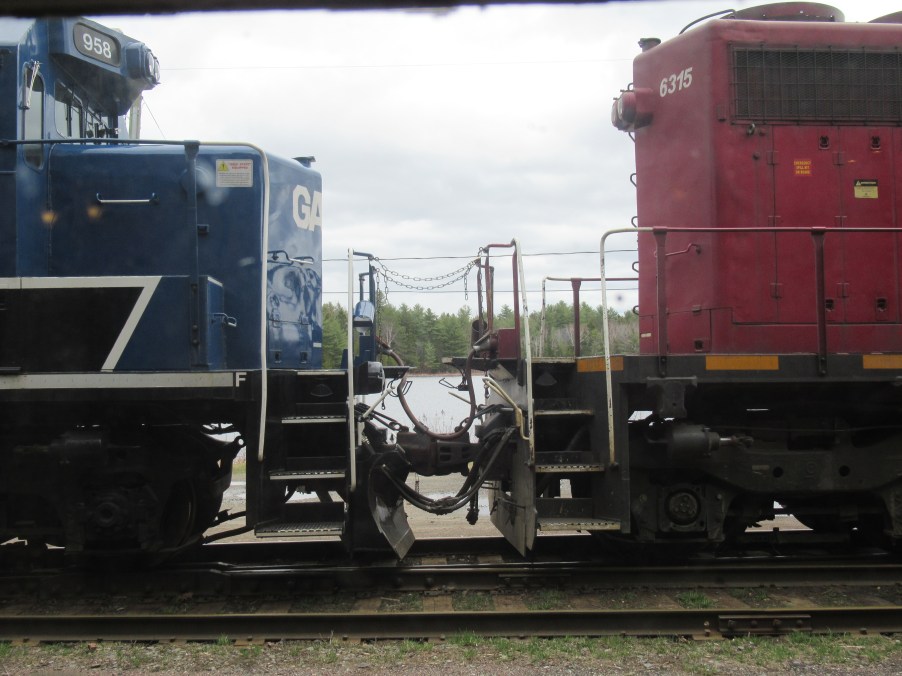
During the afternoon, we were blessed by the arrival of a train. In many ways, it was a ghost train, hauling with it so many memories of the past when railways ruled and train travel was ubiquitous.

IMG_0678.JPG

Before leaving, we paid our respects to Geoff’s painting. He had been busy on the top right corner of the mural and had completed the insertion of the military personnel who were working on the new trestle bridge built to replace the one that had been destroyed. All in all, this was a fabulous day in which art, photography, memory, writing, planning all played a part. Some photos to end with: first of all, a selfie entitled Selfie with Coal Scuttle and wow, did that bring back some childhood memories; and then a close up of Geoff’s work for that afternoon Men on the Bridge. I will end by saying that Macadam Railway Station is a ‘must-see’ visit for all train enthusiasts as well as for the train generation who wish to maintain their links with that past.

IMG_0689


IMG_0664.JPG

IMG_0692 (2).JPG


De[con]struction


20180823_152016_HDR-1_resized - Copy

De[con]struction
(1945 AD)

daylight regenerates
a stuttering roar
noise bursting into life

ladders and supplies
rise from earth to sky
loud voices verbal angels

barn dance on raw rafters
uncovering hidden layers
replacing worn-out tiles

ascending descending
Jacob wrestling with
his heavenly burden

no crows on patrol
cats long gone to ground
chaos and commotion

leave taking
a ritual shaking
rough tarry hands

a brave new world
rebuilt by three
not so wise men
less than three days