November 1961

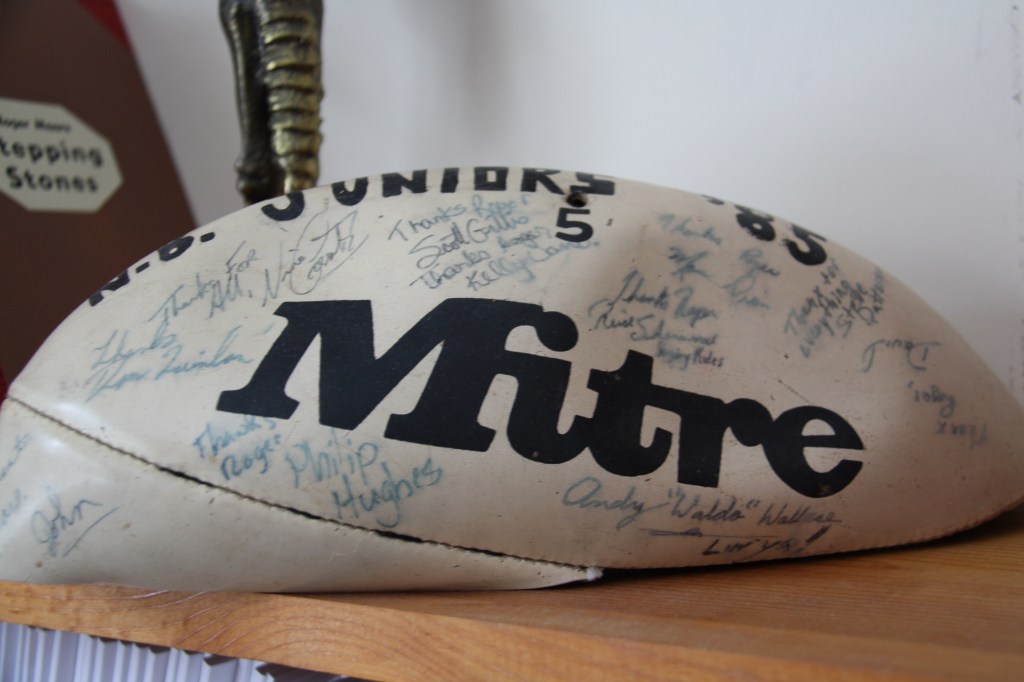
I wondered what had happened to that rugby ball!

November, 1961

November on the Berryfield: duck weather,
we call it, with the rain pouring down
and the watchers standing on WWI duckboards,
chilled their fingers, eyes blinking against the wind.

West Country clay turns rugby boots into leaden
counterweights. Hands stuck in pockets, the railway
carriage where we changed is a distant memory.
The only reality, this wet clay holding us back.

Mouldy and muddy, our rugby jerseys are all the same
and it’s hard to distinguish friend from foe.

Trench warfare, we think, as the two packs strain,
a Roman tortoise, sixteen bodies, thirty-two legs,
crabbing from side to side as they seek a perfection
that will never be found on a day like today.

Rain shrouds the goalposts and the scrum half’s kick
is a yard too far from clumsy, chilled fingers
as they scrabble in vain at this soap-bubble nightmare
we call a rugby ball. Worn-out legs churn through
mud that clutches like an octopus at feet and ankles.

Running rhythms are lost. Wet clay fingers hold us back.
Grey ghosts of ancient alumni raise up our hearts,
help us to haul our opponents’ tired bodies down.

Comment: Just rediscovered this, revised it, and now I am posting it again. The Berryfield is where I played my school rugby. If anyone remembers the Berryfield, or actually played there, by all means drop me a line. That West Country clay mud was the devil. Heavy and clinging, it grew on your boots until they became as heavy as diver’s boots and gradually weighed you down. It was worse for the opposition than for us. We, at least, were accustomed to it. It was even worse for the cross-country runners and I have never forgotten those ploughed clay fields.

Sunday in Wales

To be Welsh on Sunday
(This prose poem should be read out loud, fast, and in a single breath!)

              To be Welsh on Sunday in a dry area of Wales is to wish, for the only time in your life,  that you were English and civilized,  and that you had a car or a bike and could drive or pedal to your heart’s desire, the county next door, wet on Sundays, where the pubs never shut  and the bar is a paradise of elbows in your ribs and the dark liquids flow, not warm, not cold, just right, and family and friends are there beside you  shoulder to shoulder, with the old ones sitting  indoors by the fire in winter or outdoors in summer,  at a picnic table under the trees or beneath an umbrella that says Seven Up and Pepsi (though nobody drinks them) and the umbrella is a sunshade on an evening like this when the sun is still high  and the children tumble on the grass playing  soccer and cricket and it’s “Watch your beer, Da!” as the gymnasts vault over the family dog till it hides beneath the table and snores and twitches until “Time,  Gentlemen, please!” and the nightmare is upon us as the old school bell, ship’s bell, rings out its brass warning and people leave the Travellers’ Rest, the Ffynnon Wen,  The Ty Coch, The Antelope, The Butcher’s, The Deri, The White Rose, The Con Club, the Plough and Harrow,  The Flora, The Woodville, The Pant Mawr, The Cow and Snuffers — God bless them all, I knew them in my prime.

Comment: I wonder how many other ‘serious drinkers’ or ‘amateurs’ remember these pubs and clubs. And, oh yes, there were so many more. The Mexico Fountain, The Tennis Court, The Old Market Tavern, The New Market Tavern, The Load of Hay, all those many colored dragons: green, black, blue … the Three Lamps, the Cricketers, the Villiers Arms, the Birchgrove Arms, the Rose and Shamrock, several Red Dragons, the Church, the Black Swan, I can’t remember how many different Georges, and Kings’ Heads, the Vine Tree, the Sun, the Oak tree, the Penguin, the Naval Volunteer, the Quadrant, the Coronation Tap, the Mauretania, The White Horse, the Black Horse, the Old Grey Mare … so many memories, and all deniable, and I’ll never forget the Wheelbarrow Race (ask me about it), nor Pickety Witch, one of those pubs at which I never stopped!

Downsizing

Books abandoned on the sea shore of life.

Downsizing
Francisco de Quevedo

I chose each book, held it in my hands for
one last time, then placed it peacefully in
its new resting place. Old friends, they were …
I broke that friendship and set my friends free
to fulfill their promised afterlife on
another reader’s shelves.

Mind to mind, though they had
lived five hundred years ago,
I strove to engage them in lively
conversation, Bakhtinian dialogs
within our time and space, and
that space my basement library.

I loved to hear their lilting speech,
to listen to their wisdom with open eyes
and mind. I answered them with words
I quickly pencilled on each page.

One day, a man arrived from the university.
He carried them away in a delivery truck
and they were borne to a wider world.

If you see on, bless it, read it, cherish it.
Blind now my eyes that devoured their words.
Deaf now my ears that heard the dead,
for I can listen no more.

Note: “Escucho con mis ojos a los Muertos /
I listen with my eyes to the words of the dead.”
Francisco de Quevedo (1580-1645)

With thanks to Nicholas Wermuth, who was kind enough to comment and help me revise and restructure this poem.

Survivor

Survivor

Every day, now he’s learning to speak Welsh,
he finds out something new about his childhood.
It’s not the need to talk so much as the necessity
of diving into himself and mining his memories.

Brynhyfryd / Mount Pleasant.
Pen-y-Bont / the End of the Bridge.
Ty Coch / the Red House.

This latter the house in which he was born,
way out of town, by Fairwood Common,
away from the strafing and bombing.
The war generation of his family all born
in the same in-the-country Gower bed.
No room in war-time hospitals
not even for the birth of war babies.

Three of his brothers did not survive
those rough, household births.
He still bears the forceps’ scars
from the moment the doctor
plucked him out, head first,
and hung him up by the heels,
shaking him, bringing him back to life.

He bears other scars as well
from the survivor’s burden of carrying
three dead brothers for seventy long years,
alive and kicking in the womb-warm
crevices of his still beating heart.

Midnight

A great NB Winery

Midnight

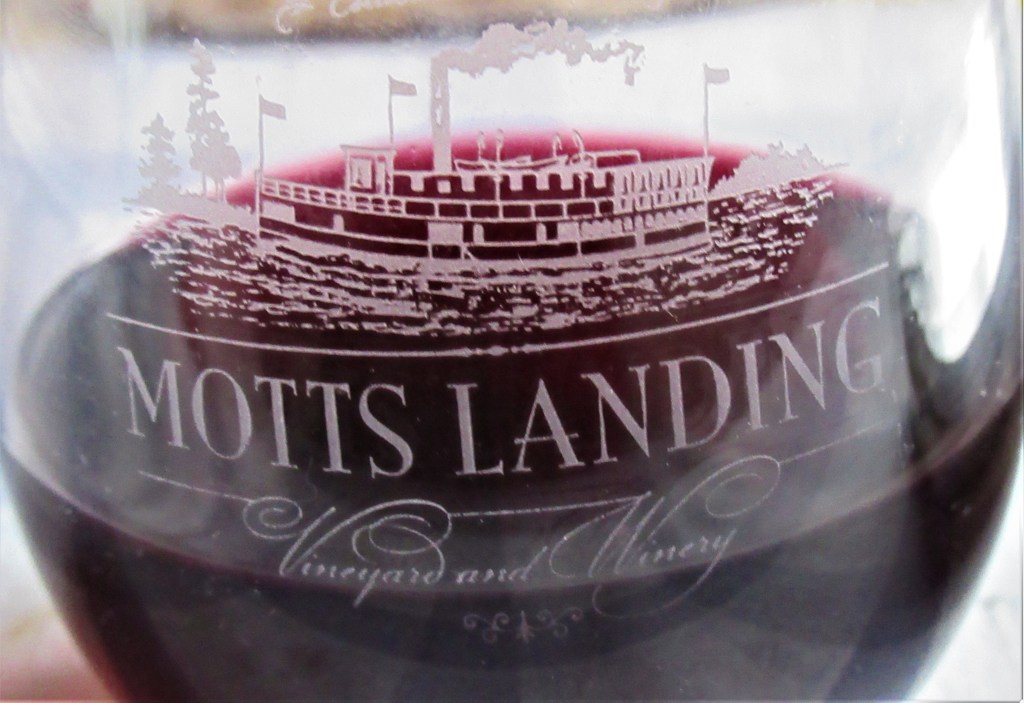
Primary red, this label, and the wine, fresh-drawn,
plucked from the bottle, tumbling tinto, into the glass.

Swirled, streaked ruby by overhead lights, bubbles
bright with hints of garnet, purple, brick at meniscus.

Sniffed, it smells of warm autumn days, scintillating
leaves, just crisping, turning color, and fruit all ripe.

Tasted: fruit bursts into hints of raspberries,
strawberries, spices, a touch of garrigue, mysterious.

Wine descends like water on a dry, hot, dusty day,
or rain after drought, when thirsty lands lap up

liquids, and rejoice in moisture’s blessings.
Raised now the glass, vineyard and vintners toasted,

midnight greeted, saluted the old day past and gone,
welcomed the fresh day walking in, swaddled, new born.

Autumn

Autumn
and all that jazz

1

Slow last drag of summer’s sad trombone
sliding its airs between stark, naked trees.

Golden memories float face down in tranquil
waters, life and the summer drained away.

A voice, her voice, ripples across the pond,
echoes over drowned and mirrored leaves.

2

Grey the sky, white the birch trees:
Narcissus kneeling, dark waters flooding.

Tumble-dried by this autumn sky,
leaf words falling, still her voice echoes.

3

Tintinnabulation: a tin-pan alley of leaves
blown against windscreen and car windows.

I, who a grief ago sat here watching her walk,
now sit here alone, waiting for her return.

4

I who am nothing know nothing, save that I
am a burnt-out ember, cold, in a grey-ash grate.

A grating of old bones, these hips and knees,
and if I fall, sweet heart, please love me more.

5

Here endeth today’s lesson: that of the fall,
the fall of all things finally into deep water.

Fall, fall asleep to the rhythmic leaf beat
that summons us all to our appointed end.

Chance Encounter

Chance Encounter
Overheard one night at the bar

“Meeting her, unexpected,
with another man, that night,
and me, with another woman,
all four of us looking
bemused by what the other
had chosen in each
others absence

… time suspended …

and the halted, faltering
politeness of a nod,
a handshake, ships
passing in the night,
signs and signals
no longer recognized.”

Re-[b]-earth

Re-[b]-earth

“Get out and about,” she told me.
Take off your socks and shoes.
Walk barefoot on the earth and grass:
twin pleasures, you can choose.”

I took two canes, one in each hand,
and left the house to walk the land.

In the garden I took off my shoes
to walk barefoot on the lawn;
when grass sprang up between my toes
I was instantly reborn.

I stood in the shade of the crab apple tree
and let leaf and flower spill over me.

Sunlight took away my frown
and freckled a smile on my face.
I was blessed again with hope and light;
earth and grass filled me with grace

I stooped to reach my shoes
and carried them home in my hand,
maintaining as long as I could
my contact with this magic land.

When white blossoms filtered down
they gifted me a flowery crown.

Daffodils

Daffodils

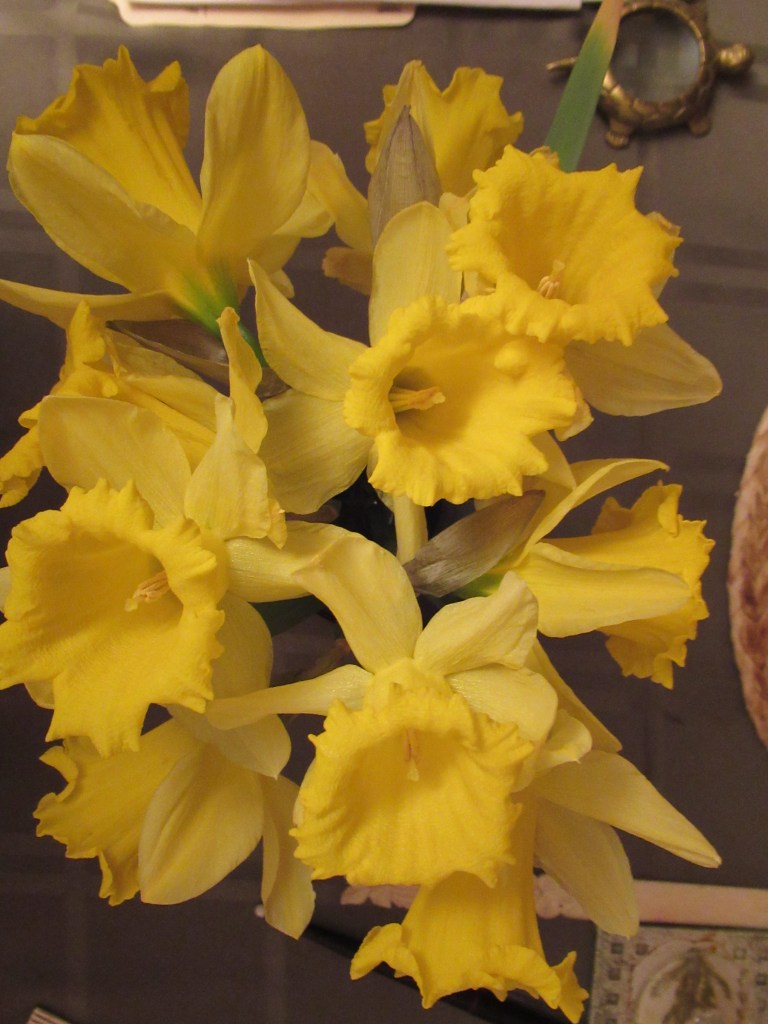
For ten long days the daffodils endured,
bringing to vase and breakfast-table
stored up sunshine and the silky
softness of their golden gift.

Their scent grew stronger as they
gathered strength from the sugar
we placed in their water, but now
they have withered and their day’s done.

Dry and shriveled they stand,
paper-thin and brown, crisp to the touch.

They hang their heads:
oncoming death weighs them down.

Dreams

Dreams

All my former lives gather at night
thrusting their way forward
into the half-light of my drowsy mind.

Alive and thriving, they descend
from midnight’s tree of knowledge
and besiege me with grasping fingers.

Do my dreams fish these colors and shapes
from my own interior seas?

Or do they watch and wait for these spirits
to emerge from sleep’s cocoon
and be reborn in fiery blocks of color?

My neighbor’s dog greets the dawn
barking bright sparks of color
into secluded corners of my waking mind.

I dream dark angels with butterfly bodies,
their inverted wings spread over my head.