Angel

Angel

Oh yes, I have been with them, the lost folk, the tramps, the homeless, the bag-women, all the gente perduta. I have stepped on their fingers as they sprawled on the sidewalk. I have trodden on their toes, tripped over their legs, bumped into their stiff, stumbling bodies and stepped in their wasted body fluids. I have stayed out all night, shared a pack of cigarettes, producing another pack or a bottle from the pouch beneath my wings. Such stories they tell, and they tell them in that antiquated language that I first heard hundreds of years ago. They know me now. I won’t say they trust me, but they tolerate my presence, a Jacques Cousteau voyeur, looking into the sea-depths of their despair.
            Garbed in garbage bags, thin trickles of wine and vomit slipping over their lips and cheeks, bloody bandages wound around needle wounds, they have scars at elbow and foot. I hear the warmish blood whistling its snake song through their arteries and veins but death shall have no dominion, not while I am on watch.
            I enfold myself in my wings and weep as these people, my people now, pillow their heads on bloody bandages. Their world is a world of vomit and reek, yet the edges of their shattered lives rip chunks from my hands and fingers, pluck feathers from my wings, tear holes in my heart. Needles I have seen and touched, blunt, shared between three, five, and twenty-five. Round and round, they go, slipping the thin threads of drug-dreams and tainted blood from friend to friend while the blunt points stab at bruised flesh and leathery vein until the freed blood oozes through fingers and hands clenched tight to hold and staunch.
            Night after night I have watched them searching for something just beyond their fingertips. As the late-night diners emerge from their opulent restaurants, I have seen my people fortifying shop doorways with cardboard castles. I have watched them climb inside, shut down the portcullis, and enfold themselves in the plastic that will keep them free from wind and rain. They all crave the bottle’s warmth. They fight and scratch for that which will hold them together, body and soul, that spiritual glue that binds the spirit before setting it on its drunken dreams of freedom. Kings and Queens, tumbled from their earthly thrones, they dream of the paradise they lost, yet think they can find again at the sharp point of a needle or the bottom of a bottle.
            Oh bird-on-a-wire dreams held captive in a skull-bone cage, how you yearn to grow wings, like me, to soar, to fly, to be released from the body, to at last be free …

Commentary:

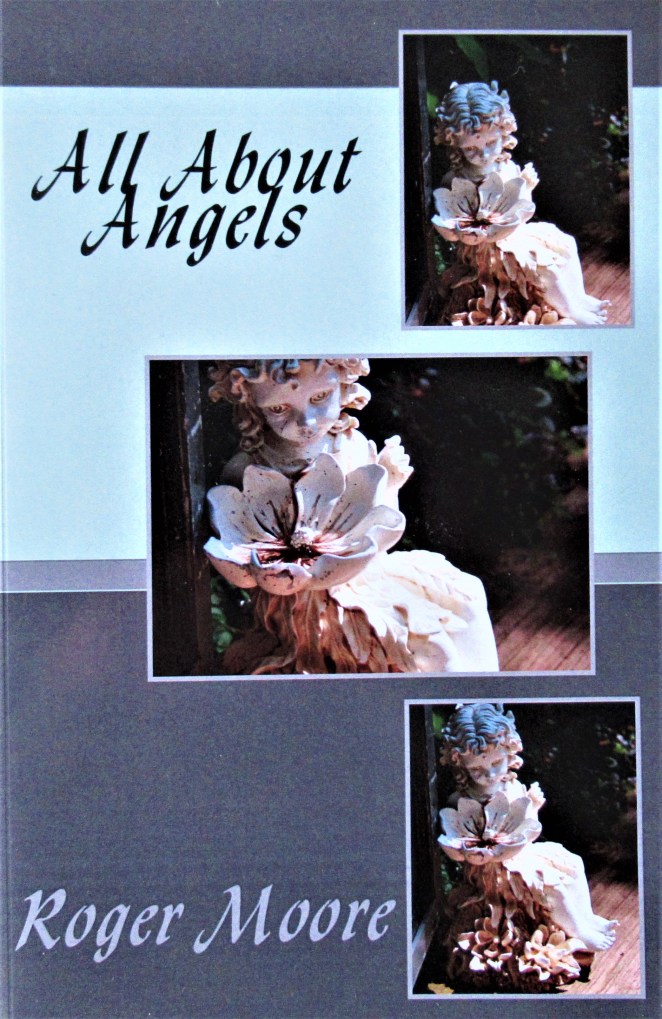
This book, All About Angels, is available online at Amazon.ca. Click on the link below to purchase the book.

All About Angels
Paperback edition

Monkey Turns Down Promotion

Monkey Turns Down Promotion

“I hereby appoint you head of the asylum.”

The young office monkey with the plastic stethoscope
was dressed neatly in a white sheet.

“Dr. Freud, I presume?”
Monkey held out his hand
but his witticism was lost in a flood of water
flowing from the flush and over the floor.

Monkey stood there, paddling in piddle.
Inmates with crowded heads and vacant faces,
fools grinning at a universe of folly,
paddled beside him. He wiped
a sick one’s drool from his sleeve.

The office boy spat on his hands,
slicked down his hair, and placed
his stethoscope on monkey’s heaving chest.

“You have no pulse.”
“How do you know I have no pulse?
Surely, you cannot hear my heart
for you have a banana stuck in your ear.”

“Speak up!” said the doctor,
“I cannot hear you:
I have a banana stuck in my ear.”

Then monkey felt fear.

Daylight diminished
and waters closed over his head.
He spurned the proffered paw,
the life belt thrown
by the offer of a new position.

Exit monkey left,
pursued by a chorus:
“Run, monkey, run!”

Commentary:

A Golden Oldie from Monkey Temple (2010). I came across it by accident as I thumbed through some older books – wow, fifteen years ago that came out. A Golden Oldie indeed. I had forgotten all about Monkey Temple. However, the last couple of days I have watched New Zealand vs Canada and England vs France (Women’s Rugby World Cup). Both semi-finals took place at Ashton gate, Bristol. That’s when I started thinking about Bristol and Bristol Zoo.

We had family in Bristol (Westbury-on-Trym) and from an early age we visited Bristol Zoo. One of my favorite places was the old ruined Monkey Temple, full of monkeys that impressed me with their antics. A small, walled zoo, it was full of innovations and I remember well Alfred the Gorilla and Rosie the Elephant. I loved the rides on Rosie’s back. The camels too offered lifts to young children and the elephants took apples from my hand with their long trunks. I also remember the bear pit, and loved watching the brown bear climb to the top of his pole and catch food thrown to him by the visitors.

I think everybody’s greatest thrill came with feeding time for the seals. What a racket when the attendant appeared with his / her pail of fish and he/she threw them to the waiting seals. Almost as thrilling was the penguin house with its aquarium and glass windows. Animals that seemed so clumsy, waddling on land, turn into sea-angels when they dived and we could meet them, face to face, so to speak, almost in their own environment.

My love of zoos reached out and I recall the zoo in Madrid, established when Columbus returned from his voyages with species of animals hitherto unknown. And who could forget Copo de Nieve, the albino gorilla in Barcelona zoo.

Alas, my zoo day’s are over. But the world is wonderful. Today, two deer entered our front yard, lunched on the fallen crab apples, and went to sleep underneath the trees outside our window. Joy to the world and the world brings me joy -sunrise and sunset, colored clouds, the deer in my yard, a fox passing through. However, I must admit I am not impressed by the little red squirrel that nests under the hood of my car and gnaws my cables. Nor by the porcupine who loves the salt in my garage doors and nibbles at the door frame every chance it gets. The love of nature – red in tooth and claw – I guess we have to enjoy the good and put up with the bad. Life’s like that. “Ask the animals, they will teach you.” Bristol Zoo motto.

Boxing Day

They’re not Boxing Gloves – but they could be. Photo by my friend Geoff Slater.

Boxing Day


            By the time I get up, the gloves are really off and the sparring has begun in earnest. I hear angry, raised voices, walk downstairs to the kitchen, and a hush falls on the room. Knife-edge glances slice their menacing ways through the thickening atmosphere.
            Time for boxing: on my left, in the blue corner, my mother, smoking what is probably her second packet of the day. A thin haze of grey smoke escapes from her bruised lips and a cloud of exhaled fumes crowns her head with a murky halo. On my right, in the red corner, my father. White-faced, hungover yet again, truly into the spirits of Christmas. He breathes heavily, like a Boxer Dog in the mid-summer dog-days, snoring and snorting at a bitch in heat. In the middle, my grandfather, the referee. He is keeping the combatants apart, creating a tiny breathing space so the true Spirit of Christmas can disentangle itself from those false Christmas Spirits and bring peace to earth again for at least sixty seconds between each round.
            I look around the heaving, seething, threshing silence of a room where conversation has suddenly ceased. The fire is burning merrily. Beside it, tongs, poker, and small shovel stand to attention. On the hearthstone, the little red brush, with its long handle lies in ambush. This is what my father uses to beat me when he can’t be bothered to take off his leather belt. Scorch marks from the hot coal fire sear the handle and back of the little red brush. I threw it on the fire one day, hoping to see the end of it. Of course, it was rescued from the flames, resurrected, and I got beaten for that act of rebellion too.
            “It’s all your fault!” My father breaks the silence, pointing at me. His red-rimmed eyes blazing with a sudden and renewed anger. He starts to rise, but my grandfather steps between us.
            “Go and see your granny,” grandpa tells me. “She’s in the kitchen. Go now!” He points to the kitchen door.
            I run a gauntlet of staring eyes and go to my gran. As I shut the door behind me, voices rise higher in the room I have just left. Boxing Day, indeed. The gloves are off. The battle has begun again. My grandfather has evacuated me from no-boy’s-land and, for a moment, I am no longer trapped in the mud-filled, cratered, shell-holes between the trenches, the uncut barbed-wire barriers, the poached-egg eyes peering through periscopes and spying on me from the parental and priestly parapets above the wooden duck-boards that line the floor on the far side of the room and keep the enemies’ feet clear of mud and water.

Crocodile Tears

Crocodile Tears

The crocodile lives in the wind-up gramophone. The gramophone lives in the top room of the house. The boy winds up the gramophone with a long brass handle, round and round, till the spring is tight. A tight spring frightens the crocodile and he sits quietly in his cage. But as the record goes round and the spring loosens up, the crocodile roars and demands to be freed. He’s the Jack that wants to jump out of the box. His long-term dream is to eat up the witch who looks out of the window and watches the boy as he plays in the yard.
            Last week the boy decided to dig. He picked up a spade and dug a deep hole that went all the way down to his cousin in Australia. The little dog laughed and joined in the fun, scraping with his front paws and throwing earth out between his back legs like happy dogs do. The witch in the window cackled with laughter and the rooks in the rookery rose up in a cloud and cawed in reply. Only the boy is able to see the witch and he only sees her when she sits in the window. But he knows she wanders through the house, and the air goes cold when she enters and exits the rooms, especially when she brushes past the boy and sweeps his skin with her long, black gown.
            When the boy got tired of digging, he drove the spade into the ground and left it standing by the hole. When his father came home it was well after dark. He didn’t see the hole but he saw the spade. So he didn’t fall in to the shaft of the coal-mine that went down to Australia. No free trip to the Antipodes for that unlucky dad. He beat the boy for that, for digging that hole. Then he beat him again for lying because the hole didn’t go to Australia. Australia was too far away and the angle was wrong. The boy laughed when he saw that his dad didn’t know where Australia was.
            “Ha-ha,” he laughed. And his dad beat him again, this time for laughing.
            Sometimes at night the boy can hear rats running through his bedroom walls. They scuttle and scuffle as they hunt through the guttering. The crocodile growls from time to time in that upstairs room. The witch cackles with laughter. The boy puts his head under the blankets and cries himself to sleep. Sometimes he wishes the crocodile would come and eat up his dad. But he loves his dad like the dog loves his dad even though his dad beats both the boy and the dog. Sudden beatings, they are, that arrive without warning: hail and thunder from a sunny summer sky.
            “Well, you’re not laughing now,” his father announces as he beats him one more time. “A beating a day keeps disobedience away. There will be no disobedience in this house.” When the father beats the boy, the dog cowers beneath a chair. The boy hears the crocodile growl and smiles through the tears as he wipes salt water from his eyes.
            “Are you laughing at me? I’ll make you laugh on the other side of your face,” the father taunts the son and beats him again.
            The crocodile growls. The old witch cackles. The rooks in the rookery rise up in the air and the father’s hair stands up on end like it does when lightning lights up the sky, and thunder rolls its drums, and the sky’s wheels rattle like an old warrior’s chariot whose wheels have not been greased. The veins stand out in his father’s cheeks as the old man once more raises his hand to the boy.
            The old man tells the same old jokes again and again. The boy must always remember to laugh at them as if he had never heard them before. If he doesn’t laugh, his father gets angry. Some of the jokes are good, and the boy likes the one about the Catholic with the pet crocodile who goes into a bar in Belfast and asks the barkeep if they serve Protestants. ‘Of course we do,’ says the barkeep. ‘Good,’ says the man. ‘I’ll have a pint of bitter for myself and a Protestant for the crocodile.’  Or is it the one in which the Protestant goes into the bar and ask the barkeep if they serve Catholics … anyway … whatever … one night, the boy dreams and it happens like this. The crocodile escapes from the gramophone. The witch hands the boy a leash and a collar and between them they restrain the crocodile.
            “Walkies?” says the boy.
            The crocodile nods his head and crocodile and boy walk down the street to the Kiddy’s Soda Fountain on the corner. When the boy walks in with the crocodile, the waitress raises her eyebrows and opens her mouth.
            “Do you serve grown ups in here?” the little boy asks her.
            “Of course we do,” says the waitress.
            “Good. I’ll have a glass of Dandelion & Burdock for myself and a grown-up for the crocodile. Please.”
            The witch says grace, the boy sips his Dandelion & Burdock, and they all shed crocodile tears as the boy’s pet crocodile chomps on the fast-disappearing body of the boy’s dad.
            Next morning, the boy wakes up. The witch and the crocodile are sitting on his bed.
            “I had a funny dream last night,” says the boy.
            The witch cackles. The crocodile burps, then sheds crocodile tears. The boy starts to laugh. He laughs until he cries and then the witch sheds crocodile tears too.

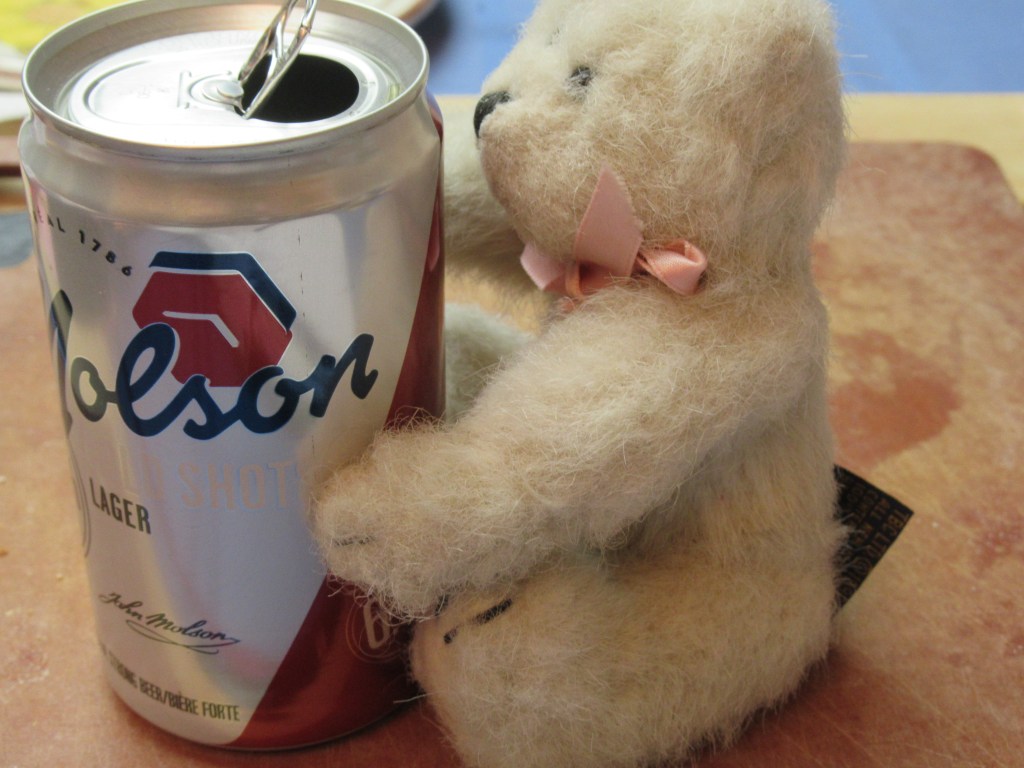
Basil Bear Packs

Basil Bear Packs

            “You promised.”

            “I know I did.”

            “Then take me with you. I’m only small. I’ll fit in a pocket.”

            “All right: go and pack.”

            “What shall I pack?”

            “Don’t ask me. I don’t know. I’ve never travelled with a teddy bear before.”

            The conference is a strange one. There are no women present and only one person of color. Nobody speaks to him. When he reads, I am the only one to hear his paper. It’s actually quite good.

            I move from that session to the next one. The man sitting beside me opens his briefcase and tells me to look inside. I do. He has two pistols in there.

“Are you packing?” he asks me.

     “No,” I reply. “But I packed to come here. So did my guardian.”

“Guardian?” the man raises his eyebrows. “That’s cool: a body guard, eh? You need to pack round here. But a body guard is great. Where are you going tonight?”

I tell him.

“That’s a dangerous area of town. You’d both better be packing if you go down there.”

“Thanks for the advice,” I nod to him. “Are you going to the reception?”

“Yup,” he smiles. “I’ll see you there. And don’t forget to pack.”

“Well, Basil,” I see when I get back to the hotel room. “It looks like you’ll be going out with me tonight.”

“That’s great,” little Basil gives me a big teddy bear smile.

When I get to the reception, my friend from earlier is there. He nods at me and smiles at the bulge on the left side of my jacket.

“Good to see you’re packing. Can I have a look?”

“Sure,” I say and open my coat. Basil sits up, opens his eyes, and gives him a little wave. The man’s mouth falls open. He stares at me, wild-eyed.

“Ain’t nobody gonna tackle a mad man who’s carrying a teddy bear,” I say. “Now that’s really packing.”

He walks to the bar, orders a double-double and swallows it, Ker-Splosh.

“That’s telling him,” says Basil, snuggling back down in the warm beneath my armpit. “Hi-ho, Silver: let’s go out and get those gangsters.”

Comment: For Tiffany who understands the important things on the brighter side of life.

On Being Welsh

On Being Welsh
in a land ruled by the English

On Being Welsh
in a land ruled by the English

is available at the following links:

https://www.amazon.ca/dp/9388319842

https://www.amazon.com/dp/9388319842

A shortened version of this manuscript was awarded first place in the David Adams Richards Awards for a prose manuscript by the Writers’ Federation of New Brunswick, 2020.

Individual stories have been published in Anti-Lang (M. T. Head), West Coast Short Story Slam (Teeth), and on commuterlit.com (Remembrance Day).

Individual stories have won awards as follows: Butterflies (Honorable Mention, Atlantic Short Story Competition, Writers’ Federation of Nova Scotia), Auntie Gladys (Finalist, Wordfeast NB, Postcard Stories), Message in a Bottle (Honorable Mention, WFNB Creative Non-Fiction), The Key (Finalist, CBC Short Story Competition), Letting Go (First Place, WFNB Douglas Kyle Memorial, short story).

I would like to thank Lucinda Flemer, Primum Mobile, the first mover, who brought together the KIRA artists and turned them into a creative community. These artists include Geoff Slater and Chuck Bowie, both of whom have influenced the writings in this book. A special thank you must go to Ginger Marcinkowski, my Beta reader, who really deserves an Alpha Grade for all her help and understanding.

I would also like to thank Dr. Karunesh Kumar Agarwal (Managing Editor) Cyberwit.net for his editing skills and his invitation to participate in this poetry series.

Donna Morrissey, award winning Canadian author and judge of the 2020 D. A. Richards Award, wrote the following about my winning submission.

Judge’s Judgement: “This writer’s prose is eloquent, lyrical and beautiful. His stories are disturbing and memorable. It is an evocative journey through the deeply seeing eyes of an old man, and back through his tormented and deeply felt self as a beaten boy. There were times I held my breath against his suffering, and times I applauded his courage to keep on living. At all times I was held by the strength of such writing as would allow me those sparse and limited visuals to the bruising of the flesh whilst leading me directly into the tendered heart. Congratulations.” 

The Story: Set in Tara Manor, a boutique hotel in St. Andrews, New Brunswick, the narrator searches for a story he can write. He rejects the stories and myths of other people and indigenous races, only to discover that he must be the subject of his own tale. It is a story of childhood abuse, first at the hands of his own family and then in Catholic and Protestant boarding schools in Wales where he was sent at the early age of six. It tells of a growing self-distancing from the world, including self-harm and attempted suicide, and then of self-discovery, understanding, and self-forgiveness, far from his Welsh homeland, in the Maritime beauty of Atlantic Canada.

Editor’s Comment: No doubt, here in these poems we are impressed by the ease and strength of the rhythm. Several of these poems show the passionate flight of profound imagination. The poems have poignant force of true feeling. All poems are irresistibly powerful.

Author’s Comment: Poems or stories? Both really, for On Being Welsh is composed of poetry written, not in verse, but in prose. Prose poems then, or poems in prose. How could I write anything but poetry when I come from the same town in Wales as Dylan Thomas and Vernon Watkins. I too was born with music in my heart and poetry on my lips.

On Being Welsh

On Being Welsh in a land ruled by the English

This is now published and in my hands. I do not yet have full details on links and where and how to purchase, but I will put them up as soon as I have them. Meanwhile, I am grateful to my cover artist, who always does such a great job, and to my editor, Dr. Karunesh Kumar Agarwal (Managing Editor) Cyberwit.net. What a pleasure it has been to work with him. The cover picture, incidentally, is An Only Son.

I am now working on my next book, Stars at Elbow and Foot. I am sure many will recognize the title as coming from a line of a man born in the same town in Wales as I was: Dylan Thomas. The island in the picture is the only Island visible in Island View, incidentally. Alas, I do not have a picture of my cat, though I may put one on my next cover.

Ah yes, time to celebrate. I guess we’ll open a barrel of wine tonight. Hopefully we won’t finish it one sitting. I’d be lying if we did. This incidentally is the bodega where I got baptized. If you haven’t got baptized in a Spanish bodega, you haven’t lived. I’ll tell you about it sometime. How I miss that verdejo! Unfortunately, the verdejo didn’t miss me, and that’s how I got baptized. ‘Ya te hemos bautizado!’ “Que sea yo, y no el vino.” And if you understand that, you speak pretty good Spanish or Spanish pretty good … and you probably have an evil mind, just like mine.

Here I am, on the sea-shore, selling C-shells and thinking about my evil mind. But remember, my evil mind is mine, and it’s a one-of-a-kind. You go and find your own. And watch out for those Saint John C-gulls.

Go on, buy one and read it.
I dare you.

Self-Isolation Day 19


IMG_0718 (2)

Self-Isolation Day 19
Platero yo yo
Meniscus: Crossing the Churn

I am eking out my reading of Platero y yo much as I eke out the food supply: small portions, and a chapter at a time. In the same ay that I am enjoying my food so much more, savouring each mouthful, cutting down on the accompanying wine, tasting life to the full, so I am slowing down my reading. I am learning to enjoy the journey, the perusal of each word, each phrase, the long-drawn out aftertaste of every image, the lingering bouquet of each metaphor. Yes, Platero y yo is a fine wine drawn slowly over the palate to be tasted and tested, not swigged and swallowed.

Not for the first time in my life, I am jealous, jealous of this writer with his Nobel Prize for Literature and his wonderful way of choosing le mot juste, the exact word, with which to illustrate his tales. It is not the Nobel Prize of which I am jealous, but the talent, the skill, the patience, the taste of each word. I wish I could write like that. I wish I could take the world outside in my garden and imprison it on the page.  Imprison: that’s what I do. Juan Ramón Jiménez imprisons nothing. His birds and butterflies fly free. His donkey roams free. His village women, young and old, wander freely across the pages as do the gypsy children and the children of the poor, with their dreams of gold watches that will not tell the time, their shot-guns that will not kill hunger, their donkeys that will carry them to a pauper’s death. Reading at this level, I rediscover my inevitable inability to write the way I want, to capture what I see, to give life and liberty to my words, enchained all, and lavishing in their captivity.

There is, of course, an alternative, one of which I am also incapable: to create a new world. I know of few people who are capable of doing that. Tolkien, of course, created Middle-Earth, the Shire, Mordor, Gandalf, and the Lord of the Rings. Rowland created Hogwart’s and the world of magic that surrounds Harry Potter. Closer to home, Alexandra Tims created Meniscus, a planet that travels around twinned suns and is in turn circled by two moons. Here water effervesces and flows uphill or generates dramatic water-climbs and lake-like churns.Erosion occurs by wind-scour and frost-heave. It holds predators (slear-snakes and kotildi) and humans have been brought her, as slaves, from earth itself, to eke out a miserable existence amidst the dystopia created by Dock-winders, Gel-heads, Argenops, and the Slain.

What I love about this series includes the invented language, the flora and the fauna, the wonderful drawings and maps that occur regularly throughout the books. This is no Middle-Earth, a recognizable world inhabited by humans and figures of magic drawn from our own legends and mythologies. It is a flesh-and-blood creation of something new and startlingly different.

Wolfgang Kayser suggested, a long time ago, that there were three types of novels: novels of action (the easiest to write, if you have that calling), novels of character (the development of an individual or a series of individuals), and novels of place (where the world, or a small part of it, is captured in detail). Occasionally, a great novelist, and Miguel de Cervantes was one of those, manages to write a book (Don Quixote) that contains all three of these features. Mikhail Bakhtin talks about ‘man’s dialog with his time and place’. Well, Ms. Tims has created ‘a woman’s dialog with her created time and space’ and I, personally, am so very happy that she did so.

Comment: [added 27 March, 2020]
Meniscus: Crossing the Churn can be found at
Here are the other books in the series.
Book One – Meniscus: Crossing The Churn

Book 1.5 – Meniscus: Forty Missing Days
Book Two – Meniscus: South from Sinta
Book Three – Meniscus: Winter by the Water-climb
Book Four – Meniscus: The Village at Themble Hill
Book Five – Meniscus: Karst Topography
Book Six – Meniscus: Oral Traditions
Book Seven – Meniscus: Encounter with the Emenpod


The Medallion

img_0265.jpg

The Medallion (Solace 7, 8, & 9)

7

St. James, Santiago, the patron saint of Spain and of the Conquistadores. Pale, egg shell blue walls, darkness ruling inside the church. It will do so until the sun peeps in the stained- glass windows and awakens all the sleeping colours. I bow my head, then my knee, and kneel at the back. Ahead of me, I recognize some of my neighbours who concentrate on the gestures of the priest as he mumbles to himself before the altar.

The early morning shadows creep across the walls until a single beam of sunshine descends and shatters the altar into a thousand tiny chips of fragmented light. My hands are pallid butterflies fluttering in the sun’s rays and a rainbow halo adorns my head. I shift away from the sunbeam and move to the side-chapel dedicated to the statue of St. James.

… St. James the Moor-Slayer … Santiago Matamoros … he stands on the severed heads of the Moors he has killed … behind him hands tied behind their backs dusky skinned warriors march away into slavery … my eyes are level with those severed heads and I stare eyeball to eyeball at a decapitated Moor … beside the statue stands a photo of the Gate of Glory, la Puerta de la Gloria, in the Cathedral of Santiago de Compostela in Spain … … generations of pilgrims have laid hands upon the Tree of Jesse, imprinting their fingers into the stone … human hands clasping rough granite in a search for comfort and warmth …

8

When I leave St. James, I find the witchdoctor squatting, in a trance. His fire burns low and a strong scent of copal rises from the coals, hangs heavy on the air, then slowly dissipates. I stop for a second to study El Brujo and the witch doctor speaks without opening his eyes.

“I spoke to your mother yesterday.”

“That’s nonsense,” I replied. “My mother’s dead.”

“What ails you, my son?”

“I’m not your son.”

“It’s a wise man knows his own father,” El Brujo opens his eyes. “One night, many years ago, Jaguar crept between your ribs and took your heart into his mouth. When he closed his jaws, your heart was as heavy as stone and Jaguar broke his tooth upon it. He cursed you and your heart remained a rock within your chest. At night, when you sleep, you dream of dust and ashes.”

“You speak in riddles,” I try to remain calm yet the words fan a sorrow within me that I thought had died a long time ago.

“Perhaps, but my words speak true.”

            … curses, stone, dust, ashes, broken heart, rock, heart in mouth … a marigold path, zopilote, high in the morning air, fire-red his wing-tips, and then an old stone bridge, a river below it with the snow floating down to be carried away by the current, three crones dancing on the steps of an orphanage, three beautiful ladies dancing on the temple steps, an old man, dead, then alive and walking in his burial clothes … hummingbirds dancing round the sun … red slashes of blood … tulips against a white-washed wall … an old man vanishing into a tomb … death’s face simmering in the moon’s dwindling pool …

“You must make a sacrifice, my friend.”

“I don’t do sacrifice, not like that boy this morning.”

“No, not like that,” El Brujo shakes his head. “You must sacrifice your beliefs and allow me to bless you.”

“I have no beliefs.”

“Even that is a belief.”

“Then I am sacrificing nothing.”

“If that is what you believe, it is so. Here: take this. It’s yours by right,” El Brujo offers me a medallion on a braided leather thong. “This is your mother’s gift to you.”

“You’re crazy. I told you: my mother’s dead. She didn’t leave me this.”

“I tell you that she did.”

“Did you know her?”

“I did.”

“I don’t believe you.”

“You may believe what you want. But tell me, does the medallion call you?”

“I like it, yes. I can’t say it calls. How much?” I put my hand in my pocket.

9

“You do not have enough money to buy it, and if you did, you wouldn’t be the man I think you are. And in that case, I wouldn’t sell it to you,” his eyes took on a faraway look. “However, it comes from your mother and I promised your mother I’d give you this.”

            El Brujo’s eyes hold a power that disconcerts me. I lower my head to his fire and the copal makes my eyes water. I cough and my vision blurs. My lungs fill with perfume and El Brujo pushes me closer to the incense. I inhale deeply and break out in a sweat.

“You must wear this always. It will protect you,” El Brujo places the medallion round my neck. I place my hand upon it, feel its rough edges, and see through my tears that it is incomplete, for it has been broken in half. What remains shows half a cross with some broken roses where the crucified Christ would normally appear.

“But it’s broken.”

“Not broken, but divided. You must find the missing half.”

“Did my mother tell you that?”

“Your mother is dead.”

El Brujo lapses into silence and stares me down. Then he breaks into a weird, wailing chant, using a language that I do not know. As he sings, he leans forward and brushes my eyes with an eagle feather that he draws from his pocket.

“Now, you will be able to see.”

… an old woman dressed in black, pushes at a young man … colored threads hang out from her basket … they flap like flags in the single ray of sunshine that breaks into a million tiny sparks of fire … hummingbirds, tiny warriors, wing their dance around a sun that bears a man’s  face … a pair of scissors snips at the string that ties a child’s balloon to the earth and it floats away up into the air high above the cathedral tower … fire catches its wings and it flares like zopilote, the trickster, in the dawn’s early light … the cathedral spire is a notched measuring stick conducting the clouds as they dance and weave their patterns … within the prison of the sky … trenchant shadows, twisted dancers, old warrior kings bend themselves in and out of shape as they struggle to escape … an old man  wrings his hands, then vanishes …  a soap bubble floats away on the wind … a young girl stands on a bridge in winter … snow swirls and  draws a curtain around her body as she falls into the waters below … an old crone wrapped in rags carries a bundle of clothes to a set of steps and leaves it there …

            “The medallion vibrates, it’s heavy and warm.”

“It knows you.”

“What do you mean, ‘it knows me’?”

“Did you feel nothing? Did you see nothing?”

“I saw nothing,” I cough and clear my throat. “I saw nothing at all.”

El Brujo looks at me long and hard. He opens his mouth to speak, then shrugs his shoulders.

“Come, you have accepted the medallion your mother left you. Now accept my blessing.”

“Why?”

“Because I ask you to. Are you such a coward that you cannot accept a blessing from an old man? Here, kneel beside me,” El Brujo taps the ground at his side and, wondering what on earth I think I am doing, I kneel beside him.