What was your favorite subject in school?

Daily writing prompt
What was your favorite subject in school?

What was your favorite subject in school?

I never had one. I hated every school I attended with a passion. I hardly passed an examination during my school days and I remember, in Mathematics, dropping from Level I, to Level II, to Level III. I failed the first exam in Level III and earned this comment on my school report “Now I know why he descended to Level III.” I still have those school reports, incidentally, complete with the signatures of the Masters of my – limited, very limited – universe. How I appreciated Pink Floyd’s The Wall, when I first heard it. “We don’t need no education, we don’t need no thought control, no dark sarcasm in the classroom, hey, teacher, leave those kids alone. You’re just another brick in the wall.” And yes, I built walls around me, many of them. But I survived.

Another comment from that report: “He has read widely and indiscriminately – I do hope it has done him some good.” That reading included the complete works of Jean-Paul Sartre and Albert Camus, lots of Andre Gide, the theatre of Jean Anouilh – some of which I saw live in Paris -, an immersion in the Existentialist philosophical movement, the complete plays of Corneille, Moliere, Racine, Beaumarchais, a variety of French Poets, including Apollinaire and Jacques Prevert, a selection of Spanish poets, novelists, and playwrights, and a series of modern-(ish) British poets, including John Manley Hopkins, Wilfred Owen, Dylan Thomas, Vernon Watkins, and ‘indiscriminate others’! I wrote a great deal of poetry at that time, some of it in imitation of Francois Villon and Gilbert Chesterton (of whom I read many works as well).

Alas, my enthusiasm was not appreciated, especially as I scorned many of the texts that I was forced to read for my examinations. I should add I also scorned the limited, authoritarian interpretations of them that were forced upon us. The slavish imitation of ‘teacher’s remarks’ gained an A+. Any attempt to think outside the authoritarian boxes built oh so carefully for us, earned an F-.

But, if I had to choose one subject, it would be Myself. Protecting that self, developing that sense of self, growing into myself, understanding myself, and finally, having left those schools, those ideas, and that country far, far behind me, becoming the self that I am – and have always wanted to be. “What do you want to be when you grow up?” “I just want to be me.” And I am, thank heavens. And it’s a good job too, for, as Oscar Wilde once said “Everyone else is taken.”

If you had a million dollars to give away, who would you give it to?

Daily writing prompt
If you had a million dollars to give away, who would you give it to?

If you had a million dollars to give away, who would you give it to?

The key word here is “who”. Who suggests an individual – children (just choose one and make the rest jealous), grandchildren (copy the above), a friend (wow, that would make the family happy). So, let us choose another set of words – If you had a million dollars to give awaywhat would you do with it? Now that’s a better question.

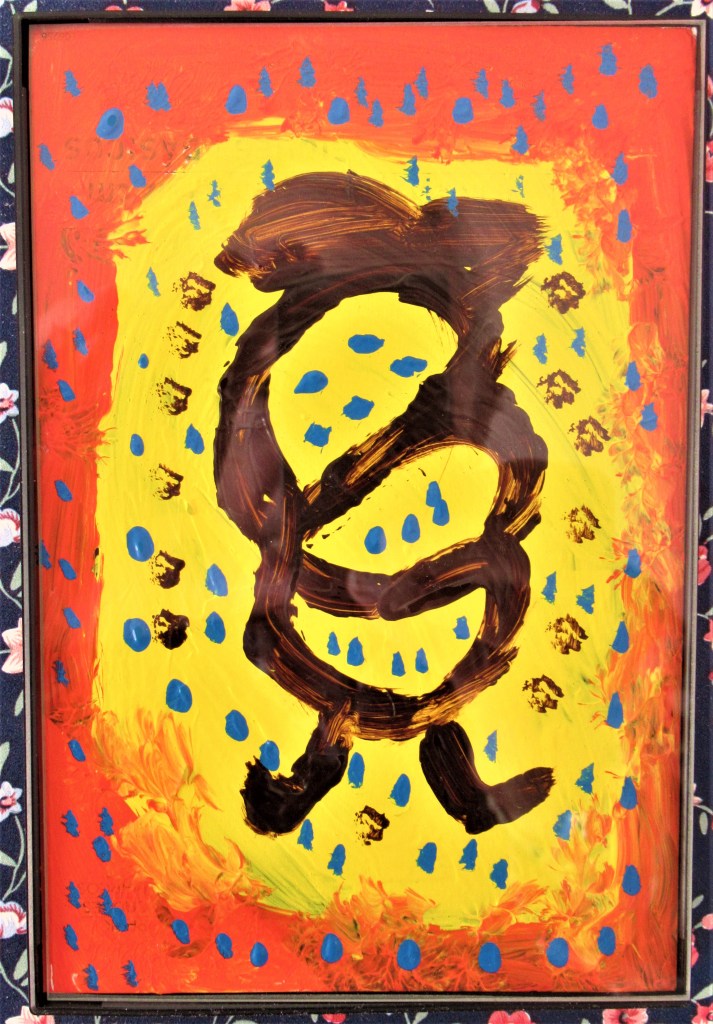
Look at the painting above. Bas Bleu was the name given to French women intellectuals who often wore dark blue stockings to show their difference. But check out Moo’s bas bleu – she has blue stockings, but not shoes. No shoes is a sign of poverty (or extreme holiness). I’ll go for the former. I would give that bas bleu and all her colleagues and lookalikes a chance at some security and a more secure intellectual future.

How? I would set up a needs-based scholarship fund for female students with special needs – indigenous women from the first nations, single mothers who need help, support, and encouragement, older women returning to the university, some of them with little or no financial support. This, I believe, is one of the most important things we need to do to improve our university system. A million dollars at invested at 5% would return $50,000 a year. That would provide five scholarships at $10,000 for five financially deserving women.

Can it be done? Of course it can. I know. I have already set the wheels in motion for such a fund to be established when my beloved and I have had our last twitch and fallen off the perch. Alas, the sum invested is a lot less than $1,000,000. I wish I had more to give. But every good thought counts and every dollar, to a person in need, is a step along the way.

What TV shows did you watch as a kid?

Daily writing prompt
What TV shows did you watch as a kid?

What TV shows did you watch as a kid?

Well, first of all I want to define the age group that outlines the meaning of ‘kid’. Here’s one definition: What age range is a kid? Children (1 year through 12 years) Adolescents (13 years through 17 years. They may also be referred to as teenagers depending on the context.) If we start with the 1-12 year old age group, then I can safely say I had no favorite TV shows as a kid, quite simply because during those years, we didn’t have a TV. Ipso facto, not having a TV, I couldn’t watch one.

That said, our first family TV was bought by my maternal grandfather in June, 1953. It was very small, black and white, very grainy, and was the only one on the street where he lived. I remember all of us crowing into the sacred room where the TV stood and watching the Coronation of Queen Elizabeth II. I was 9 years old at the time. I don’t remember much about the Coronation, but it was my first TV show.

Early TV. In the beginning, there were black and white sets. The BBC had only one channel. It came on from 12 noon until 1:30 or 2:00 pm, then shut off until 5:00 pm when it opened for evening programming until 9:30 pm or 10. I was safely tucked into my bed by then. And since I visited my grandparents at odd times, I rarely saw any TV shows. I do remember Sooty, a hand puppet, hitting Harry Corbett, the puppet-master, with a hammer (!), and I have vague visions of Muffin the Mule, a string puppet, dancing on a piano.

By the age of nine, I had been removed from my first boarding school and was attending my second. There were no television sets in boarding schools in those days. So, guess what? There were no favorite programs. In the holidays, with both parents working, to make enough money to send me to boarding school, as they so frequently told me, I often spent time with aunts and uncles (no TV) or with my paternal grandmother (no TV). The bungalow was our favorite summer residence, and that didn’t even have running water or electricity, let alone a TV set. It had one radio, an item of religious importance, that ran off a battery, and was for the sole use of my uncle. It sat on a high shelf and was untouchable. One bungalow in the bungalow field actually had a telephone, and that was only used for emergencies.

So, in the age group I am writing about, age 1-12, I rarely, if ever, saw a TV set and I certainly had no favorite programs. Radio programs, yes. But that is a different story, one that tells of a single radio in the dormitory, to the sound of which, eight or ten or twelve boys, in rows of beds, fell asleep to the sound of music. It also tells of prowling masters who would enter the dorms and switch the radios off. I will not go into the horrors of boarding school life during those formative years. I have done that elsewhere. But the shows that I remember were all true life horror shows where real flesh and blood, in the 6-12 age group, suffered appallingly, at the hands of older boys and brutal masters. But those shows, and I remember them well, were never seen on TV and were denied vehemently by the perpetrators, boys who had been bullied in their turn, and masters who claimed they were only doing their duty and making men of us. Men, indeed, and an adulthood that I, among many others, never wanted to enter.

Knowledge

Knowledge

“Knowledge: that which passes
from my notes to your notes
without going through anyone’s head.”

aka
Filling empty heads.”

I came here a beggar, begging bowl
in hand, begging for knowledge,
at the seat of all knowledge,
from the hands of those who knew.

They fed me, taught me,
brought me into knowledge,
as they knew it, but I yearned
for more, so much more.

I found it, one morning,
in my morning mirror, shaving.
I looked into my own eyes and asked:
“What are you teaching?”

My answer: words and empty words,
formulae handed down to me
over generations of people
who thought they thought because
they repeated what others had thought.

This was not what I sought.
Then, and only then, did I look
into the eyes of those I taught,
those who sought knowledge from me,
in all my worthlessness,
and I asked them what did they need,
what did they want to know,
and why did they want this knowledge.

Then I asked them how I could help them
to attain that knowledge for themselves
and to use it to construct their own lives,
on their own, without interference and shame
as I had never done.

Then, and only then, did I know
I had become a teacher in the true sense
of the word, and that together with me,
my students had learned to teach themselves
multiple ways in which to grow.

Listen to Roger’s reading on Anchor.
Knowledge

Revisionism

Revisionism

Chalk on a blackboard.
Black, red, blue, green markers
on a white board.

Here comes the eraser.
The board is wiped clean,
or almost clean, figures,
letters, blurred, just about
ready for the next class.
This happens again and again.

What remains?
Notes in a student’s book?
Memories of a lesson
in tedious boredom,
the teacher droning on and on.

“Knowledge:
that which passes from my notes
to your notes,
without going through anyone’s head.”

Yesterday’s lessons:
dry dust of a doctoral thesis.

Revisionism:
“What color is the blackboard?”
“Last year, it was green, but
this year, the blackboard is white.”

Click here for Roger’s reading on Anchor.
Revisionism

Into the Sunset

Into the Sunset

So, the writing is back. I have reformatted The Nature of Art and the Art of Nature and am now checking it through one last time before I send it to the publishers. This feels good. I haven’t stopped painting though. Luckily the original, hanging on the wall, looks better than the photo. My angles are all wrong and the colours are definitely not as sharp as in the original. As I always said, when introducing Spanish Art via slides and photos: “Do not trust the imitations. Go back to the original.” Easier said than done, especially when the original may be tucked away in a foreign museum hidden in a small town. As Dylan Thomas once said of Swansea Museum: “it’s the sort of museum that ought to be in a museum.”

As for the Introduction of Art, and please note I do not write ‘the teaching of art’, here’s my article on my career as an art facilitator! ‘In the beginning was the picture and the picture was in the book.’ I guess my art career ran parallel to my career as a facilitator of Spanish literature, prose, theatre, and poetry. Some things you can present and introduce. But no, you cannot teach them, not unless you are completely without humility and understanding.

Now that’s what it is meant to look like!

Building Bigger Boxes

IMG_1292 (2).JPG

Building Bigger Boxes

Some of the worst educators I have been unfortunate enough to work with over my undergraduate and graduate years have come up with cliché after cliché in an effort to the sway students into believing that they really are getting an excellent education. One such phrase is the infamous: “We are teaching you to think outside the box.” So, what is their definition of ‘the box‘? Alas, I do not know. They deal in clichés and, by definition, a cliché is a  phrase that both parties (teachers and taught) accept as being meaningful, even though it is often without meaning. It is also a conversation closer, as in ‘it is what it is’. It’s hard to argue with that or to reason your way around it. ‘But it doesn’t have to be!’ rarely cuts the mustard aka mouse-turd.

So, if these teachers are teaching their students how to think outside the box, how are they managing to do so? Why by building bigger boxes inside which each student can be safely taught to think, without asking questions, and without looking for independent answers.

Today’s cartoon has two titles: (1) Brave hearts  escaping, finding meaning outside the bigger boxes and (2) can the true heart escape its coffin in a bigger box? I love the boxes within boxes and the drawers within each boxed segment into which the young, developing mind can be stuffed and crammed. How do we release those hearts? How do we develop those minds? Certainly not by confining them in bigger boxes. In the battle for hearts and minds, how do we set our students free?

It must be done on the student’s terms, each student, one by one, in co-operation with intelligent, meaningful teachers who step away from cliché and commonplace to enter the learner’s world and to themselves learn how to contact each learner at a mental, spiritual, and intellectual level. Only then will teacher and taught be able to speak of true intellectual freedom. Until that happens, be very careful when your child comes home and announces that today, of all days, that child has been taught to think outside the box. “Verily, I say unto you, open the cage door. Let in the sunshine and the light. Set those children free.” But remember, it must be on a  case by case basis, with each individual weighed, assessed, understood, and released to find their own individual way of earning the things they specifically need to know. In true education, one size really doesn’t fit all.

Comment: Another Golden Oldie that suddenly surfaced and, on emerging from the depths, reminded me of another of my callings: that of a teacher of philosophy and a teacher with a philosophy. Retired now, I can no longer help young minds to create and shape themselves. This is doubly true with Covid-19 haunting us, waving at us from the shop-windows, supermarket aisles, and street corners, flapping its wings and trying to fly into our bodies. And remember to distinguish between clichés and things that are not clichés, like ‘Wear a mask’, ‘wash your hands’ (twenty seconds, with soap), and ‘keep a safe social distance’. Do this all the time and hopefully you will avoid thinking inside the bigger box of a six foot pine Covid-19 coffin.

Empty Head


Empty Head

I sat in class, head in hands, avoiding eye contact. I hoped the priest wouldn’t point me out, call on me, nominate me with a finger, but to no avail. He called my name.

“You have sixty seconds to speak about,” he paused, then produced the rabbit from the hat. “Matches. Come along, stand up, sixty seconds, starting,” he watched the second hand go round on the classroom clock, then counted down: “5, 4, 3, 2, 1 …” waved his hand, and shouted: “Start now!”

            Images flashed through my head: matches: cricket matches, boxing matches, rugby matches, soccer matches, chess matches, matches to light the burners on the gas stove, the oven, to light the fire in the fireplace … matches, matchsticks, Match Box toys, Dinky toys, toys for little boys, toys for big boys …

            “Fifteen seconds have gone … you have forty-five remaining.”

            “When I think about matches, I think about …”

            … the first spring day in the bungalow, our summer home. The rooms are cold and damp after the winter and nobody has been here since last year. We lay a fire in the grate, but the wood is damp, as is the old newspaper we gather from our last visit. We search for sugar to aid the blaze that we hope to start, but the sugar bowl is empty. We go to the stove. Cold, winter ashes crowd the fire bowl. We scrape them together in a desperate search for charcoal remains …  but we find nothing. We move to the oil-fired lamps and oil stoves. Matches dragged across soggy sandpaper fail to spark …

            “Come along, boy. We haven’t got all day. You’ve got thirty seconds left.”

            Silence fills the room. It is broken by the childhood sniggers and chuckles of long-forgotten classmates who never became friends My cheeks grow red. I start, stammer, and stop.

            … we leave the bungalow. Go next door to where our neighbours winter over. We knock on the door. “Can you lend us a match?” we ask, holding out our hands. Mrs. Williams beams at us. “A match,” she says. “First time in after the winter?” We nod. “I thought so. Saw you arriving. Wondered why you hadn’t come earlier. The weather’s been nice. Here: I can do much better than a match.”  She moves over to the fireplace, picks up the little coal shovel, scoops up a generous portion of her fire, heaps on another lump, then two, of fresh coal, and “Here you are,” she says. “Just put it in the fireplace and add some wood and coal. This can be your first fire. Here, you’d better have some matches too.” “Thank you, Mrs. Williams,” we say. “No problem,” she replies. “It’s good to see you back. It’s been lonely here this winter without you.”

            “Time’s up,” the priest says. “That’s sixty seconds of silence and you can hardly find a word to say on a simple subject. Are you stupid or what?

            My face turns red and I suffer the hot, burning cheeks of childhood shame.

Comment:

This is a theme to which I have returned on many occasions. Click on the link to see the original post. https://rogermoorepoet.com/2016/05/page/2/

Lamplighter

Avila 2008 207

Gas Lamps

When I was very young, a long time ago, in Swansea, many of our streets still had gas lamps.  The lamp-lighter would appear in winter around three or three-thirty to light those lamps. I remember him walking up the street with his long pole over his shoulder, moving from lamp to lamp. We had one outside our front door. He would turn on the gas, then light the lamp from the lighted wick at the end of his pole.  Sometimes he carried a ladder with him. Then, every so often, when the lamp needed tending, he would climb the ladder and adjust the wick. These gas lights were not very bright but they stood out like light houses between stretches of darkness and we would walk from pool to glowing pool, as if they were stepping stones leading us up the hill to home. We all knew the lamplighter and he would often wave to us as we sat in the front room window to watch him walk by. We rarely saw him in the mornings when he came back to turn off the lamps. We were all tucked safely into our beds. I remember that I wanted to be lamplighter. Later I realized that there are many ways to light a lamp and spread brightness through the world. When I grew up, I became teacher, a coach, a faculty adviser, a mentor, a creator, and those roles allowed me to establish myself as a lighter of a very different set of lamps.


Why?

IMG_0446

Why?

“Where are you going?” I ask again. “To see a man about a dog,” my father replies.  “Why?” I ask. “Hair of the dog,” his voice ghosts through the rapidly closing crack as the front door shuts behind him. “Why?” I cry out.

I recall the mud nest jammed tight against our garage roof. Tiny yellow beaks flap ceaselessly open. Parent birds sit on a vantage point of electric cable, their beaks moving in silent encouragement. A sudden rush, a clamour of wing and claw, a small body thudding down a ladder of air to crash beak first on the concrete.

“Why?” I ask.

The age-old answer comes back to me. “Wye is a river. It flows through Ross-on-Wye and marks the boundary between England and Wales.” The swallows perch on the rafters watching their fledgling as it struggles on the floor, the weakening wing flaps, the last slow kicks of the twitching legs.

“Why?” I ask.”

Y is a crooked letter invented by the Green Man of Wye,” my grandfather says.

“Why?” I repeat. “I want to know why.” Silence hangs a question mark over the unsatisfied spaces of my questing mind.

Comment: A golden oldie. We would all like to know why. But there are no answers. Just riddles cast, like two trunk-less legs of stone, on the sands of time. Nothing beside remains. Yet still we ask the age old question? Why? And still we get the age old answer from the ageing masters who rule our childhood lives and teach us everything they know: “Because.”