Redemption

I had no paper with me in the car
so I wrote this poem on a bottle redemption slip.

Redemption

Redemption:
that’s what I seek
and some days it seeks me.
A double need this need to redeem
and be redeemed. A double need too
this god I need, the god who needs me.

Lonely he will be without me,
and I without him.
Knock and the door will open.
Seek and ye shall find.

I look and, yes, he’s there,
him within me and me within him.

This redemption slip is all I need:
empty bottles on the one hand,
my empty heart on the other,
both now redeemed.

All of this while I sit in the car
outside a fast-food chain
wondering if a bullet will come,
to break the car’s window pane,
or someone brutal who will rejoice
in his heaven-sent task of delivering
my personal order of take-out pain.

People of the Mist

People of the Mist

Cover Painting

Pale Face by Moo

Back Cover Synopsis

            What if you walked into a church in a foreign country and came face-to-face your dead father? In People of the Mist, Nemo, orphaned as a baby after the suicide of his unmarried mother, seems called to visit Oaxaca, Mexico, the city of the returning dead. Upon arrival, he visits the town’s main cathedral only to encounter his adoptive father, a man he had buried years earlier. Confused by what he thinks is a realistic vision, he seeks the help of a local witch doctor to explain his mirage. The shaman seems to hold the answer and presents him with a broken medallion. He challenges Nemo to find the other half, promising the quest and discovery will reveal the real purpose of the young man being called to Oaxaca.

Brief Biography

Roger Moore, is an award-winning teacher, researcher, poet, and short-story writer. His accolades include being a CBC short story finalist, as well as winning multiple awards from the WFNB. Born in Swansea, Wales, he now lives in Island View, NB, Canada. Between 1995 and 2001, he taught multiple classes in Oaxaca, Mexico, where he first encountered the Mixtec codices.

Click here to view on Amazon

Movement

Movement

Not just the ups and downs, but the small things,
moving, that catch your eye – that butterfly
on the bees’ balm, wings folding, unfolding –
that deer at the wood’s edge, invisible when still,
then suddenly surging into empty space, tail raised,
up and away – that crow, blending into tree black,
then one quick flap, and launched into clear air –
that falcon, perched on the pole, frozen at first,
then taking a step forward, wings folded, dropping,
like a stone then a fast strike on an unsuspecting
robin – silence , pierced by the robin’s shrill shriek,
then silence and peace returned after violence.

Slow movement – the autumn leaves turning color,
a day at a time, almost invisible the change, until one day,
an autumn leaf becomes a whole forest, blushing into
its autumn finery – even slower, the fall’s stealthy approach,
and then, one day, the blue skies turn grey, rain falls,
the wind rises up, and the leaves go tumbling, here, there,
playing strip-jack-naked with limbs and branches.

Looking at my inner world, I feel, but do not see,
winter drawing near – its frosty footprints grip my bones,
snow and frost lie white upon my head, blood flows
thin and slow, seeps life and warmth away, day by day,
inexorable, yes, but also invisible, their still, small steps.

Click here for Roger’s reading.

B & W

B & W

black words     white page

thoughts

floating in space

airs and graces

the world’s wind

blowing through

freshening     cleansing

cotton clouds     silky sky

that one word

waiting

to be spoken

that one thought

soon to be borne

out from the dark

a new existence

brightens

blinds with its light

Click here for Roger’s reading.


“If you look at a page of poetry, the slim words are couched in the empty whiteness of the page.” John O’Donohue, Anam Cara, p. 69.

Anonymity

Anonymity

Multiple masks stripped away, old wall paper
shed in strips, layer by layer, until you reveal
the bedrock foundations of your delicate face.

Your visage dissolves before my eyes until you
become what you were when I first met you:
sweet, young, fresh, a delight to catch the eye.

As you still are, to these old, fragile eyes of mine,
cataracts removed and lenses still capable of
seeing you in your spring, although it is your winter.

The snowfall of your hair cannot deny the sparkle
in your eyes, the summer freckles that will soon return,
the sunlight and joy you bring when you enter the room.

Ageing, yes, but you are as young and as sweet
as you always were. How could you not be?
Anonymity peels itself away until no barriers exist

between what you are to me now, and what you were.
It is a lie, that only the young write poetry in praise
of their beloved’s eyebrow, her lips, her gaze.

For how many days have we stood together, as one,
breathing the same air, walking together, facing
the same difficulties, and overcoming them hand in hand?

Yes, we have both slowed down – the way of all flesh –
and we are no different. We wither and perish, but
we haven’t perished yet, although we are withering.

The magic of our love, our gifts, molded into our DNA,
will not perish with us, and never will, not while
our spirits live on and our love creates others in our shape.

Click here for Roger’s reading.

“In the human face, the anonymity of the universe becomes intimate.” John O’Donohue, Cara Anam, p. 37.

Dissolution

Dissolution

When I am no more myself,
will I know what I have become?
What last breath in the mirror
will reflect my passing from this self
to the next, if there be another one?
Does it matter? No, to most of us,
yes, to the lusting soul that seeks,
but what does it seek, I ask myself?

I watch the deer crossing the yard.
Muted, dark against winter trees,
I can scarcely make them out,
let alone understand their wanderings.
If they scare, they raise white flags of tails,
then run, dancing down their tracks,
as light as thistle-down, though the snow
be deep beyond their walk-ways.

I want to see them as they really are,
the original inhabitants of this land that
a scrap of paper, drawn up by a lawyer,
says I own. Nobody owns this land.
It was here before me and will be here
long after me and mine are gone.

Only the deer truly belong, passing
through, each generation similar
to the one before, knowing no lawyers,
holding no legal papers, but aware
instinctively that we are the intruders,
that the forest is their heart and home,
and that they are sole owners of this land.

Click here for Roger’s reading.

Comment: from a poem by Guillaume Apollinaire: “I am no more myself. I have become the fifth of the twelfth.” I bought a book of his poetry (Livre de Poche) from les bouquinistes in September, 1962, when I started the school year in Paris. I picked it up last night, and started reading it again. The result – this little poem and a host of memories that came flooding back as the deer walked through the garden and all was right with the world.

Spider Web

Spider Web

for
Ginger and Michael Marcinkowski

I do love long and complicated sentences,
stuffed with clauses and dependent clauses,
 and all strung together like a spider’s web,
an enormous web with silvery threads that glisten
 with dew drops in the early morning sun that
blanches them, turning them white, and look,
there’s a little fly caught in this one, trapped
by his own struggles, and struggling even more
as the spider emerges, advances towards his prey,
soon to be his breakfast, or lunch, if he lets his victim
stew in the poisons soon to be injected, and look,
dew drops are falling as web shakes, and threads
tremble, and the dark and seamier side of life
emerges with its stark, black lines, from beneath
the advertising mask of glorious beauty that distorts
reality, as the spider turns into an assassin and the fly
into his victim, and yes, each of us must choose whether
to be an assassin or a victim, meurtrier ou victime,
as Camus phrases it in one of his books, L’Étranger,
though I read it so long ago, when I was a teenager,
studying French in school, and that was one of the books
I chose to read, but I was never labelled, meurtrier or
victime, just trouble-maker, first class, because I didn’t,
wouldn’t, couldn’t tow the official line and kow-tow
to a rigid authority, that walked set lines, like this spider,
the meurtrier, who turned that fly into his victime, and I,
I who could so easily become either, became neither,
but merely the observer, who stands on the outside,
looking in, and watching as the show goes on and on,
year after year, seculae seculorum, world without end,
and yes, the English Master told me never to mix
metaphors, nor to add foreign languages to my poems,
but what if they are not foreign to me, but a part of my being,
as part of the spider’s being is to be a meurtrier, and as for
that fly, well, he is the victime, in whichever language you use,
and yes, this poem is only one sentence, and I love it, amen.

Click here for Roger’s reading.
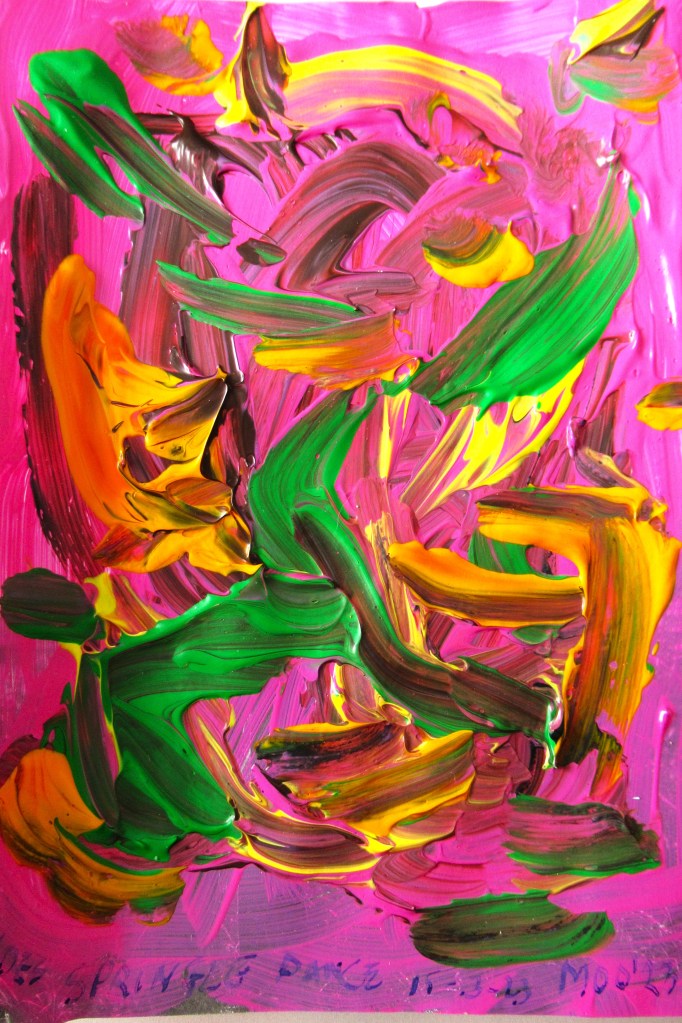
Ides of March

Ides of March

Sometimes, as the sun goes down, the shadows close in.
You can sense real people, half-hidden in the mists
rising up from the ground. You shiver in their presence.

They fought a battle here, according to legend.
Legends never lie, though they hide away the facts,
as these mists hide those fallen warriors, brought
back to life, in the half-light, and thirsting for warm blood.

In the distance, blood flows staining the evening sky.
When the hairs on your neck rise up as wraiths, you take
to your heels and run to the place where you left your car.

Westbury White Horse, Badbury Rings, Maiden Castle –
such places are haunted with those whose spirits never left,
never moved on. They stayed here, defending the defenseless,
spirited warriors, never saying die, not even when dead.

Close by, at the hill’s foot, someone has built an altar
crowned by a small, carved cross. Who put those flowers on it?
Who came to bless the peace of those who dream and wait?

The Ides of March have come once more. Now they have gone.
Like all those other Ides before them, like all those years,
those seasons, those warriors. Come and gone. Or not gone,
as you stand there, sensing their spirits, living on and on.

Click here for Roger’s reading.

Comment: The Ides of March – March 15 this year, two days before St. Patrick’s Day. “The Ides of March are come.” “Ay, Caesar. Come but not gone.” William Shakespeare. Julius Caesar. The Ides always seem such a precious time. Sandwiched between St. David (Wales) on March 1 and St. Patrick (Ireland) on March 17, and all so close to the Equinox and the start of spring. It is snowing outside my window as I type. About four inches / ten centimeters down and more to come. But, with the lengthening of the daylight hours and the arrival of spring, we hope the snow won’t last too long.

Erratic

Erratic
Four Elements pp. 156-159

Plucked before my time
by some glacial hand,
that tore me from my land
and deposited me on
this foreign shore.

Long did I languish,
worn slowly down
by wind, rain, ice, snow.
Now I am carved anew
and learning to grow.

The old land rejected me,
wouldn’t let me back.
This land had no choice,
but I found I had lost all
notion of a distinctive voice.

Now I belong nowhere, a stranded
immigrant, I cannot return.
Neither can I call this place home,
and yet I have sent my roots
deep into its landscape.

I have grown into it,
become one with its seasons,
accepting its long hours
of silence, with white snow
falling upon darkening trees.