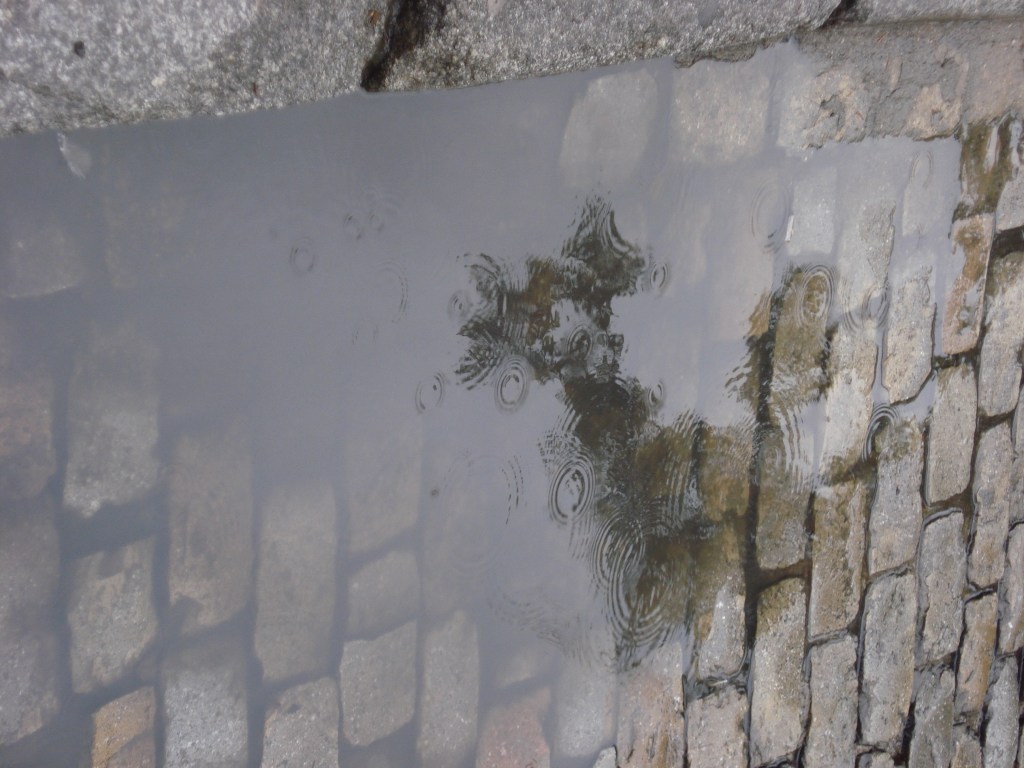
An Allegory for Gaia

Sponge in Water
an allegory for Gaia

She is in me
as I am in her –
I the sponge,
she, the water.

Our essences blend
with the promise
of an ample life
full of movement.

Eau de vie:
the water of life.

It causes me
to blossom and flourish,
to wither and perish
when her waters fail.

How lonely would I be
if she abandoned me?

What would she be,
what would she do
without me?


Commentary:

A summer without rain led to an early autumn drought. Slowly, water grew in importance. Wells in our neighborhood ran dry. We were lucky and were not affected. But we took great care not to waste water. Eau de Vie – the water of life – the water that brings life and causes life to blossom and flourish.

Without water, we are nothing. We cannot live. Then, when the rains came down, we rejoiced. We walked out into the yard and stood with our faces to the rain, looking up at the sky, mouths open, letting the water renew our hope and faith.

I took the photo, incidentally, from the dining table in my kitchen during a heavy rainstorm. Looking out into the garden, I saw a rush of water, so thick and heavy. Incredible. The photo hardly does it justice.
Carved in Stone 4 & 5

Carved in Stone 4 & 5

4

Maiden Castle –
Rome’s victorious Legions
sought out the main gates,
broke them down,
and placed their altars
to Mars or Mithras
on the ruins of the pagan temples
they desecrated.

What were they, those Romans,
but pagans themselves?

Their false gods
replaced the fake gods,
worshiped there long before
the legions’ arrival.

5

Later, the Saxon sword-song
superseded them
and the Roman Empire fell,
with a pendulum swing
that led to another set of gods.

How did they know
which was the true god?
Was it the belief in miracles
or the military might
that resolved the issue?

Bonfire night.
The sacred texts go up
in fire and smoke.

Brave is the man
who risks his hand in the fire,
defying the flames
to hold on to his truth.


Commentary:

“Brave is the man who risks his hand in the fire, defying the flames to hold on to his truth.” It appears that the Congregation of the Holy Office, aka the Inquisition, threatened to hold Galileo’s right hand in the fire unless he recanted and denied his scientific observations. Church theory held that the universe was terra-centric – the sun moved round that earth and the earth stood still – while Galileo showed that it was actually heliocentric – the sun stood still and the earth moved around it. Old and sick, he recanted in public, but was heard to mutter eppur si muoveyet it still moves.

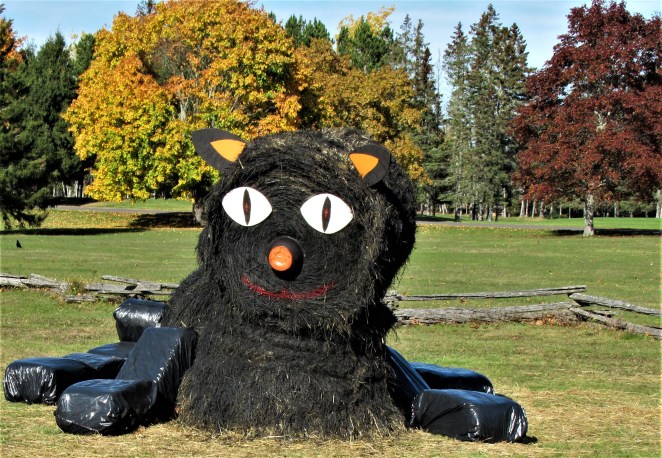
Bonfire Night celebrates the discovery of the Gunpowder Plot. Barrels of gunpowder had been placed beneath the Houses of Parliament in Westminster, but they were discovered on November 5, 1605 and removed. Bonfire Night is also called Guy Fawkes Night, Guy Fawkes being one of the key plotters to remove the English Parliament. Leading up to Bonfire Night, young children in the UK place a ragged scarecrow, called a Guy, around the streets begging for “a penny for the Guy”! With these pennies they buy fireworks. Then, on November 5, the Guy is set atop a large bonfire and the fire is lit. This autumn burning is accompanied by fireworks.

Bonfire night also refers to the old medieval book burnings of texts that were anathema to whatever religion or regime was in control. Cervantes refers to them in Don Quixote, I, 6 (1605).

Hallowe’en

Hallowe’en

1

Today is All Hallows Eve.
Tomorrow is Oaxaca’s
Day of the Dead.
The clocks change
the day after tomorrow.

Today, it’s raining,
and rain is a trick when
it forces celebrants off the streets
and town councils vote to change
the traditional date and send
young children out trick and treating
on a dry, warmer night.

But this rain, after drought,
is a Hallowe’en treat.

It brings a promise
that the aquifers will refill
that wells will not run dry,
and above all,
it brings us hope.

2

Around us, fall thrives
and watches and clocks
will soon fall back.

Trees weep for lost leaves.
Flowers that flourished
now wither and perish.

Hollyhocks topple and fall.
Bees’ Balm is abandoned
by butterflies and bees.

3

I expect time
to change with the clocks
and my body clock
will soon be out of sync
with the tick-tock chime
that denounces each hour.

Hours that used to wound
now threaten to kill.
They used to limp along,
but now they just rush by
and I, who used to run
from point to point,
now shuffle a step at a time.

But still I live in hopes to see
the clocks spring forward
once more.


Commentary:

A great poem for Hallowe’en, even if I say so myself, and I haven’t even mentioned the Blue Jays and the Los Angeles Dodgers. Oh, woe is me. Shame and scandal in my poetry.

Game Six of the World Series on Hallowe’en – wow! – well, one team will get a treat and the other will receive a very disappointing trick. I know which team I support, but I don’t know who will win this time around.

Having said that – with substantial rain after drought, everybody in my province is a winner. And who could wish for more than that?

Carved in Stone 3

3

Death is everywhere.
It rides a pale horse
in the lands
where Odin reigned.

Sleipnir, his eight-legged steed,
carried him round the world.

It also carried the god
to the underworld,
and brought him back,
one of the few to enjoy
a return ticket.

Purity, innocence, power,
the White Horse rules
these Wiltshire hills,
a symbol of hope and renewal.

Above the horses,
hill forts in high places,
lie hidden.

Wave after wave
of earth-wall and ditch
blend into the landscape
making the forts
invisible from below.

Commentary:

Odin > Wodin > Wednesday, in English, not Mercredi (French) or Miercoles (Spanish). English, via Anglo-Saxon, often goes back to the Nordic gods of the invaders. Not so in Welsh for Wednesday in Welsh is Dydd Mercher, the word breaking down into “Dydd” (day) and “Mercher” (which is named after the Roman god Mercury). Alas, it is all too easy to reduce language to its most basic level. But dig below the surface and the wonders of language, history and culture, adoption and rejection, complication and simplification, are all there to be seen.

Our language links us, binds us, holds us across our culture and history. And remember ‘to lose our language is to lose ourselves.’ While to learn another language is to grow another heart and soul.


Carved in Stone 2

2

How many free thinkers
stumble up the gallows’ steps
or take that short walk,
candle in hand,
to the executioner’s block?

Some take a longer trip,
in a tumbril along French streets
lined with howling,
slogan-chanting citizens,
en route to the guillotine.

Heads, already severed,
welcome them with sightless eyes,
a strange harvest for straw baskets.

Hearken to the swish of stone
against steel as the executioner
sharpens the blade that will swiftly fall,
then rise, only to fall again.

The horse-drawn cart
creaks towards its inevitable end,
filled, standing room only,
with unfortunates trapped
by whatever rising tide
hurled them against the razor rocks
of their imminent mortality.

Commentary:

Flower Pot Rocks along the Fundy Coast. One of the most beautiful spots in New Brunswick, a province with so many other beauty spots. It’s hard to believe that I was standing on the seabed when I took that photo. It’s also hard to believe that the Fundy Tide, one of the highest, if not the highest, in the world, rises to the tree line, at the top of the photo, way above the sand.

If you go to the Fundy, consult the Tide Tables with care. You do not want to get stuck in the Fundy mud. Nor do you want to be one of the unfortunates trapped by whatever rising tide hurls you against the razor rocks of your imminent mortality.

Carved in Stone 1

My very own hand-carved verraco
Del Rincon (Avila) a Roger

Carved in Stone

1

Behold me here,
filled with a sort of shallow,
hollowed-out wisdom
accumulated over decades
while listening with my eyes
to the words and thoughts
of writers, long-dead.

Imprisoned in book pages,
do they bang their heads
against walls that bind,
or hammer with their fists
at the barred lines
of their printed cages?

These spirits long to break free,
but they choke on library dust
and pollen from verbal flowers
that bloom unseen.

Those old ones avoided
the traps of temporal power,
or, once trapped,
gnawed off a precious limb
to limp into freedom

Commentary:

Carved in Stone is the second dialog (Chronotopos II) in my Bakhtinian Dialogs with my time and my place. Clepsydra is the first Dialog. You can follow it, in its entirety, starting with this first, introductory post.

Reception Theory – I write, you read. Any meaning that you extract from my poetry will depend on your own culture and background. Tolle, Lege – Take and read. Read slowly, and with care.

I am a poet, a dreamer, if you will. These are my dreams. Tread softly on my dreams, for when you enter my world, you mingle your dreams with mine. The result, I hope, will be an interesting intellectual blend of new creativity.

The hand-carved verraco, in the photo above, was given me by my friends in the Rincon (Avila) where I spent four happy and creative summers. Never forgotten. Blessings and pax amorque.

Clepsydra 51 & 52

51

… and thus I sit in silence
     while unspoken words
          echo through
               my empty skull

I cannot produce
     the grit that oysters use
          to smoothly shape
               the pearl of great price
                    that radiates with light

the word
     once spoken
          can never be recalled

word magic
     water magic
          liquid trickling
               from cup to earthen cup

time slowly dripping away
     filtering through my fingers

flickering and dying,
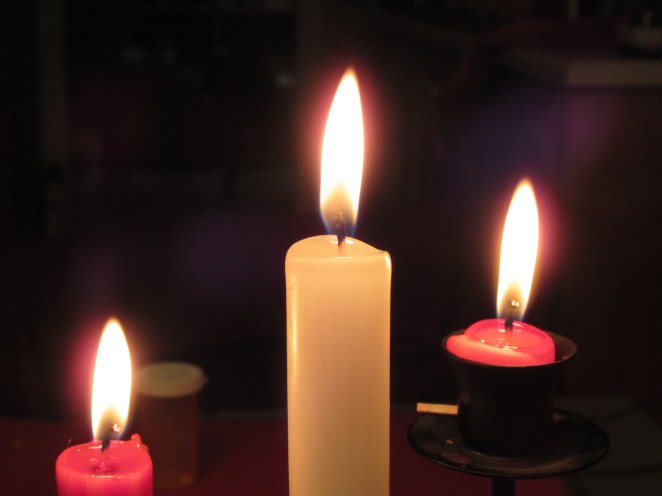
      and the snuffed candle flame
          absent now
               and everywhere
                    the pain of its absence …

52

… and me like so many others
     caught up in time’s dance
          a shadow among other shadows
               moving on the cave wall
                    while the fire flickers

I try to hold them
     as they flit by
          but they vanish
               drifting like dreams
                    half-glimpsed
                         in early morning light

dancers and dance
     must fail and fade away
          when the music ends

I recall snippets of song
     that fan the unborn fires within

what am I
     but a tadpole
          swimming bravely
                into my next metamorphosis

the dancers hold hands
     and sing, oranges and lemons
          as they circle under the arch

“Here comes a candle
     to light you to bed

and here comes a chopper
     to chop off your head

 and when will that be
     ring the bells out at Battersea

I do not know
booms the great Bell of Bow” …

Commentary:

And here ends Clepsydra. One sentence, one poem, 52 sequences. Time, frozen in the writer’s mind, the passing of time, measuring time, internal time, external time, sidereal time, historical time … all linked through memories … personal, cultural, literary, family, events … all tied up with what Miguel de Unamuno called intra-historia, those deep, very personal little histories, that lead us away from great historical events into the minds of the observers, the witnesses, the readers, all with their interior monologue and their own mindfulness.

For those of you who have chosen to walk this road with me, I offer you my gratitude. I do hope you have enjoyed – if not the whole journey, then selected parts of it that may have touched you, or amused you, or aroused your interest. Pax amorque.

Clepsydra 49 & 50

49

… I am walking backwards
     a step at a time
          into my second childhood


my face in the mirror
     is no longer that of the little boy
          I used to be


I open so many boxes
     stored in my mind’s attic
          but find only dust and ashes
               the burnt-out remains
                    of long-gone days …


50

… sitting in the car
     waiting for my beloved
          to finish her shopping

who are they
     these faceless people
          these ghosts
               who look at me
                    then avert their eyes

I see their faces
     distorted in the puddles
          left by last night’s rain

why don’t they speak to me
     why do they always
          avoid my eyes

is it the blue sticker
     in the windscreen …  

Commentary:

I see their faces distorted in the puddles left by last night’s rain.

Clepsydra 47 & 48

47

… the baited fish-hook
     the tidbit swallowed
          by an eager young gull
 
then reeled in
     by the young boy
          who winds the bird down
              
I wish
     I could control the words
          that appear in my mind

but I cannot I tie them to a hook
     and use them as bait
          for anyone gullible
               that I can reel in


I must leave so many gulls
     to float on the wind
          to hover soar and fly
               in their element

the lonely sea
     and the sky …

48

… I listen to the heartbeat
     of this old house
          hearing an occasional creak

I inhale
     exhale
          listen to my body sounds


my heart rate slows
      the faint tick
          of a distant clock
               no footstep
                    on the stair

a dust mote dances
     on a moon beam

I swim in an amniotic silence
     broken only
          by the beating
               of my mother’s heart

and my own heart
     throbbing
          in response …

Commentary:

So little to say. The poem now says it all. “The lonely sea and the sky. My heart throbbing in response.”

Clepsydra 45 & 46

45

… I enter ancient rooms
     on the walls
          pale ghosts walk
               flickering shadows

why am I tongue-tied
     why do I struggle
          a fly in a spiderweb
               to make myself heard

I long for
     the freedom of flight
          for culture restored
                    for a return
                         to my own lost world

I grasp at shadows
     reaching out
          for the ones I know
                         are no longer there …

46

… how deeply time’s wounds

     have cut and carved
          through my flesh and bone

               into the embers
                    of that slow-burn fire
                         they call the heart

some days those wounds
     neither ache nor itch
          but in moments of madness
               a knife-edged finger nail
                    careless in the dark
                         opens them up

they throb again
     and begin to bleed afresh …

Commentary:

” … on the walls, pale ghosts walk flickering shadows – I grasp at shadows, reaching out for the ones I know are no longer there …” Vanity of vanities, all is vanity. For in much wisdom is much grief, and he who increases knowledge increases sorrow.

” … the embers of that slow-burn fire they call the heart … ” Pulvus eres et pulvus eris. Just another shadow on life’s wall.