Rain Again

The rain in Spain
does not stay on the plain

Rain
              When it rained in South Wales, it rained everywhere soaking rich and poor alike. There was no escaping the eternal wetness of Welsh Rain. Whenever we traveled, especially by bus, to another part of Swansea Town, it would be raining there too, but, as my auntie used to tell us when we came back home: “Smile now. Look happy. And remember: we had lovely weather all day. The sun was shining over there where we were. Raining here, at home, all day, was it? What a pity. You should have come on the bus with us!” I remember her smiling, all wrinkles round the eyes, her false teeth shining white, as she flashed a horse’s collar coal-scuttle of a grin, absolutely shameless. But we’d back her up. We’d all smile happily and laugh, and dance, and jump up and down, basking in the joy of the falsified sunshine of her wonderful smile, her shining false teeth. And she was right: where we had been together, the sun had shone all day, in spite of the umbrellas, our wet, cold feet, and all the undoubted evidence of a day of rain.


Bath Time

62074164_10157302392400522_2936552509885382656_n

Bath Time

              My grandfather took a bath once a year, On New Year’s Eve, so he could be ready, so he said, washed and clean, for the New Year. His bath day / birthday was a family event. If we wanted a bath, well the bath water didn’t stay hot for long in the bath-tub at the top of the house, under the rafters, so an old tin bath was dragged into the kitchen and a black, iron kettle was placed on the hob, and water was boiled. One by one, we were immersed, and scrubbed, to emerge pink and glossy. All this happened in the kitchen in front of the fireplace, where we sat up wrapped in bath-robes and blankets, drinking hot cocoa so we wouldn’t catch cold. But my grandfather took his bath at the top of the house, under the rafters, in the old chipped enamel tub with its lion-claw feet, water-stained sides, and its old brass taps. He walked up there fully clothed, walked into the bathroom, and shut the door behind him, drawing the bolt with a finality that shut us all out. He sang the great choruses from Aida, and Nabucco, and we imagined him, wallowing there, in the warm water, with all his clothes on, for it was hard to imagine my grandfather naked. Then, half an hour later, he would emerge, looking just like he did when he walked into the bathroom. We never heard the water running, nor did we hear it draining away. All we heard was the The Hebrew Slaves’ Chorus and my grandfather swinging his Blacksmith’s hammer as he battered at the New Year’s Anvil.

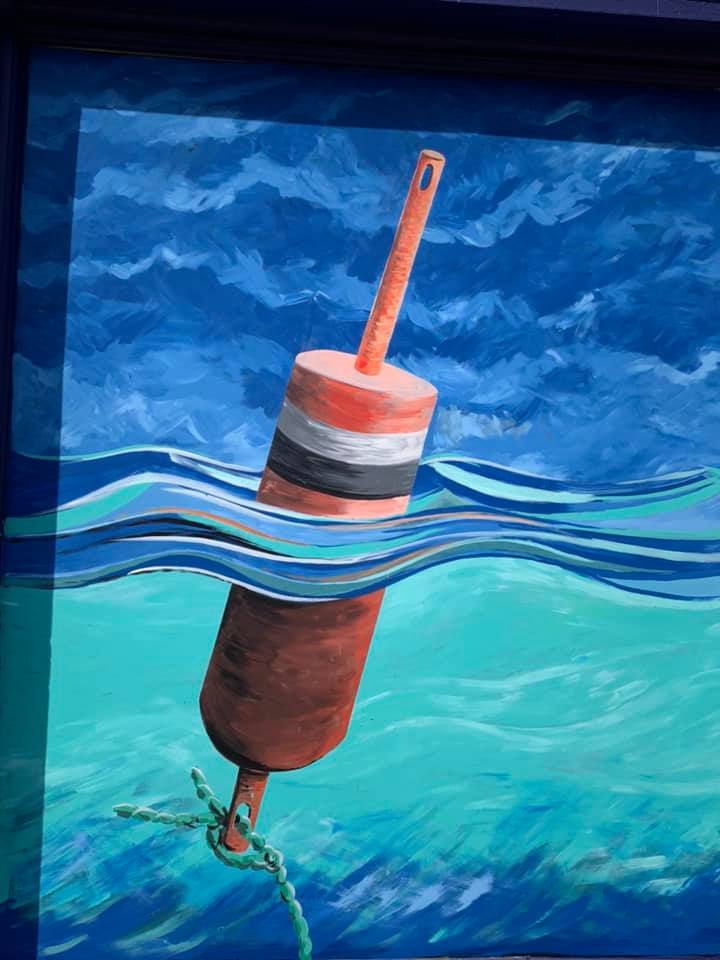
Comment: I didn’t have a photo of an old bath tub in my collection, so the lead picture is one of Geoff Slater’s murals: a buoy (pronounced ‘boy’ in Wales), taking a bath in the sea.  Let me know if you like these Welsh childhood memories, and I will keep adding to them. They are certainly fun to write and I find incredible the many ways in which memories surge as I am learning to speak Welsh. Each new chapter in my journey seems to start a new wave of thought.

Wet Welsh Rain

IMG_0730 (2)

Wet Welsh Rain

              Day after day, rain, drives in over Singleton Park and Swansea Bay. It claws its clouded way, shroud clad in grey cloud, up Rhyddings Park Road, through Brynmill, and up to the Uplands and Sketty, as it was then, now Sgetti. In those days, the rain got everywhere. It swirled around ankles and knees wetting everything below the hem of the raincoat. Umbrellas kept the shoulders dry. But when the wind blew, and gamp and brolly turned inside out, and people looked as though they were duelling with the wind, and threatening to poke each other’s eyes out, then a good soaking was sometimes better and safer and, in the worst of the rain and the wind, the gamps and brollies came down.  As for the puddles: they were everywhere. You walked in them, whether you wanted to or not, and your leather shoes turned into a pulp that let in water. Socks slopped around your feet, wetter than soggy blotting paper aka blotch [hands up if you remember blotch!]. Heads down, we faced the wind, draped around bus stops, waiting for buses that never came singly, but only in threes after much long suffering. Wind like a whiplash drove the rain before it and everywhere, woolen scarves turned into wet wash cloths and woolen gloves became underwater rain-sodden mittens.

Comment: As Tropical Storm Arthur gathers in the North Atlantic, we would do well to remember the good old days of summer holidays in Wales when it rained every day, bob dydd, during the whole two-week vacation. But did it really rain back then? Who remembers now? I seem to remember it was sunny every day, especially when the cricket was suspended with the words Rain Stopped Play displayed across the television screen. Ant the lunch time cricket scores: what joy to listen to them and to discover one day, as I listened on my illicit radio hidden in my school dormitory,  that play had been stopped because of “piddles on the putch, sorry, I mean puddles on the pitch” [hands up if you remember that announcement!]. I am sorry to say that particular radio announcer did not stay in his job for long. A great pity: I found him rather amusing.

We would do well, too, to recall the twelve days without electric power that followed Hurricane Arthur, back in 2014 [hands up if you remember Hurricane Arthur!]. Alas and alack: how accurate are our memories? And did all of those things really happen? As the street vendors and newspaper vendors [hands up if you remember paper boys!] used to cry out on street corners “Echo, Echo, South Wales Echo: Read all about it” or “Post, Evening Post, South Wales Evening Post, read all about it!” The South Wales Echo and the South Wales Evening Post hands up if you remember them … Oh those were the days … or were they? … click here and read all about it!


White Wolf

IMG_1843 (2)

White Wolf
Rhodri Mawr

Winter’s white wolf
shakes ice from her coat,
makes snowflakes fly,
blanches our world.

Nose pointed skywards,
she howls a North wind
straight down from the Pole
as we shiver indoors.

Snow gathers in the air,
thick as winged moths,
then drops to the ground,
plays dead in deep drifts.

Snow banks climb higher,
blotting out light.
Soon, Arctic cold will wrap us
in its endless night.

Avila 2008 381 (2).jpg

White Wolf  in Island View


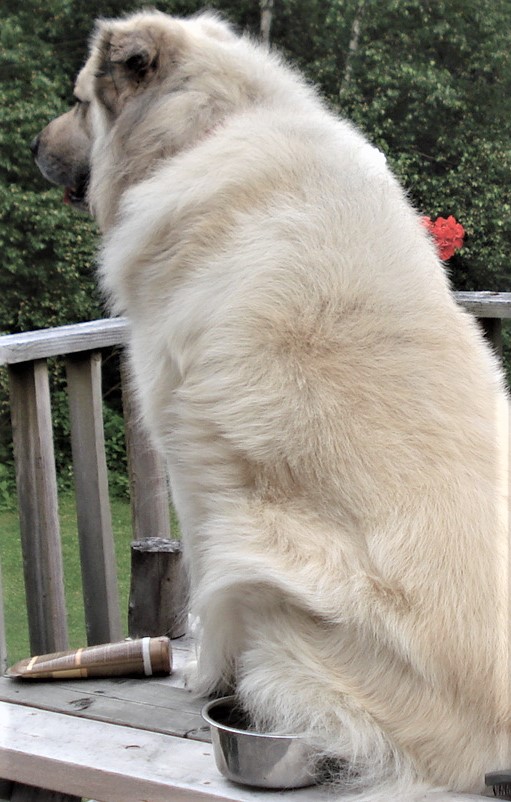
Comment: Y blaidd gwen yn y gaeaf / The white wolf in winter, translated from the original Welsh of an anonymous Gŵyr poet, circa 1613. Oh I do love messing about with images and words. I don’t have a photo of a white wolf, so instead I have posted a photo of my lapdog, Tigger, who weighs in at 115 lb. Tigger, of course / wrth gwrs, is a delicate champagne color rather than white. When he sheds hair in the summer known in the doggy trade as ‘blowing his coat’, it is like a snow storm coming off the back porch. The nesting birds and the chipmunks and squirrels can be seen carrying chunks of his fur back to their nests. They will keep wonderfully warm, wrapped in the raggle-taggle gypsies torn from coat. There are several jokes and pieces of misinformation or weird humor, woven into my poem. I wonder how many you can spot? Each of my poems is a puzzle, in one way or another, so have fun solving the riddles!

Self-Isolation Day 22 / Ducks

Empress 070

Self-Isolation Day 22
22 =Ducks, Patos in Spanish.

Ducks, because the 2 and the 2 seem to float together like a pair of ducks or a pair of Swans. How did Swansea get it’s name? Some say it was because handsome white swans used to swim on the salt waters of the bay: Swan+sea. Other’s say that  was on account of a battle where a man called Swain lost his eye: Swain’s Eye = Swansea. Oh dear, it’s so much easier in Welsh: Abertawe, the mouth of the river Tawe.

Speaking of Welsh, this is the 290th consecutive day that I have done my Welsh lessons. I guess the pandemic has helped over the last few weeks. Nowhere to go, nothing to do, and all those Welsh memories bringing a fresh light to enlighten the darkness that is Corona Virus aka Covidis-19.

Language Teaching: never easy. And I should know after 43 years of teaching Spanish in Canadian universities (1966-2009). Relevance and irrelevance: how do we teach meaningful things? Good question. Dw i eisiau prynu’r crwban ddu fach / I want to buy the little black tortoise. Very useful. I bet they use that phrase on the streets of Llanelli and Abertawe every day of the week. How about Mae’r ddraig coch yn callu smwddio bob wythnos / The red dragon is able to do the ironing every week. Well, well: I suppose I did remember these two wonderful phrases. I am sure I will use them the next time I go to Cardiff.

I much prefer the Welsh of St. David: Gwnewch y pethau bychain mewn bywyd / Do ye the little things in life or Byddwch lawen a chadwch eich ffyd a’ch credd / Be joyful and keep your faith and creed. These two quotes from the patron saint of Wales are full of meaning, especially at this oh-so-difficult juncture in all our lives. Funny really: I laugh at the first two, the dragon and the tortoise, but without them, I would probably never have arrived at the Original Welsh of St. David / Dewi Sant.

Languages: they say that to learn another language is to gain another soul and another set of eyes through which to view the world. We view the world through our languages. Limit the language and we limit the world. Reduce the language, any language, to its lowest common denominator, and we reduce and diminish the world around us. Sparrows, juncos, chickadees, Cedar Waxwings, robins, mourning doves, crows, hawks (Cooper’s Hawk, Sharp-Shinned Hawk, Marsh Hawk) are all reduced to birds. Mountain Ash (Russian or European), Birch, Hackmatack, Tamarack, Spruce … all these are reduced to trees, nothing more and nothing less than trees.

Think about language. Savor language. Roll it round your mouth. Taste it on your tongue. Use the correct names for things. Expand your vocabulary. Do not be satisfied with Grade 9 English. Learn. Advance. Develop. Carry a dictionary (Y geiriadur Gymraeg newydd) and look up words, learn their meanings, learn how to spell them. Never give up. Do not be satisfied, ever, with the lowest level of existence. Flower, flourish, rise up and fight for your own self-education, for your own language, for your own destiny, for your own rights!

On the outside

IMG_0192

On the Outside Looking In …

I walked home on my own. As usual. I’d hated the church Christmas party with all its trumped-up noise, childish games, and artificial gaiety.
The priest, formidable yet effeminate in his long black skirted robe, had made us sit in a circle on the floor, legs crossed. He stood inside that circle and placed a bar of chocolate on the wooden boards. Then he walked around the group and whispered a word in each boy’s ear.
“You must wait until you hear your secret word,” he explained. “Then one of you, when I speak that word, whoever it happens to be, may have the chocolate bar,” he stared at us, large, yellowed, horsey teeth, no hair, eyes golden, fierce, like an eagle’s, beneath bushy eye-brows. “When you hear your secret name, you must run and grab the chocolate bar. Understood?”
I had come to the party on my own as both my parents worked. The mums and dads who had brought their offspring to the party leaned forward in keen anticipation. The boys all nodded.
“Are you ready?” The priest watched us as we nodded and then he shouted “Alligator!”
Nobody moved.
“Elephant!” The boys shuffled forward, like inch worms, hands twitching, fingers flexing and grasping.
“Tiger!” A sigh emerged from multiple mouths. Some of the boys licked their lips.
“Lion!” One boy moved, but the priest shooed him away. “Sit down. That wasn’t your word.”
“M-m-mouse!” The boys heaved, a sea-wave about to crest and break.
“I do love this game,” said the priest to the parents. “And so do the boys, don’t you boys?”
“Yes, father …” came the chorus.
“Monkey!” All the boys, except one, leapt into springy action. They dived, crawled, leaped to their feet, ran … a surging heap of boys writhed on the floor as the chocolate bar was torn apart and the long-awaited fights ensued.
All the boys moved, except me. I just sat there.
“I said ‘Monkey,’” the priest frowned at me. “That’s your word. When I say ‘Monkey’, you join in with the other boys and fight for the chocolate bar.”
I shook my head.
“Have some Christmas fun. Join in the game.”
I again shook my head.
“Why not?”
“It’s not right. You’re just mocking us.  I want to go home,” I stood up and walked out of the church hall. I turned at the door and saw the priest glaring at me while a mound of boys continued to scrummage on the floor.
As I walked home, it started to snow. Not the pure white fluffy snow of a Merry Christmas Card, but the dodgy, slippery mixture of rain, snow, and ice pellets that turned the streets of my little seaside town into an ice rink. I turned up the collar of my coat, bowed my head, and stuffed my hands into my pockets. Two houses before my own, I stopped.
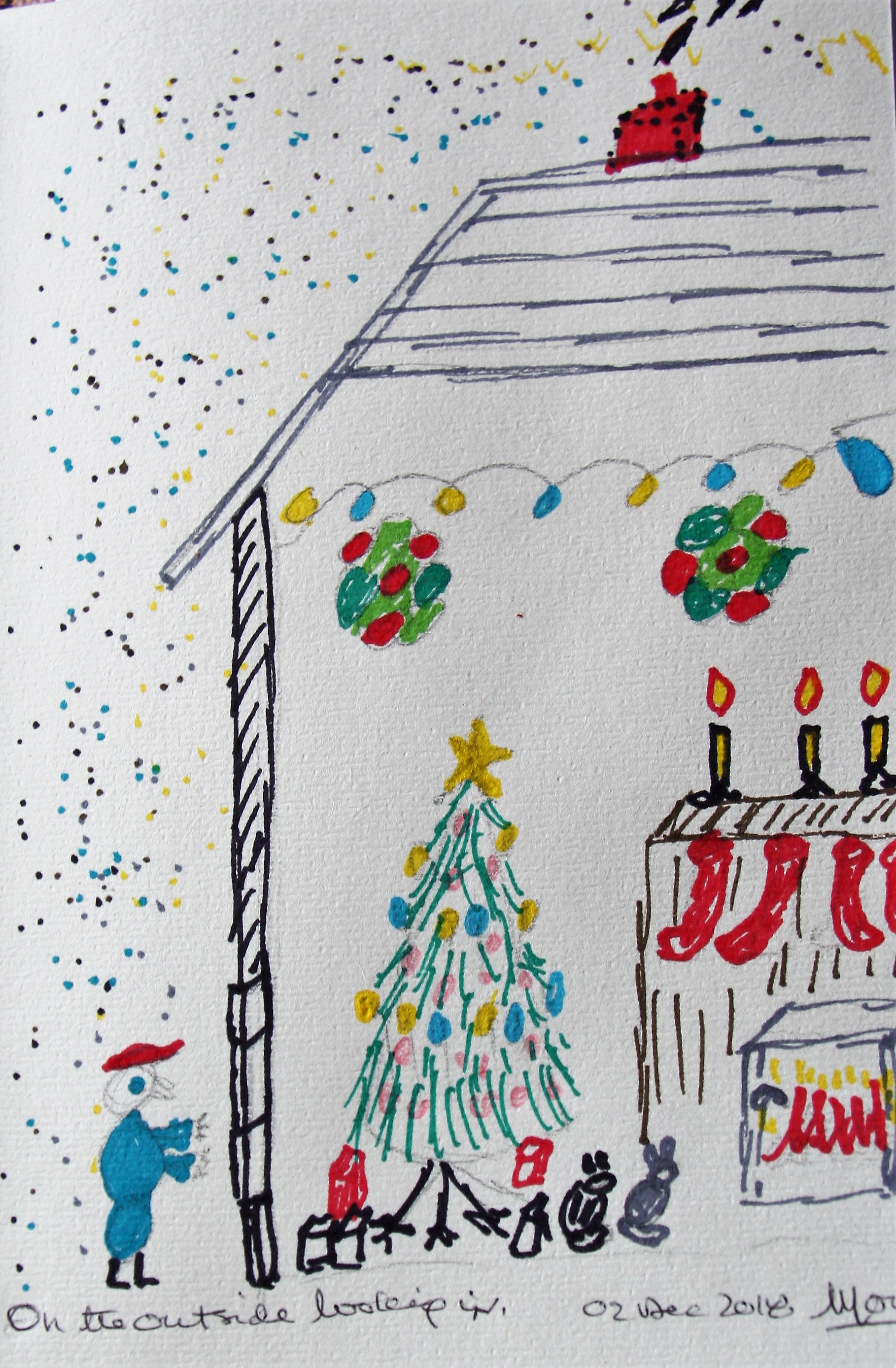
A neighbor’s house. With a window lit up in the gathering dark. I drew closer, pressed my nose against the window and looked in. A Christmas tree, decorated with lights, candles, more decorations, a fire burning on the hearth, two cats curled up warm before the fire, presents beneath the tree, stockings hanging from the mantelpiece. For a moment, my heart unfroze and I felt the spirit of Christmas. Then I thought of my own house. Cold and drafty. No lights, no decorations. No fire. The snowball snuggled back into my chest and refused to melt.
When I got home, our house stood chill and empty. My parents were out at work and the fire had died. Nothing was ready for Christmas. I sat at the kitchen table, took out my colouring book and began to draw.
When my mother came home, I showed her my drawing.
“Very nice,” she said, barely glancing at it.
“But mum, you haven’t really looked.”
She stared at the picture again. This time, she saw the Christmas tree and the lights, the cats and the candles, the decorations and the presents.
But she never noticed the little boy standing outside the house in the falling sleet, peering in through the window.

Old Pal

IMG_1002 (2).JPG

Old Pal
It’s as easy as ‘Bob’s your uncle,’ as we say in Wales. Yet Bob is my uncle and life with him is never easy. On Saturdays I drive him to the local supermarket so he can purchase his groceries. He also buys cans of Old Pal dog food for Paddy, his ageing and eccentric Cocker Spaniel.
Bob always strips the labels off the cans he brings home. He trades them in for stamps so he can buy cigarettes and things. However, this stripping reduces the cans to bright, shiny aluminum canisters that sit together on the pantry shelf. He claims he knows in which order he stacks them, but I think he’s playing Russian Roulette, because he can’t tell the difference between soup, rice pudding, and dog food. They’re all locked in look-alike cans. Bob doesn’t care. His diet is a lottery anyway. He shoves the can’s contents into one end and as long as they come out the other, he’s happy.
“That’s what life is all about,” he tells me. “Munchies in and munchies out.”
            Bob’s quite happy with mushroom soup for lunch, or eating rice pudding. If he opens a mystery can and finds dog food in it, he just adds a spoonful of curry powder and heats it up on the stove. He stressed out about eating the meat in dog food when Mad Cow Disease hit Wales and consumers avoided beef, but his family doctor told him not to worry.
            “You’ll never get Mad Cow Disease from dog food,” the doctor told him.
“Why not?” Bob asked.
“Because dog food’s made from horse meat.  You can’t get Mad Cow Disease from a horse.
Bob loves dogs, but he hates Welsh Corgis. One day, he asked me to take him out for a drive. He put Paddy in the back seat, on an old blanket then patted him on the head before closing the car door.
I was already in the driving seat. I had taken the precaution of placing a plastic garbage bag over the passenger seat, in case Bob had an old man’s accident, but he told me not to worry.
“I’ll be all right. “I’ve got my Old Pal with me,” he pointed to the canvas bag at his feet. It rattled when he kicked it.
“Where do you want to go?” I asked Bob.
“Down the road,” he replied. “Let’s visit the Corgis.”
Down the road we went, driving happily, until Bob’s face came alive with joy.
“Turn right,” he cried. “There’s a Corgi down that street. Drive slowly now.”
I slowed down while Bob counted the houses.
“Stop,” he told me. “Now. Stop now.”
I stopped and Bob turned around and started slapping Paddy until the dog began to howl. Then Bob rolled down the window, pulled an empty can of Old Pal dog food from the canvas bag, unzipped his fly, stuck his old man’s magic screwdriver into it, and peed.
“The Corgi’s coming. He’s nearly here,” I could hear Bob’s chest wheezing.
“There he is,” Bob screeched with delight as a black-and-tan Corgi appeared at the gateway to the house. Bob whistled at the Corgi and, as the dog looked up, he threw the contents of the can … whoosh! … all over the dog. The Corgi jumped back, blinked, shook himself, and growled and snarled as the can drenched him in a sticky, smelly, golden shower.
“Take that, you dirty dog,” Bob cried. “Quick, drive away, now, before anyone sees us.”
I put the car into gear and accelerated away.
“This is so much fun. I’m so excited. I’m so excited I want to pee again,” Bob pulled a second empty can from the canvas bag. “Turn left. Third house up. Get ready, Paddy. There’s another Corgi on the way.”

Railway Yards

IMG_0681 (3).JPG

Railway Yards

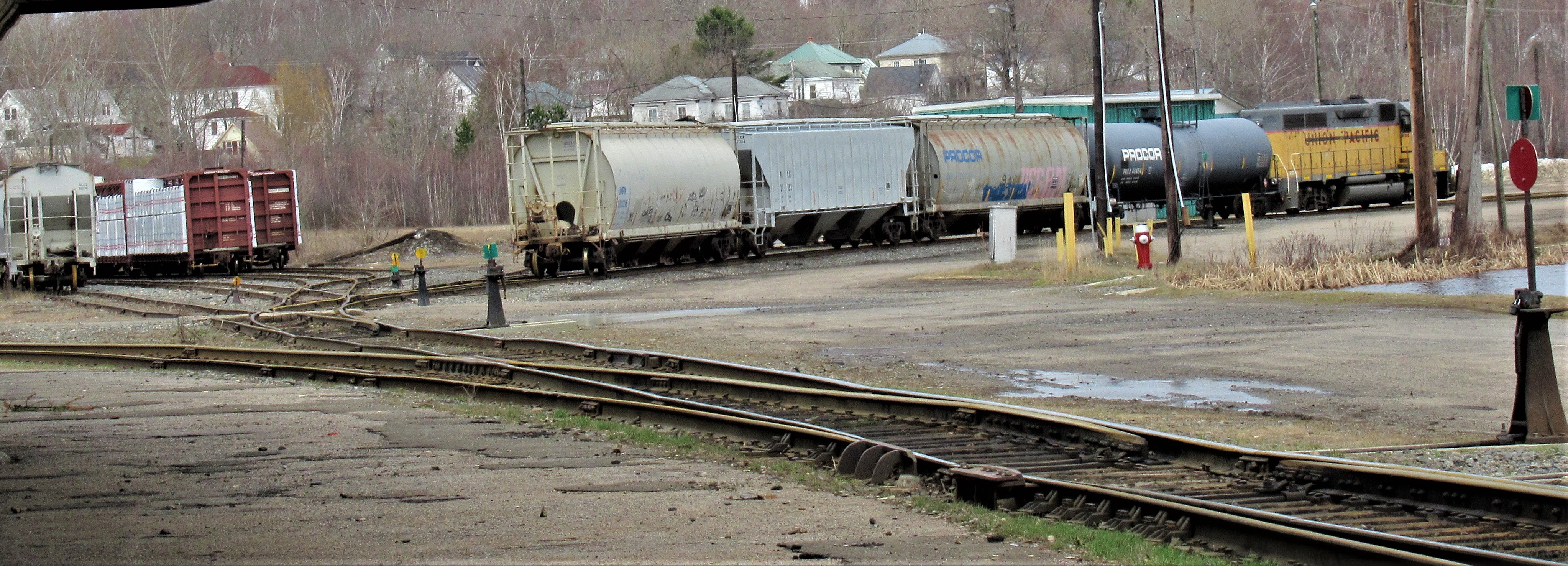
The enemy came to bomb them. And they did. Tracks rooted out, twisted like spaghetti. Engine sheds burned down. Rolling stock ruined. Many children that year lived with the fear of thunder and lightning as Swansea, my home town, burned, in spite of the black out curtains and the air raid precautions. My father’s father lived by the railway yards. When I stayed with him overnight, the shuffle and clank of steam engines and the clatter of coal trucks scarred my dreams.

My mother’s father lived by the sea and each night the ebb and flow of the tides rocked me to sleep when I stayed in his house. I told the time by the tides and I knew every ship that entered and left Swansea Docks. Standing on the front step, with field glasses to sweep the bay, I could read the ships’ names, painted on bow or stern, and then check their movements in the local paper, the South Wales Evening Post.

Timetables: they ruled my life: time tables for the trains, tide tables for the ships.
When they drove me away to boarding school, I was far removed from the rail yards and the sea. I was now summoned by bells, my every activity chimed in by bell after bell. Bells: wake up, get dressed, eat breakfast, be silent. Bells for each class, for the angelus, bells for dinner, supper, bed time, and baths. Bells on the altar as we knelt before tall candles that flickered light as the tinkling bells flicked sound across the chapel. The only escape from bells came during field games. No bells then, just whistles. But bells and whistles whittled the timetables of a carefully regulated working life.

When we moved from Swansea (Abertawe) to Cardiff (Caer Dydd), our new house also backed onto train tracks and railway yards. The rattle of rolling stock lulled me to sleep. Each day, I opened my eyes to the clash and clang of early-morning shunting. Each night, at exactly 3:10 a.m., the express train to London would rattle past my bedroom window and shake me awake as I lay in my bed. The one day I didn’t hear the train, I woke up anyway, listening for its sound. When silence stalked beneath the stars, I knew there had been an accident, and I couldn’t get back to sleep. Radio and newspapers, there was little television then, screamed the news, so many people dead and injured. We mourned for the unknown dead, just like we did in the mine disasters and the bombings.

Lights out at 9:30, prefects and house masters on patrol outside dormitory doors enforced the silence that ruled the night in those inland boarding schools that I was forced to inhabit. No trains, no ships, no tides, no rattling of rolling stock, no steam whistle, no salt smell of the incoming sea disturbed my dreams, just the snoring and whimpering of lonely little boys lost in their iron-frame beds and longing for the comforts of home.

On Learning Welsh

IMG_1238 (2).JPG

On Learning Welsh
            Here I sit, an old man now, in front of my computer, learning at last my mother tongue, Welsh. English is the language of the invaders, the mine-owners, the men who own the steel works and foundries, and who rule this land with a fist of coal inside an iron glove. Welsh is the tongue of farmers and fishermen, of the villagers who live on the hills and tend the sheep and plant potatoes in tiny small holdings where only the fittest children survive.
My mother’s father was the last of us to speak Welsh. It was banned in our house because it was bad for the kids. In a working-class household, Welsh, be it language or accent, was a barrier to success. And success came from imitating your English betters, and climbing upwards, like a vine, or Jack on his beanstalk, until you achieved the impossible and talked and looked and dressed like them.
Sitting here, I have discovered the beauty of simple words, not so much their meaning as their sound, the way they flow, the poetry of remembered rhythms:
Cwmrhydyceirw, the Valley of the Leaping Stag, though legend has it that ceirw was really cwrw, and cwrw is beer, and its real name was the Valley of the Brown Stream Frothing like Beer.
Words have their own music, even if you cannot pronounce them properly: Mae hi’n bwrw glaw nawr yn Abertawe / it’s raining now in Swansea. Mae’r tywydd yn waeth heddiw / the weather’s worse today. Bydd hi’n dwym ddydd Llun / it will be warm on Monday. Why, oh why, in Wales, do we always talk about the weather?
Place names also have their own magic: Llantrisant, Llandaff, Dinas Powis, Gelligaer, Abertawe, Cas Newydd, Pen-y-bont … Meaning changes when you switch from one language to another:  gwyraig ty / a housewife, gwr ty / a househusband, a concept of equality that has ruled Welsh lives since Julius Caesar invaded Albion, coming from Gaul with his legions in 55 BC.
            Un deg chwech, dau deg saith, tri deg wyth, naw deg naw … The photographer asks me to speak in English, then in French, then in Spanish, then in Latin, and lastly in Welsh. He checks the memory card in his camera and looks puzzled.
“You put on a new face each time you speak a different language,” he tells me. “Look, this is when you spoke French.” He shows me the photo and yes, I look happy.
“And this is when you spoke Latin.” He holds out the camera and I see myself on the screen. I look ever so grim. English, French, Spanish, Latin, Spanish, and Welsh: all different and each language is a new a map carved into my face.  Am I a clown, then, a comedian, a chameleon to wear so many masks and to slip so easily from one to another? Which, then, is my language and where is the Old Red Sandstone from Wales into which I can carve my memories and my dreams? More important, which of those many tongues will shape my story as I sculpt each letter of my tale?

Ghosts

IMG_1055 (2)

Ghosts

My grandfather would wheeze, then cough, as he leaned on the old black dresser in the Welsh kitchen with its vast, cast iron fireplace. “As black as the hobs of hell,” he would say, and “as warm as our kitchen.” It was full of nooks and crannies where pasties and pies could stay warm, soup cauldrons could hang from iron chains, and copper kettles could whistle wild tunes and call us all to endless cups of tea. Sergeant-major tea: so strong and filled with so much sugar that a tea-spoon could stand upright and never fall over. Gassed in the First World War, my grandfather was always out of breath and each time he coughed, he brought up a tiny part of his lungs. “One day,” he announced between wheezes, “there’ll be nothing left.”
Twice a day, my grandfather would roll up the newspaper and brandish it like a conductor’s baton. The first time would be when I came home from school and it was time to do my homework. The second time would be after supper when it was time for me to go to bed. Each time he rolled up that newspaper, he would tap it gently on the dresser to get my attention, and then he would speak those famous words: “Let battle commence.” I would fight to escape to the street to play with my friends. I would fight to stay on my feet and I never, never wanted to go to bed. I hated to be entrenched alone, upstairs, in the cold shadows of that ghostly no-boys-land where I could hear mice and rats scuffling behind the dugout walls and smell the sour smells of old age and illness that stalked my dreams.
“Up the wooden hill to Bedfordshire,” my grandfather would sing, conducting with his baton and pointing to the stairs. I was never afraid of him. He was dark, strong, tall, and very gentle, a great man in his own right, one of those tall men who would always stoop to help a little child. If I was too troublesome, he would start to cough. And if he started to cough, the pink phlegm would come and he’d spit it into the red and blue polka-dot handkerchief he always carried. The pink phlegm caused consternation and in the ensuing panic, I would bolt for the stairs, go up to my room, undress, put on my pajamas, and bury myself in the vast double bed I shared with my grandmother. My grandfather’s bed was in the middle room downstairs. I didn’t realize then, as I do now, that he could no longer climb those stairs up which I scuttled.
After a while, I left of my grandfather’s house and went back to live with my father. One day, my grandfather, as he prophesied, coughed too much and that was the end of him. After the funeral, my father took me back to see my grandmother. Aunties and uncles, cousins, family friends that I didn’t know, neighbors known and unknown, spilled over the house in an invasion of tears and grief. After the friends had gone, my father and I decided to leave and the family gathered on the doorstep to wave us goodbye. I waved back to them all. “Goodbye,” I shouted. “Goodbye aunties, goodbye uncles, goodbye grandmother.” I paused. My grandfather stood there waving to me. “Look: there he is. I knew he couldn’t have gone.” I pointed and waved. “Goodbye grandfather!”
“Don’t be stupid. He’s not there,” my father said. “He’s dead.”
“I can see him,” I said. “He’s there. I can see him.”
“He’s not there. He’s dead.” Tears ran down my father’s face.
Sitting here, writing these words, I can still  see my grandfather, standing on that doorstep, waving goodbye. And I can still feel my father’s long dead, shadowy hands reach down, grab me by the shoulders and shake me, shake me, shake me, until I too am crying and the ghosts of my milk teeth are again rattling in my head.


IMG_1063 (2).JPG