Pony

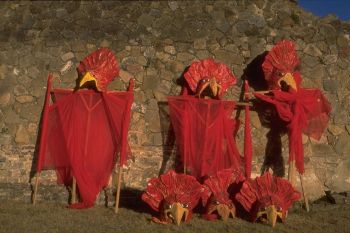
img_0291

Pony

for Jude
(and the WYPOD)

“A pony, a pony, my kingdom for…” Of course,
he didn’t want a pony. He was losing the battle
and the kingdom’s sceptre is not a baby’s rattle
to be tossed aside, even for the fastest horse.

Ponies and palfreys are not for kings. A princess
may ride a pony, and a side saddle, fit for a queen,
may grace a horse’s back, but a horse between
a princess’ legs is crass. How cramped the dress,

how wrinkled the nobleman’s brow seeing
his daughter, his wife, the female of the breed
straddling, legs apart, a broad-backed steed.

No: ponies are for Christmas, not for kings fleeing.
A horse, then, hung with bells, covered in red:
not with ribbons, but the old king, flayed and dead.

Dydd Dewi Sant Hapus.

14633208_10207317214799871_1242532105939959170_o

To be Welsh on Sunday


(This poem should be read out loud,
fast, and in a single breath!)

To be Welsh on Sunday in a dry area of Wales is to wish,
for the only time in your life, that you were English and civilized,
and that you had a car or a bike and could drive
or pedal to your heart’s desire, the county next door,
wet on Sundays, where the pubs never shut
and the bar is a paradise of elbows in your ribs
and the dark liquids flow, not warm, not cold, just right,
and family and friends are there beside you
shoulder to shoulder, with the old ones sitting
indoors by the fire in winter or outdoors in summer,
at a picnic table under the trees
or beneath an umbrella that says Seven Up and Pepsi
(though nobody drinks them) and the umbrella is a sunshade
on an evening like this when the sun is still high
and the children tumble on the grass playing
soccer and cricket and it’s “Watch your beer, Da!”
as the gymnasts vault over the family dog till it hides
beneath the table and snores and twitches until “Time,
Gentlemen, please!” and the nightmare is upon us
as the old school bell, ship’s bell, rings out its brass warning
and people leave the Travellers’ Rest, the Ffynnon Wen,
The Ty Coch, The Antelope, The Butcher’s, The Rhiwbina Deri,
The White Rose, The Con Club, the Plough and Harrow,
The Flora, The Woodville, The Pant Mawr, The Cow and Snuffers …

… God Bless them all, I knew them in my prime.

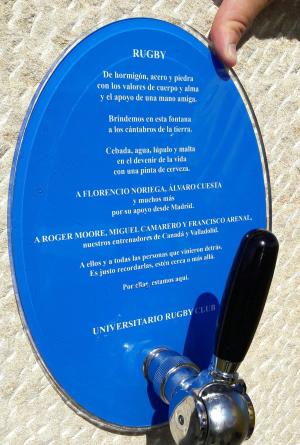
Comment: When I was living in Wales, back in the fifties and the early sixties, the country divided itself into counties that could drink alcohol on Sundays (wet Wales) and those that couldn’t (dry Wales). There were twelve counties in those days and people commuted from the dry to the wet, on Sundays, if they wanted to drink. Some took the wet / dry divide very seriously. Others didn’t. Where do I stand? I refuse, even now, to say. But check out, very carefully, the attached photo. Not every rugby coach has his name engraved on a beer spigot in a rugby club in Santander, Spain. Happy St. David’s Day, everyone. Dydd Dewi Sant Hapus.

Fire

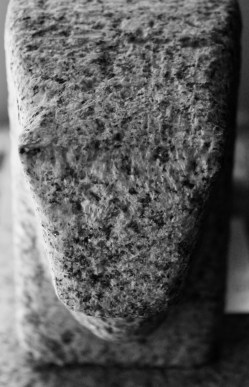
img_0294

Fire

Fire
a double sword

Fire
the beginning
and fire the end

Fire
the means of forging
the Omega and Alpha
that surround us
day by day

Fire
surrounds us
but leads us
nowhere

we must create
our own path through
fire

to the life beyond
fire

so many things
to save from
fire

so many things
to be consumed
by fire and flame

Comment: Fire is a raw poem, written this morning, based on two other posts by two other writers, Meg Sorick and Mr. Cake. It is nice to receive a creative spark from other bloggers. Thank you both. Here are the links:

Meg Sorick

https://drmegsorick.com/2017/02/22/fire-creeps-in/

Mr. Cake

https://cakeordeathsite.wordpress.com/2017/02/21/fire/https:

Five deer!

IMG_0422.jpg


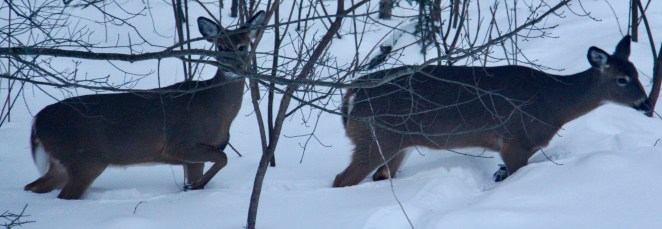
I glanced out of the bedroom window, and there they were. So silent. “Five deer,” I whispered to Clare.

IMG_0423.jpg

We watched as they moved through the trees at the garden’s foot. Step by step, silent, slow, ears pricked, cautious, the little ones up to their bellies in snow.

IMG_0428.jpg

They couldn’t see me as I took these pictures, but I am sure their sharp hearing caught the click of the camera. The one on the left is looking right at the spot where I am sitting.

IMG_0431.jpg

Sound and movement surround them: the clicking of branches, the whispering wind. They are so careful, so cautious, so suspicious. We look: but we can’t see anyone out there. Certainly we cannot hear the neighbors’ dogs.

IMG_0436.jpg

There must be something, there. They start to turn. Will they go back the way they have come?

IMG_0448.jpg

No: they continue to the road and we catch a last glimpse of them through thin branches as they prepare to cross the tarmac and vanish into the deeper woods beyond.

Losing It

IMG0075_1

Losing It

When you lose it,
whatever it is,
your fingers pick at seams,
hankies, skirts, shirts, jeans,
or strip a label from a bottle,
or crumble bread, or …

There are so many things
you can do,
personal things.

On the table:
a vacant cereal bowl,
a silver teaspoon in a saucer,
an empty teacup
returning your round
moon-face stare.

Comment: I would like to thank everyone who joined in this discussion today (blog, e-mail, and Facebook). The poem transcribed above is the final version, subject to later consideration of course. Earlier versions, with selected comments, are set out below.

1

Losing It

When you lose it
whatever it is
your fingers pick at seams
hankies skirts shirts jeans
or strip a label from a bottle
or crumble bread or

there are so many things
you can do
personal things

on the table
a vacant cereal bowl
a silver teaspoon in a saucer
an empty teacup
returning your round moon stare

your hands
twist and pull
your nails
click together

blunt needles knit
then unpick stitches
trying to unravel
then to repair
this ball of empty air

 Comment: This is a Golden Oldie. It dates from the final illness and passing of my mother, thirty years ago next month. When I wrote it, I wasn’t punctuating my poetry. Nowadays, I prefer punctuation as it guides the reader in terms of the rhythm and flow of words. Leaving it exactly as I wrote it means you, as reader, have to wrestle with the meaning, the order, the pauses, the rhythm. My guess is that this over-complicates the poem. However, it was a difficult time, so the poetry I wrote at that time was also difficult. I will be interested in any comments on the following question: to punctuate or not to punctuate?

Comment from Judy: An out there idea: what if  for Losing it – you ended poem with first stanza?
Reply from Roger: What if, indeed? Then it would need a tweak or two, something like this: the poem changes, but does it gain or lose?

2

Losing It

blunt needles knit
then unpick stitches
trying to unravel
then to repair
this ball of empty air

your hands
twist and pull
your nails
click together

your fingers
pick at seams
hankies skirts shirts jeans
or strip a label from a bottle
or crumble bread or

there are so many things
you can do
personal things

on the table before you
a vacant cereal bowl
a silver teaspoon in a sauce

an empty teacup
returning
your round moon stare

Comment from Jan: Play it again, this time with punctuation. This time I have returned to Judy’s original suggestion, and just placed the last stanza first. Then I have punctuated the poem. Revision and re-creation time: this is fun! I punctuated the above version, then cut it down to the first poem published at the start of this article. Tank you all for the help.

Monumental Madness


img_0181

Monumental Madness

                  A long time ago, at Niagara Falls, I dressed in yellow oilskins, walked behind a tumbling wall of water, and knew I was close to the edge. Back outside, everything changed and beside that brightness of grass and rock, water screamed like shorn hair as it tore down the precipice. Have you been there? Have you walked to the end of the world, stood at the edge and peered into the starless, foam-speckled darkness that beckons below?

                  The deed leaves a bleakness dangling at the end of your wrist. Silent, you fear to dip your toes into an icy bucket of fire. Sun through dark clouds: a candle illuminating the scene. You cannot see your breath, but you know that it hangs there on the air before you. A spider web of smoke strings its impenetrable cloak between you and reality.

                  An animal urge to surge and run makes your muscles twitch but your feet are trapped in sand as crazy glue binds your limbs and banishes flight. Beads of sweat pearl on the upper lip and below the eyes. There is a melting at the temples’ edges where the short hairs tense and prickle. Now your back is on fire. Sparks fly from your hair as you prepare, Roman Candle in this unlit bonfire’s gloom, to explore a subterranean cave of unknowing.

                  The walls around you slowly congeal and your sweat flows thick then dries.  Your toes sink back into their frosty oblivion. There is no movement from your knees down. Your fingers stiffen and arthritis steals movement from inflamed joints. A voice inside your head tells you to punch the emergency numbers on your frozen cell phone, but wisdom is drowned in the mind’s dark urgings and your fingers cannot respond. You sense that this will not bring the beginning of the end. It will be the continuing of the same, torment without end, until a century of centuries stands in your mind like a single day. Eternity stretches before you with its long, dark, endless winter night: no stars, no sun, no moon, no spark, no hope, just this eternal cold that suspends all motion.

                  Within you, an animal rages carnivorous against the bone bars of its cage. It can see you; it can sense you; it can smell the atoms of fear that rise from between your toes and flow out of your armpits. Your own nostrils flare and stiffen and you too can smell that fear; you can taste the bestial desire that flesh holds for fresh torn flesh. A black velvet band binds your eyes and pulls itself tighter and closer across your chest. Your heart is a stone thrown into an icy pond. Down, it plunges, down and down, and as it descends it bumps the bodies of other beings locked there in the deep pool of your chest.

                  Somewhere in this Arctic night there is a shuffle of white pads. Sleek feet move across the snow. The polar bear’s snuffle is a whimper of hope that the end will come swiftly in the bright light of midnight descending, all red in tooth and claw. You shiver. You bite your hand. You quench your chattering teeth and hope they do not wake the nightmare. Yet still you sense it drawing close with an acquiescent dragging of slow feet.

                  The illusion, the dream, the nightmare, the chimera, the dragon that dwells in the depths, the ice cold sucker of souls that emerges in a sudden gasp of bated breath, the red hot air that flees from the anthracite when the door of the dream world flies open and the devil dances on the hot coals of his promised hell and condemns your ice to melt in those sinister flames.

                  Your pale face floats through the gloom: yellowed teeth, frail lips curved, a Cupid’s bow that will shoot sweet darts of poisoned love, dry mouth, desiccated words, sounds that form into sinister sequences, their meanings misunderstood, false hope dangling by its neck from a choking rope, the bare words pacing, naked bears across a chain of dancing memories strung out like good times, past and dead, and dangling stiff from their skeletal chains.

                  Your flightless fancies flit through a darkness of despair, as awkward as auks, as clumsy as penguins stranded in zoo cages far from their native seas, as meaningless as the dodos, as dead as the ashes lying cold beneath the crematorium’s fire.

                  A sudden bucket clatters down the well. But there is no water. This ice will not melt. These desert sands may burn your feet but they will not warm your glacial heart. The manner of your third or fourth coming brings forth no nourishment.

                  A mirror grows from a spider web on the wall. Face to face, the present and past are ambulant tenses that foretell no conditional. There is no future, let alone a future perfect. A dislocation of infinitives stretches into the infinity of an invisible futurity.

                  To be: and now you are permitted to see the depth to which you will descend. Now you see yourself sinking lower and there is only one exit. A rope and a beam appear before you; a tin of Ant Trap; the silver tusk of an open razor; that bottle of pills; that steering wheel, one twitch of which will veer you into the path of that passing truck; that bridge which crosses into the fog and ends half way across the river; the mystery and madness of that final plunge into an even longer night.

                  Or not to be: lips move and promise an end to heat and cold. Here, they say, is darkness without memory; here is sleep bereft alike of nightmare and dream; here is oblivion; here is the cessation of strife and struggle; here is peace.

                  If you take that step, you leave your present hell and enter into another hell leaving behind you family and friends to suffer without you in their own living hell.
Doppelganger

img_0149

Doppelgänger

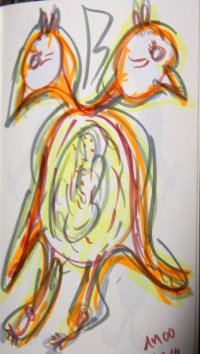
When I walked in through
the hospice’s glass door
I met myself walking out.

A curious sensation:
seeing two separate versions of me
side by side in sympathetic union.

When I got to my room,
I looked in the mirror:
how long had I been like this?

My two-faced, double head
joined at the neck,
a Siamese twin of myself,
never knowing which was which
nor whether I was coming or going.

What grief there will be
when the mirror shatters
and nothing remains
but a black space
adorning a broken
wall in an empty room.

Cribbage

IMG_0360.jpg

Cribbage

Red and white markers
chased each other
along the S bends,
past the skunk lines
to the final straight
where a single space
awaited the winner.

I don’t remember
who won, nor do I care.
But I know we shuffled
the cards and dealt again
as we waited for sleep
to descend and bless us.

We fasted that night:
no food, no water.

When midnight struck,
we put away the deck
and pegging board,
and bade each other
goodnight.

“Sleep well if you can,
my friend,” you said.

“Tomorrow  will bring
a much more serious game
that neither of us
can afford to lose.”


Waiting


IMG_0155

Waiting

I remember pushing
my father around the ward.

“Cancer,” they said.
“But it’s kinder
not to let him know.”

In those days,
it was better to die
without knowing why.

Did I betray him
by not telling him
what I knew?

Two weeks we had,
together.
He sat in his wheel chair
and I wheeled him
up and down.

I lifted him
onto the toilet,
he strained and strained
but couldn’t go.

“Son,”
he said, sitting there.
“Will you rub my back?’

How could I say no?

That strong man,
the man who had carried me
on his back,
and me standing there,
watching him,
his trousers around his knees,
straining,
hopelessly

and me
rubbing his back,
waiting

for him to go.

Ice Storm

img_0033

Ice Storm

This month and my life
are nearly done.

Sun strengthens in the sky
but birds ice up
in spite of feathers,
fluffed like eider downs.

Man alone,
within warm walls,
can bravely laugh
at winter’s squalls.

But oh, if the power fails,
if wires are tumbled
by winter’s gusting gales,
man’s heart no longer
fills with ease.

He sits at home
in the cold and dark
while all around him,
ice covers the land
and even fire dogs
freeze.