MiA

IMG_0447.jpg

MiA

The things you didn’t see:
the cat, this morning, ginger,
coiled like a spring and ready
to pounce on an unsuspecting junco;
five crows perched on the same
side of the tree, and the tree leaning
over on account of their weight;
the smile on my granddaughter
when we Skyped.

The things you didn’t hear:
the squawk of the bird
as the cat misjudged her jump;
those same five crows cawing,
cracking the day open like
an egg boiled for breakfast;
the joy in my granddaughter’s voice
when she spoke to me: “Hi Moo.”

And you didn’t hear the robin’s shriek
as the hawk’s claws pierced,
nor the tears in my voice
as I called out your name.

CROCODILE TEARS: FFF

img_0184

Crocodile Tears
Flash Fiction Friday
28 April 2017

The crocodile lives in the wind-up gramophone. The gramophone lives in the top room of the house. The boy winds up the gramophone with a long brass handle, round and round, till the spring is tight. A tight spring frightens the crocodile and he sits quietly in his cage. But as the record goes round and the spring loosens up, the crocodile roars and demands to be freed. He’s the Jack that wants to jump out of the box. His long-term dream is to eat up  the witch who looks out of the window and watches the boy as he plays in the yard.

Last week the boy decided to dig. He picked up a spade and dug a deep hole that went all the way down to his cousin in Australia. The little dog laughed and joined in the fun, scraping with his front paws and throwing earth out between his back legs like happy dogs do. The witch in the window cackled with laughter and the rooks in the rookery rose up in a cloud and cawed in reply. Only the boy is able to see the witch and he only sees her when she sits in the window. But he knows she wanders through the house, and the air goes cold when she enters and exits the rooms, especially when she brushes past the boy and sweeps his skin with her long, black gown.

When the boy got tired of digging, he drove the spade into the ground and left it standing by the hole. When his father came home it was well after dark. He didn’t see the hole but he saw the spade. So he didn’t fall in to the shaft of the coal-mine that went down to Australia. No free trip to the Antipodes for that lucky dad. He beat the boy for that, for digging that hole. Then he beat him again for lying: the hole didn’t go to Australia. Australia was too far away and the angle was wrong. The boy laughed when he saw that his dad didn’t know where Australia was.

“Ha-ha,” he laughed. And his dad beat him again, this time for laughing.

Sometimes at night the boy can hear rats running through his bedroom walls. They scuttle and scuffle as they hunt through the guttering. The crocodile growls from time to time in that upstairs room. The witch cackles with laughter. The boy puts his head under the blankets and cries himself to sleep. Sometimes he wishes the crocodile would come and eat up his dad. But he loves his dad like the dog loves his dad even though his dad beats both the boy and the dog. Sudden beatings, they are,  that arrive without warning: hail and thunder from a sunny summer sky.

“Well, you’re not laughing now,” his father announces. “A beating a day keeps disobedience away.  There will be no disobedience in this house.” When the father beats the boy, the dog cowers beneath a chair. The boy hears the crocodile growl and smiles through the tears as he wipes salt water from his eyes.

“Are you laughing at me? I’ll make you laugh on the other side of your face,” the father taunts the son and beats him again.

The crocodile growls. The old witch cackles. The rooks in the rookery rise up in the air and the father’s hair stands up on end like it does when lightning lights up the sky, and thunder rolls its drums, and the sky’s wheels rattle like an old warrior’s chariot whose wheels have not been greased. The veins stand out in his father’s cheeks as the old man raises his hand to the boy.

The old man tells the same old jokes again and again. The boy must always remember to laugh at them as if he had never heard them before. If he doesn’t laugh, his father gets angry. Some of the jokes are good, and the boy likes the one about the Catholic who goes into the bar in Belfast and asks the barkeep if they serve Protestants. Or  is it the one in which the Protestants go into the bar and ask the barkeep it they serve Catholics … anyway … whatever … one night, the boy dreams and it happens like this. The crocodile escapes from the gramophone. The witch hands the boy a leash and a collar and between them they restrain the crocodile.

“Walkies?” says the boy.

The crocodile nods his head and crocodile and boy walk down the street to the Kiddy’s Soda Fountain on the corner.  When the boy walks in with the crocodile, the waitress raises her eyebrows and opens her mouth.

“Do you serve grown ups in here?” the little boy asks her.

“Of course we do,” says the waitress.

“Good. I’ll have a glass of Dandelion & Burdock for myself and a grown-up for the crocodile. Please.”

The witch says grace, the boy sips his Dandelion & Burdock, and they all shed crocodile tears as the boy’s pet crocodile chomps on the fast disappearing  body of the boy’s dad.
Algorithms

img_0177

Algorithms
Wednesday Workshop
26 April 2017

I want to begin by confessing that I don’t know what they are. Algorithm: it sounds like a word pulled out of a lexicographer’s top hat or a question from a Grade 9 Spelling Bee.

“May I have the definition?”

“Certainly: it’s ‘a step-by-step procedure for solving a problem or accomplishing some end especially by a computer’ …” (Merriam-Webster).

Before we go any further, please watch this brief, very explicit (self-explaining, sorry) video.

https://www.youtube.com/watch?v=oP3c1h8v2ZQ

So, if I understand the video correctly, an algorithm, applied to literature, is a program that (a) analyses the structure of texts and (b) establishes whether or not a specific text follows the necessary steps or procedures for that text to become (b.1) a best seller or (b.2) an acceptable potential book in which an investor (aka publisher) could or should invest his / her money.

Where does this leave us as writers? We have spoken before about the Guardians at the Gates and the Judges who determine our fate when we enter literary competitions (see below)

https://rogermoorepoet.com/2016/05/31/winning-not-whining/

Suddenly, these Guardians are no longer fallible flesh and blood but infallible wires, nuts, and bolts joined by electronic circuits.

So, we have a story. Right? Right length. Right theme. We think it is good. We submit it to an editorial house. What happens next? Well, it depends. A major house won’t touch it unless put forward by an agent. No agent? It molders to a prolonged, slow, very slow death on someone’s desk. Electronic submission? Wait a minute. Some secretary may read the first five pages and find them good. Then, your submission may be sent to Death by Algorithm.

How is that algorithm prepared? Thousands of best-sellers and classics are fed into the computer program, analyzed, sorted into lines and curves, highs and lows … then your manuscript is fed in. If its computerized profile matches their computerized profile (the algorithm) then BINGO … you may have a foothold on the first rung of the lowest ladder that leads to winning the literary lottery!

Or not.

What can we, as writers, do about this? Absolutely nothing. We must believe in ourselves. We must believe in our writing. We must keep on writing. We must publish where and when we can … and, above all, along with Albert Camus and Sisyphus and his rock, il faut imaginer l’écrivain heureux / we must pretend that, as writers, we are happy.

And that, ladies and gentlemen and others, is a pretty sorry state of affairs and a pretty lousy (but very interesting) piece of translation.

Chaos

Chaos

Chaos

Chaos theory:
it states that we don’t know
what we’re doing and
it wouldn’t really matter
anyway, even if we did,
because life lacks meaning,
chance rules, and Lady Luck
with her lusty locks attached
to her forehead and she,
all bald and hairless
from behind, must be caught
as she arrives, because later
is much too late, and when past,
she’s gone for good and
our good luck’s gone with her,
and we’re left for ever,
sitting there, head in hands,
bemoaning all that milk spilled
before we ever had a chance
to actually taste it.


The Perfect Boiled Egg

img_0184

The Perfect Boiled Egg

two dozen
at the bottom of the pot
as hard as rocks

two dozen at the top
liquid beneath the stale bread
resurrected as toast
and used as blotting paper
to mop them up

and there
lurking somewhere
in the middle of the pot
hiding like the prize number
waiting for the winner
in a national lottery

the perfect boiled egg

Comment: School food was always a thing of wonder and I remember it only too well. If nothing else, the school sports gave me an appetite and the school food made me more or less omnivorous and gave me a cast-iron stomach. I can’t remember who said them first, but I always associate these words it with St. Trinian’s: “School fish: the piece of cod that passeth all understanding.” We sat at tables of eight and we could always find someone who would eat whatever we left … more about that (and school) later.

Vixen


IMG_0190

Vixen

Meductic,
New Brunswick.

She climbs up from the head pond
a ripple of red and orange over the highway.

 As quick as a fox, they say:
black socks, brush winter-thick
held high and proud,
as quick as a shadow
melting into dark woods
on the highway’s far side.

She is followed by her cub
who is not quite as quick.
He is struck by a truck
and ground into the gravel.

 The fox-stink of memory
clings to my nostrils
like slow-motion death
dreamed at night
frame by bitter frame
.

 Now a night-time of silence
falls from the lips of fading lovers.

Raccoon

IMG_0080.JPG

Raccoon

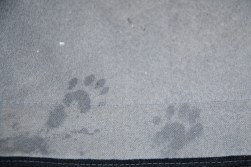
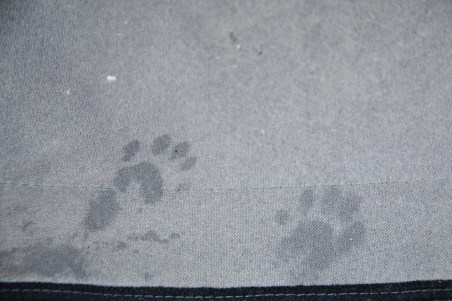
Two footprints on the dew damp chair
show that he has been here.

We know he visits at night.
The cat wakes up, jumps off the bed,
leaps to the window, and hisses.
Then she falls silent.

The raccoon steals food from the feeder
and shuffles the pottery shards
we leave out to gather water for the birds.

We never see him.
Sometimes we hear him grunt;
occasionally the wind chimes rattle furiously
as if caught by a giant gust..

We peer into the dark,
turn on the outside lights,
but his absence greets us
like a long lost friend.

Last night, nothing:
this morning, an empty feeder,
those footmark in the dew on the chair:
we know he was there.

Footpaths

IMG_0220

Footpaths

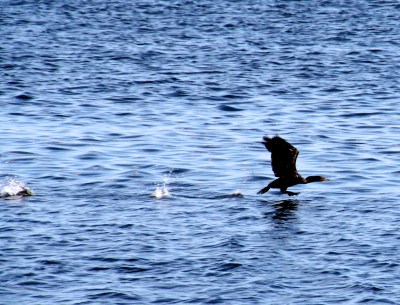
Such a miracle:
the first steps of the cormorant’s flight
taken over water.

That first step heavy,
the second lighter,
and the third scarcely a paint brush
pocking the waves.

The need to take flight
lies deep within me.

“Journeyman,”
the Spanish poet wrote,
“there are no footpaths
across life’s sea,
just a wake to show
the way you came.”

Like a ship at sea
or a seabird over the waves
I leave white water in my wake
to show where I have been.