Windmills

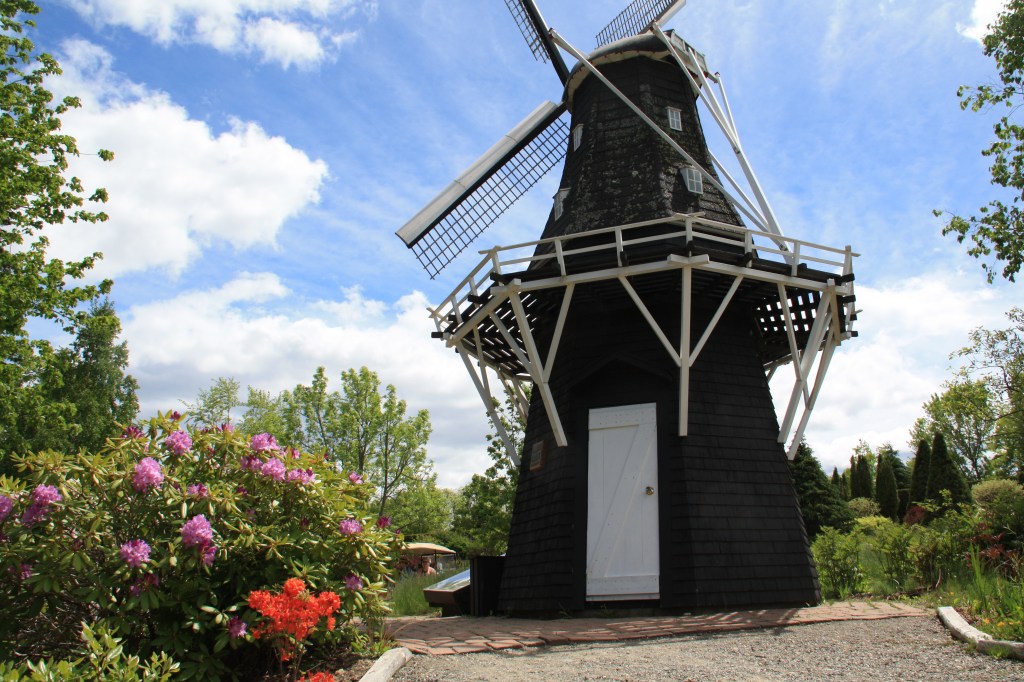
Windmills

Only the pendulum clock
disturbs the silence
as the slow stars circle
and the moon hides
its face beneath
seven excluding veils.

Tranquility finds me,
seated here, head in hands,
contemplating the complicated
dance steps of a terra-centric
universe where planets weave
an intricate back and forth
to justify the falsehoods
of misguided mistakes.

Men, confident in their wisdom,
know that all is well,
that their faith in the old gods,
the old books, the words
that were written, in stone,
before the modern world began,
need no rethinking.

Those whirling sails,
imprinted on the questing mind,
are a giant’s arms, those sheep
an enemy army cloaked
in dust, coats of arms visible
only to the far-sighted
whose eyes defy vision’s laws.

Right, they were then.
Right they are now.
Nothing changes. Nothing
can possibly change.
Sheep are the enemy
and windmills wait to invade
the unsuspecting mind.

Comment: The history of Don Quixote and its reception in Spain is quite interesting. I was very sorry to read that Cervantes’s language is now considered so antiquated that interpreters are needed. I actually have a cartoon version of his quests – a picture reader, so to speak, very brief, because each picture is worth a thousand words. I have not yet seen the simplified text, rewritten with today’s reader in mind.

Don Quixote still holds many lessons for this modern world of ours and is definitely worth re-reading for, as Soren Kierkegaard (1813-1555) wrote: “There are two ways to be fooled. One is to believe what isn’t true; the other is to refuse to believe what is true.” Don Quixote, the character, threads a narrow path between those two extremes, as do many of the other supporting characters, some of whom use metatheatre for their smoke and mirror Wizard of Oz trickery. And remember, or forget at your peril, nihil sub sōle novum – there is nothing new under the sun. And yes, history does repeat itself, as you will see if you read (or re-read) Cervantes’s master piece.

Flight

Flight

Such a miracle: those first steps to flight
taken by the cormorant over water.
That first one heavy, creating ripples,
the second one lighter, and the third one
scarcely touching the water.

The need to take flight lies deep within me.
Fleeing from what? Flying towards what?
Who knows? All I know is that the future
lies ahead where my bird’s beak points and
the past, a rippling wake, lies behind me.

That white water, trailing its kite’s tail,
tells me where I have been. Machado’s
voice calls out from the past: “Traveler,
there is no road, just a wake across life’s sea.”

Comment: The photo is a golden oldie, one of the first I ever posted on this blog. The poem is part old, part new. In reality, it is a revision, completed today, of the earlier poem associated with that old blog post. It is interesting to compare the two visions – with those seven extra years of creative experience between them. Let me know what you think!

A special thank you to my long-time friend, Dale Estey, for commenting and suggesting an improvement for the fourth line. Spot if if you can!

Rebirth

Rebirth

“El mundo nace
cuando dos se besan.”
Octavio Paz

A new world is born
when two people kiss.
The hummingbird sips
at the hollyhock’s lips.
Bee enters the blossom
and, sated, comes out.
A butterfly perches,
flutters its wings.
The sun enters a cloud:
radiance is born.
Silver linings
morph to gold.
The sun’s needle stitches
the world together.
Oh to be a part of Eden,
Paradise born anew,
in the moment when
lip meets lip and the tongue
is a twister, touching down.
Two hearts a-whirl,
their world aflame.
Their world reshaped,
new shapes now born.
Wild flowers swaying
in an age-old dance.
Life’s journey renewed,
not always by chance.

Write about a random act of kindness you’ve done for someone.

Daily writing prompt
Write about a random act of kindness you’ve done for someone.

Write about a random act of kindness you’ve done for someone.

Sir Alex Ferguson, one of soccer’s greatest managers, once said that it wasn’t the victories he remembered, but the defeats. So it is with my own coaching career – it’s the losses I recall. Same thing with random acts of kindness. There have been many, too many to count. I will not paper my e-walls with glowing memories of past kindnesses. But what about those random acts of kindness I failed to do? Here’s one of them.

            Crave More: I hate those words. I always choose a cart with the shop’s name on the handle. I can handle that. I can’t handle a shopping cart that screams Crave More at me every time I stoop down and place another item in the wire grid. If stores were honest, they would inscribe their shopping carts with a sign that said Think More, Crave Less, and Save Your Money. I bet that would quickly cut into profits.

            Anyway, there I was, in La-La-Land, leaning on my cart, still half asleep, when this ghost drifted towards me. “Help me,” it said. “I’m hungry. I need food.” I woke up from my dream, looked at the ghost, tall, skeletal thin, cavernous eyes and cheekbones protruding, gaps in the teeth, grey face drawn and lined. The single word “Sorry” came automatically to my lips. Then I felt shame. I looked at him again. “I only carry plastic.” The excuse limped heavily across the air between us. I saw something in his eyes, I knew not what, and I turned away.

            Then, as I walked away, I added 100 lb of muscle to the scarecrow frame. Took forty years away. Filled his body with joy and pride, and remembered how he played when I used to coach him, hard and fast, but true. I ran my hand through the card index of former players that I had coached. I knew their moves, and attributes, the way they played the game, their stronger / weaker side, their playing strengths, their weaknesses. I remembered him holding up the Champion’s Cup. But I couldn’t remember his name.

            I pushed the cart all over the store in a frantic search for him. I went to the ATM and took out cash. I could hand it to him. I could tell him he had dropped it. I went through a thousand scenes. I could invite him to the snack bar. I could tell him to buy what he needed and follow me to the check out lane where I would add his purchases to my cart. I looked everywhere. He was nowhere to be seen.

            A single opportunity. One chance. That’s all we get. Miss it, and we blow the game. Take it, and we win the Championship and hold up the Cup.

What traditions have you not kept that your parents had?

Daily writing prompt
What traditions have you not kept that your parents had?

What traditions have you not kept that your parents had?

What traditions have you not kept that your parents had?

To the best of my knowledge, my parents only had three traditions. I have not kept any of them.

Tradition 1: They took two weeks holiday every year in August. Both were hard-working, and that holiday was always a precious break from work. Being employed in academia and a life-long inhabitant of the Ivory Tower, I have not had holidays forced upon me by a 9 to 5 work schedule. Research and creativity do not function according to a 9 to 5 clock. I realize how fortunate I am, and I give thanks every day for my intellectual and creative freedom.

Tradition 2: They fought like cats and dogs at every opportunity. It was so bad that, at one stage, in my innocence, I thought that cats were females and that dogs were males, and that was why they opened instant hostilities whenever they saw each other. Luckily, I have no siblings to challenge this view of events, and my parents are long gone, so they won’t be worried either.

Tradition 3: My maternal grandmother’s birthday was just before Christmas. On her birthday, every year when I was a child, my mother would come home early from work, but my father wouldn’t. He often didn’t come home at all. Office parties. My mother would hang around the house for a while, consoling herself. Then she would get angry, tell me to pack a bag, pack one herself, and call a taxi. This would take us to the railway station or the bus station, and off we would go to grandma’s house to celebrate her birthday. My father, looking sheepish and hang-dog, would arrive late Christmas Eve, or early Christmas morning. On Boxing Day, the gloves came off, and they were at it again. That’s why it’s called Boxing Day. Well, that’s what I thought anyway.

So there you have it. Three traditions that my parents had and that I have never kept.

Anonymity

Anonymity

Multiple masks stripped away, old wall paper
shed in strips, layer by layer, until you reveal
the bedrock foundations of your delicate face.

Your visage dissolves before my eyes until you
become what you were when I first met you:
sweet, young, fresh, a delight to catch the eye.

As you still are, to these old, fragile eyes of mine,
cataracts removed and lenses still capable of
seeing you in your spring, although it is your winter.

The snowfall of your hair cannot deny the sparkle
in your eyes, the summer freckles that will soon return,
the sunlight and joy you bring when you enter the room.

Ageing, yes, but you are as young and as sweet
as you always were. How could you not be?
Anonymity peels itself away until no barriers exist

between what you are to me now, and what you were.
It is a lie, that only the young write poetry in praise
of their beloved’s eyebrow, her lips, her gaze.

For how many days have we stood together, as one,
breathing the same air, walking together, facing
the same difficulties, and overcoming them hand in hand?

Yes, we have both slowed down – the way of all flesh –
and we are no different. We wither and perish, but
we haven’t perished yet, although we are withering.

The magic of our love, our gifts, molded into our DNA,
will not perish with us, and never will, not while
our spirits live on and our love creates others in our shape.

Click here for Roger’s reading.

“In the human face, the anonymity of the universe becomes intimate.” John O’Donohue, Cara Anam, p. 37.

Dissolution

Dissolution

When I am no more myself,
will I know what I have become?
What last breath in the mirror
will reflect my passing from this self
to the next, if there be another one?
Does it matter? No, to most of us,
yes, to the lusting soul that seeks,
but what does it seek, I ask myself?

I watch the deer crossing the yard.
Muted, dark against winter trees,
I can scarcely make them out,
let alone understand their wanderings.
If they scare, they raise white flags of tails,
then run, dancing down their tracks,
as light as thistle-down, though the snow
be deep beyond their walk-ways.

I want to see them as they really are,
the original inhabitants of this land that
a scrap of paper, drawn up by a lawyer,
says I own. Nobody owns this land.
It was here before me and will be here
long after me and mine are gone.

Only the deer truly belong, passing
through, each generation similar
to the one before, knowing no lawyers,
holding no legal papers, but aware
instinctively that we are the intruders,
that the forest is their heart and home,
and that they are sole owners of this land.

Click here for Roger’s reading.

Comment: from a poem by Guillaume Apollinaire: “I am no more myself. I have become the fifth of the twelfth.” I bought a book of his poetry (Livre de Poche) from les bouquinistes in September, 1962, when I started the school year in Paris. I picked it up last night, and started reading it again. The result – this little poem and a host of memories that came flooding back as the deer walked through the garden and all was right with the world.

Landscape

Landscape

Your face: a landscape
luminous in the darkness,
a mapa mundi in the light,
your heart spread out.

My eyes trace the contours,
follow the ups and downs
of your existence, track crows’
feet, crinkling by your eyes.

Time has carved, molded,
sculptured your features.
Wind, snow, wet weather,
sunlight, each has left its mark,
a wrinkle when you frown,
a dimple when you smile.

My eyes want to rest here
for a while, take in the tracks,
pause at the passes, climb hills,
descend into valleys and dales.

Such beauty spread before me.
Such a joy to contemplate
the way you are able to show
the paths I have walked of late.

Click here for Roger’s reading.

“It [landscape] is the most ancient presence in the world, though it needs a human presence to acknowledge it.” John O’Donohue, Anam Cara, p. 37.

Heart and Hearth

Heart and Hearth

I remember the old coal fires in Swansea.
My grandmother’s house in the Hafod,
with a hearth separate from the kitchen.
The hearth held a huge cast iron fire-place
where cookpots and kettles hung
 or nestled into smouldering coals.

My grandfather’s house in Brynmill,
had a magic fireplace. Banked in before bed,
it gave warmth and light all through the night.
Warmth, comfort, the family gathered,
the wisdom of the old shared with the young,
traditional tales and songs passed down.

Everybody was welcome and each one
had a special spot reserved around the fire.

Comment:

I have been revising this poem, shortening it, and changing it very gently. Funny how the old days come back and dance before us, like the flames dance on the coals, as the old ghosts walk now upon the logs.

Click here for Roger’s reading.

True Names

True Names
Iron John, p. 236

No one will know our true names
until after we have left this place.

Like that elusive moon in tonight’s sky,
our paths will be visible, seen, but not heard.

Orion herds the stars, steering them westwards,
away from the sunrise, to moon’s golden circlet.

So much has been lost, so many of us have gone,
leaving us to mourn unspoken thoughts, silent words.

In spring, sometimes, we can hear voices whispering
to us among burgeoning blossoms and leaves.

Who will bear witness to lovers’ wishes and desires
when the great separation springs upon them?

Who will sing songs, give speech to the little children
taken before their time and lost in the silent night?

Click here for Roger’s reading.