Meditations on Messiaen. Quartet for the End of Time.
3
The End of Time
A thin violin crying its cat-gut heart out in tears of sound, falling, rhythmic raindrops, down a grey-streaked face tight with stress and pain.
Such concentration, such soulfulness packed into each mindful note.
An audience of one, I sit, head bowed, meditating on the meaning of meaning and nothingness, the nothingness of being condemned to oblivion yet oblivious of the how and when.
Each note a hammer-blow, then, the piano hammering nail after nail into this coffin body I drag through the motions of extracting meaning from this meaningless life.
Meditations on Messiaen. Quartet for the End of Time.
1
A Stone
I cast a stone into the sea. A round, flat stone, it skipped from wave to wave and refused to sink.
My heart sank within me as I counted each bounce: five, six, seven… then the stone sank bearing with it my seven deadly sins and I wept no more.
I, who have lost all that I had, mother, father, brothers, land of my birth, I laid them all to rest and I dried my tears, forgot my fears, and counted my blessings as I walked, no longer alone, along the shore.
I remember pushing my father around the ward. Two weeks we had together. He sat in his wheel chair and I wheeled him up and down.
“Cancer, ” they told me. “But it’s kinder not to let him know.”
In those days, it was better to die, without knowing why. Did I betray him by not letting him know what I now need to know?
One day, he begged for help and I lifted him onto the toilet. He strained and strained but couldn’t go.
“Son,” he said, sitting there. “Will you rub my back?” How could I say no?
That strong man, the man who had carried me on his back, and me standing there, watching him, trousers around his knees, straining, hopelessly, and me bent over him, rubbing his back, waiting,
Seize the day. Squeeze this moment tight. Nothing before means anything. Everything afterwards is merely hope and dream.
A tiny child, you chased wind-blown leaves trying to catch them before they hit the ground. Elf parachutes you called them and trod with care
so as not to crush the fallen elves as they lay leaf-bound. I stand here now, a scarecrow scarred with age, arms held out, palms up, in the hope that a leaf
will descend, a fallen sparrow, and rest in my hand. When one perches on my shoulder and another graces my gray hair, my old heart pumps with joy.
I remember pushing my father around the ward in the hospital. Two weeks we had together.
My father sat in his wheel chair and I wheeled him up and down.
“Cancer,” they told me. “But it’s kinder not to let him know.” In those days, it was better to die without knowing why. Did I betray him by not letting him know what I now need to know?
One day, he begged me for help and I lifted him out of his wheelchair and placed him on the toilet. He strained and strained but could not, would not go.
“Son,” he said, sitting there, “Will you rub my back?” How could I say no?
That strong man, the man who had carried me in his arms, on his back, and me standing there, watching him, his trousers around his knees, straining hopelessly, and me bent over him, rubbing his back, waiting,
for him to go.
Comment: Thank you, once again, Alejandro Botelho of Diverse TV. This was a great reading. If you, dear reader, are interested, you can listen to it HERE. Alejandro’s reading of my poem begins at 40.52 and ends at 42.33. But remember, the other poems are also well worth listening to and Alejandro has a great voice and wonderful interpretation. A further comment: first there is the text. Then there is Alejandro’s excellent reading. Then there is my own reading. From each of these the observant reader and / or listener will extract a slightly different emphasis and meaning. In my own case, following Alejandro’s reading of the original text, I have added some minor changes, to add to the intertextual rhythm of the words. Tolle, lege et vade mecum. A Cancer Chronicle is available HERE.
Jackson Pollock it ain’t. But just look at those fledgling storks launching themselves into the air. And yes, those are their nests!
Spotify Scroll down to appropriate episode.
Bird’s Nest Jackson PollockNo5 (1948)
This bird’s nest starts with a startling tweet that wins a trilled, thrilled response. A flutter of heart-string wings, creator, viewer, join
with the creation. Thin threads of life mix and match their tangled weave, existential tapestry, fathered in a feathered nest.
World without end, this labyrinth without an entry point, without a beginning, with a spaghetti-thread middle that meets
not in a breath-catch of the mind, but in a brush-flick of coloured rain, a cycle recycled of circled paint, circular
in its circumnavigation, its square eight by four-foot globe of a new world whirled in stringy whorls, reinvented beauty
drawn haphazardly from the bicycle tour de force of this artist’s inner mind.
Comment: This is a tongue-twister of a poem, much as Jackson Pollock’s painting is a twisted vision twisting the viewer’s eye. And, no, it is not easy to read. Nor is the painting easy to view. Click here for a link > Jackson Pollock < to the painting. Click here for a link to Alejandro Botelho’s reading of < My Grandfather >. Note that Alejandro’s reading of My Grandfather begins at 17.58. And note too that the other poets are also well worth listening to. Once again, thank you for this, Alejandro: your work is very much appreciated.
Spotify Remember to scroll down to correct episode.
My Grandfather
My grandfather gave me my first sewing lessons. He sat before the kitchen fire and put a grey wooden darning mushroom inside the sock, stretching woolen threads to expose the hole.
He chose with care his colors: bright yellows, oranges, reds, sky blues, anything that stood out against the sock’s dark rainy-day drabness. If the socks were thin, he split new wool, pulling it into individual strands that he would dampen with his tongue. Then he would thread the needle.
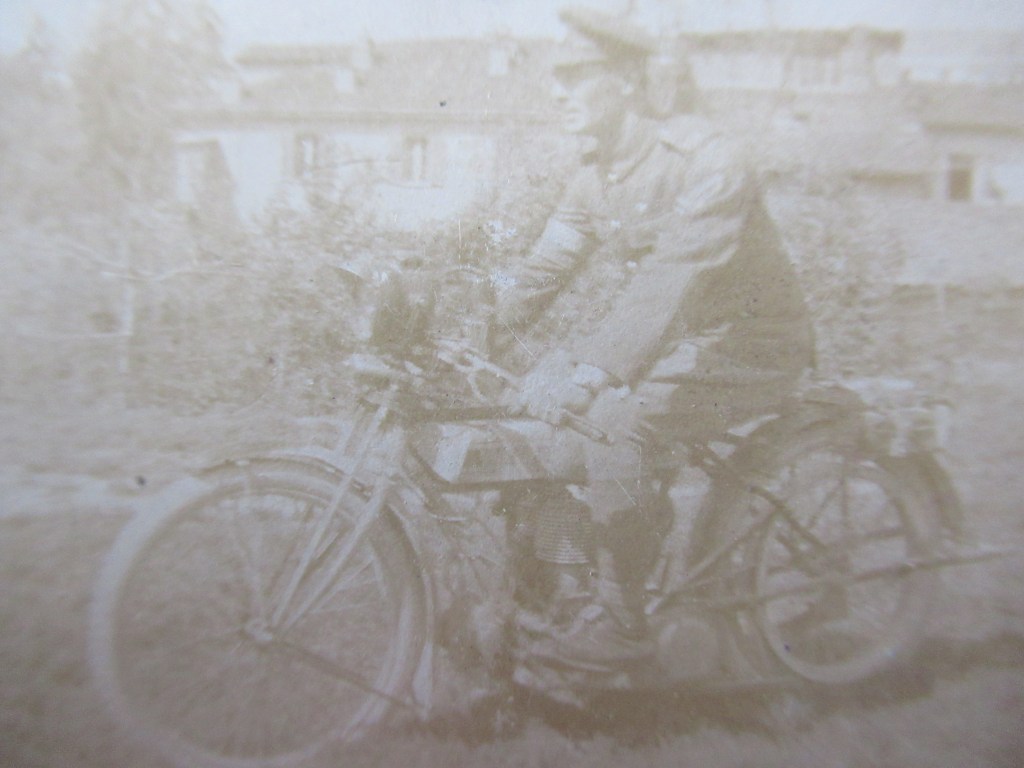
Wool in place, he would cross-hatch the sock’s hole, slowly forming a life-raft that he’d fill with color. All my life, I have darned socks, sewn buttons, and mended my sweaters. I use bright colors, to my friends’ dismay. I still have my grandfather’s World War One sewing kit, all wrapped up in a canvas bag with his needles and some wool.
It’s wonderful to touch where his strong hands were. There are dark blood traces where he pricked his thumb and deeper stains where he sewed up wounded friends.
Comment:My Grandfather, the poem, is available on DiversityTV where it is read by Alejandro Botelho. Thank you, Alejandro, for a great reading and a fine interpretation of this poem. Click here > My Grandfather < for Alejandro’s reading. Note that My Grandfather begins at 13.30. Note too that the other poems on this site are worth listening to as well.
Dawn from the Red Room at KIRA. Another form of birth.
Spotify Remember to scroll down to the correct episode.
The Origin of the World Gustave Courbet L’Origine du monde
The origin of the world and where I came from, her deep, moist cave that cast me from dark to light. She loved me, she said, depriving me of her warmth, leaving me to go back to her lover, loving him more.
Was it guilt that drove her to drinking whisky? A forty-ouncer a day at the end, sometimes more. She would wake in the night, wander the house, banging against chairs, tables, walls, and doors.
She ran up bills in local shops, and the keepers would dun me for the money she owed. She also borrowed cash and some days her fingers were bare. She left pawn shop IOUs on the table and I drove
into town to redeem her rings. Once, in a drunken frenzy, she cursed her only child. A mother’s curse is a terrible thing. Living albatross, it claws lungs and heart. Its weight drove me to the bottle. I too sought oblivion.
Joy came when blackness descended, the albatross flew, amniotic waters rocked me in warmth and comfort, and my body’s boat floated once again on an endless sea. Reborn each day, mornings cast me back from dark to light.
Comment: Here is the link to the DiversityTV reading of The Origin of the World. The Origin of the World begins at 28.40. I will attach my own reading from Spotify, just as soon as I complete it. I always find it fascinating to compare the way others read with the way I do. meanwhile, I would like to thank Alexandro Botelho for his invitation for me to participate in his DiversityTV show. I enjoyed his reading very much and I wish him all success with this venture.






 rogermoorepoet