Dalí ‘s Clock

Spotify

Remember to scroll down to the correct audio episode.

Dalí ‘s Clock
Salvador Dalí

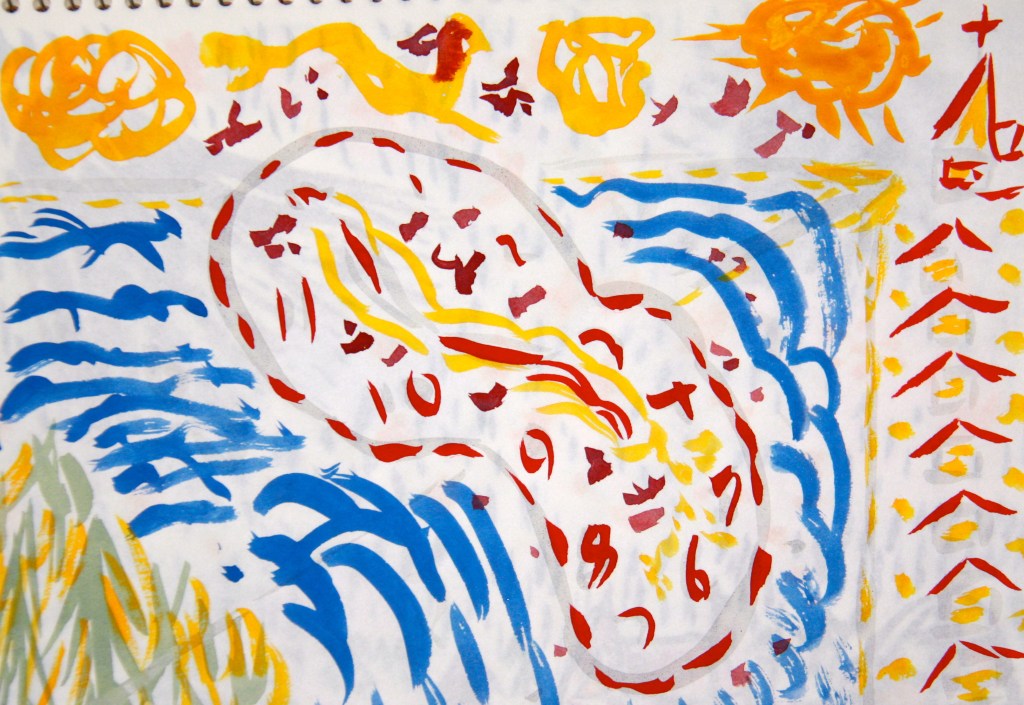
A clock, a sheet hung out, strung out,
on a canvas washing line. No wind,
no pegs, soon to be sun-bleached, dried,
then folded in on itself, corner to corner
the sheet, and the watch, how will it fold?

Face to face, in half circles, perhaps, or
back-to-back with time cut in half, a tick
without its companion tock, a stutter of time,
halved, then quartered, then in an eighth,
a quesadilla of broken springs and tiny
wheels within wheels, all disjointed,
with glass fragmenting, shattering.

While we watch, our clockwork universe
disintegrates before our eyes, in a tiny
explosion as all chronological creation
implodes into a logic of carnival, absurd
our words and world, devoid of meaning,
a pocket-watch going over a waterfall,
a timepiece soon to break into rusty pieces,
painted by a man who dreams he isn’t mad.

Click on the link below to peruse my books for sale.

Books for Sale


Man of Glass

Spotify

Remember to scroll down to the correct audio episode.

Man of Glass
After El Licenciado Vidriera
(Miguel de Cervantes)

“I am made of glass,” I said.
“You can see right through me.”

But the harder you looked,
the less you saw.
You claimed
there was nothing there,
just empty air.

“Your glass is an illusion,” you said.
“It’s not half full
and it’s not half empty.”

“Glass is fragile,
I break easily.
Drop me, I shatter;
hot and cold will
make me crack.”

“Your fragility is in your mind,
not in the fact of your existence.”

“When light passes through me
I break into a million colors,”
I said.

“You are a prism,
the colors that you cast
change you and rain
rainbow lights
that change others
too.”

“That’s because,” I said,
“I’m made of glass.”

Click on the link below to peruse my books for sale.

Books for Sale

Freedom

Spotify:
Remember to scroll down to the appropriate audio episode.

Freedom

We are all so lonely,
locked in our cardboard castles,
no view beyond the battlements,
save for the wild lands, the forest,
from which the enemy might come.

Wild beasts, we cage ourselves
in our isolation and bang our heads
on the bars we built to protect us.

Sometimes, at night, we ascend
to the topmost turret to observe
the stars that dance above us,
tracing our lives in their errant ways.

And is this freedom, this night sky,
with its wayward planets, trapped
in their overnight dance and weaving
our futures, for ever and ever, amen?

Fire

Spotify:
Remember to scroll down to the appropriate audio episode.

Fire

Fire
a double-edged sword

Fire
the beginning
and fire the end

Fire
the means of forging
the Omega and Alpha
that surround us
day by day

Fire
surrounds us
but leads us
nowhere

we must create
our own path through
Fire
to the life beyond
Fire

so many things
to save from
Fire

so many things
to be consumed by
Fire and flame

only a fiercer Fire
will free us from
will put an end to
Fire

Driving at Night

Spotify:
Remember to scroll down to the appropriate audio episode.

Driving at Night

Once upon a time,
my hair was brown and curly,
but now it’s straight and as white as
this drifting snow clogging the windshield.

I smooth down my hair with my fingers:
swollen knuckles, crooked joints.
I burn with feverish thoughts
yet cold blood shivers through my arteries.

Headlights blind me in my good eye.
The other one’s useless when I drive at night.
It’s a long time since I last saw,
let alone touched, my toes.
Putting on my socks or tying my shoelace
is a morning no-no.

Short of breath, of agility, with no ability
to climb up stairs: I stop to catch my breath,
pause, and shudder with despair.

What happened to my youth?
Where did my childhood go?

Charles Baudelaire

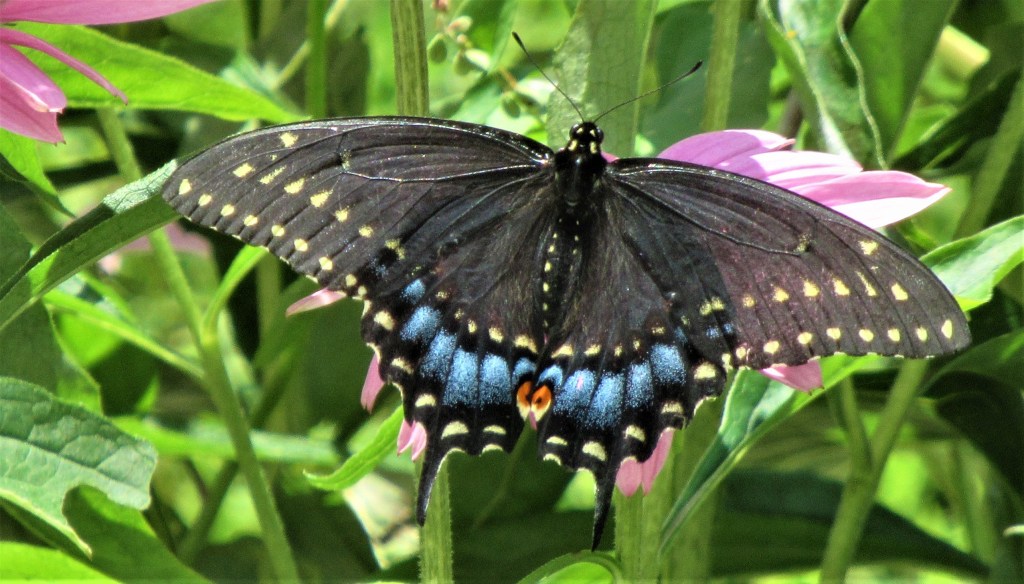
A butterfly perches on Les Fleurs du Mal.

Charles Baudelaire

He walks past the Jesuit Church
where the shoe-shine boys store
polish, brushes, and chairs overnight.
He walks past the wrought-iron bench
where the gay guys sit, caressing,
asking the unsuspecting to join them.

Nobody asks Charles for a match,
for a drink, for charity, for a walk
down the alley to a cheap hotel.

The witch doctor is the one who stops
the hands on all the clocks at midnight.
He’s the one who leaves this place,
and returns to this place, all places being one.
The witch doctor sees little things
that other men don’t see. He reaches out
and flicks a fly from Charles’s nose.
“I too have lost my way,” it sighs.

Charles thinks he knows who he is,
but sometimes he wonders when he shaves,
rasping the razor across his chin’s dry husks.
The witch doctor, his lookalike, his twin,
stares back at him from the bathroom mirror.
Three witches dance on the waning soap dish.
One spins the yarn, one measures the cloth,
one wields the knife, that will one day sever
the thread of all poor creatures born to die.

Oh hypocrite lecteur, mon semblable, mon frère.

Time

Spotify:
Remember to scroll down to the appropriate audio episode.

Time
A Theory of the Absurd

I wonder what I’m doing here, so far from home, sitting
at the bar, with my beer before me, my face distorted
in half a dozen fairground mirrors, surrounded by
people half my age, or less, all smoking, cursing, using
foreign forms of meta-language, gestures I no longer recall:
the single finger on the nose, two fingers on the forehead,
the back of the hand rammed against the chin with a sort
of snort of disapproval. It’s way beyond my bedtime, yet
I am held here, captured, body and soul, by foreign rhythms,
unreal expectations of a daily ritual that runs on unbroken
cycles of time: morning brandy, pre-lunch wine and tapas,
home for the mid-day meal, a brief siesta, back to the café
for a post-prandial raising of spirits, more blanco, then back
to work at four and struggle on until seven or eight when
the bar routine begins again with pre-supper tapas and tinto.
Time, comprehended in this new life-cycle, lacks meaning.
Time, in a cycle I have long abandoned, is absurd as well.

Fate Accompli

Spotify:
Remember to scroll down to the appropriate audio episode.

Fate Accompli

Life begins with the glow-worm of a match.
Luciérniga, Lucifer, the bringers of light.
Sun-flames flicker on the weaver’s fingers,
lighting day’s candle, bringing an end to night.

The shuttle clatters away, plotting our fate.
Tiny, we await our doom on the maker’s loom.
Wooden teeth braid each of the threads
the mid-wife will tie when she cuts the knot.

Three witches stand beside the newborn’s cradle.
One spins the yarn, one measures the thread,
the third one wields the journey-ending knife.

Infants, we walk, unwitting, our planks of fire.
We cast star-crossed shadows on cave walls.
Three witches smile as false omens forge our fate.

Ruins of the Heart

Spotify:
Remember to scroll down to the appropriate audio episode
.

Ruins of the Heart

Dusty paths meander under drifting clouds.
A worn-out, shadow rag, this ruined land.

An old man with a sly-eyed dog herds thin cows.
Threatened, I stoop and gather stones.

Moving targets, the dog, a shadow of dust
on burial mounds, wind-stirred with weeds.

Abandoned in this wilderness, a wild thorn
thrusts a spear through my derelict heart.

A rag-bag my own body, stitched together
with threads of long-forgotten tales.

Fear sets nightmare shadows dancing,
skeletons come alive on sculpted graves.

Carved faces, a woman, courted by men.
Which one captured her flowering heart?

Who pierced it with an arrow? Who scarred
her name letter by letter on this stone?

That first rock, freed from my fingers,
strikes hard on the canine’s cowardly frame,
setting earth’s shadows free to flee.

Sun and Moon

Sun and Moon
Poems from Oaxaca, Mexico

is available at the following link:
Click here to purchase Sun and Moon

Introduction to Sun and Moon

Oaxaca

A city of legends where the dead walk among the living and the stones beneath your feet come alive and talk to you. A city where the animals have voices and the songs of tree and leaf can be clearly heard. A city of hallucinations and spirits, of mystery and myths, a city, young in itself, built on land so old that memories clutch at you with treacherous fingers and lay siege to your heart claiming you for their own. This is the land of Sun and Moon. Come, enter its world. Join me there, if you dare.

Meeting my father in the main square

I saw my father yesterday evening, in Oaxaca. I walked through the zócalo, opened the main cathedral doors and walked in. The doors closed behind me. I looked towards the main altar and there my father stood, motionless. The evening light shone through the engraved glass panels and illuminated him as if he were some long passed saint come back to visit me. We stared at each other, but I couldn’t open my mouth to speak. The hairs on my neck stood on end and my hands shook. When I forced my mouth open, words stuck in my throat. He wore his best grey suit over a light blue shirt and a dark blue, hand woven tie: the outfit in which I had buried him.
            Three old women, dressed in black, broke the spell. One stood in front of me and wouldn’t let me approach my father. She held a large bag of knitting in her hands and the wool spilled everywhere as she pushed me away. The second threatened me with a pair of scissors that she held in her left hand and thrust towards my face. The third smacked a tailor’s measuring rod against my father’s head.  He nodded, smiled sadly, and they all turned their backs on me and hurried away out of the cathedral and into the square.
            Just for a moment, I stood there in silence. Then I pulled the doors open and ran in pursuit of my father. The setting sun filled the square with shadows that whispered and moved this way and that, as if a whole village had come down from the hills to walk beneath the trees and dance in the rays of the dying sun. I stood on the cathedral steps and called out my father’s name, but I could see no sign of him among the cut and thrust of the shadowy crowd.
            I ran out into that crowd and pushed at insubstantial people who stood firm one moment and then melted away the next like clouds or thick mist. I came to a side street and saw real people, flesh and blood beings, a group of villagers gathered behind their band. I stopped and as I did the village elder put a live match to the taper of the rocket that he clutched between his thumb and forefinger. The taper caught on fire and the rocket soared upwards with a searing whoosh. The village band marched forward and started to play a traditional dance as the rocket clawed its way into the sky to explode with a loud knock on the door of the gods.
            Tired of grasping at shadows and afraid of this living phalanx of men that marched towards me I went back to the cathedral and knelt at the altar of La Virgen de la Soledad, the patron saint of Oaxaca. Real wax candles stood before her altar, not tiny electric lights, and I inserted five pesos in the slot, took a taper, and lit a fresh candle from an ageing one that had started to sputter. I knelt and, for the first time in years, I prayed. I prayed for the soul I had saved from extinction by lighting my candle from another’s flame. I prayed for my father and my mother and, above all, I prayed for myself.
            On the way home to my second-floor apartment where I live alone, I bought two litres of mescal, one to send me to sleep, and the other so I would survive the next morning.