Carved in Stone 51 & 52

Carved in Stone
51

Time, shape, and location –
the Templars’ Castle
in Ponferrada,
considered impregnable,
but it had no water works,
no moat.

Napoleon placed his cannon
on the hills above
and fired down into the bailey,
shattering walls, gates, and doors.

Again, only the ruins remain
inhabited by choughs
that nest in the walls,
and rise up in stormy clouds
when visitors disturb them.
 
I go there on a sunny day
and wonder when the castle drowses
if it dreams of its former glories,
ground down into the dust.

52

I climb a ruined wall
and watch white clouds
as they gather over the hills,
then roll down into the valley –
a cavalry charge of plunging horses.

So easy to see
Santiago Matamoros,
St. James the Moor Slayer,
descending from the clouds
to rescue the Christian army.

I study the skies
and see something secret,
almost mythical,
carved from the mists of time.

But this not my land
and these are not my people
nor my legends.

I sense I am not welcome here,
that I can never belong,
and I decide to move on.

Commentary:
“I sense that I am not welcome here, that I can never belong, time to move on.” Sad words – but we live in a world that, all too often, has turned its back on people. More, it has turned them into numbers and statistics, and number sand statistics are not flesh and blood. Tragic really. And doubly tragic the labels that are stuck on people. So hard to get off, those sticky labels, for they are designed not to come off easily, but to linger, like sticky plastic wrappers in the grocery store.

James Bond – 007 – interesting – but I am not a number, though I have had numbers attached to me all my life, as have you and all the people you know. Number plates on cars, telephone numbers, Medicare numbers, dental care numbers, bank account numbers, driving license numbers, student numbers, graduate student numbers, library card numbers – and now passwords, a mixture of numbers, letters (small and capital), and signs, all jumbled in such a way as to make things inaccessible for those who do not know the numbers. An alien world, my friends, for the numbers, those numbers, are much more important than we are, and each of us, like it or not, is reduced to a number, or a label, or a recognizable feature or nick-name.

So, how do we belong? How do we fit in? How do we survive? If we are lucky, we have small communities that thrive around us and look after us. But sometimes we are left alone. All alone. And then we have nothing to belong to, no sense of being, of belonging, no sense of a valued place in life, of being worthy. And when our worthlessness sinks in, then we sink lower, and lower, and we wake up one day and realize that it is all over and that the end is near, for we have nothing, not even the desire to live on.
Carved in Stone 12

12

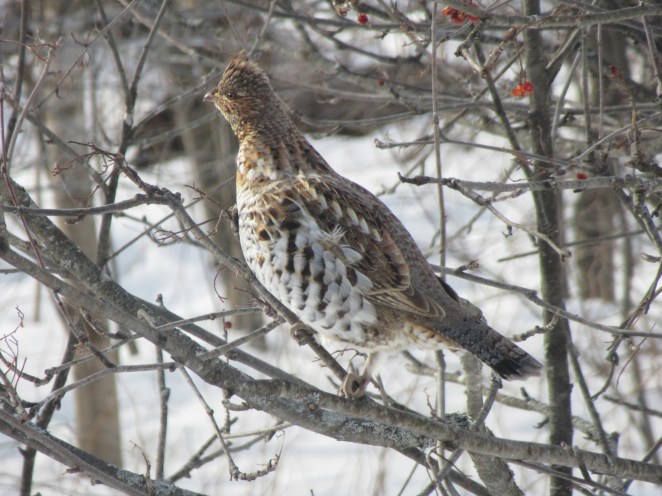
A Ruffed Grouse sought refuge
among the berries
of the Mountain Ash.

I shot him,
not with a gun,
but with a camera.

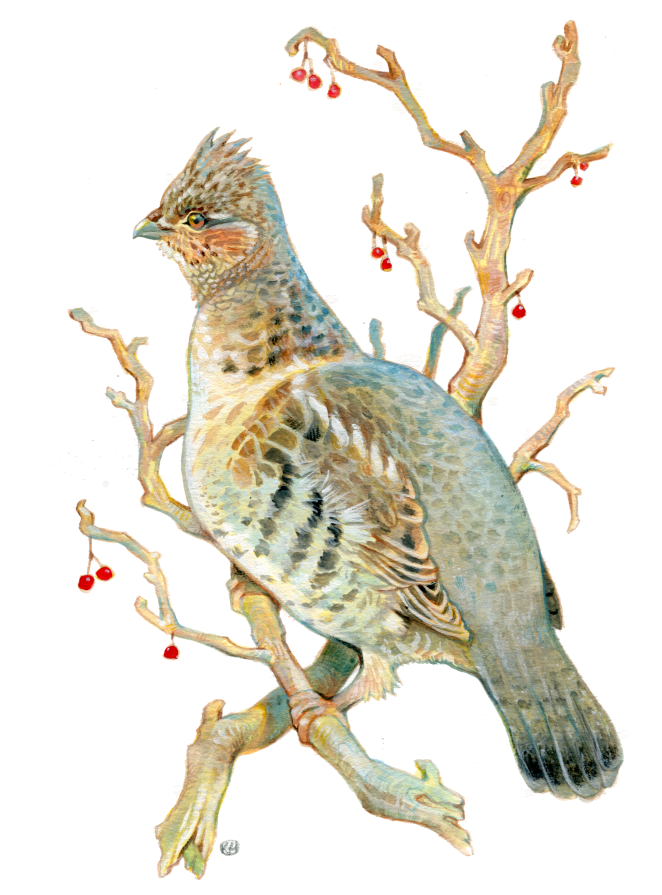
Intertextuality –
a friend borrowed the photo,
turned it into elegant brush strokes,
and now the painting
hangs on my wall,
opposite the tree
where once he sat.


A still-life
face to face with its reality
as early morning dew
forms on spider webs,
hammock-strung
between grass-blades,
bending in the wind.

And what if the spell breaks
and I can no longer see the fine seeds
of the dandelion clock kissed away
by the lisping lips of time?

What is life?
Is it just an illusion?

Commentary:

I shot him, not with a gun, but with a camera. Interesting. I have never seen the need to take the life of living creatures, except in cases of absolute necessity. And no, I have never killed, let alone for fun or sport. Shooting with a camera, that’s my ideal, and when a friend and fellow KIRA artist likes the photo and offers to paint it … well, that leads us into the nature of intertextuality, where reality becomes photo, becomes painting, becomes a text, and you, dear reader, are contemplating all those moments that join us.

The fine seeds of the dandelion clock kissed away by the lisping lips of time. This image comes from my walks in the Welsh countryside around Brandy Cove, Gower, with my paternal grandmother. “What time is it Nana?” I can still see her, bending down, plucking a dandelion, and holding it out for me to blow the seeds away – one puff, one o’clock, two puffs, two o’clock. I recall the seeds, drifting away on the summer breeze. “The Good Lord loved those dandelions,” she once told me. “That’s why He planted them everywhere.”

What will happen when the wells run dry and water runs out and there are no more dandelion seeds? How long will it be before I can no longer see them? Vis brevis, ars longa. The answer to my questions – I care, but I really don’t know.

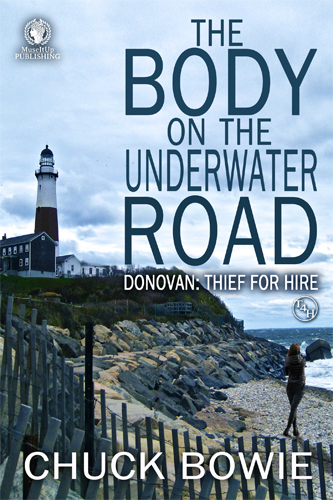
Chuck Bowie

Chuck Bowie
(June, 2019)

We met at St. Andrews, at low tide, on
the underwater road. In secret we
shared the closed, coded envelopes of thought,
running fresh ideas through open minds.

Our words, brief vapor trails, gathered for
a moment over Passamaquoddy,
before drifting silently away. Canvas sails
flapped white seagulls across the bay.

All seven seas rose before our eyes, brought
in on a breeze’s wing. The flow of cold
waters over warm sand cocooned us
in a cloak-and-dagger mystery of mist.

We spun our spider-web dreams word by word,
decking them out with the silver dew drops
proximity brings. Characters’ voices,
unattached to real people, floated by.

Verbal ghosts, shape-shifting, emerging from
shadows, revealed new attitudes and twists,
spoke briefly, filled us with visions of book-
lives, unforgettable, but doomed, swift to fail.

Soft waves ascended rock, sand, mud, to wash
away footprints, clues, all the sandcastle
dreams we had constructed that afternoon,
though a few still survive upon the printed page.

Comment:
This is a ‘get well soon’ post for my friend, Chuck Bowie. Let us hope it gives him that little boost all artists need, when they feel a little bit down. An excellent writer, I am pleased to support his work and bring it to the attention of the readers of this blog. The poem, incidentally, is taken from my own book, The Nature of Art and the Art of Nature.

Chuck and I met at St. Andrews, on the beach, and spent a pleasant hour or two discussing both art in general and the structure and characters of this book in particular.

Was that really in June, 2019, more than five years ago, when he was resident artist at KIRA? So many tides have risen and fallen since then. So much water has gathered and flowed. Vis brevis, ars longa – life is short, but our art outlives us – long may both authors and their art survive and flourish!

Write about your first crush.

Daily writing prompt
Write about your first crush.

Write about your first crush.

No. No, I can safely say that I have never had that sort of crush, except on a teddy bear or a little poo-pee aka puppy. I guess my first real crush was an orange crush. And no, again, not that orange crush either. I guess I have never been a fan of the Denver Broncos. But, as a child, I loved Orange Crush and Dandelion and Burdock, the former suitable for children and the latter looking remarkably like grown aka groan up beer.

During my time at university, I fell victim to several crushes. One was at the bottom of a collapsed scrum while playing rugby. Never much fun that sort of crush. All those sweaty, smelly bodies. Another came in an attempt to beat the Guinness Book of Records under the achievement – how many people can you get inside an English Telephone Kiosk? This was in the sixties, when England actually had telephone kiosks. If you have never seen a real English telephone kiosk, there’s one down in Kingsbrae Gardens, and I highly recommend a visit to that antiquity – almost as good as the statues in the gardens.

Anyway, one day in rag week, a group of Bristol University students, me among them, started crowding into a telephone kiosk. We entered upright, tried kneeling, others kneeling on our shoulders. We managed about twelve.

Doors open or doors closed? This baby came with no instructions. Poor parents, even more miserable single parents. And they are almost always young women, aren’t they? Come to think of it, maybe we should have invited some female students to join us – much lighter in weight and far less smelly – in the bad sense!

So, we tried a different tactic. If the first measure was a crush, and indeed it was, well, the second measure??? Judge for yourselves. One of us held the door open, the rest of us lay down like logs, feet outside the door, and the newcomers lay down on top of us. Ingenious indeed. But those at the bottom could scarcely breathe. They were the victims of a real crush.

Like the finger in the woodpecker’s hole, we reversed it – feet in, heads out. We got up to twenty-seven students. Then we ran out of student volunteers. Revolting. We asked passers-by to help us. But to no avail. Reversed and removed. Equally revolting. Sent our efforts in, with photos. There was no response. We didn’t make it. I still don’t know what that particular crush record is.

In Cassis-les-Calanques, 1960, I was one of eight people standing in a Citroen Deux Chevaux. That was quite a crush. But, in Santander, Spain, 1970, Clare and I watched 11 people, yes, eleven, get out of a SEAT 600, a 600cc Spanish four-seater car, otherwise known as a bullet / bala, and with about as big an engine as your lawnmower. They exited, one by one, and proceeded to enter the local church for Sunday mass. Can you imagine 11 people riding on your lawnmower?

Maybe that wasn’t a crush at all. Maybe it was just a (Morris) minor miracle.

If humans had taglines, what would yours be?

Daily writing prompt
If humans had taglines, what would yours be?

If humans had taglines, what would yours be?

I really only want a one word tag – poet, and that’s the name of my blog – rogermoorepoet.com.

An award-winning teacher, researcher, poet, and short-story writer, I was born in Swansea, the same town as Dylan Thomas, the famous Welsh poet, whom I emulated in my youth. I wrote poetry throughout my childhood, but I never took lessons, nor was I known as a poet.

Early in 1962, I sent a sonnet to the poetry competition of the Stroud Festival of Religion and the Arts. I left school and was studying in Paris, when the results came out and I discovered that I had won first place in that competition. In my absence, a deserving boy from my school was sent to pick up the award, a book of poetry, signed by Ursula Vaughan Williams. The poem was published in Trydan and I have a copy of it somewhere.

Throughout my undergraduate career (1963-1966), I wrote poetry. Much of my early work appeared in my university’s student arts review, The Nonesuch Magazine – the Flower of Bristol that giveth great light. Alas, I was not studying English, and only the English students seemed capable of being called poets, so I was always called something else. I wrote a lot about nature, back then. One day, when I hand delivered my poetry submission, the editor of Nonesuch, an English student, asked me if I was a pantheist. “Good heavens, no,” I told him. “I’ve got a girl friend.” This answer did nothing in university circles to affirm my wanna be status as a poet.

Some of these poems survived and a couple appeared in Stars at Elbow and Foot. Here is one from Last Year in Paradise.

St. Mary Redcliffe

Time and Temple Meads
have begrimed your wand-thin spire,
the tallest in England.

You waved goodbye
to the Cabot boys,
Nova Scotia bound,
as they set sail.

Starlings lime your belfry,
gift and inspiration
of Merchant Adventurers,
that gentlemen’s company.

Worms wriggle and gnaw
at your ship’s figure-head,
harbored now, bare-breasted,
sturdy in your oak-beam nave.

Rust rustles and creaks
at the Edney Gates,
wrought to last centuries
by Bristol ironmasters,
themselves apprenticed
to learn time’s laws.

I call myself a poet. I think of myself as a poet. In Santander, Spain, I was known as the mad Welsh poet! What an honour it would be to have Roger Moore Poet as my tagline. I’d rather leave the ‘mad Welsh’ out.

But why stop at one tagline? I am also an award winning teacher and researcher. And a long-term rugby coach. How would they be as tags? Roger Moore Coach? Roger Moore Teacher? Roger Moore Researcher? Not quite the same thing. No resonance and I can produce no links to attach to those names. They are much more run of the mill. Anyone can be a coach, a teacher, a researcher. Not everyone can be a poet, let alone a famous poet, like Dylan Thomas. Besides which, I live in Idlewood, not Milkwood.

There is one other alternative, however. Roger Moore 007. Alas, that one belongs to someone much more famous than me, even though we share the same name. But I might go one step further. How about 3M-007? That would do at a pinch – pretty unique – there aren’t many of them about! I love it. So there we go – a choice of two taglines, either of which fit – Roger Moore Poet and Roger Moore 3M-007.

Which one would you choose for me? “A rose by any other name would smell as sweet.” But remember, I ain’t no rose. So please don’t tread on the tails of my all-disguising, multi-colored 3M-007 poetry coat.

Describe one simple thing you do that brings joy to your life.

Daily writing prompt
Describe one simple thing you do that brings joy to your life.

Describe one simple thing you do that brings joy to your life.

Painting.

I was always told that I couldn’t paint. “You don’t have a clue. Give it up now. You’re wasting your time, and ours.” Same with drawing and any other form of visual and creative art. I tried to build model aircraft – Spitfires and Hurricanes, Gloucester Gladiators, SE5s -. They were ugly, lumpy, had crooked wings, and never flew properly. The few that I managed to launch often fell apart on landing. Same with model kites. The one I did manage to build took off in a half a gale and got stuck in a tree.

Failure!!!!!

Much later in life I re-discovered Henri Matisse. “I make meaning out of shape and color.” Then I stumbled across Salvador Dali’s famous statement: “I don’t know what it means, but I know it means something.” From there I started to take lines for a walk, and moved into cartoons – you will find some earlier on these pages *click here* – or – *click here* – or just explore these early pages for yourself.

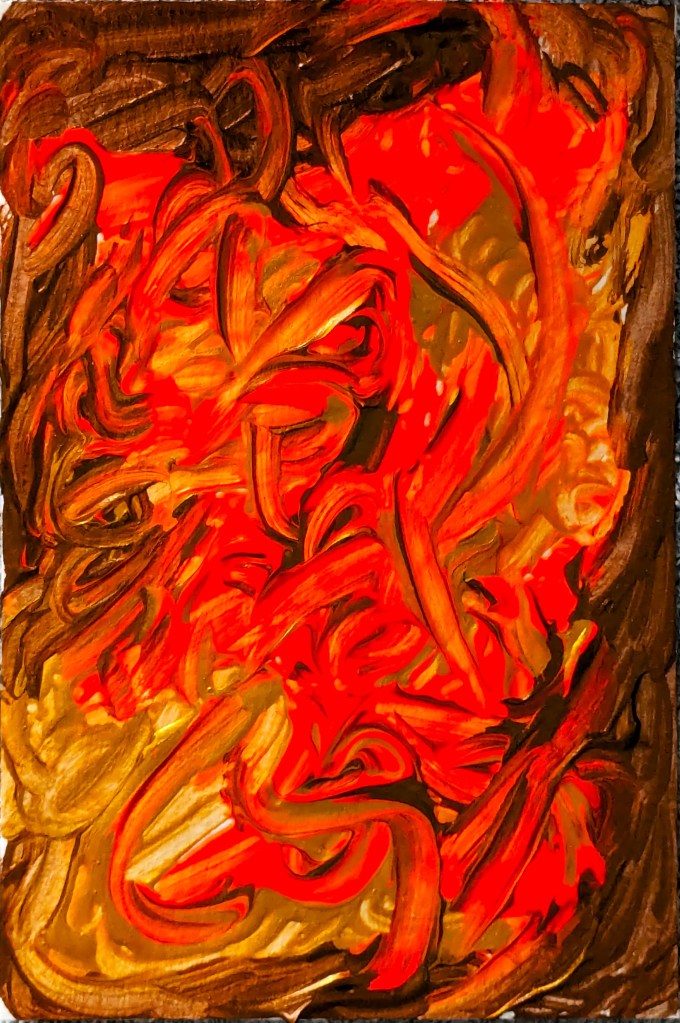
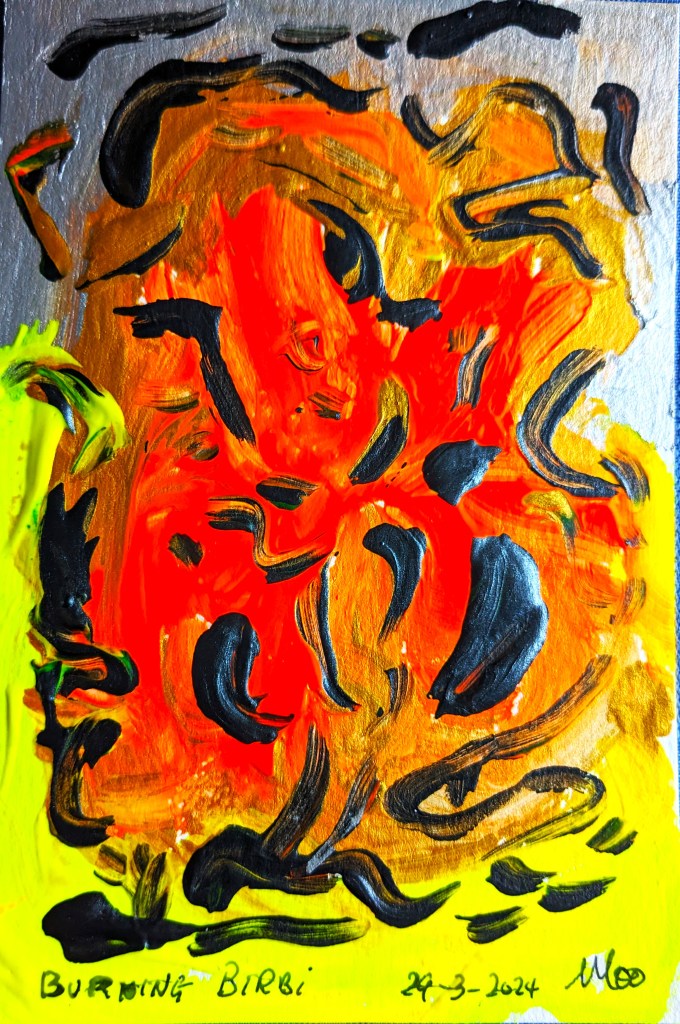
From these cartoons, I moved, with the encouragement of Geoff Slater, the Art Director at Kingsbrae International Residencies for Artists (I was the first writer in residence, June 2017), to actually painting, for the first time, with acrylics on canvas. This led me to my Pocket Paintings / Peintures de Poche, made with acrylics on 4″ x 6″ postcards. What fun. I now have well over a hundred of these and, guess what! – just like my books, I give them away to my friends for free.

These simple, linked acts – writing – painting – gifting – bring me great joy.
Long may it continue.
Pax amorque.

It’s A Small World

It’s A Small World

Light returns to Island View after Monday’s eclipse. Here it is post the total eclipse and daylight is being restored. It was a wonderful experience, totally unlike the last total eclipse we saw, at Skinner’s Pond, In PEI, on 10 July 1972.

That one was unexpected. Nobody talked about it. Nobody said a thing. We travelled to Skinner’s Pond, the birth place of Stompin’ Tom Connors, just to see where he was born. We parked the car, put the dog on a leash, and walked on the beach. Normal sea-side sounds – waves, sea birds, wind among the dune grass – swallows rose and fell, twittering joyfully. A world at peace. Then it happened.

A shadow moved across the sun and the world started to darken. The dog went wild, strained at the leash, started to whimper. The bank swallows began to gather, then, as the darkness deepened, they dived for their burrows and vanished from sight. We shivered and wondered. We had no glasses of any kind. We avoided looking at the sun, and just experienced the world as it darkened and became colder and more silent, save for the sound of the wind in the grass. As the light returned, the dog settled down, the swallows emerged from their tunnels and took to the skies, twittering again. Life, light, and warmth returned to normal.

Monday’s eclipse was so very different. We weren’t intending to watch it, other than on the television. While I was out shopping, early that morning, I joked with the people I met that, during the eclipse, I was going to tuck myself into bed and hide my head under the blankets, in case it was dangerous. [Yes, I have read Day of the Triffids and seen the movie. Now that does date me.] On the way home, I met one of my neighbors. Was I going to watch the eclipse? Once in a life experience. Did I have the right glasses? He told me to avoid normal sunglasses. Told me I wouldn’t get the right glasses now. All sold out. He gave me a strange look when I told him of my decision to bury my head in the blankets – just in case – so no harm would come to me.

Several news items turned up on my computer. In one of them I read that approved special glasses – true specifics and details given – had vanished from the stores in Fredericton. Only one place still stocked them – Canadian Tire, South Side. Ha! I drove back into town and there, on the door of CT-South, I saw a sign – Eclipse Glasses available at Check Outs. I joined the line up of late buyers, bought two pairs, and headed joyfully home.

When the eclipse started, I drove around the block, looking for the best place from which to view it. I parked here, there, and everywhere, tried my glasses out – a small, black line, curved, was slowly and silently invading the sun’s disc. I drove back home and discovered, after an experiment or two, that our back porch was the perfect spot for viewing. We put chairs on the deck, sat down, and watched as the blackness on the sun’s face grew larger. No beach view this. The Island in Island View is in the St. John River / Wolastoq, on the other side of the hill. No sea gulls, no swallows, in our garden. In fact very few birds at all.

As it grew darker, we could hear the soulful hooting of some mourning doves. They soon grew silent. The crows, on the other hand, rose up to defend their territory, just like they do when a hawk passes over and puts its shadow between them and the sun. What a racket of sheer defiance.

Through our glasses we could see wavy lines of light flickering around the visible parts of the sun’s circumference. Occasional red streamers, flared up and out. Then the eclipse became total. We took off our glasses and for two minutes and seven seconds (or so) we basked in celestial glory. Breathtaking. Spell binding. A mystical moment of myth and magic. We sat in silence. Then, the spell broke. The sun emerged from its moon shadow and light returned. The earth warmed. Life was as it was. Nothing had changed, except for us. Light broke where no sun shone, and suddenly we realized so many truths.

How tiny is our world. How enormous is the space around us. How mighty is the universe. How fragile are we humans. How small and insignificant is our world. How glorious is our existence, the joy of life, of witnessing, of seeing such power and such glory. The joys of knowing that we are sentient, and alive.

Two images of partial eclipse – with clouds – Kingsbrae International Residencies for Artists (KIRA, June 2021).

Poems for KIRA 2023 # 1

1

when we two came together
 we closed an ancient circle
becoming one with the standing stones
that measure seasons and time

now we harvest the summers
 lilies lupins fox gloves blue bells
a surfeit of wild flowers plucked
from the maze of our days

we wait and watch the slow snow
settling white on sarsen stone
as time weaves crow’s feet
into the corners of our eyes

2

i listen with my eyes
to the words and thoughts
of long-dead writers.

age-old and wise they walked
alone along the hidden ways
to set themselves free

they fled the royal courts
where power and jealousy
plotted twisted ways

cruel means
justified by brutal ends.
mindless quarrels bitter strife

i also ran away
and slowing down i found
an enviable life

enriched i live
harvesting a wealth
of goodness

days lived far from fear
 envy resentment distrust
in wooded seclusion

Comment: I was invited to attend KIRA as writer in residence this month. However, a weakened immune system and a series of setbacks over the late summer made this impossible. That said, KIRA and the early morning light seen from the Red Room live on in my heart and I will try to complete my planned project, here in Island View, over the next month or so. Wish me luck.

Windmills

Windmills

Only the pendulum clock
disturbs the silence
as the slow stars circle
and the moon hides
its face beneath
seven excluding veils.

Tranquility finds me,
seated here, head in hands,
contemplating the complicated
dance steps of a terra-centric
universe where planets weave
an intricate back and forth
to justify the falsehoods
of misguided mistakes.

Men, confident in their wisdom,
know that all is well,
that their faith in the old gods,
the old books, the words
that were written, in stone,
before the modern world began,
need no rethinking.

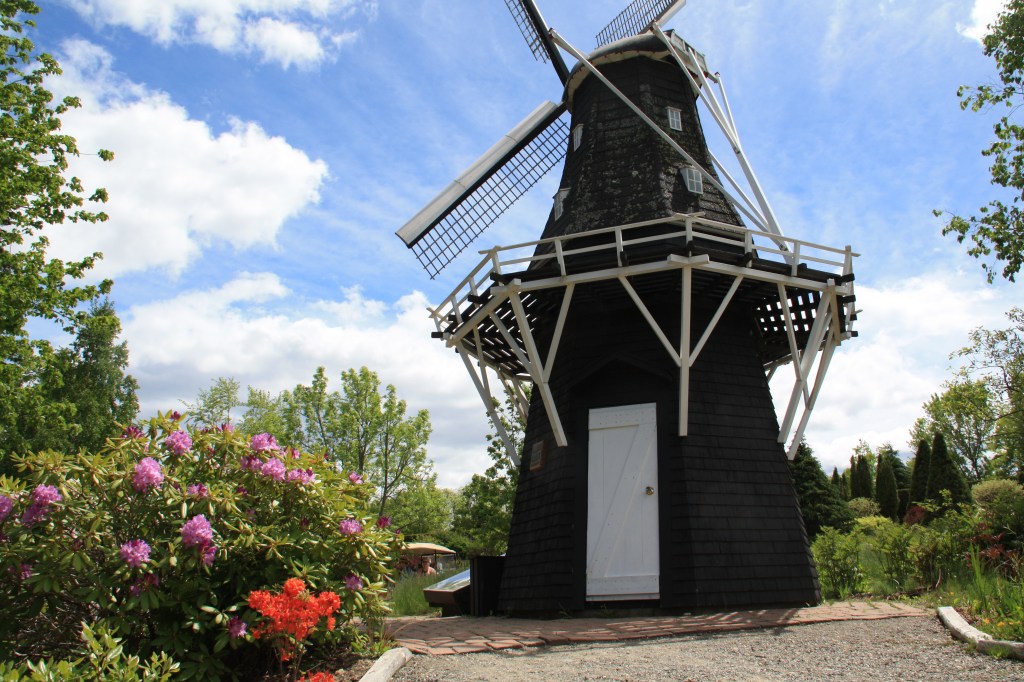
Those whirling sails,
imprinted on the questing mind,
are a giant’s arms, those sheep
an enemy army cloaked
in dust, coats of arms visible
only to the far-sighted
whose eyes defy vision’s laws.

Right, they were then.
Right they are now.
Nothing changes. Nothing
can possibly change.
Sheep are the enemy
and windmills wait to invade
the unsuspecting mind.

Comment: The history of Don Quixote and its reception in Spain is quite interesting. I was very sorry to read that Cervantes’s language is now considered so antiquated that interpreters are needed. I actually have a cartoon version of his quests – a picture reader, so to speak, very brief, because each picture is worth a thousand words. I have not yet seen the simplified text, rewritten with today’s reader in mind.

Don Quixote still holds many lessons for this modern world of ours and is definitely worth re-reading for, as Soren Kierkegaard (1813-1555) wrote: “There are two ways to be fooled. One is to believe what isn’t true; the other is to refuse to believe what is true.” Don Quixote, the character, threads a narrow path between those two extremes, as do many of the other supporting characters, some of whom use metatheatre for their smoke and mirror Wizard of Oz trickery. And remember, or forget at your peril, nihil sub sōle novum – there is nothing new under the sun. And yes, history does repeat itself, as you will see if you read (or re-read) Cervantes’s master piece.

One Small Corner

One Small Corner

 And this is the good thing,
to find your one small corner
and to have your one small candle,
then to light it, and leave it burning
its sharp bright hole in the night.

 Around you, the walls you constructed;
inside, the reduced space, the secret garden,
the Holy of Holies where roses grow
and no cold wind disturbs you.

 “Is it over here?” you ask: “Or over here?”
If you do not know, I cannot tell you.

But I will say this: turning a corner one day
you will suddenly know
that you have found a perfection
that you will seek again, in vain,
for the rest of your life.

Comment: This is the title poem of the book One Small Corner – A Kingsbrae Chronicle, written at the first Kingsbrae International Residences for Artists (July, 2017), and published on Amazon – Kindle that same year. This is the video that accompanies the poem. https://www.kingsbraeartscentre.com/ – turn up your sound. My thanks to all those involved in that first residency and especially to Mrs. Lucinda Flemer, Geoff Slater, and my fellow resident artists, Ruby Allan, Carlos Carty, Elise Muller, and Ann Wright. One Small Corner, along with some other publications, can be found by clicking here. Special thanks for the making of the video itself go out to Geoff Slater, Jeff Lively, and Cameron Lively.