Do lazy days make you feel rested or unproductive?

Daily writing prompt
Do lazy days make you feel rested or unproductive?

Do lazy days make you feel rested or unproductive?

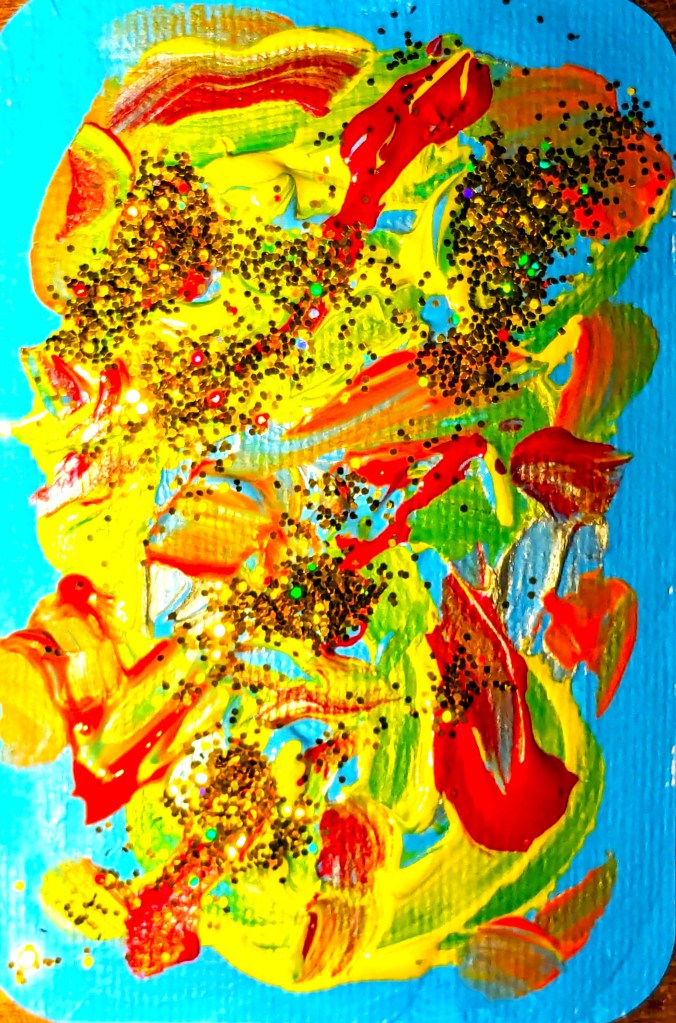
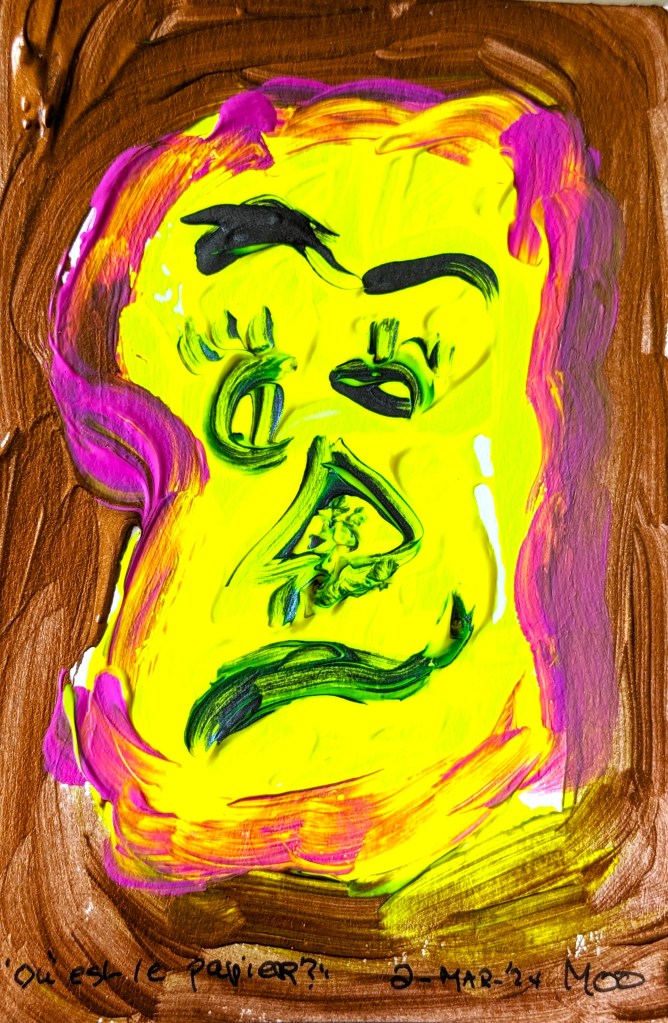
How on earth do you define a lazy day? If a Lazy Boy is a chair, what is a Lazy Day? Is it something like a Lazy Rocker? Or a Lazy Twister? ‘Come on, let’s twist again’! Is it no more than a lazy, hazy, crazy day of summer, as the song would have it? In which case, is it possible to have a lazy day when summer has gone, the days grow cold, and autumn is on the way? And who is having the lazy day, anyway? And is that a lazy painting I see before my eyes?

Enjoying retirement, as I am, busy or not, I feel quite rested, most of the time. As for being productive or unproductive, well! I feel productive when I post an answer to a blog prompt. So today, I am being productive. Ipso facto, I suppose I am not being lazy, though the sun is shining outside, the leaves are actually staying on the trees, after the overnight frost, and are not hurrying and scurrying and busying themselves in falling to to the ground. It’s a lazy leaf day – they are definitely not being productive. If they were, they would be littering the yard for me to tidy them up and then they would be productive by making me labour, and I would not be having a lazy day, because I would be busy picking up the leaves, putting them into piles, then waiting for the busybody wind to stop being lazy and to interfere with my work and scatter leaves around the garden again.

So, back to the original prompt – Do lazy days make you feel rested or unproductive? Let us give a totally non-committal, political answer – after all, it is the election season – and say – “It depends”. It depends on the multiple meanings of a lazy day, rested, productive, or unproductive. If the hen doesn’t lay an egg, is she being lazy and unproductive? Or does she feel fulfilled and rested? I could ask any one of the dozen or so eggs I keep resting in the fridge. Oh boy, do they have a restful time, lying there, eggs-in-waiting. And what are they waiting for? That joyous moment when they appear in public, are cracked open and whisked into omelets or scrambled like the brain – rested, rusted, busy, productive or unproductive – of anyone so twisted that they would write anything like this in response to a simple prompt. A simple prompt, you say? Now that’s a great departure point – what do you mean by a simple prompt? Answers on an egg-shell fragment please!

Ah yes, it’s another busy, productive day and my scrambled brains, like the scrambled eggs I devoured for breakfast, are all as busy as little bees can be, even though the bees are now out of season and there are none left in the garden. And with that I bid you farewell, au revoir, or is it adieu? I’m too lazy to care? Please choose whichever buzz word suits you best!

What things give you energy?

Daily writing prompt
What things give you energy?

What things give you energy?

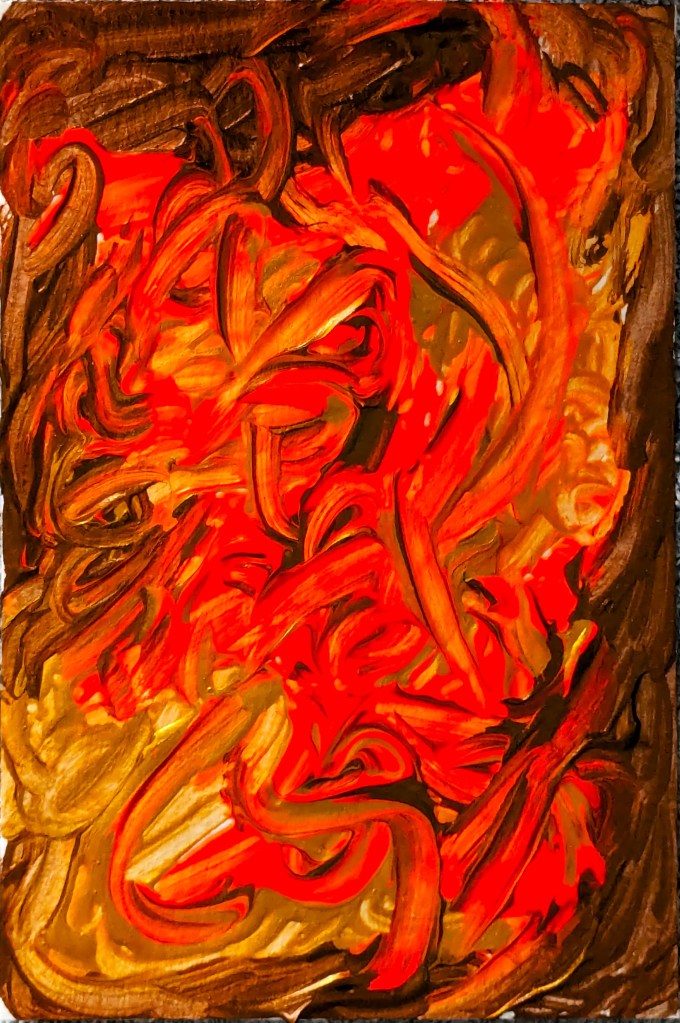
What on earth do you mean by energy? And why should energy be associated with things? For example, today’s painting (above) is by my friend Moo. He calls it Joy to the World. It is indeed a joyous painting, full of light and creative energy. The photo does not do justice to the painting, which sparkles and reaches out to draw the viewer in. We must never underestimate the energy that comes from the creativity and art that creative people put into their art works. It is like bread cast upon the waters – it will return tenfold. The world would be a sad place if we lost our powers of creativity and invention. May we always keep them close by us, and turn to them when the skies are grey – for with our ingenuity and skills we can always turn those grey skies blue again. It just takes time, trust, belief, creativity, and a little bit of energy.

Or is the prompt referring to the energy that comes from food? Vonnegut refers to such energy as comes from the breakfast of champions. Was that really Scott’s Porridge Oats? Certainly used to be – and all those caterwauling bagpipes puffing out their oaten tunes. More foods, please. Cornish Hens and Kedgeree, unzipped bananas, eggs – preferably fresh and free range – boiled, poached, scrambled, fried, or served in various types of omelets … energy from food – oh, I could go on and on and on … caws wedi pobi, cennin a tatwystortilla espanola, paella de mariscos, calamares en su tintachapulines from Oaxaca … food as a source of energy … wow! And who said the foods had to be written in English?

Mind you, an alternate source of energy is the current news cycle. When not a storm in a tea-cup, sugared or un-sugared, it is ferocious and opinionated enough to set people banging their heads against the walls so the pain will come from an alternate source. And noise demands energy – energy in (and also garbage) and energy out (mainly garbage), and all that rage, fury, wind, despair, blather, generated by written, printed, spoken, televised, radio borne waves of noise. We could start a wind farm if we trapped the blatherings of congress, the senate, the houses of parliament.

Meanwhile, we live in a large house, almost a barn really. Some of our friends call it our hacienda. They are the ones who speak no Spanish and can’t pronounce Quevedo correctly, even though I’ve known them for a quarter of a century. Actually, strictly speaking, most of them are ex-friends now. Many went AWOL when I retired and the rest disappeared, fates unknown, during Covid.

That house has an electric furnace that warms us in winter and circulates cool air, in summer, from the basement (cool) to the upstairs bedrooms (warm). We also have a fireplace insert that burns wood. But we only use that in emergencies (power loss during cold weather or storms) or for decoration (the yule log) at Christmas and over the New Year.

A large house means large heating bills. About ten years ago, we installed a wonderful heat pump that serves the whole house. It heats in winter and cools in summer. It also halves (or more) our electricity bills. Most of the house functions on electricity, hydro-electricity from the dam at Mactaquac, just up the road. No coal-fired furnaces for our electric supply. We do, however, have the ability to connect to a petrol-driven generator. But we rarely, if ever use it and that, too, is for emergency use only.

Otherwise, many of the things we use on a daily basis – computers, cell phones – can be battery driven (when the power fails) and those batteries can be charged in the car (during emergencies) or from reserved chargers hidden away. The car itself is a normal gas engine – nothing special – as is the snow blower. We do not use solar power – nor wind power – but we do have candle power and our fireplace insert can be used for heating food and boiling water.

So there, as a challenge to your lack of clarity, you have a clear account of my many sources of different types of energy. Oh, and don’t forget, I am energized by earing your prompts apart and chomping them into tiny pieces.

Comment – revised, Sunday, 22 September 2024.

What’s your favorite word?

Daily writing prompt
What’s your favorite word?

What’s your favorite word?
Seems like a daft question to me. Just one word?

Llanfairpwllgwyngylldrawbwlchllantisilioggogogoch – how’s that for a single word? And what’s wrong with married ones anyway. Or should I go for something like – home, health, morning (good or bad), night, how? -as in How! And what about the vast quantity of expletives that are found in so many languages? Many of them are single words, although many others are found in fertile and creative compound structures.

Of course, wrth gwrs, we are thinking of how many single words in how many languages? Or are we? I personally think that phrases might be more important than single words. Thank you becomes gracias (in Spanish) or te / se lo agradezco (more formally). It changes to merci (in French) or merci bien, or merci beaucoup, or grand merci, or merci mille fois, or je vous remercie. Then, in Welsh it becomes diolch, though many prefer diolch yn fawr.

Mind you, when living in Mexico, especially in some of the more isolated villages where food and water are not always the cleanest, bathroom may be a key word. Quick is also an important one. Put them together and you get bathroom quick! Help is also very useful when travelling alone and lost. As is Please! Por favor, in Spanish – two words of course!

Single words, in isolation, can be very dangerous. Especially when using a second language that one doesn’t dominate. Examples of embarrassing mistakes are multiple in the language-learning text-books. Speaking of which, it is interesting how infrequently they offer phrases like “Where is the bathroom?” or “I need the toilet. Now.” Alas, they also avoid the inevitable consequences like – “Too late!” “Sorry!” “Where is the nearest dry cleaners?”

A funny thing, language. And other people’s languages are equally funny. By funny, I mean weird, strange, and unpredictable, especially without a sharp cultural knowledge to permit the speaker to actually understand what he or she wants to say and how to phrase it correctly. Simple example – embarazada, in Spanish, does not mean embarrassed, it means pregnant. You would be surprised at how many young ladies, learning Spanish in Spain, have amazed their hosts and teachers by the simple announcement, often in class, that ‘estoy embarazada’‘I am pregnant’ – and I have seen the looks of amazement adorning the sympathetic faces of the families gathered round the table or the looks on the faces of the classes being so addressed.

So, a little knowledge is a dangerous thing. I can think of very few words, single words, that I would use on their own. But I can think of many, many phrases, most short, that I would be happy to use, and many more that I would avoid at all costs. As the students in the lower grades of Spanish used to say – “Buenas Nachos” and “I only want to be able to ask for a beer.” “Can’t we watch the Smurfs?” Have you ever tried to understand humor in another language, another culture? It is one of the hardest things to master, especially when it depends on the double-meaning of words, words which, all too often, only have one meaning in the pocket dictionaries people carry around with them. Caveat emptor. Buyer beware. And tread carefully, for you may not know just whose toes you are treading on, nor why, nor how they will react – the people, not the toes. Dangerous things those pronouns.

On the other hand, we can always go religious and turn to the Bible for advice. There we find “Faith, hope, and charity, and the greatest of these is charity.” So. Problem solved. I have found my one word – Charity. That said, I do like the painting Moo offered me for this prompt. He calls it Hope. And remember, you can’t go wrong with any of those three words – Faith, Hope, and Charity. Tolle lege. Amen.

Scour the news for an entirely uninteresting story. Consider how it connects to your life. Write about that.

Daily writing prompt
Scour the news for an entirely uninteresting story. Consider how it connects to your life. Write about that.

Scour the news for an entirely uninteresting story. Consider how it connects to your life. Write about that.

Scour the news – what on earth does that mean? Let’s begin with scour – If you scour something such as a place or a book, you make a thorough search of it to try to find what you are looking for. Rescue crews had scoured an area of 30 square miles. Synonyms: search, hunt, comb, ransack. Search, hunt, scour, ransack – well? Which one are you after? And how long have I got? Question: what am I looking for? Answer: an entirely uninteresting story. What a tremendous waste of my time. And, when you get to my age, time is precious.

As for the news, well, what on earth do you mean by that? I speak several languages fluently. Am I looking for an entirely uninteresting piece of news in all of them? As one of the Two Ronnies used to say “You’re having me on, aren’t you? You’re having me on.” Let’s just stick to one language – English. Then let us ponder for a moment the meaning of the news. How many newspapers do you wish me to purchase and peruse? I am not a millionaire, you know. Or do you want me to listen to the news on the radio or the television? If so, how many channels? How about sending me online? I love the thought of that. There are thousands of websites out there filled with all kinds of news, good bad, indifferent, fake, artificial? And you want me to scour them all in search of, and I quote “an entirely uninteresting story”! Pull the other one, as the old comedians used to say, ‘”it’s got bells on”.

I’ll tell you what I’ll do. I’ll scour your prompt, that’s what I’ll do. Having given it a brief analysis, I declare it entirely uninteresting. Next I’ll consider how it links to my life. Well, sorry, it doesn’t. If I were to follow it through, I’d be sitting here for hours, wearing my fingers out on the keyboard. So, what’s the link between your prompt and my life? A total waste of time, that’s what. Sorry, I have better things to do with my life. Like reading Shakespeare – “Friends, Romans, Countrymen, and prompt readers, lend me your shovels. I come to bury this prompt, not to praise it.”

Here endeth the lesson and the prompt.

If you were going to open up a shop, what would you sell?

Daily writing prompt
If you were going to open up a shop, what would you sell?

If you were going to open up a shop, what would you sell?

That is a very hard question to answer. I think of all the material things that everyone else can think of, but I do not want to sell commonplace things – antique furniture, paintings, books, stamps, groceries – I could go on and on, but I will resist the temptation to do so.

When I lived in Santander, Spain, the local wines were sometimes called ‘sol embotellado‘ / bottled sunshine. I wouldn’t want to open a wine shop, but I would love to bottle the essence of a warm sunny summer day and – why should I sell it? I wouldn’t. I would give it away, free of charge, to all the needy people, inner city boys and girls, the impoverished, those who live in the streets and sleep in doorways or under bridges at night. Oh the joy and happiness that would come when they opened their bottle of summer sunshine and felt the warm fresh air gather around them so they could breathe it in.

But why stop there? I would also give away ‘essence of butterflies’, that special feeling that comes on the colored wings of a butterfly and combines with the joy of flowers and the gift of taking flight. How special that would be. But sell it? It is much too valuable to sell. Put a dollar, Euro, yen, rupee, or sterling price upon it, and all its powers would vanish, like fairy dreams fading away.

Fairy dreams – yes, I would offer them as well to those who needed them. And not the sort that fade away, but those fairy dreams that suspend us in the wondrous beauty of their ethereal light. And I would bottle hope, and self-belief, and the power to change oneself from what one is to what one is destined to be. And I would add essence of self-knowledge and powder of Davey Lamp light that would enable the seekers to seek in the darkest corners of their souls and find that elusive inner self, and bring it out from the darkness. And I would stock fragrant filaments of firefly that would also allow my customers to enlighten that darkest of nights, the dark night of the soul. And a map of hidden foot paths that would allow the wanderer to wander and never get lost.

How about an elixir of happiness and joy? A quintessence of rainbows, perhaps? Or a magic lantern that would shine out from heart and eyes and enlighten the soul friends of those lucky souls who were able to locate and enter my shop of conditioners, vital vitamins, and soul magic for all those lost and lonely people. And there, that mirror on the wall – look in it, gaze deep into your own eyes, and maybe, just maybe, you will find my shop.

And “What will your shop be called?”, you ask. Look into your heart and you may find the answer engraved therein. It will be called The Gift Shop of Hope Restored. I look forward to welcoming you when you open the door and step in.

On what subject(s) are you an authority?

Daily writing prompt
On what subject(s) are you an authority?

On what subject(s) are you an authority?

First, I would like a definition of an authority. Here’s what I found – 1. the power or right to give orders, make decisions, and enforce obedience – as in “he had absolute authority over his subordinates”. 2. a person or organization having power or control in a particular, typically political or administrative, sphere as in – “the health authorities”. Isolating the words enforcement, power, and control, I am delighted to say that no, I am not an authority on anything, and I have no control over anyone. Also, I am not a monarch, and I have no subjects.

What happens if we change the meaning of the words slightly and ask another question? Here is a suggestion from the online Cambridge Dictionary – searching for an answer to my question “What is an example of authority on the subject? – I found this – The phrase “authority on the subject” is correct and usable in written English. You can use this phrase to describe someone who has extensive knowledge or experience on a particular topic. For example, “Dr. Smith is considered an authority on the subject of modern psychology.”

Now this becomes a very interesting question and it can be answered from a variety of perspectives. In our two person household, I deem myself an authority on some forms of cooking. I regard my beloved wife, my better two-thirds as I call her – an authority on the forms of cooking that I have trouble with – for example, baking, cooking vegetables, boiling eggs. She does a wonderful boiled egg. I am hopeless at boiling eggs – either too hard or too soft, usually the former. But I am the authority on Spanish omelets and scrambled eggs. They are my specialities. She makes wonderful chowders. I specialize in gazpachos, sopa de quince minutos a very quick (15 minute) Spanish sea-food soup, and Cawl Mamgu and other Welsh stews.

Once we step outside our kitchen, the world changes. In a world (New Brunswick) where cricket is virtually unheard of (save in the minds and cultures of fellow immigrants) I am considered an authority on cricket. Not that I am an authority, but at least I know what it is and have a good idea of what is happening in a cricket match. Therefore, we must also consider ‘being an authority’ in the context of the audience that receives our words of wisdom. To my nine year old grand-daughter, I am an authority on several subjects. However, I have absolutely no control over her – how she thinks and what she does. I can suggest or persuade, but I cannot and will not enforce.

In the undergraduate classroom, in which I taught for 43 years, I was considered an authority on Spanish by my students. Outside the classroom (and sometimes inside it) I learned more from my students than they ever learned from me, especially in my formative years as a Canadian when I was learning to skate and to ski. Don’t go there – too many painful memories of falling only to rise again!

But when we moved from the classroom to the wider university, to the full Canadian Scene of the Learned Societies, as they used to be called, I became the learner and the authorities were to be found elsewhere, often on the podium, sometimes in the bar. Same thing when we move onto the international stage. There are very few world authorities, in my field. However, there are many wannabe’s, but for them, after careful analysis of their strengths and weaknesses, I have usually had very little respect.

So, today we have opened another can of worms and look at them, wriggling and crawling before our very eyes. Worms – one of my friends really is an authority on earth worms. She knows all about them. Another of my friends is an authority on worms in puppies and kittens. A world wide authority, known every where and often quoted? I doubt it. But certainly in my garden and the vet hospital where I take my pets, they are both authorities.

Ah, the joys of Discourse Analysis – maybe, one day, I can be an expert on that. But take my words, as always, with a large pinch of salt, and, whatever you do, don’t put salt on slugs, and snails, and puppy dog tails. On that point, we can all be authorities.

What are your daily habits?


Daily writing prompt
What are your daily habits?

What are your daily habits?

“The habit (Greek: Σχήμα, romanized: Schēma) is essentially the same throughout the world. The normal monastic color is black, symbolic of repentance and simplicity. The habits of monks and nuns are identical. Additionally, nuns wear a scarf, called an apostolnik.”

So, my daily habits are a little bit monastic. “Monks were very religious, lived simple lives and followed certain rules to discipline themselves. The monks didn’t have any possessions, they didn’t even own their own clothes and they wore a simple garment known as a habit. Monks chose to live in the monastery as they wanted to help others and worship God.”

I can’t say I am very religious, in the church-going sense, but I do live a pretty simple life. My rules and disciplines consist of daily exercises, stretching and strength, a morning wash and shave, getting dressed in my non-monkish habits – jeans, shirt, sox, shoes or sandals. Coffee and fruit for breakfast. Writing – (a) in my journal (b) on the computer (c) in my poetry book. An early lunch, usually a sandwich. A post-prandial walk around the garden with my roller, examining the hollyhocks, the yucca, and the clematis, and checking on the progress of the other flowers.

The daily routine of a monk is somewhat similar. Monks typically wake up early in the morning, often before sunrise. I wake up early, text a couple of my best friends on the cell phone beside my bed, and then I go back to sleep again. I often begin the day with a prayer or a hymn – as do the monks – “Every morning, when I wake, / oh Lord, this little prayer I make, / that thou will keep a watchful eye, / on all poor creatures born to die.” Then I begin my daily routine of work and meditation. The specific activities and schedule can vary, but generally, I spend several hours each day in work (writing) or study (reading).

I try to think like a monk – to think like a monk means to remain calm and focused under all circumstances, especially when life gets challenging. Alas, at my age, I meet challengers all through the day. Things fall to the floor – challenge – can I pick them up with my magic claw? I can’t open bottles and cans – challenge – can I do so with one of my two magic appliances? I actually have three, but one of them doesn’t work. The other two, however, are wonderful. It is almost impossible for me to open plastic wrappings – challenge – can I do so with a pair of scissors, a pocket knife, or must I, in the worst case scenario, use a genuine can opener? Good tip, that, incidentally, especially for bubble packs. There are many other challenges, the worst of which is always what to do if I fall down. We won’t talk about that – I just do my best not to fall.

I also do my best to lead a relatively simple life – I try (1) to do one thing at a time – (2) to commit whole-heartedly to my family and few close friends – (3) to simplify my life and concentrate on what I am doing – (4) to develop my mind by not indulging excessively in social media – (5) to order my existence by making lists of essentials that must be accomplished – (6) to express myself and my love for the world around me in poetry, prose, and paint – and finally, (7) to remember that, the day I was born, I took my first step on the path to death. Beyond that, I do very little more.

Are there things you try to practice daily to live a more sustainable lifestyle?

Daily writing prompt
Are there things you try to practice daily to live a more sustainable lifestyle?

Are there things you try to practice daily to live a more sustainable lifestyle?

Let me begin by asking a straightforward question – what on earth does this question mean? Permit me to begin with the word lifestyle. I googled it and got the following – 1. a set of attitudes, habits, or possessions associated with a particular person or group. 2. such attitudes, etc, regarded as fashionable or desirable. Let me now google sustainable. Here’s what I found – 1. able to be maintained at a certain rate or level – “sustainable fusion reactions”. 2. able to be upheld or defended – “sustainable definitions of good educational practice”. 3. Sustainability is ability to maintain or support a process over time. Sustainability is often broken into three core concepts: economic, environmental, and social.

This is all very interesting indeed. So, what can I practice daily that will allow me to maintain “sustainable fusion reactions”? Answers via snail mail, trained snails please, via the North Pole, to arrive by Christmas, if the snails can maintain the pace. What can I practice daily to “uphold or defend sustainable definitions of good educational practice”? Good question as a retired former teacher, I have to admit that there is very little I can do about an academic world, already moribund, that I left fifteen years ago. As for the three core concepts of economic sustainability, environmental sustainability, and social sustainability, well, I really don’t know what to say.

Economic sustainability – I look at the growing number of homeless and the multitude of retirees who are forced out of their homes or apartments and onto the streets by rising rents, and I feel fear and dismay. I watch prices rise and my savings fall – you tell me, pretty please, what can I do about it? Hope? Pray? Petition? Buy less? I already do that. Eat less? I already do that. I can control a certain amount around my own house and home, but there’s little I can do about homelessness and the stock exchange and the cost of living.

Social sustainability. Covid brought shutdown (2020) and shutdown meant a great many friendships and connections were broken. It is hard, at my advancing age, to establish new friends, begin new relationships, or renew connections with friends who are happy to remain disconnected. Besides which, a year or more of masking, not meeting, not leaving home, changes one’s lifestyle. It is hard, as I say, to gear up and start again.

Environmental sustainability. “Drill, baby, drill.” What can I do, on a daily basis, to stop drillers drilling, miners mining, polluters polluting, forest fires burning? I certainly try to pollute as little as possible on a daily basis – but – I do not own an open cast mine, an oil refinery, nor do I have an oil field to exploit, nor a space ship to launch like a modern day Noah’s Ark, to escape the deliberate destruction I am doing to the earth. Clearly, I try not to play with matches, especially on a hot dry day. But that’s mainly a cross between courtesy and common sense. To phrase it another way, I certainly didn’t guzzle up all the cod on the Grand Banks, or allow the sewage from a major sewage works to overflow into rivers, lakes, and seas in order to save money and make larger profits for my friends and shareholders.

Given my limitations, yes there are things I do on a daily basis to live a more sustainable lifestyle. I eat less. Go out less. Exercise and stretch more. Try to recycle as much as possible. Try not to over indulge and to make my daily bread stretch as far as possible, sometimes into a second or third day. I would, if I could, buy seven loaves and five fishes, go out into a central square, and feed a multitude. But, alas, something like that is really way beyond both me and my pension level.

What’s the most delicious thing you’ve ever eaten?

Daily writing prompt
What’s the most delicious thing you’ve ever eaten?

What’s the most delicious thing you’ve ever eaten?

No single item of food stands out. That said, eating is a cultural thing – does one eat on one’s own, or does one eat with family and friends? What role does food play in one’s life? For me, for example, food is cultural, an occasion, not a meal. For example, a fresh, Spanish croissant, for breakfast, a late breakfast, at the bar in the Rincon, Avila. Before me, the daily newspaper, open at the page with the daily chess problem. The coffee, freshly brewed, a cafe con leche, and the croissant, waiting to be dipped in the coffee, and the resulting delight transported to my mouth. Sometimes, there are no croissants left. Then, one of the world’s best kept secrets, un sobao pasiego, a small sponge cake, from the Vega de Pas in Cantabria. It holds together when dunked and can be eaten moist or dry.

By extension, when younger, after an afternoon’s soccer on the beach – la Segunda Playa del Sardinero, in Santander – cool red wine from a porron, and selected seafood in the form of tapas, nibbled with the other players, as thirst is quenched, and the appetite that comes from running on warm sand under a hot, summer sun, is slowly sated. Seafood – this includes octopus – pulpo a la gallega – or squid – calamares rellenos en su tinta – or caracoles de mar – sea-snails – or oysters, fresh, with a squeeze of lemon – or mejillones en salsa de tomate – mussels in tomato sauce – gambas a la plancha, roasted shrimp – or gambas al ajillo, pan fried shrimp in garlic – or almejas a la marinera, clams, Spanish style – the point is to ganarse el puchero / to earn your food, by dint of hard work, and to share it with your friends.

When I think of Welsh food, once again, it is the family gatherings and the love around the table that dominates. Under these circumstances, a simple boiled egg – not everyone can boil an egg properly – with hot toast and fresh salt butter, can be an overwhelmingly delicious meal. Eggs – so supple, so creative – scrambled eggs, creamy and lightly curded – an omelette aux fines herbes, with a lightly tossed green salad – a tortilla espanola, easy to prepare, but incredibly difficult to prepare to perfection. Free range eggs, fresh from the hen house, sea salt prepared locally, olive oil from a local terroir, potatoes, also local, onions from the garden. Each of these contains within it the taste of the same earth, the same air, the same rain.

Speaking of which, to travel to the high hills in the Province of Avila, and to smell the herbs that grow in the sheep pastures, thyme, rosemary, and to know that the flesh of the spring lamb will be flavoured by the herbs it has been eating – even the lechazo, a lamb still on its mother ‘s milk, tender, so tender, and so small that it broke my heart to see it. A lamb so small that I couldn’t eat it. I watched it appear on the family table and vanish in a couple of mouthfuls, washed down by a specially selected wine. I enjoyed the company and the rest of the meal. But I’ll never forget that tiny lamb.

However, it’s never just about food – it is about the cultural content of the room, the family, the table, the friends, the joy of sharing and caring. Oh dear, and I never got around to telling you about the paella I made, the ones that appears in the lead photo!

Write about your first crush.

Daily writing prompt
Write about your first crush.

Write about your first crush.

No. No, I can safely say that I have never had that sort of crush, except on a teddy bear or a little poo-pee aka puppy. I guess my first real crush was an orange crush. And no, again, not that orange crush either. I guess I have never been a fan of the Denver Broncos. But, as a child, I loved Orange Crush and Dandelion and Burdock, the former suitable for children and the latter looking remarkably like grown aka groan up beer.

During my time at university, I fell victim to several crushes. One was at the bottom of a collapsed scrum while playing rugby. Never much fun that sort of crush. All those sweaty, smelly bodies. Another came in an attempt to beat the Guinness Book of Records under the achievement – how many people can you get inside an English Telephone Kiosk? This was in the sixties, when England actually had telephone kiosks. If you have never seen a real English telephone kiosk, there’s one down in Kingsbrae Gardens, and I highly recommend a visit to that antiquity – almost as good as the statues in the gardens.

Anyway, one day in rag week, a group of Bristol University students, me among them, started crowding into a telephone kiosk. We entered upright, tried kneeling, others kneeling on our shoulders. We managed about twelve.

Doors open or doors closed? This baby came with no instructions. Poor parents, even more miserable single parents. And they are almost always young women, aren’t they? Come to think of it, maybe we should have invited some female students to join us – much lighter in weight and far less smelly – in the bad sense!

So, we tried a different tactic. If the first measure was a crush, and indeed it was, well, the second measure??? Judge for yourselves. One of us held the door open, the rest of us lay down like logs, feet outside the door, and the newcomers lay down on top of us. Ingenious indeed. But those at the bottom could scarcely breathe. They were the victims of a real crush.

Like the finger in the woodpecker’s hole, we reversed it – feet in, heads out. We got up to twenty-seven students. Then we ran out of student volunteers. Revolting. We asked passers-by to help us. But to no avail. Reversed and removed. Equally revolting. Sent our efforts in, with photos. There was no response. We didn’t make it. I still don’t know what that particular crush record is.

In Cassis-les-Calanques, 1960, I was one of eight people standing in a Citroen Deux Chevaux. That was quite a crush. But, in Santander, Spain, 1970, Clare and I watched 11 people, yes, eleven, get out of a SEAT 600, a 600cc Spanish four-seater car, otherwise known as a bullet / bala, and with about as big an engine as your lawnmower. They exited, one by one, and proceeded to enter the local church for Sunday mass. Can you imagine 11 people riding on your lawnmower?

Maybe that wasn’t a crush at all. Maybe it was just a (Morris) minor miracle.