Mannequins


IMG_0836

Mannequins
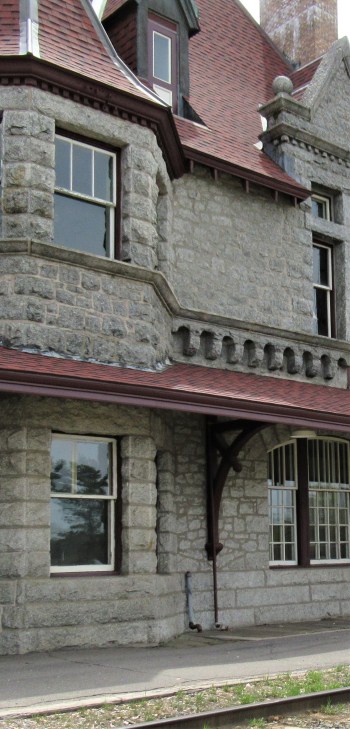
McAdam Railway Station #12

“He startles the unaware, that man by
the door, in uniform, with his youthful
looks and old-fashioned peaked cap,

fingers poised by his silver watch chain
ready to pull out his Waltham pocket watch
and check the time against the master-clock.

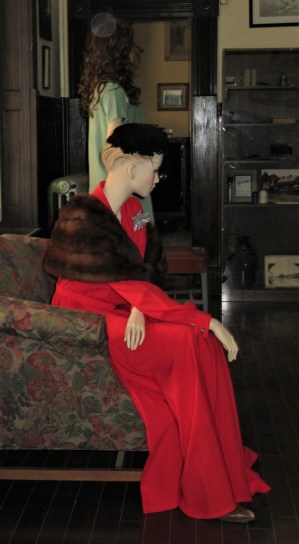
Two ladies wait in the waiting room.
One wears winter robes of red and black
while the other wears velvety green. Both

are motionless, one seated, one standing. Yet
if you watch them from a corner of one eye,
you will see shadowy gestures as their lips move.

Overnight they have changed into summer
clothes, gauzy, almost see-through, flowery
patterns, light-weight wedding boots, laced,

restful, cool, thin-soled. ‘Are you for real?’
I ask the standing one, for a joke. When she
nods and winks, a chill settles over the room.”
IMG_0676 (2).JPG


Duende

img_0826-3.jpg

Duende
Federico García Lorca

It starts in the soles of your feet, moves up
to your stomach, sends butterflies stamping
through your guts. Heart trapped by chattering teeth,
you stand there, silent, wondering … can you?
will you?what if you can’t? … then a voice breaks
the silence, but it’s no longer your voice.

The Duende holds you in its grip as you
hold the room, eyes wide, mouths open, possessed,
taken over like you by earth’s dark power,
volcanic within you, spewing forth its
lava of live words. The room is alive
with soul magic, with this dark, glorious
spark that devours the audience, heart
by heart. The magic ends. The maelstrom calms.

Abandoned, you stand empty, a hollow
shell. The Duende has left you. God is dead,
deepening your soul’s black night. Exhausted,
you sink through deepest depths searching for that
one last drop at the wine bottle’s bottom
that will save your soul and permit you peace.

IMG_0810 (2).JPG

Hospital

IMG_0811 (2).JPG

Hospital
McAdam Railway Station #9

“I was here the day they
took the hospital away.
I gave some writing workshops.
Teachers upset, students in tears,

everywhere, fear and despair.
‘I was born in that hospital.’
‘My grandfather died there.’
‘Where will my child be born?’

I helped them write down
their memories and fears,
their hopes and dreams.
My lesson plans vanished.

How could they survive
when life’s rising tide
broke all bulwarks,
flooded open hearts.

A wounded community,
diminished by its loss,
they took me into their hearts.
Their loneliness wrapped me.

They wrote down memories.
Tears stained every page.”

Comment: This is one of my memories of being in McAdam. I was invited to run a series of writing workshops there, under the Writers’ Federation of New Brunswick  (WFNB) WiSP (Writers in Schools Program). I arrived there the week the announcement was made that the local hospital would close. I remember all too well the effect that this announcement had on the local community and I have tried to express that anger, sorrow, despair, fear, resentment in the above poem. More than anything, I felt the sorrow and despair of students and teachers. It is so easy to make an executive decision, at a distance, to rip the beating heart out of a living community on financial grounds. It is so difficult to revive the patient after the act of removal. What amazes me about McAdam is the effort hat volunteers are making to rebuild their town. Their words and deeds are truly impressive: as impressive as their magnificent railway station, now declared a national heritage site.

Defenestration


IMG_0781 (2).JPG

Defenestration
McAdam Railway Station 4

“When I first walked
by that tiny window,
right up there,
on the third floor,
I wanted to go up to it,
to stand there, to look out.

There was a young girl,
went up there one morning,
opened the window,
and threw herself out.

She must have been desperate.
Rejected by her lover,
who knows what state she was in.”

Defenestration?
It’s a funny word,
I had to look it up.

It’s from the Latin:
de means out from,
fenestra is the window,
fenêtre in French.

“She just opened the window
and threw herself out.”

Comment:  Geoff, in his role as tour guide, took Clare up to the third floor, showed her this window, and told her the story of the young girl who had jumped out, killing herself in the process. Clare said she was fascinated by the story and felt an urgent desire to stand there, and look out of the window. I am so glad she didn’t feel the need to throw herself out. Oral tradition: I love the way stories are passed from mouth to mouth, changing slightly all the while. Why did the young woman kill herself? Was she pregnant? We can only speculate and I guess we’ll never know for certain.

A Three Year Old Girl

img_0181

A Three-Year Old Girl
McAdam Railway Station #3

“I often see her, walking around,
standing in a doorway,
looking into a room.

She’s very curious
but never says a word.
Doesn’t ask questions.

She’s not scary at all,
like some of the others.

There are rooms here
where people won’t go
if they’re alone.

But they mean no harm,
these broken ghosts.

They’re lost, nowhere
else to go, I guess.
Just missed the last train”

Comment: Another story from Elsie, who says she often sees this young child in one room or another. The station is indeed filled with many memories and you can feel warm and cold presences throughout the building. Some rooms are filled with foreboding, while others are warm and comforting. Many old buildings have these qualities as do the old iron age walled camps scattered around the south of England. Maiden Castle and Badbury Rings spring to mind, as do Westbury White Horse, Corfe Castle and parts of Brownsea Island in Poole Harbour. Do I believe in ghosts? I echo the words of my mentor and fellow-countryman, Dylan Thomas: “I’d be a fool if I didn’t.”

Fourteen

IMG_0774.JPG
Fourteen
McAdam Railway Station 2

“Fourteen years old, he was.
Left school to work at the station.
Pushed brooms, did the cleaning.

Walked into the men’s washroom
early one morning to give it a clean.
Found a man hanging there, dead.

Took out his pocket knife,
cut him down, called for help.

I met him at the station
when he was ninety-three.

He told me all about it,
shrunk in size he did
as he told his story, shrunk

until he was the same size
he was at fourteen.”

Comment:
Another story from Elsie, one of the guides at the McAdam Railway Station and the President of the Macadam Historical Association. A true historian, she is gifted with an uncanny ability to condense a remembered incident into a minimum of poetic words. Thank you, Elsie, for allowing me to access your memory and repeat what you told me. It is an honor and a pleasure to do so.

Call Girl

IMG_0783 (2)

Call Girl
McAdam Railway Station 1

“She came down from Montreal
to look after all the railway workers.
We called her the Call Girl.”
The men in the room sit up
and pay attention. The women
look rather expectant.

“She was a great worker,
performed her duties willingly.
Up at four in the morning,
out into the streets,
knocking on the men’s doors,
waking them up for work
with her morning call.

We called her the Call Girl
because it was her vocation.
she was called to call.”

Comment:
I visited McAdam Railway Station last week, a Canadian National Heritage Site. The guides who were there, many of them members of the local historical society, were well-versed in tales of the station and the people who used to pass through there. I listened to their words with great care, admiring the quality of their images and speech, the terseness and accuracy of their words. This sequence of poems is based upon those people, excellent guides and raconteurs in the best sense of the word. These are their words, not mine, and with their permission, I am posting their stories here. The first poem was spoken by Elsie. Thank you so much, Elsie, for allowing me to share your words. Click this link to the McAdam Railway Station site if you want to see some great photos and read about the history of the McAdam Railway Station.


A Fly on the Wall

IMG_0437 (4)

A Fly on the Wall

Behind me, two elderly ladies, obviously grandmothers, exchanged intimate family details about husbands, daughters, grand-daughters, acquaintances.
“Bessy, my granddaughter, you’ve met her, well, she can’t have any children. Something wrong with her womb after that bout with cancer. You must remember that?”
“I do. Terrible thing, cancer. Had her whole womb removed didn’t she?”
“That’s right. Well, she’s thinking of adopting.”
“I don’t like adoptions. All those yellow and brown babies. You’ll never find a white one.”
“She’s working with the church. They say they’ll find her a nice little pink one.”
“That would be nice. Boy or girl?”
“She wants a girl. That’s why they said ‘a nice pink one.’”
“My Annie has breast cancer. They want to cut them off, but I told her ‘no,’ there must be another way. So they’re giving her chemo. They wanted to send her to Moncton, but she said she wasn’t going anywhere near that French speaking lot. So, she’s going to Saint John instead. Her daughter drives her down most days.”
“Lucky to have a daughter like that. So many cut you off when they lave home. They just don’t care.”
“I know. Not the churchy ones, though.”
“Them too, sometimes.”
“How’s your Bert?”
“He walked out.”
“Never!”
“He did. Just up and left. Never said where he was going or anything.”
“Younger woman, probably.”
“Don’t know. Took to the road and went out west, I think.”
“Just one of them things. My husband’s gone, too. Stroke or something. I sat with him in the hospice for a week. He never spoke again. I just sat and held his hand. Poor thing.”
“At least it was quick.”
“A week at his bedside didn’t seem like quick. All those tubes. Stuck in everywhere. And me, left all alone now with the grand kids. I’ll cope somehow, and the fourteen-year old, with her belly already swelling.”
Words settle. Fine dust dances in a sun ray that spotlights floating motes. Lives and worlds end and begin. I spot my beloved walking down the stairs in the heath centre and get to my feet. The two women are silent. I do not turn to look at them. My beloved waves and I walk towards her. Hand in hand, we go to the door and walk to the car. When we are safe inside, we’ll start to talk.

Murals

IMG_0664

Murals

Painting a mural,
inside, interior
wall, knowing it will
stand time’s test.

Viaduct broken,
a tumbled engine,
Canadian workers,
railwaymen all,

some from Macadam,
pebbled the floor,
handrail, radiator
camouflaged for war,

part of the painting.
Depart from the station.
Turn right. Straight ahead,
flaked peeling paint.

So sad, this outside
mural, exposed to winter’s
snow, frost, winds, and ice.
So vulnerable

and so ephemeral.
Butterfly on a rock.
Such a short-lived
summer, over in a day.

Comment:

My friend, Geoff Slater, inventor of line painting and a renowned muralist, is painting a mural at Macadam Railway Station celebrating the role of Canadian railway engineers in WWI. Here are two fragments  from his unfinished mural. The poem above is based on his lamentation that his outdoor murals, subject to the slings and arrows of outrageous Canadian winter weather, are ephemeral, like butterflies, and cannot endure.

IMG_0692 (2)

Crows

IMG_0146

Crows

one day
whirled off my feet
next day
toes set
in concrete

a single black feather
floats down from the sky
meaning?

a bone to a dog
sun-flower seeds
strewn before squirrels
red and grey
the occasional chipmunk

only crows
black-winged marauders
monarchs destined to wear
a weighty crown,
cry out their anguish

mobbing the hawk
longing for the day
when they’ll rule again