Laver Bread

I didn’t have a photo of a cow,
let alone a Welsh cow from Gower,
so I included a photo of a Kingsbrae Garden
alpaca instead.

Laver Bread / Bara Lawr             

… and we would all go down to the bungalow, at Pyle Corner, in Bishopston, and we would play funny games and we would roll in the fields, but we Welsh boys watched where we rolled, because we knew the cows came in and left cow pats … and we called the cow pats laver bread, because they looked like laver bread, bara lawr, the sea weed we eat that comes from Penclawdd, where the cockles come from … and wonderful it is, though it sticks between your teeth, and my London cousins rolled down the field, faster and faster, and then they couldn’t stop and they rolled right through the laver bread and were covered from top to toe in laver bread and we laughed so much, we local boys, who knew where the cow pats were, and when to stop, we laughed so much we cried, and then we were sick and the London boys, all covered in laver bread, had to change their clothes and be washed and bathed, and they were beaten soundly and called rude names and had to go to bed early … and I hope none of them are reading this … or they will be calling me rude names and I wouldn’t want that at my age … and perhaps they have forgotten all about this … but I haven’t … and oh! … there are so many memories in the Olde Curiositie Shoppe that is also known as my mind …

Snake

I don’t have a photo of Pwll Ddu.
Here’s the Beaver Pond at Mactaquac instead!

              … and once when we went to Pwll Ddu, to the Black Pool, in English, where the stone bank holds the river back and we can sail our boats on the pool and the water is warmer than the sea … and one day, a long time ago, we saw this snake swimming across the backed up river, between the banks of reeds at the end of the valley, of Bishopston Valley, where the trees meet the salt marsh which leads into the sea … and he was a big snake, though I don’t remember what sort of snake he was … and he didn’t have a care in the world, just swimming across the water in the sunshine, hissing to himself, then he climbed the bank with a slither and a slurp … and was gone as quickly and as mysteriously as he came and we were left there playing, paddling, building dams, throwing stones at lumps of wood and pretending they were enemy battleships, waiting to be sunk … and playing ducks and drakes … and making the flat stones, like pieces of slate, slip and skip across the surface, one bounce, two bounces, six, seven, eight, and nine bounces … and the little ripples on the pool’s surface moved slowly outwards and suddenly my cousin trod on a broken bottle and there was blood everywhere … because someone had used a bottle for a battleship and had broken it with a broadside of stones … and we had to stop everything and strap him up and take him home and then he went to hospital and they gave him stitches, eighteen stitches, in the sole of his foot,  and an injection … and suddenly what with the snake and the broken bottle, we cursed the pool at Black Pool, at Pwll Ddu, the name of which the boys from London could never pronounce, with their different accents and their capital styles, and though they were a part of us, like their mother was a part of us, they weren’t really part of us and they didn’t speak like us and they didn’t have our accents and they couldn’t pronounce the Welsh … and the neighbours laughed at them behind their backs …

Fish Nets

Fish weirs in Fundy
Poles in Passamaquoddy
anonymous local artist

              … and speaking of fish, there are the fish nets on their poles stretched from horizon to horizon, at low tide, and the fishermen in their waders walk out to the nets where the mud is squishy from the sewage system which dumps all the sewage in Swansea bay, but the tide was younger then, and stronger, and there weren’t so many people, so the beach was always swept clean in those days by the tide, and the sewage was always swept out to sea … and the fish were nice and fat and healthy and you could buy a couple of whiting or flounders, dirt cheap, and bring them home, if you asked nicely, and plaice and sole, well, they’re all flat-fish, really, and our cousins from London could never tell the difference between them, but we can, and I’d tell you, but it’s so long ago, that I’ve almost forgotten, and it’s partly size and partly colour, and partly spots, and I forget so many things now …  but I don’t forget the sea as it licks at your toes, and you standing there, early in the summer, as white as an ice cream, and the sea climbs up to your ankles, and then your knees, but on Swansea Sands, at the Slip, or at Brynmill, you have to walk miles and miles before it reaches your waist … especially when it’s out and low … but you have to be careful for there can be deep holes and the mud can be slippery … though nobody ever falls down, oh, we were so much cleverer when I was young, … but there are rumours of quick sands out there at low tide, out beyond the fish nets … out where the banana boats ride … out where the bright lights are seen at midnight … the flashes and flares … the mysteries of the unidentified flying objects, saucers and the like, that visit us in Swansea, to learn to speak Welsh, or so the locals say, so that later they may n=mingle among us, and eventually take us over … once upon a time, when I was young, and the world was all new-born, that was not a conspiracy theory … and it was not fake news … maybe that’s why we moved to Cardiff …

Summer in Swansea

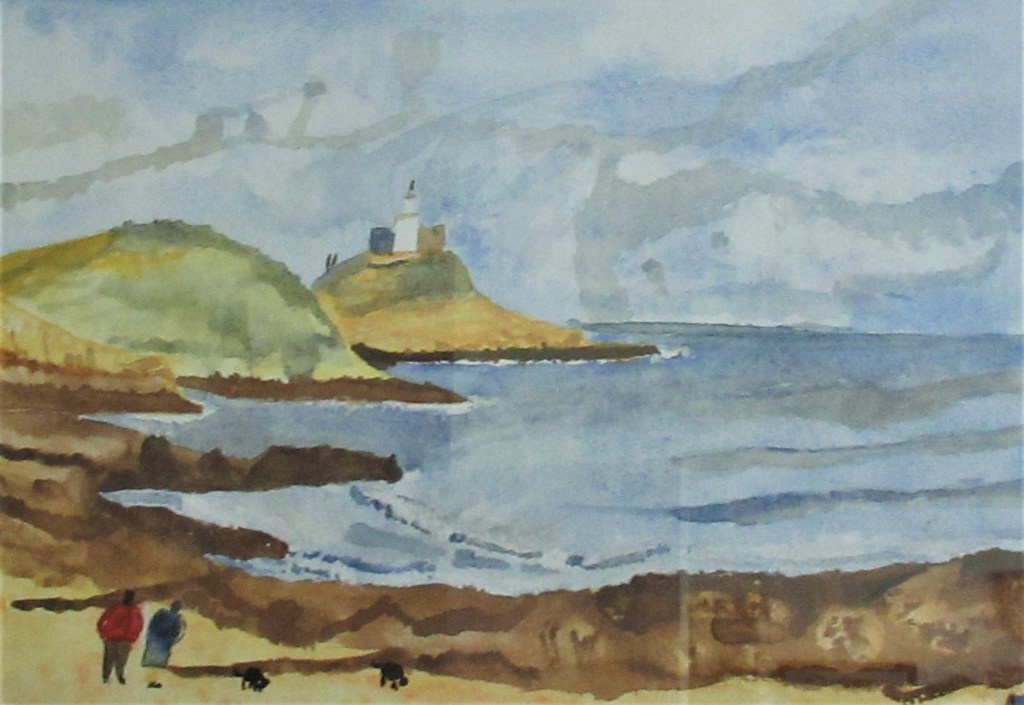
My Uncle Frank’s first water color:
the Mumbles Lighthouse from Limeslade

              … but it’s watch out for the dog, for the dog gets everywhere because he’s on holiday too and everybody’s on holiday in this little sea side town and the cousins have come down from London with their cockney accents, born within the sound of Bow Bells, though they’re half Welsh by blood, though you wouldn’t believe it with those incredible accents which nobody can understand … and they’ve never seen the sea, though their mother was born here, beside my mother, beside this self-same sea which has never left and which still flows in and out, even now, and it still flows through my bones and “Look at all the water!” my youngest cousin cries and then he really cries because London, the capital of England, is concrete and tarmac and all petrol smell and smog and fumes and busses and he’s never ever seen the sea, the sea’s open spaces, the wide open arms of the bay held out to embrace you with Swansea Docks on the left, a working area of ships and shipyards where my grandfather labours and takes me on workdays, even in summer, and shows me the ships and his friends and everyone is happy and laughing because it’s summer and it’s hot and there’s lots of employment and the banana boats are lining up in the bay, at low tide, waiting for high tide, when they can enter harbour and be unloaded and this happens all year round, but it’s really in summer, when the sun is as yellow as the bananas, that the banana boats become significant and we show them to my cousin who has never seen the sea nor the banana boats, though he knows what a banana is and where to buy them and what they cost, but he never knew they came in on these boats, these great white summer boats, from Africa and the Caribbean,  with their funnels all yellow and their bright stripe of blue, Elder and Fyffe, and the boats all lined up in the bay and look: to the right there’s the Mumbles and the Mumbles has a pier and a playground and you can go out and walk on the pier and at the end there’s the life boat and the life boat has a slipway for the life-boat to run down into the sea to rescue people who are shipwrecked, but only in winter because in summer the sea is calm and shiny and it runs in and out twice a day, like an obedient dog, and why is the beach wet? Because the sea weed … and the pier is a world full of wonders, with its peep shows and its games and the old men fishing off the end, chatting and gossiping, and not ever worrying about whether or not they catch the fish which many of them throw back anyway, so they can catch them again tomorrow  …

Walls

Walls

             
I remember little Willy, the mad boy at the end of our lane, whose cries of “Uh! Uh! Uh!” were the closest he came to speech. His presence still haunts me, for my father and grandfather made throaty sounds ‘Uh! Uh! Uh!” to chide me whenever I did something wrong or disobeyed the dictates of their adult world, their grown up world that layered cement on top of the high brick wall, that inserted bottles in the still wet cement,  that waited for the cement to dry, and then smashed all those bottles with a hammer and locked little Willy, the boy with whom I must no longer play, into a high-walled cage whilst I watched and waited and knocked at the door and asked politely: “Please: can Willy come out and play?” But my only companion was his wild sound “UH! UH! UH!” flawed words torn with clawed hands from his throat and floated like invisible butterflies over the cruel glass jest of the wall they had built between us.

To be Welsh on Sunday

To be Welsh on Sunday
in a dry area of Wales

              To be Welsh on Sunday in a dry area of Wales is to wish, for the only time in your life,  that you were English and civilized,  and that you had a car or a bike and could drive or pedal to your heart’s desire, the county next door, wet on Sundays, where the pubs never shut  and the bar is a paradise of elbows in your ribs and the dark liquids flow, not warm, not cold, just right, and family and friends are there beside you  shoulder to shoulder, with the old ones sitting  indoors by the fire in winter or outdoors in summer,  at a picnic table under the trees or beneath an umbrella that says Seven Up and Pepsi (though nobody drinks them) and the umbrella is a sunshade on an evening like this when the sun is still high  and the children tumble on the grass playing  soccer and cricket and it’s “Watch your beer, Da!” as the gymnasts vault over the family dog till it hides beneath the table and snores and twitches until “Time,  Gentlemen, please!” and the nightmare is upon us as the old school bell, ship’s bell, rings out its brass warning and people leave the Travellers’ Rest, the Ffynnon Wen,  The Ty Coch, The Antelope, The Butcher’s, The Deri, The White Rose, The Con Club, the Plough and Harrow,  The Flora, The Woodville, The Pant Mawr, The Cow and Snuffers — God bless them all, I knew them in my prime.

Comment: When I lived in Wales, a long time ago, there were twelve counties and each one of them voted whether or not to allow open pubs and hence drinking on Sundays. The ‘dry’ areas did not permit drinking, but the wet areas did. Hence there was mass migration from dry to wet every Sunday, especially after Sunday morning chapel. I dedicate this piece to every dedicated Welsh boy who fled his dry county to quench his thirst in a wet one! NB This piece should be read out loud, fast, in a Welsh accent and also in a single breath! Mind you, I find that hard to do nowadays.

Forget-me-not

Forget-me-not

sitting in the kitchen
crouching by the coal fire
hands quite warm
back quite cold
checking the windows
peeling back the curtains
blackout curtains
frayed and old
looking at raindrops
sliding down the windows
chill greasy raindrops
grey and cold

wondering who wants me
wondering who loves me
wanting my teddy bear
longing for my pussy cat
wanting my little dog
longing for his tail wag
so much missing
my nose so cold

now I am seventy
everything has changed
changed town and country
changed clime and weather
everything is different
nothing is the same
longing for my childhood
longing for my home land
watching the ocean
that comes rolling in

ocean of waters
ocean of memories
ocean of people
now long departed

Comment: Rhythm is everything here. I have just re-read The Sing-song of Old Man Kangaroo from Just So Stories (Rudyard Kipling). My mum and dad gave me copy when I was seven years old. Did they really think I could read it and understand it at that age? Whatever! The rhythms have stayed with me all my life and today I tried to reproduce them. My soul and my fingers danced as I thought of old man kangaroo and how he lost so much to gain so much. And what of the Elephant’s Child with his insatiable curiosity? I lost so much when I came here to Canada but I gained so much from this wonderful country. I tore my world apart then put it back together. How to explain it? It may not be explicable.

Royal Doulton

Trying not to …

Royal Doulton
            Some nights I woke up during the night, needing to pee. At night, I slept with my gran. I never liked using the Royal Doulton chamber pot that squatted coldly beneath her huge brass bed, especially if she was in the room. We had no indoor plumbing, nor running water. Apart from the rainwater the only tap was at the far end of the field, a long way away. Rainwater, caught in a bound, wooden barrel, was the only water we didn’t need to fetch.
            The cows that wandered through our yard at night really frightened me. We would meet them in the lane some times, a noisy, dusty, flowing, multi-colored tide that flooded the pathway and forced us walkers into the next field, if there was a gate close by, or to climb high into the hedge, if there wasn’t a gate. One cow, with a crooked horn, had gored our neighbor’s dog. She had also broken a young girl’s leg. Vicious when, isolated from the herd, she often meandered around on her own.
            At night, when I wanted to pee, I walked outside, to the outhouse. I would grope my way out of the bedroom and slide back the bolts on the door. Then I would half-open that door and peep out, listening carefully for any sound of the cows tearing out the grass with their teeth. I would sniff the night air, and if I caught the sweet breath of a cow in the vicinity, I would pee through the narrow crack of the open door and swear in the morning, when someone found the little puddle, that it wasn’t me, that it must have been one of the cows.
            One quiet night, I walked bravely out into the dark and stepped right into a fresh, warm cow pat. It sifted upward between my toes and rose to assault my nose. After I had gone pee, I wiped my foot again and again in the long grass beside the outhouse, then placed it beneath the water-spout from the rain barrel, trying to flush it clean before I crept back into bed.
            That was the night I left the back door open. Next morning, Nana woke us all up with a series of long, loud screams. The black and white cow had wandered through the open door and ended up in the kitchen where my grandmother had come face to face with it in the early morning light.
            I still have dreams, nightmares, really, of a herd of cows invading my bedroom, breaking down the doors, climbing in through the windows, and me all alone, trapped in my bed, shivering ferociously, squeezing myself, trying desperately not to go pee.

Brân

IMG_1063 (2)

Brân

Golden in the starlight, moon carved mountains and valleys, taut the skin, treacherous to the touch.  Heavy he is, glowing. He and his children. We carry them to the dark beneath the trees. Locate the secret, sacred place. Dig deep, bury him with the hoard.
We all know the place. Have measured it with footsteps. None will reveal it. Not under torture. Rather our lives than darkness eternal.
My mother limps beside me. Back-bent and broken. A crone in the moonlight. She’s been here before. Much too often. That’s how she bore me. Caught by the heathen. Captured and taken and twenty times taken.
Me, the blond son. Son of sea-raiders. Not black like my brothers. But never forsaken.
Head of the household, her man rejected her. Called for the Druids with mistletoe and magic, herbs and fragrance, scourging their medicine.
She would not drink them. Said she would keep me. Her biggest baby. Blond. To take vengeance.
Behind us, the villa in flames, there in the distance. Smoke rises heavenwards. Blots out the stars. “We should have fought,” my brothers say. “You would be dead,” my mother replies.
Brân, the white crow. King Arthur revenant. I fly the land, my brothers behind me. Black-haired, black-feathered. Strong as the crow flies. We travel at night. Fast now and furious.
My long bow penetrates. Shatters oak shields. Kills at a distance. None can withstand it. Daylight finds us grouped in the forest. Close to the place where the dragon lies buried. Close to my mother, the place where she sleeps.
Oh yes, they hunt us. But they don’t dare find us. Swift is their fate if they come close. Frightened they are, feared by the finding, wordless and dumb at the swift ending.

Comment: It’s an ill-wind, they say, blows nobody any good. So, ipso facto, some good must come from even the worst of things. Maybe, like Charles Dickens, I should write: ‘These were the worst of times, these were the best of times.’ The worst, because we have been under lock down, first voluntary, then involuntary, and now voluntary again, for 83 days. The worst, because we know that many people are dying and that many, many more are suffering. The worst, because we see some people, who think they are above the law, flouting the law and getting away with it while putting other innocent people at risk. The best, because we have seen extraordinary sacrifices made by the humblest people, many of whom, shop clerks, garbage collectors, street cleaners, bus drivers, taxi drivers, nurses, care-workers, house cleaners, were seen, if they were seen at all, as cheap labor to be exploited. However, thanks to CV, we now see them for what they are: the keys to making our lives and our economies function. The best, because where precautions have been taken the death toll has dropped and so have the infections. The best, because once again, we are free to move around so much more. However, many of us, after so long, no longer want to.

For me, safely distanced among the trees in my ivory tower, these have also been the best of times. I have made many new friends online. I have restructured the ordering of my acquaintances. I have gone into my computer files and found things that I cannot even remember having written. One such is Brân, the white crow, who is said to be King Arthur, still alive, and flying everywhere, ready to protect his from the evils that beset them. I do not know when I wrote this piece. Nor do I remember where the ideas came from. In what secret fold of the mind were they born? I do not know. But I do know that I have seventeen manuscripts, many of them rediscovered during this Dickensian ‘best of times / worst of times’, and all of them awaiting publication. This one is from a 67 page manuscript called A Cambrian Chronicle. 67 pages … and I don’t remember writing any of them.

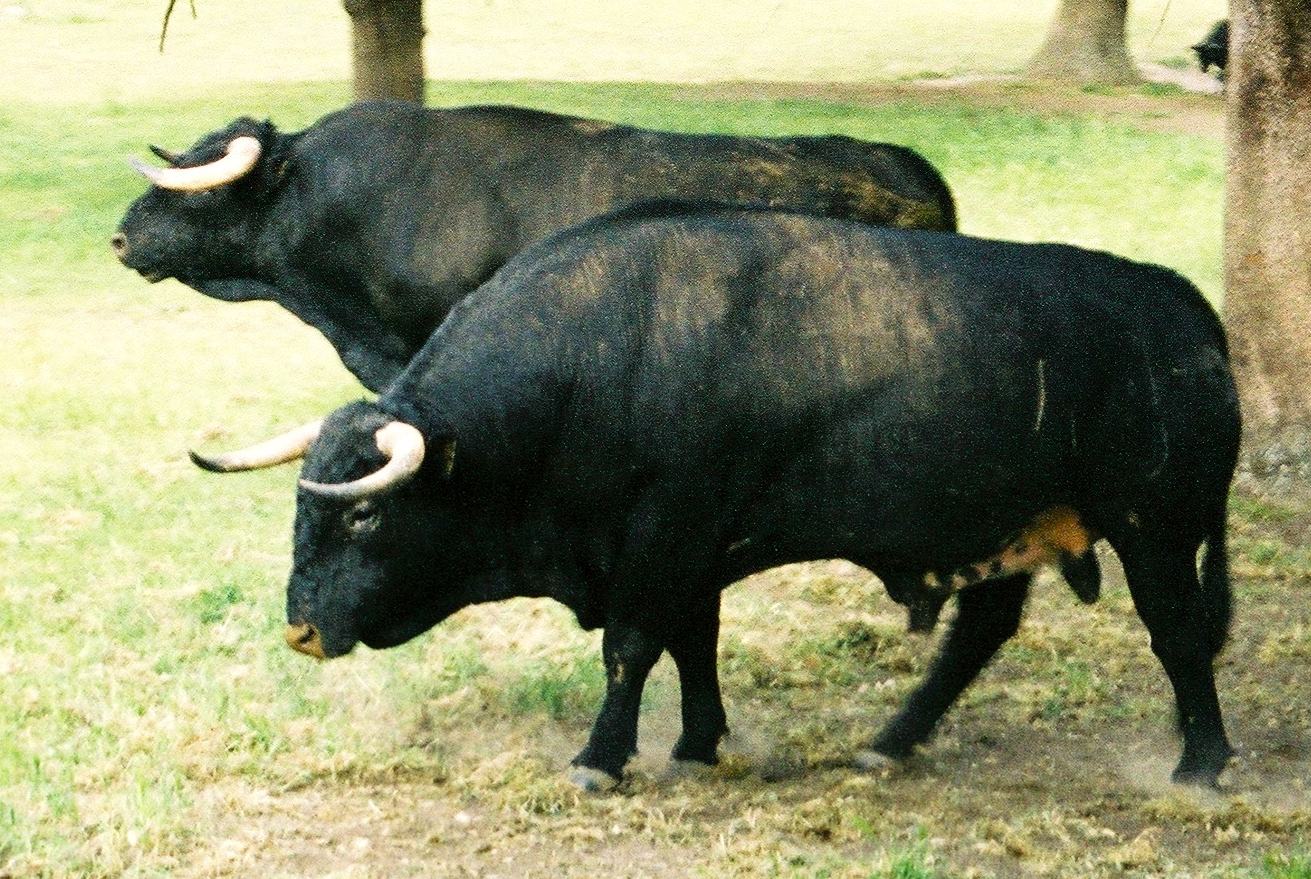
A Sacrifice to Mithras

F1040022

A Sacrifice to Mithras

“What is this sound?”
“It is your own death sighing,
groaning, growing
while you wait for it
to devour you.”

“What is this feeling”
“It is the itch of your own skin
wrinkling and shrinking,
preparing to wrap you
in the last clothes you’ll wear.”

“What is this taste?”
“It is the taste of your life,
bottled like summer wine
once sweet tasting,
now turning to vinegar.”

“What is this smell?”
“It is waste and decay,
the loss of all you knew
and of all that knew you.

“That carriage outside?”
It is the dark hearse
come to carry you
to your everlasting home.”

“Look on us in our darkness,
help us to seek and see the light.
Keep us strong, keep us brave.
Mithras, always a soldier,
help us to die aright.”

F1010019

Comment: I am re-reading Puck of Pook’s Hill (Rudyard Kipling). It was given to me for a Christmas present (1955) by my father’s younger brother, my Uncle Frank. His signature is there, on the fly leaf, and his hand writing is as I always remember it. As I write these words, I can still hear his voice. The Song to Mithras, on which this poem is based, can be found on page 191, my edition (MacMillan, 1955), as a prelude to The Winged Hats. Without these clues, the poem operates in another space, more personal and more morbid, perhaps. The rites to Mithras were associated with the sacrifice, at midnight, of the black bull. The upper photograph shows one of the Bulls of Guisando (Los Toros de Guisando), which have stood in the province of Avila, in Spain, since time immemorial. So old are they, that the Roman legions left their mark on them in Latin, as you can see from the photo, when they conquered Spain after the Carthaginian wars.  The lower photo shows fighting bulls on a bull farm in Salamanca, Spain. Born from generations of fighting stock, these animals have been bred for thousands of years to die in the bull ring, as the bulls dedicated to Mithras were bred to die in the Roman temples. This is not a defense of the cruelty of bullfighting or the sacrifice of animals. It is rather a statement regarding the longevity of cruelty, of sacrifice, of the natural flow that leads men and women from birth, through childhood, to maturity, and on to old age, and death. My father is long gone now, as is his younger brother. Who will have access to these memories of mine when I go? Who will remember my family when I am gone?