El Cristo de Carrizo

F1030024 2

El Cristo de Carrizo

For Tanya Cliff

“Contemplate this crucifixion.

Each time you sin
you plant a fresh
thorn in your savior’s
crown.

Each misdemeanor
spears the sacred side
or hammers a nail
in hand or foot.

Christ lives in you.
your daily misdeeds
nail him daily to the cross
he bears for you.

No death, for him,
no resurrection:
just an everlasting hanging
from these nails you daily drive.”

Monkey Reviews Retirement
Monkey Reviews Retirement

IMG0056_1

“No more Latin, no more French, no more sitting on the old school bench.”

Monkey chants this famous ditty as he relaxes in the whirlpool bath, a glass of white wine on the tray before him and his faithful tablet sitting beside it.
“The olde order changeth …”  Monkey pauses and takes a sip of wine, “… lest one good custom should corrupt the world.”

“Welcome to heaven,”Monkey lies back in the jacuzzi and the beating waters whirl around him, sending him into a dream world.

No more committee meetings: The unter-monkeys sit in a circle, where all are equal but some are more equal than others.  They pass a lyre bird feather  round and round, weeping crocodile tears and lying through the tight monkey  grins of their alligator teeth.

No more writing reports: The dead text he revises is composed of misquotes, harsh judgements,  double-talk, and outrageous lies.

No more long-term contracts: “Will the defendant please rise. Sir: I sentence you to a term of two years’ detention at this institution, renewable for another two years. And, should you continue to to do well, and should you fail, over that four year probationary period, to fall by the wayside, or to do anything wrong, I sentence you to life imprisonment, till death do you and the institution part. Amen!!!”

No more promotion: Inmates with crowded heads and vacant faces, fools grinning at a universe of folly, paddled in piddle beside him.

No more cabin fever: Monkey has worked for forty years among foreigners and lunatics afraid of the rats who keep him company, devoured by his monkey lust to drive silver knives and forks through the watch springs of their inhuman, foreign hearts.

No more penis envy: They lounge in glass cubicles, checking each other out for size, weight, length, girth, with a roll of the eye, and a casual flicker of a forked lightning tongue.

No more water-fountain gossip: They prefer death by blow-gun, their poison dart injected through hollowed fangs or Chinese Water Torture, the slow drip after drip of poison inserted into ears and veins, a drop at a time, and slowly gathering … until their victim slows down, ceases to struggle, stands there, eyes open, unable to move, poisoned and paralyzed.

No more gala occasions: … gripping cup handles between finger and thumb, enormously pleased to be the center of attention, however clumsily they walk,  in their hired-for-the-occasion, ill-fitting,  black and white penguin suits.

No more macaronic Latin: Caesar adsum jam forte, Brutus aderat; Caesar sic in omnibus, Brutus sic in at!

No more thought police: The Thought Police try to make him change his mind. Others, in blind obedience to a thwarted, intolerant authority, first bully him, then beat him, then bite him till he’s dead.

No more Wittgenstein: Or is it just the act of perception, as Wittgenstein would have us believe, and nothing more, the money always spinning on its metal edge, never falling, the coin on its axis, a new day with its potential,  sunshine or shadow, thrown dice still skittering, a new world  imperceptibly poised in its own making?

No more Camus: “Il faut imaginer l’esclave heureux.”

No more Shakespearean tragedy: Down in the kitchen, the cooking staff are preparing the next nutrition break. As the cauldron boils and bubbles, three old monkey witches dance around the pot and polish that bright red poisoned apple.

No more annual reports: Monkey is not übermenschen, nor is he untermenschen, either. He thinks of himself as honorable mention, not a whole chapter in the book, but rather an interesting footnote to one of those less important pages that abound in local histories.

No more kowtowing to a vacant authority: “Yadda, yadda, yaddathree bags  full … and a fig for the frigging king beneath my frigging cloak.”

No more drugs: The bartender measures poison and monkey slips it skillfully into his veins.

No more avoiding direct questions: When asked where he grew up Monkey will now say “I don’t think I have.” When asked what he did for a living, Monkey will now say“I no longer know.”

There’s nothing more to say. The jacuzzi whirs on and on and Monkey continues his voyage serenaded by the buzzing of the bees as he walks past  the cigarette trees on his way to the soda water fountain.

Beaver Pond in October

dsc02200

The Beaver Pond
in October

Open are the pond’s bright spaces,
brown and withering are the reeds.

Clouds float in the pond’s dark mirror.
Small islands of grass seed
where underwater logs have clogged
and rotted themselves back into life.

Around us, emptiness, empty nests,
earth and its waters waiting for what
strange second coming?

Leaves,
like footprints, delicate on the water,
their pale green tongues lapping
towards the land and everywhere
the low light bright against stripped
white branches.

That lone mast standing still,
gift-wrapped this bouquet of grass
and cloud-enhanced,
magic, these sun

rays,
this October light,

descending.

DSC02197.JPG

All About Angels


img_0618


All About Angels

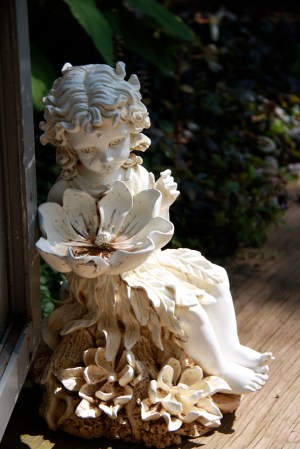
Angels: many people believe in them, some people don’t. ‘What are they really like?’ you ask. Well, the ones I have seen, and they are the only ones I can talk about, are nothing like the angels we see in old church paintings.

 Angels visit me regularly. They speak to me through the mouths of innocent birds and beasts and I listen to them carefully, for they are the messengers of Gaia, the earth goddess. If we do not listen to the earth goddess, if we don’t pay attention to her words, the earth and the people who live on it will be in serious trouble, sooner or later.

 So, go out into the garden and the woods. Walk softly. Stand beneath autumn trees. Watch for footprints in the winter snow. Above all, watch out for the living creatures with which we share our world. Listen to them when they speak to you. Pay attention to their words. Do not ignore them, and remember St. Francis of Assisi who called them his brothers and sisters, for that’s exactly what they are. They are our extended family and as we treat them, so will we ourselves be treated when Gaia, the earth goddess, calls us home.

Pensive Angel

 “A penny for your thoughts!”

 The pansies turned their heads,
gazing at her with great disdain.

 They are the lowest of the low,
yet grow again, each year,
from their own scattered seed,
like weeds.

 Their faces are beautiful,
bursting suddenly from winter’s
white dream.

 They create pastel thoughts and fill
the flowerbeds with secret dreams
that they alone can see.

All About Angels, my next book of poetry,  will soon be available on Amazon and Kindle.

Wild Bird


IMG_0231 2.jpg


Wild Bird

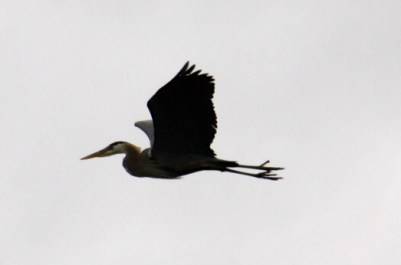
 A wild bird has built
her nest in my heart.

Her blood-beat
flutters new rhythms.

Birdsong streams
sunlight in my pulse.

Afloat I knew the sea-
surge lift and pull.

Now hot blood rises
with the sun and sets
with this glorious fall
from heaven to earth:

sweet helter-skelter
glide of current and cloud.

Hair is to head
as feather is to nest.

The egg of my skull
shows hairline cracks:

tiny beaks pecking
fine-tuned sparks of song.

Late Summer Angel


IMG_0003.JPG


Late Summer Angel

“It’s good to stop, while mowing,
and to rescue that one red leaf,
and that one yellow leaf,
and that other leaf
the sun has spotted,
like an old man’s hand.

And it’s good to stay
bent over for a while,
to rest and to gaze
at the October fungi,
mushrooms and toadstools,
thrusting from the earth:
puff balls, dust balls,
little brown umbrellas.

 And it’s good to see
where the moles
have dug new houses.”

 “Better yet,”
says the autumn angel,
“is to stand beneath
the trees, drinking up
the sunlight.

Raise your hand and see
your skin fragmented
into a coat of many colors.”

 Sunshine through
a stained glass window.

 Light rains
droplets down
through speckled leaves.

Note: Late Summer Angel is from All About Angels, the poetry collection that I am currently revising for re-publication. It will be available online at Amazon and Kindle in time for Christmas, 2016.


October Angel

IMG_0122.jpg

October Angel

birds peck their way
through egg shell skies
in search of summer

 ice pellets strike dead foliage

the October Angel
hangs suet from the rowan

a finger of wind
stirs stubborn leaves
whirling them round and round
in a carousel of color

she gathers her evening gown
and walks among ruined flowers

a snapdragon opens
the frosted forge of its mouth
and sprinkles the sky
with ice-hard shards of fire

Note: October Angel is from All About Angels, the poetry collection that I am currently revising for re-publication.

Juggler

IMG_0038


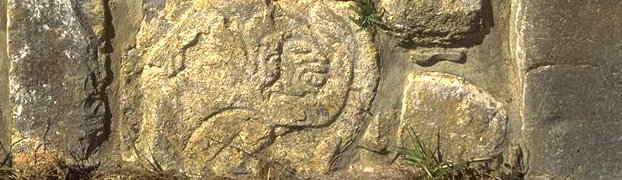
Juglar /  Juggler
(from Land of Rocks and Saints)

1

 In the beginning was the word,
and the word was tossed in the air:
a dove over dark water.

It grew as it descended,
turned into tongues of flame,
each of them licking
at the listeners’ hearts,
tearing them apart.

Sleight of hand:
this deck of words, tossed skywards;
jacks and queens tumbling,
caught, tossed up again;
words, nothing but words,
this pack of wolves descending.

2

 Lips part as words draw blood;
red wound of the open mouth,
a rose in spring’s garden
bears us down with crimson scents.

The spirit is trapped in its cage,
flesh and bone binding those wings
with their urgent urge to be free and fly ….

“… you would have seen …” he says.

And so we see: the sea, white horses cresting,
St. James riding over the mountains,
bone on lance point, spear bloodied,
Moorish chain mail bursting asunder,
El Cid advancing on his foes.

Words join with words,
become joint with gesture;
they plunge into our chests,
grow tight round heart and lungs.

Juglar: In Spain, the mediaeval juglar was musician, singer of songs, juggler, and general entertainer. The oral tradition still thrives in Avila and in places where the rhythmic and musical emphasis of the spoken word is still important.

In Absentia 5

img_0141-2
In Absentia
5
The Undiscovered Self
has sat on my shelf, just gathering dust.
Written by Jung in 1956, I see from my notes
that I bought it in 1976, read it then,
and re-read it in 1985, 1987, and 2009,
all years of mini-crises.  It is on the table
before me now and finally I have time
to sit and read the pages, not speed reading
for information, but to digest them, one by one.

Time on my hands: so precious these moments
alone, with the sun filtering through the kitchen
and the autumn leaves storing up sunlight
like an old precious wine before they fall.

I sip slowly at this bottle filled with life,
knowing that my friends are there, knowing
I can call them on the phone or knock
on their doors to be greeted with warmth,
an arm round the shoulder, the offer of a meal …

but really, I prefer this solitude, my adventures
with the cat, my slow stroll, not through the autumn
woods, but through the leaves of this book.

This poem is dedicated to my good friend Judy Wearing who challenged me to write a positive poem about my experiences alone in the house looking after the cat. I would like to thank Judy for thinking of me at this time and encouraging me to be positive!