Death’s Angel

039

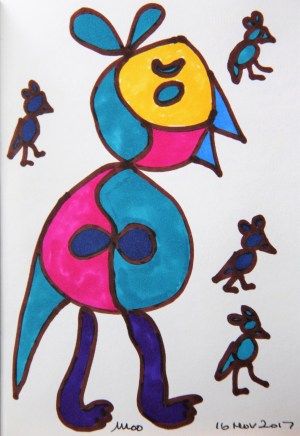
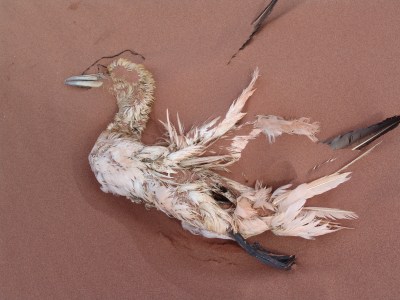
Death’s Angel, also known as the Angel of Death, or the Black Angel, is probably the most important figure that we will meet, face to face, here, in the evening of our lives. He appeared at my bedside the other night, and spoke to me. Bright moon. The Angel stood there, haloed, blazing in a spotlight of glory.

“Everything you have, I own,” he announced, taking my hand. “Your house, your wife, your children, your cat, your dog, your car, your books, your flowers, your garden, they are all mine. And one day I will return and take you  from them.”

Cold, the moonlight. Frigid, that waking from my dreams. My hand burned with his fire, yet I shivered.

“When will you call for me?” I asked?

“Soon,” he said. “Very soon. And remember: it will always be much sooner than you think.”

“What can I do?”

“Nothing. I will lend you all these things that you think you own, for a  little while longer, but you must never forget that I am lending them to you. You do not possess them. They are only borrowed.”

“And then?”

“And then they will be mine As you will be mine.”

“There must be something I can do to …”

“There is always something. Embrace me now. Hold me. Breathe in my breath. Know me for who and what I am.”

I did as he asked and his warmth filled me. I looked into his eyes and no longer knew fear.

“There is no past,” he said. “No future. All that you own is this precious moment, the magic of the now, this breath you inhale, this air you release. That is what you own. Understand that, and let everything else go. Live in the moment, for the joy of the day. Seize each second, as you live it. Enjoy it, for that alone is yours. Knowledge, foreknowledge, and understanding: these are my greatest gift to you.”

Then, for a moment, I knew and  came to terms with the gifts he gave me.

“Sleep now,” he said. “But remember, I will be back.”

I fell asleep and dreamed of the man who met Death in Cairo. Death looked surprised to see him. “What are you doing here?” he asked. Fear filled the man. He ran, packed his bags, left Cairo with its vision of Death, and traveled as swiftly as he could to Baghdad. where he met again there with Death, who welcomed him.

“Why were you so surprised to see me in Cairo?” the man asked.

“Because we had a meeting here in Baghdad, tonight,” Death replied. “And I didn’t know if you’d show up.”

When I awoke, a joyous sun illuminated the world. What I had heard and seen rang out with splendor of church bells calling across green fields and leafy woods on a summer morning. I also knew that what the Angel told me, was not for me alone. It was for everyone I knew. A message, not of sorrow, but of joy, not of despair, but of hope.

This wine I sip, this bread I break, this ray of sunshine, this raindrop glistening, that nervous deer peering shyly from the woods, that chickadee feeding, those crows that bring the world back to life with their daily chorus, each is instant of life held, for the briefest of moments, and then released.

My greatest joy, gained from reading Don Miguel Ruiz, The Four Agreements,  is to pass his wisdom on to you who read my words, for this message will change your life, as Don Miguel Ruiz’s message has changed mine.

Carpe diem: seize the moment. Deus est in nobis: it is the world soul alive and living within us, unique to each of us. While it is with us, our joy will live forever, and, even though we perish, that joy once shared will never die.

img_0122


Touch and Go

15-may-2002-pre-rimouski-224


Touch and Go

            Rain. Persistent rain. Cornish mizzle that chills and wets. Basque chirrimirri penetrating flesh and bone. Low clouds blanket buildings, wrap themselves round the windshield. Cling with the tenacity of Saran wrap. Visibility variable, now clear, now a muffler round the car’s headlights. Darkness gathered, still gathering. Lights moving, cars moving, the road moving, blending first with the lights then with the shadows, shape-shifting.

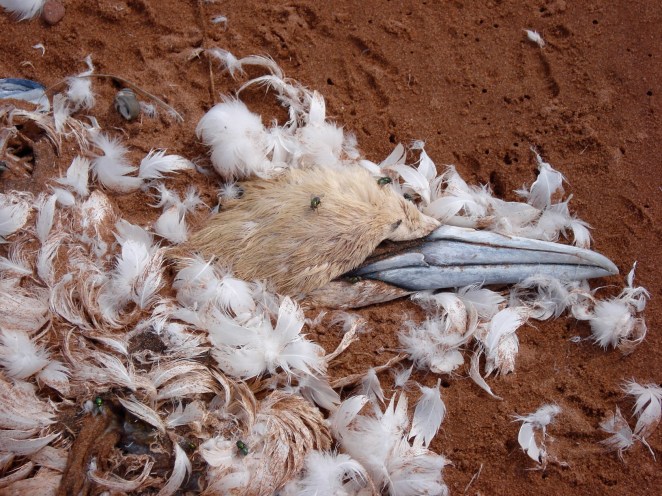
            Down the hill now, out of the city lights, into the countryside. The road changing, patches and potholes, lights flickering in and out, darkness and light. Small animals of light, the potholes, shimmering, bumping by. Another pothole, moving, turning from side to side, a pothole with a ringed tail and two tiny eyes. A baby pothole, misses the front wheels, not the back. One dull, dry thump.

            What were you doing there, in the middle of the road? Why alone? Why no mother, no brothers? Why so small? I didn’t mean to … I didn’t want to … Why me? Why you? Why now? If only …

            Light breaks through the darkness clouding my mind. Memories: the driver on the road to Kincardine, chasing a jackrabbit, trapped in the headlights, a Belgian Hare, dodging down the middle of the country road. Laughing, the driver, with the joy of his hunt. Then: one dry thump. The car stopped, the hare, still twitching, held by its long ears, shown as a trophy at the car window, then thrown in the trunk. Memories: two lads in a half-ton, on a back road by Grand Lake. A sunny Sunday. Spotting the ground hog at the roadside. Driving at it with the truck. Swerving to hit it. The joy and laughter in their faces, looking back. One dry thump. The ground hog, front half viable, spine fractured, back legs paralyzed, dragging itself with its forearms to the roadside, dropping into the ditch.

            Legend tells of the man who met Death in Cairo. Death looked surprised to see him. “What are you doing here?” he asked. Fear filled the man. He ran, packed his bags, left Cairo with its vision of Death. Traveled to Baghdad. Met there with Death, who welcomed him. “Why were you surprised to see me in Cairo?” the man asked. “Because we had a meeting here in Baghdad, tonight,” Death replied. “And I didn’t know if you’d show up.”

“Every morning, at day break,
oh Lord, this little prayer I make,
that thou wilt keep thy watchful eye,
on all poor creatures born to die.”

            Dylan Thomas wrote those words in his poetry play for radio, Under Milkwood. All poor creatures born to die. That’s us. That’s you and me. We don’t know how, or why, or where, or when. And it doesn’t matter. That’s the whole point: it doesn’t matter. Our death was born with us, walks with us, lives inside us, and one day will take us by the hand, each of us, we poor creatures, born to die. What matters is that we live while we can, rejoice while we can, thrive while we can, think while we can, write while we can, enjoy every moment of every day that is gifted to us …

            Enlightenment came last night, at the darkest, warmest of times. It followed me home and crept with me into my bed. I thought of all the creatures found each spring morning, their lives cut short at night along the sides of our New Brunswick roads: deer, porcupine, squirrels, groundhogs, foxes, domestic and feral cats, dogs, skunks, and yes, one, very special, baby raccoon, a tiny raccoon, so small as to be almost invisible in chirimirri, mizzle, and mist.

            His spirit came to me in the under-blanket dark, wrapped itself warm around me, and brought me comfort. “You too,” he whispered. “You too. But not just yet. My work is done. I can go now. But you still have lots of work to do. Remember: Vis brevis, ars longa,” his raccoon spirit nuzzled me and I reached out and patted him. Then both of us settled down to dream our different dreams of a life and death that is surely nothing but a dream, or a game of touch and go.

Show Don’t Tell

IMG_0141.JPG


A barber shop quartet, four of them, singing in unison, spring birds at a feeder, early morning sparrows at a jug of milk, abandoned by the milkman on the doorstep.

Except they were none of that. How could they be? They were four brothers, torn apart at birth. They never knew each other, never sang together, never embraced each other, never held each other in their arms. How could they have done so? The first one was stillborn. The second one survived for a while, but struggled to live, succumbed, and drifted away. The third one lived, marked for life by the scars on his forehead where they dragged him from the womb. The fourth one stopped struggling in the seventh month, but the mother carried him to term, even though she knew he was dead.

She carried them, blessed them, gave them all names, and buried three of them. They were her babies and she never got over their loss. Oh, she survived physically, but mentally she was destroyed.

The priests wanted to know what sins she had committed for God to be so angry with her that He destroyed the fruit of her womb. She had no answer. Some refused to bless her. Others ignored her completely. A few used her sorrows to drag the survivor into the tangled web of the church. “He has been spared. He will be one of us,” they said, and rejoiced at the potential strengthening of their celibate ranks.

Three of her children were ever before her. But the fourth lodged like an albatross on her shoulders and hung like a crucifix round her neck. She could never see him clearly. How could she? He was rarely before her eyes, never in the range of her sight. She tried to mold him like putty, but like water or sand, he slipped through her fingers.

Her husband hated him. Was he the father? It’s a wise man knows his father, or his son. Yet they looked alike. But no, they never thought alike, or walked alike. Nor moved in the same circles.

The father, a gambler, had borrowed a large sum of money and placed it with a bookie, betting that this third son would never live and that his death would make his father’s fortune, if the child was indeed a product of the seed his father deposited in his wife’s child bank.

The father lost his bet. The son lived. The father hated him every day of his life.  A rich man he would have been, if … if only … and the scars of that lost bet raged ragged on his face as the father cursed the doctor who had pulled his  son, if he was his son, alive and struggling from the womb.

If he was his son … a strong man, magnificently muscled , it was not his fault, never his fault, it was the fault of that worthless woman, the woman who had carried his seed, if it was his seed, the woman who carried his other three sons, and never brought them alive into this world …

The ostrich sees danger, and buries his head in the sand. The son sees danger and learns to run. The wife sees danger and  learns to suffer, to be beaten, to be abused, to be the victim because yes, she is filled with guilt, and how could it be otherwise, when the spirit is willing and the flesh is weak, so weak that it cannot give birth and eventually takes to the black holes of victimization, of alcoholism, and eventually of oblivion.

And the son learned to hide, to make himself invisible, never to be there, never to accept responsibility, never to sit at the desk when the buck was about to stop anywhere nearby, never to be blamed … never to turn down the solace to be found in the darkest depths of those same bottles that finally destroyed the woman he loved, who was also his mother.

Instructor’s Comments:

Rewrite.
Next time, show don’t tell.
Minimally acceptable.

D


Spotlight

20180823_151201-1_resized

Spotlight

Imagine a spotlight of sun peeping for a moment through dark, cool woods. Then this glimpse of wood texture beneath the bright, creamy butter color of these fungi. A moment’s magic caught by the camera and preserved forever, or until the computer crashes, or the funds for this blog page run out. So much potential beauty lost in the impermanent mists of time.

Old, ruined buildings. Churches and barns, their people moved on, their roofs crumbling, their windows boarded up. A heavy snowfall and, back-broken, they fall to their knees and yield to the weight of snow. A storm-surge of age and ailments break over them. Wildflowers creep up and in. The names on the gravestones slowly vanish, layer by layer, letter by letter, until even the names are no more.

Such will be our fate: all our glory reduced to nothing. Sic transit gloria mundi [Thus pass the worlds’ glories] as the Romans once said. All our books and words reduced to dust. No more living words, just  Polvo seco de tesis doctoral [Dry dust of a doctoral thesis] in the prophetic words of my good friend, the Spanish-Canadian poet José María Valverde.

Haircut, anyone?

SD 16

Haircut, anyone?

Well, it’s almost time for me to have my hair cut. When I looked in the mirror to shave this morning I looked a little bit like this: beaky nose, eyes closed, well, half-closed and squinting, anyway, and all lathered up. My grand-pappy told me there’d be days like these: usually just before he cut himself shaving at the kitchen sink with his old cut-throat razor. Then he’d disappear into the outside bathroom and reappear with little Vs of toilet tissue pushed into his chin to staunch the still-leaking wounds. All that’s missing here, in this photo, apart from life itself [nature morte: still life] is my grandfather’s pink shaving cream. And a sense of humor: wreckage on life’s beach, the common destiny that awaits us all, flies and all.

MT 2-6 Monkey Meets An Anarchist Ant

img_0188

MT 2.6
Monkey Meets An Anarchist Ant

(Memories of El Camino de Santiago)

The anarchist ant dresses in black.
He wears a little red base-ball cap
backwards on his head.
His eyes are fiery coals.

“Phooey!” He says.
“It’s folly to go with the flow.”
So he turns his back
on his companions and marches
in the other direction.

Some ants call him a fool.
The Ant Police try to turn him.
The Thought Police try
to make him change his mind.

Others, in blind obedience
to a thwarted, intolerant authority,
first bully him, then beat him,
then bite him till he’s dead.

Comment: One of the legends of the Road to St. James, the pilgrim route across Northern Spain that I walked in 1979, states that if you do not walk the road as a human being, in your own lifetime, you will come back as an ant and be forced to walk it ant form, when you are dead. I stood on the hill outside Astorga, looking back at the city. On the old pilgrim road, at my feet, and beneath the old Cruz de Harapos, a colony of ants was busy walking in a long line towards Santiago de Compostela. One turned his back on the group and started to walk the other way, but he didn’t last long. “Go to the ant, thou sluggard.” Fair enough. But watch out for the ant-police and the thought-police. 

Book Burning

IMG_0192

Book Burning

A sharp-edged double sword,
this down-sizing,
this clearing out of odds and ends.

Library shelves emptying.
books disappearing, one by one.

So many memories
trapped between each page,
covers, dust-bound now,
dust to dust and books to ashes.

Sorrowful, not sweet, each parting,
multiple losses, characters
never to be met again,
except in dreams.

Heroes, thinkers, philosophers, poets,
their life work condemned to conflagration.

Alpha: such love at their beginnings.
Omega: such despair,
with Guy Fawkes celebrations
the means to their ends.

Word-fires:
the means of forging
those book worlds that surrounded us.

Bonfires:
the means to end them.

Steadfast, the book-fires,
flames fast devouring

all but an occasional volume
snatched, burnt fingers,
from the flames.

Diagnosis

IMG_0457

Diagnosis
(sonnet)
posted apparently a year ago today

Diagnosed with a terminal illness
called life, I know it will end in death.
For more than seventy years, that end
has lived within me, walked beside me,
sat at my bedside, and shared my sheets.

We have shared so many things: laughter,
joy, victory, defeat, the soul’s dark night,
the winding ways of fortune’s labyrinth.
When cancer called, we faced it together,
and life won out for a little while longer.

Hand in hand, we are together again,
our ménage à trois, engaged in a three
-legged race, blindfolded, unsure of who,
what, why, where, and especially when.

Bistro FFF

IMG_0155

Friday Flash Fiction
20 July 2018

Bistro 

LJ sat at a table in a dark corner of the Bistro. He held a plastic bag in his hands and moved what looked like dried brown fava beans, one by one, through his fingers. A priest at prayer, his lips moved in a silent mantra as he counted the beans:  “… twenty-seven, twenty-eight, twenty-nine.”

Robin and Will watched him closely, looking for the tell-tale signs that would announce LJ’s return to his former life.

Same-sex couples danced through the Bistro. They avoided this one corner that formed an oasis of severity amidst the gaiety and noise of Carnival celebrations.

“How much does he remember?” Robin looked at Will. Will shrugged and the two men exchanged worried glances.

A whooping conga of men dressed in garish, feathered costumes that revealed more than they concealed, approached the table where the three friends sat. The conga came to a stop in front of them.

“Now what have we here?” The leader asked. He turned to his followers flashing a white, toothy smile.

“Let’s see what you’ve got, darling,” he reached towards LJ’s plastic bag.

“Don’t touch him,” said Robin, rising to his feet.

Three large men broke away from the line and two grasped Robin while the third put his arms on Will’s shoulders and held him in his chair.

“I’m warning you,” Robin said.

“Shut it,” said the leader.

LJ closed the plastic bag that held the twenty-nine fava beans and put it in is breast pocket, next to his heart.

“Don’t put them away, darling, they look delicious,” the leader grinned his enormous grin. He was a big man, not tall, but broad and heavy. “Give them to me, I want to eat one. C’mon, I’ll just pop it in my mouth and suck it.”

The Conga crowd roared their approval.

LJ got to his feet. He was a small man, but wiry. The night-fighter, they had called him. He was the one who slipped out at night through enemy lines and knifed the sentries. One hand over their mouths, one hand on his knife, all sounds extinguished till they relaxed, lifeless, then that one quick twist of the knife and the ear-lobe severed as the dead man was lowered to the floor.

“Wanna dance?” The conga leader wiggled his hips and ran his tongue over his lips, then puckered a little kiss.

LJ’s face turned red, the veins engorged, and his eyes stood out. Nobody saw him move, nobody ever saw LJ move. He grasped the Conga leader’s windpipe with his left hand and drew him forward until they were locked eyeball to eyeball. LJ’s night-fighter knife lay flat across the man’s jugular.

“LJ, no,” Robin screamed. “Not number thirty.”

LJ kept staring at the man he held. His knife disappeared.

“You’re not worthy,” he said, leering into the Conga leader’s purpling face. “You’d dishonor them.”

Will and Robin breathed a sigh of relief.

Comment: Bistro is the title story in a collection of short stories and flash fiction. Bistro, the book, was one of three finalists (and the only self-published book) in the New Brunswick Book Awards (Fiction, 2017). Bistro (the collection) is available on Amazon. The sound recording below is my own reading of the story and the opening cartoon, Belle Bottom Naval Gazing,  is the picture on the cover of Bistro, the book. It is also my own work.


Dead Day

dsc03693

Dead Day
A Thursday Thought
12 July 2018

Funny how a day without soccer suddenly seems a dead day. Yesterday was filled with world cup fever. Anticipation, build-up, cheering, Croatia (champions), defeat (England), football (fantastic) … today the world cup has a rest and people start to breathe more easily. As a result, all -over, boredom, cleaning up, defeat (deja vu), emptiness, future (hopes on hold) … all the alphabet soup of life packed into a few short hours.

Where do we look for meaning? Is there even any meaning to look for? I watched 120 minutes of soccer, yesterday … that’s two hours. Well spent or wasted? Meaningful or not? The world heats up. A hurricane moves up the coast, turns into a tropical storm, then back into a hurricane. Hit or miss? I still don’t know, but I hope it misses. The last big one hit in 2014. We went ten or twelve days without power, and that in the Province’s capital city. Five trees were downed in our yard. More than a dozen were tugged up in my neighbor’s place. Why? Why us? Why here? Why now? Is this personal? What did we do wrong? Values? Meaning? Yet, for 120 minutes yesterday, I could forget my immediate woes and concentrate on football’s joys and sorrows. I guess that holds meaning in itself. I thought so yesterday. Today, I’m not so sure.

Out driving yesterday, I pulled into the roadside twice to allow ambulances to pass. An ambulance, a mysterious closed vehicles, lights flashing like a mad Christmas tree manned by a crew of Dr. Who Daleks. Yes, it was warm. Yes, people were excited. I guess someone, somewhere, was overcome by something and the telephone rang and the call went out to the ambulance. Values? Meaning? “What is this life if, full of care, we have no time to stop and stare” … at the ambulance, lights flashing, sirens sounding, as it rushes by and we pull over into the side of the road to allow it to pass. Values? Meaning? A sense of an ending? A sense of a beginning?

Today, more than anything, a sense of being suspended, of waiting in a bubble, in a certain silence, for something to happen, don’t know what, or when, or why, or where, or to whom. The world, instead of moving on, seems to stand still. Even the leaves on the trees have stopped shaking. The silence before the storm, perhaps? What storm? And who will it strike? And where? And how? And when?

How will it begin? How will it all end?