Self-Publishing

img_0196


Self-Publishing

Why do we write?

Before we talk about publishing, in any form, we must pose the question: why do we write? As a former academic, my writing was intimately tied to academia. At first, I wrote to pass my exams; then I wrote to pass my courses by handing in essays and potential papers; then, when I was a full-time academic, I wrote for the “publish or perish” world of academia, churning out articles (90) and reviews (70) on topics that were tied to my research projects. My writing, in other words, had a purpose and a direction. I knew why I was writing and I was conscious of the areas and places in which my publications would be acceptable and accepted.

At the same time as I wrote for the academic world, I indulged in creative writing. I have always written poetry. I have always been aware of my vocation as a poet. However, I was also aware that it was very difficult to earn a living as a poet. We’ll talk more about that later. The academy, research, and teaching gave me enough free time to indulge my dream of being a creative writer. It also permitted me to put food on the table and to keep my family warm and comfortable during our cold, Canadian winters.

So, the first question you must ask yourself is: why am I writing? What do I hope to achieve as a writer? Who do I want to read my works? Why do I want to be published? How do I want to be published? Your answer to these questions, and others like them, will determine your relationship to the publishing process.

Traditional Publishing

It isn’t easy to become published in the traditional fashion. In the first place, there are fewer major presses out there, and those that do exist are very large and powerful indeed. They want only the very best work. Not only that, they want the best work that will make them the most money. Good writing isn’t always guaranteed to sell well and thus to make the most money, remember that. In the second place, there are some excellent smaller presses, but they tend to be niche presses tied to a specialized corner of the market. Academia is a niche market. My own area of academia, Spanish Seventeenth Century Literature, is a very small niche market indeed. In order to get published in the traditional manner, a great deal of research into the niche area and the presses that publish therein is needed.

Most major presses will not look at up and coming writers unless they are represented by an agent. Few agents will take on an up and coming writer. This is a chicken and egg conundrum: how do we get the experience to be represented when we need the representation to help get the experience? All writers must solve this problem in their own fashion. There is no easy answer. Novels that have the potential to be turned into films: these will attract an agent and a big press, because that’s where the money is. How many of us are capable of writing them? Short story collections used to be a reasonably safe bet, but it appears that fewer presses and literary magazines are publishing them. Poetry generates little or no money, hence it also belongs to a highly specialized niche market with very small circulation figures. Once these realities are understood, then we can consider the alternatives.

Self-Publishing

 Self-publishing is no longer associated with the so-called Vanity Press, a term used to denigrate it. Not so long ago writers who paid for their writing to be published were considered by many to be ‘poor’ writers, ‘vanity’ writers. This is no longer true and The Writers’ Union of Canada (TWUC) now accepts self-published works as genuine works of literary merit, always provided that they are well-written. The advent of the computer revolution made all forms of writing, printing, and publishing so much easier. The ensuing advances in desk-top publishing allowed anyone to be a published writer and a writer’s life was suddenly that much simpler.

I published two poetry books with traditional presses in 1978 (Last Year in Paradise) and 1986 (Broken Ghosts). In 1990, following the death of my parents, I felt a deep desire to write and to be published once more. I had poems published in small literary reviews and magazines and I had a track record of wins and honorable mentions in writing competitions, but nobody wanted to publish another book of my poetry. I papered my walls with rejections … and I got nowhere. Therefore, in 1990, I started to self-publish.

My first six books were simple: I typed out the poems, ordered them the way I wanted, and took them to the local print shop where, for a small sum of money, the books were printed and saddle-stitched. This was a cheap means of production, so cheap, that I didn’t need to sell the copies so I just gave them away to my friends. Between 1990 and 1996 I published six of these little paperback chapbooks: Idlewood, In the Art Gallery, Daffodils, Secret Gardens, Iberian Interludes, and On Being Welsh. The runs were small, ranging between 100 and 200 copies, and very cheap per copy, often less than a toonie / twony (two dollar coins, after ‘loonies’ one dollar pieces with a loon on the coin).

All the initial work for these books was done by me: writing, selection, typing, and editing. The printers did the rest: copying and binding. In the case of these first self-published books, the covers contained typed titles and the author’s name and nothing more. In 2000, I was very fortunate. I met a genuine editor who agreed to work with me to publish my poetry via a small university print-shop. I wrote the poems and typed the text. My editor, a wonderful lady, then edited the text and prepared it for printing. My beloved (aka my wife) designed the covers for these books. Between 2000 and 2012 we (self-) published six of them: Sun and Moon, Though Lovers Be Lost, Fundy Lines, At the Edge of Obsidian, Obsidian 22, and Monkey Temple. These were genuine paperback books, with an ISBN. They were all limited editions and again I gave them away to my friends.

2008 saw Nashwaak Editions, the book division of the Nashwaak Review, publish Land of Rocks and Saints, a book of poetry that I wrote while in Avila (Spain). Again I funded this printing myself and again I gave it away to my friends and colleagues. I was devastated on several occasions to find signed copies of these books in second hand bookstores, that which I had given away for free had been sold for money. The receivers of free gifts had gained more cash than the books’ writer.

I continued writing and now had several manuscripts that I thought well worth publishing. Armed with a genuine list of publications and prizes and with excellent letters of recommendation from established writers, I again tried the traditional approach. Alas, I got the traditional results. Two small trade presses who agreed to publish my work both went out of business before they could do so. Agents, if they bothered to reply (and most of them didn’t), turned me down. I got to final judging with a famous niche press, but their marketing department said the book wouldn’t sell and they refused to market it … I didn’t know where to turn.

I had for some time been getting e-mails from houses that, for a large sum of money, would publish my new works for me. However, I was by now retired, and didn’t have those ‘large sums of money’. Publishing costs varied from $1500 US to $3500 US to £3000 (sterling). Well, I wasn’t that desperate, especially when I was suddenly subjected to regular e-mails, constant phone calls, and targeted advertising. I got tired of sales reps ringing me up and asking “are you read to go to press now?” There had to be easier and cheaper ways to get published.

2016 saw a major change in my self-publishing. A new friend, now a very close friend, suggested I try CreateSpace on Amazon. He came over one afternoon to give me a demonstration and we had a manuscript up and running that same day. It cost me nothing. I still haven’t sold a copy of that particular book. But it is up and available on Amazon. I buy copies at a relatively cheap rate and, you guessed it, I still give them to my friends. I now have nine titles on Amazon, two new titles* and seven rewrites and expansions. These include Monkey Temple, Bistro*, Though Lovers Be Lost, Sun and Moon, Obsidian’s Edge, Empress of Ireland, All About Angels, Iberian Interludes, and Avila* (my first book of poetry in Spanish).

Marketing is still a problem partly because I just don’t have (nor do I want to have) what it takes to be a salesman. I still give copies of my books to my friends. I guess I’ll never make any money worth speaking about from my creative writing. But that has never worried me: I have never written for money, only for love. I write because I love writing. I publish so I can give copies of my books to those friends who ask for them. I am a poet, whether I want to be or not. I am also condemned to my fate: I am an academic, a writer of poetry and books, and a book self-publisher. I guess I’ll never be a businessman.

Is it all worth the effort? Yes, I think it is. Can (other) people make money from self-publishing? Yes, they can, especially if they are willing to advertise, market, and sell their books at every opportunity. This is something that I just cannot bring myself to do although I know several writers who have been very successful with this aspect of the trade.

Quality Control

Are self-published books capable of being genuine works of art? Indeed they can. Bistro, although being self-published, has just been confirmed as one of three finalists in the New Brunswick Book of the Year Competition (2016-2017). Several of the stories in Bistro were either published separately in literary magazines or were part of larger manuscripts that received recognition in one way or another for the quality of their writing. Parts of several of my other books on Amazon have been published or awarded prizes or honorable mentions in competitions and this gives my creative work a track record of respectability.

I am an academic, trained to assess written work and to maintain quality control on my own written work as well as that of other people. Not everyone is born to be an editor, let alone a self-editor. How do we get to the level of self-editing necessary to be confident in our own quality control? Enter your work in competitions. Submit your work to literary magazines. Take writing workshops online and in person. Consult with other writers and join a good writing group or form one yourself. Be careful of submitting your work to the opinions of your best friends and your family: they will only tell you how good you are. Remember that your granny may be your favorite person, but she is not necessarily your best critic. Seek always the objectivity that allows you to stand back and criticize your own writing from a distance. Seek the opinions of others who are objective and will do the same.

Summary

  1. Think about why you are writing and what you want to achieve with your writing.
  2. Consider the different ways in which you can publish or self-publish and decide which is better for you.
  3. Research your market / niche market as carefully as you can and target the area in which you wish to work.
  4. Writing is a long-term commitment: you must make that commitment and stick with it.
  5. Remember that there is no substitute for high quality writing.
  6. Remember the words of Dewi Sant, St. David, the Patron Saint of Wales: “Keep the faith.”
  7. Don’t give up. Keep moving forward. If you stop writing, you will never achieve your goals or finish that book.

Titles

img_0177


Titles

I am currently thinking and re-thinking the titles to my books.

Clearly, the title is of the utmost importance. The title should draw the reader in while offering some information on the content. Alas, my earlier titles rarely did this.

Monkey Temple, for example, really doesn’t say much about what the book contains. Nor does its subtitle: A narrative fable for modern times. Those who have read poems from the book or who have heard me read excerpts from it, know what it is about. However, deep down the title really says little about the life and times of Monkey, the protagonist who works and suffers in the corporate Monkey Temple.

In similar fashion, Though Lovers Be Lost is a wonderful title, taken from Dylan Thomas, and illustrating his theory that “though lovers be lost, love shall not, and death shall have no dominion.” If readers have these lines on the tip of their tongues, as most people from Wales do, then they will have a fair idea about the contents of the book. However, without that intimate knowledge of one of the great Welsh poets … many readers will be lost and the title will lack meaning, check my post on Intertextuality.

Bistro is a collection of flash fiction. I am not sure that the title suggests that instead of a standard and expected table of contents the book has a menu that refers to the 34 pieces of flash fiction are contained within its pages. The pieces are so varied, rather like a meal of sashimi or sushi, that it is difficult to describe the contents (or menu) in such a short thing as the title. Does the one word, Bistro, draw the reader in? The cover picture might and the combination of title and picture and cover may go further. However, I have my reservations.

Empress of Ireland, on the other hand, is a book of poems about a specific event: the sinking of the Empress of Ireland  in the St. Lawrence River in May, 1914. Here, title and event are closely linked and hopefully the title is rather more indicative of the contents. Even here, as in the cases of the books mentioned previously, a brief description of the book is necessary.

Sun and Moon is a great title, provided you have lived in Oaxaca, Mexico, and know that Sun and Moon are the official symbols of the state of Oaxaca. Without that knowledge, the sub-title, Poems from Oaxaca, Mexico, is essential. The cover photograph with the state symbol of Sun and Moon is intriguing, but it is still necessary to read the description to find out what the book is about. Are title and sub-title enough in themselves? I’m still not sure.

Obsidian’s Edge is a tricky title. I thought everybody knew that obsidian is the shiny black glassy stone produced in volcanic areas. Further, I thought most people knew that the edge of obsidian is used in weapons and knives that cut. By extension, obsidian knives were used by the Aztecs and others in their human sacrifices … so much knowledge that is clear to the writer but unclear to the reader who may not realize that we all live at Obsidian’s Edge with the sacrifice of our own lives hanging by a thin thread on a daily basis. Oh dear, I have been to workshops and readings recently where people knew nothing about obsidian and its properties … my title gives so little information.

Land of Rocks and Saints has yet to be revised and rewritten. Few English readers will associate it with the old Spanish saying, Ávila: tierra de cantos y santos / Avila, Land of Rocks and Saints. The tragedy of living a life in more than one language is that the cultural knowledge so easily understood in one does not necessarily transfer readily into a second or third language. Some of my readers write me to say that they Google all these terms and learn a tremendous amount from the books. Alas, I have to improve my titles. I need to sharpen them and use them to draw my future readers in.

Ávila: cantos y santos y ciudad de la santa, the Spanish translation of Land of Rocks and Saints that I put up on Amazon / Kindle, is a better title. Avila is both the province and the capital city of the province. The rocks and saints are clearly linked to the name and the city itself is the city of the saint, St. Teresa of Avila, of course. Hopefully, this title, in Spanish, will attract some Spanish readers. I can only hope.

The book on which I am currently working was originally called Iberian Interludes and had no sub-title. In my revision, I am selecting poems about Spain from various earlier collections and placing them together in one large compendium. I have selected poems from two collections Iberian Interludes and In the Art Gallery (oh dear, I never mentioned that it was the Prado and that all the paintings could be found there). To these I have added a selection of individual poems either published in reviews and literary magazines or taken from other collections.

I am still working on a title for this collection, hence today’s post. I have rejected Iberian Interludes as too vague (how many of my potential readers know that Spain is Iberia) and I am now looking at a bold assertion: Spain. If I do this, I will need a sub-title. The evolution of the subtitle looks like this: Bull’s Blood and Bottled Sunshine, ¡Olé!  >  Bull’s Blood and Bottled SunBottled Sun and Bull’s Blood. I wonder if Spain: Bottled Sun and Bull’s Blood will be catchy enough. Will it draw readers in and attract them?

Post Script: By the way, I thought long and carefully, and went with Iberian Interludes anyway. The cover picture shows a modern stone sculpture of a traditional bull. Lovely!

Revisions

img_0128

Revision
“We are not writers, we are re-writers.” I do not remember who said this, but it is extremely well said. We write, yes. But then we rewrite, sometimes obsessively, again and again. But how does that rewriting process take shape? Why do we rewrite? How do we rewrite? And what do we do when we re-write? These are all vital questions.

Mechanical revisions and rewrites
This, for me, is the search for typos, punctuation errors, mis-spellings, grammar corrections, that sort of thing. Yes, we can rely on a (reliable?) editor and a not so reliable spell-check, but the editor usually costs money. Or we can learn to do it ourselves, which is what I recommend very strongly.

Grammatical revisions and expression checks
These are usually a little more difficult to deal with. Do the verb tenses check out? Are subject and verb clearly delineated? Does the wording make sense, not just to us, but to the outside reader? A second pair of eyes is always useful at this point. Also, a sense of distance from the text is useful. Leave it a day (or two) and come back to it later when he creative rush has fled the system.

Structural revisions 1
Whenever we do a structural revision, it is essential to check that the revision ties in with the rest of the piece and that we maintain consistency throughout. A simple example: I decide, on page 77 of my novel, to change my main character’s name from Suzie to Winnie. Clearly, her name has to be consistent, both backwards (1-77) and forwards (77 onwards). While this is obvious, other changes, taste, color of hair, color of eyes, height, weight, tv program preference, may not be so easy to check and double-check. But it must be done.

Structural Revisions 2
This is where we must pay attention to the vision in the re-vision. We must ask the question, what does the poem / story / chapter / text want to say? What is it actually about? Often, in the flush of creation, we write words (actions, thoughts, emotions) on the page and they flow like water from a fountain. It’s a wonderful feeling. Later, during the re-vision process, we must ask ourselves, again, deep down, what do these words mean, what are they trying to say? This is actually a slightly different question from what am “I” trying to say?
The speaking / writing voice may want to say something, but the words (and characters and actions) themselves may want to say something else. Now we are faced with a dilemma: do we write what we want to say or do we follow the intricate word-path growing from what we have written? As a beginning writer, I did the former. As a more mature (and I hope, a slightly better writer) I now do the latter.
The result is often a piece that is radically different from it’s starting point. When you listen to what the story / poem / text / characters etc are telling you and when you follow words and characters, then structure changes, paragraphs switch places, thoughts move around, expressions change. We are no longer forcing words into our meanings, we let the meanings grow out of the words. This is particularly important in short story telling and the writing of poetry. It is vitally important to the novel where any inconsistency must have a relevance to the development of action, plot and character. It is also a totally different approach to the meaning of re-vision.

Summary
I realize many writers may have difficulty accepting these points. Those trained originally in the academic world, in particular, will respond negatively to the idea of the words ‘not being forced into the correct academic shape by the quasi-omnipotent academic mind’ aka Constable Thesis Editor. However, the more creative a writer is, the more that writer will respond to the creativity that lies within both the creator and the creation that has appeared on the page and, as writers, we must never lose sight of that creative act, for it is one of the most truly wonderful things that we can do.

Comment

This is a golden oldie. However, it is still worthy of being reconsidered. Why do we revise? How do we revise? I hope this article is of use to the many out there who are looking for help and encouragement.

Time Folds

IMG_0158

Time Folds

Time folds … itself in two or three. A rubber omelet clock, it vanishes over the white water adventure rocks, bending and sliding, folding and unfolding. Riding the waves is ungainly, unseemly. We hang on to ropes, clock edges, reach for outstretched hands, count seconds, minutes, hours, search for meaning …

Further downstream, men and women dance on the bridge at Avignon. Now there are two popes and each one castigates the other, hurling verbal darts, well sharpened, that pierce the thickest of skins. The bridge across the river stands unfinished. It stretches stone hands out towards the other side, but the further shore is distant and the bridge’s fretwork abandons its quest.

Where do we find meaning when seconds, minutes, hours slip down the stream paddled along beside all those hours lost from the clock? Omnia vulnerant, ultima necat: they all wound, but the last one kills. At what time will that final hour suddenly loom and sling its ultimate stone, shoot its outrageous final arrow? Jove’s thunderbolt, sudden, from a cloudless sky? Life’s lead-tipped slingshot and all that we love turned suddenly to hatred? A tremble of the ground beneath our feet? Kangaroos and Koalas burn, setting even more bush ablaze and the smoke from those fires reaches out, out, out, across the bush, across the cities, across the Tasman, across the Atlantic. New Zealand has become the land of the long pink cloud.  Now South America is gifted its grey, smoky monsters of grasping hands, those insubstantial nightmares of our childhood dreams, reaching in from the dark to pluck us from our sleep.

On the unfinished bridge at Avignon, the people still dance. In their papal palaces, the partisan popes still hurl the insults of their hit and missiles. Somewhere, close, was it in the future or will it be in the past, the Black Death lurks, waiting its moment. The Great Fires of London sizzle and stench from 1666 to 1941 while religious partisans burn each others’ homes. The Spanish flu invades the trenches and kills more men than the war will ever manage.

Turn your face to the wall, my darlings, as the gentlemen go by. But what do they bear in their hands, those gentlemen, in their minds, those unsubtle warriors of a crazy game that leads us onward, merrily, merrily, not so gently, down what stream, over what waterfall, and into which of the many perils that lie in wait?

Going, going …

IMG_1336 (2).JPG

Going, going …

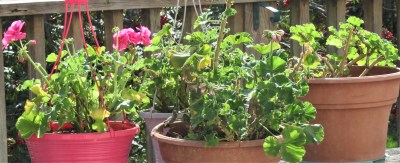
… and soon they’ll all be gone, save for the lucky ones that Clare gathers and sticks in pots to winter over in the house-warmth. Over the coming months, if you visit us, you’ll find these flowers in corners, on tables, in places that are touched by the low winter sun. Clare keeps lots of geraniums and they do winter over very well. She makes a selection of colors and then places them in sunlit spots. They bring color and light to the darkest days and help keep winter at bay. They are also great to photograph against snows and crows, and I often use their window reflections in my indoor photography.

IMG_1264.JPG

Here are some red and white geraniums getting their last touch of fall sunshine as they cling to the back porch.

IMG_1259 (2).JPG

This little group await their fall prune. Clare will trim them down and then bring them in. They will be slightly dormant for a while and then start to flourish once again. By the time next spring comes round, they will be ready for their outdoor adventures, a day at a time, back in overnight, and nursed and nurtured until they are ready for their full summer blossom.

It’s Thanksgiving this weekend, so a Happy Thanksgiving to all, and may you all have flowers to brighten your life and bring you some beauty and peace.


Spooky

IMG_1335 (2).JPG

Spooky

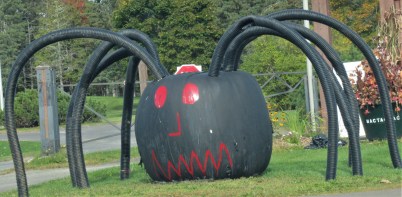
As Halloween draws near, the people at the park, Mactaquac Park, begin to spookify the countryside. Here’s the giant spider, coming to get you. It is the first in a series of spookified spookies.

IMG_1333 (2).JPG

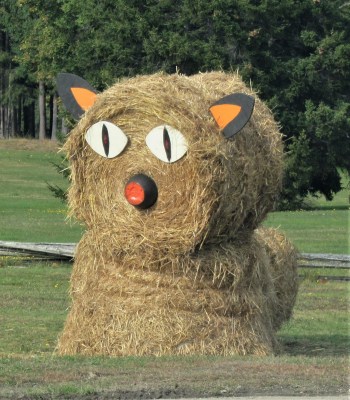
And here’s the spookified ‘what will it be”? Might be a spookified pussy dog or a spookified puppy cat. Who knows? Right now it looks more cute than wicked. Keep it that way, I say.


IMG_1186 (2).JPG

No, they’re not here yet, but watch out for the boogies and the boogeymen. They’re not far away. And they may just be out to get you. So, when someone says ‘Trick of treat’? Be sure to say ‘treat!” You want the dog biscuit, not the Rottweiler. And don’t forget to drool and say ‘pretty please’.

IMG_1338 (2)

What we do know is that when autumn leaves, strange things creep in to fill our minds and take autumn’s place. It’s that creepy-crawly time, that time of night mists and strange visions, that season of mellow mists and fruitiness when things that go bump in the night suddenly do just that.

IMG_0169


Sheep

IMG_1295 (2).JPG


Sheep

I wear the hide of the sheep
they slaughtered for me
twenty-three years ago
in Oaxaca, Mexico.

Like a sheep led to slaughter
I wait in the waiting room
along with other willing victims.
Heads down, silent, we clutch
open magazines, but do not
lift our heads or make eye contact.

In World War One, French troops
bleated like sheep as they marched
in tight columns towards Verdun.

They were disciplined and decimated,
one in ten shot for cowardice.
Is it cowardly to sit here, shivering,
glum faced, as we await
bad news and an uncertain fate?

I hate this uncertainty,
this inability to know what
is happening to my body.

Knowledge I can face, but
not doubt’s shadow dancing
like a will-o’-the wisp, and
leading who knows where,
keeping me awake as it did,
last night, stoking my fears
into this red-hot furnace
filled with burning coals
of fierce, fired-up doubt.

True bravery is to know fear,
to face it, and to face it down,
and to laugh in its face even
though your heart is breaking
and your gut tells you to run,
now, before it’s too late.


Springle Dance

IMG_1258 (2)

Springle Dance

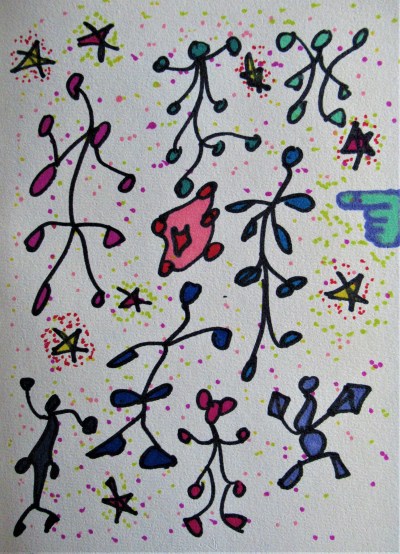
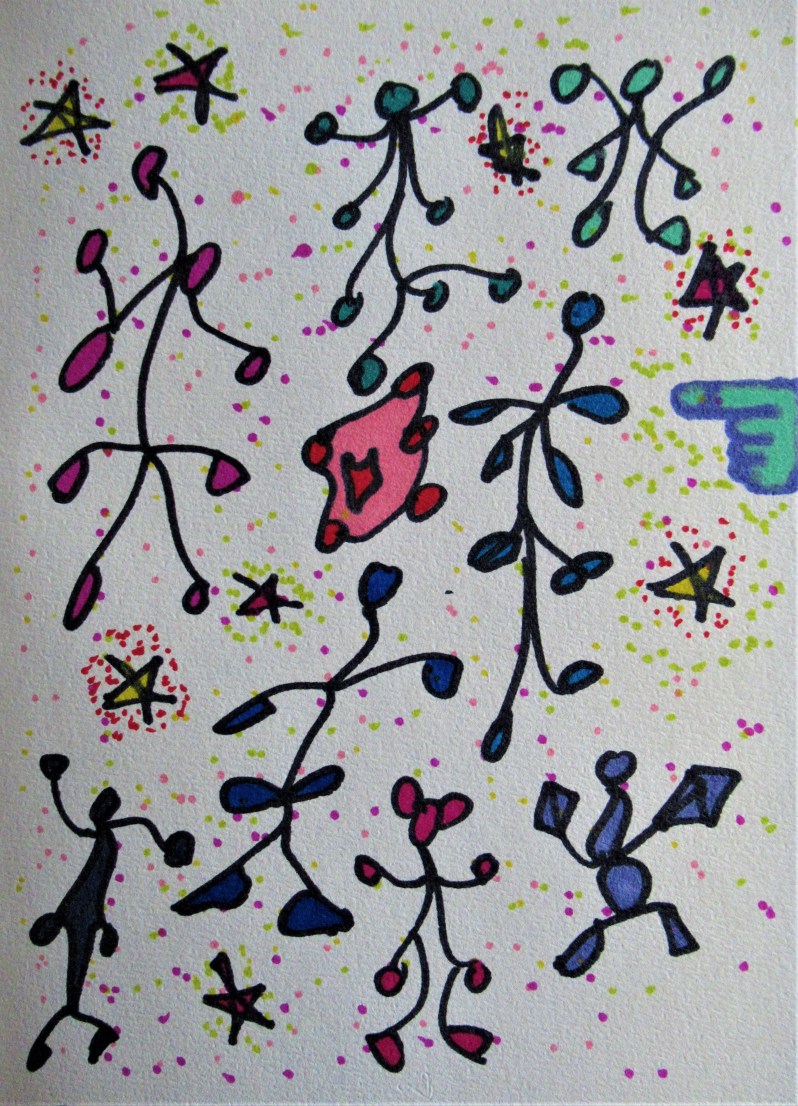
I guess the title comes from Tolkien where the Hobbits begin an energetic dance at Bilbo’s Party. Or something like that. Mine is a Fall Girl Dance. The hand on the right points to the poor misshapen heart as it moves between fall leaves and colorful dancing sprites and spirits that help it on its way. Where is it going? Who knows where the autumn leaves go once they leave the tree? The bodies fall to the ground, obviously. We rake them into dry, crisp piles and our children and grand-children dive into those leaf-piles, scattering them everywhere so we have to rake them up again. Think of them, the children, as forming leaf angels, a bit like snow angels, but, like the broken heart, a great deal more fragmented.

Try as I might with camera and photo shop, the colors are never quite what they were when I splashed them haphazardly, like September rain and wind-blown leaves, across the page. But life is like that: memories are discolored and distorted, old photos turn sepia, old folk turn white and grey and wrinkled and fragile, like withered leaves from the tree of life. And this is life, real life. We live it every day. Each dream, a flower, each moment a leaf, and every moment the only one we ever truly experience.

So savor those moments, both the good and the bad. They are yours and nobody else’s. Your like is what happens to you. Sometimes it is bitter with salt and vinegar and lemon juice. Sometimes it is toxic and poisonous. But it is yours. It is your chalice to drain as you stand in the garden, feeling betrayed. Like it or not, this is you. Then there are the dream moments: sugar and spice and everything nice. On those days, when the sun shines, it’s away with slugs and snails, and puppy-dog tails and hello hollow world, I see you for what you are and I welcome you for what you are. And yes, you can meet with triumph and disaster, and you can treat those two impostors just the same. You are more powerful than the forces around you. Centre yourself. Find yourself. Heal your broken heart as it wanders among the springle dancers sent to bring you peace and comfort.

Look for your self. Find your self. Be your self. You and your self are stronger than any woes that may beset you. Seek the light … and you will find it.

Autumnal


IMG_1258 (2).JPG

Autumnal

Skeletal rattle of autumn trees their crisp,
leaves fallen beneath barren branches.
Rat-a-tat rap of dead bone music dries out
flowers, shakes seed pods. Summer’s end
yammers its ruby-sweet, rose-tinted world
where petalled hope and October carnival,
with its ghoulish goulash, mish-mash mix
far-fetched mismatched face. Gruesome
uniforms, fairy-faced, gauze-winged, facile.

Cadaverous danse macabre of death mask
clowns posing distorted in a hall of mirrors
for selfies. The drowned moon needs a kiss
of life. Last night, she peeped through my
window and nuzzled me. This morning my
head is full of mystery, poetry, and dreams.
I analyse them. None of them make sense.

Shower (A Selfie)

IMG_1256 (2).JPG

Shower
(A Selfie)

I smell. I whiff. I gloriously stink.
My arms, my feet, my crotch, reek with beauty.
This is me. I am still alive. I’m rank.
The time has come, the Walrus said, to take
a shower. I strip. I weigh. I obey.

Hot water streams. Bathroom steams up. I draw
faces on grey glass, smiling, glum. Soft soap
works its miracle turning Japanese
nylon into a rough body cloth that
rubs and cajoles all putrid dirt away.

Butterfly from its chrysalis, I step
from the shower, sniff with caution, and stench
no more. I am clean. I no longer pong.
My body has been taken over by
perfumes no longer mine. Who am I now?

I am no more myself. I am no more
my own gorgeous underarm muscular
ripeness. I have left my odor circling
in the soap suds and drifting down the drain.
What a pain. It will take me a week or
more to start smelling like myself again.

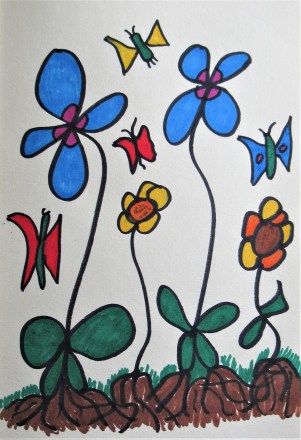
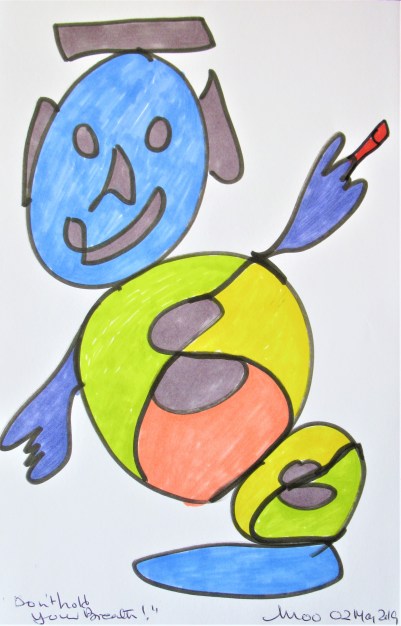
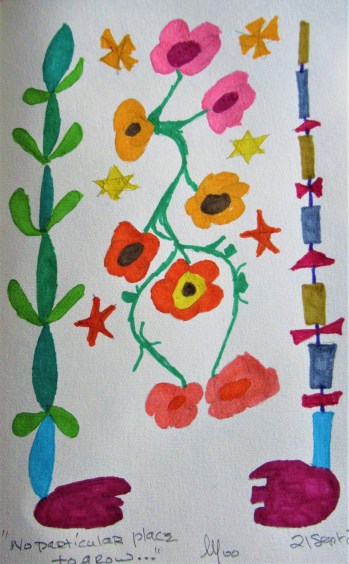
Comment: The cartoon is today’s effort. I looked out of the window and saw all the garden plants with ‘no particular place to go’ and that’s how it is sometimes, especially at this time of year, the summer behind, us fall present , and the winter ahead. We are left with the tiding up, the readying for next year, a sense of sorrow, and a feeling of hope that yes, the garden will return and yes, we will be here to witness it.

So, what are the figures in my cartoon saying to each other? Well, they have been reading the wise words of my olde friend, Oscar Wilde. “Be yourself,” he told them, ” everybody else is taken.” What are they you ask? They are themselves, as I am myself, and you are yourself, and yes, I am very happy to be who I am. And of course, everybody else is taken, so who and what is there left for us to be?