Empty Head


Empty Head

I sat in class, head in hands, avoiding eye contact. I hoped the priest wouldn’t point me out, call on me, nominate me with a finger, but to no avail. He called my name.

“You have sixty seconds to speak about,” he paused, then produced the rabbit from the hat. “Matches. Come along, stand up, sixty seconds, starting,” he watched the second hand go round on the classroom clock, then counted down: “5, 4, 3, 2, 1 …” waved his hand, and shouted: “Start now!”

            Images flashed through my head: matches: cricket matches, boxing matches, rugby matches, soccer matches, chess matches, matches to light the burners on the gas stove, the oven, to light the fire in the fireplace … matches, matchsticks, Match Box toys, Dinky toys, toys for little boys, toys for big boys …

            “Fifteen seconds have gone … you have forty-five remaining.”

            “When I think about matches, I think about …”

            … the first spring day in the bungalow, our summer home. The rooms are cold and damp after the winter and nobody has been here since last year. We lay a fire in the grate, but the wood is damp, as is the old newspaper we gather from our last visit. We search for sugar to aid the blaze that we hope to start, but the sugar bowl is empty. We go to the stove. Cold, winter ashes crowd the fire bowl. We scrape them together in a desperate search for charcoal remains …  but we find nothing. We move to the oil-fired lamps and oil stoves. Matches dragged across soggy sandpaper fail to spark …

            “Come along, boy. We haven’t got all day. You’ve got thirty seconds left.”

            Silence fills the room. It is broken by the childhood sniggers and chuckles of long-forgotten classmates who never became friends My cheeks grow red. I start, stammer, and stop.

            … we leave the bungalow. Go next door to where our neighbours winter over. We knock on the door. “Can you lend us a match?” we ask, holding out our hands. Mrs. Williams beams at us. “A match,” she says. “First time in after the winter?” We nod. “I thought so. Saw you arriving. Wondered why you hadn’t come earlier. The weather’s been nice. Here: I can do much better than a match.”  She moves over to the fireplace, picks up the little coal shovel, scoops up a generous portion of her fire, heaps on another lump, then two, of fresh coal, and “Here you are,” she says. “Just put it in the fireplace and add some wood and coal. This can be your first fire. Here, you’d better have some matches too.” “Thank you, Mrs. Williams,” we say. “No problem,” she replies. “It’s good to see you back. It’s been lonely here this winter without you.”

            “Time’s up,” the priest says. “That’s sixty seconds of silence and you can hardly find a word to say on a simple subject. Are you stupid or what?

            My face turns red and I suffer the hot, burning cheeks of childhood shame.

Comment:

This is a theme to which I have returned on many occasions. Click on the link to see the original post. https://rogermoorepoet.com/2016/05/page/2/

Striations

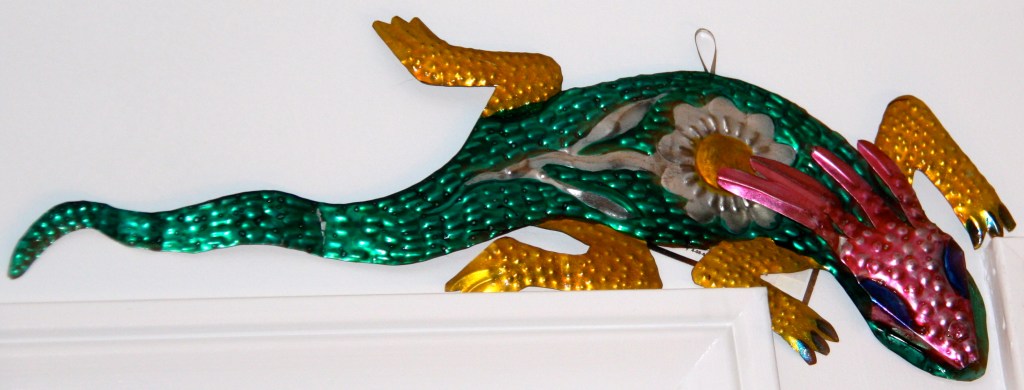
There are striations in my heart, so deep, a lizard could lie there, unseen, and wait for tomorrow’s sun. Timeless, the worm at the apple’s core waiting for its world to end. Seculae seculorum: the centuries rushing headlong. Matins: wide-eyed this owl hooting in the face of day. Somewhere, I remember a table spread for two. Breakfast. An open door. “Where are you going, dear?” Something bright has fled the world. The sun unfurls shadows. The blood whirls stars around the body. “It has gone.” she said. “The magic. I no longer tremble at your touch.” The silver birch wades at dawn’s bright edge. Somewhere, tight lips, a blaze of anger, a challenge spat in the wind’s taut face. High-pitched the rabbit’s grief in its silver snare. The midnight moon deep in a trance. If only I could kick away this death’s head, this sow’s bladder, this full moon drifting high in a cloudless sky.

Comment: This is the prose version, from Fundy Lines (2002). The prose version was based on an extract from a longer poem that first appeared in Though Lovers Be Lost (2000). Though Lovers Be Lost is also available on Amazon and Kindle.

Chance Encounter

Chance Encounter
Overheard one night at the bar

“Meeting her, unexpected,
with another man, that night,
and me, with another woman,
all four of us looking
bemused by what the other
had chosen in each
others absence

… time suspended …

and the halted, faltering
politeness of a nod,
a handshake, ships
passing in the night,
signs and signals
no longer recognized.”

Sciatica

Sciatica

There is no science to sciatica,
just a series of sensations
most of them involving pain.

I don’t know how or when it comes,
but one day, it knocks on your door
and you clutch back and buttock.

It’s like a hawk at the bird feeder,
flown in from nowhere to shriek
and shred, unawares, one small bird.

Was it the flannel I dropped yesterday
when showering?  I stooped to pick it up,
lunged forward, and that was it?

The pain came later. It kept me awake
all night, my worst nightmare.
No comfort anywhere. An endless

wriggling and every movement a knife
blade stabbing at my buttock and slicing
its slow, painful way down my leg.

The screws, my grandfather called it,
a metal screw screwed into his leg,
leaving him limp and limping.

I googled it today, sciatica, and they
suggested an ice pad for twenty minutes,
repeated twenty minutes later.

“Yes,” I muttered, “yes” and found
in the fridge the ice pack we used
to use in our Coleman’s cooler.

My beloved helped me undo my pants.
“This,” she said, “will be icing on the cake.”
“No,” I said, “it will be icing on the ache”

Tomorrow, I will call the chiropractor.
She will bend me to her will, straighten
my back, cure the pain, set me right again,
as long as Covid lets me in to her domain.

The Champion

The Champion

There I was, in dreamland, half-asleep,
leaning on my cart, when this phantom drifted
towards me. “Help me,” it said. “I’m hungry.”

I woke up from my dream, looked at the ghost,
tall, skeletal, thin, cavernous eyes, cheekbones
protruding, gaps in the teeth, grey face drawn.

“Sorry!” My reply was automatic. I looked
at him again. “I only carry plastic.” The excuse
limped heavily across the air between us.

I saw something in his eyes, I knew not what.
As I walked away, I added one hundred pound
of muscle to his frame. He had played hard.

I remembered him holding up the Maritime Cup.
But I couldn’t remember his name. I pushed
my cart all over the store searching for him.

At the ATM I withdrew cash I could give him.
I would tell him he had dropped it. I could invite
him to the snack bar, buy him a meal and more.

I could tell him to buy what he needed and meet
me at the check out. I could add his purchases
to my bill. I looked everywhere. Nor sight, nor sign.

One opportunity. That’s all we get. Miss it, blow
the match. Grasp it, hold it tight, we’re champions.

Comment: “Am I my brother’s keeper?” “Or my sister’s?” Here and now we are living with realities that we have rarely faced before. Not everyone has kept their jobs. Some are indeed living out on the streets, helpless, homeless, panhandling, hoping. Right now they are lucky. Sunny, warm, hot … though sometimes too hot. At least it isn’t 40 below and freezing their butts off. So what do we do? Turn a blind eye? Say we are sorry? Suddenly recognize an old friend, turn quickly away before he recognizes us, and burn ever afterwards with shame?

I cannot answer for you. I can only answer for myself. I am ashamed of my slick answers, my throwaway negatives, my disguised barbs. “Go get a job.” There are no jobs, or very few anyway, Covid-19 has seen to that. “Do something useful, can’t you?” There’s very little they can do, and seemingly there’s very little can be done for them. “Go home!” They have no homes to go to.

So what are the alternatives? Love? Charity? Comprehension? Embracing their situation? Understanding? How can we understand, you and I, who sit before the computer screen, the cell phone, or the I Pad, scanning this in comfort? Think about it: there, out into the street, but for some good luck, and the grace of God, go you and I. Think about it. Now do you understand?

Thursday Night Football

Thursday Night Football

Once a month, they stick
a needle in my arm and check my PSA,
cholesterol, and testosterone:
blood pressure rising, cholesterol high,
body clock ticking down.

The doctor keeps telling me
it’s a level playing field
but every week he changes the rules
and twice a year he moves the goal-posts.

A man in a black-and-white zebra shirt
holds a whistle to his lips while another
throws a flag. It comes out of the tv
and falls flapping at my feet.

Yes, I’m living in the Red Zone
and the clock’s ticking down.

Can you tell me …

Painting by the very talented
line-painter, Geoff Slater

Can you tell me …

… why an incoming wave
is a flash of a handkerchief
an invasion of white water,
a hand at dockside waving good-bye?

… why each wave separates,
thrives for a little while,
then dies on the beach,
wrapped up in its lacy
shroud of foam?

… why errant stars fall,
leaving their constellations
to wander the world alone,
each shooting star, a child?

… why a mother abandons that child,
turns her back on her husband,
and looks silent at the wall?

… why, one night, that husband
walks out of his house,
and never returns?

Don’t Look Out

Don’t Look Out the Window

Don’t look out the window, you don’t want to
know what’s lying out there. Don’t look out.

Play ostrich. Place your head in the sand,
pretend there’s nothing there to worry you.
Pretend you can see the missing PPE,
the vanished masks, the surgical gloves,
the sanitized hand-wash that everybody needs.
Just don’t look out the window. Don’t look out.

Pretend there’s nothing out there. Deny that
nearly two million people are ill.
Deny that a hundred thousand have died,
not in vain, but from ignorance and vanity
 and a total denial of scientific truth.
Just don’t look out the window. Don’t look out.

Just look at these walls that surround you.
Smile back at the smiling faces, the nodding heads,
the puppet-string politicians who agree with
every piece of nonsense that issues, meaningless,
from empty mouths. Surround yourself with people
who believe what you believe, who think and do like you,
fellow narcissists and bullies, cheats and liars,
who have deceived and stolen, lied like you, to build
enormous fortunes while they have cheated on
their wives, gone bankrupt, and borrowed shady money
in questionable deals with shabby, foreign banks.
Don’t look out the window. Don’t look out.

All those employees know a bum deal
when they are on the sharp end of one.

But nobody speaks out and nobody,
but nobody, dares open those curtains
for fear of seeing that reborn beast,
its hour come at last,
slouching down the streets.
Close your eyes. Don’t look out the window.
Don’t look out.

Comment: I rarely comment on political events, let alone write poems about them. That said, I do not consider this poem to be a political statement. For me, the key to the poem can be found in the final five lines beginning with ‘for fear of seeing …’. I have explored inter-textuality before in these pages. I hope the reference to W. B. Yeats’ poem The Second Coming, is clear.

Keeping Score

Avila 2007a 035 (2)

The Score

It’s the old conundrum:
you place one grain of wheat
on the chessboard’s first square,
two on the second,
four on the third.

And so on and so forth,
eight on the fourth,
sixteen on the fifth.
Now close your eyes
and make a wish:
“Let all these pandemic victims go.”

Alas, no.
You must sit and watch them grow:
32, 64, 128,
and that’s the first rank done.
Seven more marching ranks to go.

256, 512, 1014,
Lord above: how many more?
2028, 4056, 8112,
what on earth can people do?
Wash your hands, stay inside,
and hope your best friends
haven’t died.

Doubled again
that’s even more:
16 thousand 224.
Upon this rank
just one more square
sees 32 thousand
lying there.

How many more,
how many more,
and each death ringed
by family and friends.
This week it seems
death’s dance will never end.

Comment: La Calle de la Cruz / Street of the Cross, shown in the above photo, runs past the cathedral of Avila. It is also known locally as La Calle de la Vida y de la Muerte / the Street of Life and Death as it seems duels were sometimes fought there. It seemed an appropriate photo to accompany this poem which speaks of the seeming lottery, with its winning and losing tickets, in which we are all currently involved. The lower photo, incidentally, captures a stone mason’s mark carved into the face of the cathedral in Avila.

When writing the poem, I repeated the numbers naming them with their single digits, thus: 256, 512, 1014 becomes two five six, five one two, one oh one four (line 14). This allowed me to manage rhythm and rhyme. In my mind I always associate  rhyme with reason, but in this current pandemic, I can see very little reason. I guess, as I wrote in one of my earlier poems, ‘there are so many ways to die’. I just hope Corona Virus isn’t one of them. No, I don’t want to live forever, but hell no, I don’t want to die just yet! Keep safe, keep well!

Avila 2007a 039