Flute

IMG_0134 (2)

Carlos Carty Making Magic

Kingsbrae 8.1

Flute
(for Carlos Carty)

Songs without words:
a black alpaca rolling on green grass,
two deer dashing across the lawn,
three Indian Runner Ducks actually running,
four tents, canopies billowing beneath the sun,
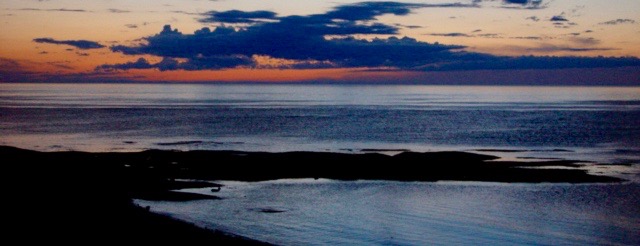
Passamaquoddy stretched out before me,
a dark island stark in the bay,
sunlight descending a ladder of cloud.

Song without words without end:
music of wind through rock,
waves lapping against stones,
a breeze tapping rhythm from river reeds,
plucked and pierced, the reeds:
the world’s first flute.

Life and breath are one.
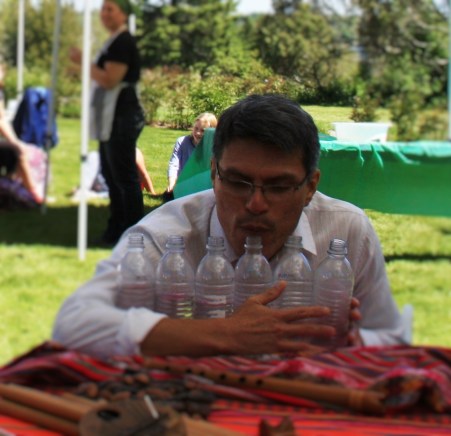
The young man opening the water bottles,
sipping the right amount, pursing his lips,
blowing into the bottle neck,
making sweet music:
a song of joy.

Visitors


img_0180


Kingsbrae 7.1
7 June 2017

Visitors

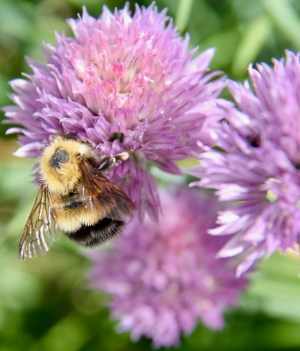
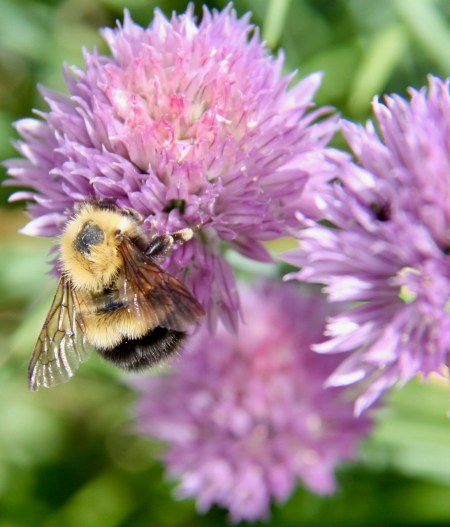
Bees to flowers,
they come to visit,
their sojourns just as brief.

Hummingbirds hovering,
they push pointed noses
here and there.

How much and what
will they understand?

Perhaps they retain
an impression of raindrops
falling, or dust motes rising
to dance in the sunlight.

Maybe my words
will sting like tiny blackfly
and leave small red bites
that will burn with a wild
itch to hear more words.

Stone Carving

Elise

Elise in her Studio

Kingsbrae 6.2
6 June 2017

Stone Carving
Elise Muller

Last night, Elise Muller led the second of our after supper artistic discussions. She told  how her grandmother had been a sculptor, but had never talked to her directly about stone sculpting. Later, when at art school, Elise took a course on stone carving and knew immediately that it was what she wanted to do. Something appealed to her and she was hooked.

Elise then showed us a series of photographs that displayed her sculptures in chronological order. She talked about each one individually, the stone from which it was carved, the manner in which she carved, and the effects she was trying to achieve. Movement interested her and she was trying to sculpt a series of movements into her stonework. Her early sculptures featured different forms of movement, fathers and mothers carrying their children, a woman wading,  and so on. At this early stage movement was present, but it was not conceived as an intentional thematic link between sculptures. Her later sculptures, some commissioned, some made for friends and family, were conscious attempts at carving movement into stone.

A statue called Ballerina was sculpted by Elise for her grandfather and shows her own daughter dancing. The slender figure moves elegantly, poised and posed in stone. A companion piece, Ballerino, shows a male figure dancing. Even a perched bird, a Whisky Jack or Grey Jay, carved in stone and perched on a stone pedestal, leans forward in a moment caught by the camera that photographed the stone. Movement, caught in still stone and photos, is everywhere in the later sculptures. Looking at them, time stands still and the stone flows.

Open discussion followed and we chatted about the healing qualities of crystals and how stones too held their magnetism and personalities. Elise talked about the different types of stone, the various marbles, soapstone, granite, and we discussed the fundamental cost of the actual stone, before it was even turned into the work of art. Elise told us how she was attracted to different types of stone and how the raw material would “call” her and attract her attention. Sometimes, she said, she drew her ideas from the stone, however, on other occasions, she would sketch what she wanted to carve and then find a stone that would be suitable. This latter method she associated more with her commissioned work. Elise also told us about the effect of weather upon stone and how some stones could be left outside in sun, rain, and snow,  while others needed more protection.

Art lag, something similar to jet lag, but far more pleasant, was setting in and, a weary group, we adjourned early, leaving behind, with regret, some wonderful ideas and memories, but taking with us images Elise’s creative techniques and mind pictures of the creations that Elise had plucked from her stones.

Small Corner

IMG_0160.jpg

Kingsbrae 6.1
6 June 2017

Small Corner

 And this is the good thing,
to find your one small corner
and to have your one small candle,
then to light it, and leave it burning
its sharp bright hole in the night.

 Around you, the walls you constructed;
inside, the reduced space, the secret garden,
the Holy of Holies where roses grow
and no cold wind disturbs you.

 “Is it over here?” you ask: “Or over here?”

If you do not know, I cannot tell you.

But I will say this: turning a corner one day
you will suddenly know
that you have found a perfection
that you will seek again, in vain,
for the rest of your life.

Journal: I had the pleasure of reading this poem to the artists and committee of the KIRA program after the evening barbeque on Saturday, 3 June, 2017. It is indeed a Golden Oldie, but it summarizes with remarkable accuracy my own feelings about Kingsbrae and the surrounding area. There are places of peace within the world and, as our world becomes more crowded and our cities overflow with urgency, these peaceful places take on more and more importance. It is essential for us to escape the concrete and tarmac of the so-called civilization and to take refuge in nature. The cultivated garden has a long tradition going back to Medieval times, le jardin enclos and its sacred space, for example, and the monastery cloisters and their enclosed serenity,

Following in this tradition, Kingsbrae Gardens has established an oasis of cultivated peace within the larger peaceful space that is New Brunswick. We are indeed lucky to be permitted to enter these places, to renew our contact with nature in all its beauty and bounty, and to be able to refresh our spirits and drink deep of the peace that flows, and fills us, and blesses our endeavors.

The photo that accompanies this poem is of the crab apple trees in full blossom on the front lawn of the house in Island View where Clare and I have lived and worked together for a quarter of  century or more. This is the view from my writing room window. It is no wonder that poetry flows from this subtle spring beauty.

Encaustic


Anne Mist

Mist Lifting Over The Bay
Anne Wright

Kingsbrae 4.3
4 June 2017

Encaustic
Anne Wright

Anne Wright led the first after supper discussion for KIRA June 2017. She talked about her voyage of discovery into the world of art and explained how she envisioned herself as an abstract expressionist who attempted to place mood, emotion, and feeling into her art work. She showed us examples of her latest works, greeting cards with a combination of pressed flowers and  artwork. She also presented three ‘works in progress’ from her encaustic collection. These have a wonderful tactile quality and seeing them and then touching them gave two very different impressions of her art.

Anne also talked about art as a communion with the unconscious. This may be understood as that which is not yet known or revealed, but is waiting to be given expression.  Art and poetry are the language of the soul, and so can capture something instinctively, before it gains open expression. Words and the meaning into which they distill often come much later and that, according to Anne, is the process of crystallizing the narrative of our lives. Sometimes, as artists, we enter art in order to probe more deeply into ourselves and to discover that which is within us. Anne then led our group into a deeper discussion of this residency and what each one of us, starting with herself, wished to achieve while at Kingsbrae.

Carlos intervened at this point and suggested that we should distinguish between ‘process’ and ‘result’.  With our nightly conversations we are working on the process of how we act and think as artists. Our creativity is in a process of change and this residency gives us time to think and re-think ourselves and thus to concentrate on the how and why we create. In addition, we have time in the individual creative periods to experiment with our creative process. The ‘results’ may be seen as a short term product, i.e. what we produce today, this week, this month, or as a long-term process, i.e. how we grow and develop in a future of which we may not not yet be aware.

Elise responded to this with the story of how she had pushed herself in her sculpting and had, as a result, accidentally broken her own stonework. This was the result of trying to carve a thin, delicate figure from stone. Her effort to create movement in static stonework led to a further discussion into how we attempt to place movement into two dimensional paint. This in turn led to a discussion of classical art with its formality and its entry points versus a more modern art that has no entry point and less formal construction. This responds in part to the twin aspects of reproducing the visual, external world versus creating a new, internal world that represents the inner workings of the artist’s and, by extension, the viewer’s, mind. In this way, what the viewer / reader / listener sees / reads / hears is as important (almost!) as what the creative artist creates.

Ruby spoke of her own art as a narrative line that led into a painting and told, through her painting, a story of her subjects. She spoke of her adventures on the quay where she had spoken with various people and asked permission to photograph and paint them. The contrasts between our different views on our distinct creative methods and how we create / imitate / reproduce / react with our various versions of the world were most interesting. This is an aspect of our residency that will grow and strengthen. It will play a large part in what we are now calling, thanks to Carlos’s intervention, the ‘artistic process’. Needless to say, we are all growing and developing and our creative worlds are growing with us.

Plein Air

Ruby 2.JPG

Kingsbrae 5.3
5 June 2017

Plein Air
(for Ruby Allan)

Plein air,” she said,
and I imagined her
sitting before the blank
spread of a canvas,
a ship’s sail waiting
for a sea-side breeze
to fill that empty space
with color and mood.

What routes will
her paintbrush take
as it wanders
over the new world
lying before her?

Plein air, al fresco,
in garden and street,
before the shops and then
on headland and shore,
alone or accompanied,

with sea birds wading
and the gull’s cry echoing
its sea of sound as the sun
sets in its bonfire of brightness
and throws light and shadow,
chiaro-oscuro, all around.

Journal:  Above Ruby’s poem, there is a photo of her Kingsbrae  studio with a new painting waiting for her on the easel. To my mind, this particular photo is very reminiscent of Dali’s paintings of paintings within paintings, all seen from different perspectives. Alas, the photo will not sell for as much money as a genuine Dali.

Among other things, we discussed the value, versus the price, of art last night. It seems that some paintings are sold at so many dollars per square inch. I find this very interesting. I told the story of how I give away my books to friends. Occasionally I find those same books, signed with suitable, individual sentiments expressed, on sale in the second-hand book stores I frequent. It is sad, and in a way very funny, to think that something I give away for free ends up earning money (a) for the recipient who received and accepted it as a gift and then sells it to the second-hand bookstore and (b) for the bookstore owner, whom I may or may not know, who buys the book second-hand and sells it on to a customer.

Ruby and Anne both told similar stories with regard to paintings that artistic friends of theirs had painted. It brought us to question the whole nature and value of the art we produce. Value, of course, is not something that has, of necessity, a dollar tag attached to it. Art for art’s sake and therapeutic art, for example, have different values both for the creators and the admirers of such art. As Oscar Wilde once phrased it: “To know the price of everything and the value of nothing” and value, like beauty, is sometimes in the eye of the beholder.

Apologia

IMG_0447


Kingsbrae 5.2
5 June 2017

Apologia

Late last night, I opened Alistair Macleod’s book The Lost Salt Taste of Blood and I re-read the first story. I was soon dabbing my eyes with a tissue and blowing my nose.

This morning, I want to destroy everything I have written. I know I don’t possess the verbal and emotional genius of the great writers and I sense that I cannot write like them. Graduate school taught me to be passive, not active, and to write impersonally, choking every emotion when I write. Academia also taught me how to kiss and how to run away with my thirty silver pence. “Never challenge the status quo,” my professors told me. “Learn the rules and disobey them at your peril.”

But here, in this private space where I create and re-create, there are no rules. The enemy is not clear any more and the fight is not one of black against white. It is rather a choice between diminishing shades of grey, and all cats are grey in the gathering dark that storms against my closing mind. Should I destroy all my writing? I wouldn’t be the first to do so; nor would I be the last. And I won’t be the first or the last to destroy myself either. Intellectual, academic, and creative suicide: as total as the suicide of the flesh.

I carry on my back the names of those who have gone on before me as if they were a pile of heavy stones packed into a rucksack that I carry up a steep hill, day after day, only to find myself, next morning, starting at the bottom once again. But this is not the point: the point is that if I cannot write like the great writers, how can I write?

I think of Mikhail Bakhtin and his cronotopos, man’s dialog with his time and his place. I have no roots, no memories, and that is where my stories must start: in the loss of self, the loss of place, the loss of everything. I was uprooted at an early age, soon lost my foundations, and only survival mattered.

I look at the first page of one of my manuscripts. My writing manifesto is clear before me: “And this is how I remember my childhood,” I read. “Flashes of fragmented memory frozen like those black and white publicity photos I saw as a child in the local cinema. If I hold the scene long enough in my mind, it flourishes and the figures speak and come back to life.”

I am aware of the words of T. S. Eliot that “every attempt / is a wholly new start, and a different kind of failure / because one has only learnt to get the better of words / for the thing one no longer has to say, or the way in which / one is no longer disposed to say it” (East Coker).

Are these stories an exercise in creativity or are they a remembrance of things past? How accurate is memory? Do we recall things just as they happened? Or do we weave new fancies? In other words, are my inner photographs real photographs or have they already been tinted and tainted by the heavy hand of creativity and falseness?

The truth is that I can no longer tell fact from fiction. Perhaps it was all a dream, a nightmare, rather, something that I just imagined. And perhaps every word of it is true.

I no longer know.

Yellow Bird

IMG_0176

Kingsbrae 5.1.1
5 June 2017

Yellow Bird

Broken-winged, a bird I found,
panicking upon the ground.

I stooped to lift it from the land:
it nestled in my open hand.

A matchstick splint with cotton tied,
a canary cage to rest inside.

With healing done, an open door:
my yellow bird will fly no more.

I take a pencil, draw a tree,
my bird begins to sing for me.

I erase the cage bars, one by one,
paint a lion’s mane of sun.

Now yellow bird sits in his tree,
and sings all day, to inspire me.

Comment: I split the original post into two segments. The first, 5.1.1 is the poem Yellow Bird and the voice recording. The second, numbered Kingsbrae 4.3 Encaustic, contains the summary of the first evening’s artistic discussion.

Ireland in my Mind

Empress 070

Kingsbrae 3.2
3 June 2007

Ireland in my Mind
(for Anne)

That cottage, stony and cold,
on Galway’s shore
where sunsets redden
the bay as the sun’s slow
candle burns low
across untroubled waters.

Overhead, the planets
await their call to emerge
from the sky-dark
and perform their Platonic
dance steps back and forth
as they have always done.

This limestone, barren
at first sight, now teems
with a hidden life that
emerges when the time
is right and its particles
dance their earthly dance,

the one that burgeons
into paint and flows with
beeswax down the canvas
to create a poetry woven
with lichens and moss, as soft
as this Irish accent

that leaves word footprints
and worlds, as dark as song,
with memories drawn, like water
fresh from the well, as starlight
twinkles and the day recreates
itself in memory and dream.

Journal: Last night, a magnificent and very entertaining supper, hosted by Mrs. Flemer, was held for the invited artists and the KIRA Residency Team. Afterwards, the residency group, consisting of Anne (Encaustic) , Carlos (Piper), Elise (Sculptor), Hanna (Cuisine), Roger (Poet), and Ruby (Painter) gathered in the residence at KIRA and began the first of many discussions on the new cultural world we are creating.

Carlos explained, through his interpreter, how he listened to other people’s music. First comes the rhythm. Then the structural division, segment by segment. Finally, there is the melody. In addition, Carlos looks at what techniques and themes he may incorporate into his own compositions. A general discussion followed on the nature of art and inspiration. Included in the discussion was the weight of responsibility that many of the residency artists felt. This was expressed in a need to produce something special while we are here.

This need to produce came in part from the desire to return to KIRA the faith shown in selecting this group of people, most of whom expressed their surprise at having been chosen.  A discussion followed on how each member had felt upon receiving the news of the selection. A fierce desire to repay the KIRA Team with works of value was felt by the chosen artists. However, the artists also realized that while some results might be immediate, the long-term development of the individual’s art, as a result of the KIRA Residency, might take some time to come through. Patience, belief, and envisionment were three of the themes that then surfaced. After all, Rome wasn’t built in a day and Kingsbrae would never be revealed in all its glory on the first day of a 28 day residency.

Anne Wright presented a signed copy of her book Change Artistry to each member of the group. She also gifted us a delightful card collection of inspirational sayings. My own favorite for the day: “There is a thread you follow. It goes among things that change. But it does not change” (William Stafford). Other exchanges of gifts, some visual, some verbal, some musical, will occur, we are certain, throughout this residency.
Kingsbrae 1.2

img_0180

Kingsbrae 1.2

Huezeequichi
1 June 2017

Pen on paper,
words fall like tears,
waters that will erode
the hardest of stones.

 This man bears witness
to thought, word, and deed.

He’s the outsider who sees
the interior world
and drags forth its spirit
for others to see,
not painted in paint,
not sculpted in stone,
no breeze through the reeds,
just words on the page
lined up in thin lines
to flower and flourish
like an army that conquers
the world of the soul,
and leaves fresh foot
prints on eternal snow.

Journal: The packing is being done. I have gathered my books and my writing material, my notebooks, my pens, my colored inks for cartoons, my drawing paper … it is all in a large box that I call my office. Next I must pack the laptop and the files / USBs and music that I need. After that comes camera and accoutrements, including a tripod in case I want some videos. Finally, the clothes that I need, working clothes and something slightly more elegant, not that I have much good clothing that fits me any longer: alas, I have put on size and weight. The ones who wear white coats told me I would … and they were right.

Carlos will be catching the Fredericton plane in an hour or so. I will have supper when I have packed and I’ll go to the airport after supper to meet him. Then I have to decide whether to drive down to St. Andrews tonight or whether to come back home and sleep here. Decisions, decisions: if the flight is delayed, as it often is, then we’ll spend the night here. If we spend the night here, we’ll leave tomorrow and head for St. Andrews early, just after breakfast.

There is so much to do, so much to think about. Luckily, I made a list and I am just following the instructions I gave myself when my mind was calmer.

Huezeequichi: the one who bears witness.