Hymn of Praise

IMG_0021.JPG

Kingsbrae 4.2
4 June 2017

Hymn of Praise

Woodhenge, Stonehenge,
bay and shore henge,
the sun rising out of the sea henge,
this forest older by far
than the Christian God,
and those Druids, my ancestors,
late-comers, five thousand years ago,
bound to this earth by the same
rays of sunshine that bind me now.

No man kills
in praise of the life-giving Sun,
that Celestial Father
who raised with Earth Mother
the beauty of our flowers,
the bounty of our fields.

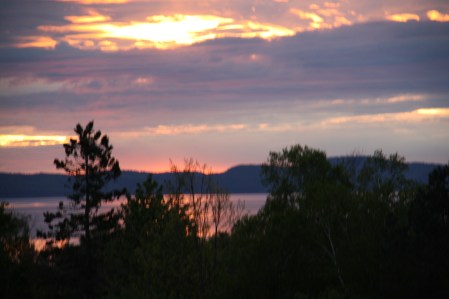
Here, at Kingsbrae,
sitting at my window,
I raise my Sunday hymn of praise
to the Sun who gifted me my life
and who’ll still be there
when I end my days.

Love

img_0137

Kingsbrae 4.1
4 June 2017

Love

Love wore a mummer’s mask.
Cloaked in mystery, it came,
tumultuous, to my door,
and sold me a pig of promises
wrapped in a colored cloak.

When love broke my heart,
I swore I’d never love again.
I chose instead a steady friend,
a singular flower growing
wild in the hedgerow.

Wine, I offered, distilled in
my own winery. Drawings
and paintings, poems, simple
things that rooted deep
and blossomed when least expected.

No passion now, no smoldering fire,
just a slow growing old together,
hand in hand, and a settling down
in comfort and joy, our glasses
filled with the sunshine and un-
tarnished gold that spell true love.

Journal: Absence makes the heart grow fonder, they say. Sitting here, at my window in Kingsbrae, at 6:00 am on Sunday morning, the sunlight sews gold threads through my heart and I realize how much my life has been enriched by the person I have left behind in Island View. Those same gold threads that descend from the sun have bound us together across the years. Apart, we are not alone and I feel her fill me with light even as I sit  here at this window, typing these words, watching the sun rise up over Passamaquoddy Bay.


Triumphs


Avila 2008 006.jpg

Triumphs

Now is the time of minor triumphs:
waking to birdsong in the morning,
making it safely to the bathroom,
shaving without cutting my face,
getting in and out of the shower
with neither a slip nor a fall,
drying those parts of the body
that are now so difficult to reach,
especially between my far-off toes,
pulling my shirt over sticky patches
still damp from the shower,
negotiating each leg of my pants,
tugging the pulleys that permit
my socks to glide onto my feet,
forcing my feet into my shoes,
hobbling to the top of the stairs
and lurching down them, left
then right, one step at a time …

Bistro

18581930_1306791786107970_4016640231053970709_n-1.jpg

Bistro is a finalist, one of three, in the New Brunswick Book Award (2016) for Fiction. The photo is an older one, taken by the local newspaper in my basement in 2014, and reproduced in the paper today. Funnily enough, I am wearing the same clothes today as I was when the photo was taken three years ago. Luckily, Clare has washed them for me, on several occasions, in the interval between then and now. Thank you, Clare, for all the little things you do to keep me alive and happy. Without you, I don’t know what I’d do. This book, like all my creative work, is dedicated to you.

Bistro is available online.

Sun

Empress 070

Sun

The sun has decided to take a vacation.
He’s left us and gone down to Mexico
for a week or two. Right now I think
he’s in the main square in Oaxaca.

He’s wearing a flashy, floral shirt
and a panama hat and he’s sunning
himself in El Jardin as he sits in the shade
and sips his ice-cold Oaxacan beer.

This evening he will go to Monte Alban
to see himself set. Tomorrow, bright
and early, he’ll pop over the mountains
to Puerto Escondido where he’ll gild
sand castles and play games on the beach.

I know where he is, because he sent me
a postcard saying “Having a great time.
Wish you were here.” I miss him so much.
I really do hope he’ll come home soon.

Comment: Today is my father’s birthday. He would have been 107 years old. I was thinking of him this morning, how he loved the sunshine, the sea, and his glass of cold beer. He also liked to travel. I don’t think he ever went to Mexico, but he would have loved Oaxaca and the beaches at Huatulco and Puerto Escondido. He would have appreciated the old temple compound and palaces at Monte Alban.  I thought of calling this poem, this ‘very raw’ poem, Sun & Son, but it’s all about him really, the Sun as warmth and protector and father, and the Son as missing the Sun.

Battle Axe

img_0199

Battle Axe

Grim-faced, ageing,
wrinkles bone-deep
sculpting her skin
into unsightly waves,
a grimaced frown,
much practiced,
worn as a mask
to keep the world at bay.

Over her shoulder,
the mail-pouch slung,
brimful of letters,
bills, in all probability,
their content unknown
until the recipient’s
thumb or pocket knife
slits open the envelope
and reveals the secrets.

She carries more secrets.
They bob along in the streams
that flow beneath her skin
where joy and sorrow mingle.

Tomorrow, the surgeons
will perform their biopsy
and search out those secrets.
For now, she walks
with her eyes cast down,
unwilling  to meet
my all-seeing gaze.

Double Trouble

IMG_0473.jpg
Double Trouble
“I’ll need some ID,” the guy selling Fred a new cell phone said. “Something with a photo on. May I see your driving license?”
“Of course,” Fred pulled out his driver’s license.
The salesman took it, glanced at the picture, walked over to the computer, and started to type in numbers. Fred watched him as he nonchalantly punched the keys. Then Fred saw him stiffen and straighten up as he held the license up to the light, double-checked it, and frowned.
“I’m sorry, sir,” the salesman said, looking very sad. “This license has expired. It’s more than two years out of date.”
“You’re joking,” Fred said
“No sir,” the salesman replied. “This license expired two and a half years ago.”
He handed it back to Fred who also checked it with care. At first, the figures seemed blurred. Fred took out his glasses and put them on.
“You’re right,” Fred said. “It is out of date. I must have the new one in here somewhere.”
He started to rummage through all the plastic cards in his wallet. But there was no new driving license.
“I must have left it at home,” Fred muttered.
“They usually shred the old licenses,” the salesman smiled. “They never let you keep them. You must have forgotten to renew.”
Fred placed his hands on the cell-phone counter, looked down, and saw his face mirrored in the shiny plastic. He gazed into his own eyes and they looked back at him. Then his mind flashed back two and a half years.
He had just been through the biopsy, a messy, painful, and unnerving affair, and the results had come back positive.
The urologist demanded a new battery of tests: X-rays, bone scans, blood tests, MRI’s, examinations, more examinations, questionnaires, discussions about possible forms of treatment …
The different treatments were set out like food in a self-serve restaurant and, like the strange foreign foods that Fred liked to try without knowing exactly what they were, their names meant nothing to him.
Then there was the travel: out on the road between his little place in the country and the major cancer hospitals in the province with an examination here, and a consultation over there. All the medical staff he encountered were kind and helpful and the suggestions they offered were sound. The winter road conditions complicated matters, though, and twice he was forced to cancel appointments because of road conditions.
Then, a week or so after the MRI, the allergic reactions set in and, over a three week period he lost all the skin, first off his hands, and then off his feet. He watched the skin bubble, then he saw it go very dry, and then it just flaked off. He remembered getting out of the shower one morning, drying his feet, and staring down at the little pile of flaked-off skin that had come away with the towel.
A little later on, came the injections, the tablets, and that was before the start of radiation treatment …
Now, two and a half years later, Fred’s driving license, the one that should have been renewed on his birthday, had expired. He remembered that birthday well. He lay on his side in the hospital and the specialist drove that first needle into his buttock … what a birthday present. And now, two and a half years later, he had another special gift from that birthday, an expired driving license.
He thanked the cell-phone salesman, put his expired driving license back in his wallet, and said how sorry he was that e would be unable to purchase the cell-phone at this time.
Early the next morning, Fred went down to the Driving License Renewal Center to discover his fate.
The lady on the counter was most sympathetic. She listened to his story and told him not to worry.
“Don’t worry,” she said. “It happens all the time. But I’m afraid you’ll need to take all the tests again, including the road test. That’s the law. I’ll need to see some documentation. A photo ID is preferable. Do you have your birth certificate or your passport with you?”
Fred nodded. He had checked online to see what he needed and had brought all the right documents. He handed the passport over.
The lady behind the counter took the passport, opened it, and looked up at Fred with a sad little smile.
“I’m sorry, sir,” she said. “You are in trouble. Your passport’s expired as well.”
 

Walker

img_0380-2

Walker

It’s as good as a walker, this shopping cart.
I set my heart on finding one and when I do
I hang on to the handle and goad myself
onward, up the supermarket ramp.

I hate it when people to see me like this,
body and confidence broken by my fall.
For when I fall there’s no safety net,
no security, just an old man lying hurt.

A leaf on a tree, I shake in the breeze.
I pause for thought, catch my breath,
then struggle forward, caught like a high-
wire dancer in the spotlight, my heart in my

mouth, trying not to look down, or fall,
struggling on, fighting the good fight.

My Favorite Book

img_0196

My Favorite Book

Last night, my writing group threw the table open for discussion on ‘my favorite book’. I listened as each member of the group came up with a title or two and then chose a book that was ‘the favorite’. When my turn came, I was last, they all turned to me, but I remained silent for a long time and then: “I can’t do it,” I said. “I bet it’s got windmills in,” one person remarked, thinking of my propensity of frequently quoting Cervantes’s Don Quixote as a model when literary discussions arise. Indeed, Don Quixote might be my favorite book, but is it?

Let us begin with the concept of book. Is a book something contained between two covers or could it be a series of books? For example, does one choose between The Chronicles of Narnia or must one select The Lion, The Witch, and the Wardrobe over The Silver Chair? Is one free to choose The Lord of the Rings, or must one prefer The Two Towers, say, to The Return of the King? By extension, where exactly does The Hobbit stand, as a book, in book form, in relationship to the later and longer series? Or The Silmarion? Again, can we roll them all together, a series of books under the cover of one book, a favorite book?

The idea of favorite author versus favorite book then surfaced and we discussed Georgette Heyer, John LeCarré, equally loved and loathed, Jane Austen, the Bronte’s, J. K. Rowling, and William Shakespeare. The mention of Shakespeare led us into plays as reading material and plays as performance, and performance as on stage or on film. One of our members loved Shakespeare on film and TV, but didn’t like reading Shakespeare, because it was ‘difficult to read and needed the interpretation of the actor for the meaning to come across’. This same person did not like LeCarré’s books, but was very appreciative of his work on film. Where does George Smiley begin and Alec Guinness end, one asks? How can we separate the character from the actor? Applied to James Bond, who is James Bond? Is he Sean Connery (totally unique and my personal favorite), Roger Moore (better for me in the role of Simon Templar, The Saint), or one of the later and newer actors who have taken over the role? By extension, should James Bond be played by a black actor (why ever not I ask?), and could (oh horror of horrors!), a female actor take over that role (I’d love to see it … “I’m Bond. Jane Bond!”)?

This led us into the art of the narrative and the relationship between book as narrative and film as narrative. Clearly they are two different forms of media, but how do they influence each other? The book obviously comes first. We can talk of the seventeenth century novel, but it is difficult to talk of the seventeenth century film. So, the linear narrative of the book comes first and then that book is turned into a film. However, a film contains its own narratives structures and these include multiple points of view, split screens, flashbacks and time distortions, and a multiplicity of other devices among which the actual scenic impact is of the utmost importance. For most of us, the nineteenth century novel (no radio and no television for entertainment in those days) is long drawn out and very slow moving. We miss the instantaneous impact of screen and TV with the breaks for advertisements and the time to recharge our coffee cups and snacks. This leads us to our own attention spells as readers and our own demands for the instant gratification of a thrill a minute. “Hook them on page one and addict them by page three,” one person commented to many nods from around the table.

But the mention of Don Quixote also takes us into other areas. In this age of bi- and multi-lingualism, do we prefer to read our books in one language rather than in an another? Don Quixote in Spanish or French or English? And which translation? There are some twenty translations of Don Quixote into English. Is one preferable to another? Which is more accurate in the terms of a translation? Which reads more easily in terms of a re-creation in artistic form of the original? Should we prefer an English-English translation to an American-English translation? And where oh where is the Australian, Indian, Pakistani, South African, Canadian, Irish, or Welsh translator who will justify that famous text in his own country’s rendition of what used to be called the King or the Queen’s English?

Don Quixote, according to the great Spanish literary critics, is a book for the three ages of life. Readers should read it when they are young, when they are middle aged, and when they are approaching old age. Why? Because one’s reading and understanding of the book changes as one grows older. If this is true, then can we not expect to have books that we preferred at an earlier age in life, The House at Pooh Corner, for example, or The Wind in the Willows? And what about our early teens (adolescence), our early twenties (university years)? The idea of our being able to choose a ‘favorite book’ becomes less and less clear as we open up our minds to the broader horizon of tastes that change as we age and mature.

You will have noted that, with the exception of Shakespeare, we concentrated on the twin ideas of fiction and narrative, be it in word or on the screen. What about poetry? Five major critics met at the Modern Language Association of America’s meeting held one year in the University of Toronto and held a panel discussion in which they discussed why and how they had been attracted to the foreign language that they had studied. In four of the five cases, it was the poetry of the language, not the theatre or the narrative, that had pulled them in. Last night, we did not discuss poetry.

When we bring poetry to the table, we open a different discussion. We rarely read and appreciate ‘books of poetry’. With a few notable exceptions, it is individual poems and poets that attract our attention, rather than entire books or collections. And what is it about poetry that attracts us? Surely, it is the power, not of situation nor of action, but of language. It is the sheer power of language and the thrill of words that draws us to poetry. Perhaps that is why, in an age of impatience, we have less time for immersion in the magic spell of words and their undercurrents of subtle meanings. As a friend of mine said to me, the day before yesterday, “I started your poetry book, Obisdian’s Edge, but it was too deep for me, too difficult. I gave up on it. I needed something simpler to read.”

Comment: This article should be read in association with an earlier piece in this blog (15 July 2016) on My Top Ten Books.