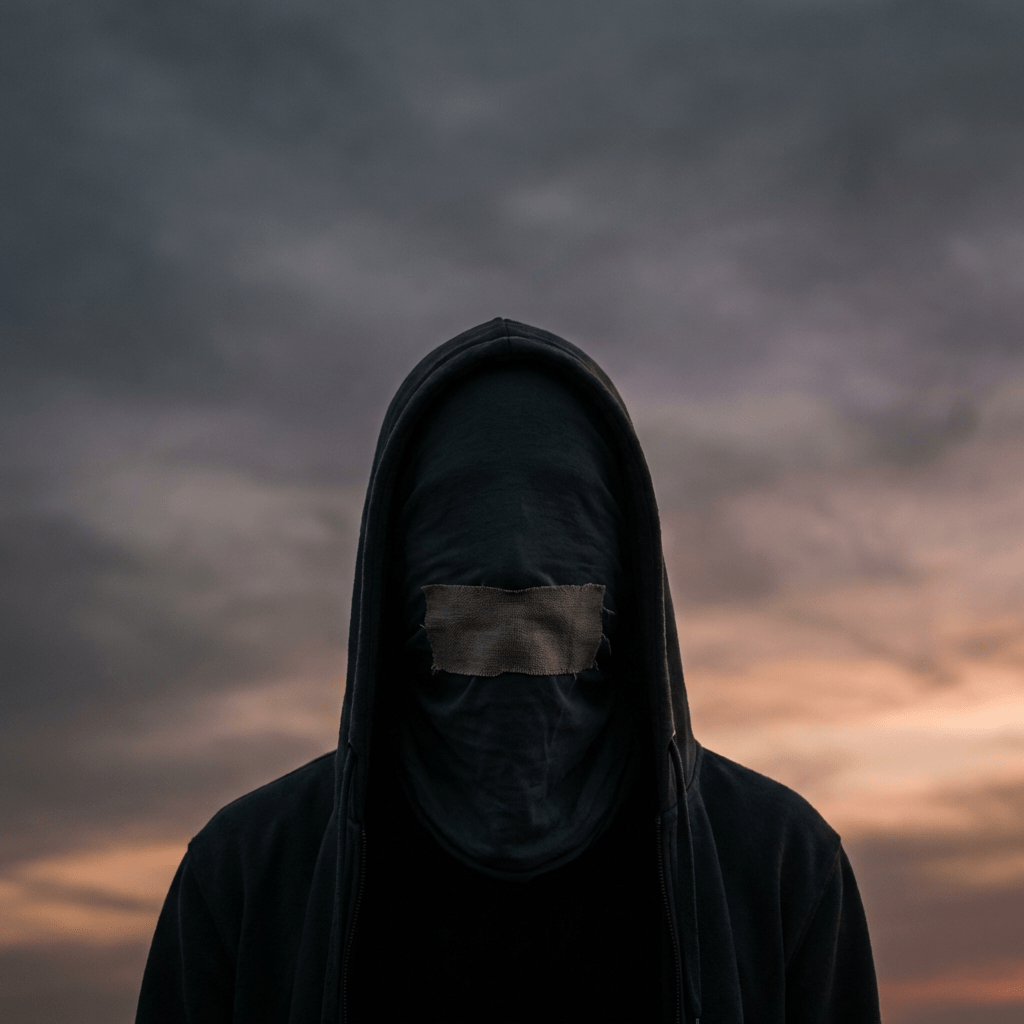
Image generated by AI
Ryan and Don Roger
6
Censorship
Censorship plays an important part in many societies and can take multiple forms. The Spanish Inquisition, for example, along with book burning, played a powerful role in the printing industry. Every book had to be examined and approved by a member of the Inquisition. Political correctness is itself a form of censorship. It encourages people to think about what they say and how they are saying it. Many sorts of political correctness arise from the feminist movement that began to question the male domination of the English language. Actors and actresses became actors. In cricket, wicket-keepers, bowlers, and fielders passed the linguistic test, but batsmen and batswomen became batters. I sincerely hope that glove men, for wicket-keepers, do not turn into glove persons.
Nowadays, some people feel that the correction of language has gone too far and this has resulted in the anti-woke movement, as it is called. This rejects both the correction, and the hyper-correction, of what some people call imbalances in language, culture, and society. I will self-censor myself, rather than being censored by another person or persons, and refrain from what I personally feel about these ideas. Here, I merely point out that they exist.
Lazarillo de Tormes, for example, was heavily censored by the Spanish Inquisition. All anti-clerical references in the original edition, and there were many of them, were removed. The resultant volume, heavily redacted and much smaller, became known as Lazarillo Castigado / Lazarillo chastised.
To the best of my knowledge, the only piece removed from Don Quixote was the episode in which he made a rosary from the tail of his shirt, by tying ten small knots in it, and one large one. Since the shirt tail was used for many purposes, including wiping oneself, the censor thought this idea was indecent. Cervantes replaced the shirt tail with ten acorns and a chestnut in later editions.
He also managed to escape censure by placing all his questionable statements in the mouth of a mad man. Whenever an anti-clerical comment was made, readers (and listeners, for in those days, not everybody could read), chuckled at the enormity of the statement and rejoiced in the fact that only a madman could say such things.
Together with censorship comes correction. Thus Sancho, who is illiterate and can neither read nor write, is also unable to spell. In this fashion, he offers a series of incorrect pronunciations and phonetic equivalents that Don Quixote joyfully and carefully corrects. We see this in other characters too. In DQI, VII or 7, the devil named by the housekeeper, becomes ‘the sage Muñaton’ in the mouth of the niece. Don Quixote changes this to ‘Freston’. The housekeeper continues with ‘Freston’ or ‘Friton’ and adds “I know only that his name ended in ton.”
In our modern society, I see an enormous change taking place. Where I was educated by reading books, many books in my case, today’s younger generation teach themselves via AI and Chat. They watch videos. Watch TV. Text on cell phones. They listen to multiple podcasts. All this is audio-visual, little of it is written down. As a result, essays I received from my students were filled with phonetic spellings of words that they had heard, but not seen in written form. In addition, schools are no longer teaching cursive. My grand-daughter can print. She can neither read nor write joined letters. However, she can text faster with her two thumbs than I can with my index finger! The new generations have entered an electronic world that is totally alien to me.
Quis custodiet ipsos custodies? Who shall guard the guards? Who shall police the police? Who shall program the programmers? And with what shall they program them? A long time ago, the BBC in England banned Sesame Street because it was too simplistic. Today, Sesame Street equivalents rule. So, let us extend our questions – “Who shall censor the censors?”
Sometimes, it takes a madman to do it, in our case, a madman called Don Quixote! He, in his madness, encourages us, nay (or as Rocinante might say ‘neigh!’), he forces us to re-examine our links to language, to reality, to illusion. Reading his text, we learn to ask questions of the world around us. How many of our realities are illusions? How many of our illusions are corruptions of reality? How many times has Don Quixote been banned by figures in authority because of its attacks on authority?
Quis custodiet ipsos custodies? Who shall guard the guards? Who shall program the programmers? “Who shall censor the censors?” And who will protect us if we speak truth to authority, and authority doesn’t like the truths we offer? The author of Lazarillo remains anonymous. Cervantes distanced his words from himself and put them in the mouth of a madman. Other people have taken evasive action in other ways.
The alternative – stay silent and bleat with the sheep – “Four legs good! Two legs bad!” And when the Mastiffs with their spiked collars come for us, we can always, like the sheep, change our chant. “Four legs bad! Two legs good!” After all, all sheep are equal, even when some sheep are more equal than others, and all of us can imagine we are animals on George Orwell’s Animal Farm – and then we can say what we want and nobody will listen, nobody will pay attention, and nobody will understand. And remember, somebody, somewhere will want Animal Farm banned. And 1984.
 rogermoorepoet