Kingsbrae 2.2

img_0165

Kingsbrae 2.2
2 June 2017

The Red Room

Carlos makes music on his flute.
He lives in the Green Room,
an open door opposite mine.

He creates the highest note of all
and it floats before me in the air,
a trapeze artist caught in a sunbeam,
suspended between the hands
that fling and those that catch.

His musical rhythms are different.
I try to follow his fingering.

In the space between notes,
hummingbirds flash their ruby
throats as they flit between flowers.

With a whirring of wings, all music
stops, save for the robin’s song
refreshing the early summer
with the sound of his eternal joy.

Journal: As I unpack my bags and start to settle in and arrange the room to my own liking, Carlos who will stay in the room opposite mine, starts to play his flute. I listen to the notes and, as I am listening, a robin joins in the song. I rest for a moment and sit at the small writing desk by one of the windows. From here I can see white clouds floating their ice-berg shapes across a sea-blue sky. Beneath them, Passamaquoddy Bay sparkles and crackles with filtered sunshine.

My mind goes back to another, more desperate time, two years ago, when I sat by the hospice window in Moncton and looked out at the car park. My car sat out there, abandoned, lonely, waiting to take me home for the welcome respite of a weekend free from radiation and treatments. Now, looking out of the window towards Minister Island, I feel as if I belong, as if this place had been waiting a long time for me to arrive and bear witness to it. I feel deep inside me the joy I feel when I walk in the door and enter the warmth of my own family and home.

Kingsbrae 2.1

IMG_0486.jpg

Kingsbrae 2.1
2 June 2017

Pan Pipes
(for Carlos)

Lips form to make sounds
and the pan pipes speak
the international language
of love and lost love,
of a breeze through river reeds,
of fire on the snow high above
on Huascaran, Misti,
and wherever the pan pipes
roam, the piper will be at home,
his magic moving hearts and minds,
entering fingers that tap
and feet that move to the music’s beat,
yet beat is too harsh a word
for music that moves
like a breeze through the reeds
to pierce our souls
with its rhythmic breath
of a life now shared
with its mastery of that sacred art
older by far than other music,
save for the tapping
of stone and stick.

Zampoña andina
(para Carlos)

Los labios se comprimen
para formar sonidos
y habla la zampoña
la lengua internacional
de amor y amores perdidos,
de una brisa entre las cañas,
de fuego en las altas nieves
de Huascaran, Misti,
y dondequiera que viaje la zampoña
estará en casa el zampoñista,
su música penetrando
el corazón del oyente
haciendo bailar sus dedos
y danzar sus pies
al compás de la música,
aunque compás es una palabra
demasiado dura para describir
esta música que mueve y nos mueve
penetrando el alma
con el suspiro rítmico
de una vida ahora compartida
con su dominio de esta arte sagrada
más antigua que toda la música
salvo el batir de bastón contra piedra.

Journal: Last night, I picked Carlos up at the airport and we loaded the car. It was getting late, and between thunderstorms, water on the highway, poor visibility, the spring presence of moose on the highway, the gathering dark, and the hydroplaning that was a part of the storm, we decided to spend the night in Fredericton rather than arrive late and in the dark. My Spanish, very rusty, is improving under Carlos’s guidance. I am helping him with his English as he helps me with my Spanish.

This morning we are up early. Breakfast is ready. I will post this and then we will be on our way.


Kingsbrae 1.2

img_0180

Kingsbrae 1.2

Huezeequichi
1 June 2017

Pen on paper,
words fall like tears,
waters that will erode
the hardest of stones.

 This man bears witness
to thought, word, and deed.

He’s the outsider who sees
the interior world
and drags forth its spirit
for others to see,
not painted in paint,
not sculpted in stone,
no breeze through the reeds,
just words on the page
lined up in thin lines
to flower and flourish
like an army that conquers
the world of the soul,
and leaves fresh foot
prints on eternal snow.

Journal: The packing is being done. I have gathered my books and my writing material, my notebooks, my pens, my colored inks for cartoons, my drawing paper … it is all in a large box that I call my office. Next I must pack the laptop and the files / USBs and music that I need. After that comes camera and accoutrements, including a tripod in case I want some videos. Finally, the clothes that I need, working clothes and something slightly more elegant, not that I have much good clothing that fits me any longer: alas, I have put on size and weight. The ones who wear white coats told me I would … and they were right.

Carlos will be catching the Fredericton plane in an hour or so. I will have supper when I have packed and I’ll go to the airport after supper to meet him. Then I have to decide whether to drive down to St. Andrews tonight or whether to come back home and sleep here. Decisions, decisions: if the flight is delayed, as it often is, then we’ll spend the night here. If we spend the night here, we’ll leave tomorrow and head for St. Andrews early, just after breakfast.

There is so much to do, so much to think about. Luckily, I made a list and I am just following the instructions I gave myself when my mind was calmer.

Huezeequichi: the one who bears witness.

Kingsbrae 1.1

IMG_0464

Conference Call
(for Anne, Carlos, Elise, and Ruby)
Kingsbrae 1.1
1 June 2017

Face to face, the five of us,
a gallery of artists, meeting
together for the first time
in a virtual reality unlike
the ones we ourselves create.

Our opening words simulate
a game of chess, slow and
hesitant, then speeding up,
slowing down, accelerating
as we gain more confidence.

Faces become names, voice
and tone take on deeper
meaning, one of us smiles,
some of us smile back. Then
smiles turn to laughter as
formalities break down.

In growing fellowship, we work
on the where, how, and why,
of what we will be doing
when we meet at Kingsbrae.

Journal: Anne organizes two conference calls in May and we are able to talk online and discuss what we intend to do when we gather together at Kingsbrae. It is a little slow at first, but we soon warm to each other and the ideas flow.  It’s not easy for us to pull everything together, for we are so different. Our group contains an artist in multi-media (Anne), a musician from Peru who plays the pan pipes (Carlos), a sculptor, (Elise), a painter (Ruby), and a poet (Roger).

Now the First of June has arrived. Anne and Elise are already on the road. Carlos is in the air, flying in from Lima to Toronto, and then on to Fredericton, where he will be met later today by Roger. Ruby is all packed and about to set out. She will probably head right past my house as she travels to St. Andrews. Depending on the actual time of arrival of Carlos’s flight, we will either meet tonight in Kingsbrae or else early tomorrow.

Expectation is high. My own artistic antennae are twitching, and I am sure that everybody else feels the same: fortunate, lucky, charged up with artistic energy, in a single word: blessed. Soon the creative adventure will start. Then let the magic wand wave and a fecund creativity will set in.

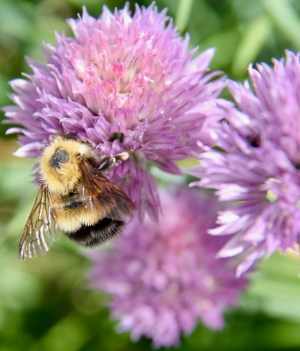
Blackfly

15-may-2002-pre-rimouski-224

Blackfly

Open car door or window:
they whisk in with the wind.
Silent they head for light,
crawling steadily up the inside
surface of the windshield.

If you are quick, you can
catch them now. Kill them
cleanly before they gorge
on your blood, spreading it
thin, your own raspberry jam
blocking your line of sight.

When you exit the car,
you see the killing fields,
blackberry jelly spread
thick on number plates,
dimming your headlights
with dark clots of death.

Comment: We drove down to St. Andrews on Monday and visited Kira and the Kingsbrae Gardens. Such beauty, such a wonderful reception, and the food in the garden café was marvelous. On the way home, the pinging of blackfly against the windshield made us think it was raining. When we got out of the car, headlights, hood, and license plate were covered with thick films of dead flies. We kept doors and windows closed, except for a brief moment at the service station, where we filled up with much more than gas.

Metaphor: Wednesday Workshop

img_0177

Metaphor
Wednesday Workshop
26 October 2016
Revised
31 May 2017

Metaphors: What are they? I must be honest: I don’t really know. I don’t understand them. I never have. I probably never will. This morning, I determined to find out what a metaphor really is. So I Googled metaphor and came up with the following definitions.

  1. A metaphor is “a figure of speech in which a term or phrase is applied to something to which it is not literally applicable in order to suggest a resemblance.”
    Well, that is pretty clear, isn’t it?
  2. A metaphor is “something used, or regarded as being used, to represent something else; emblem; symbol.”
    No doubts there.
  3. “Metaphor is a figure of speech which makes an implicit, implied or hidden comparison between two things that are unrelated but share some common characteristics. In other words, a resemblance of two contradictory or different objects is made based on a single or some common characteristics.”
    I know exactly what they mean. Or do I?
  4. “In simple English, when you portray a person, place, thing, or an action as being something else, even though it is not actually that “something else,” you are speaking metaphorically.”
    No misunderstanding here.
  5. “A metaphor is a figure of speech that refers, for rhetorical effect, to one thing by mentioning another thing. It may provide clarity or identify hidden similarities between two ideas. Where a simile compares two items, a metaphor directly equates them, and does not use “like” or “as” as does a simile.”
    Slightly clearer, but not as clear as daylight.

I turn to my blog in search of metaphors that I have created in my poetry and read that “The egg of my skull / shows hairline cracks: / tiny beaks pecking / fine-tuned sparks of song”. “This piece,” Tanya Cliff writes, “offers a unique and beautiful perspective on the theme (of birds).” I think I can do without the dull, dry definitions set out in the definitions above and understand metaphor as “a unique and beautiful perspective”. This functions for me. Thank you, Tanya.

Two more sequences, this time from October Angel: (1) she gathers her evening gown / and walks among ruined flowers (Meg Sorick’s choice) and (2) a snapdragon opens / the frosted forge of its mouth / and sprinkles the sky / with ice-hard shards of fire (Tanya Cliff’s choice). I can understand the first in terms of “a unique and beautiful perspective” since the picture of the October Angel is clear in my mind. In addition, evening / evening gown / ruined flowers are particularly evocative. The second sequence is much stronger as anyone who has seen the snapdragon flowers braving the ice and frost will testify.

After thinking about these three examples, I think I can now understand metaphor a little bit better. I would now define a metaphor as “a brief verbal sequence that creates a new reality that offers a unique and sometimes beautiful perspective on something that we have long known and accepted but now, thanks to the writer / poet, see in a different light.”

This personal definition allows us to distinguish more easily between dead metaphors and clichés like dead as a door nail or avoid it like the plague while allowing us to enjoy the permutations that spring from the innovation of the true metaphoric sequence. The metaphoric sequence also allows us to distinguish between a two word metaphor and a series of metaphors that are thematically linked.

From my own poetry, ruined flowers would be an example of the first while the longer sequence a snapdragon opens / the frosted forge of its mouth / and sprinkles the sky / with ice-hard shards of fire would be an example of the second. Iterative thematic imagery, a form of sequenced metaphor chains, then links the whole work, be it poem or longer piece, within an associative semantic field of parallel meanings. This also illustrates the idea of differentiating between the inorganic and organic conceit, where the inorganic conceit is the example of a single, independent instance while the organic conceit is woven into the fabric of the oeuvre.

In the WFNB Workshop on Metaphor, held in Saint John on Saturday, 27 May, 2017, we had a two hour, in-depth discussion on this topic. We began the workshop with a meet and greet and ice-breaker. Then we offered a pictorial definition of a metaphor. We generated a series of dead metaphors, to be avoided like the plague, except where we use them to define a character, or make fun of them, or use them in a new fresh light that resurrects them and brings them back to life. This was a great deal of fun. We then indulged in a series of creative writing exercises that focused on the creation of new metaphors. We finished the workshop with a “song of craze” in praise of the joys of metaphors. What a day!

The structure of the workshop was very simple. We had 120 minute (two hours) and broke them into 3 sessions of 20 minutes, a 5 minute break, 2 sessions of 20 minutes, and  a grand finale composed of 3 sessions at 5 minutes each. The twenty minute sessions broke down into 5 minutes writing, 7 minutes small group discussion (4 participants per group), and 8 minutes full room participation. The five minutes writing centered on each person writing to a topic. Each member of the group then shared what they had written with the other group members. This helped develop individual voices (the theme of the conference) and showed how each individual approached a single topic in a multitude of different ways. A representative piece from each group was then chosen and the writer read the creation to those gathered in the full room participation.

As a result, everybody was actively engaged in the thinking, writing, creating, reading, and critiquing process. A considerable number of what I call “writing starts” were made. Hopefully participants will continue to develop these writing starts and develop something from them, long term.

Phoenix

IMG_0158

Phoenix

The wool shop has gone.
It survived the winter storms
that whipped the bay ice
into waves of mashed potatoes
that hardened and crashed
against the quay, splintering
its timbers, tearing it down.

It survived the spring time
freeze and thaw that cracked
the sea wall, split foundations,
and wobbled the shop
as if it were yellow jelly.

It survived the carpenters,
the stonemasons, the police,
the insurers that came
with their cameras and their
oh-so awkward observations.

It survived everything
except the lightning bolt
that lit the fire that reduced
the old shop to dust and ashes
from which, unlike the phoenix,
it would never be born again.

Gift

img_0137

Gift

“I have a gift for you,” I said.
“Why?” I had no answer.
Silence built its barriers
between us. “Look,” I said.
“It’s yours.” I held out the book
and she took it in her hands.
“For me?” she asked. “You wrote
this book for me?” “Yes.” The lie
hung in the air for a moment,
a listless, lifeless kite, floating.
“It’s beautiful,” she said. Her smile
ignited the air, sent sparks across
the space between us. She opened
the book, turned the pages, saw
her name. It was indeed her name,
but she was not the person who bore
that name when I wrote the book.

Rainbow

IMG_0375

Rainbow

I dreamed last night
that angels lofted me
skywards and wrapped me
in cotton-wool clouds.

The nearest rainbow
was a helter-skelter
that returned me to earth
where I landed in a pot
of golden sunlight.

Red, gold, and yellow
were my hands and face.
I stood rooted like
an autumn tree covered
in fall foliage with
no trace of winter’s woe.

“May this moment last
forever,” I murmured,
as the rainbow sparkled
and I rejoiced in
my many-colored coat.