
Mactaquac
Going over the Mactaquac Dam.
Only in New Brunswick. What a pity.
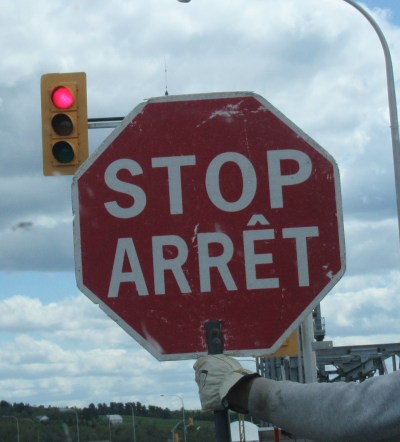
Mactaquac
Going over the Mactaquac Dam.
Only in New Brunswick. What a pity.
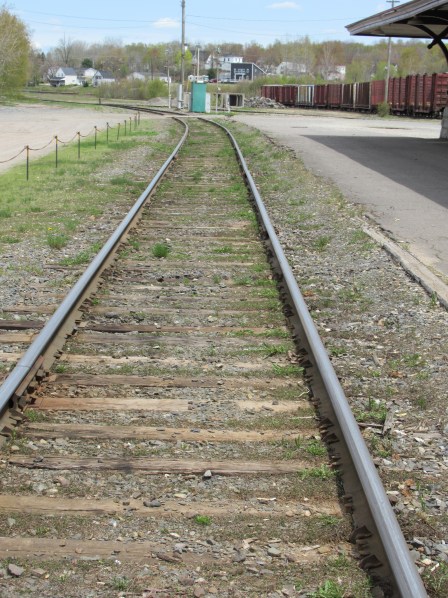
Shunting
McAdam Railway Station # 7
So many memories
cling like hobos
to freight trains.
Tracks as always,
sleepers, steel rails
an optical illusion,
joining in the distance
where the miles
between now and then
knit themselves together
and we are young once more,
riding the rails,
dreaming of towns
beyond this town,
dreaming of the future,
not the past.
Comment: This is one of my own memories. We lived by the railway yards in Swansea and again in Cardiff. The trains were a regular part of my dreams. I lay awake one night waiting for the 3:20 to London, but it never came. I couldn’t sleep, waiting for that train. Next day I learned that there had been a railway accident. When I returned to boarding school after the holidays, I would lie awake at night waiting for trains that never arrived. We had a track close to the school, but we called it the Beetle Crusher because it was old and rusty and used so rarely that the beetles, who never knew when it was coming, would get crushed when it arrived. I have written a book about that train and that school, but I have yet to publish it. When I was very young and we travelled to London on the Great Western Railway (GWR) train from Swansea High Street, we had to go up to the engine driver and say ‘hello’. And then we had to thank the engine before we set off. Iron, steam, coal, inanimate to many perhaps, but live living animated beings young children who sat, like our ancestors in Gower caves, and watched the pictures the sea-coal flames painted in the fire.

Volunteers
McAdam Railway Station 6
Only the old in body
and young at heart know
how to cook like this.
The soda fountain stools,
the horseshoe bar
from the old Royal York,
they merit only the best.
Simplicity rules. Stews
like grandma made them,
lining the ribs,
defying damp and cold.
Railway Pie, recipes
a hundred years old, or more.
bread rolls that melt
into the butter knife,
coffee to kill for. No wonder
the old ghosts walk around
feeding off cooking smells,
sad, gentle eyes, watching us
as we eat, refusing to leave.
Comment: That’s the end of the Railway Pie, I’m afraid. The soup has already vanished. Three lucky people, arriving on cooking day, and receiving a free lunch. What joy, what delight. The volunteers were cooking for another event, outside the station, which was not yet open. Old ghosts watched from quiet corners as we ate. I am sure those spirits survive on the wonderful cooking smells that emerge. I should add how impressed I am at the knowledge displayed by the volunteers at McAdam Railway Station. They now only have their facts at their fingertips, but hey are able to express those facts in a way that draws the audience in and makes every visit a genuine pleasure. Volunteers: thank you for being there. You do a great job.

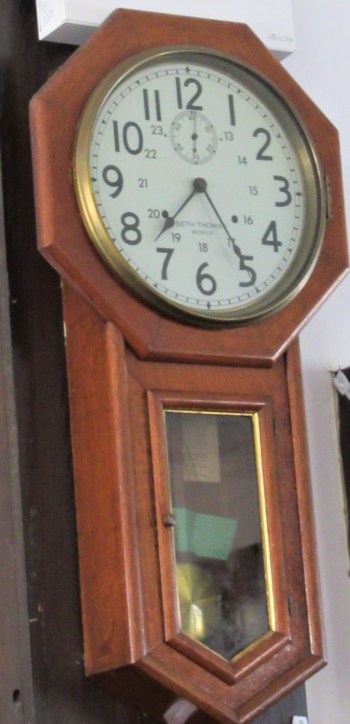
Master Clock
McAdam Railway Station 4
“It came from the Empress,
in Victoria. It won’t work here,
I’m afraid. It’s the clock
that runs all the clocks
and keeps them on time.
It needs a network.
ten, twenty, thirty clocks
that it can control
from its central circuit,
keeping them all on time.
Just like the railway.
The trains were always on time.
Except, just like this clock,
they don’t run anymore.”
Comment: I don’t have a picture of the Master Clock at McAdam Railway Station. I guess I’ll have to take one next time I visit McAdam. This clock can be found in the dining room. Like the Master Clock, it too has stopped. Known in Wales as Grandmother Clocks, these pendulum clocks are designed to hang on the wall rather than to stand on the floor like Grandfather Clocks. Can a Grandmother Clock be a Master Clock? I’ll leave that semantic conundrum to the experts in linguistics. While they are all arguing about it, I will just say that Elsie, who else, told the story of the Master Clock to a group of tourists from Nova Scotia while I was listening.
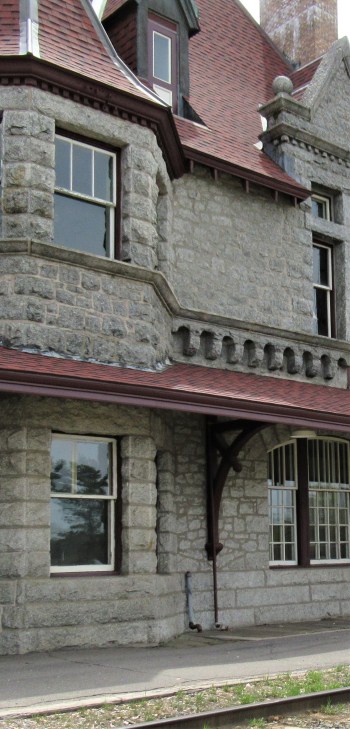
Defenestration
McAdam Railway Station 4
“When I first walked
by that tiny window,
right up there,
on the third floor,
I wanted to go up to it,
to stand there, to look out.
There was a young girl,
went up there one morning,
opened the window,
and threw herself out.
She must have been desperate.
Rejected by her lover,
who knows what state she was in.”
Defenestration?
It’s a funny word,
I had to look it up.
It’s from the Latin:
de means out from,
fenestra is the window,
fenêtre in French.
“She just opened the window
and threw herself out.”
Comment: Geoff, in his role as tour guide, took Clare up to the third floor, showed her this window, and told her the story of the young girl who had jumped out, killing herself in the process. Clare said she was fascinated by the story and felt an urgent desire to stand there, and look out of the window. I am so glad she didn’t feel the need to throw herself out. Oral tradition: I love the way stories are passed from mouth to mouth, changing slightly all the while. Why did the young woman kill herself? Was she pregnant? We can only speculate and I guess we’ll never know for certain.

A Three-Year Old Girl
McAdam Railway Station #3
“I often see her, walking around,
standing in a doorway,
looking into a room.
She’s very curious
but never says a word.
Doesn’t ask questions.
She’s not scary at all,
like some of the others.
There are rooms here
where people won’t go
if they’re alone.
But they mean no harm,
these broken ghosts.
They’re lost, nowhere
else to go, I guess.
Just missed the last train”
Comment: Another story from Elsie, who says she often sees this young child in one room or another. The station is indeed filled with many memories and you can feel warm and cold presences throughout the building. Some rooms are filled with foreboding, while others are warm and comforting. Many old buildings have these qualities as do the old iron age walled camps scattered around the south of England. Maiden Castle and Badbury Rings spring to mind, as do Westbury White Horse, Corfe Castle and parts of Brownsea Island in Poole Harbour. Do I believe in ghosts? I echo the words of my mentor and fellow-countryman, Dylan Thomas: “I’d be a fool if I didn’t.”

Fourteen
McAdam Railway Station 2
“Fourteen years old, he was.
Left school to work at the station.
Pushed brooms, did the cleaning.
Walked into the men’s washroom
early one morning to give it a clean.
Found a man hanging there, dead.
Took out his pocket knife,
cut him down, called for help.
I met him at the station
when he was ninety-three.
He told me all about it,
shrunk in size he did
as he told his story, shrunk
until he was the same size
he was at fourteen.”
Comment:
Another story from Elsie, one of the guides at the McAdam Railway Station and the President of the Macadam Historical Association. A true historian, she is gifted with an uncanny ability to condense a remembered incident into a minimum of poetic words. Thank you, Elsie, for allowing me to access your memory and repeat what you told me. It is an honor and a pleasure to do so.
Carpe Diem
This tube of toothpaste,
nearing its end,
folded over, again and again,
doubled into itself.
Squeeze it tight.
It’s all you’ve got.
Spread it on
the worst teeth.
Brush as you always did,
with hope, up and down,
not sideways. Nothing
before means anything.
Everything afterwards
is merely hope or dream.
A child, you chased
wind-blown leaves
catching them before
they hit the ground.
A scarecrow now, scarred
with age, arms held out,
palms up, hoping a leaf
will descend, a sparrow
rest in your hand,
or on your shoulder.

Call Girl
McAdam Railway Station 1
“She came down from Montreal
to look after all the railway workers.
We called her the Call Girl.”
The men in the room sit up
and pay attention. The women
look rather expectant.
“She was a great worker,
performed her duties willingly.
Up at four in the morning,
out into the streets,
knocking on the men’s doors,
waking them up for work
with her morning call.
We called her the Call Girl
because it was her vocation.
she was called to call.”
Comment:
I visited McAdam Railway Station last week, a Canadian National Heritage Site. The guides who were there, many of them members of the local historical society, were well-versed in tales of the station and the people who used to pass through there. I listened to their words with great care, admiring the quality of their images and speech, the terseness and accuracy of their words. This sequence of poems is based upon those people, excellent guides and raconteurs in the best sense of the word. These are their words, not mine, and with their permission, I am posting their stories here. The first poem was spoken by Elsie. Thank you so much, Elsie, for allowing me to share your words. Click this link to the McAdam Railway Station site if you want to see some great photos and read about the history of the McAdam Railway Station.
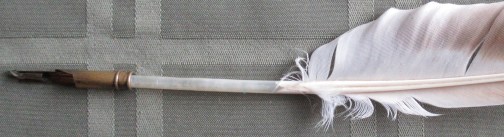
Quill
This old fashioned quill,
a goose feather, plucked,
trimmed, and split,
hare-lip of split hairs,
words and ideas cleft,
sucked in, thrown out,
no clout in the cloister
where the mind walks dry
amidst terminal showers,
meteors of rhyme and reason,
shootings stars falling,
filled with imperfections,
each star a still-born child,
running wild in some meadow,
a heavenly paradise
where walled-in imps
seek an exit outside the box
into which they have been boxed,
with mindless spiders
weaving webs of fine spun words,
filling the sails of pea-green boats,
laden with meanings
destined to set out
and never arrive.
 rogermoorepoet