Catching Crickets


IMG_0265.jpg

Catching crickets, caging them, and making them sing

We track them through their courting ceremonies
hunt them down by the noise they make
clutch them tight between anxious fingers

We weave glass jails
sentence them one by one to green imprisonment

At day’s end we ferry them to city apartments
incarcerate them like canaries in their cages
and wait for them to sing

At first they are silent in this strange environment
we feed them with bread dipped in brandy and wine
and sooner or later they sing in their captivity

Now they will not eat
they await the liquor that burns them
into fiery tongues of song

 Our midnights are haunted by their spirituals

Commentary: This is a “Golden Oldie”going back to when we were living in Santander, Spain. When we visited the beach at Noja, we would lunch with our Spanish family and all their children on the grassy headland overlooking the sea. After lunch, the children would hunt for crickets. When they caught one, they would weave a grass jail from blades of grass and place the crickets in there, one by one. Then, when they went home, they would bring the crickets with them and cage them. The crickets usually ‘sang’, but if they didn’t then alcohol was used as a bribe and a persuasion. I told this story in class one day and one of my students, Sheree Fitch, herself an excellent poet and story teller said: “It’s a poem: quick, write it down.” And I did. And here it is. With many thanks to Sheree Fitch.

NB Our cricket, the one they caught for us, wouldn’t sing. Clare and I took it down to the local gardens and released it when nobody was looking.

Balancing the Books

DSC03693.JPG


Balancing the Books

I knew that I did not have the strength and stamina to make a living as a writer. I knew too that I could not put my beloved and my family through the strain of maybe, or maybe not, making it as a creative writer. And I wanted to be an artistic writer, a poet above all, not just a commercial writer, writing adverts for a living, or pandering to the lusts of a baying multitude.

So: the most difficult thing for me would be look after my family and balance the books. Rather than writing full time, I chose a career in academia. My career as an academic led to 90 research articles in my various fields, 70 book reviews, the publication, in book form, of part of my doctoral thesis, and an online bibliography, now turned into a searchable data base. Add in unpaid, voluntary overload teaching to maintain a small program in a small university, overseas travel programs for students, a relatively successful coaching career at club, provincial, regional, and national levels, and a commitment to various editorial positions, in 14 local, regional, national and international journals, and my creative writing career has understandably suffered. In spite of that, I published 10 poetry books, 11 poetry chapbooks, 12 short stories and 130 plus poems in 20 Canadian (and other) journals, and won several writing awards. Indeed, to have been a full time creative writer and to have maintained a house and a family and a second career would, in my opinion, have been impossible.

Now that I have retired from university teaching, I can finally write full time. In my part-time creative writing career, maintained while I worked in academia, I kept a journal and made sure I spent at least one hour a day writing creatively, even if I had to get up early to do so. This resulted in a couple of poetry books with small presses and later a series of self-published poetry books that doubled with various festivals and other writing sequences. My poetry books did not sell well, and there is very little money in poetry anyway, so I started to give the books away to friends and well-wishers who were interested in what I was writing.

In retirement, I discovered CreateSpace and I now have eight books up on Amazon and Kindle. I am working on my ninth. What do I love best about Canadian Culture and Creativity? That it allows a person like myself, born in Wales, and speaking English, French and Spanish, to live and write in Canada about Wales, England, France, Mexico, Spain, and my adopted homeland. However, the literary and cultural industry boasts of our international character while totally ignoring me and writers like me. We ignore the self-published (calling them adherents to the vanity press) and we put down those who have not progressed in the ways that the literary societies accept.

Do I care? Of course I care. That is why I am writing this and why I will continue to write. Will anyone read this and take any notice? I doubt it. Will anyone take any action as a result of this tiny pebble cast into a Great Canadian Lake? I really, really doubt it. I can see the shoulder shrugging now as the eye-brows raise themselves slightly and the reject pile beckons. Will literary Canada keep staring at its own belly button and congratulating itself on its wonderful cultural opportunities for self-expression in writing? I guess it will. Will things change for artists on the periphery, for struggling artists, for artists like myself who with great difficulty have fought throughout their lives to balance the books? I doubt it very, very much indeed.

But I am here, as others are here. We have a voice. A very powerful voice. A voice that has been side-lined by the establishment and the institutions. But we are many. Very many. And one day, we will be heard.

A brief commentary:

The Writers’ Union of Canada (TWUC) invited its members to contribute a piece on their Canadian Writing Experience to Canadian Heritage, a group interested in gathering comments by Canadian Writers about their experiences. I thought about it for a while, penned this piece, and submitted it for their consideration. I was very pleased to have it accepted and it has attracted some attention.


Power Out-[R]-age

IMG_0303.JPG


Power Out-[R]-age

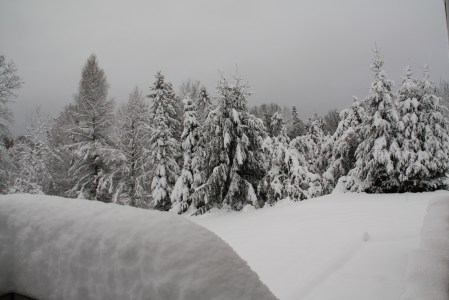
A tree fell across the wires.
Our power went ‘poof’!
No lights. No water. No heat.
We lit a log fire and strove to keep
sub-zero temperatures at bay.

It was as if God had stepped
away from the high altar
and gone out for a coffee
at the local Tim Horton’s
leaving a deserted church
to the mercy of the elements.

Guttering candles surrender
their skimpy lives but scarcely
warm us as more snow falls.

Shadow demons creep in
with the gathering night.
Shivering beneath piled blankets,
we cling together and hope
to keep out the growing cold.

 Warning: Raw Poem

Another raw poem. We lost power at 8:30 am on Wednesday, 30 November and it returned on Friday, 2 December at 2:00 am. 42 hours without power and the temperatures not rising above +2C and dropping to -3 / -5C. No light. No heat. No water. No phone. No internet. I thought of the victorious general who announced to the tune of the bombs bursting behind him on our tv screen that “We bombed them back to the Stone Age.”

Well, here we were sitting in our own miniature stone age and mentally unprepared for the shock of what it all means. What a struggle: to light the fire, to keep it alight (day and night), to keep warm, to prepare hot food over a log fire in an insert fireplace (and us so lucky to have one; some of our neighbors didn’t), and we won’t talk about going to the bathroom! At least, I now what it means to lose power at the start of winter. However, I really don’t understand what it means not only to lose power, but to know that an enemy deliberately and callously stripped that power away.

I tried to put those thoughts into the first version of the poem, but then I took them out as I didn’t want to politicize what is right now a nature poem, pure and simple. The out-[R]-age is there, with or without those other memories and that out-[R]-age comes partly from the knowledge that our civilization, if indeed we can truly claim to be civilized, is indeed skating on very thin ice.

Baby Angel

IMG_0012.jpg

Baby Angel

yesterday a baby angel
lay dead beside the road
the trees
caught their breath

the air stood still
a red fox
tore from the woods
a runaway leaf
so quick so silent
a shadow across the road
melting away to hide in the forest

I can still see the occupants of the stricken car
standing with their cell phones in their hands
punching urgent numbers

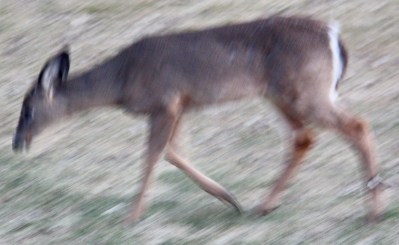
the mother deer’s dead eyes
gazed at them from inside the windshield
shock had rounded the driver’s snow white
lips into an O for Operator

Thought Police

img_0184

Thought Police

Why are they always men,
these blue-clad figures
who wear our dreams like badges
and stare into our eyes,
bright lights behind them,
as they check our numbers
and make us count from one to ten
and up and down again.

Be warned:
you can’t walk in the street
without seeing a curtain
flicker at a window;
unseen lips repeat your words
as they wander,
stray cats and dogs,
from house to house.

Walls have watchful eyes
and lusting ears
that clutch each wayward thought
reporting it to people
who have our best interests at heart,
or so they say.

Don’t look up
but there’s someone
leaning over you,
reading these words right now.

Questions

img_0141-2

Questions

I hear her voice, delicate, distant and I run to the sound, jump on the table, and sit in my usual spot just beside her play thing, but she isn’t there. He’s there, damn it, talking away on that little black thing with buttons. I can see him, smell him. I hate him, his other sex perfumes, his heavy-footed shuffle, his loud voice, his walking-sticks. I run when he approaches, run and hide myself away, making myself small, fitting under furniture where he can’t get at me, trying new places, new spaces …

Downstairs in the basement is good. He has problems with the stairs – shuffle, shuffle, clump, clump – and I get plenty of warning. Not that he ever comes downstairs to the basement. There’s nothing down here for him and I can sit here and snooze and dream and wait for my darling to come back. She will come back. I know she’ll come back. I know she’ll never abandon me, like she’s abandoned him. I am faithful, I can wait.

Besides which, I am training him. It takes time, but he’s beginning to understand that he must do things my way now. I chat him up for food and whisk myself around his legs and down comes the kibble, like manna from heaven. He often spills the food, so I get extra bits, nipping in quickly while he searches for a broom or a dustpan, or that noisy sucking thing I hate so much. That’s not just him, I run when she uses it too: it hurts my ears. And my feelings: I think they’re shooing me away because they don’t want me near. Not that I want to be near him, oh no.

I stay away from the upstairs and the bedroom while he’s here alone. Sometimes we meet on the stairs when I have completed my ablutions, but I give a little shimmy and scoot and leave him star-struck and stranded. He’s just not quick enough. He’s not cruel, mind. He doesn’t kick me or hit me with his stick or anything like that. I just don’t like men. I remember that other man, the one that beat me before she came to the place with all the other cats and cages and took me home. I think all men are like that first man, if you give them the chance, and I’m not giving this one a chance, not until I’ve trained him properly. And he isn’t trained yet. I wonder how long I’ve got?

There he is, hanging on to that little black thing, and when he stops talking, I can hear her beloved voice. It’s distant and a little bit tinny, with a sort of echo, and there are other sounds in the background that I can’t quite make out, but it’s her, I’d know her anywhere, and I whimper and scratch, and he puts down a hand in my direction, but he doesn’t tempt me, and then he holds that black thing down and she calls me by my favorite names and I sit there, silent, and gaze into space, remembering her touch, her gaze, her hand upon my neck, my back … no, I won’t let him that near me, not yet.

Yesterday, he sat at her place by the table and turned the picture machine on. Then shadows appeared and her voice came out of the machine. The shadows moved and played and people chatted back and forth and I didn’t understand it, I just didn’t understand. My whiskers stiffened and I sat there and bristled. The machine was warm and I snuggled up to it, behind the flat piece, where I could listen but he couldn’t quite touch me, even though he stretched out his hand. And she called my name, again and again, but I didn’t move, I just sat there and sat there, waiting.

Then I came to the front of the machine where the shadows danced and her voice was stronger. A shadow, I couldn’t make it out, then her voice again, my whiskers stiffened, I leant forward and sniffed, but no smell, it was her voice, and the shadow shifted the way she does, but they had no smell, and scentless, I could not really sense her, I bristled and she called me, called me by my favorite names, and mewed, I mewed back.

But I couldn’t smell her, and there was no sense of touch … is this the hell all pussy cats will suffer … shadows on a screen, a haunting voice, memories shifting and dancing, no touch, no hugs, no sense of smell … and nothing solid … just shadows and absence … and a sense of chill … forever and forever?

Absence Makes the Heart: Flash Fiction

img_0294

Absence makes the heart
Flash Fiction

 Time on my hands: so precious these moments alone, with my wife gone away to visit our daughter and our grand-daughter. I didn’t want her to leave me here alone. But I thought she needed the break, the space, and I also thought the women needed time together without the troublesome presence of a man. So many ideas flow back and forth when the man isn’t present, ideas that women share and debate, female anxieties that they will not discuss in front of the male, questions of children and development, teething and first words, actions and reactions, left-handedness and right-handedness, backwards and forwards skills that they will not discuss with the same comfort if the man is there.

I miss her. The sun filters through the kitchen and the autumn leaves store up sunlight like an old precious wine before they fall. Wine: I sip slowly at this bottle filled with life and sunshine, bottled sunshine they call it in Spain, sol embotellado, and I know that although I am alone, my friends are there, at the end of the telephone line. I can call them if I need them and anyway, they call me often or drop in once or twice a day to make sure I am okay. If I walk around the block or knock on their doors I know I will be greeted with warmth, an arm around the shoulder, the offer of a meal.

Thanksgiving is near. I already have two invitations for dinner and another lady, much lonelier than I am, has offered to buy the Thanksgiving food, bring it round, and cook it for me. She will also clean up after wards and leave the house cleaner than when she arrived. Can you believe it? I get company, companionship, and no, they are not the same thing, a cooked meal, and a house clean all together. It’s like winning the lottery.

But really, I prefer this solitude, my adventures with the cat, my slow stroll, not through the autumn woods, but through the leaves of this book. I like exploring my own mind, linking myself now to the self I was when I first read these pages and yes, there have been crises, and there will always be crises, and this is not a crisis, not yet anyway.

I remember when I was in boarding school. First day back from the holidays, I would draw a railway engine, and a train track, and I would number the days until the holidays came around again. For the first few days, I would cross off each day. Then, one day, as the new routine took control of my mind, I would forget to do so and the days would all blend into each other.

The new routine: get up earlier than usual. Go down and feed the cat. Make sure the cat had water. Change the kitty litter and make sure that her litter box is clean. Hoover around the litter box and pick up all the spilled litter. Place used litter in the garbage. Put the cat garbage on one side ready for Monday morning when the garbage men come around. Finish with the cat. Wash hands carefully. Then wash them again.

Downstairs I go. I put the kettle on and debate what I shall have for breakfast. Tea or coffee? Cereal or eggs? Muffins or toast? Breakfast for one is so simple. I take the easy route. Green tea with honey, no milk, no sugar. Some yogurt. Some grapes.

I sip my tea and thumb the pages of Carl Jung’s book, The Undiscovered Self.  I love her and miss her so much, but I am glad she has gone. Her absence allows me to re-discover my own presence. I learn about myself once more. I remember who I am and what I am and how I survive when I am on my own, abandoned, set adrift to fend for myself.

I get up from the breakfast table, look around the house, and find my Teddy Bear. The cat will not come near me, so Teddy it is. I set him on the table next to me and tell him all my news. Then I tell him what is happening on the news. Together, we sit and wait for the phone to ring. If she doesn’t call soon, I’ll call her myself. But not yet, not just yet: I’m still discovering my undiscovered self.

Gramm’er uh?

img_0177

Gramm’er uh?
Wednesday Workshop on a Saturday

One year I volunteered to teach the Introduction and Welcome to University course that I had helped design. It lasted twelve weeks (a single semester) and introduced students to the basic survival skills needed to study Liberal Arts at the university level. These included reading a single book, planning and writing essays on that book, examination techniques and sitting mini-exams, how to set about research, thinking and analytical skills, all that sort of thing.

I chose to read Room with a View by E. M. Forster, partly because the film would allow students to better visualize and understand what they were reading. We read a couple of chapters a week, and every week I held a mini test on the chapters read. The test included (1) give the meaning of five words chosen from the chapter; (2) a commentary on any 2 from 3-5 single sentence extracts from the chapter; and (3) an invitation to point out (a) what was going right with the course, (b) what was going wrong; and (c) an invitation to request a one on one meeting with me. There were initially 36 students in my section of the course and although half of them had never before read a book in its entirety, 34 of them successfully completed the course.

A dictionary was one of the key components. On day one I outlined the syllabus and exhorted the students to “use the dictionary” every class, every day. In response to my request for “any questions” a young lady raised a tentative hand and whispered … “I know it’s a stupid question, sir, but …” I stopped her right there. “There’s no such thing as a stupid question,” I stated. “Whatever you want to ask, there are probably five other people who also want to ask that question, but who are afraid to raise their hands. You are the brave one. You are the first to ask. Congratulations. Now: what do you want to know?” I cannot remember what her question was, but I do know that many of the students wrote down the answer I gave her.

I followed up this speech with another one. “This is first year university. All of you have questions. Whatever your background, you may feel ignorant and lacking in knowledge. There’s no crime in that. However, if after four years you have never asked a question and you are still ignorant and lacking in knowledge, then shame on you. You have wasted four years of your life.”

The first two tests were dummy runs: no marks, just the answers. Within two weeks you could tell the students from my section of this course: they were the ones with well-thumbed dictionaries in their back-packs. They asked questions, they checked the spelling and meaning of every word, and they got their money’s worth in education.

I want to say the same thing about grammar, spelling, and punctuation. We are bloggers, we are writers, we want to be the best we can be. So: work at it. In the tabs under Review, MSWord has three very useful tools: Spelling and Grammar, Thesaurus, and Language. When I click on Spelling & Grammar, I get a message stating thatmy heading, Gramm’er uh?, is not in the dictionary. Well, surprise, surprise. S&G make several suggestions (none of them useful in this instance) but the tag Check Grammar suggests the direction my heading should be taking. Use this tool. Work with it. It will help you, if you are having difficulties. It may suggest alternatives ways of expressing yourself, one of which may turn out to be useful.

The Thesaurus tool is also very useful. As an active poet and writer I am always looking for different ways to express my thoughts, and synonyms (words of the same meaning) and antonyms (words with the opposite meaning) are most useful since they assist me in my search for better ways to express myself. When I clicked on Thesaurus, better was highlighted and well over fifty different ways of expressing better (and its opposites) were laid out before me. Scanning them rapidly, I thought of various ways in which the sentence that included the word better could be bettered / enhanced / improved / ameliorated / developed / or simply changed for the better.

As for the Language tab, well: I was educated in Wales and England (English UK) but moved to Canada (English Can) and published widely in the USA (English USA). Spelling changes, as do word meanings, and the English I now speak and write just isn’t the English I learned in school. I need to check my spelling across three variants. Auto-correct will do this for me. But I need to be aware of which spelling system I have clicked upon, or all will not be well. MSWord will also auto-correct punctuation for me. I do not like this tool, especially when writing poetry, as I use punctuation for different ends within poetry. However, it does keep an eye on my writing and how I punctuate it. Speaking and writing three languages, English, French, and Spanish can also be a problem, and differentiating between, for example, profesor, professor, and professeur can sometimes be a problem: one –f- or two, one –s- or two? Auto-correct just changed my Spanish into English by adding an extra –s- … not good in a document written in Spanish.

The modern answer to the dictionary in the pocket (hence pocket dictionary, wow!) is Google. Almost anything can be Googled: grammar, punctuation, spelling, doubts, memories, facts. You can check them all out on Google. It takes only a few moments to search for something and, if necessary, to refine that search until you finally get what you are looking for. A word of warning: get your muse-inspired writing down on the page. Only check your words after you have written them. The flow of inspiration is paramount. The second thoughts that come as a result of revision and checking will usually improve your work, but there is no substitute for that initial flow of creativity.

Main message: never surrender. Never give up. We are writers. We are bloggers. We are here to explore language and to get the better of it. We want to make it work for us. There are many ways of doing this. Find the ones that suit you and slowly, bit by bit, inch by inch, turn yourself into the writer you aspire to be. And remember: if you want to break the rules, no problem. But it helps to know them first … then you know what you are breaking and are conscious of the results.

Gifts: Wednesday Workshop

img_0177

Gifts
Wednesday Workshop
16 November 2016

Gifts or blessings? I am never sure which is which for many a gift is a blessing and many blessings are gifts and sometimes the ones come disguised as the others.

So here I am, in retirement from a career in teaching. I miss my students. I miss the hurry and scurry of the classroom, the deadlines for essays and exams, the highs and lows, the setting of goals, the solving of problems, the light at the end of the tunnel when, after four years, the students, armed with their degrees, set out to face the world, their world, their  brave new world fit for brave new students.

Nowadays, I feel like the lost man, the forgotten man. The deadlines have gone. There is no more rush and tumble. Peace rules the office in my house and dust and spider webs gather in the corners of my mind. I am reminded of the words of Francisco de Aldana: “lo mejor es estar muerto en la memoria del mundo” / best of all is to lie dead and forgotten in the memory of the world. Then I look around me and see the gifts.

From Megan Strong:

IMG_0297.jpg

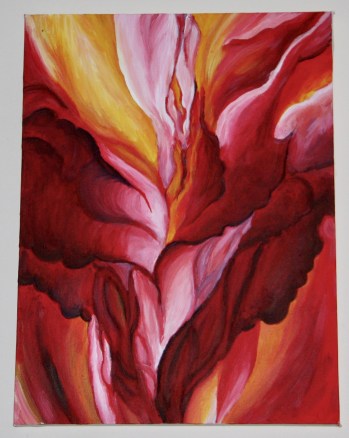
“Do I have to write an essay?” Megan asked me. “Couldn’t I do something else?”
“What would you like to do?”
“A painting. I’ll explain it in Spanish.”

And she did. There are no essays pinned to my walls, but this gift of a painting reminds me of something very precious: a student’s will to be creative, the presentation of knowledge in formats that are not necessarily the expected ones, the ability to be flexible, to understand, to open one’s eyes to the world around one, to see and encourage talent. These were the blessings, some of them anyway, that came with Megan’s gift and her ability to paint.

From Jane Tims:

IMG_0274.jpg

Clare and I visited Jane in her studio home. We drank tea and shared the afternoon sunshine together. Then, just before we left, Jane asked us to choose a painting. Clare chose this one: Apples. We went home and, after much thought, placed it on wall in our kitchen, just beside my chair. I see it everyday and so does Clare. It brings light and warmth to the room and reminds us of Jane’s gifts: her writing, her poetry, her research skills, her drawings, and her paintings. This one above all, for it is so meaningful to us and brings us light, peace, and stillness: such precious gifts.

From Jan Hull:

IMG_0279.jpg

I cannot say enough about this stone sculpture gifted to me by Jan Hull in Shediac, New Brunswick, on November 4, 2016. Jan Stoneist has taken one of the motifs from my book Stepping Stones and has placed it on the left hand side of the carving. On the right hand side she has taken one of the verses from the book and added my name. The result is both a gift and a blessing. Jan searched carefully for the right surface on which to carve her offering and finally found it: Welsh Red Sandstone. What better gift for a poet from Wales … and indeed, Jan makes me feel truly blessed.

From Ainsley Swift:

IMG_0294.jpg

In the days immediately after my retirement, when I found myself at the bottom of the well, looking up at the daylight through a long, dark tunnel, Ainsley appeared at my door and asked me if I would be willing to mentor her as she was having some difficulty with certain aspects of her studies.  Brightness descended upon me and Ainsley and I have worked together for some time now. One day, she turned up with a brown paper parcel and announced that “This is for you.” I didn’t even know that she painted, let alone that she was a talented artist. Another gift, another blessing, light breaking where no light shone, and that brightness still surrounding me.

From Juanra Sánchez:

IMG_0290.jpg

What does one say about the man who persuades the retired stone-cutter in Avila to make one last carving in the style of the verracos that were carved by the Celt Iberians thousands of years ago? Here it is, my own verraco, gifted to me by the best of friends who, every Sunday for four consecutive summers, drove me around the Province of Avila and showed me the love he held for his land. Thanks to Juanra, I saw places and things, too many to enumerate,  that no tourist will ever see. A weighty gift indeed, and a true blessing that will last as long as granite bulls stand firm beneath wind, rain, and snow.

This verraco comes with a story. It is very heavy and very solid. I placed it in my carry-on bag and hoped that nobody would think to weight it. Tired of carrying it on my shoulder at the airport in Madrid, I stood in line, then placed the bag upon the ground. The line wasn’t moving, so I walked a few paces to the wall and leaned up against it. Lines shuffle and flex, as we all know, and that’s what happened. Gradually a small space opened up between my bag and the man in front of me. The man behind me was impatient to close that gap. He looked at me as I leaned against the wall. I half-closed my eyes and watched him. The line shuffled forward. He brought his leg back and gave my bag a mighty kick, right on the rear end of my granite bull. I can still see that man hopping on one leg, cursing, and my bag sitting there, having moved not an inch.

Gifts and blessings, along with kind words and actions, move the heart and soul. I will write more on this subject at another time. Meanwhile, remember the old song: if you can’t sleep, “count your blessings instead of sheep.” I just did and five of them are listed right here.

Desaparecidos

IMG_0137.jpg

Desaparecidos

Last year, in Fredericton Mall,
a mother lost her little girl.
They found her in the women’s washroom
where two old ladies were cutting off her hair
and dressing her in a young boy’s clothes.

Wanted in Winnipeg.
Vanished in Vancouver.
Cheap alliterations in tabloid headlines
disfigure each tragedy.

Sometimes we think we recognize their faces.
This young girl with an old woman’s body
standing at a Yorkville window.
That other girl on Yonge Street
selling her body for drugs.
That flash of underage flesh
mounted by strangers
and glimpsed in a pirate video.

Do you call for call girls when you travel?
That midnight knock on your hotel door
is someone’s missing daughter.
You saw her once before on an airport advert
or on the carton of milk you opened
for your family’s breakfast.

What traveling salesman would you trust
to take your only daughter’s body and treat it well
while she promised him the sexiest time
he would ever have?

But in Goya’s Spain
it’s the males who disappear
usually during the night.

Most times, their families never see them again.
Sometimes, as in this etching,
their bodies are found, nailed to a tree
or dumped in a side street with the garbage.