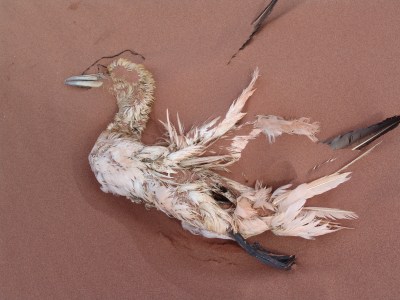
Loss of …

IMG_0062.JPG

Loss of …

By the time I remembered your name,
I had forgotten your face. Then I couldn’t
recall why I wanted to talk to you.

I trace dark landmarks on the back of scarred
hands: blood maps, unremembered encounters,
dust covered photographs, grey, grim, anonymous,

not belonging in any family album.
At night I cruise among islands, emerald green
against sapphire seas. Why didn’t I visit

some of these places? Golden sand trickles through
night’s fingers and time’s hour glass, as stars
sparkle and planets dance in Platonic skies.

My memory fails. I wake each morning
unaware of where I have been the night before.
I track the sails of drifting ships, white moths.

I think I have caught them in overnight traps,
but they fly each morning in dawn’s forgiving light.
I give chase with pen and paper, fine butterfly nets

seeking wild thoughts waiting to be caught, then tamed.
I grasp at something just beyond my fingertips,
but I can’t quite remember what it is.

Comment: I first published this poem on July 31, 2018 (click here for the original post). Here it is now, in revised form. I find the revision process to be totally fascinating: the polishing of old ideas, the arrival of new ones, a different structure, a reshaping of the poem’s internal logic. So much happens in the revision process. Many great poets wrote and rewrote their poems, again and again.  I consider Francisco de Quevedo and Juan Ramón Jiménez to be poets who continually revised. A perusal of the variants to their poems (28 versions in the case of some of Quevedo’s poems) gives the reader an understanding of how the great poets think, of how they purge, intensify, sometimes simplify, usually improve their initial instincts. We lesser poets can learn so much from the greats. Above all, we can understand that poetry is a life-long practice, that it is a love of words and emotions, that it is a desire to catch and preserve the uncatchable that can never be completely caught. The critics say that the reader can never know the writer’s intentions. I agree with that, to a certain extent, as I never know why I am writing what I put down on the page. I guess I often have no intent. More important, my original intention can change as I write, and what I write is by no means what you understand I wrote when you read, for each of us processes the imagery, especially metaphors, in a different, and very personal, fashion. That said, when I rewrite a thought pattern emerges and my intentions become that much clearer, not from the words on the page, but from the footpath that led me in different directions until the final version emerged on the page.
Knowledge

F1040022

Knowledge
Thursday Thoughts
9 August 2018

In response to yesterday’s post, The Curse of Cursive, I received this comment.

“I have always blamed my own illegible (except – well sometimes – to me) scribble on the hours sitting in college lectures attempting to make a record of what was being said. Consequently, I could only ever record about every 3rd sentence. Something which I claim accounts for all those gaps in my learning.”

This comment merits a Thursday Thought.

First thought: the whole process of note-taking. One of my professors in Bristol University, where I did my undergraduate degree, was in the habit of sipping Harvey’s Bristol Cream while munching his sandwiches, consequently his post-lunch thoughts were always most enlightening. Here is his post-lunch declaration on knowledge: “Knowledge is that which passes from my notes to your notes without passing through anyone’s head.” This statement was followed by a closing of the drowsy eyes and an enormous hiccup.

For me, the art of note-taking goes way beyond the copying down of another’s ideas. As  note-takers, we must sift the incoming information, break it into salient and important features, and get the main drift of the argument down on the page. And not just the argument, but our own questions and challenges as well. Much of what I was taught at the various schools I attended was, frankly, nonsense. However, I learned a great deal about teaching from those who taught me that nonsense. A dictated note from an early geography class, preserved for ever in the young student’s mind: “The earth is geoidal, ie, earth-shaped.” Good one, teacher. “Please sir, if the earth is earth-shaped, what shape is the moon?” “Don’t be cheeky, boy, I’ll see you afterwards.”

When I received my first important teaching award I realized that it came to me on account of what I had avoided (all those inadequate lectures and lessons) and that what I was doing was engaging students and challenging them to challenge me by developing their own questions and ideas, by doing their own background checks, and by establishing their own thought processes, rather than trying to imitate somebody else’s dictated and regurgitated notes with their partial pictures of (in)complete and often antiquated knowledge, and all this often dredged up and recycled in the form of ancient, dusty scrawlings from pre-historic graduate courses.

I realize that this is unfair to several lecturers I encountered over the years who were able to deliver riveting and thought-provoking adresses. However, these were few, very scarce, and much appreciated. Their names and ideas are engraved on my mind. They and their methods are not forgotten, even now, but, as I say, there weren’t many of them.

As for knowledge, it is so personal and becomes an integral part of who we are and what we do. I know people who received everything they knew about life with their first degrees. They thought they possessed everything, the complete tree of knowledge in one rolled up certificate. Alas, many of them spent their lives never progressing, standing still and contemplating their known world, neither learning nor needing to learn anything else.

Our knowledge is incomplete. If we are at all ‘thinking people’, we know this. We also know we can never get enough knowledge. A PhD is great: knowledge Piled higher and Deeper. But often it is Reinforced Ignorance, the false knowledge that this knowledge is the only knowledge, well, the only knowledge that matters to the individual who, at a substantial living wage, ekes it out with great care and tests other people on their ability to reproduce it in its exactitude. “And I never-ever thought for myself at all” (I am the Monarch of the Sea, the Ruler of the Queen’s Navy, HMS Pinafore).

And here we enter the world of clichés: life-long learning, an everlasting thirst for enlightenment, for more light, more knowledge. The only real knowledge that we simply must transfer to our students, our followers, is how they can gain knowledge and even more knowledge for themselves. A love of and a desire for life-long-learning is the teacher’s greatest gift. If the teacher can pass that on, then the world of ideas will not fail, knowledge will not become carved in stone, set in concrete, entrenched in notes ‘that pass from my notes to your notes without going through anyone’s head’.

Here ends my Thursday Thought. A rant, really, and a very satisfying one. Thank you, Roland of Roland’s Ragbag, for turning on the tap and allowing these refreshing waters to once again flow.

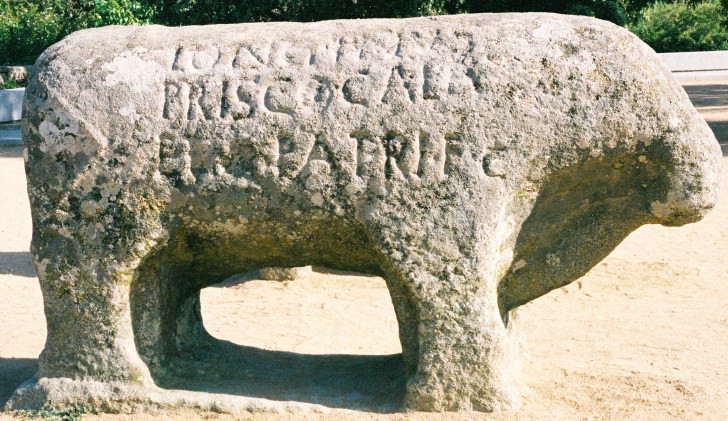
Comment: Opening photo, knowledge set in stone. One of the Bulls of Guisando (Province of Avila, Spain), with graffiti carved by a Roman legion.

The Return

IMG_0087 (2)

The Return

This time last year I returned to KIRA for a visit after my one month artist’s residency. I have been back several times since, but each return is always more difficult than the last. Memories are golden and the reality of the return is never quite the same. Here’s the link to last year’s post on my first return to KIRA: KIRA Return July 2017 .

You can never walk in the same river twice (Heraclitus). This is what makes the return always so difficult. It is like the spoken word that, once spoken, can never be reclaimed.

I guess the return is more difficult for some people than for others. There are so many places to which I have never returned: Cardiff, Gower, and Swansea (Wales), Bath, Bournemouth, Bristol, Christchurch, Frome, Gloucester, Hengistbury, and Wick (England), Oaxaca (Mexico), Avila, Bilbao, Elanchove, Madrid, and Santander (Spain).

These place names scratch memory’s surface, no more, for there are places within those places, also never to be seen again, save in old photos and dreams. Yes, my dreams are tinged with sadness, the sadness of remembering. There is also the great joy of having been there, of having borne witness to this moment and that. Time and memories slip through grasping fingers like water or sand. The ephemeral: it will never last, even though we catch it for a moment in a photo or a verse.


Dead Day

dsc03693

Dead Day
A Thursday Thought
12 July 2018

Funny how a day without soccer suddenly seems a dead day. Yesterday was filled with world cup fever. Anticipation, build-up, cheering, Croatia (champions), defeat (England), football (fantastic) … today the world cup has a rest and people start to breathe more easily. As a result, all -over, boredom, cleaning up, defeat (deja vu), emptiness, future (hopes on hold) … all the alphabet soup of life packed into a few short hours.

Where do we look for meaning? Is there even any meaning to look for? I watched 120 minutes of soccer, yesterday … that’s two hours. Well spent or wasted? Meaningful or not? The world heats up. A hurricane moves up the coast, turns into a tropical storm, then back into a hurricane. Hit or miss? I still don’t know, but I hope it misses. The last big one hit in 2014. We went ten or twelve days without power, and that in the Province’s capital city. Five trees were downed in our yard. More than a dozen were tugged up in my neighbor’s place. Why? Why us? Why here? Why now? Is this personal? What did we do wrong? Values? Meaning? Yet, for 120 minutes yesterday, I could forget my immediate woes and concentrate on football’s joys and sorrows. I guess that holds meaning in itself. I thought so yesterday. Today, I’m not so sure.

Out driving yesterday, I pulled into the roadside twice to allow ambulances to pass. An ambulance, a mysterious closed vehicles, lights flashing like a mad Christmas tree manned by a crew of Dr. Who Daleks. Yes, it was warm. Yes, people were excited. I guess someone, somewhere, was overcome by something and the telephone rang and the call went out to the ambulance. Values? Meaning? “What is this life if, full of care, we have no time to stop and stare” … at the ambulance, lights flashing, sirens sounding, as it rushes by and we pull over into the side of the road to allow it to pass. Values? Meaning? A sense of an ending? A sense of a beginning?

Today, more than anything, a sense of being suspended, of waiting in a bubble, in a certain silence, for something to happen, don’t know what, or when, or why, or where, or to whom. The world, instead of moving on, seems to stand still. Even the leaves on the trees have stopped shaking. The silence before the storm, perhaps? What storm? And who will it strike? And where? And how? And when?

How will it begin? How will it all end?


Good Heavens!

Skeleton

Good Heavens: it’s hard to believe that I am a blogger when, currently,  I so seldom blog. I guess it’s the online courses, back to back, eight weeks of creativity online, but a different line from the blog line, and then another eight weeks, five gone and three to go. So much to catch up with. So much to do. Also, all that hard work and then the discovery: a poem published on my blog is a poem published and it is not eligible for publishing elsewhere.

Oh dear … that somehow sucks … like a rose, a poem is a poem is a poem and there is an enormous difference between publishing, can you really call it ‘publishing‘, a poem here and publishing it in a journal or submitting it to a competition, with real live editorial groups poring over its content and then giving it the thumbs up, or thumbs down, as the case may be.  Whatever: rules is rules, I guess, made to be broken, but we lesser mortals break them at our peril, I guess.

Whatever: the reading lessens in three weeks time, also the writing load, and the critiquing load, and all the other loads we writers must carry around with us, on our backs, like a snail carries its shell, aka its house. Lesson: be like a hermit crab, moving in, moving out, changing your residence as it suits you … one way tickets that will keep you in the pink, or some other suitable color.

So: since the start of May I have written / revised more than seventy poems, but I daren’t put them on the blog … why not? Because I would like to publish them in more traditional fashion or else submit them for competitions where unpublished work is demanded. Screwed up? Yes, but the whole world is whirling towards a screwed up state right now. What to do? To publish or not to publish? Where to publish? Where not to publish?

You know, deep down, I am not sure that it matters a damn. I’ll play their game, by their rules, for a month or two, then when the shot-gun riders on the poetic garbage trucks (aka the gate-keepers) move in and warn me off, I’ll come back here and publish it all anyway.

Meanwhile: believe, breathe deep and believe. I’m not going away, not just yet, anyway. But I am taking a small break, and I am moving in a slightly different direction … but I am absolutely certain that I’ll be back.

Wednesday Workshop: Codification

IMG_0068 (2)

Codification
Wednesday Workshop
30 May 2018

For me, it is vital to see how others read and interpret my work … what comes across, what doesn’t, how things are understood and read, sometimes in the same way, sometimes in different ways. It is always easy to pick out some favorite phrases. However, deciphering, interpreting, and then reacting to, a poem’s inner code, is a very different matter.

I love the cut and thrust of dialog … I was at our Tuesday night writing group meeting last night from 7-9:30 pm and we had a great time, back and forth across the table pecking, like wild birds perched on a literary feeder, at each others’ texts. My own texts are thickly layered and highly codified and I have become very interested in the theory of literary codification.

My own ideas are a development of those of Northrop Frye as he expressed them in The Great Code. When we lose our common code, to what extent do we need to explain a private one? This is of great import to Frye’s studies on William Blake, perhaps (in spite of his seeming simplicity in certain poems) one of the most difficult of English poets.

Perhaps the answer lies in Karl Jung’s theories on the racial subconscious: that we all share deep, (human) racial symbols that transcend words and often appear as symbols and images. If this is true, then we communicate, at a non-speech level, through metaphor and symbol, and that is more powerful and outreaching than linear language, however well and clearly codified it may be.

This emphasis on symbol, image, and metaphor leads us, of course, into surrealism, free writing, concrete poetry, sound poetry, and all those efforts to abandon the linear and reach into the subconscious roots of ‘that which binds us together as human beings’ … in my humanistic theories, to find the links that behind is more productive than the reinforce the fears and misbeliefs that separate. Alas, not everyone thinks that way in the literary world, and private codes can easily be used as wedges to force people apart.

We need codes, preferably codes that we can share. The question is, how explicit would we be, as writers, in explaining those codes? How closely should we imitate the writing codes of other people?

The eternal mystery of Aladdin’s Lamp: “New codes for old.” And don’t forget the magic words “Open Sesame.”

Ah, the joys of codification.

Commentary
This is my first post for some time, ten days in fact, 20 May. No excuses other than other commitments: to the WFNB, to my online poetry course, to my physical writing workshops, to my own creative condition … I am creating furiously at present. Codification is something that has interested me for some time: the Biblical Code, The Western Tradition, Courtly Love, the Icy Fires of Petrarchism, Romanticism,  Impressionism, Expressionsim, Surrealism. Modernism, Post-Modernism … the -isms, once started, are apparently endless. All of these -isms spiral round the ideas of verbal codes. In codification, I would like to start a discussion on what these codes are, how they affect us, what do they mean, especially when they can be so totally personal. By all means, join the discussion: what do you mean by codes? How do you use them? How do you interpret the codes of other people?

Fear

IMG_0094

A List of Fears
(exercise: tick all that apply)

of failure
of success
of inadequacy
of being caught short
of being found out
of the blank page
of revealing intimate details
of feeling stupid
of typos or punctuation or bad grammar
of presumption
of being laughed at
of new things or old things
of something borrowed
of new topics or new methods
of research or hard work or perfection
of rejection or dejection or ejection
of losing yourself or finding yourself
of caring or not caring
of the unknown or the unknowable
of peer pressure
of speaking out loud
of being unable to write like …
of being wrong or right
of political or social consequences
of free speech
of hurting others
of being misunderstood or understood
of large or small audiences
of clothing or mechanical failure
of starting or finishing or writer’s block
of having nothing to say
of having nothing worthwhile to say

fear of fear

Commentary:
Last Saturday, in Quispamsis, I facilitated a two hour workshop on things that writers fear. I began with a list of all the things that I have feared at various times during my writing career. This morning, I turned, with great trepidation, those fears into the list poem I reproduce above.  If you wish to discuss any of these fears, or add other fears of your own to the list, and remember, this is a list of writers’ fears, then please do so. I will be happy to enter into a dialog.
As for the fear of feeling stupid, I often offer this small piece of advice. It has been known to comfort those who actually have a fear of feeling stupid. (1) buy a small fluffy toy, preferably a Teddy Bear, that will fit into your pocket or purse. (2) christen that small fluffy toy with the name of Stupid. (3) you carry Stupid around with you all day knowing that you can put your hand in your pocket or purse and feel Stupid all day and nobody is going to know or care.
The moral of the story is this: when you can laugh at your fears, you fear them no more. And remember: you can stop feeling Stupid whenever you want to.

Wednesday Workshop: Recycling

IMG0075_1

Wednesday Workshop
09 May 2018

Recycling 1

“You never know when you might need it,” my

grandfather said, finger-nails cracking red-
waxed parcel string. Bright sealing wax rained down
on the tablecloth, covering it with hard,
scarlet chips, wax cracked, tight knots emerging.
One by one, my grandfather first loosened
them, then sought the string’s free end, following
it along its snaking way from knot to
knot. Like Theseus following his twine
through the labyrinth below the palace, my
grandfather mused, hesitated, followed
the clues given him by the knotter’s mind.
Set free from its parceled knots and lashings,
he looped the string around his fingers and
tied the twine into a tight bow that he
stowed away for future use. Reef knots, slip
knots, sheep-shanks, bowlines, bowlines-on-the-bight,
he showed me how to tie them all. He taught
me too how to never tie granny knots.
“Never cut string with a knife: untie knots,”
strict his advice and followed still today.

Recycling 2

finger-nails
cracking red-waxed
parcel string

sealing wax rained down
staining snow white tablecloth
wax cracked
hard scarlet flakes
tight knots emerging
loosened

now seek the string’s
free end
then follow it
the way it snakes
linking knot to knot

muse
hesitate
unknot
the mind of she who tied

set free these
parceled knots and lashings
loop string around fingers
tie tight the twine

a child’s bow
to be stored
for future use

Recycling
Haiku 1
[7/11/7]

string yields blood-bright scarlet wax
a thread to lead through the parcel’s labyrinth
open now the magic box

Recycling
Haiku 2
[5/7/5]

blood-bright scarlet wax
a thread through the labyrinth
open now the box

Commentary:
There are many ways to recycle. All are valid. Some are more valid than others.

Downsizing

img_0136

Downsizing

a double sword
this clearing out
of odds and ends

the library diminishing
book by book
so many memories
slipped between the covers
dust-bound now
yet springing so quickly
back to life

sorrowful not sweet
these multiple partings
from people I will never see again
save in my dreams

I think of book burnings
so many heroes
going up in flames
fire their beginnings
fire their ends

fire the means of forging
the Omega and Alpha
of the book world
that surrounds us

fire encircling us
death’s bone fires
consuming us
outside and in

Be Leaf

IMG_0135

Be Leaf

An autumn leaf,
brown crisp flaked from a tree,
floats breeze-blown
into my mind’s-eye corner
and settles down to sleep.

What joy to lie there
forgotten by the madcap
rush of televised folly,
false news filmed, fake news
hustled and bustled
by a burgeoning wind of change.

No science now, no truth,
no facts, no knowledge,
just news, fake news, false news,
the word pack shuffled and reshuffled,
each verbal insult dealt and redealt,
true falsehoods peddled
by tinker men and tailors who stitch
words to meanings,
while the real truth
lies dead and safely buried:

a leaf among leaves, lying forlorn,
forgotten beneath autumn trees.