May Day

May Day

Mayday, Mayday, S O S,
this is a plea for help, I guess.

Dit-dit-dit- dat-dat-dat,
the world lies dying
and that’s a fact.

Add another dit-dit-dit
and that’s morse code
for we’re in deep shit.
What can we do
to get out of it?

Very little, as I see it,
if the world can’t be
bothered to see it.

Another half country
of forest gone,
right whales diminishing,
they won’t last long.
Rivers flooding,
forests on fire,
what have we done
to earn Gaia’s ire?

Human beings
long-forgotten,
but profits are up,
maybe that’s what’s rotten.
We’re near rock bottom
I would guess.
Mayday, Mayday, SOS,

We’ll soon be gone
our works forgotten.
No more humans,
the world in a mess:
Mayday, Mayday, SOS.


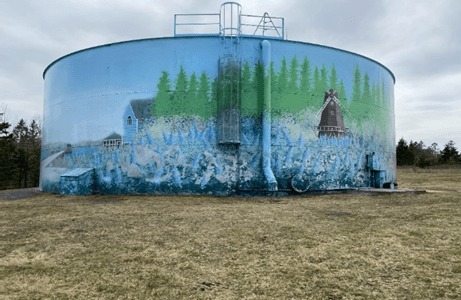
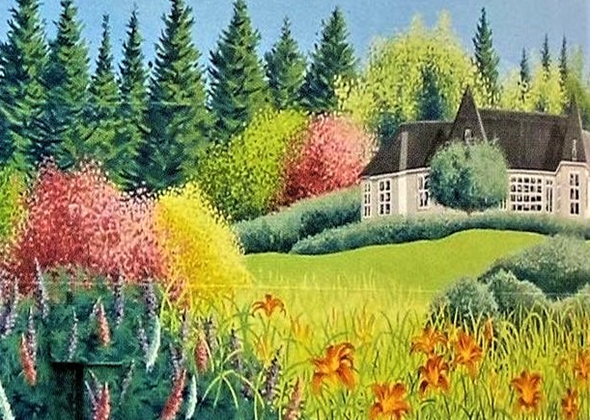
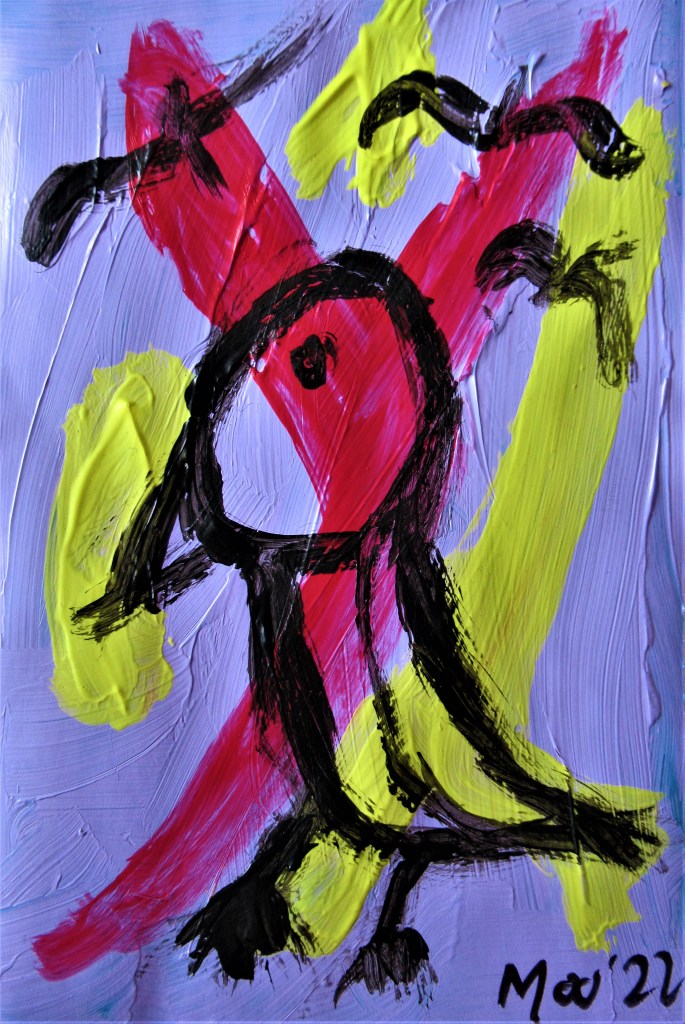
Comment: Well that’s how I see it some days and this is just one of those mournings. Say it in paint, say it in rhyme. Nobody’s listening most of the time.

Click here for Roger’s reading on Anchor.
May Day

Dawn Chorus

Dawn Chorus

On a sunny morning, the sun lights up
my bedroom wall. Each day he arrives
earlier and earlier, a minute a day.
Now days grow longer, a sure sign
that spring is on its way.

As I lie awake, waiting for the sun,
I sing my morning sunshine song.
It keeps me warm and comforts me.
I also count the birds that fly across
the garden in search of sunshine and food.

Crows come first. They perch atop
the highest trees and watch and wait.
Mourning Doves come next
and their dawn song is a mourning chorus,
“Who-who-who’s next?
called from branch to branch.
With the sun come Chickadees,
Pine Siskins, lazy Blue Jays, Juncos.
These are all regulars.

Irregular are my neighbor’s Cardinals,
orange and red, American Goldfinches,
two small woodpeckers, a Downie
and a Hairy, a Nuthatch.

Gone now are the Gray Jays,
Gorbies, Whisky Jacks,
those ghosts of the woods.
Lost too are the Greater Pileated,
the flocks of Grosbeaks, Evening,
Pine, and Rose-Breasted.

They may come back,
but somehow, I doubt it.
For now, the Blueness of Jays,
the Blackness of Crows,
and an unsubtle dawn chorus
of Caw-Caw-Caw-Caw-Caw.

Click here for Roger’s reading.
Dawn Chorus

Doors

Vis Brevis – Ars longa

Doors
Revised version

Paintings:
doors you can walk through,
windows that open onto visions
of another, more beautiful life.
Deeper than the paint, the thoughts
and words that formed them,
brushed them into life,
an ephemeral life, so brief
that butterflies seem to last longer
and flowers live for all eternity.

Transience and insubstantiality.
Change is all around us,
we are surrounded by change.
But the deepest changes,
the ones that affect us most
are internal, set deep within us,
death’s eggs hatching slowly
since the day we were born.

Life is indeed short, and art endures.
Carved five thousand years ago,
in stone, this magnificent henge,
first Wood-henge, then Stonehenge,
majestic at the dawn of time,
with its sarsen stones, pillars, post-holes,
and labyrinths, circling within circles,
a frail spider-web of sunlit brilliance.

Lost now, the message,
as my own message is lost,
covered by paint, though words
emerge in the strangest places,
allowing us to peer in through windows
as long-lost words and worlds
whirl out through carved and painted
windows and everlasting doors.

Doors
First version

Paintings are doors you can walk through,
windows that open onto visions
of another, sometimes better, life.
Deeper than the paint are the thoughts
and words that formed them,
brushed them into life,
an ephemeral life, so brief
that butterflies last longer
and flowers live for all eternity,
or so it seems.

Transience and insubstantiality.
Change is all around us,
we are surrounded by change.
But the deepest changes,
the ones that affect us most
are internal, set deep within us,
death’s eggs hatching slowly
since the day we were born.

Life is indeed short, and art endures.
Carved five thousand years ago,
in stone, this Towie ball
with its labyrinths and circles.
Lost now, the message,
as my own message is lost,
covered by paint, though words
emerge in the strangest places,
allowing us to peer in through windows
as long lost words and worlds
walk out through carved and painted doors.

Click on this link for Roger’s reading.
Doors

Spiders

Spiders

The spider plant
spins out web after web,
all knotted together,
then ejected
from the central nest.

One landed on my floor
the other afternoon
with an enormous clunk.
A huge new set of offspring
and roots ejected and sent
on a voyage of discovery
to find a new home.

Mala madre / bad mother.
Oaxacans have a curious way
of naming their plants.
I lived in an apartment
above a courtyard
filled with malas madres.

A Bird of Paradise
nested in the same tree,
while in the garden
a banana plant, in flower,
a huge hibiscus,
and such a variety
of prize poinsettias
that I could never get
the varieties straight:
red, white, cream, single,
clotted, and double-crowned.

In the powder room,
downstairs, our hibiscus
is about to break
into winter blooms.

Sider mites crawl all over it.
Every day, I hunt them down,
squishing them whenever I can.

My daughter calls me cruel
and a padre malo.

I say ‘no: it’s them
or the hibiscus.
You can’t have both.’

Click on this link for Roger’s reading.
Spiders


Self-portrait with flowers

Self-portrait with flowers

I walk past the Jesuit Church
where the shoe-shine boys store
polish, brushes, and chairs overnight.
I walk past the wrought-iron bench
where the gay guys sit, caressing,
asking the unsuspecting to join them.

Nobody bothers to ask me for a match,
for a drink, for charity, for a walk
down the alley to a cheap hotel.

The witch doctor is the one who throws
the hands of all the clocks into the air
at midnight, in despair.
He’s the one who leaves this place,
and returns to this place, all places being one.

The witch doctor sees little things
that other men don’t see. He reaches out
and flicks a fly away from my nose.
“It too has lost its way,” he sighs.

I think I know who I am,
but I often have doubts when I shave,
rasping the razor across my chin’s dry husks.
The witch doctor, my lookalike, my twin,
stares back at me from my bathroom mirror.

Three witches dance on the waning soap dish.
One spins the yarn, one measures the cloth,
one wields the knife, that will one day sever
the thread of I, who the same as all
poor creatures, was born only to die.

You too must one day look in that mirror,
oh hypocrite lecteur,
mon semblable, mon frère.

Type on this link for Roger’s reading.
Self-portrait with flowers

Comment: My thanks to all those who click on earlier poems and express their liking for them. I am particularly pleased when an earlier poem lacks a voice reading. Then I can revisit it, rethink it, rewrite it, record it, and speak it aloud. Here’s the link to the earlier version of the poem Charles Baudelaire. Fast away the old year passes, and we must renew ourselves, our thoughts, and our poetry for the new year soon to be upon us. To all my readers, old and new, welcome to that world.

Boxing Day

Boxing Day

Still Life with Hollyhock
Geoff Slater

How do you frame this beaver pond,
those paths, those woods? How do you
know what to leave, what to choose?
Where does light begin and darkness end?

Up and down: two dimensions. Easy.
But where does depth come from?
Or the tactility, the energy, water’s
flow, that rush of breathless movement
that transcends the painting’s stillness?

So many questions, so few answers.
The hollyhock that blooms in my kitchen
is not a real hollyhock. Intertextuality,
visible and verbal: this is a poem about
a painting of a digital photograph of a
hollyhock, a genuine flower that once
upon a time flourished in my garden.

A still life, naturaleza muerta in Spanish,
a nature morte in French, a dead nature,
then, portrayed in paint and hung alive,
on display, in this coffin’s wooden frame.

Click on this link for Roger’s reading.
Still Life with Hollyhock

Comment: Back home in Wales, Christmas Day was for family and Boxing Day was for friends. I guess the same traditions still exist here in Island View. And what better friend than Geoff Slater? I met him in 2017 at the first KIRA residency and we have been friends ever since. We have worked on so many projects together: painting, creative workshops, videos, sound recordings, poetry, and short stories. He has illustrated several of my books, McAdam Railway Station, Tales from Tara, Scarecrow, and I have put some of his drawings to poetry, Twelve Days of Cat. Last, but by no means least, his painting of a hollyhock from my garden appears on the front cover of my latest poetry book, The Nature of Art and the Art of Nature (Cyberwit, 2021). The title of the collection, incidentally, came from sundry discussions we had on the nature of art and the Prelude: On Reading and Writing Poetry (pp. 7-31), was written at his suggestion. Poems to Geoff can be found on pp. 43, 44, and 61-62 of The Nature of Art.

So, Boxing Day is for friends. And I dedicate it to Geoff Slater and all the many friends I have made in KIRA, Kingsbrae, and throughout my multiple meanderings through the realms of academia, coaching with the NCCP and the NBRU, researching in communities like the ACH, the AATSP, and the MLA, various editorial positions on academic journals like the IFR, BACH, STLHE Green Guides, STLHE Newsletter, La Perinola, AULA, CJSoTL, Canadian Modern Language Review, Calíope, translating for different associations, including the Discalced Carmelite Nuns in St. Joseph’s Convent, Avila, and volunteering with STLHE and the 3M National Teaching Fellowship. To all those friends out there, including my friends and e-friends in TWUC, the LCP, and the WFNB, and those on Facebook, my blog, and my online Skype and Zoom courses and meetings, plus, of course, those I know via Quick Brown Fox, you are not forgotten. Here, for you, on Boxing Day, is a hug or a wave of the hand and a great, big thank you for being there.

Selection of my books
on the sea-shore at Holt’s Point.

Rain or Shine

Rain or Shine

Ginger Marcinkowski
(KIRA, August, 2019)

“My walk each morning, rain or shine,
feathers my black galoshes with dewy grass.
There I would ramble through gated doors
that kept out the world and sealed in
my pen’s work for that day. 

I often found myself sidetracked,
exploring paths that led through flowerbeds,
and up to my favorite sculptures.
I paused to watch my fellow artists
as they focused on chosen subjects
unaware that I was eavesdropping. 

Then silently, I would steal away
along the well-trod path to my studio,
pausing long enough to greet the llamas
and baby goats. If I listen carefully
I can still hear their bleating. 

In wonder, every day, I climbed the steps
of wood that led to my studio, opened
the door, and turned to breathe in my good
fortune. ‘What a blessed woman you are,’
I would tell myself before taking my place
for hours on end at my desk, each moment,
each stroke of the pen, each letter added
to the growing lines on the page, a gift.”

Comment: This is a found poem, found in the sense that it doesn’t belong to me. I met Ginger at KIRA in August, 2019, and we became close friends. We have corresponded regularly since meeting and she has become one of the best beta readers I have ever had, open, fiercely, honest, knowledgeable, and challenging. This challenge for me ‘to be the best that I can be’ really does bring the best out of me as a writer.

A found poem: I found it in one of the e-mails Ginger sent. In it she described a typical day for her at Kingsbrae. Isolated from its e-mail prose, the lines shortened and the thoughts slightly re-arranged, it became this poem, Ginger’s poem, her poem. I offer it to her, as she offered her writing talents to me, openly and with great humility. It can be found in the section entitled Impressions of KIRA Artists on pages 66-67 of The Nature of Art and the Art of Nature (Cyberwit, 2021, details to follow when available).

Click on this link for Roger’s reading.
Rain or Shine

Mindfulness

Hollyhock by Geoff Slater

Mindfulness

Gardens of Mindfulness

What is it about generic greens, their power of growth,
renewal, resurgence? In the Auberge, Moncton’s Hospice
for cancer patients, sufferers wore green clothes, shirts,
blouses, skirts, trousers. Green for recovery, for hope,
for the persistent belief that nature mattered, more,
that nature could be omnipotent, ubiquitous, everywhere
around us.  The patients planted a small garden, almost
an allotment. They walked in it, sat beside it, watched
the flowers grow, grew their own cells anew, hoped.

Exercises are easier, more fulfilling, when done in green
surroundings. Go green for improved moods, better self-
esteem, growth beyond the muscles of cold iron pumped
indoors by hot, sweating bodies. Never underestimate
the healing power of walking barefoot on grass, your toes
curling into the early-morning coolness of fresh, new dew.

Focus your attention on the here and now. Forget the past.
Let the future take care of itself. Your most important
therapeutic tool is this moment of awareness when you
and your world are one. Erase loneliness and isolation.
Don’t pander to the pandemic. Talk to your plants. You
may not think they’re listening, but they are. And you
must listen to them too. Learn the languages of tree and
shrub, of butterfly and bee, of Coneheads and Cape Daisies.
Bask in beauty: sunflowers, hollyhocks. All will be well.

“Verde, que te quiero verde. / Green, how I love you green.”
Federico García Lorca (!898-1936).

Comment: I have been discussing Mindfulness with several people recently. Whether it be the Covid-19 outbreaks or the necessity of staying apart from friends and family, some of my seem to have become more isolated and more introverted over the last couple of years. As a result, the theme of mindfulness has arisen, often spontaneously. So, this poem is dedicated to all of us who feel the need to live in the moment and to concentrate on the development of our inner growth and being. It is taken from my book The Nature of Art nd the Art of Nature (pp. 134-35), soon to be available on Amazon and at Cyberwit.net

Click on the link to hear Roger’s reading.
Gardens of Mindfulness

The Nature of Art

The Nature of Art

It’s here and it looks beautiful. The photo does not do the cover justice as Geoff Slater’s painting is just phenomenal. The book holder wishes to announce that the photo does not do him justice either. He is much more good-looking in real life. I don’t have the Amazon / Kindle details yet, but I’ll post them as soon as they arrive. meanwhile, you will all have to make do with one poem. But remember: “A poetry book is a dream you hold in your hands.”

Still Life with Hollyhock
Geoff Slater

How do you frame this beaver pond,
those paths, those woods? How do you
know what to leave, what to choose?
Where does light begin and darkness end?

Up and down: two dimensions. Easy.
But where does depth come from?
Or the tactility, the energy, water’s
flow, that rush of breathless movement
that transcends the painting’s stillness?

So many questions, so few answers.
The hollyhock that blooms in my kitchen
is not a real hollyhock. It is the painting
of a photo of a genuine flower that once
upon a time flourished in my garden.

A still life, then, a nature morte, a dead
nature, portrayed in paint and hung alive,
on display in this coffin’s wooden frame.

Click on this link for Roger’s reading.
Still Life with Hollyhock


Welcome Guests

Welcome Guests

They arrived last night, late.
Bright moonlight. Soft silence.
I neither heard nor saw them.

I awoke to moonlight on snow.
Shimmering stars. Orion
proud among prancing planets
sparkling in frosted air.

I looked out. Nothing there.
White wilderness of snow,
unmarked, but shadowed.

Dawn. An anxious child
on Christmas Day, I peeped
under the tree, and yes,
I cried out, “He’s been.”
I remember brightly
wrapped packets of gifts.

Today’s gifts: hoof prints
emerging from dark woods,
circling beneath the ash tree,
leading to the bird feeders,
and back into empty woods.

“Yes!” I said aloud. “At Last.”
And joy filled my heart.

Click on this link to hear Roger’s reading.
Welcome Guests

Comment:

Reading the poem aloud, I changed some of the word order to the rhythm of my speaking voice. It’s reading before an audience and hearing their reaction that tells me when a poem is right or needs retouching. Alas, those live readings are gone for now. Anchor, Spotify, Facebook, Twitter, and this blog are good, but not quite the same. But, for a rhythm and voice poet, who loves live readings and welcomes a live audience, they are better than that midnight silence under dark trees.