Yellow

IMG_0617

Yellow

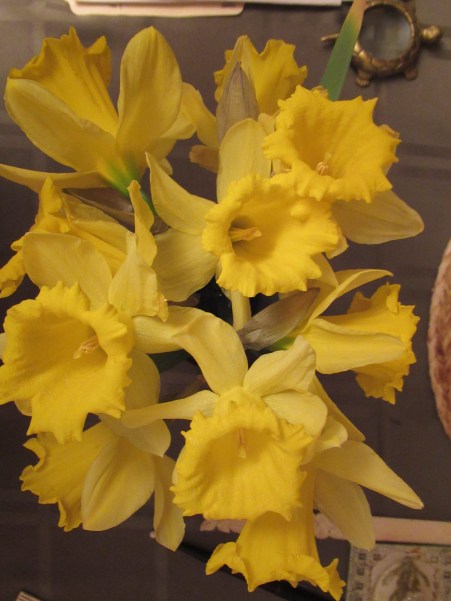
Sunshine and daffodils: my grand-daughter
paddles in the kitchen sink. Her mother
washes feet and dishes. “Sit,” Finley says,
and “stand,” following the words with actions.

“Yellow,” she says, “yellow,” as daffodils
fill the computer screen to shine in that
far-off kitchen five hundred miles away
by road, but immediate by I-Pad.

“Yellow,” Finley repeats, “yellow.” Soon
in that distant province where spring arrives
so much earlier than here, she will see
daffodils dancing their warm weather dance,

tossing their heads to gold and yellow trumpets,
fresh, alive, and young in the soft spring breeze.

Commentary: Not a large vocabulary, back then … yellow … yellow hair, yellow jello, yellow dog, yellow cat, yellow daffodils, well, we got that one right anyway. So, she is here now, yet again, with an enlarged vocabulary and two feet taller. She comes shopping with me, swings on the shopping cart, runs everywhere, will not sit still, slips and slides like stones in a slate quarry. She takes my cane, I call it a walking stick, and thwacks it in the air, a danger to sundry and all. Knows what she wants: not this, not that, no, yes, THIS … and points with a sticky finger at whatever it is that has caught her fancy.

She runs away from me, and I cannot catch her. I stand there quietly, waiting for her to return. And she does, with a squeal and a shriek and cries of joy after even a brief absence. We talk magic. I say I am invisible, and she cannot see me. She says she is invisible, but I poke her in the ribs with my index finger and she squeals again. Magic, she says, you can do real magic. I nod. Me too, she says. And she is the real magician for she is four years old and has me bewitched.

Finley at Two

IMG_1058 (2).JPG

Finley at Two

Blood of my blood, my daughter’s daughter,
I live too far away to watch each day the laughter
on your lips, the sparkle of your eyes.

I see them when we Skype. Such a miracle
this magic machine that reduces distance
and time and brings you here to me.

I see you trying to stand, to understand,
to hold my image in your mind, to figure
out these moving shadows on the screen.

Words, born from poetry in my heart
and music on my lips, sometimes fall short,
and fail. Perhaps I should carve you a Welsh

love spoon. But time is not on my side. So brief,
this life: I wonder if we will ever meet again.

Commentary: Seeing Finley again, now aged four, has made me question all my earlier poems about her. I am overwhelmed by her energy, her interests, her concentration. I am bowled over by her flexibility, her strength, her joy in simple things. The above is not a new poem: it is a rewrite of an older poem, one that no longer served its purpose. I reshaped it as a sonnet, not traditional, but a sonnet none the less. I doubt that I will have much time on my own over the next two weeks in which to write. I guess I will pick away at this blog, adding a little something every so often, when the energy runs down and tranquility descends. Bear with me: I’ll be back.


A Different Kind of Doorway

different kinf of doorway.png

A Different Kind of Doorway

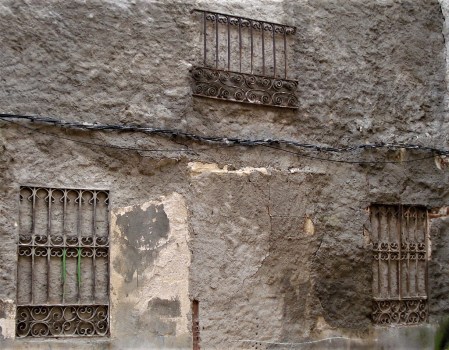
When one door closes, another opens. And yes, they are so important, these doors, that open and close. One day everything is open to us; the next, the future seems closed. But another door opens and we walk right through.

Avila 2008 072 (2).jpg

Or maybe we don’t. So much depends. The brain drain, as they called it. The migration of students from Great (as she used to be) Britain to North America.  “Make sure,” they told us, “That you can see light at the end of the tunnel. If you can’t, don’t go.” I went to Canada for a year and stayed here for the rest of my life. I came to New Brunswick for a year and stayed here for the rest of my life.

Regrets? None. Dim o gwbl /  none at all, as we say in Welsh, the language of my maternal grandfather, from the land of my father(s), who never spoke a word of it. A language that I am just learning now with great pleasure, in the evening of my life. I am losing my French. I am losing my Spanish. I am learning Welsh.

So how do we open those doorways? Well, that depends on you, each one of you. Keep your eyes open. Study. Learn. Don’t waste your life. Recognize your talents. Don’t despair. Never give in. Nil carborundum illegitimi. No. Don’t allow yourself to be beaten down. Believe. Breathe deep and believe. And remember: there is always light at the end of the tunnel. Any tunnel. Don’t give up. Never give up. You just have to find that light. Seek: and you will find it.

Avila 2007a 105 (2).jpg

Butterflies


IMG_1053 (2).JPG

Butterflies

“Why did the butterfly flutter by?”
“Because she saw the dragonfly drink the flagon dry.”
That’s all you need to know about our raison d’être, our reason for being here, the meaning of life. Unless, like Bertrand Russell, The Meaning of Meaning, you think a cat is a dog or you know why “the beach wet” or how many turtles there are, on the way down.

IMG_1060 (2).JPG

So many butterflies have visited us recently. We think the hollyhocks may have attracted them. But they seem to prefer the cone flowers.  And the bees’ balm remains virtually without visitors.

IMG_1052 (2).JPG
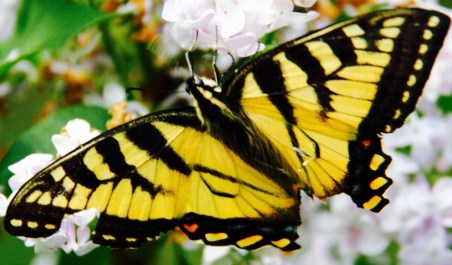
What exactly are these blessings that descend upon us? I don’t know. I have never seen this one before. A black swallowtail, according to my searches. But this is the first time we have seen one, let alone catch one on camera.

IMG_1043 (2).JPG

According to my research, shallow at best, these Admirals mimic the Monarch Butterflies which taste so bitter that predators will not touch them. True or False (T / F): a multiple choice question that I cannot answer, for I have no personal or scientific knowledge, just opinions found on the web.

IMG_1041 (2).JPG

What I do know, from personal experience, is that our little patch of garden is blessed by the presence of butterflies, bees, and hummingbirds. We live in a treasure-house, pleasure-house of Nature. Long may it continue.

img_0189


Thursday Thoughts Ubi sunt …

IMG_0576 (2).JPG

Thursday Thoughts
Ubi sunt …

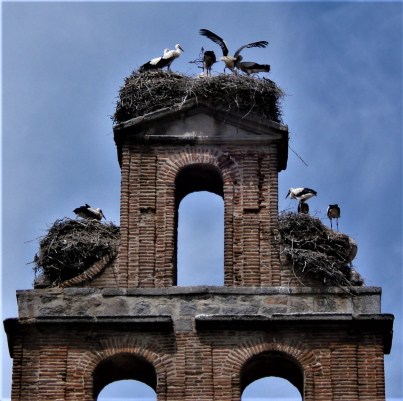
Ubi sunt qui ante nos fuerunt? Where are they who went before us? As St. Augustine is said to have written: O homo, dic mihi, ubi sunt reges, ubi sunt principes, ubi imperatores, qui fuerunt ante nos… “O man, tell me, where are the kings, where are the princes, where the emperors, who had been before us” {Wikipedia]. Many philosophers have written on this theme, and many poets, including Villon in his famous ballade “Mais où sont les neiges d’antan?” Where is last year’s snow? Cervantes also echoes the theme with this slight variation “No hay pájaros en los nidos de antaño.” There are no birds in last year’s nests.

IMG_0573 (3).JPG

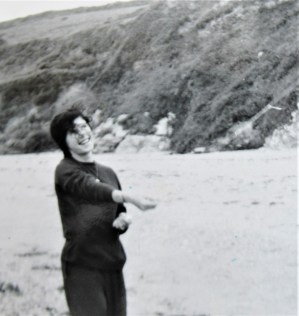
Goran Haven, Cornwall, July, 1966. I was waiting to receive the results of my final exams from Bristol University. Clare and I decided to spend a week in Cornwall and ended up in Goran Haven. When we came back, I made her a book of photos from the trip with hand-written poems beneath them. I discovered that book the other day and was taken back to a time when I wasn’t even thinking of coming to Canada. Fifty-three years later, looking at these photos, I ask myself ubi sunt … where did those days go? All those days, the old country, and everything that went with our youth … ubi sunt?

IMG_0574 (2).JPG

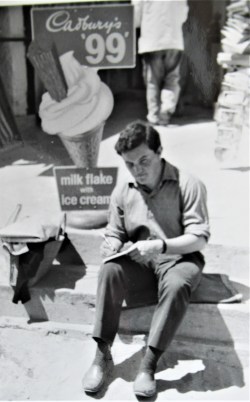
Same thing happened when I visited McAdam Railway Station: wonderful memories of all the steam trains of my youth. And those railway names: Great Western Railway [GWR], London Midlands Scotland [LMS] , London North Eastern Railway [LNER]. So many things that I can never forget: the smell of the old steam engines, the sound of their wheels going clackety-clack, the taste of smoke and ash when I thrust my head out of the window, in spite of the sign that said, Do not lean out of the window, the feel of those worn cloth seats beneath the fingers, and the sense of excitement and joy when an empty corner seat begged to be sat in. Something else I’ll never forget: the cold taste of a Cadbury’s Milk Flake stuck in an ice-cream on a warm summer’s day.

IMG_0570 (3).JPG


Gower

Empress 070.jpg

Gower

To be Welsh in Gower is to spell it funny
and pronounce it worse: Gwyr.
It’s to know how to say Pwll Ddu.
It’s meeting the cows in the lane to Brandy Cove
and knowing them all by name and reputation,
which one kicks, which one gores,
when to walk in the middle of the lane,
and when to jump for the safety of the hedge.

It’s to know the difference between the twin farmers
Upper and Lower Jones.
It’s to recognize their sheepdogs, Floss and Jess,
and to call them with their different whistles.
It’s knowing the time of day by sun and shadow;
it’s knowing the tide is in or out
by the salt smell in the air
without ever needing to see the sea;

and now, in this far away land called Canada,
it’s hearing your stomach growl for crempog or teisen lap
whilst memory’s fish‑hook tugs at your heart
in the same way your father hauled in salmon bass
at Rhossili, Brandy Cove, Pennard, Oxwich, and Three Cliffs.

Commentary: I was checking Gwyr, the Welsh for Gower, where I was born, and found this interpretation of the name. <<G is for generous, your giving nature. W is for wise, more tomorrow than today. Y is for young, the years never show. R is for rapport, friends seek you.>> I don’t know if that’s me, but it certainly wouldn’t be a bad set of descriptors to live up to.


Dies Irae

IMG_0139

Dies irae

Nowhere has she found peace, save
in the dregs at the bottle’s bottom.
She solves life’s dilemmas with single
malt or grape’s blood fresh-plucked.

Doctors tell her that she must stop drinking,
not stoop to conquer yet another bottle.
The remedies they suggest will never suit her.
Family and friends lecture her in vain. 

She knows she will not live forever,
that one day a higher power will call.
So she opens another bottle of Scotch,
just a drop before she goes. She falls

to the floor, and lies asleep. Three still
born babies cover her with their love
to keep her warm. “Sleep well,” they say,
“you’ll find greater peace in eternity.”

Commentary: Another poem that was not easy to write. The last line is a tribute to Seamus Heaney and his poem, Yellow Bittern, the inspiration for this one. “You’ll be stood no rounds in eternity.” In the literary theory of Intertextuality, texts talk to texts and a series of interlaced textual dialogs move across time and space. Hablo con mis ojos a los muertos, I speak through my eyes with the dead, as Francisco de Quevedo said in the 17th century. He was reading Seneca, another great writer born in Spain, when he wrote those words.
I restructured this poem three times. I began, following Seamus Heaney, with the first person singular [I]. Then I changed it to the second person singular [you], but you, in English, can never approximate to the intimacy of tu [versus vous] in French, or the multiplicity of [versus usted, vosotros, vosotras, ustedes} in Spanish. Finally I settled on the third person and settled on she [rather than he]. I guess when  a woman loses three children, she is entitled to lose herself in a bottle of Scotch and shut out the world.

Time-Spirits

IMG_0868.JPG

Time-Spirits

Zeitgeist

Zeitgeist is a concept from 18th- to 19th-century German philosophy, translated as “spirit of the age” or “spirit of the times”. It refers to an invisible agent or force dominating the characteristics of a given epoch.
Wikipedia

Those who cannot learn from history are doomed to repeat it.

“Plus ça change, plus c’est la même chose.”

Poems for troubled times.

Introduction

Our world finds itself in an incredible mess right now. Somehow, we have to sort it out. Images and metaphors tie past, present, and future together. We must pick our ways through the difficulties of these troubled times, as you must pick your way through the intricacies of these poems. Many of you will give up. Some of you, the chosen few, will make your way to the heart of each poem.

These poems are deliberately cryptic. Each one is a mind game I am playing with you. I do not underestimate you. I have placed clues throughout each poem and if you follow the clues you will arrive at many of the poem’s hidden meanings. Some poems are more difficult than others, their meaning more recondite. Others seem very straightforward, yet still contain secrets.

            This style of poetry has a long history going back to Anglo-Saxon riddles and way beyond, back into the mists of time. Luis de Góngora (1561-1627) and Francisco de Quevedo (1580-1645) specialized in similar forms of recondite poetry, often based on metaphor and the juego alusivo-elusivo, the game of alluding to something while eluding the act of saying what it is. Jorge Guillén (1893-1984) and Federico García Lorca (1898-1936) also played this game, as did Octavio Paz (1914-1998). In the works of all of these poets, the clues may rest in the poem or they may be found in a generic knowledge of the mythology of the poem’s exterior world.

             Always remember that “those who cannot learn from history are doomed to repeat it” (George Santayana). Otherwise expressed, in the words of T. S. Eliot: “Time present and time past / are both perhaps present in time future / and time future contained in time past” (Burnt Norton). The seeming anachronisms in these poems suggest that all time is ever-present and that each new day presents us with events that have already occurred on many occasions.

Commentary: The idea for Time-Spirits aka Zeitgeist was born around the kitchen table in Island View on Saturday, 22 December 2018, during a literary conversation between Gwen, Victor, and Roger. A poem at a time, one after another, grew from that table top chat. The result: 70 poems, not easy to read, deliberately difficult, that reflect our troubled times. My thanks to Geoff Slater, line-painter, who drew the cover picture: Robin Red in Claw and Breast, a symbol of nature ‘red in tooth and claw’. So are we in the words of Albert Camus who writes ‘nous sommes ou les meurtriers ou les victimes’ . Is it the early bird that catches the worm? Or is it the late worm that gets caught by the bird? Whichever: it’s the worm that gets eaten, until the robin bites the dust, when he is eaten in his turn. Just think of it as nature doing its regular recycling …


IMG_0865 (2).JPG


A Fly on the Wall

IMG_0437 (4)

A Fly on the Wall

Behind me, two elderly ladies, obviously grandmothers, exchanged intimate family details about husbands, daughters, grand-daughters, acquaintances.
“Bessy, my granddaughter, you’ve met her, well, she can’t have any children. Something wrong with her womb after that bout with cancer. You must remember that?”
“I do. Terrible thing, cancer. Had her whole womb removed didn’t she?”
“That’s right. Well, she’s thinking of adopting.”
“I don’t like adoptions. All those yellow and brown babies. You’ll never find a white one.”
“She’s working with the church. They say they’ll find her a nice little pink one.”
“That would be nice. Boy or girl?”
“She wants a girl. That’s why they said ‘a nice pink one.’”
“My Annie has breast cancer. They want to cut them off, but I told her ‘no,’ there must be another way. So they’re giving her chemo. They wanted to send her to Moncton, but she said she wasn’t going anywhere near that French speaking lot. So, she’s going to Saint John instead. Her daughter drives her down most days.”
“Lucky to have a daughter like that. So many cut you off when they lave home. They just don’t care.”
“I know. Not the churchy ones, though.”
“Them too, sometimes.”
“How’s your Bert?”
“He walked out.”
“Never!”
“He did. Just up and left. Never said where he was going or anything.”
“Younger woman, probably.”
“Don’t know. Took to the road and went out west, I think.”
“Just one of them things. My husband’s gone, too. Stroke or something. I sat with him in the hospice for a week. He never spoke again. I just sat and held his hand. Poor thing.”
“At least it was quick.”
“A week at his bedside didn’t seem like quick. All those tubes. Stuck in everywhere. And me, left all alone now with the grand kids. I’ll cope somehow, and the fourteen-year old, with her belly already swelling.”
Words settle. Fine dust dances in a sun ray that spotlights floating motes. Lives and worlds end and begin. I spot my beloved walking down the stairs in the heath centre and get to my feet. The two women are silent. I do not turn to look at them. My beloved waves and I walk towards her. Hand in hand, we go to the door and walk to the car. When we are safe inside, we’ll start to talk.