Recycling

Books

Recycling

“You never know when you might need it,” my
grandfather said, finger-nails cracking red-
waxed parcel string. Bright sealing wax rained down
on the tablecloth, covering it with hard,
scarlet chips. Wax cracked, tight knots emerged.
One by one, my grandfather first loosened
them, then sought the string’s free end, following
it along its snaking way from knot to
knot. Like Theseus following his twine
through the labyrinth below the palace, my
grandfather mused, hesitated, followed
the clues given him by the knotter’s mind.
Set free from its parceled knots and lashings,
he looped the string around his fingers and
tied the twine into a tight bow that he
stowed away for future use. Reef knots, slip
knots, sheep-shanks, bowlines, bowlines-on-the-bight,
he showed me how to tie them all. He taught
me too how to never tie granny knots.
“Never cut string with a knife: untie knots,”
strict his advice. I follow it today.

Commentary:
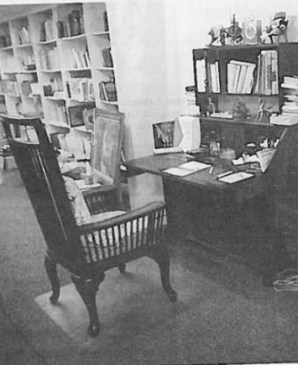
The photo shows my grandfather’s chair sitting before my basement desk where I write and store my books. I used to climb up the back of this chair when I was a tiny child, and blow on the bald spot on his head while he was asleep. Such memories nesting in the attic corner of the dormant mind. One day, I will write about that. Oh: I just did.

Friday Fiction: Crave More

IMG_0125

Friday Fiction
04 May 2018
Crave More

Crave More: I hate those words. I always choose
a cart with the shop’s name on the handle.
I can handle that. I can’t stand a cart
that screams Crave More at me every time I
bend to place an item in the wire grid.
If stores were honest they would write Think More
and Crave Less
 on their shopping carts. I bet
that would cut into profits. Anyway,
there I was, in LaLaLand, leaning on
my cart, half asleep, when this ghost drifted
towards me. “Help me,” it said. “I’m hungry.
I need money for food.” I woke up from
my dream, looked at the ghost, tall, skeletal
thin, cavernous eyes and cheekbones sticking
out, gaps in the teeth, grey face drawn with shame.
“Sorry,” came automatically. Then I
too felt shame. I looked at him again. “I
only carry plastic.” The excuse limped
heavily across the air between us.
I saw something in his eyes, I knew not
what, and turned away. As I walked away,
I added one hundred pound of muscle
to the scarecrow frame. Took forty years off
his age. Filled his body with joy and pride,
not shame, and remembered how he played, hard
and fast, but true. I ran the card index
of former players that I had coached through
my mind. I knew their moves, and attributes,
the way they played the game, strengths, weaknesses …
I remembered him holding up the Cup.
But I couldn’t remember his name. I
pushed the cart all over the store in a
frantic search for him. At the ATM
I withdrew cash. I could hand it to him.
I could tell him he had dropped it. I went
through a thousand scenes. I could invite him
to the snack bar. I could tell him to buy
what he needed and follow me. Check out
time, I would add his purchases to my
bill. I looked everywhere. He was nowhere
to be seen. One opportunity. One
chance. That’s all we get. Miss it, and we blow
the game. Grasp it and we medal with gold.

Commentary:
I have been experimenting with iambic pentameter, counting words and syllables on my fingers, tapping rhythms on the table, driving Clare crazy, and disturbing the cat. I have also disturbed my usual way of writing, for better or for worse I am not yet sure. Yesterday’s entertainment was to rewrite my brief story, Crave More, as a poem in pseudo-iambic pentameter. The measures seem to function and the rhythm and word count move both within the line and in the melodic, rhythmic phrasings that move between lines in a constant enjambement.

So, by all means let me know what you think of this experiment.  Here’s the link to the short story, also called Crave More. I would love to receive your opinions on narrative pseudo-iambic pentameter.

Revised Version:

Encounter

I was in the Superstore, leaning on
my cart, half asleep, when this ghost drifted
towards me. “Help me,” it said. “I’m hungry.
I need money for food.” I woke up from
my dream, looked at the ghost, tall, skeletal
thin, cavernous eyes and cheekbones sticking
out, gaps in the teeth, grey face drawn with shame.
“Sorry,” came automatically. Then I
too felt shame. I looked at him again. “I
only carry plastic.” The excuse limped
heavily across the air between us.
I saw something in his eyes, I knew not
what, and turned away. As I walked away,
I added one hundred pound of muscle
to the scarecrow frame. Took forty years off
his age. Filled his body with joy and pride,
not shame, and remembered how he played, hard
and fast, but true. I ran the card index
of former players that I had coached through
my mind. I knew their moves, and attributes,
the way they played the game, strengths, weaknesses …
I remembered him holding up the Cup.
But I couldn’t remember his name. I
pushed the cart all over the store in a
frantic search for him. At the ATM
I withdrew cash. I could hand it to him.
I could tell him he had dropped it. I went
through a thousand scenes. I could invite him
to the snack bar. I could tell him to buy
what he needed and follow me. Check out
time, I would add his purchases to my
bill. I looked everywhere. He was nowhere
to be seen. One opportunity. One
chance. That’s all we get. Miss it, and we blow
the game. Grasp it and we medal with gold.

Comment to the Revision:

The first eight lines of the original poem set the scene. While I tried to use them to accentuate commercial exploitation of the customer’s potential for greed, Crave More, they are not essential to the story of the encounter. Meg noticed this and following her interaction I have revised the poem, eliminating those first eight lines.

This is an interesting and inter-active way to work. Thank you Meg!

Poetry


img_0189

Poetry

“Poetry gives permanence to the temporal forms of the self.”
Miguel de Unamuno.

That is what my writing is all about.
Those temporal forms, fluttering and changing.
Butterflies, they live for a day or two,
perch and flourish, spread their wings,
excel for a moment, catch our attention,
blown by a sudden gust, tear their wings on a thorn,
perish in the blink of an eye, cluster and gather,
reborn in dusty ditches, congregate on bees’ balm,
smother Cape daisies and black-eyed Susans,
shadows shimmering, butterflies by day,
fireflies lighting up the night, terrestrial stars
floating in their forest firmament, hackmatack,
black oak, bird’s eye maple, silver birch, fir,
impermanence surrounds us, dances beneath stars,
sings with robins, echoes the owl’s cry through woodlands,
poetry, the elemental soul, our words capturing nothing,
turning it into eternity, holding it for the briefest moment,
then letting it go. Island View: my dialog with time and place.

Wednesday Workshop: Vis Brevis


IMG_0068 (2)

Wednesday Workshop
18 April 2018
Vis Brevis

Rain. Persistent rain. Cornish mizzle that chills and wets. Basque chirrimirri penetrating flesh and bone. Low cloud blankets buildings, wraps itself round the windshield. Clings with the tenacity of Saran wrap. Visibility variable, now clear, now a muffler round the car’s headlights. Darkness gathered, still gathering. Lights moving, cars moving, the road moving, blending first with the lights then with the shadows, shape-shifting.

Down the hill now, out of the city lights, into the countryside. The road changing, patches and potholes, lights flickering in and out, darkness and light. Small animals of light, the potholes, shimmering, bumping by. Another pothole, moving, turning from side to side, a pothole with a ringed tail and two tiny eyes. A baby pothole, misses the front wheels, not the back. One dull, dry thump.

What were you doing there, in the middle of the road? Why alone? Why no mother, no brothers? Why so small? I didn’t mean to … I didn’t want to … Why me? Why now? If only …

Light breaks through the darkness clouding my mind. Memories: the driver on the road to Kincardine, chasing a jackrabbit, trapped in the headlights, a Belgian Hare, dodging down the middle of the country road. Laughing, the driver, with the joy of his hunt. Then: one dry thump. The car stopped, the hare, still twitching, held by its long ears, shown as a trophy at the car window, then thrown in the trunk. Memories: two lads in a half-ton, on a back road by Grand Lake. A sunny Sunday. Spotting the ground hog at the roadside. Driving at it with the truck. Swerving to hit it. The joy and laughter in their faces, looking back. One dry thump. The ground hog, front half viable, spine fractured, back legs paralyzed, dragging itself with its forearms to the roadside, dropping into the ditch.

Legend tells of the man who met Death in Cairo. Death looked surprised to see him. “What are you doing here?” he asked. Fear filled the man. He ran, packed his bags, left Cairo with its vision of Death. Travelled to Bagdad. Met there with Death, who welcomed him. “Why were you surprised to see me in Cairo?” the man asked. “Because we had a meeting here in Bagdad, tonight,” Death replied. “And I didn’t know if you’d show up.”

“Every morning, at day break,
oh Lord, this little prayer I make,
that thou wilt keep thy watchful eye,
on all poor creatures born to die.”

Dylan Thomas wrote those words in his poetry play for radio, Under Milkwood. All poor creatures born to die. That’s us. That’s you and me. We don’t know how, or why, or where, or when. And it doesn’t matter. That’s the whole point: it doesn’t matter. Our death is born with us, walks with us, lives inside us, and one day will take us, each of us, we poor creatures born to die. What matters is that we live while we can, rejoice while we can, thrive while we can, think while we can, write while we can …

Enlightenment came last night, at the darkest, wettest of times. It followed me home and crept with me into my bed. I thought of all the creatures found each spring morning, their lives cut short at night along the sides of our New Brunswick roads: deer, porcupine, squirrels, groundhogs, foxes, domestic and feral cats, dogs, skunks, and yes, one, very special, baby raccoon, a tiny raccoon, so small as to be almost invisible in chirimirri, mizzle, and mist.

His spirit came to me in the under-blanket dark, wrapped itself warm around me, and brought me comfort. “You too,” he whispered. “You too. But not just yet. My work is done. I can go now. But you still have lots of work to do. Remember: Vis brevis, ars longa,”  his raccoon spirit nuzzled me and I reached out and patted him. Then both of us settled down to dream our different dreams of a life and death that is surely nothing but a game of touch and go.


Thursday Thoughts: Downsizing


IMG_0188

Thursday Thoughts
05 April 2018
Downsizing

“The time has come,” the Walrus said,
“To talk of many things:
of shoes, and ships, and sealing wax,
of cabbages and kings,
and if the sea is boiling hot,
and whether books have wings.”

Downsizing: such a sad time. Over the last few weeks we have slowly and steadily packed seventeen boxes with a part of our precious book collection. We are giving it to the Harriet Irving Library at the University of New Brunswick, our local provincial university. The collection contains several specialist areas including Mexico, the State of Oaxaca, and five pre-Columbian Mixtec codices, the 1492-1992, quincentennial facsimile editions. Today the Mexico collection, minus the codices (which we will deliver later, by hand), departed.

Their departure has left an emptiness on our shelves and a sadness in our hearts. Old friends, they are. We sought for them in Oaxaca, chasing through old books stores, market places, state institutions, and the houses of friends. The result: a steady accumulation of literary gems. Clare, in particular, took a delight in the codices, learning first to read them, then to analyze them. Much of the Mexican collection centres on how to interpret these precious documents, one of which still bears the burn marks where a wise priest drew the manuscript codex from the Inquisitional flames and saved it for posterity.

When the Mexican collection settled down in the boxes, a little space remained and we filled one box with the first set of books from our Quevedo collection. This was La Perinola, the Revista de Investigación Quevediana. I lay awake most of the night agonizing on whether or not I should let this review series go. Then, at 4:00 am, I got up, put on my dressing gown, went downstairs and photographed the Perinola, in all its glory. When this was done. I returned to bed and was finally able to fall asleep.

IMG_0192

The Perinola meant (and still means) so much to me. I still remember the thrill of being asked to sit upon the consejo honorífico, the only Canadian scholar, and one of only two Anglophones to be so honoured, my external reader being the other. To read my name next to that of the external examiner for my doctoral thesis on the love-poetry of Francisco de Quevedo (University of Toronto, 1975) was, and still is, an extraordinary honour. I still get butterflies when I see my name attached to this review. The butterflies settled, bit by bit, as I realized that I could preserve my personal memories with a photo while donating the series to the greater glory of Quevedo Studies in the wider world of Hispanic Academia.

IMG_0187

Thursday Thoughts

IMG_0027

Thursday Thoughts
22 March 2018

Washroom

Locate the nearest washroom …  I am growing old. Maybe I am the only one who needs the consolation of the proximity and known whereabouts of this item, but I am so much happier when I have located it and know where it is.  For me, it’s part of the pre-reading, ‘scouting out’ process that I wrote about yesterday.

The other thing I should have mentioned: work out for yourself a simple relaxation exercise that helps you to concentrate and brings your nerves back under control very quickly. Closing your eyes and breathing deep, one in, one out, does it for some. When uptight, I use a simple exercise from my early piano lessons. (1) Shrug your shoulders, relax your arms and let them hang down, then roll your shoulders, forwards and backwards; (2)  shake out your forearms and fingers; (3) close your eyes and breathe deep. This takes about five – ten seconds.

A personal anecdote: the first time I was due to read a paper at a major academic conference (in Laval University, Quebec) I was standing outside the lecture room listening to the chatter of a group of friends. I opened my mouth to join in and … squeak … no sound … speaker’s block … my voice had disappeared.

I eventually found a washroom,  did a series of  relaxing routines, including this one, sipped some water, and just like that, my voice came back. I returned to the conference and was able to read my paper, five minutes later, without further embarrassment.

Such narrow margins between success and failure.

Braids

IMG_0080


Braids

All thumbs,
I can manage
two bunches,
one on each side.

But now,
with her mother gone,
it’s much more difficult
to part my daughter’s hair
neatly into three.

I work hard to perfect
that one thick plait
she loves down her back.

As for fish-bones
and French braiding…
she begs me to try

and I promise
that when my thumbs
turn into fingers,
I’ll give it a go.

Torticollis

Avila 2007a 039

Torticollis

A sudden crick of the neck and I am back in the chalet at Perines with Trini.

“Torticollis,” she says, raising a hand to her neck, except she says it in Spanish, ‘tortículis’.

She offers me tea, very English, from the Wedgewood tea pot I brought her, all those years ago. Beside her, the Pirate with the Parrot on his Shoulder, my Toby Jug, still stands on guard, and protects my memories.

Orphaned, I was, from England, abandoned on that Spanish shore, and left there all summer to learn the language. Trini taught me how to eat, speak, choose my books and my friends … she had lost a son, same age as me, just after the Civil War, and treated me like her son, returned, like the Prodigal Son I was to all who had sent me away from home to improve my lifestyle and my manners.

Wanted? Unwanted by my family? I wouldn’t know the difference.

In that far-of land, in time and space,  I only knew the loneliness of being lost, marooned in a foreign land, feeling my way, day by day, among foreigners, still foreign, although they took me into their homes and hearts and loved me as I had never been loved before.

Back home, drowsing  at the kitchen table, I doze into my dreams, only to be woken by that beloved voice.

Wistful, I turn my head and glance backwards into that past of sunshine and beaches, where the sun sparkled on hill, sand, and sea and the table cloth was spread on the family table, pure and white, with a dozen of us sitting, talking, smiling, drinking wine, that bottled sunshine that still adorns my dining room table.

“Trini? Is that you?”

Her name slips from my lips as I snap my head towards her voice. As I turn, I twist my neck and raising my hand to the sudden pain, I hear again that word: “¡Tortículis!”

Return to KIRA: Thursday Thoughts

IMG_0087.JPG

Return to KIRA
Thursday Thoughts
27 July 2017

“You cannot step in the same river twice,” according to Heraclitus. And he was perfectly correct. Yesterday I returned to KIRA. But it wasn’t the same. How could it have been?

Geoff, Hanna, and Cherry met me at the door. Geoff shook my hand, Hanna gave me a big hug, and Cherry pushed her wet nose into my crotch. Some things don’t change and one of them is a favorite doggy’s greeting. Mary sat at her desk just inside the door and she got a big hug too.

One Small Corner, the book that I wrote while at KIRA in June was in my hand. I had a signed copy for each of them. They also had a present for Clare and I: lunch at the Garden Café, courtesy of KIRA and a trip there on KIRA’s latest acquisition, a new golf cart, driven by Hanna. We were early for our lunch booking and Geoff suggested a quick tour of the gardens since Clare hadn’t seen them.

We all climbed into the Golf Cart, Mary and Hanna in front, and Geoff, Clare and I on the back seat, looking back as KIRA slowly vanished behind us. Another quote: “History,” said Marshall Macluhan, “is like looking at the past through the rear-view mirror of a rapidly advancing car.” This is a wonderful metaphor for my feelings at the time.

I had just met the young lady who had inherited my room, the Red Room, and my studio, #1. Neither the room nor the studio belonged to me anymore. They were now closed spaces, occupied by another. It didn’t hurt. It didn’t drive a spear through my still suffering heart. It did, however, underline that the waters of the stream had moved on and were not the same.

The gardens had changed too. Gone were the splendiferous rhododendrons of June, present were the multitudinous colors of Late July. The tiniest alpaca, born just before I left at the end of June, was now a sturdy one month old, larger and much more self-contained. Moe was a month older too as he sat on the roof of his shelter and nickered away at the world in general. Our lunch table was reserved for 12:30 and we would see them all later, parading on the lawn.

The gardens were fuller now than they were in June: more flowers, more blossoms, more color, more people, more children, more hazards for Hanna to slow for as we made our way back to the Garden Café, past the Sensitivity Garden and the Therapy Garden, past the Labyrinth and the Maze, past the Dutch Windmill, past all those magnificent sculptures … new sculptures had appeared … the blue piano wasn’t there earlier … this month’s artist had erected a new piece in the Secret Garden … change was all around me … and I viewed it from the backward-facing seat of a slowly advancing Golf Cart.

We had lunch in the shade beneath the apple tree. I looked around for Carlos, certain that he and his shadow were both close by … but I could hear no pipes. I spoke to Clare in Spanish, just to hear that language once again, but Carlos still didn’t appear. How could he? The river had flowed on and he was back with his family in Brazil.

Friends dropped in at the table to chat: Brad, Tim, Stefan, Mikah …lunch came and went speeded on by reminiscences and plans. After lunch, we visited the exhibition put on in the Garden Café by the latest group of resident artists. We admired the pencil drawings, loved the paper-maker and her art, and were wowed by the rug hooking and the photographs …

I thought of our own exhibition, held in the same place in June. We had our paintings, courtesy of Anne and Ruby, our sculptures, thanks to Elise, but the silence of July’s exhibition had been broken by the sounds of Carlos’s pipes and the viva voce reading of my own poetry. We were not a silent group, but a noisy, head-banging, drum-beating, piping, singing set of selfie-videophiles … the river had flowed on.

Ghosts of our voices clung to the back porch when we returned to KIRA. Hanna and Mary returned to their duties. Geoff, too, had things to accomplish. We met with two more of the new resident artists and complimented them on their skills. Then we slipped silently away to join the river of traffic that flowed down Water Street and up and away and back again to Island View.

Yes, I enjoyed myself. Yes, I will return again in August for I have promised to do that. But each trip will be different and no two trips will ever be the same, for old man river … well …he just keeps flowing along …

IMG_0080

IMG_0087 (2)

IMG_0092


True Love

IMG_0027.JPG

True Love

Her voice in the night
drags me from my dreams.
But it is not her voice:
she has gone back home
leaving Clare and I alone.

Our sleeping rhythms have changed
and we wake each other up
when we unexpectedly touch
or startle at the voices in our dreams.

True love is so much more
than an exchange of rings
or a holding of hands,
especially when our lives
are no longer ruled by hormones,
and they’re taken over
by rebellious glands.