Niche

Jane gave me the honor of writing the foreword to her book and I did so with great pleasure.

Jane Tims: Niche. KDP.
Book Review

Niche, the fourth poetry book published by Jane Tims, is a neat configuration of six segments that elaborate and illustrate the poet’s original definition of the multiple meanings of her title word niche. It is very difficult to separate the author from the act of narration as her keenly observed and skillfully executed drawings, together with their verbal representation on the page, are so autobiographical and so much an extension of her artistic and professional abilities that the objective separation of writer and text is scarcely possible. It is hard to forget that Jane Tims was, and to a great extent, still is, a highly competent professional botanist. The harnessing of the professional botanist, with her unique drawing skills and scientific knowledge, to the poet and auto-biographer is a key factor in the reading and interpretation of this text in which acute observation blends with an intimate knowledge of the observed botanical world, both flora and fauna, and this allows the poet, in her role of poetic narrator and lyrical voice, to weave a network of poems that are, at one and the same time, objective and intensely subjective.

The author emphasizes this when she writes in the Preface that “In biological terms, the niche is the quality of a space occupied by a living thing, the sum total of physical, nutritional, biological, psychological and emotional needs gathered together in one place.” She also reminds us that in human terms “niche can be a metaphor for home, community or personal space” and it is within these metaphoric spaces that the poetry text is elaborated. The text becomes a linked mixture of visual drawings, iterative thematic imagery and associative fields, all centred on the multiple meanings of niche. These terms are both biological and human in nature and the poet’s named world meets at this juncture between the human and the natural.

The section occupying space (1-19) bears the subtitle satisfying need and begins with a setting out of what this means in the following 12 poems and 4 accompanying drawings. The poem ‘apples in the snow’ with its companion drawing stands out for me. The section strategy, subtitled solidifying position (21-43) outlines in poetic terms, how plants, animals, and humans ensure their own survival. The section praying for rain, subtitled, avoiding danger and discomfort (45-68), offers views on discomforts and dangers. It also opens the discussion—relocate or stay where we are? The section mapping the labyrinth or places I have occupied (69-83), which contains the wonderful sentence “When I get lost on the road ahead, I look to the road behind me,” throws open the multiple meanings of home. The section new ways for water, subtitled coping with change (85-98), offers a double landscape, first, external, the things seen, touched, examined, remembered and described, and then the internal landscape that reflects upon them and is reflected in them. Finally, forgetting to move, with its subtitle getting comfortable (99-111), presents an autobiography that links observer (the twin personage of author and narrator) to observed (nature, both flora and fauna, and the added element of autobiography and self) via the symbiotic relationship of botanist to botany.

Two moments stand out for me. (1) Sadness is in seeking the space that is never found. (2) Loneliness is in trying to return to a space once occupied but no longer available. The whole concept of the Welsh word hiraeth is summed up in these two lines. Carpe diem, Jane Tims’ poetry indeed seizes the day and, with its minute, intense observation, it preserves so many precious moments. It also pays attention to that which has been lost, those moments that are irretrievable. They will vary for each reader, but hopefully, like me, you will take great pleasure in discovering them for yourself.

Comment: Brian Henry of Quick Brown Fox picked up this review and published it on QBF. Thank you, Brian and thank you Jane, you both do me great honor. Here’s the link: Niche on QBF 14 March 2021

Aubade

IMG_0033.JPG

 Aubade

Fluffed up in their look-out points,
the birds in the garden complain of the cold
with short, sharp calls.

A life of ease they seem to live,
but when the mercury descends and water freezes
icy blinds inside our window panes and snow-
squalls bluster in from north and west,
who knows what’s best for those poor birds?

Crows, aloft in their crow’s nest spars,
sailing snow’s seas,
steadfast in their skippering of wind-bent trees
don’t seem to suffer so much.

This Arctic cold is such
that neither man nor beast can love it,
crouched close to whatever warmth there is,
shivering in the wind’s cold touch.

Driving home from the hospital,
bullied by fierce winds on a snow-packed road,
I dream as I drive.
I envision a past that never was,
a future that may never be.

As I hibernate in that past,
last summer’s flowers flourish in my mind.

The car skids into a snow bank
and my world shakes in shock.
A thirty wheeler rumbles by:
there are so many ways to die.

Water Falls

DSC01067.JPG

 Water Falls

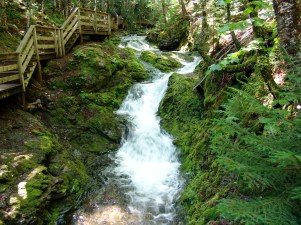
    What is it about running water
that it explodes like long, blonde
hair over moss and rock
frothing with sunlight the diamond
sparkle, the freckling sound,
light flickering downwards,
fine threads of angel hair
tumbling from above, falling,

DSC01073.JPG
white, over earth’s rocky shoulders,
pillowed across soft green quilts

DSC01045.JPG
poured down from heaven’s skies
watering the earth’s dark throat,

DSC01058.JPG
sinking through the soil
emerging in rivulets and brooks
until all waters are one
and the rains join hands
to splash, rejoicing,

DSC01055.JPG
dryads and naiads bathing
together in deep, cool pools,
nymphs reborn, acrobats over rocks
as water falls to seek the sea.

Dark is her shop

Dark is her Shop

IMG0014_1.jpg

I buy two liters of white mescal, cheap and rough,
without the second brewing: fire water, not smooth.
Two liters: she sells them in an old Coke bottle
she’ll seal with cellophane, and a rubber band.
Six worms I buy. Bedraggled fighters dragging
smoky trails as they plummet through a yellow sea.

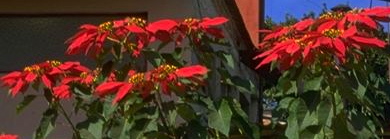
In the shop next door I buy poinsettias.
When I get home, I put them in a vase
and watch them, red-eyed, watching me.
Bloodstains scratching a white-washed wall.

IMG0034_1.jpg

Misshapen gems in a ceramic prison, their beauty
breaks me down: a fragmented world, decimated
words, metaphors born from worms and mescal.

The eyes I see are not eyes because I see them:
they are eyes because … twin brown ovals …
they watch me as they float in a liquid mirror
within the upraised glass held by my hand.

Outside, beyond the balcony,
sun -blood melts like sealing wax.
The bougainvillea strains sharp stains
through a lonesome slice of sunlight
giving birth to flamboyán and tulipán.

My lemon tree leans over to listen.
Glistening pearls of dew embellish
its morning throat. Christmas decorations
these postage-stamp minstrels, thronging
each branch, filling me with song.

18 June 2002 butterflies in ditch 014.jpg

Butterflies, winged flakes of archaic paint,
flutter from temple walls leaving them barren.
Church towers, strong when terra firma shakes,
quiver insubstantial. Mescal melts the morning,
a miracle, this quiver of shimmering air.

Teddies or Cats?

IMG_0015.JPG

Five reasons why a Teddy Bear is much better for you than a Kitty Cat.
I know, I know: cat lovers will go wild. They think cats are such lovely cuddly things. And they believe strongly that nobody can resist a warm, loving, darling, purring bundle of fur. Well, I can resist cats. And I can give you five good, sound, solid, 25 carat reasons why Teddy Bears beat Kitty Cats any day of the week.

One
Teddy Bears do not need to be fed on a regular basis. In fact, one piece of kibble will last a Teddy Bear for a very, very long time. And you can’t say the same for your cat. So less expense, no need to feed, don’t have to put that fresh water down every day, no constant fawning attention when hungry or just plain greedy, don’t have to worry about treading on the cat’s tail … In fact, a Teddy Bear wins out every time.

Two
“Don’t mention cleaning out the kitty litter.  Promise?”
“I promise. I won’t mention it.”
“Word of honor?”
“Word of honor. Fresh Walnut and all that.”
“You just mentioned it.”
“Mentioned what?”
“The kitty litter.”
“I didn’t.”
“You did: you said ‘Fresh walnut.’”
“So?”
“So that’s what keeps the kitty litter from smelling.”
“Does it smell much?”
“Quite a bit. I hate cleaning it out.”
“Why?”
“It’s so smelly, filthy, grainy, lumpy, stinking …”
“So, why do you do it, then? What you need is a nice, clean, environmentally friendly Teddy Bear. There’s no cleaning up after a Teddy Bear. Who’s ever heard of Teddy Bear Litter?”
“You said you wouldn’t mention it.”
“Mention what?”
“Kitty litter.”
“I didn’t, you did.”

Three
Teddy Bears don’t have off-spring. You don’t need to neuter them, and they don’t need taking to the vet. Nor did they sit and wait in family groups for their photos to be taken. What we have below is a fake photo placed there by the unscrupulous enemy for their own pro-cat propaganda purposes.

Empress 048.jpg

Four
Teddy Bears are very obedient. If you tell a Teddy Bear to “sit” or to “stay”. He does so. Immediately. And he stays where you put him. There’s no clash of wills and egos, no conflict at all. Teddy Bears are easily trained and very obedient. Also, they don’t want to go out in the garden and wander beneath the bushes to shriek and whine when the moon is full. Now, if you have cats and you want them to sit and stay still, you must give them something to watch or to play with. Chipmunks and garden birds aren’t cheap, you know, and they are less trainable than cats. How long do you think it takes to train a chipmunk to just sit there quietly to entertain your cat? Especially when it’s being hissed at and the cat is bouncing the window with anguish? Also, Teddy Bears don’t climb on furniture, nor do they break ornaments, nor sink their claws into your hair as you pass beneath them, nor do they drop on you, unexpectedly, from great heights.

Five
Five and finally, when there’s a moth, a fly, or a mosquito on the ceiling at night, you can’t train your kitty cat to fly into the air and snatch it off the ceiling. But as for Teddy: grab him by one leg, preferably the back one; give him his commands “Ready, Teddy, Go!” and hurl him skywards. With a little practice, he’ll nail that nocturnal buzzing monster every time.

No: all things considered — and I promise I won’t mention, you know what, that little box the cat sits in — there’s nothing better than a Teddy Bear. Wise, silent, friendly, cuddly, obedient, friendly (did I say that?), needs no training, always there when needed, waits patiently for you when you’re away, never stalks off with tail in air, never gets out and hides in the garden where you can’t find him, adorable, cuddly (did I say that already?) … Give me a Teddy Bear anytime.

Click this link for original post and more photos:
https://rogermoorepoet.com/2016/05/01/teddy-bears-and-kitty-cats/.

On Re-reading Quevedo’s Poetry

IMG_0190

On Re-reading Quevedo’s Poetry

Was that where my life went,
a spent candle trailing dark studies
among the packed lines of your poems?

And you, was your life gutted by that
same guttering candle by whose light you
scrawled your tight black spider rhymes?

Were they all meaningless, your insights
and my words? So few now know who
you were and what you represented
and I, your scholar, a mere shadow of your
shadow struggling in the straggling
light of a far-off continent, far from content
at knowing so much about you. Intent
I was on spreading light and the word
to a world that thinks the two of us absurd.

Our world is spinning on its edge, placed
on the perimeter of space, and going nowhere.
Specks of dust we sit and contemplate
the vastness of what exactly: our fortunes,
our spirits, our houses, our power, our lands?
Out there, in the vastness that surrounds us,
worlds without end will never know we existed.

Bleak and blank our names, our deeds, our status,
the statues they raise in our praise. And what of
our thoughts, those sparks of electricity
that link us lip to ear and mind to action
and each of our actions transformed by a dance
performed by circling planets that shape our wills?

Who programs that universe now? Who plays
what trivial games of snakes and ladders
in which we are the dots and dashes, pinballs
among a million trillion strings of flashing lights?

Earth to Earthlings

IMG_0158 (1).jpg
March 1 is St. David’s Day: Dewi Sant, patron saint of Wales. While we are here, immersed in cold and snow, in Wales, spring is arriving, the daffodils are out, trees are budding. This poem is a reminder that winter will end and sunshine and spring will return. So for St. David’s Day, I wish you joy and hope.

Earth to Earthlings

“Get out and about,” she told me.
Take off your socks and shoes.
Walk barefoot on the earth and grass:
twin pleasures, you can choose.”

I took two canes, one in each hand,
and left the house to walk the land.

In the garden I took off my shoes
to walk barefoot on the lawn;
when grass sprang up between my toes
I was instantly reborn.

I stood in the shade of the crab apple tree
and let leaf and flower spill over me.

Sunlight took away my frown
and freckled a smile on my face.
I was blessed again with hope and light;
earth and grass filled me with grace

When white blossoms filtered down
they gifted me a flowery crown.

I stooped to reach my shoes
and carried them home in my hand,
maintaining as long as I could
my contact with this magic land.

IMG_0140.jpg

Striations

IMG_0299.jpg
The iguana that guards the front door of our house. At night he comes alive, goes round on patrol, checking and securing everything and everybody. Beware the jaws that bite, the claws that clutch!

Striations

There are striations in my heart, so deep, a lizard could lie there, unseen, and wait for tomorrow’s sun. Timeless, the worm at the apple’s core waiting for its world to end. Seculae seculorum: the centuries rushing headlong. Matins: wide-eyed this owl hooting in the face of day. Somewhere, I remember a table spread for two. Breakfast. An open door. “Where are you going, dear?” Something bright has fled the world. The sun unfurls shadows. The blood whirls stars around the body. “It has gone.” she said. “The magic. I no longer tremble at your touch.” The silver birch wades at dawn’s bright edge. Somewhere, tight lips, a blaze of anger, a challenge spat in the wind’s taut face. High-pitched the rabbit’s grief in its silver snare. The midnight moon deep in a trance. If only I could kick away this death’s head, this sow’s bladder, this full moon drifting high in a cloudless sky.

Comment: a fitting ending for the month of February: ubi sunt? Where have all those days gone: Ou sont les neiges d’antan?

San Pedro

IMG0024_1
Looking back at my old photos from Oaxaca I am amazed at the contrasts between sun and shade, light and dark. I will never forget that ultimate glory: a sunbeam through a stained glass window, casting fragmented light.

San Pedro
Oaxaca

A single sunbeam descends.
Sharp blade of a heliocentric sword,
it shatters the chapel’s dark.
Fragmented light
stains me with glazed colors.

A pallid lily truncated
in the dawn’s pearly light,
Peter, the young widower,
kneels in prayer.

His head wears a halo.
His pilgrim palm
presses into the granite
forcing warming fingers
into a cradle of cold stone.

His flesh clings to
the statue’s marble hand.
A mingled maze:
marble and human veins.

Peter > petrus > piedra >
this church now a rock.

Daffodils

IMG_0142.JPG

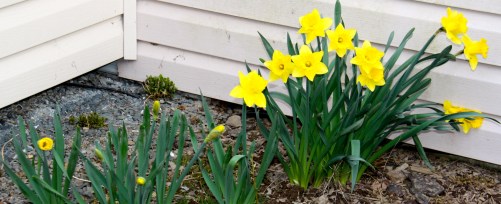
Daffodils
(for my mother)

Light in dark
bright yellow stridence
shrill golden dog’s bark
to warn off death’s wolves
that freeze her blood

she dreaded night’s unease
the devil’s wintry anti-spring
life’s darkest sparks

 but loved the daffodils’
sunny March cadence
of brief piercing dance

Comment: A Golden Oldie. My mother loved daffodils and planted them all over the garden in Cardiff, Wales. They are the national flower of Wales and break into blossom just in time to welcome St. David on St. David’s Day, soon to be upon us, Dydd Dewi Sant.