Survivors

Survivors

Last night’s rainstorm shrank the house.
We closed down rooms
and now the walls are closing in.
There’s so much we no longer use, nor visit,
so many rooms we no longer enter.

Almost all our friends downsized long ago.
We are the holdouts. We love it here
in this big house with its lawns and trees
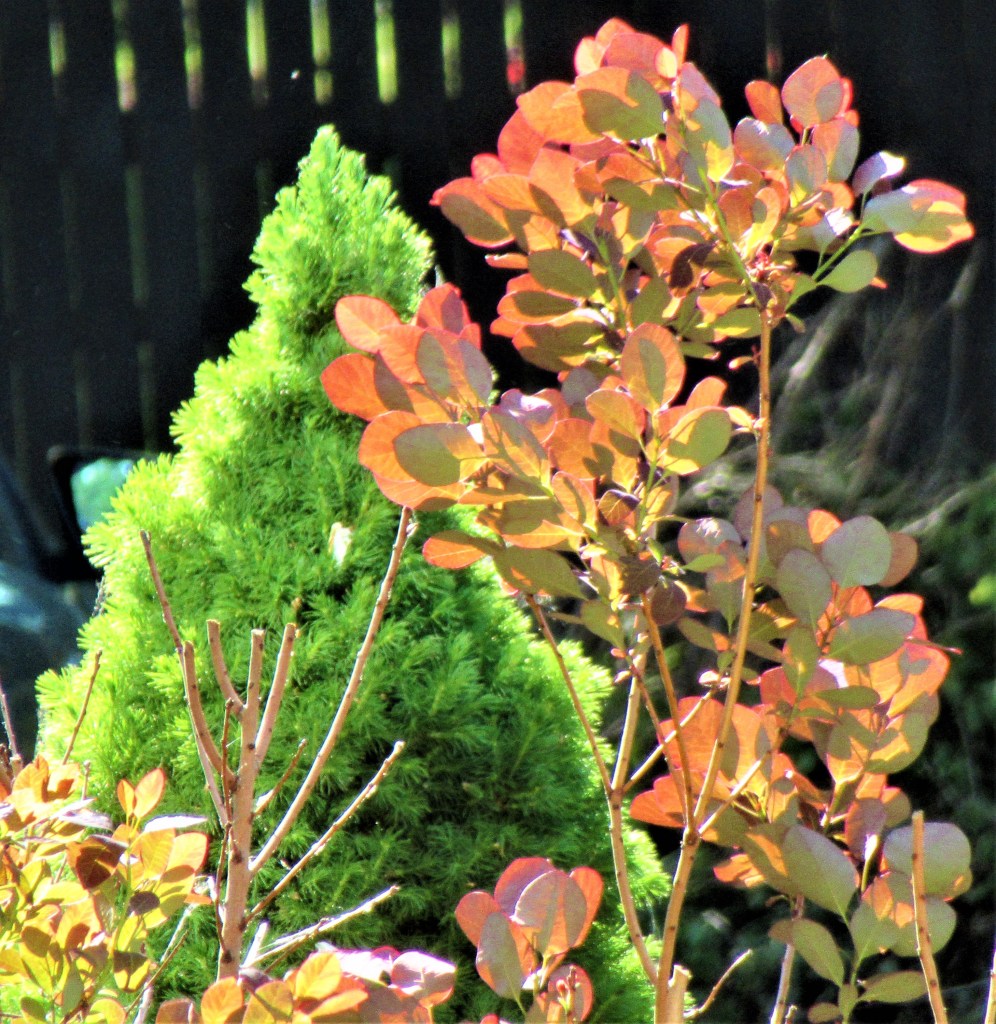
and flowerbeds with bees’ balm, butterflies, birds,
and the yard abuzz with sunshine and bees.

But now we are starting to throw things out.
Maybe we’ll move, next summer perhaps,
or maybe not. For now is the time of indecision.

Like friends of the same age,
we travel the lesser road of memory loss,
a name and a face here,
a date or phone number there.

Perhaps, when the time comes,
we will have forgotten how to move.
Meanwhile, the mandatory old man’s question:
‘where did I put my glasses?’

Why?

Why?

“Where are you going?” I ask again.
 “To see a man about a dog,” my father replies.
  “Why?” I ask.
  “Hair of the dog,” his voice ghosts through the rapidly closing crack as the front door shuts behind him.
  “Why?” I cry out.
 Years later I remember this episode. The mud nest nestles tight against a beam beneath our garage roof. Tiny yellow beaks flap ceaselessly open. Parent birds sit on a vantage point of electric cable, their beaks moving in silent encouragement. A sudden rush, a clamour of wing and claw, a small body thudding down a ladder of air to crash beak first on the concrete.
“Why?” I ask.
The age-old answer come back to me.
“Wye is a river. It flows through Ross-on-Wye and marks the boundary between England and Wales.”
The swallows perch on the rafters watching their fledgling as it struggles on the floor, the weakening wing flaps, the last slow kicks of the twitching legs.
“Why?” I ask.”
“Y is a crooked letter invented by the Green Man of Wye.”
“Why?” I repeat. “I want to know why.”
Silence hangs a question mark over the unsatisfied spaces of my questing mind.
A golden oldie. We would all like to know why. But there are no answers. Just riddles cast, like two trunk-less legs of stone, on the sands of time. Nothing beside remains. Yet still we ask the age old question: why? And still we receive the age-old answers from those ageing wise men who ruled our childhood and taught us everything they knew.
“Why?”
“Because.”

Comment:

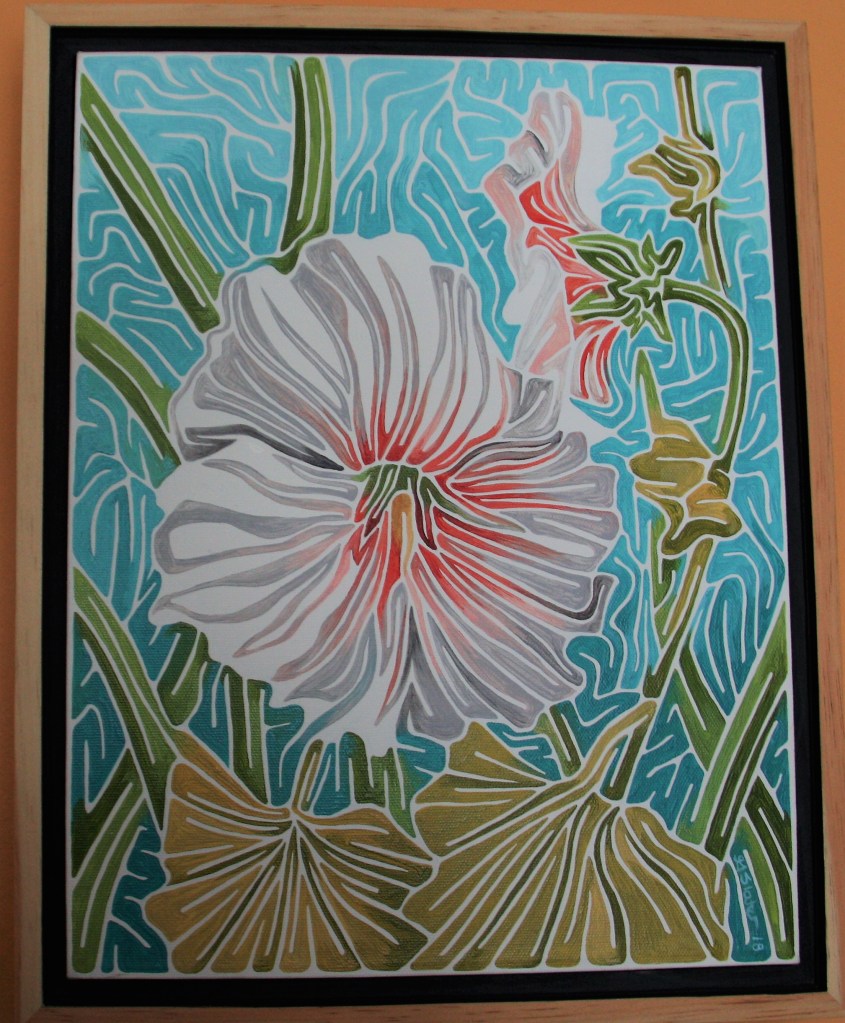
Alas, we have lost our hollyhocks, not all of them, but most. They have been drowned in torrential rain, blown and bent, ravished by raging winds, and they have been scorched in a heat-warning scorched earth policy that left them and the garden all forlorn. As for the lawn, between chinch bug, crows, raccoons, and a surge in weeds and bugs, it is a desolation.

What is worse: they were so beautiful, those hollyhocks. Multi-coloured, stately, and tall. Hopefully, they will return next year. We do hope so. And equally hopefully next year will be a better year for them. And for you and me. Meanwhile, I savour the photos and mourn their loss. Meanwhile…

“Why?” I ask “Why?”

The answer echoes back across the years in well-known voices that have long been silenced.

“Because.”

Poetic Structures

Poetic Structures
Wednesday Workshop
21 July 2021

External Structures

            Roman Armies, men and words, were structured, highly structured. Poetic structure can take many forms: external structure, the sonnet, for example, with its 14 lines and its 4+4+3+3 verse form which can also be 4+4+4+2 or 5+5+4, or 5+4+5 or 2 x 7 or 3+3+3+3+2. I have experimented with all of these sonnet forms, and many more, at one stage or another in The Nature of Art. Milton Acorn, the Governor-General’s Poetry Award Winner for poetry, wrote a book called Jackpine Sonnets. His Jackpine Sonnets are wild and beautiful, growing this way and that, totally individual and out of shape, just like wind-swept jackpines of Tara Manor in St. Andrews on the East Coast of New Brunswick, Canada, where I penned some of these poems.

Internal Structures

            In the same way that poems can be given a formal structure, so can lines. Structure can be external, flowing from line to line in an unbroken sequence, or it can be internal, limited to each line. Some of my poems include stanzas where the individual line flows into the stanza and the result is an amalgamation of both the individual and the whole. Individual lines can be structured by syllable count, 10, 11, 12 or more per line. They can also be structured by stress, the stress of normal speech or the stress of forced rhythm. Structures can have Greek or Latin names, English ones too. Or it can be the structure of simple, everyday speech. Fray Luis de León, (1527-1591) wrote that he counted his syllables when he spoke and he wrote prose and poetry the same way he spoke. Syllables, a strange term nowadays, not understood by all. Try the ‘beat’ of music: “You can’t always get what you want” (Rolling Stones) or “All you need is love,” (Beatles). Simple really, but it is all too easy to complicate these concepts.

Comment: Clearly this is a simplification of what can be an intensely scientific and academic subject. We have only to think of the books of rhetoric, with their long lists of Greek names for the different syllables, long and short, and the different line lengths that run from Iambic Pentameter to Hymns Ancient and Modern. However, the purpose of these thoughts is to simplify and not to complicate. More important, perhaps, rhythm, in one form or another is akin to structure and many of us have an innate sense of verbal rhythm, whether we count our syllables on our fingers, as I do, or count them not, as is the modern trend in some poets. Think daisy petals: she loves me, she loves me not, I count them, I count them not. Yet still the rhythm is there and that, in many ways, is one of the key secrets of our unique poetic voices: we all speak and write in different fashions and that is one of the things that makes us unique.

Hollyhocks

Hollyhocks

I have published three books this year and I am working on a fourth and a fifth. Somehow, the blog, like these hollyhocks, seems ephemeral. It will not out last me, though its seedlings, children and grandchildren, may creep into my printed books and remain a lot longer. These, incidentally, are the children and grandchildren of the first hollyhock grown in the garden. I think a little bird must have dropped it about five years ago. Now it has seeded and reseeded itself. Reseed, yes — recede, we hope not. They are so tall we can sit in the kitchen and they are at eye level with us.

And don’t forget the yucca. He was $120 in the local garden store. Reduced to half price ($60). Then to $50. “We are in the wrong zone for yuccas,” I told the salesman. “Yours for $20, then. He probably won’t last.” That was 32 years ago. And baby, just look at that yucca now.

He hides behind the hollyhocks, but he doesn’t live in their shade. Not by any means. There are so many things to see and do. The blog seems to have drifted by a little bit. I know it’s lonely, but I haven’t forgotten it, as the hollyhocks haven’t forgotten the yucca and vice versa. It’s just that it’s summertime and things are busy and well, I guess I’ll try to do a little bit better. I promise!

Vets

Autumn Leaves, the Peace Park, Mactaquac

Spotify
Remember to scroll down to appropriate audio episode.

Vets
A Thursday Thought

Mary Jones

I met her unexpectedly in a restaurant in St. George.
I was masked, but she knew me right away. She hadn’t
changed. How could she have? She is as she is. Straight
forward, upright, honest, true to her words and her values.
Ex-military. A United Nations Peace-Keeper. A Blue Beret.
World traveller to some of the roughest, toughest, ugliest,
craziest spots. Everywhere she went, she helped keep the peace.

She came back home to find out what she already knew: that
rural New Brunswick was as wild as anywhere she had been.
She was anonymous, here, was just another number in a book,
a casualty in a nameless war of attrition after which the winners
rewrite the history of events, twisting them this way, that way
to suit themselves and their own instincts and interests.

“Best of the best,” I wrote in the book I gave her. Fortuitous,
it was, finding her again, finding that copy close to hand,
reserved for her alone. That book and this poem are my tribute
to her for her courage, her fortitude, and her strength of will.
They are also a tribute to her role in making the world a safer place
in which others, less fortunate, can create, without fear, their lives.

Comment: There is very little more to be said. Each former soldier is an individual with a history and personality of their own. This is my tribute to a very good friend who served her country and the United Nations Peace Keeping Forces with pride and distinction. Mary Jones, I, an academic, a writer, and a non-combatant, salute you for all the positive values which you have brought into this sometimes troubled world of ours. You and your well-being are in my Thursday Thoughts.

Ruffed Grouse

Ruffed Grouse by Kaitlin Hoyt

Kaitlin Hoyt
(KIRA, May-June, 2021)

She is an oyster, silent at low tide, yet with a host
of pearls waiting inside her, ready to be released.
When set, she will release those pearls herself,
stringing them together, like Chantal’s beads,
into a skein of meaningful, enigmatic moments.

Enigmatic, yes, but, like Elgar’s Enigma Variations,
a Russian Doll puzzle of secrets and intrigue. Comic
book artist, she evolved to graphic designer, then
multi-tasked first to Kinetics, and then to a painter
who reaches out in empathy to the world around her.

For her, all art is linked and communications are key,
on many levels. Visualization. Achievable goals.
A step-by-step process with each step foreseen, planned
beforehand, and each step always taken with an open mind
that accepts the true response, leaving falsehoods behind.

Kinetics, yes, but she is above all a loner. Kayaking.
Hiking. Weight-lifting. Yoga. Meditation. Mindfulness.
Caring. Sharing. She sends me her web page and I am
blown away by her empathy with birds and the natural world,
that world her oyster and her, an oyster in that world.


Comment: This particular bird visited our Mountain Ash in the garden at Island View. Kaitlin saw my photo and asked if she could paint it. I sent it to her, and this is the result. Wild life to Still Life to art and never Nature Morte! Together, Kaitlin and I have preserved forever the surprise visit of this beautiful bird.

Sculptures in the Gardens

Spotify
Remember to scroll down to the appropriate audio episode.

Sculptures in the Gardens

It’s the only sculpture garden in Canada. It may even be
the only one in the world in which the sculptures
shake off their shackles and come alive at night
when the moon hangs heavy in the sky and shifting
shadows prowl beneath Kingsbrae’s trees. Deadly
nightshades, roaming with no thought for the humans
who walk around by day taunting these sculptures,
thinking they are lifeless, mere images set in stone.

Beard not the lion in his den, nor the fox running wild,
nor the chubby bear whose clumsy run belies his speed
and strength. The dragon opens iron wings, but beware
of the hot forge lodged in the snap-dragon’s mouth.


Have you seen the cerulean whale, marooned and ship-
wrecked on these foreign soils? Once upon a time,
in a fairy tale, he roamed the seven seas and plundered
men and ships with abominable ease. Ease and the easel,
plein air paintings, sculpture portraits taken from life
and converted to a ship’s canvas that will never sail.


Ask not who is that bearded man, for he might be the one
Don Juan invited to supper. Ah, the hard rock ship-shock
when with a thunderous knock he arrives, an unexpected
guest, at the coward’s door. And shake not his hand lest
his fearsome grip turn you to stone or drag you down to hell.

Daybreak at KIRA

Spotify
Don’t forget to scroll down to appropriate audio episode.

Daybreak

… early morning sunshine
creepy-crawly spider leg rays
climbing over window and wall
my bed-nest alive to light
not night’s star twinkle
but the sun’s egg breaking
its golden yolk
gilding sheet and pillow
billowing day dreams
through my still sleepy head …

… the word feast festering
gathering its inner glimpses
interior life of wind and wave
the elements laid out before me
my banquet of festivities
white the table cloth
golden the woodwork’s glow
mind and matter polished
and the sun show shimmering
its morning glory on garden and porch …

Comment: Not every day is the same, nor are the colors the same. Monet would watch the sun crossing the face of Rouen Cathedral. Every hour brought a different set of colours and a changed palette of impressions. No two mornings in the Red Room are the same. Each one presents a changed light, changing moments, changing impressions, but all (or almost all) are unforgettable. The poem, incidentally, can be found in One Small Corner. A Kingsbrae Chronicle (available at this link).

Comment: Another moment of magic: this is the morning of the partial eclipse (Thursday, 10 June, 2021). However, there’s enough cloud cover for me to have missed the actual moments of the eclipse. That said, the sun is all distorted and not at all clear, as it usually is when seen early from the Red Room, nor is it the same rich colors at all, so perhaps I did catch something worthwhile after all. More than worthwhile, this too is a magic moment.

Ginger Marcinkowski

Spotify
Don’t forget to scroll down to appropriate audio episode.

Ginger Marcinkowski
(KIRA, August, 2019)

“My walk each morning, rain or shine,
feathers my black galoshes with dewy grass.
There I would ramble through gated doors
that kept out the world and sealed in
my pen’s work for that day. 

I often found myself sidetracked,
exploring paths that led through flowerbeds,
and up to my favorite sculptures.
I paused to watch my fellow artists
as they focused on chosen subjects
unaware that I was eavesdropping. 

Then silently, I would steal away
along the well-trod path to my studio,
pausing long enough to greet the llamas
and baby goats. If I listen carefully
I can still hear their bleating. 

In wonder, every day, I climbed the steps
of wood that led to my studio, opened
the door, and turned to breathe in my good
fortune. “What a blessed woman you are,”
I would tell myself before taking my place
for hours on end at my desk, each moment,
each stroke of the pen, each letter added
to the growing lines on the page, a gift.”

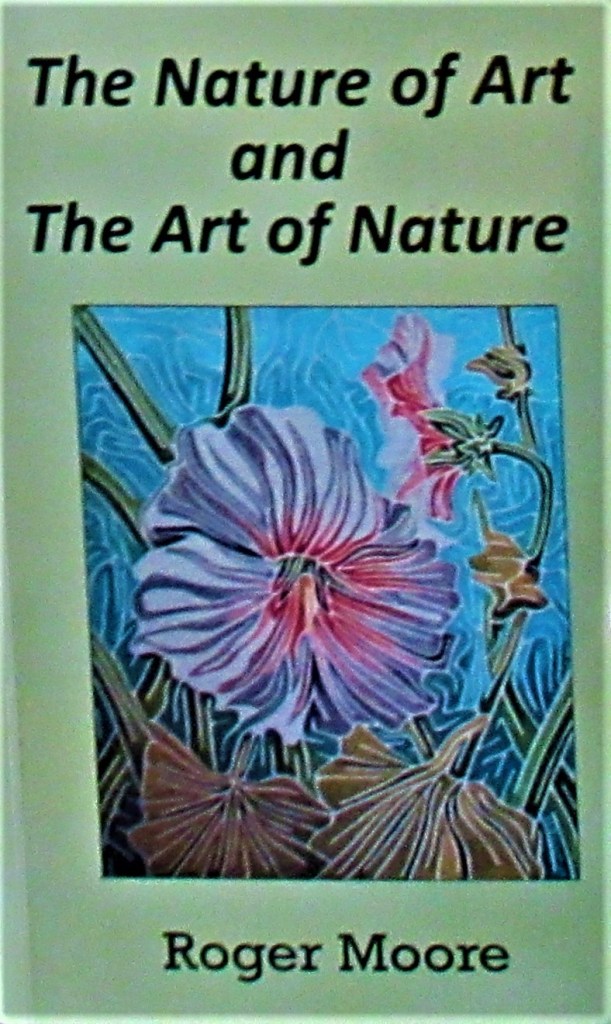
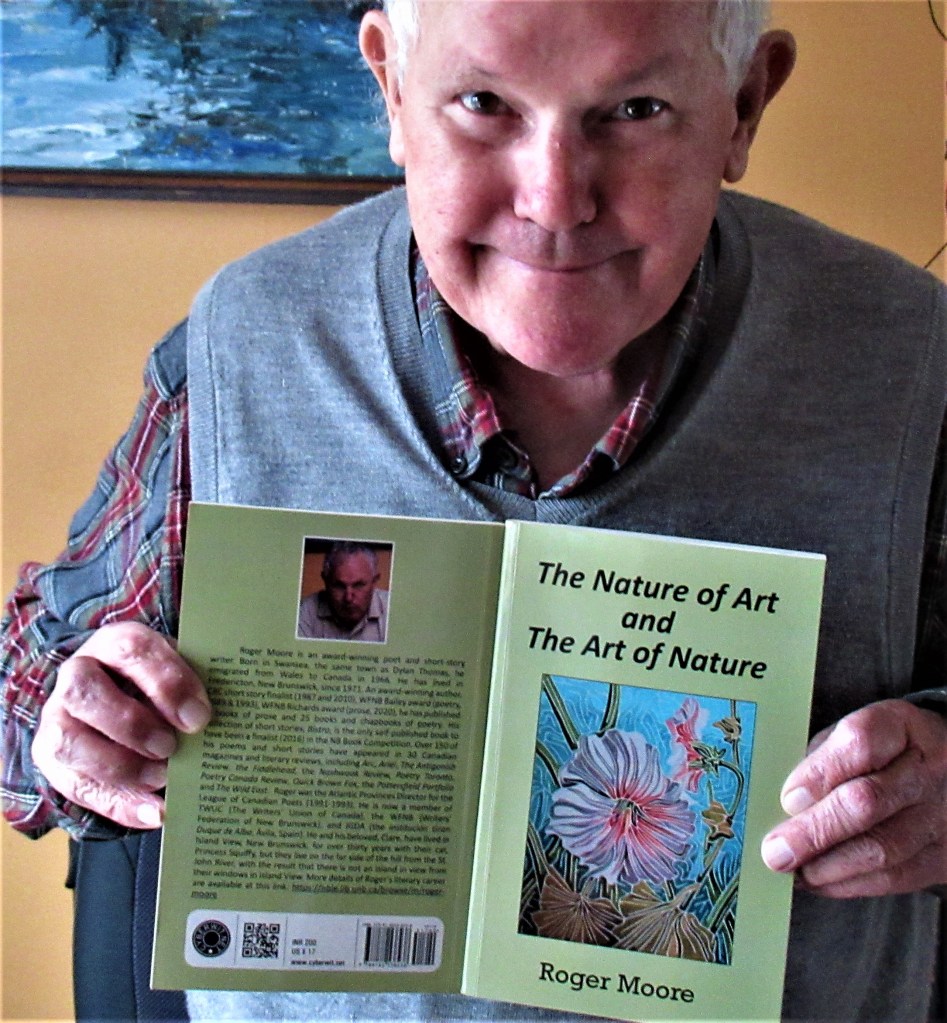
Comment: I have been writing poems about the KIRA artists as part of my next poetry book, The Nature of Art and the Art of Nature. This is my KIRA2021 project. The Nature of Art is a revision and expansion of a poetry manuscript of the same name that placed second in the WFNB’s Alfred G. Bailey Award (2020). This poem appears in the section entitled Impressions of KIRA Artists. Currently this section contains eleven poems, but it is still under construction. This poem is interesting in that it is a ‘found’ poem, in the sense that Ginger wrote these words to me in an e-mail. I removed them, reordered them, polished them, and sent her back her own poem in her own words. What fun! This should help explain the use of inverted commas at beginning and end, for this poem is spoken in Ginger’s own words.

Saturday at KIRA

Early morning sun through mist.

Scroll down for the text of the selected poem.

Saturday at KIRA

Visitors Day at KIRA and the artists work in their studios showing their methods and techniques to visitors from the local community and further afield. The mist disappears very quickly and we are left with sunshine and warmth. A good day for sitting out on the porch and waiting for guests.

View from my book table.

I sit behind my table on the porch at KIRA, making notes in my journal and waiting for the advent of guests. I have no plans other than to sit ad write. If people arrive and wish to engage me in conversation, that will be great. It will be even better if they pick up a book, open it, choose a poem or a passage of prose, and allow me to read it to them. They can follow the text while I read. When people do arrive, they look first at the covers of the saddle-stitch books and chapbooks. Many comment on the wonderful pencil sketches that Geoff provided for them. A couple are drawn to the bright colors and cartoons of the larger books. Title and cover combine together to persuade each visitor to pickup a book and start to read it.

Visitor’s view of the book table.

This is more or less what guests and visitors see when they approach the book table. You have to imagine me, the poet, sitting behind that table, masked if I do not know the guests, unmasked and at a safe distance if I do. I find it difficult to read out loud with the mask on. It is much easier, mask off.

I promised one guest, alas, I have forgotten her name, that I would post a poem and a voice recording of it, here on my blog, so that she and her friends could hear me read. This is the poem I read to her. I do hope she is able to locate my blog and follow this up. Here is the poem, from Sun and Moon. Poems from Oaxaca.

Santo Domingo
Worshipping Gaia before the great altar
in Santo Domingo

If the goddess is not carried in your heart
like a warm loaf in a paper bag beneath your shirt
you will never discover her hiding place

she does not sip ambrosia from these golden flowers
nor does she climb this vine to her heavenly throne
nor does she sit on this ceiling frowning down

in spite of the sunshine trapped in all this gold
the church is cold and overwhelming
tourists come with cameras not the people with their prayers

my only warmth and comfort
not in this god who bids the lily gilded
but in that quieter voice that speaks within me

and brings me light amidst all this darkness
and brings me poverty amidst all this wealth

I will post some of the other poems that I read on the porch over the next few days. Meanwhile, be patient with me. I feel that I am all off-balance, trapped between two worlds, part of me is away in KIRA and part of me is home in Island View. I find it difficult to work on my KIRA2021 project, a rewrite of The Nature of Art and the Art of Nature. This manuscript placed second in the WFNB’s Alfred G. Bailey poetry award in 2020. Since then, I have been revising it and adding to it, with KIRA2021 in mind. However, creating and posting seem to be two conflicting skills right now. The need to express (open blogging) and the need to create (secretive and non-sharing). I hope this helps to explain my irregular postings and my absences from this blog.