Crows

IMG_0146

Crows

 1

 “Your head’s bleeding.”
“I know.
“What did you do?”
“Nothing.”
“What do you mean, nothing? How did you get that cut on your head? Did you fall?”
“No.”
“What happened then?”
“I’d rather not talk about it.”
“You have to talk about it. Tell me, or I can’t help you.”
The old man looks at the social worker.
“It was my wife. She hit me with the frying pan.”
“Why?”
“She wanted bacon and eggs and I wouldn’t cook them. So she hit me.”
“What! And what did you do?”
“Nothing. I couldn’t hit her back.
“I should hope not. Where is she now?”
“In hospital.”
“What on earth …. why is she in hospital”
“I wouldn’t hit her. So she stuck her hand in the door jamb and closed the door on her fingers. There was blood everywhere. I called the ambulance and they came and took her in.”
“You didn’t go with her? To get your head seen to?”
“Obviously not.”
“Why not?”
“I knew you were coming. I couldn’t leave the house empty. It was funny though …”
“What was?”
“The crow. He must have heard her scream. He came and perched on that windowsill, right there, and just sat, and looked through the window as she lay on the floor. Then, when the ambulance came, he flapped his wings and flew away.”

2

He moves in closer then he tries to head butt me. I sense it coming, but I’m not quick enough to avoid the blow. It glances off the side of my head and I feel skin break, blood flow.
I step back.
He moves in again and this time throws a punch, a roundhouse swing with his right hand. I catch his wrist, pull him off balance, turn my body, spin on my heel, drag him across my outstretched leg: Tai Otoshi. He doesn’t know how to break fall, and I throw him down heavily, rather than lowering him. Then, I drop with him and, as his head rebounds off the floor, I slam my elbow into his nose and mouth.
He is now bleeding worse than me.
I leave him lying there.
As I walk away, two crows fly into a nearby tree and, heads cocked to one side, stare at him as he lies there.

3

My open-toed sandal catches on one of the nails that the ice forces up through the wood and I hit my head heavily on the back porch even before I realize I am falling.
I put my hand to my head and my fingers come back sticky and wet.
I lie there, stunned, groaning.
A crow flies in, perches in the nearest tree, and sits there, watching me. He caws. Two other crows join him. And then two more. A family of five. I watch them watching me.
Everything hurts. I try to roll over, but cannot.
The first crow flies towards the porch and lands on the balustrade where he sits, head cocked to one side, staring at me.
I slide slowly across the wood. The splinters are sharp. The nails stick up and catch in my clothes.
The crow on the balustrade caws and a second one flaps in and lands feet first, claws outstretched, to join him.
This spurs me into renewed action. I slither awkward across the boards, roll over on to my tummy by the picnic table, and force myself to do a push up. Then I grasp the seat of the picnic table and haul my aching body to the Hail Mary praying position.
I shriek, once, as my body returns to the almost vertical.
The crows flap their wings and fly away.

4

My father once told me how, during police training, a man burst into the classroom, grabbed the lecturer by the lapels of his coat, and tried to head butt him. The lecturer struggled with his assailant. Curses and blasphemies rose high as the two men rocked back and forth locked in combat.
“Stay there. Don’t move,” the lecturer screamed at the class. “I’ll handle this.”
The young recruits froze in their seats.
The intruder left as quickly as he came, cursing, and leaving the lecturer seething. The lecturer took a deep breath, regained his composure, and turned to the class.
“Write down what you have just seen,” he said. “I’ll need you all as witnesses. Use your own words. Don’t talk to anyone.”
There were thirty young recruits in the room and twenty-four different versions of the event.

Bakhtin’s Chronotopos

img_0385

Bakhtin’s Chronotopos
Thursday Thoughts
13 April 2017

This note is an adjunct to Dr. Margaret Sorick’s piece, The Novelist’s Pen, that I re-blogged yesterday. The author, Dr. Sorick, raises some important issues, upon which I would like to elaborate further. Dr. Sorick begins her article with a quote from the Marquis de Sade in which de Sade states that “The novel … is the ‘picture of the manners of every age.’” Dr. Sorick then adds her own comment to this: “What a weighty responsibility lies on the shoulders of the novelist then. To capture the truth of an age, to illuminate that which history’s light does not reach.”

Bakhtin’s Chronotopos may be summarized as “man’s dialog with his time (chronos) and place (topos).” Clearly, man, in this instance, stands for human being / writer / author, and it should be understood in this fashion. By extension, an author’s time and place is clearly the time and place in which an author lives. For me, my time is the early 21st Century and my place is Island View, New Brunswick. Dr. Sorick presents the reader with the question, rephrased in my own words, ‘are we doomed to write from our own time and place or can we insert ourselves into another time and place to write, for example, a historical novel of, let us say, the First World War’? Clearly, we can study ‘another time, another place’ and when we do so our dialog extends from our time and place into another’s time and place, and this second time and place will become one that we will in some way make our own. The exact historical resonance of that time and place and its substantial links with our own, will depend upon the skill and ability of the artist.

However, if I read the New Criticism correctly, we read and understand only from our own time and place. We must eliminate the author, eliminate the historical time, and read only the text that we have before us. There is no time and place other than our own time and place. I could be wrong about this, but it is my understanding that, for the New Critics of the Chicago School, we must not look beyond the text for the text is everything. In creating a text, we create a world, and that world is the only world. There is nothing beyond it.

I was educated in a rather different fashion. While in Graduate School, at the University of Toronto, there were in the department where I was studying, two opposing sets of ideas. One followed the New Criticism and concentrated on the text, the text, and nothing but the text. The other followed the more traditional idea of the text in context. According to this school of thought, it was necessary to understand the time and place from which the original author was writing. Without that knowledge, the reader or critic was in grave danger of misinterpreting the text by approaching it from a single point of view: that of the modern reader.

Theory is one thing; practice is another. While both points of view stand up in theory, what happens when we see them working in practice? I will, with apologies, take a single example, that of the Adventure with The Galley Slaves, that occurs in Don Quixote, Part One (1605).

If we read this from the point of view of a 21st Century reader, then we see a gentleman adventurer, dressed in out-of-date, old-fashioned armour, meeting a chain gang of criminals walking towards imprisonment in the infamous galleys of the Spanish navy, where they will row for a number of years as part of their prison sentences. Don Quixote stops and politely requests each galley slave to explain why he is going to the galleys. He receives a series of answers that allow him to observe that the slaves are being forced against their will and, in an act of charity, he helps free them. From a 21st century point of view, this episode had been read as an act of social justice, the freeing of the innocent. This act of social justice resonates across the centuries and is a call for more understanding and a better sense of social justice and freedom in our own times.

When we immerse ourselves in Cervantes and the Golden Age of Spain, a very different picture emerges. Cervantes, the author, was always interested in the Spanish picaresque novel and he imitated it on several occasions. One of his artistic experiments in the Don Quixote, was an attempt at writing a picaresque adventure. Cervantes’s chronos is the junction between the sixteenth and seventeenth centuries. His topos is the countryside of Spain where the chain gangs were a relatively common sight. In this instance, the language of the galley slaves is the double talk of thieves’ slang. They are all, in their own minds, innocent and the double meaning of their language shows that this is so. Don Quixote accepts their innocence, as proven by his interpretation of their double-speak, and contributes to freeing them. His act is not, in the mind of the times, an act of social justice, but a crime against the laws of the land. He is pursued by the Santa Hermandad, the equivalent of the country’s police, for a crime against the state. Only his own state of total madness saves him from arrest.

Can we hold both pictures, that of the twenty-first century reader and that of the seventeenth century reader in our minds at one and the same time? I think we can. BUT, and it is a big BUT, hence the capitals, I also think that we must be aware of these two radically different points of view: (1) what we read and understand and (2) what ‘they’ would have read and probably understood. That said, throughout the seventeenth century, with a few notable exceptions, the great playwright Calderón de la Barca being one of them, the Quixote was seen as a work of humor in which a madman created comedy while doing crazy things and breaking all the laws of the land.

Let us return now to Dr. Sorick’s original statement: “What a weighty responsibility lies on the shoulders of the novelist then. To capture the truth of an age, to illuminate that which history’s light does not reach.” To seek to find comfort and understanding in another age, on the terms of that age, is a very great and difficult undertaking. That said, an event that is re-created in such a way that the event stands out and on its own is an artistic achievement. We are then entitled, as readers, to interpret that event in whatever way we please, social justice or criminal act, in the case of the Galley Slaves. However, we must also be aware of the biases and distortions that accompany us as we travel back in time and look at their lives through our own eyes. The world has changed, will change, and we will continue to evolve. We must always be aware of that.

In conclusion, I agree with Dr. Meg Sorick, as both readers and artists we bear a great and heavy responsibility indeed. As artists and critics, we must do our research. As readers, we must understand the limitations imposed upon us by our own time and place.

In Medias Res

img_0177

In Medias Res
Wednesday Workshop
12 April 2017

In medias res is Latin for in the middle of things or in the middle of the story. It is a device from classical literature, going back to Homer, that allows the narrator to start the tale half way through, to return to the beginning to show what has happened leading up to the current situation, then to end the tale in suitable fashion with all the necessary details now in place.

In some ways it’s a bit like the arrival of a pizza from a new pizza home delivery service. You are hungry, you make the phone call, you order the pizza, and then you sit and you wait. The doorbell rings and the dog comes rushing out of nowhere and barks at the delivery man who stands there with his delivery bag in which the pizza nestles comforting and warm. You tell the dog to sit, you hand over the money, with a tip, of course, and the delivery man takes the pizza from the bag and pops it into your hands.

You close the door, walk back into the kitchen, and everyone is there, salivating waiting to see what you’ve bought. You know what kind of pizza it is, because you ordered it. But this is the secret of in medias res: the pizza is there but it’s still a mystery. You don’t really know what the pizza’s like. It may smell nice, it may look great when you open the box, but what’s in it, or rather on it; and how does it taste? These things are as yet unknowable. They are the mysteries that give in medias res its bite.

“Seek and you will find.” But what are you looking for?

You recognize the onions,; then there’s a meatball; ooh, look, some slices of salami and bacon; then there’s red peppers and green peppers; no anchovies (are you old enough to remember that song? RIP J Geils: I remember and still like your music); it’s a high rise pastry and there’s a cream cheese filling in the crust: delicious; oh yes, that subtle sweetness will come from the pieces of pineapple that decorate the pizza. Cheese: there’s plenty of that, three different types by the look of it and the tomato sauce is spicy and delicious.

When you take that first bite, the whole blend explodes in your mouth and the full delights of pizza burst upon you.

And that’s how I think of in medias res: no planning, washing and cutting the ingredients, no cooking, no placing in the oven, no wait as the house fills up with the smell of cooking pizza.

There’s just the pizza itself and the journey backwards to discover how it was made and what conjures up the magic of that first bite.

Beneath the surface of many people’s writing, lie lots mysterious ingredients. Sometimes, you can draw a few of them out and examine them as they flourish in the daylight. Often, they remain as mysteries, unconscious moments that float like lilies upon the surface of the story.

As I write, the sun is shining and the storm that visited us last week has all cleared away. There are deer prints by the bird feeder where the deer came last night and nuzzled for bird food.

The red spark of a squirrel sits by the feeders and four mourning doves crowd together on the balcony. I do not know where they came from and, like the deer, I do not know where they are going, although the deer tracks point to a probable destination.

In medias res: we all live there; we understand it, even if we don’t call t by its classy Latin name; we are intrigued by it; and it often lies at the center of our fascinating world.

Truth & Lies

img_0177

Truth and Lies or Verisimilitude
Wednesday Workshop
05 April 2017

Miguel de Cervantes comes at truth and lies from a slightly different angle than most of us. In Don Quixote, he writes of verisimilitude (verosimilitud in Spanish) and defines it  in this way: “Tanto la mentira es mejor cuanto más parece verdadera” — The lie is so much better when it appears to be true.

Cervantes extends verisimilitude into perspectivism when an object, for example, the shaving bowl that turns into Mambrino’s helmet, is seen from different angles to represent different things.

Thus Sancho sees a barber’s bowl while Don Quixote sees a warrior’s helmet, specifically that of Mambrino. As Cervantes demonstrates, when both aspects can be held to be true, we are no longer dealing with a direct opposition, truth (barber’s bowl) versus fiction (Mambrino’s helmet). In fact we are dealing with a new reality, that of the basin which doubles as a helmet and the helmet that doubles as a basin. The compromise, in Cervantes’s Spanish, is to invent a new word, a new world, that of the baciyelmo, the first half of which is the basin (baci-) and the second half of which is the helmet (-yelmo). This blends two appearances together to form a new fictional reality upon which the protagonists can agree.

I like to think that this is what we are all doing when we write, forming a new fictional reality to create a new world. We do this when we combine our memories and our imaginations to create new truths. Perhaps it is the fuzziness around the edges, rather than true clarity,  that allows us to penetrate the mist of meaning and come up with the new words and worlds.

For example, some men like facial hair and some men don’t.

I was invited to play an acting role in the local film co-op and the art director asked me to grow a specific type of mustache, something I had never ever done previously. I didn’t want to do it and was faced by a dictat “do it or you don’t get the role”. The AD was a good friend, so I did it. I grew a mustache.

It was the worst mustache you have (n)ever seen and trust me you can be glad you didn’t see it (but you can see it on the film, except I’m not telling you the name of the film). Anyway, when the final words “It’s a wrap” were called, late one Sunday night, my beloved was waiting on the doorstep with a razor and a shaving brush. “Off with it,” she said. And I’ve never grown another whisker since.

Is this a true memory or a coloring of the facts? You’ll never know. What is true is that the art director was amazed at the refusal of many males to grow facial hair.

Spanish proverb: “Both man and bear: each more beautiful with more hair / ¡El hombre y el oso: más peludo, más hermoso!

The film in which I played the role of a domineering theater director was a New Brunswick short (15 minutes). It’s called Misdirection (and is available from the NB Film Co-op). It’s a totally amateur production and was enormous fun to make.

In retrospect, the mustache actually didn’t look too bad … but there’s a very evil glint in my eyes in a couple of scenes. The DoP was using a shoulder held camera and did some great close-ups. I was trying to avoid looking at the camera, but he was so close that I was staring down the lens a couple of times.

More on body hair: I was coaching at the Canada Games one year (once upon a time, a long time ago, in another life) and was moved to investigate the howls of merriment that were emerging late at night from one of the bathrooms in the residence we were all sharing.

I did so to discover, after hammering at the door and demanding entry, that five or so girls were devoting their attention and their razor blades to removing all the body hair of one of our male swimmers so that he could slip through the water with less friction.

It wasn’t exactly a Brazilian Wax, but it was a gazillion laughs: death by a thousand cuts. I am sure the scars slowed the swimmer down. This was a long time ago, incidentally, when the world was young.

Truth or Fiction? Verisimilitude? The closer the lie is to the truth, the more convincing it is. Ask Cervantes: he should know.

Fake News!

dsc03693

Fake News

At 10:00 AM today, Saturday, April 1, 2017, Donald Trump, the President of the USA, will sign an Executive Order reversing Galileo’s theory that the Earth moves round the Sun. As of 11:00 AM, thanks to the President, the Sun will once again move around the earth as, in the words of an unnamed source who wishes to remain anonymous, “it always has.”

Late last night the President tweeted:

Earth moves round sun? Fake News. Obama inspired scientist was wrong. SO SAD.

In addition, the President will be setting up two Commissions of Inquiry. The first will be ordered to investigate and establish the Flat Earth Phenomenon.

The President tweeted:

Obama and the Democrats are RWONG. VERY SAD. The Earths Flat. Any one can see that. Look out youre window. SO SAD.

An unnamed source said: “We have known this for a long time. Just waiting for the right moment to announce it. April 1 before mid-day felt good.”

In a third tweet, early this morning, the President asserted:

Just seen sun rise out of sea. Heading for Mar-a-Lago right now. Earth not moving. Have eyes. Can see.

The second Commission of Inquiry will look into the establishment of Coal-fired Space Travel.

Coal-fired space ships. An America Frst American First. Make America Great Again.

An unnamed source stated that “The President said he would put American miners back to work. And he’s a man of his word. Think how much coal it will take to send a space ship into space. Great President. He’ll Make America Great Again. Coal is so clean and so cheap. Democrats under Obama wasted so much money. So Sad.”

At the time of going to press, White House official staff were unavailable for comment.

So Sad.

New Brunswick Book Awards

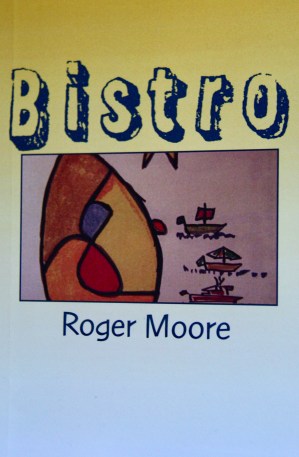
It was quite the surprise, but I am very happy to see that my book of Flash Fiction Short Stories, BISTRO, is one of the three finalists in this year’s New Brunswick Book Awards, organized jointly by the Writers’ Federation of New Brunswick (WFNB) and The Fiddlehead. It’s great to see that self-published books can get recognition at the highest (for me) level. Thank you to all who are involved in organizing this annual book award.

Bistro Cover.jpg

Bistro is available online at

https://www.amazon.com/Bistro-Flash-Fiction-Roger-Moore/dp/1537254405/ref=sr_1_2?ie=UTF8&qid=1490464520&sr=8-2&keywords=Roger+moore+Bistro

Here’s the link to the Writers Federation of New Brunswick / Fiddlehead New Brunswick Book Awards short list page

https://thefiddlehead.ca/content/announcing-finalists-new-brunswick-book-awards


Minus

IMG_0133 2.jpg

Minus

“The earth is geoidal, i.e. earth-shaped.”
These words, dictated to me by the geography
master when I was about fifteen years old,
taught me that teachers didn’t really know
all there was to know. Nor, indeed, did they
need to know everything. “I don’t know,
I’ll check and tell you later,” breaks the myth
of infallibility but sets up sympathetic links.

“What do groundhogs eat?” the little girl
asks her classroom teacher. “Spaghetti,”
comes back the instant answer from one
who doesn’t know that every day the child
watches the groundhog that lives in her yard
devour delicate New Brunswick violets.
“Spaghetti, with mushroom sauce, of course.”

Then one day comes the spelling test:
“How do you spell minus?”
M-I-N-O-S.”
“Wrong. Try again.”
M-I-N-A-S.”
“Wrong again.
You think you’re so clever.
Everybody knows it’s
M-I-N-U-S.
Don’t we class?”
The class breaks into shrieks and giggles.

Everyone knows how to spell minus:
even the one who has just read how Theseus
followed Ariadne’s thread to escape from
the Minotaur who roamed the Labyrinth
beneath the Cretan Palace of Knossos.

That one was present too, in her own mind,
at the Siege of Minas Tirith, when Gandalf
held five evil kings at bay and Aragorn fought
the nameless Dark Lord who dwelt beneath
the shadow in the land of M-O-R-D-O-R,
a Lord not so powerful M-I-N-U-S his ring.

Miracle at Lourdes


img_0618

Miracle at Lourdes

Ed walked through Heathrow Airport. It took him ninety minutes to go from one terminal (Madrid) to the next (Montreal). The black strips on his Achilles tendon held his leg together. He limped a little, towards the end, but the Spanish osteopath had done a good job on his damaged leg. He made it to his next flight with ease.

Thirty years ago Ed had visited Lourdes. It wasn’t a pilgrimage. He was passing by and took a side trip on the way through. He watched old ladies, on their knees, rosaries in their hands, ascend the Via Crucis towards the cross at the top of the man-made hill. Then he went into the sanctuary. He stood there whole, unhurt, curious. A wave of hatred rose up from those who sat in wheelchairs or kneeled at the altar, praying, hoping for healing to descend. Ed needed no healing. He was whole and complete. Ed made the sign of the cross, bobbed his head before the high altar, and left.

Next day, a Saturday, Ed sat in a café, somewhere, downtown, in Lourdes, and he asked for a cup of coffee. An enormous barman towered over his customer, a stark rock on the sea shore, and showered the table with his displeasure. He was big and antagonistic. Ed sipped at his coffee. Then, after a moment or two of thought, he went to the bar.

“Excuse me.” No response. Ed tried again. “Excuse me … can you help?”

“What?” The barman flicked the glasses beneath the counter with his cloth. He refused to look up. An ice block, he froze Ed out.

“Uh, I’m a stranger here. A foreigner. Could you help me … ?”

“What?” the man mountain flicked at the glasses and turned his broad bluff shoulders to meet Ed’s face.

“I’m Welsh,” Ed said. “Gallois. Du Pays de Galles. I would like to see a rugby game tomorrow. Could you tell me where I might go to see a good one?”

“Welsh? Les petits diables rouges?  Rugby?” The barman straightened up and snorted. “Why didn’t you say so?”

He took a deep breath and gave Ed an analysis of every game taking place next day in the region. Then, raising his shoulders and giving Ed a beaming smile, he said, “Jean, le petit Gachassin.”

Ed had seen Gachassin play for France, against Wales, in Cardiff, but he had lost track of him. Le petit Jean had gone to Bagnères-de-Bigorre when they were in the third division, had seen them rise through the second division, and now they were playing their first game in the French first division against Mont-de-Marsan.

“And they have Roland Bertranne,” the big man said. “A future colossus for France. Go to Bagnères-de-Bigorre and watch them play.”

Ed did. It poured with rain. He got soaked. But he saw some scintillating rugby.

Thirty years after that visit to Lourdes, Ed took the train from Avila to Madrid. He planned to spend the night in a hotel and catch the early morning flight first to London and then to Montreal. There was only one problem. He had injured his Achilles tendon and could hardly walk.

The hotel Ed had chosen sported a notice on the reception desk. Massage Service Available. Ed thought about it for a long time. No, he didn’t call for call girls when he traveled. Nor call boys. Massage service: what did it mean? Ed took the plunge, phoned, and made an appointment.

Half an hour later: a knock on the door.

Ed opened it.

“I’m the osteopath. You called?” A handsome young man stood there, his eyebrows raised.

“Yes,” Ed said. “I did. Uh, um …” his face turned red. “Er, you’re not gay, are you?”

“No,” the osteopath said. “Are you?”

“No,” Ed said.

“Thank God,” the osteopath smiled. “I’ve had six requests from gays today. I don’t do that thing.”

“Nor me,” Ed said. “Come in.”

The osteopath entered the room set up his folding bed, and helped Ed on to it. Then he examined him, slowly and carefully. They spoke Spanish at first and then, in a moment of illumination, the osteopath told Ed how, for two years, he had been the physiotherapist for the rugby team at Bagnères-de-Bigorre. Then they spoke in French and ran the rule over their heroes, le petit Jean Gachassin and Roland Bertranne.

The osteopath treated Ed for an hour and a half and charged him for an hour.

Next day, Ed walked through Heathrow Airport, a long, long walk and suffered no pain.

What could Ed say? Serendipity? The good finding the good?

Finally he put it all together and found a phrase for it: the Miracle at Lourdes.


People of the Mist 18

img_0146-2


11:00 AM

            … hard baked loaves of stone … hot cobbles beneath the feet … the burning street forced upwards through the shoe leather to scorch the feet … the sun’s orb an irresistible hammer beating the strength out of the sweating body … the heart sucked dry … the lungs shriveled … a man dehydrated … already dried up by the baths … from the inside out …

Everything seemed different to his distorted vision. Translucent people, pale ghosts of themselves, passed before him and wandered across the street, shadows in a dream cast against a cave wall. Tim walked to the central square and entered the cathedral through the same carved glass doors in which he had seen his father’s image, but his father was no longer there. Wary of flames and flickering candles, Tim stood in the dust-laden beam of sunlight that fell from a stained glass window high in the roof.

Wave after wave of colored light broke across his face and played fragmented games upon his hands. He inhaled sunshine and felt the sea-surge of a body being reborn. A new man, he emerged from darkness into light, a spiritual being, neither of this world nor yet of the next. The colored light danced its chiaro-oscuro upon the surrounding walls and he felt soft sunlight flooding into him.

            … inside massive stone walls … candles … crucifixes … paintings of saints … statues … carved wooden images … outside in the sunlight … alebrijes … staring eyes … wagging tails …  protruding tongues … their spirits breaking through the wood … turning from darkness into light … within the man’s head … once open doors slowly closing …  keys no longer turning in locks … unwound clocks no longer ticking … cobwebs gathering in forgotten rooms … flowers on the altars… nochebuenas with their single and double petals … crimson and cream … cempasúchiles … marigolds lighting  a golden walkway to guide the dead … loved ones returning to visit the living …

Standing in the cathedral, drenched in a rainbow shower of light, Tim’s mind drifted in and out of sun and clouds. All around him he saw secret worlds opening like oysters before his eyes. Flames through the candles made hard, crisp sounds, hissing and sharp, like the inside of an apple when strong teeth penetrate the outer skin. Candlelight brought an unexpected peace as its yellow bees’ wax light wandered over the altar.

Tim went to the chapel dedicated to La Virgen de la Soledad, the patron saint of Oaxaca. A girl knelt in front of the altar with a basket of flowers upon her head. With a click, wheels turned in his head and Tim realized that he had seen her that morning in the square in front of St. James. He didn’t want to disturb her prayers, so he tiptoed to the far side of the altar rail and started to kneel. As he did, the flower girl turned her head towards him.

Señor: I am so glad you have come. Please, I need your help.”

“My help?” Tim stood up and moved towards her. “Of course, what do you want me to do?”

“These flowers, I must place them on the altar. But the basket is caught in my hair. I cannot remove it. Could you …?”

“I saw you with a boy, this morning outside St. James, didn’t I?”

“Perhaps. My cousin walked with me until he slipped on the cobbles and could walk no more. He would have helped. Now there is nobody.”

“I’ll help. What must I do?”

“Take the weight of the basket and try to see where my hair is caught. You must untangle it, if you can. Then I can place the flowers on the altar as I have vowed.”

She knelt, motionless, an animal frozen in a trap. Tim lifted the basket and its weight shocked him: the stones within must have weighed at least twenty pound. As he lifted the basket, she winced and he saw where her hair had caught in the basket’s wickerwork.

“Can you hold the basket now?” he asked her.

She raised her hands and held it aloft. As she did so, Tim began to untangle her hair from the weave, a slow, difficult task. At last, the basket came free and the girl’s black hair fell smoothly into place.

“I hope I didn’t hurt you when I pulled your hair free.”

‘”Thank you and no, it didn’t hurt,” She took the basket in her hands and he opened the altar rail for her. She mounted the steps and placed the basket of flowers on the altar at the feet of La Virgen de la Soledad.

“There,” she bowed her head, crossed herself, and muttered a prayer. “My father will get better now.”

The girl returned through the altar rail and she and Tim knelt side by side in front of Oaxaca’s patroness.

“They say she will answer your prayers,” the flower girl looked weary and distressed. “She has worked many miracles for those who have walked the road. My cousin walked with me for a bit, but he was in great pain, so I sent him home.”

“Surely you could have finished the pilgrimage another day?”

“Oh, no, señor, it must be completed between the hours of six and twelve. My cousin should have helped, but I did it on my own. Señor, I must go now. It is time for me to change. I have completed my pilgrimage and now there is work for me to do.”

“Perhaps I can walk with you a little way?”

“Oh no, señor, that wouldn’t be right. I must go alone. But thank you.”

Tired, but full of grace, she got to her feet and walked backwards, away from the altar, not taking her eyes off the Virgin’s face. When she got to the chapel’s entrance she turned and left.

Tim knelt there in silence and thought of the strange things that seemed to happen in Oaxacan churches. Last Sunday he had gone to mass in La Consolación. The lady in front of him had opened her blouse and offered her breast to her youngest child who sucked there, greedily, throughout the service. The old man at the back held a roll-your-own smoke in the palm of his hand and closed his eyes in ecstasy as he inhaled the drug. Three dogs, tongues lolling, were pursuing a bitch in heat and she came into the church for sanctuary. The dogs chased her up and down the aisles as the high priest doggedly murmured the blessings that uplifted the hearts of the faithful: a bored acolyte passed the anointing oil and presented the sacred wine to the priest. Flowers and candles adorned the altar. When the old man from the back of the church stubbed out his smoke and knelt for communion, night breath lay whisky thick on the high priest’s tongue.

La Virgen de la Soledad stood tall on the altar wearing a black kirtle. Silver stars and planets swam through the dark night of the velvet that flowed down from her waist. Beside her, a young man with open, staring eyes hung from a rough, wooden cross. He recognized Tim and called him by his baptismal name, but Tim no longer knew how to answer. The young man had the jewel eyes of a flayed Mexican god, living forever, and never quite dead. Black blood flowed down the carved face and formed a river of coal dust waxed with carmine. The heavy smell of incense mingled with the smoke from the candles and transported Tim to an internal world in which time rolled on and on and lost all meaning.

… impressions … a nose here … a pair of eyes there … long black hair … a tree swaying to the music … a nose wrinkled in disdain … a black bible banged on a wooden table … a thin girl … a Cubist nightmare of female body parts … multiple pin balls released in a rush by an errant slot machine … light falling from high windows … stained glass … reds … blues … greens … smoke from a candle twisting in the air …

People of the Mist 16

img_0146-2

9:20 AM

Tim walked up the street towards the centre of town, moving slowly, from window to shop window, still hesitant to go to the baths. A craft shop packed with bric-à-brac and old curiosities caught his attention. The shop held an irresistible sense of mystery and he tried to look in but couldn’t see much through the dust and cobwebs. He opened the door and copper goat bells jangled. An old man, dressed in an artist’s smock, emerged from a room behind the counter.

“Are you looking for anything in particular?”

“I’m not sure. May I look around?”

“Of course you may.”

The old man’s eyes followed Tim as he walked from shelf to shelf and examined the dusty objects. A figure of the Spanish knight, Don Quixote, built from scrap metal sat on the reinforced toe of a workman’s boot. Tim marveled at the artist’s innovative use of recycled materials: valves soldered together with nuts and bolts and springs.

“Did you make this?”

The artisan nodded and smile. Tim took the medallion out of his shirt where he had hidden it next to his skin and showed it to the shop keeper.

“Have you ever seen anything like this before?”

The artisan’s eyes narrowed and he shook his head.

“I’m looking for the other half. Could you make one for me?”

“Impossible.”

“Why?” Tim offered it to him for closer inspection, but the artisan threw up his hands and backed away.

“I don’t need to look closer. I can’t help you.”

“I need to repair the medallion.”

“I can do nothing for you.”

“Then what do you suggest?”

“Go to El Brujo. He’s the only one who can help you.”

Door bells jangled and the shop door opened.

“Speak of the devil ….” the artisan looked relieved. “It’s the man himself.”

“My ears were burning,” El Brujo‘s eyes held a mischievous twinkle.

“Here he is,” the artisan turned to Tim. “You can ask him yourself now.”

“Ask me what?” El Brujo stared at Tim who turned red in the face as he pushed the medallion back under his shirt.

“It’s nothing,” Tim readjusted the buttons.

“You won’t find it here.”

“Find what?”

“The other half of your medallion; have patience, my friend. It knows that you are searching for it. It will be drawn to you, never fear. The baths are across the road, incidentally. Alonso told me you might go there this morning. I’ll go with you.”

“But I thought you were going to Yalalag; I saw you on the bus this morning. You spoke to me.”

“Indeed I was and indeed I did. But I got off the bus, didn’t I? And you didn’t understand me when I spoke to you, did you? So I’m here, now; where I’m needed. Come along. Let’s go.”

He nodded to the artisan.

Adiós, Pepito. Thanks for calling me. By the way, have you thought about that offer I made you?”

“I have indeed.”

“And your answer?”

“I think you know what I will say.”

“I do. But you must make up your mind quickly. The circle is broken and we must rebuild it.”

“When I am needed, I will be there.”

“You will be needed tonight.”

“Then I’ll be there.”

El Brujo and Tim exited the shop together, crossed the street, and walked towards the baths …