Kingsbrae 2.2

img_0165

Kingsbrae 2.2
2 June 2017

The Red Room

Carlos makes music on his flute.
He lives in the Green Room,
an open door opposite mine.

He creates the highest note of all
and it floats before me in the air,
a trapeze artist caught in a sunbeam,
suspended between the hands
that fling and those that catch.

His musical rhythms are different.
I try to follow his fingering.

In the space between notes,
hummingbirds flash their ruby
throats as they flit between flowers.

With a whirring of wings, all music
stops, save for the robin’s song
refreshing the early summer
with the sound of his eternal joy.

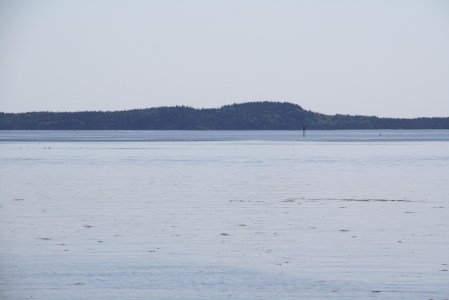
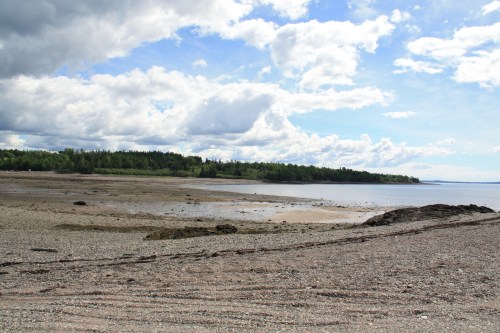
Journal: As I unpack my bags and start to settle in and arrange the room to my own liking, Carlos who will stay in the room opposite mine, starts to play his flute. I listen to the notes and, as I am listening, a robin joins in the song. I rest for a moment and sit at the small writing desk by one of the windows. From here I can see white clouds floating their ice-berg shapes across a sea-blue sky. Beneath them, Passamaquoddy Bay sparkles and crackles with filtered sunshine.

My mind goes back to another, more desperate time, two years ago, when I sat by the hospice window in Moncton and looked out at the car park. My car sat out there, abandoned, lonely, waiting to take me home for the welcome respite of a weekend free from radiation and treatments. Now, looking out of the window towards Minister Island, I feel as if I belong, as if this place had been waiting a long time for me to arrive and bear witness to it. I feel deep inside me the joy I feel when I walk in the door and enter the warmth of my own family and home.

Blackfly

15-may-2002-pre-rimouski-224

Blackfly

Open car door or window:
they whisk in with the wind.
Silent they head for light,
crawling steadily up the inside
surface of the windshield.

If you are quick, you can
catch them now. Kill them
cleanly before they gorge
on your blood, spreading it
thin, your own raspberry jam
blocking your line of sight.

When you exit the car,
you see the killing fields,
blackberry jelly spread
thick on number plates,
dimming your headlights
with dark clots of death.

Comment: We drove down to St. Andrews on Monday and visited Kira and the Kingsbrae Gardens. Such beauty, such a wonderful reception, and the food in the garden café was marvelous. On the way home, the pinging of blackfly against the windshield made us think it was raining. When we got out of the car, headlights, hood, and license plate were covered with thick films of dead flies. We kept doors and windows closed, except for a brief moment at the service station, where we filled up with much more than gas.

Phoenix

IMG_0158

Phoenix

The wool shop has gone.
It survived the winter storms
that whipped the bay ice
into waves of mashed potatoes
that hardened and crashed
against the quay, splintering
its timbers, tearing it down.

It survived the spring time
freeze and thaw that cracked
the sea wall, split foundations,
and wobbled the shop
as if it were yellow jelly.

It survived the carpenters,
the stonemasons, the police,
the insurers that came
with their cameras and their
oh-so awkward observations.

It survived everything
except the lightning bolt
that lit the fire that reduced
the old shop to dust and ashes
from which, unlike the phoenix,
it would never be born again.

Ticks

img_0177-2

Ticks

Ticks, as a student, are never to be feared.
They are good for you,
mark your rites of passage,
never catch on your skin
or bite into your beard.

Ticks in the woods creep and crawl,
people really don’t like them at all.
They fall and they climb,
bring diseases like Lyme.

Leeches are bad and suck at your blood.
They swell up with your juices
as you well knew they would.
But leeches don’t kill, as tick bites might.
So get out your tweezers and squish ticks on sight.

Comment: Ticks are about. Watch out for them and be very careful with them. Announcement on CBC Radio, 19 May 2017.

Triumphs


Avila 2008 006.jpg

Triumphs

Now is the time of minor triumphs:
waking to birdsong in the morning,
making it safely to the bathroom,
shaving without cutting my face,
getting in and out of the shower
with neither a slip nor a fall,
drying those parts of the body
that are now so difficult to reach,
especially between my far-off toes,
pulling my shirt over sticky patches
still damp from the shower,
negotiating each leg of my pants,
tugging the pulleys that permit
my socks to glide onto my feet,
forcing my feet into my shoes,
hobbling to the top of the stairs
and lurching down them, left
then right, one step at a time …

Bears

Empress 048

BEARS

Think of pink salmon caught in pools,
plucked from water, tossed to air,
the catch stacked rainbow‑fired.

Winter now:
unsnubbable, lumbering overcoats
closeted, laid to rest;
seeking power in hibernation
till sun from summit melts frosty dark:
fresh heartbeats forged in forest’s night.

Think alchemy:
prime matter moved safely in flask or jar.

Think circus stars:
The Great Bear leads the Lesser,
dancing to the trainer’s whip,
tumbling from their pedestals.

Secure behind bars,
think fallen stars.

Purple FF

img_0199

Purple

I close my eyes and return to Paris, Easter holidays, 1961. Algérie-française, Algérie-algérienne, the car horns tweet in the street as we drive the boulevards of a city divided. This is all new to me, a seventeen year old student in Paris to learn about French culture. My friends in the car have heard the tooting before and join in the fun.  Algérie-française the driver toots.

Turning a corner, flattened and blackened, still flaming against a fire-burned tree, the metal skeleton of a Deux Chevaux, a ‘tin of sardines’, bears witness to the car bomb that has laid its occupants low.

* * *

Hitching the highway, from Paris to Chartres, thumb stuck out to catch the wind, a purple Citroen stopped and offered me a lift. I trusted the car: a Citroen, like Simonet’s famous detective Maigret used to drive.

When the car stopped and the door opened, I got in and saw that the driver wore black leather gloves. His hand movements on the steering wheel were stiff and clumsy and he made exaggerated gestures when he changed gear.

“No hands,” he explained. “Lost them in Algeria. Listen: I used to be the driver for a top General. I drove him out of an ambush once. I lost my hands later, when the car exploded, caught in a crossfire. They teach you things in the Army. I can still drive.”

He accelerated and threw the car at four times the speed limit through the S bend that snaked through a small group of houses. I bounced from side to side, held back by no seat belt.

“You see,” he said. “They train you to do this before they let you drive. Ambush. The sniper at the corner. The Molotov Cocktail. You must always be prepared.”

I closed my eyes and returned to Paris.

Collateral damage: the young girl with her photo in the Figaro next day, scarred for life; her mother, legs blown off, lying in the gutter in a pool of purple blood.

Maman, maman,” the young girl cried. But her mother was never going to reply.

The Pom-pom-pompiers arrived in their fire trucks, sirens screaming. The ambulances screeched to a halt. The young girl cried. The mother bled out her life-blood in silence. Her blood turned purple and black as it flowed through the gutter.

Parisians emerged from dark doorways and stood there, bearing silent witness. Evening draped itself over the Paris skyline. The sky darkened and became one with the purple of the car bomb’s angry flame. Purple bruises marked my arm where I had gripped myself with my own fingers. An indigo angel squatted above the faubourg street, with shadowed wings, brooding.

* * *

I opened my eyes.

We left the village in our wake, travelling five times faster than the speed limit.

“They trained me for this,” the driver said. “I am prepared for anything.”

He stopped the car by the cathedral in Chartres. I thanked him and got out. He offered me his hand and I shook it. Inside the glove, the hand was hard and metallic. Alcohol sweated out through the purple veins that stained his nose and flowed in abundance over his sun-tanned face.

Teddy Bear Tales TBT 1


Empress 048

Oppressive-Possessives
TBT1

 Teddy Bear Tales 1

 “Possessives are oppressive,” my Teddy Bear whispers in my ear. “I’m not your Teddy and you’re neither my owner nor my master. The world exists without you possessing it. It will continue without you. And yes, I hear you, especially when you talk in your sleep. ‘My wife,’ you mutter, ‘my daughter, my flowers, my garden, my lawn, my birds, my bees, my deer, my house, my grounds, my groundhog, my car, my TV, my team, my Teddy.’ Well, permit me to share a secret with you. None of them are yours. You may think you own them, but you don’t.”

My God …” I sat up in bed and held my Teddy Bear at arm’s length, staring into his button eyes.

“There you go again,” Teddy stared right back at me. “Whatever are you thinking? Those two little words, yours and mine, are a threat to the universe.”

Gardeners

IMG_0486.jpg

Gardeners

when three bearded men
unbury winter’s bones they pick
at old wood scars dead trees and
their limbs now lying there lifeless

they dig deep at flowerbeds
uprooting a riot of Japanese
Knot Weed untangling roots
all tangled and twisted with
Bees’ Balm and perennials
that stray across borders
unwelcome immigrants neither
barriers nor fences can possibly hold

they probe between flag-
stones where wintering birds
and squirrels and chipmunks
cracked the seeds and wild weeds
that grow there and flourish

but where would the land be
and what would it accomplish
without helping hands
and the power of strong fingers
and fresh eyes that spot those
intruders who diminish
the space where good flowers
grow strong with fresh herbs
chives and oregano basil
and parsley peppermint sweet
crushed beneath feet

Comment: This was the day for Thursday Thoughts, but I don’t have any, save for those in the poem. How does Mother nature manage without us? What is the difference between a weed and a flower? Why do the dandelions dance in my garden and why so many, fresh every spring? What happens when the gardeners no longer garden and nature takes over? Is the wilderness that arrives really a wilderness? The garden that grows, does it really need us? Do we own the land, or does the land own us? The same with development: do we shape the land or does the land shape us? Was the wilderness a wilderness before we arrived? I watch the deer drifting past the trees in the garden. They are so tolerant, so aware of my presence. “Beware of the possessive,” my teddy bear tells me. “I’m not your Teddy and you’re not my master. The world exists without you possessing it. It will continue without you. And yes, I can hear you: ‘my flowers, my garden, my bees and my deer, my house and my grounds, my groundhog and my Teddy.”‘ “My God,” says the Teddy Bear who sits on my bed and hears me snore and watches me dreaming … “Whatever are you thinking?”