Insomnia

IMG_0114

Insomnia

Mine was at its worst in Moncton in 2015. I was committed to eight weeks of radiation treatment, and after two weeks, I slept restlessly, if at all. Some of the other residents of the hospice were worse off than me. They got up at all hours of the night and paced the floors downstairs, nursing their wounds, both mental and physical, searching for the peace and the sleep that eluded them. I never went down to join them. My case was different. All cases are slightly different. In spite of this society’s attempts at social engineering, each of us is an individual and we deal with our own problems in our own way.

In my case, the need to pee during the night dominated my sleep. I would sleep in ninety minute cycles, then get up and visit the bathroom, then return to bed for another ninety minutes. Sometimes, I was lucky and the cycles went for two hours, or two and a half hours. I rarely got more than three hours sleep. Upon returning to bed, I would often just lie there, remembering, thinking, musing, hoping, waiting for sleep to come. Often my cycle would reject the sleep I needed, and I just lay there waiting until I was ready to pee again. These were not great times. Luckily I never fell asleep so deeply that I wet the bed. Some did, but I was one of the lucky ones and managed to keep my bedding clean.

During this time, I learned to divide the night into segments. I thought of the segment that ran from 10:00 pm to 3:00 am as an uphill climb with the initial joy of dropping off to sleep tempered by the knowledge that the urge to urinate would soon be upon me. The segment from 3 am to 4 am was the plateau at the top of the hill: I rarely slept during this period and would look frequently at my clock while the minutes ticked by. Sometimes I would turn on the light and just watch the second hand throbbing slowly round. It was like watching sand sift through an hour glass, or water sift through the fingers: uncontrollable, unstoppable, life just slipping away. I had plenty of time to think and much to think about. I relived my life during those eight weeks and a lot of it was unpleasant as I blamed myself for the situation I was in.

At 4 am, the universe shifted, and I was able to relax and slide downhill into the Land of Winking, Blinking, and Nod. With the urges of the earlier segments fading, I would often get two sound sleeps at this stage, one from 4 to 6 and the other from 6-8. If I was lucky, I would sleep from 4-7, or even 4-7:30 am. These were bonus nights and I awoke after a three hour sleep session to find myself greatly refreshed.

Three years after my treatment, many things have returned to normal However, those sleep patterns have not changed that much. I no longer feel the need to urinate at such regular intervals, but I still dip in and out of those same sleep cycles. They have become a part of my system. The easy part, tired, sleeping from bed-time to about 2:30-3:00. The lying awake, anywhere between 2:30 – 4:30, then the relaxing slip into dreamland, for the last part of the night.

The good thing is that my dreams have changed. I am no longer chased by the ghosts of times past who pace through my night, awake and asleep, to prove that my suffering is due to past moments of childhood iniquities discovered in soulful daily examinations  induced by a consciousness of minute sins demanded by the weekly confessional. Now, I dream of many things, of shoes, and ships, and sealing wax, of cabbages and kings, and if the sea is boiling hot and whether pigs have wings. This is much more fun: I find I can now control my dreams, re-think them, and re-write the endings. In my waking periods I do just this, and my dreams adapt and change and become more pleasant as I fall back into sleep. This has turned into a time of great creativity: but that is a tale for another day.

Cooking

img_0385

Cooking

My Welsh grandmother, not my Irish one, taught me how to cook. At the time, I was the only grandchild. Whenever she cooked and I was in the house, she would take me into the kitchen, stand me on a stool by the gas stove, and encourage me to stir as the mixtures swirled and bubbled in pan or pot. I also helped her shell the peas, slice the carrots, whatever. When the preparation was ready, she would set aside a small portion that was mine. This might be a cake in the oven, a pair of biscuits shaped awkwardly by my own hand, or a small side pot of soup. “There’s nobody else,” she would whisper to me. “The old ways will die if I don’t teach you.” She was the one who taught me the exact moment when Welsh Cakes were ready to be molded, and there’s only one way to learn: place your hands in the mix. The right texture, as they say in the cookbooks, is ‘fine grain sand’ but you have to experience it to be certain what those words really mean.

I was a latch-key kid, as they now call them. Both my parents worked all day, leaving the house at 7:30 in the morning and not returning until 4 or 5 at night. Being able to cook meant that I never starved and I remember cooking soups, Cawl Mamgu among others, at a very early age. When I started traveling to France and Spain, I often ended up in various kitchens where I listened to the women as they prepared the food. Language and cooking went hand in hand and I learned how to roast coffee beans in a cast-iron frying pan, how to vary my range of soups, how to prepare casseroles, how to scramble eggs the continental way.

When I studied in Santander, Spain, my landlady left me, every night, one onion, one potato, and one egg. This was for the Spanish omelette that I ate most evenings. She cooked the first one for me, supervised me as I cooked the second one, and then abandoned me to my own devices. I often heard her snoring as I lit the gas, warmed the pan, and started to prepare my tortilla española. I still make Spanish omelettes, and they are delicious, but here in Canada they are never quite the same as they were in Spain. The ingredients look the same, olive oil, egg, salt and pepper, potatoes and onions … but the eggs are not Spanish free-range eggs from country hens and the oil, the potatoes, the onions, the salt … everything looks the same, but tastes vastly different.

Two days ago I bought a pound of fresh hake, merluza in Spanish. I cooked it in butter, half poached, half-sautéed. We ate half that night. Next day, I struggled with my thoughts: should I make fish cakes from the rest of the fish, or should I make a fish soup / sopa de pescado? Fish soup won. I put some truffle flavored olive oil into the frying pan, sliced small a tomato fresh from the garden, added a finely chopped onion, spiced it with sea salt, and added a small pinch of pimentón picante / hot Spanish paprika from La Vega in Spain. I let this simmer for a few minutes, then added some sherry. Into this mixture I put the rest of the hake together with the butter sauce that remained from the night before. The dish looked inviting, was very colorful, but appeared to be small and insufficient for the hungry eyes that followed the process. I added four large shrimp, sliced into four pieces each, a large scallop, thinly sliced, and sufficient water to thin the gathered liquids. Then I chopped up some sugar peas and added them as well. My sopa de pescado had undergone a sea change and become a sopa de mariscos / a sea food soup. The colors amazed: reds, yellows, oranges, and touches of green. On the spur of the moment, I named it New Brunswick Autumn Foliage. I tested it regularly as it simmered and it was ready when the sea food was done. Delicious.

I don’t know when my grandmother was born, or where, other than somewhere in Wales. I celebrate her birthday every time I cook something special, and my last two meals were very special. I don’t know where you are, Nana. You left us a long time ago. But wherever you are, thank you so much for the gifts you gave me. And Nana, I love you. You have traveled with me from Wales to Canada, and I celebrate you and your birthday every time I cook.

Friends

img_0146-3

Friends

Strange things, friends. What are they exactly? And how do we make them?  In fact, do we make friends, or do we just grow together, like gardens or trees? Birds of a feather, they say, but our feathered friends are flighty and the snow-birds leave in the hard times only to return when the sun comes back. Fair-weather friends, then, and I have known a lot of those.

I turned to Wikipedia, the source of all knowledge, but all I could find under FRIENDS was a series of articles on TV shows, every episode, every actor, every friendship, every situation, but no discussion of what friendship actually meant. FRIENDSHIP: I looked that word up and the results were much more satisfying. The article ranged from a definition: ‘a mutual attraction among people’ to a series of academic studies about friendship in childhood, adolescence, adulthood, and older adults. As we age, so our notions of friendship change. In addition, as we move from place to place, job to job, so our circles of friendship grow old, renew themselves, and gradually fade away. One study shows that in adulthood we rarely have more than two good, true friends. Our acquaintances are many, but our friends are few. Old age brings a different set of equations to bear and loneliness and isolation with the consequent absence of friends, all bring their own problems, including sickness and ill-health.

Empress 048

Here are some of my closest friends. Rosie is named after Rosie the Elephant in Bristol Zoo. Teddy is the Koala. Basil is the small one on the left with the pink ribbon. Chimney is the little one on the right with the orange skirt. Her name’s Chimney, but I call her Sweep. Don’t ask, I won’t tell. These friends summarize all the needs of friendship: they don’t beat me up, they listen when I talk, they don’t interrupt me, they nod silent agreement to my opinions, and they soak up my tears when I cry. They also keep me warm in bed at night. Well, Rosie and Teddy do anyway. These are not their real names, incidentally. Teddies, like cats, have secret names, and you cannot really call a teddy bear your friend until he or she has revealed that name to you. It may take years for that to happen. The speed or the slowness of the true name’s arrival has nothing to do with the success of the friendship.

IMG_0032

This is Princess Squiffy aka Vomit. She threw up beside my chair again yesterday and I am just not sure if that is a sign of friendship or not. At least she didn’t throw up in my chair, which is what she did last time my beloved was away visiting our daughter in Ottawa. So, how do your friends show their friendship? By sitting in silence and listening? By keeping you warm in bed at night? By throwing up in your chair? By presenting you with hairballs, so carefully formed and all gift-wrapped? I am not sure. I guess I’ll have to go back to Wikipedia and check it all out. In the meantime: here’s a picture of man’s best friend.

IMG_0139

I bet you weren’t expecting that!

Ruins

IMG_0040

Ruins

There are many types of ruins, ruined castles, ruined churches, ruined monasteries, old stone circles fallen into ruins, barns alongside the highway, backs broken, roofs caved in, old people beg, still clean and proud, outside the supermarket, proud, yes, but still more or less ruined. And then there are unkempt gardens that fall into ruin when summer crawls to the burnt out embers of  its heat.

When I came back from my week’s creative retreat in KIRA, our garden lay in ruins. The hollyhock still stood, but it was on its last legs, drying up. It didn’t imitate the dead sticks of the yucca plant, four flowers this year, nor the dried up foliage of summer flowers. Nevertheless, wind and rain have now brought him close to his end, poor thing. I want to remember him in all his glory. I want to see beyond this bent, withered stick of a plant that slowly bows its head to look down at its roots. My hollyhock, please, in all his glory!

20180916_182952_HDR-1_resized

All our glories! I too am in decay and falling into ruin. I dug out an old photo of myself. Bristol University, 1964, running for the First Cross-Country VIII on the Bristol – Weston road relay. Hugh Arnold was just handing off to me and I was setting out on my 5 mile leg of the race. Young, fit, no grey hairs, no wrinkles, no limp, no stoop: it was a five mile leg that I would complete in about 25 minutes. Alas, slow is me: it takes me that long now to walk 400 metres. And I need rests and a stick to help me on my way.

Standing amidst he ruins of my life, yes. But I stand proud, my head held as high as I can hold it. I can honestly say I have done my best. And what more can anyone do? Athletics, rugby, coaching, research, publishing, teaching, facilitating workshops and retreats, travelling, editing, creative writing … it has been a crazy life, packed with fun and adventure and no, I do not regret a moment of it.

Come to think of it, unlike many people, I have actually lived many lives. My first took place in Britain and Europe. Then in September, 1966, I was reborn as a Canadian. Each subsequent Fall, at the beginning of September, as each new academic year began and the year’s cycle turned round to freshness and intellectual renewal, I was born again. Teaching, coaching, working with young people: what wonderful things to do. Now, I look at the ruined garden and remember the joys of summer. They will return. My hollyhock will also be back. He has sown his seeds throughout the flowerbeds and sooner or later he will return. I too have sown seeds: the seeds of joy, knowledge, learning, creativity. I too will live on in the many virtual children whose minds I have inhabited and helped to shape.  Winter is drawing near. The cold and the dark encroach: but, like my garden, I will be back.

Green

39948917_706398923049634_3046174897211441152_o (1).jpg

Green
KIRA Day 3

Where has the time gone? Don’t answer that question. The Retreat has settled into a structure of its own and outside time no longer has any meaning. The internal time of the retreat runs smoothly as clockwork, a wooden, self-oiling clockwork, of the most delicate kind.

08:00 – 09:00 Breakfast. We gather in the kitchen and the conversations begin over breakfast. We talk about the previous night’s readings, the plans we have for the day, or whether we want to workshop of just retire to our studios and write.

09:00 – 10:30 Workshop time. Each morning we have a topic and we illustrate it and discuss it fully. Each workshop also comes with ideas and prompts for writing. At the end of  each workshop, we plan the rest of the day. We hold regular Blue Pencil Cafés in which facilitators and participants discuss submitted work. We suggested about 20 minutes for the BPCs, but my first one last over an hour and we managed to get through half a poem. Jeremy’s first one lasted an hour and a half (prose) and he covered more ground than me. My second one was marvelous: we spent an hour or more on one paragraph, three lines.

What happens in the BPCs is unbelievable. It’s not just the revision of the poem or the piece of prose, but a wide-ranging discussion on theories, ideas, prompts, the nature of writing, directions a piece may take, the nature of creativity, where inspiration comes from, how it may be channeled, how writing occurs, where it can lead … incredibly exhausting at times, yet energy fills us and we are always ready to write, re-write, revise, and talk again.

14:00 – 16:00 Art School. On Tuesday, Geoff Slater sat us down with paper and paint and we experimented with color, the creation of color, the basics of primary colors, how to make secondary colors, how to create the color wheel. Geoff enthralled us: never will the color wheel ever look the same again. Never will I use a color again without thinking in depth about it’s composition and meaning. Green no longer means Green: it means so much more. I read Lorca’s Romance Sonámbulo, this morning, and it took on all sorts of different and very new meanings. Verde, que te quiero verde. Green, for I love you green … green wind … green branches … green flesh … green hair … 

I sat opposite Geoff this morning. Behind him, green bushes, green trees, green leaves, green grass, green foliage … Yesterday, I paid little attention to all that green-ness. Today it fascinated me and I was able to distinguish between the amount of yellow, the amount of blue, the lightening factor, the darkening factor, the tinges of red and brown and oh to be able to capture it all, all that green-ness, all that certainty, blurred into a sea of green.

16:00 -17:30 BPC time. We pair up facilitator / participant and share our work. Each day a different piece, a different conversation, an advancement of yesterday’s talks, another step or two forward. Sometimes we take tiny steps. Other times we make gigantic leaps. Time and space lose meaning. We have been gifted with something different and we are truly blessed.

18:00 – 19:30 Dinner. This is a sumptuous meal provided by the Garden Café, our very own award-winning Kingsbrae Garden Café. The group is open. The man who provides us with desserts, he makes them in our kitchen, specially for us, joins us as we sit at the table and we add culinary art to the poetry, prose, and painting that we are always discussing.

19:30 – 21:30 Readings. We read what we have written during the day and facilitators and participants share together. I try to choose work of mine that reflects the day’s themes. Linking theory (morning) to practice (evenings) is also a fascinating procedure. We finish the evening by planning the next day’s work. The key to the retreat is flexibility. We respond to each others’ needs. Colors are important? We concentrate on colors and read about them in our evening sessions. Today we talked symbols. Tonight I will offer a reading in which symbols play an enormous role.

Alas: my free time is over. Now I must descend and return to the joys of BPCs, discussion, dinner, and the evening’s read. Farewell for now: I will be back as soon as I can.


KIRA 1

IMG_0170


KIRA 1

Our first full day at KIRA, and it’s not over yet.

Last night we had our first dinner together, courtesy of Kingsbrae Garden Café. Wonderful food and a dessert to live for. All of the participants gathered around the table and we were graced with the presence of Mrs. Lucinda Flemer. Conversation was lively, with each of us defining our position and interests in various art forms ranging through painting, print-making, poetry, photography, short stories, and memoirs.

After dinner, we discussed the nature of the retreat itself. This centered on several areas: Establishing Goals, Towards a Shared Experience, Building a Creative Community, and Managing Expectations. We discussed an agenda for this morning (Monday) and agreed upon an action plan for our first day. We also agreed that we would achieve what we could during the first day and then change, as necessary, if change were needed. The main things: be flexible, be creative, talk together, work together, support each other, and cater, small group, to each individual.

This morning we discussed the creation of a personal time and space for writing. Each one spoke of where and when they wrote. We made some suggestions as to how time and place might be achieved, even during a busy working day. We then spoke about journals, pocket notebooks, hard work versus inspiration, and the need to recognize gems when we created them. Genius is 99% perspiration and 1% inspiration. The hard yards must be put in at the beginning. Before long they will no longer be hard. The idea of the artist as a traveler was discussed. We are all making similar journeys, but we are all on different points along the way. Many of us were helped in our beginning days, and we in our turn must now help others.

We then worked on specific goals for each person, facilitators and participants. This was very person-specific. We agreed upon a schedule for Blue Pencil Cafés and gave the first ones later in the afternoon. We finished with a ten word exercise, courtesy of Jeremy Gilmer. Write a ten word story. We took time off to write and then ended the session by reading our efforts to each other. Great fun and a good time was had by all.

My own BPC went very well. More about that later, perhaps. It went on much longer than I expected and we both had great fun looking at a poem in all it’s different shapes, meanings, and possibilities. Tonight, we have our first set of readings and we will see how they go. The BPC material, reworked, should be ready for later. Again: it will be fun and words, thoughts, and ideas, will creatively take wing and fly.


Butterflies

img_0189

Butterflies

Butterflies, as large as elephants, stamp through my gut, just when I thought I was too old for butterflies. As my old Holly-Hock told me this morning: “You’re never too old for butterflies.”

So, what’s it all about, Holly? I am packed and almost ready for the trip to St. Andrews to participate in the inaugural KIRA Boutique Retreat. And yes, I am happy, excited, and very nervous. Hence all those butterflies, walking the tight-rope of my tum.

IMG_0068 (2)

One of the elements of creativity that we will talk about next week is the importance of attention to small details. I attach an article on how small words, lapidiary (carved in stone) phrases, can light up our lives, in the best sense of the word. We should all work on them, for such phrases glow in the dark, unlike those cutting and damning words, so hurtful, that cut people down and cause so much harm. Hope, my friends, hope in the breaking of day. We can leave the dark night of the soul to the cynicism of our current politicians. Hope: for all is not doom and gloom and, with our best words, our best works, we can write through the gloom and bring light to lighten the darkness.

How poetry can bring light to darkness


Holly-Hock

IMG_0026

Holly Hock Hangs on …

I keep calling my Holly-Hock ‘he’, but I am beginning to think that if Holly Hobby was a lady, then this tough old plant is a lady too. A limpet lady. She has gone through three quite hard frosts now, one early, and two back to back, earlier this week, followed by two days of heavy rain. The rest of the garden is withering or withered. Clusters of dry blackened stems surround this old lady, but she still stands tall and proud. Not only that, but she casts more and more flowers out to greet us.

We have kept lots of seeds and will sow them soon, some are in the ground already, in the hopes that she and her offspring may flourish. For this lady is a symbol of hope. Hope in the face of frosts, cold winds, heavy rains. Hope in the seeds that she produces and scatters. Hope in the generation and the regeneration of a beauty and a strength that, if lost, may never be found again. Hope in old age that our children will survive and lighten our countenances with their love.

So go, you Holly-Hock seeds. Bury deep, send out roots, sleep for a while if you need to, and when the spring sun peeps over the horizon after a hard, long winter, be ready to bloom again. We, your faithful followers, will be waiting for you, with hope in our hearts.

Jack Frost

IMG_0026

Jack Frost

Or, since I live in a bilingual province, should that be Jacques Frost? Whatever. He visited the garden last night and did his usual job on our tomatoes. There are a couple of survivors this morning and we have now rescued those, but last night we neither took the toms in nor covered them up.  Oh dear. The result?

IMG_0027

As for the hollyhock, it was looking very sorry for itself early this morning. But, with a little bit of warmth and sunshine, he rose to the challenge and, while looking a little battered, soldiers on and on.

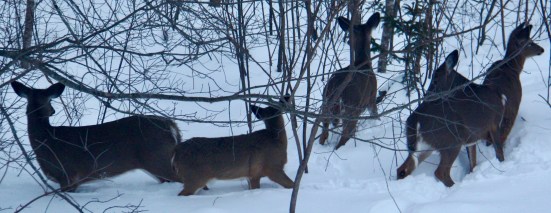
A wounded warrior, this tomato, though. The birds will get him, or the deer, or something. The cat has been very worried about intruders recently, birds and others. Here she is, inspecting the back porch from her watch tower beside the sliding door.

IMG_0032


Seeds

20180916_183415-1_resized

Seeds

As creative artists, we seek to leave seeds and plant seeds. Just one idea, seeding elsewhere authenticates us as artists and creators. Some seeds fall on stony ground, we know that. Others do not take immediately, but lie dormant for some time. Some, a few, a very few, a happy band of siblings. drop, root, and grow into the flowers we always wanted to create.

We must always have confidence in our seedlings. We must believe that they will survive, somehow, somewhere, in spite of the random nature of the universe. Write with that belief. Create with that belief. Be strong. believe. Even when others doubt you and, what is worse, you doubt yourself. Never doubt yourself.

My Hollyhock doesn’t doubt. It came from nowhere and gifted itself upon us. Now it has gifted us with pod after pod of wonderful seeds. Some will be lost. The squirrels, chipmunks, and mourning doves, not to mention the passerines, will get others. But some will survive, take root, and flourish, just like this one did.

Believe, my friends, believe. And never stop creating.